The main category of All News Articles.
You can use the search box below to find what you need.
[wd_asp id=1]
The main category of All News Articles.
You can use the search box below to find what you need.
[wd_asp id=1]
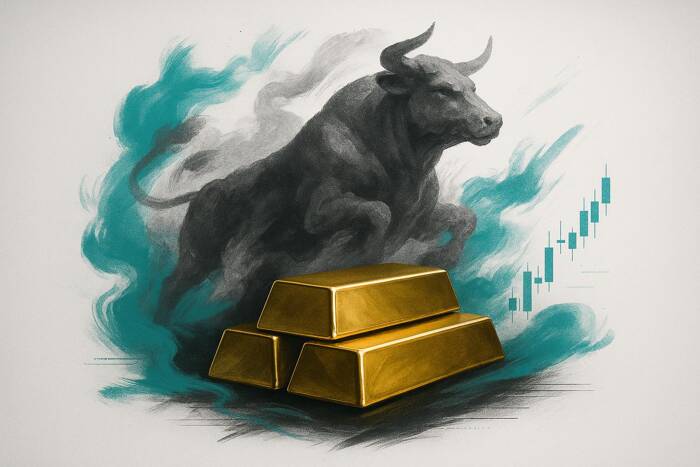
The move satisfies a classic measured target near $4,356. That is where the second upswing from the October low equals the price change of the first advance. An area where symmetry can produce resistance or, on a clean break, signal sustained strength. A rally above the recent lower swing high at $4,245 provides the next clear confirmation of the pennant breakout and keeps momentum pointed toward that initial objective.
Beyond $4,356, the 127.2% projection of the second advance relative to the first points to $4,454, with a slightly higher 127.2% extension of the most recent pullback at $4,516. These levels represent the next upside decision zones for the developing advance.
One powerful day does not make a trend—buyers must maintain control and deliver follow-through, beginning with a push above $4,245. Friday’s $4,152 low now stands as immediate short-term support; any violation there would raise the first yellow flag and open a test of the 10-day average at $4,114 and 20-day average at $4,086.
The combination of a textbook pennant breakout, dual channel captures, and the strongest close in over a month leaves gold strongly positioned for trend continuation into new record territory. Hold above $4,152 and clearance of $4,245 keeps the path open to $4,356 minimum and $4,454–$4,516 thereafter. Sustained buying conviction remains the only requirement — momentum currently favors the bulls.
For a look at all of today’s economic events, check out our economic calendar.
Cardano price is hovering near $0.42 with rare bullish signals emerging on higher timeframes, even as short-term weakness persists and participants watch closely for a decisive move.
Cardano is currently trading near $0.42, extending its broader downtrend while trying to stabilize after a sharp multi-week decline. Volume remains elevated, signaling active participation even as traders debate whether ADA is nearing a cyclical bottom or preparing for further weakness. With sentiment mixed across the market, ADA is sitting at levels where previous reversals have occasionally formed, but confirmation is still needed.
A portion of ADA community believes that Cardano price is trading well below its fair value. Analyst Hardy expressed this view recently, noting that Cardano remains “massively underestimated”. This angle reflects growing interest from contrarian participants who see opportunity when a token drifts into long-term accumulation regions.
Cardano’s deep-discount zone is drawing renewed interest from value-focused traders who see ADA trading well below fair value. Source: Hardy via X
While sentiment alone cannot drive a reversal, ADA’s current pricing aligns with historical areas where value-driven buyers have previously shown interest. If broader confidence returns, this deep-discount narrative could support early inflows.
Cardano has now printed what looks like its second-ever monthly Wyckoff spring, a rare structure previously highlighted by Eilert. The last time this same event occurred, ADA rallied from roughly $0.017 to $3.10, a staggering move that still defines Cardano’s breakout history.
The new spring is forming at a major multi-year support zone, signaling that long-term sellers may be exhausted. A structure like this typically marks the transition from distribution to accumulation, setting foundations for a much broader move if demand returns over the coming days.
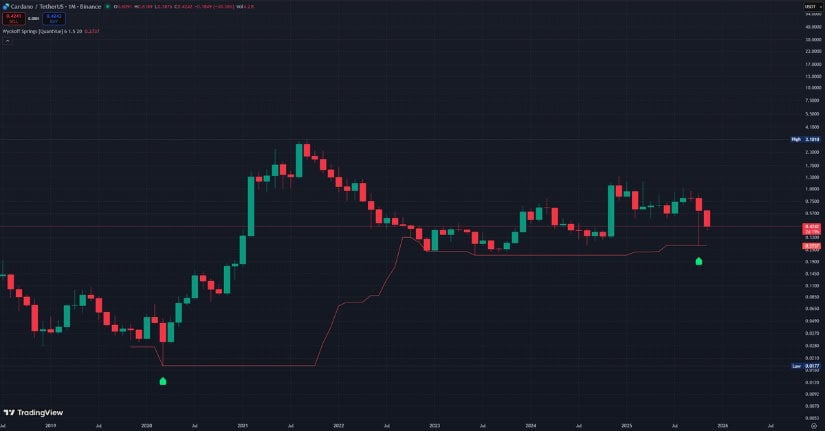
Cardano’s monthly chart shows a rare Wyckoff spring forming at major multi-year support, hinting at potential long-term accumulation. Source: Eilert via X
Weekly RSI continues to print multiple bullish divergences, another factor emphasized by Eilert. ADA has not seen this type of momentum shift in several years, and divergence clusters of this scale often develop near macro bottoms.
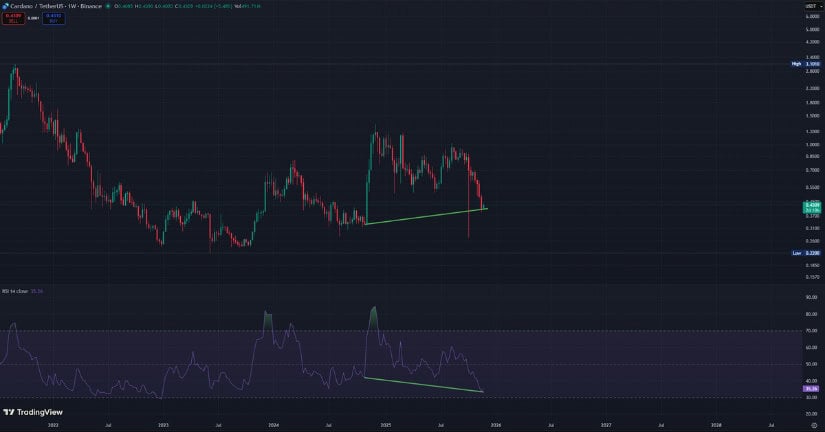
Cardano’s weekly chart shows multiple bullish RSI divergences forming near historical bottom zones, signaling a potential momentum shift. Source: Eilert via X
With ETFs, stablecoins, and infrastructure updates progressing across the ecosystem, the fundamental backdrop strengthens the argument that Cardano price might be one of the more undervalued assets heading into the next phase of the cycle. If RSI continues climbing while price stabilizes, early trend reversal conditions could form.
Recent intraday action shows Cardano price reacting precisely from a fresh imbalance zone, a structure highlighted in Miya’s chart. Price is currently hovering near $0.42–$0.40, an area where sell-side liquidity remains dense. If bulls manage to defend this region, a short-term relief move towards $0.55–$0.60 becomes possible.
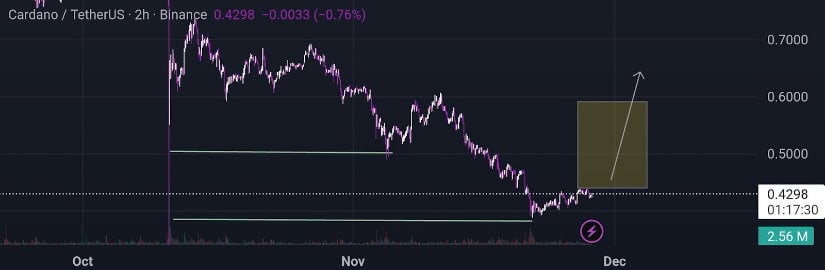
Cardano is reacting cleanly from a fresh imbalance zone near $0.42–$0.40, creating a pivotal intraday decision area. Source: Miya via X
However, failure to hold the imbalance floor exposes Cardano price to another sweep lower, targeting the next liquidity pocket near $0.38. Traders will be watching whether volume increases as ADA approaches these zones.
Cardano’s market structure sits at a key turning point. On higher timeframes, Cardano price is showing rare bullish signals (Wyckoff spring + momentum divergence), but short-term charts still reflect weakness and heavy overhead supply.
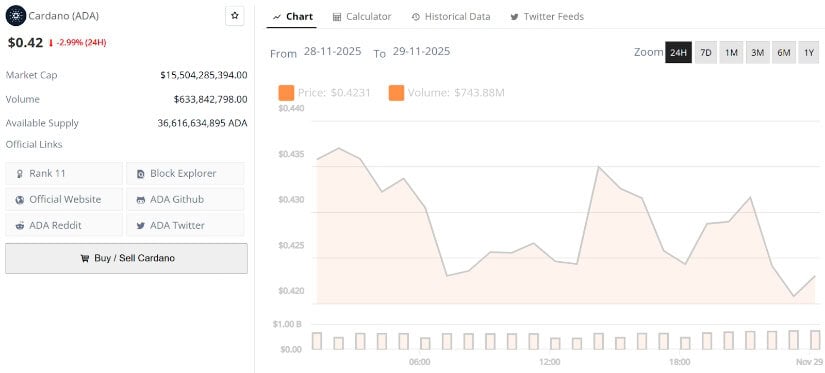
Cardano price is trading around $0.42, down 2.99% in the last 24 hours. Source: Brave New Coin
If buyers reclaim $0.46 to $0.48, a broader trend shift towards $0.55, and eventually $0.62, becomes realistic. Conversely, continued breakdowns below $0.40 open the path back towards deeper supports around $0.36 to $0.33, where long-term accumulation may expand.
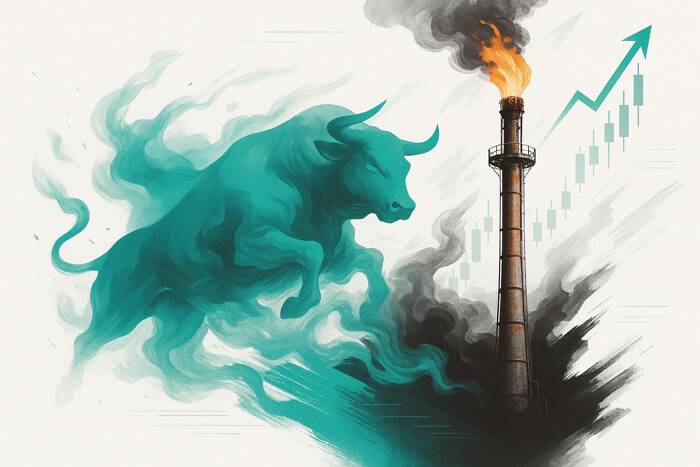
The breakout completed a 200% extension of a prior pullback exactly at $4.69 before powering through—a classic measured objective that often acts as only a pause in strong trends. Friday’s $4.53 low delivered a precise test of the 10-day moving average, met instantly with aggressive buying that triggered the triangle resolution and new highs.
Recent pullbacks have repeatedly found support at rising moving averages: the last one at the 20-day line, and on Friday at the 10-day. This progressive defense of higher averages signals strengthening demand and mirrors behavior seen in prior strong breakouts. Sustaining momentum above the 10-day line—now confirmed dynamic support—is essential for the bullish structure to remain intact.
Immediate upside focus falls on the long-term trend high from March at $4.91. A clean push above that $4.91 price zone, would generate another clear bullish signal for the developing bull trend that began from the August low. The 61.8% Fibonacci retracement of the long-term downtrend started from the November 2022 swing high, then becomes then next upside target at $5.28.
Natural gas has already reclaimed a lower October 2023 swing high, underscoring larger-timeframe improvement. Friday’s powerful green candle and close near the monthly high reinforce that shift in character.
The combination of an ascending triangle breakout, perfect 10-day average launch, and close at highs on multiple timeframes leaves natural gas strongly positioned for a continuation toward $4.91 at a minimum. The 10-day and 20-day averages now serve as trailing support gauges; any post-breakout pullback that holds above them might offer attractive risk/reward for the next leg higher. Momentum firmly favors buyers until proven otherwise.
For a look at all of today’s economic events, check out our economic calendar.
is stealing the spotlight as traders search beyond the latest XRP price prediction hype and look for a project showing real momentum. While XRP news focuses on whether Ripple can hit the $6 target, Remittix is pulling a different kind of attention with viral growth, live product releases, and a PayFi model built for everyday users. The is already active on the App Store, giving the project a head start that even major altcoins rarely achieve this early.
Investors are noticing how Remittix blends crypto and traditional finance inside one simple system. The platform lets users move digital assets into global bank accounts without friction, delays, or confusing fees. This is where Remittix sets itself apart, and whales are reacting fast.
Why Remittix Is Gaining Traction
Global transfers across 30+ countries
Real-time FX conversion built into the wallet
with #1 pre-launch ranking
Multiple CEX listings confirmed, including BitMart and LBank
This mix of trust, utility, and accessibility is driving viral interest. The Black Friday 200% bonus and the new referral program—offering 15% USDT rewards paid out every 24 hours—are accelerating adoption even more. With each wallet upgrade, Remittix strengthens its case as the PayFi leader to watch.
As Ripple chases a $6 breakout, Remittix is shaping a different narrative. Its fast-growing ecosystem, audited infrastructure, and expanding global reach are turning it into the unexpected name dominating investor conversations right now.
(Bloomberg) — Metals surged in volatile trading on Friday, with silver and copper hitting fresh records, after a chaotic hours-long outage on CME Group’s Chicago Mercantile Exchange.
Silver jumped as much as 5.9% to $56.53 an ounce, surpassing a peak set during a historic squeeze in the London market in October. The white metal has been supported by rising hopes of a Federal Reserve interest-rate cut in December, inflows into bullion-backed exchange-traded funds and ongoing supply tightness. Copper surged against the backdrop of supply shortfalls and bullish price predictions.
Most Read from Bloomberg
The record-setting moves came amid low Black Friday trading volumes in the US following the CME disruptions. Spreads between what dealers and sellers would buy and sell gold for briefly surged earlier, signaling an illiquid market. As most trading operations resumed early in the US morning, futures on the London Metal Exchange extended their rally.
Spot silver traded at $ an ounce as of in New York. Gold rose while platinum traded higher. LME copper futures settled 2.3% higher in London after earlier hitting a fresh record of $11,210.50 a ton.
Silver’s new high comes just over a month after a severe supply squeeze in the dominant trading hub in London last month, which sent prices soaring above levels in Shanghai and New York. While the arrival of nearly 54 million troy ounces has eased that squeeze, the market still remains markedly tight with the cost of borrowing the metal over one month hovering above its normal level.
The flows into the London market have now put pressure on other hubs, including in China. Silver inventories in warehouses linked to the Shanghai Futures Exchange recently hit their lowest level since 2015, according to bourse data.
“In the short term, a further price increase cannot be ruled out if registered silver inventories in China continue to decline,” analysts at Commerzbank AG wrote in a note earlier Friday.
Traders are also monitoring any potential tariff on silver after the precious metal was added to the US Geological Survey list of critical minerals this month. While 75 million ounces have left Comex vaults since early October, fears of a sudden premium for US silver have caused some traders to hesitate before shipping metal out of the country.
Silver has surged more than 90% this year, as investors pile into alternative assets in a wider retreat from government bonds and currencies, dubbed the debasement trade. Optimism about the metal’s fundamental supply-and-demand balance have also supported prices — the market is set to see a fifth consecutive supply deficit this year. Unlike gold, a large share of silver demand is industrial, with applications in solar cells and electronics.
Solana price is edging into a decisive zone, holding key support while testing major resistance levels as ETF inflows and improving market structure hint at a potential upside continuation.
Solana price is slowly regaining momentum after a volatile week, with market structure stabilizing above short-term supports and institutional flows offering some early signs of relief. While sentiment across the broader crypto market remains mixed, SOL continues to show pockets of strength backed by ETF inflows, improving treasury activity, and gradual technical improvement on higher timeframes.
Even so, upside remains far from guaranteed. Solana now approaches a cluster of critical resistance levels that will determine whether this recovery attempt matures into a broader trend reversal or fades into another lower-high formation. With price hovering near the $140–$142 band, volatility is expected to increase.
One of the more notable developments comes from renewed demand on the institutional side. Ted Pillows highlighted how Solana-linked treasury companies are beginning to stabilize and show early recovery signs, a shift that aligns with steadily rising inflows into Solana ETFs. Bitwise’s SOL fund alone has absorbed more than $527 million in inflows since November 10.
Solana ETF inflows have surged past $527 million since November 10, highlighting steady institutional demand despite recent volatility. Source: Ted Pillows via X
This consistency of inflows doesn’t guarantee upside, but it does act as a buffer during pullbacks. If these inflows persist, Solana price prediction models tilt more favorably, especially heading into December, where historically liquidity improves across risk assets.
From a charting perspective, Solana price is entering a decisive zone. Price has rebounded sharply from the $121–$122 demand region, an area where buyers stepped in aggressively, according to CryptoGemsCom. This bounce pushed SOL back towards the immediate resistance band at $144, which now becomes the level traders are watching for confirmation.

Solana has bounced strongly from the $121–$122 demand zone and is now retesting the critical $144 resistance area. Source: CryptoGemsCom via X
Meanwhile, ChiefraT’s chart places emphasis on the two recovery markers at $146.85 and $152.80, both aligning with key Fibonacci retracement levels. These zones previously triggered strong rejections, and a clean breakout through them would signal a meaningful shift in trend strength.

Solana is now eyeing the $146.85 and $152.80 Fib resistance levels, key zones where previous rallies were rejected. Source: ChiefraT via X
Support remains firmly established around $121–$126, where the most recent reversal originated. Losing this level would place SOL back into a vulnerable position, likely sending the price towards deeper liquidity pockets near $110.

Solana current price is $139.50, down 2.05% in the last 24 hours. Source: Brave New Coin
On the upside, the first reaction zone rests at $144, followed by the more significant resistance confluence at $147–$153. This cluster aligns with both historical supply and Fibonacci retracements. Clearing this zone would open the path towards $165, the next major liquidity block from earlier this year.
If momentum accelerates, Solana price prediction scenarios extend towards the broader mid-range level at $180, a region that previously capped bullish expansions during Q2.
Higher-timeframe structure presents an interesting case. Gordon’s long-range chart, rooted in a Wyckoff-style multi-phase progression, argues that Solana may still be sitting in the later stages of a large reaccumulation pattern. His model outlines a potential move back towards 320–$380 over the next market cycle, provided price maintains its structural supports and ETF inflows continue stabilizing demand.

Solana may still be in a late-stage Wyckoff reaccumulation, with potential upside toward $320–$380 if structure holds. Source: Gordon via X
The broader takeaway is that while short-term volatility remains significant, SOL’s long-term narrative remains technically intact. Institutional flows, on-chain activity, and cyclical positioning all form part of the argument that SOL Solana price could still be building for a larger expansion phase in 2025.
Solana price is attempting an early recovery, backed by improving ETF inflows, stabilization across treasury-linked companies, and a constructive bounce from major demand levels. However, the next phase hinges entirely on whether SOL can reclaim the heavy resistance cluster between $144 and $153, a zone that has rejected the price multiple times.
Clearing this area would place Solana in a stronger position to retest mid-range targets around $165–$180, and potentially reopen discussions for higher-timeframe expansion later in the cycle. But until confirmation arrives, participants should remain cautious of lower-high formations and the possibility of another dip towards $121 if demand weakens.
As the largest internal organ, the liver carries out hundreds of vital functions that keep your body running smoothly. It is responsible for filtering toxins out of the blood, processing key nutrients, producing bile for fat digestion and metabolizing medications and foreign compounds. However, when it’s overloaded with harmful substances, it becomes vulnerable to inflammation and injury. Supplements, in particular, often contain high concentrations of compounds that can strain this hardworking organ. While they are often seen as a natural way to support health, experts caution that the six supplements below should be taken carefully to avoid potential liver damage.
Green tea extract is widely sought after for its antioxidant and heart-protective properties, but concentrated supplements may do more harm than good. “Green tea extract (EGCG or epigallocatechin gallate) capsules can harm the liver at high doses,” says Vanessa Rissetto, M.S., RD, CDN. She explains that concentrated EGCG can generate immune reactions and oxidative stress in susceptible people, leading to liver inflammation and irritation that mirrors hepatitis. Instead, she recommends reaching for brewed tea, as it has much lower concentrations of EGCG. But if you prefer supplementation, she says, “keep EGCG from supplements 300 milligrams or less per day and avoid products delivering 800 mg or greater per day, which have been linked to liver enzyme elevations and injury.”
Vitamin A plays an essential role in vision, immunity, skin health and cellular growth, but too much can quickly turn toxic—particularly when taken in supplement form. The type most likely to cause harm is retinol, the active form of vitamin A, which is often found in high doses in supplements. Unlike water-soluble vitamins that flush out the body easily, says Tara Durden, M.S., RDN, vitamin A is a fat-soluble vitamin that tends to build up in the liver when intake exceeds the body’s needs. She warns that when the liver becomes overburdened with vitamin A, it increases the risk of toxicity. As such, she recommends sticking to the safe dose of 1,000 to 5,000 IU per day and avoiding high doses greater than 10,000 IU to reduce the risk of acute vitamin A toxicity.
Niacin, also known as vitamin B3, is often taken to manage high cholesterol. However, high doses can take a huge toll on the liver. “At nutritional levels, niacin is safe, but pharmacologic doses used for cholesterol (often 1 to 6 grams per day) can inflame the liver and cause jaundice,” says Rissetto. She highlights that sustained-release niacin supplements pose the highest risk. “Even supplements containing 500 mg or more can raise liver enzymes [a marker of liver stress or damage] in some users, and the risk climbs with grams-per-day dosing or switching formulations without supervision,” she emphasizes. For these reasons, the tolerable upper intake for adults is 35 mg or less per day. Rissetto cautions that prescription-strength use or any dose of 1,000 mg per day or more should only be taken under the guidance of a clinician.
Ashwagandha is a popular herbal supplement promoted for its stress-relieving and anxiety-reducing benefits. Although generally considered safe for short-term use, recent reports have linked some commercial herbal products claiming to contain ashwagandha to rare cases of liver injury. There have also been rare cases of liver injury and, in some instances, the need for a liver transplant in people with preexisting liver diseases and cirrhosis. The exact cause of liver toxicity is unknown, but some experts suspect that compounds in ashwagandha called withanolides are the main culprit. Typical amounts found in supplements range from 150 to 600 mg, taken one to three times per day. However, Durden recommends using the lowest effective dose. She also advises only taking the supplement for a short period of time, choosing third-party tested brands and seeking medical attention if symptoms of liver injury appear.
Kava is an herbal supplement that is typically used to promote relaxation and ease anxiety. However, depending on the dose and how it’s formulated, its calming effects can come at a serious cost to liver health. “Kava products, especially solvent extracts, have been tied to severe liver injury, including rare cases of liver failure,” warns Rissetto. She points out that these effects may be due to the herb’s toxic metabolites or its ability to deplete the liver’s antioxidant defenses. The risk of liver injury is even higher when the herb is taken with alcohol or other compounds that may harm the liver or if you have preexisting liver disease. To reduce the risk of liver damage, Rissetto recommends choosing water-extracted formulations made from the root of the plant, not exceeding 240 to 250 mg of kavalactones per day and only taking them short-term.
Though black cohosh is marketed as a natural remedy for menopause symptoms, such as hot flashes, night sweats and mood regulation, it doesn’t come without risk. “Black cohosh has been associated with idiosyncratic hepatitis [drug-induced liver injury] and, rarely, liver failure,” says Rissetto. She notes that the specific compound responsible for the effects on the liver isn’t known, so people with liver disease should avoid it, and any user who experiences adverse symptoms should stop taking the herb immediately. If you do choose to take black cohosh, she outlines that clinical studies often involve around 40 mg of extract daily. However, the safety of long-term use is uncertain, so it’s best to use the supplement on a short-term basis and pay close attention to any symptoms that may arise.
If you’re taking any of the above supplements, both dietitians advise that you stop the supplement immediately and contact your health care provider if you notice the following signs and symptoms:
“Some people have no early symptoms, so blood test abnormalities (ALT/AST, bilirubin, INR) after starting a supplement also warrant stopping and evaluation,” adds Rissetto. Of all of the symptoms, Rissetto emphasizes that in drug- or supplement-induced liver injury, jaundice signals more severe disease and needs prompt attention.
Many people turn to supplements to boost their immune, mental, hormonal and overall health. However, herbal remedies and high-dose nutrients aren’t as harmless as they may seem. Supplements like vitamin A, niacin, green tea extract, kava, ashwagandha and black cohosh should be taken with caution, as they have all been linked to liver injury, inflammation and damage when taken in excess.
Though the liver works tirelessly to filter out excess substances, it still has its limits. When those limits are crossed, symptoms like yellow skin and eyes, dark urine, fatigue, nausea, vomiting, loss of appetite, pale stools and itchy skin can arise. If you experience any of these symptoms, experts advise stopping supplementation and seeking medical attention immediately. After all, your body’s largest internal organ is counting on you to adhere to professional guidance and proper dosages to prevent long-term damage.
Bitcoin, a staple in the crypto market, is currently navigating through a period of mixed sentiments with its price hovering just above $91K. With the recent gains and impressive 11.39% year-to-date growth, Bitcoin’s potential to reach the $100K mark is captivating investors worldwide. Current dynamics reflect a complex interplay between bullish optimism and caution amid macroeconomic influences and holiday trading patterns. Much of the market’s next move hinges on a possible supply cluster breakout that could propel the BTC price rally significantly upward.
As of today, Bitcoin is priced at $90,468.84, showing minimal change from the previous close. This price stability reflects a broader market pause, with Bitcoin exhibiting a 1.22% increase over the past five days. However, monthly performance depicts a 5.09% decrease, pointing to a fluctuating pattern that is typical for the world’s leading cryptocurrency. The question on every investor’s mind is whether Bitcoin can overcome these hurdles to hit the $100K milestone.
For Bitcoin to achieve further momentum, a supply cluster breakout is essential. Currently, Bitcoin’s relative strength index (RSI) stands at 38.70, indicative of a potential price reversal, while volatility remains marked by an ATR of 4558.31. Investors are closely watching these indicators to discern future movements. Latest discussions suggest varied opinions on how Bitcoin’s journey to $100K will unfold.
Inflation concerns and recent policy statements from major central banks are adding layers of complexity to Bitcoin’s price prediction landscape. As the holiday season progresses, trading patterns often shift due to thinner volumes and holiday-related market closures. For Bitcoin, Thanksgiving has historically contributed to increased volatility, as investors reassess portfolios before year-end.
Bitcoin’s current volatility indicators, such as the Bollinger Bands indicating a range between $82,032.20 and $111,601.95, reflect potential price movements. This variability creates both opportunities and risks as traders speculate on Bitcoin’s path forward. The crypto market trends during this holiday period could be pivotal in pushing Bitcoin past psychological barriers.
Investors remain divided on Bitcoin’s immediate future. With a market cap of approximately $1.8 trillion, Bitcoin’s dominance continues to shape crypto market trends, yet its path to $100K is not assured. The strong trend indicated by an ADX of 44.62 suggests a persistent directional movement, though whether this is upwards to $100K or downwards remains an open question.
The oversold position indicated by an MFI of 14.04 could prompt buying activity, adding upward pressure to Bitcoin’s price. Market sentiment is also influenced by forecasts predicting Bitcoin reaching $100,096.72 monthly. However, the long-term forecast varies, indicating potential setbacks or slower gains.
The investment landscape for Bitcoin is teetering between optimism for a rally and caution due to current macroeconomic challenges. The short-term focus for investors lies in observing breakouts from supply clusters and watching volatility indices closely. Longer-term projections offer a promising glimpse into Bitcoin’s potential, buoyed by forecasts of substantial growth in the coming years.
With the volatility and price movement patterns surrounding Bitcoin, investors should remain vigilant. Staying informed of macroeconomic policies and significant market events is crucial for making strategic decisions. Platforms like Meyka, offering real-time insights and predictive analytics, can be instrumental in navigating this complex crypto market.
Ultimately, whether Bitcoin reaches $100K will depend on the broader economic environment, investor behavior, and technological advancements in the crypto sector.
Bitcoin’s journey towards the $100K mark is affected by supply cluster breakouts, macroeconomic policies, and seasonal trading patterns like Thanksgiving. Current stability at $91K and an 11.39% year-to-date increase highlight mixed market sentiments.
Technical indicators like an RSI of 38.70 and an ATR of 4558.31 highlight possible price reversals and volatility. These metrics are crucial for predicting Bitcoin’s price trajectory and potential breakout points.
While some investors anticipate a BTC price rally, challenges like economic uncertainties and policy impacts create hesitation. BTC’s oversold status suggests potential buying, yet risks remain significant, leading to mixed outlooks.
Disclaimer:
The content shared by Meyka AI PTY LTD is solely for research and informational purposes.
Meyka is not a financial advisory service, and the information provided should not be considered investment or trading advice.
Gold (XAU/USD) keeps crawling higher, and is on track to close the week 2.7% higher, with the US Dollar weighed by rising bets of Fed monetary easing. XAU/USD has been capped at $4,190 earlier on Friday, as the US Dollar picked up in a calm Thanksgiving session, but downside attempts remain limited above $4,140 so far.
The US Dollar Index, which measures the value of the US Dollar against a basket of six currencies, is picking up from lows on Friday, favoured by a mild rebound in US Treasury yields, but it remains on track for its worst weekly performance in months.
Dovish comments from Fed officials and weak US consumption figures have prompted investors to ramp up hopes of a Fed rate cut in December, which has sent US Treasury yields and the US Dollar tumbling this week.
The technical picture remains positive. The 4-hour Relative Strength Index is trending higher, reaching levels past 60, and the Moving Average Convergence Divergence (MACD) has turned up and is crossing the signal line, highlighting growing bullish pressure.
The move above $4,100 confirmed that the bearish correction from the November peak is over, and bulls have shifted their focus to the November 14 high, at $4,210, on track for November’s peak, at $4,245.
On the downside, the mentioned $4,140 support (November 27 low) keeps the bullish trend in play. A bearish reaction below here brings the November 25 low, near $4,100, to the focus, ahead of the November 21 and 24 lows between $4.025 and $4,040.
The table below shows the percentage change of US Dollar (USD) against listed major currencies this week. US Dollar was the strongest against the Japanese Yen.
| USD | EUR | GBP | JPY | CAD | AUD | NZD | CHF | |
|---|---|---|---|---|---|---|---|---|
| USD | -0.41% | -0.81% | -0.22% | -0.42% | -0.99% | -1.60% | -0.25% | |
| EUR | 0.41% | -0.39% | 0.20% | -0.02% | -0.60% | -1.20% | 0.16% | |
| GBP | 0.81% | 0.39% | 0.58% | 0.38% | -0.21% | -0.80% | 0.56% | |
| JPY | 0.22% | -0.20% | -0.58% | -0.22% | -0.84% | -1.52% | -0.03% | |
| CAD | 0.42% | 0.02% | -0.38% | 0.22% | -0.58% | -1.18% | 0.18% | |
| AUD | 0.99% | 0.60% | 0.21% | 0.84% | 0.58% | -0.59% | 0.80% | |
| NZD | 1.60% | 1.20% | 0.80% | 1.52% | 1.18% | 0.59% | 1.38% | |
| CHF | 0.25% | -0.16% | -0.56% | 0.03% | -0.18% | -0.80% | -1.38% |
The heat map shows percentage changes of major currencies against each other. The base currency is picked from the left column, while the quote currency is picked from the top row. For example, if you pick the US Dollar from the left column and move along the horizontal line to the Japanese Yen, the percentage change displayed in the box will represent USD (base)/JPY (quote).
“One compound in particular, epigallocatechin gallate (EGCG), boosts nitric oxide and promotes vasodilation, helping your blood vessels relax,” states Bess Berger, RDN.
When blood vessels relax, or vasodilate, blood pressure decreases, a temporary impact that can enhance circulation.
“While catechins are one type of tea polyphenol, the blood pressure–lowering effects of green tea are probably attributable to a combination of all of the plant compounds it contains instead of an individual few,” cites Qianzhi Jiang, Ph.D., RDN.
Research indicates that green tea may help to reduce blood pressure in both healthy people and those with hypertension, though findings vary and further long-term research is needed. While it relaxes blood vessels temporarily, its biggest benefit may lie in long-term protection. The same polyphenols that offers green tea its antioxidant power also defend arteries against oxidative stress and low-grade inflammation, major contributors to increasing blood pressure over time.
“Green tea’s catechins support blood vessel health by reducing inflammation and improving how your vessels function,” states Devon Golem, Ph.D., RD, LDN.With time, this changes to more elastic arteries that expand and contract effectively, supporting the heart pump blood with less strain.
Green tea contains less caffeine than coffee, almost 30 mg per 8-ounce cup when compared to 95 mg in coffee but it can still result in a temporary elevation in blood pressure.
“If you’re super-sensitive to caffeine, green tea could cause a temporary bump in blood pressure right after drinking it,” says Berger.
For most individuals, this short-term raise doesn’t outweigh green tea’s long-term cardiovascular advantages. Decaffeinated choices are available for those who are particularly caffeine sensitive while still providing antioxidant benefits.
There’s no official guideline, but most researchers used three to four cups each day. Longer-term use, more than three months, showcased greater reductions in blood pressure.
“The majority of the studies used three to four cups of green tea daily, and greater reductions in blood pressure were observed with longer use—more than three months,” describes Jiang.
Moderate brewed green tea is normally safe, but concentrated green tea extracts might result in side effects such as nausea, abdominal discomfort, or even increase blood pressure. Green tea extracts may also impact with some medications that include beta-blockers such as nadolol or other heart and cholesterol drugs. People consuming these medications should consult their healthcare expert before taking large amounts or extracts.
Disclaimer: This article is intended for informational and educational purposes only and is not a substitute for professional medical advice. Consult your healthcare provider before making major changes to your diet, especially if you have existing medical concerns.
Q1. What is green tea?
Green tea is a drink made from unfermented tea leaves, packed in antioxidants. It has been connected to several health advantages, including cardiovascular support.
Q2. How does green tea affect blood pressure?
Green tea may help to relax blood vessels and enhance circulation, temporarily reducing blood pressure. Long-term advantages are likely due to its anti-inflammatory and antioxidant properties.



:max_bytes(150000):strip_icc()/TK-Supplements-That-Could-Be-Bad-12894ea8afbe493e9e8903a150b1bd4b.jpg "6 Supplements That May Be Damaging Your Liver")