The main category of All News Articles.
You can use the search box below to find what you need.
[wd_asp id=1]
The main category of All News Articles.
You can use the search box below to find what you need.
[wd_asp id=1]
SAN FRANCISCO, Nov. 25, 2025 /PRNewswire/ — The global dietary supplements market size is expected to reach USD 414.52 billion by 2033, registering a CAGR of 8.9% from 2025 to 2033, according to a new report by Grand View Research, Inc. Rising awareness of personal wellness, shifting consumer habits, and a stronger emphasis on preventive health are propelling the market.
The growing health consciousness, accelerated by the COVID-19 pandemic, has encouraged consumers to prioritize immunity, vitality, and holistic wellness. This has significantly boosted the demand for dietary supplements addressing nutritional deficiencies caused by hectic lifestyles, processed food consumption, and poor dietary habits.
In addition, the increasing adoption of personalized nutrition, driven by advancements in nutrigenomics and digital health technologies, is reshaping consumer preferences. The market is witnessing demand for targeted supplements that support gut health, cognitive function, stress management, hormonal balance, and overall well-being. Millennials, in particular, show strong interest in supplements with probiotics, nootropics, adaptogens, and herbal extracts.
Download a free sample copy or view report summary: Dietary Supplements Market
Moreover, the expanding global fitness movement and the rise in active lifestyles among younger consumers are boosting the demand for clean-label, natural, and plant-based supplements. Companies are focusing on greater transparency throughout the supply chain by strengthening ingredient traceability, ensuring sustainable sourcing, and adopting eco-friendly packaging solutions.
However, variations in global regulatory standards for dietary supplements may create compliance challenges for manufacturers. This evolving regulatory environment also presents a positive opportunity for companies to strengthen product quality, enhance transparency, and build greater consumer trust, ultimately supporting long-term market growth.
Dietary Supplements Market Report Highlights:
Based on ingredients, the vitamin supplements segment held a revenue share of 27.7% in 2024, owing to the growing consumer awareness regarding the nutritional gaps linked to hectic routines and unbalanced diets.
Based on type, Over the Counter (OTC) dietary supplements captured the largest revenue share in 2024. The growth is attributed to the increasing awareness of nutritional advantages and the convenience of easy product availability.
Based on form, the tablet segment accounted for the largest revenue share of 31.5% in 2024. The segment growth is attributed to their ease of storage, transport, and consumption, making them well-suited for consumers with busy lifestyles, while the familiarity and trust associated with tablet formats further support their growing adoption among health-conscious individuals.
Based on application, the prenatal health segment is projected to grow at a CAGR of 12.7% from 2025 to 2033, due to growing awareness of the vital role maternal nutrition plays in supporting fetal development and reducing pregnancy-related complications.
Based on end user, the adult segment accounted for the largest revenue share in 2024, driven by rising focus on immunity, energy, digestion, mental well-being, fitness, and age-related health concerns, which is fueling demand for convenient preventive solutions.
Based on distribution channel, offline sales led the market with a 79.7% share in 2024, driven by trust, expert guidance, and product authenticity, with pharmacies and health stores enabling direct professional support.
North America held the largest global revenue in 2024, supported by rising obesity and lifestyle-related diseases linked to dietary patterns, high disposable income, and heavy reliance on processed and ready-to-eat foods.
The development of Layer-2, a completely EVM-compatible blockchain for meme coins, high-throughput apps, ultra-low fees, and sniper-bot resilience, provides Little Pepe an edge. This purpose-built ecosystem solves numerous early-stage meme launch issues, making LILPEPE a pioneer in meme coin infrastructure. Early presale customers have experienced returns of over 120% since Stage 1, and analysts estimate LILPEPE might reach $0.22 in 2026, a 10,000% increase from current values. Unlike ADA, where upside is constrained by its size, Little Pepe sits at the ideal point of the adoption curve for investors seeking multi-X returns.
Airbnb (ABNB) saw a slight uptick in its latest intraday trading, even as the stock continues to face negative pressure while trading below its 50-day simple moving average. The medium-term downtrend remains dominant, with the price moving along a descending trendline. These recent gains appear to be an attempt to recover part of its previous losses, while the stock also works on easing its clear oversold conditions on the Relative Strength Indicators, especially as early positive signals begin to appear.
Therefore, we expect the stock to decline in the upcoming sessions, as long as it remains below $117.30, targeting the support level at $105.40.
Today’s price forecast: Bearish
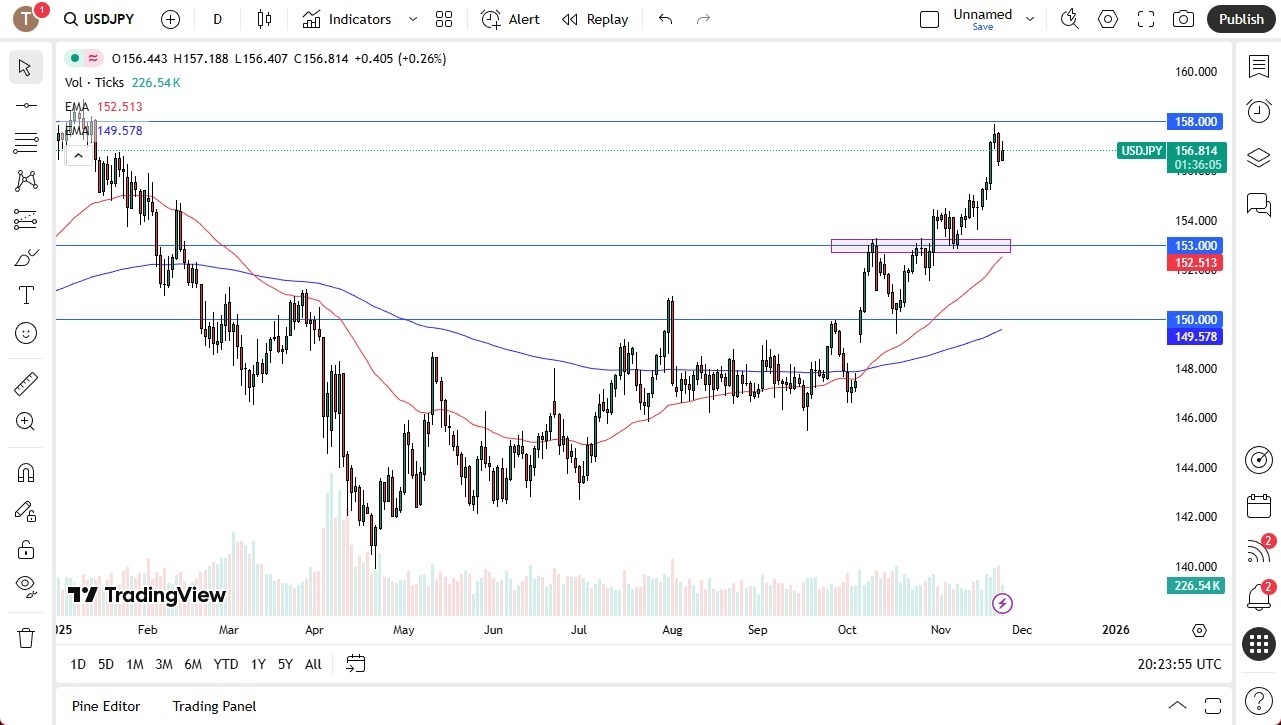
The US dollar rallied against the Japanese yen during the trading session on Monday as the market continues to see a lot of significant volatility. But that being said, the market is likely to continue to see a lot of choppy behavior. But I think even if we do fall from here, it’s likely that we continue to see a lot of buying opportunities all the way down to at least the 153 yen level.

That being said, the market is likely to continue to see plenty of buyers willing to get involved due to the interest rate differential favoring the United States dollar, as the Bank of Japan simply cannot do anything whatsoever to tighten monetary policy in any significant manner.
If the market does fall from here, I think the 155 yen level is an area that you have to look for some type of bounce, followed by 154.50. And then the 153 yen level, which for me is the absolute floor, the 50-day EMA sits right around there as well. And I think you have a scenario where plenty of people are willing to sit on this trade and simply collect profit at the end of every day via swap. And then, of course, eventually the nominal gains.
If we can break above the 158 yen level, then it’s likely that the market will go to the 159 yen level, which is an area that’s been important. And then naturally we’ll be watching the 160 yen level after that. I have no interest in shorting this pair. And even if we did break down below the 153 yen level, then at that point in time, I’m probably going to check out the fundamental situation before I put any real money into this market.
Want to trade our USD/JPY forex analysis and predictions? Here’s a list of forex brokers in Japan to check out.
Christopher Lewis has been trading Forex and has over 20 years experience in financial markets. Chris has been a regular contributor to Daily Forex since the early days of the site. He writes about Forex for several online publications, including FX Empire, Investing.com, and his own site, aptly named The Trader Guy. Chris favours technical analysis methods to identify his trades and likes to trade equity indices and commodities as well as Forex. He favours a longer-term trading style, and his trades often last for days or weeks.
Magnesium is essential for muscle function, cellular energy, and repairing tissue—but if you take it for recovery, when should you expect to feel the difference?
To get clarity on timing, dosing, and the best forms of magnesium for your muscles, we spoke with Reuben Chen, MD, a board-certified sports medicine physician and chief medical officer at Sunrider International.
*This interview has been edited and condensed for clarity.
Q: How long do you need to take magnesium to see improvement in muscle recovery?
Chen: Most people start noticing reduced muscle soreness and faster recovery within one to four weeks of consistent daily magnesium supplementation.
If you’re severely deficient, you might feel some changes sooner. For example, you may feel a difference in exercise-induced cramps or soreness within a few days.
But in general, magnesium’s deeper recovery benefits take longer to build. Some benefits, like reduced inflammation markers, better sleep quality, and improved muscle repair processes, typically become more pronounced after four to eight weeks.
Your timeline also may vary based on:
For muscle recovery in active adults, the most commonly studied and effective dose is 300 to 500 milligrams (mg) of elemental magnesium per day, said Chen, with the option to split it into two doses.
This range reliably raises muscle magnesium levels and improves perceived recovery in athletes.
However, higher doses increase your risk of gastrointestinal side effects like diarrhea, cramping, and nausea, without additional recovery benefits. On the other hand, doses below 250 mg may not do much in people who aren’t deficient.
For athletes training intensely, Chen said a more individualized approach may be beneficial: The sweet spot appears to be around 4 to 6 mg of elemental magnesium per kilogram of body weight.
According to Chen, magnesium glycinate, magnesium malate, and magnesium citrate are generally the best-absorbed and most effective forms for muscle recovery and exercise performance.
Each type of magnesium comes with unique advantages:
These forms are preferred over magnesium oxide or sulfate because your body absorbs them more easily, said Chen. That means they raise magnesium levels inside your muscle cells more quickly, helping your muscles relax, repair, and produce energy more efficiently after exercise.

Why is
crypto going up today? The cryptocurrency market is experiencing a strong
recovery rally today (Tuesday), November 25, 2025, with Bitcoin (BTC) price jumping
to $88,590 (up 1.6% in 24 hours), Ethereum rising 2.1% to $2,942, XRP surging
8% to $2.24, and Dogecoin gaining ground at $0.1525.
The total
crypto market capitalization has risen 2.4% to $3.1 trillion, adding $23.8
billion in value over the past day as investor sentiment improves from extreme
fear levels. The crypto surge is primarily driven by a shift in Federal Reserve rate
cut expectations, with odds jumping from just 40% last week to 82% for December
according to Polymarket and CME FedWatch data.
However,
this is most likely a dead cat bounce, and the cryptocurrency market could
quickly resume its decline. In this text, I provide a technical analysis of the
BTC/USDT, ETH/USDT, XRP/USDT, and DOGE/USDT charts and outline what these
assets may face in the coming weeks.
Follow me on X for more up-to-date analysis and forecasts on major cryptocurrencies and other financial instruments.
Bitcoin’s
price fell 1.3% Tuesday to $87,177, showing slight weakness but maintaining a
clear recovery from Friday’s turbulent session when
it crashed to just $80,000, a seven-month low. According to my technical
analysis, Bitcoin’s movement toward my target bearish range around $74,000
encountered a local accumulation zone at $83,000-$84,000 where a bullish pin
bar candle formed with a very long lower wick, showing rejection of further
selling by supply.
As a
result, we’re currently in a short-term corrective bounce which could reach the
$92,000-$94,000 zone marked in red on my chart, as
I mentioned in one of my earlier analyses. This is a typical bull trap and
dead cat bounce, so I’m still targeting lows around $74,000 coinciding with
this year’s minimum on Bitcoin’s chart. After testing this level, I intend to
accumulate Bitcoin assuming a return to uptrend and ultimately re-entering a
price discovery phase.
Why Bitcoin price is going up today? Source: Tradingview.com
|
Key Level |
Price Zone |
Significance |
|
Current Price |
$87,177-$88,590 |
Tuesday |
|
Friday Low |
$80,000 |
Seven-month |
|
Pin Bar Support |
$83,000-$84,000 |
Bullish |
|
My Corrective Target |
$92,000-$94,000 |
Bull trap |
|
My Accumulation Target |
$74,000 |
2025 |
|
Bull Invalidation |
$100,000 |
Psychological |
Paul
Howard, Director at Wincent, provided institutional perspective on the current
market structure: “Indicators from the end of October where we saw whales
selling and tightening liquidity, led to the institutional basis trade unwind
and wave of ETF selling.”
“Dovetail
this with the year-end where we typically see books selling crypto for
reporting purposes, sentiment remains muted,” Howard continued. “I do
not expect we bounce back to $100,000 levels anytime before Q1.”
Ethereum’s
(ETH) price falls
2.5% today, testing session lows at $2,879 on Tuesday, though spot prices show
recovery to $2,942 with a 2.1% daily gain. On one hand, a very strong bearish
sell signal appeared in the form of a death cross, the 200-day EMA crossed from
above by the 50-day EMA, which
can signal medium-term declines of even 30-40% toward just $1,400, this year’s
lows last tested in April.
On the
other hand, ETH stopped clearly at the support zone I mentioned around $2,750,
which so far provides a place to bounce. However, there’s not much room as we
soon have the 50% Fibonacci retracement and also local November lows, and
shortly a resistance zone around $3,350 marked by August minimums tested again
in early October, not to mention the cluster of moving averages I mentioned.
Only a
return above this cluster will allow me to again believe Ethereum has demand
strength for further appreciation. For now I remain more bearish-biased on
Ethereum despite the short-term recovery bounce.
Why Ethereum price is going up today? Source: Tradingview.com
BlackRock has
been accumulating Ethereum through its iShares Ethereum Trust ETF (ETHA), with
recent purchases totaling $72.5 million in October and larger accumulations of
$140.9 million in September. While spot Ethereum ETFs saw $1.64 billion in
outflows during November, institutional interest from the world’s largest asset
manager signals long-term confidence in ETH as a foundational asset for smart
contracts and tokenization.
XRP price has two dynamic
days of consecutive gains behind it, including a remarkable 9% surge on Monday,
and on Tuesday the price corrects by a modest 1.6% and changes hands at $2.19,
with spot data showing $2.24 and an 8% daily gain. From a technical analysis
perspective, this two-day bounce allowed us to return to an important zone that
until recently acted as support, now acting as resistance in the range between
$2.18 and $2.29.
The fact
that we’re below the moving average cluster suggests for now we should expect a
bearish reaction and corrective decline again toward $1.90 support where on
Friday a bullish pin bar formed allowing the current bounce to materialize.
Like the two charts above, this is short-term for me and long-term I
maintain my bearish stance I mentioned some time ago due to death cross
formation, targeting a level of just $1.25 which was last tested one year ago.
Why XRP price is going up today? Source: Tradingview.com
Dogecoin (DOGE) notations fell
2.3% Monday and the cryptocurrency costs $0.1483 after rising for the last 2
days, bouncing from a support zone last tested in June. Recent declines on the
DOGE chart which we observed continuously from September peaks pushed the price
to my designated support zone between 14 and 15 cents, tested in March, April,
June and last time in October this year.
And
although it seemed Dogecoin might exit this range, which we witnessed including
last Friday, the price found support slightly lower, bounced and returns again
to this range showing that the long-term consolidation we’ve been observing
since February is still in play. Its main upper boundary falls around the 29-30
cents range, and according to swing trading principles we should be heading in
that direction.
However,
the technical situation is not in favor of buyers. Primarily we’re in a
downtrend as evidenced by simply being below the 200 MA moving average, not to
mention the
death cross formed in late October (sell signal from 50 and 200 MA
crossing).
Why Dogecoin price is going up today? Source: Tradingview.com
For me to
start believing in a stronger Dogecoin bounce, it would need to return above
the 20 cents level and break the blue average; only then would I consider
playing long positions toward 30 cents, the level last tested in September.
The primary
driver behind why crypto is surging today is the dramatic shift in Federal
Reserve policy expectations. Joel Kruger, strategist at LMAX Group, explained:
“Market conditions appear to be realigning with the broader status quo,
particularly around Fed expectations. After a brief wobble driven by a hawkish
tilt that unsettled risk assets, the market is once again leaning toward
accommodation.”
The CME
FedWatch tool shows December rate cut odds jumped from 30% on Wednesday to
75.5% by Friday, following dovish remarks from Fed Vice Chair John Williams.
This represents a stunning reversal from the 22% probability economists
assigned just days earlier.
BlackRock’s
continued Ethereum accumulation through its iShares Ethereum Trust ETF,
including the $72.5 million October purchase, signals institutional confidence
despite recent market volatility. The asset manager views Ethereum as a
foundational layer for smart contracts, tokenization, and institutional-grade
Web3 infrastructure.
Kruger
noted that “the market has now digested the recent setbacks, creating a
healthier backdrop and offering investors a chance to reenter at compelling
levels. Bitcoin has historically rewarded conviction during periods of
volatility, with significant pullbacks frequently preceding powerful moves to
new all-time highs.”
Crypto is
surging on November 25, 2025 due to Federal Reserve dovish pivot with rate cut
odds jumping from 40% to 82% for December, Monday launch of Franklin Templeton
and Grayscale XRP ETFs ($94M combined first-day inflows), BlackRock Ethereum
ETF purchases signaling institutional confidence, technical oversold bounce
after Friday’s crash to seven-month lows, and leverage unwinding stabilizing
the market.
According
to my technical analysis, Bitcoin at $87,177-$88,590 is in bull trap bounce
potentially reaching $92,000-$94,000 corrective resistance before declining to
my ultimate target of $74,000 (2025 yearly minimum) for accumulation. After
testing $74K, I anticipate return to uptrend and price discovery phase.
XRP at
$2.19-$2.24 after 9% Monday rally has returned to former support/current
resistance zone $2.18-$2.29. According to my technical analysis, this two-day
bounce appears corrective within longer-term bearish structure.
This
depends on timeframe and risk tolerance. Bullish case: Fed rate cut odds 82%
for December, extreme fear (contrarian signal), institutional flows (BlackRock
ETH, XRP/DOGE ETFs $94M), technical oversold bounce, Kruger notes “Bitcoin
historically rewarded conviction during volatility” with pullbacks
“frequently preceding powerful moves to new highs.”
Yes.
Bitcoin death cross, Ethereum death cross (50 EMA above 200 EMA), my technical
analysis targeting Bitcoin $74K/Ethereum $1,400, XRP and Dogecoin death
crosses, Paul Howard notes whale selling and institutional liquidation ongoing,
no $100K expected before Q1 2026.
Before you go, please also check my previous analyses and articles about crypto and gold:
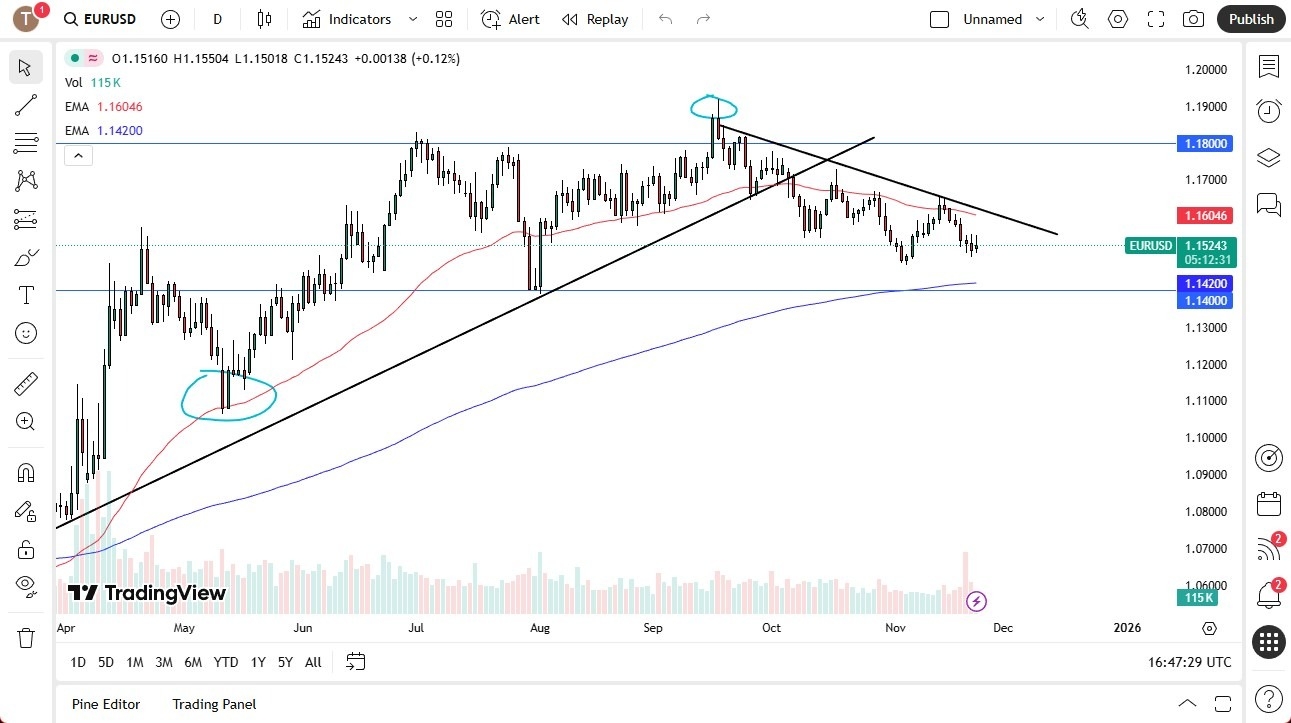
The Euro initially tried to rally during the trading session on Monday, but as we’ve seen multiple days in a row, the Euro just can’t seem to hang on to significant gains. And I do think that the US dollar is likely to continue to be a situation of fading the rally as we go forward.
All things being equal, this is a market that I think we continue to see a lot of choppy and volatile moves in, but mainly on short-term charts. After all, this is a week that I think is going to be difficult for a lot of traders, as we have the Thanksgiving holiday in the United States on Thursday.
So that basically takes the Americans out of the equation for Thursday and Friday. So, unless we see some type of major shift, and let’s be honest, we could do due to headlines coming out of Ukraine or trade tensions or whatever. I think this is a market that you just continue to face short-term rallies, you collect your profits, and then rinse and repeat. The 50-day EMA above offers significant resistance near the 1.16 level. And of course, we have a downtrend line that’s just above there that could come into the picture to offer resistance as well.
I think at this point in time, we are likely to see a potential move down to the 1.14 level, which is a large round, psychologically significant figure in an area that has shown extreme demand previously. If we drop below there, then not only will the break of demand be bearish, but you would also see a breakdown below the 200-day EMA as very bearish also. I think at that point, the euro goes to the 1.11 level. It’s not until we break above the 1.17 level that I start to look in the other direction. So, I remain bearish at least for the time being.
Ready to trade our daily Forex analysis? We’ve made this forex brokers list for you to check out.
Christopher Lewis has been trading Forex and has over 20 years experience in financial markets. Chris has been a regular contributor to Daily Forex since the early days of the site. He writes about Forex for several online publications, including FX Empire, Investing.com, and his own site, aptly named The Trader Guy. Chris favours technical analysis methods to identify his trades and likes to trade equity indices and commodities as well as Forex. He favours a longer-term trading style, and his trades often last for days or weeks.
If you have a headache, chances are you reach for an over-the-counter pain reliever to make your head feel better. Sometimes, the pain remains, and you seek another alternative. A surprising way to help get rid of your headache is by reaching inside your refrigerator or pantry for specific foods.
“The most important thing I tell patients is that migraines are highly individualized,” says Dr. Nicholas Church, a board-certified member of the American Board of Family Medicine and the American Academy of Family Physicians. “What helps one person may not help another, and what’s a trigger for one might be therapeutic for someone else.”
While no one food will act as a cure-all for headaches — as managing your sleep, hydration, exercise and stress are equally important — experts say the following foods could help you cope with headaches in the future.
“I recommend omega-3-rich fish, such as salmon, mackerel and sardines,” says Church. “These fish are high in anti-inflammatory fats (EPA and DHA), which can reduce inflammation throughout the body, including in the vascular system and brain.”
Citing a 2021 randomized controlled trial, Church explains that because migraines are believed to involve inflammatory and vascular changes in the body, omega-3 fatty acids may help reduce their frequency or intensity when eaten regularly. “The study’s findings also align with earlier data showing that omega-3s help regulate prostaglandins, which play a role in headache inflammation,” says Church. Prostaglandins are hormone-like substances that impact bodily functions such as inflammation, pain and menstrual cramps.
Fatty fish also contain vitamin D, coenzyme Q10 and B vitamins, including riboflavin, which support healthy brain metabolism.
Kiran Campbell, a registered dietitian nutritionist at MyNetDiary, also mentions a 2024 meta-analysis revealing that omega-3 fatty acids can reduce the frequency, duration and severity of migraines. She adds that plant-based sources include chia seeds, walnuts, flaxseed and algae oil.
Example foods: Salmon, mackerel, sardines, chia seeds, walnuts, flaxseed and algae oil

Chia and flax seeds are rich in omega-3s.
Daniel Redwood, the director of Human Nutrition and Functional Medicine at the University of Western States, says, “Attention to the potential importance of magnesium in migraines grew in prominence with the discovery (Ramadan, 1989) that people with migraines had lower levels of this mineral in their red blood cells, serum and brain tissue.”

Dr. Paul Daidone, medical director at True Self Recovery, seconds this, stating that food rich in magnesium — like pumpkin seeds, spinach and avocado — may reduce the severity and occurrence of migraines. He cites a 2022 study examining the potential connection between magnesium deficiency and migraines, which describes how magnesium deficiency is implicated in migraine attacks due to processes like cortical spreading depression, oxidative stress, neurotransmitter imbalance and electrolyte imbalance.
“Although clinical evidence of the acute dietary magnesium deficiency as a direct migraine trigger remains limited, scientists are investigating the involvement of intra- and extracellular magnesium levels in migraine pathogenesis,” Daidone says.
Dr. Schonze Del Pozo, a board-certified internal medicine physician and medical director at East Sacramento Concierge, states that many of the patients she sees for headaches and migraines are deficient in magnesium. She also cites a 2012 study in the Journal of Neural Transmission titled “Why all migraine patients should be treated with magnesium.” As a result, she recommends a healthy diet of magnesium-rich dark leafy greens like spinach, kale, broccoli and Swiss chard.
Example foods: Pumpkin seeds, spinach and avocado, kale, broccoli and Swiss chard
“Many swear by ginger as a way to help with migraines,” states Dr. Maria Knöbel, a general practitioner and medical director of Medical Cert UK. “Studies have proven that ginger reduces nausea and can decrease the inflammation that leads to migraine pain. Ginger has helped patients during my practice, whether they take it as ginger tea or in supplement form.” She references a 2014 study that found ginger powder to be as effective as the medication sumatriptan in treating acute migraine attacks, but with fewer side effects.
Ginger tea may be especially beneficial because, Knöbel states, “it’s important to drink enough water, as well as eat ginger. Drinking enough water might stop your migraine from getting any worse.”
Church also recommends ginger because it contains natural anti-inflammatory compounds like gingerol. “I’ve had patients find relief from migraines or migraine-related nausea using ginger tea, powder or chews,” he says.
A 2019 study also found that 400mg of ginger extract, in addition to 100mg of the nonsteroidal anti-inflammatory drug ketoprofen, may help treat migraine attacks.

Ginger tea combines the benefits of ginger with the hydration of water.
“Another group of foods I recommend are nuts and seeds, including almonds, pumpkin seeds, sunflower seeds and walnuts,” Church states. “Like leafy greens, these are rich in magnesium, and some also provide vitamin E, which has been shown to help with menstrual migraines and migraines with aura.” A 2015 study reflected this.
Example foods: Almonds, pumpkin seeds, sunflower seeds and walnuts
“Cinnamon contains a high amount of antioxidants that may also reduce headache frequency,” Campbell explains. “Stir it into your morning oatmeal or tea, or bake it into muffins and breads.” She cites a randomized, double-blind, placebo-controlled 2020 trial, stating, “Studies suggest that cinnamon supplementation may lower inflammation, cutting down on migraine frequency, severity and duration.”
The antioxidants in cinnamon may help treat headaches and migraines.
“A well-known [1998] randomized controlled trial found that 400mg of riboflavin daily significantly reduced migraine frequency and severity over a three-month period,” Church says. Though this high dose usually comes from supplementation, riboflavin-rich foods support the same metabolic processes in migraine prevention. These foods can include eggs, dairy and lean meats.
“Riboflavin is essential for mitochondrial energy production, and many researchers believe that migraines stem in part from dysfunction in energy metabolism within brain cells,” Church adds.
Redwood adds, “There exists a small but promising body of research on the effectiveness of some nutritional supplements for migraines, especially riboflavin (vitamin B2), coenzyme Q10 and magnesium. The first research-based indicator of riboflavin’s potential as a migraine treatment appeared in a small 1946 article by a medical physician, published in the Canadian Medical Association Journal, which reported dramatic effectiveness from what would now be considered low-dose B2 supplements.”
A 2022 systematic review and meta-analysis found that supplementation of 400mg/day of vitamin B2 for three months affected the duration, frequency and pain score of migraine attacks.
Example foods: Eggs, dairy and lean meats
Curcumin is the active compound in turmeric and, according to Campbell, is “high in antioxidant power and shines especially when paired with omega-3s.” To add it to your diet, consider sprinkling it into smoothies, curries or teas. Campbell references a randomized, double-blind, placebo-controlled 2021 trial that concluded, “Present findings revealed that n-3 fatty acids and curcumin co-supplementation can be suggested as a promising new approach in migraine headache management.” However, more studies are needed.
A 2023 comprehensive review also found that curcumin is a promising candidate for preventing and controlling migraines due to its anti‑inflammatory, antioxidative, anti-protein aggregate and analgesic effects. However, again, additional studies are needed.
When combined with omega-3s, turmeric may help with migraine headache management.
Church mentions that whole grains like quinoa, brown rice and oats may also be beneficial since they “provide a steady release of glucose, preventing blood sugar crashes that can trigger headaches, and are good sources of fiber, B vitamins and trace minerals.” He cites a 2023 cross-sectional study of 12,710 participants with data collected from a 1999-2004 National Health and Nutrition Examination Survey. It found that for every 10 grams of fiber added to the diet, there was an 11% reduction in the odds of having severe headaches or migraines.
“By providing magnesium, iron, and B vitamins, whole grains support brain health, oxygen delivery and a stable glucose supply, which are all relevant to migraine prevention,” concludes Church.
Example foods: Quinoa, brown rice and oats
Dr. Kimberly Idoko, a developmental neurobiologist and board-certified neurologist, reveals that dehydration can also trigger headaches, which is why staying hydrated can significantly improve migraine treatments.
“Water-rich foods like cucumber, watermelon and citrus fruits also help you stay hydrated,” adds Church.
To prevent dehydration-caused headaches or migraines, enjoy more water-rich foods like watermelon.
Chocolate, cheese and alcohol: “In one [2007] study of over 500 migraine sufferers, 44% reported at least one food as a trigger. Among the most common triggers were chocolate, cheese and alcohol, ” reveals Dr. Adam Lowenstein, a board-certified plastic surgeon who runs the Migraine Surgery Specialty Center.
Gluten: “Gluten can be a highly inflammatory food substance, especially among those who are prone to sensitivities or gluten allergy,” explains Trista Best, a registered dietitian at The Candida Diet, environmental health specialist and adjunct nutrition professor. “This inflammation causes a host of health conditions, including migraines.”

When it comes to caffeine, moderation is key.
Caffeine: “The most fascinating study I’ve seen on the role of nutrition in the treatment of headaches (Hering-Hanit and Gadoth, 2003) was published in Cephalalgia, the premier headache journal. Over a five-year period, doctors at a neurology clinic in Israel treated 36 children and adolescents (average age 9) with severe daily or near-daily headaches who drank an average of 11 quarts of cola drinks per week,” says Redwood. “At the end of a gradual withdrawal period (because too speedy a withdrawal can trigger even worse headaches), 33 of these 36 young people were headache-free, a truly stunning result. Nearly all cola drinks contain substantial amounts of caffeine.” (Chou and Bell, 2007)
Note: 11 quarts of cola per week is extreme, and the average person doesn’t consume this much caffeine. Moderate caffeine intake is still OK, according to Amelia Ti, a registered dietitian and diabetes educator in New York City who is also part of CNET’s medical review board.
However, when it comes to caffeine, Church notes, “Caffeine, used strategically, can enhance the absorption of pain relievers and constrict dilated blood vessels in the brain, which may ease migraine pain. This is why many over-the-counter headache medications include it. Studies have shown that 40–100mg of caffeine (the amount in a small cup of coffee or strong tea) can reduce migraine or tension headache pain. But chronic overuse can lead to rebound headaches, so moderation is key.”
Added sugars and highly processed foods: “Research has shown that people following a ‘Western’ diet, which includes substantial amounts of added sugars and other highly processed foods, are at greater than average risk for developing migraines, while the risk is significantly lower than average for those following a healthier diet,” states Redwood.
Dr. Joseph Mercola, a board-certified family physician and author of Your Guide to Cellular Health, adds that in addition to incorporating foods rich in specific nutrients like magnesium and B vitamins, you’ll want to eliminate triggers like processed foods that contain nitrates, MSG, added sugars or yeast.
The international crude benchmark, Brent, could dip to the $30s per barrel handle by 2027 as oversupply could overwhelm the market, according to a JP Morgan forecast posted by users on X.
Brent Crude prices have dropped by 14% year to date, and traded relatively stable at $62.59 per barrel early on Monday, as the oil market awaits news from the renewed negotiations on peace in Ukraine.
The U.S. and Ukraine held on Sunday in Geneva what the two sides described as “highly productive” talks and agreed to continue intensive work on a “refined” peace plan, which the U.S. first proposed last week.
Despite the fears of a glut, analysts and investment banks don’t see oil prices moving down to $40 or below, even as oil is set to decline in the near term with strong supply from OPEC+ and the non-OPEC producers in the Americas.
Peace in Ukraine could also weigh on energy prices as some sanctions and restrictions on Russia could be eased, analysts say.
Oil prices are set to further drop into next year from current levels amid a large surplus on the market, with the U.S. benchmark WTI Crude expected to average $53 per barrel in 2026, according to Goldman Sachs.
The investment bank’s call for next year is that oil prices are on track for further declines and investors should short oil right now, Daan Struyven, co-head of global commodities research at Goldman Sachs, told CNBC last week.
The surplus next year will be 2 million bpd on average, Goldman reckons, but notes that 2026 will be the last year of the current big supply wave hitting the market.
The oil market is set to rebalance in 2027 as 2026 will see “the last big oil supply wave the market has to work through,” Goldman’s Struyven added.
By Michael Kern for Oilprice.com
More Top Reads From Oilprice.com
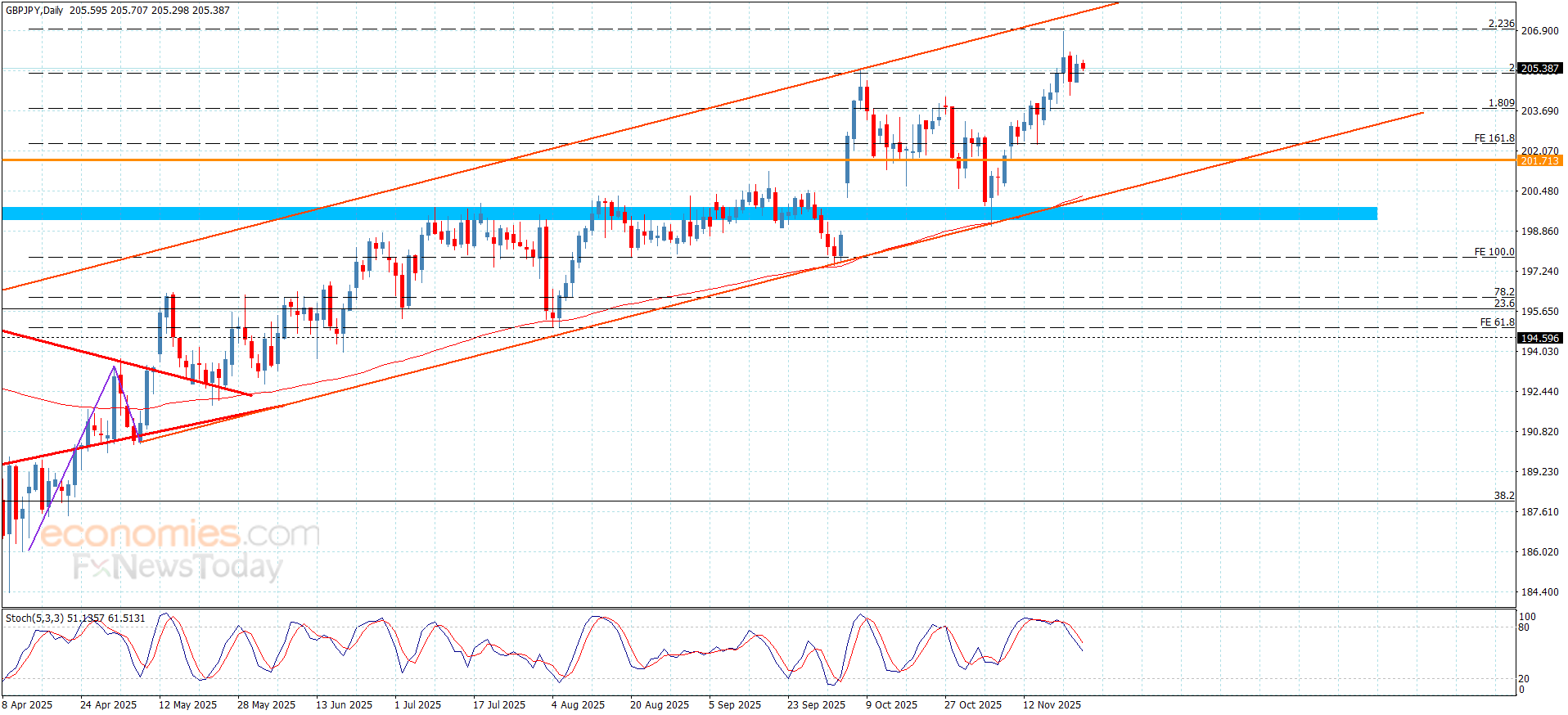
The GBPJPY pair provided mixed trading yesterday, affected by the contradiction between the main indicators, which might cause activating the bearish corrective track, so the stability below 206.90 forms main factor to confirm the negative suggestion in the near-term trading, therefore, we will keep waiting for its activation with stochastic negativity, to begin targeting corrective stations that might begin at 203.75.
Note that the price attempt to rally above 206.00 may delay the corrective trading in the current period, paving the way for retesting the mentioned barrier before reaching the suggested corrective targets.
The expected trading range for today is between 203.75 and 206.00
Trend forecast: Bearish