
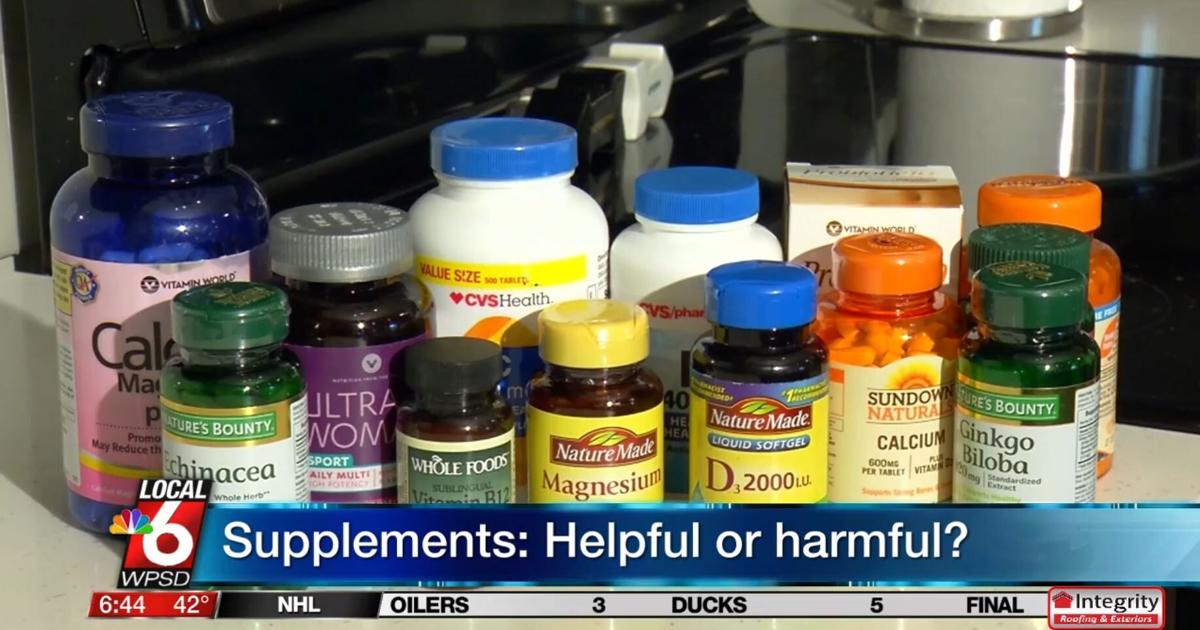
Supplements: Helpful or harmful? | News
Most Americans use a dietary supplement, but are they helpful?

“They may be a waste of money and, in worst case scenario, they may be some harm,” Erin Michos, MD, an Associate Professor of Medicine at Johns Hopkins University School of Medicine, says.
About 59 million Americans use some type of vitamins or supplements regularly — but a new study shows some supplements may be putting your health at risk.
A new study published in JAMA Network Open found that at least 15.6 million US adults may have consumed an herbal product that could damage their liver in the last 30 days. The six worst offenders were: turmeric, green tea, ashwagandha, garcinia, cambogia, red yeast rice, and black cohosh.
A big problem with supplements is that the FDA doesn’t evaluate them for safety, effectiveness, or quality. “So many individuals are taking these when many well-done clinical trials have shown that these supplements are no better than placebo,” says Michos.
The new study found some of the herbal products had discrepancies between their ingredient lists and what was actually in them. The best way to ensure quality is to look for products that have been certified by a third-party company, such as NSF, USP, BSGC, or Consumer-Lab.
“I think individuals should talk to their doctors about do they need these supplements and why are they taking them,” Michos says.
The authors of the study noted that liver damage connected to herbal and dietary supplements use has been increasing, now accounting for more than 20% of liver injuries. Severe liver problems can lead to the need for a transplant – or even death.
Source link










Share this article: