The main tag of Forex News Today Articles.
You can use the search box below to find what you need.
[wd_asp id=1]

11 09, 2024

EUR/USD pressured near 1.1000 ahead of ECB’s decision

By |2024-09-11T23:23:25+03:00September 11, 2024|Forex News, News|0 Comments

EUR/USD Current price: 1.1020

  • The United States Consumer Price Index disappointed those hoping for an aggressive Fed.
  • The European Central Bank is expected to announce a 25 basis points rate cut on Thursday.
  • EUR/USD flirted with the 1.1000 mark, aims to break below it.

The EUR/USD pair extended its weekly decline to 1.1001 on Wednesday, bouncing just modestly ahead of the close. The pair is heading into the Asian opening trading around the 1.1020 level, with an overall bearish stance.

Financial markets turned risk-averse following the release of the United States (US) Consumer Price Index (CPI), as the figures weighed down the odds for a Federal Reserve (Fed) 50 basis points (bps) interest rate cut when it meets next week. The US Bureau of Labor Statistics reported that the CPI rose by 2.5% on a yearly basis in August, easing from 2.9% in July, while the core annual figure printed at 3.2%, unchanged from the previous month. Additionally, the core monthly index increased by 0.3%, worse than the 0.2% advance anticipated.

Speculative interest hoped for further easing in price pressures and a more aggressive Fed. As a result, stock markets plunged, with Wall Street posting sharp losses after the opening. Nevertheless, the three major indexes recovered ahead of the close and trimmed most of their early losses. The US Dollar, however, retained a good bunch of its gains across the FX board.

Investors will now focus on the European Central Bank (ECB). The ECB will announce its decision on monetary policy early on Thursday, and is widely anticipated to cut the three main interest rates by 25 bps each. Policymakers will act not only because of easing price pressures but also because of mounting concerns about a potential recession in the Eurozone. Of course, officials will not put that in words, but they will repeat that they will remain vigilant and data-dependent.

EUR/USD short-term technical outlook

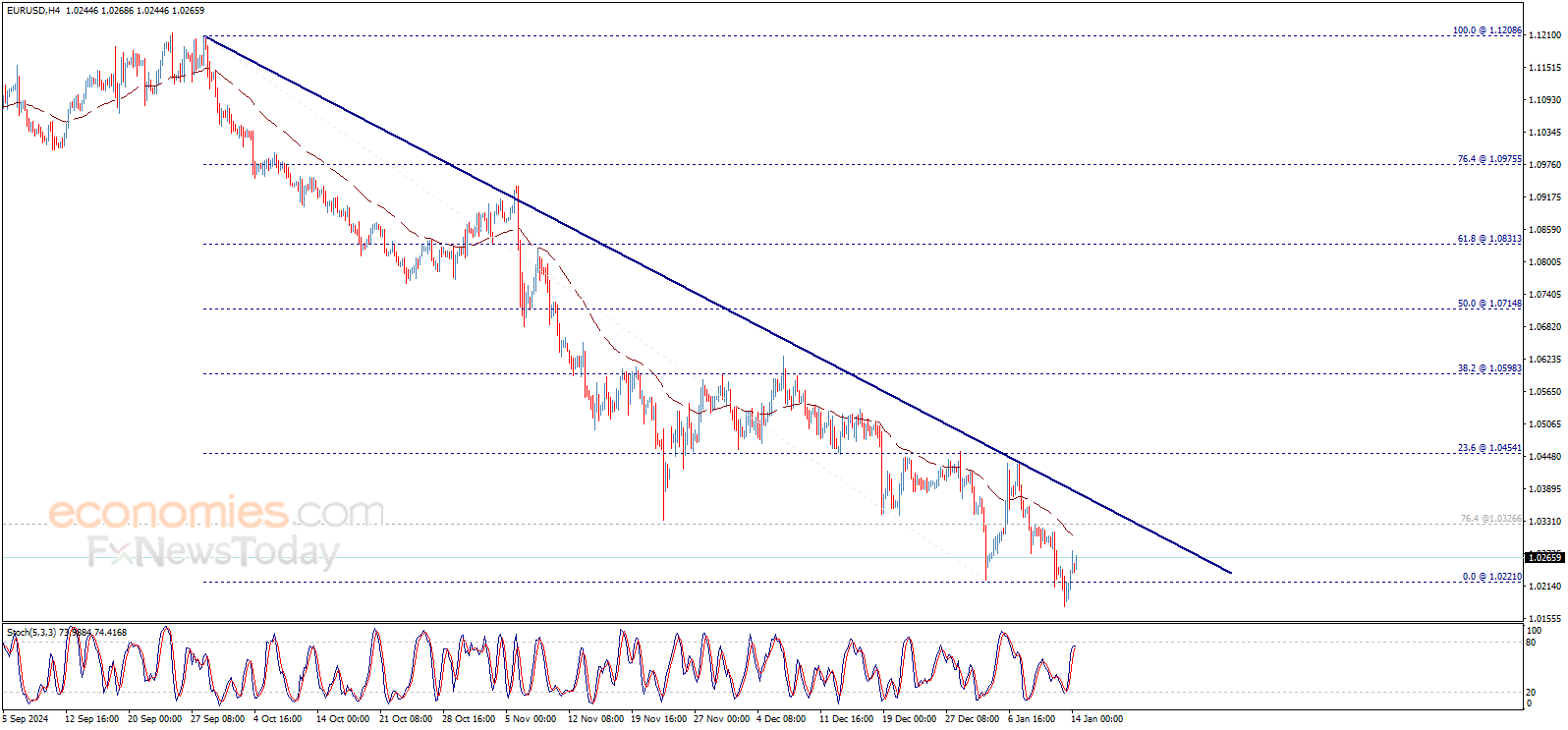
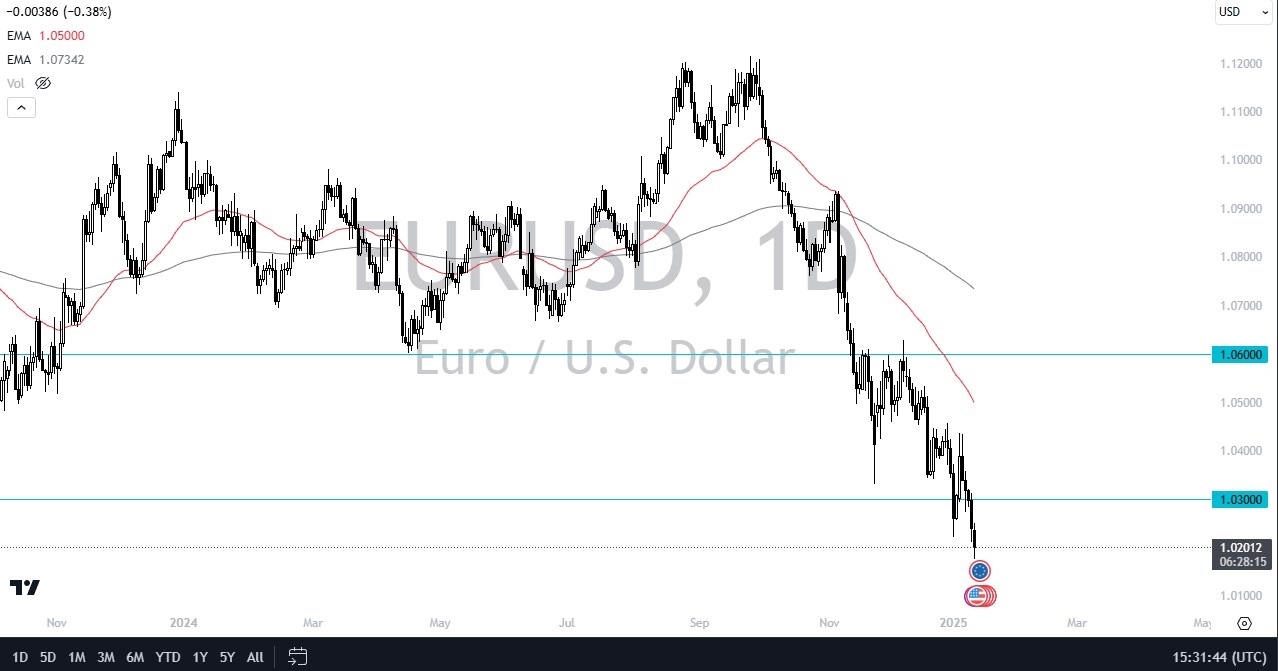
The daily chart for the EUR/USD pair shows that the risk remains skewed to the downside. The pair further extended its slump below a now flat 20 Simple Moving Average (SMA) while the 100 SMA is losing steam a few pips above a flat 200 SMA, both far below the current level. Technical indicators, in the meantime, have pared their slides but remain well into negative levels, far from suggesting downward exhaustion.

Technical readings in the 4-hour chart support another leg south. The 20 SMA gains downward traction below a flat 100 SMA, while EUR/USD bounced modestly after testing the 200 SMA. Finally, technical indicators have bounced from near oversold readings but remain below their midlines and lack directional strength. A break through the 1.1000 level will likely force buyers to give up and encourage sellers, with the pair then aiming to retest the 1.0900 threshold.

Support levels: 1.0990 1.0950 1.0910

Resistance levels: 1.1050 1.1090 1.1140

Source link

11 09, 2024

Steady Amid Growth Data (Chart)

By |2024-09-11T21:22:29+03:00September 11, 2024|Forex News, News|0 Comments

  • The pound sterling remained relatively unchanged at $1.3080 as traders digest new economic data and monetary policy outlook.
  • According to the official announcement, the UK GDP stalled for the second consecutive month in July, missing expectations of a 0.2% increase, and industrial production contracted unexpectedly by -0.8%.
  • Wage growth also slowed to 5.1%, its lowest level in about two years, while private sector wage growth, the measure the Bank of England monitors, slowed to its lowest level in 2022 at 4.9%.

On the other hand, the country’s unemployment rate fell to 4.1% and the UK economy added 265,000 jobs, well above expectations of 265,000. Furthermore, the Bank of England cut interest rates in August but has taken a cautious approach to further rate cuts. Investors are expecting a fall in borrowing costs in November, with a further cut possible in December.

Prior to that, the pound sterling rose against the euro and the dollar on the back of strong job gains. According to reliable trading platforms, the pound sterling has risen against the US dollar and the euro and other G10 currencies following the release of UK jobs and wages data, which showed no significant deterioration in the Labor market. According to trades, the pound sterling rose to 1.1847 against the euro in the minutes following the National Statistics Office’s announcement that the UK added 265,000 jobs in the three months to July, beating estimates by 123,000 jobs, which is the largest increase since May 2022. Also, the unemployment rate fell to 4.1% from 4.2%. Wage data was in line with expectations at 5.1%, but when bonuses were included in the measure, the reading of 4.0% was slightly below estimates of 4.1%.

According to forex trades, the GBP/USD rose to 1.3082 but remains under pressure in the end due to the broader rise in the US dollar that began in September. Clearly, the jobs and wages report confirm the strength of the UK economy and confirms market expectations that the Bank of England will leave interest rates unchanged next week. In this regard, Kenneth Brooks, an analyst at Société Générale, said: “Is the Labor market slackening? Employment has now risen over the past three months, with the three-month moving average rising from -157,000 jobs in April to +127,000 jobs in July, a shift in trend that would give the Bank of England hawks ammunition to oppose faster rate cuts.”

Overall, economists expect the next rate cut to come in either October or November: “The bigger picture is that the bank will move slowly due to high wage levels that will help push inflation higher in the coming months.”

Meanwhile, the data indicates stubbornly high underlying inflationary pressures, and steady wage growth – which poses upside risks to inflation in the medium term – is likely to keep rate cuts at a more gradual pace than the European Central Bank and the Federal Reserve, even into next year. As a result, “We expect sterling to outperform the dollar and the euro on our forecast horizon.”

Michael Brown, chief analyst at Pepperstone, says a September rate cut is still out of the question after these days. He explains that quarterly 25 basis point cuts remain his base case, with these cuts likely to coincide with the bank’s updated economic forecasts, thus leaving the November meeting on the table for the next, and likely last, cut this year. Such expectations, of course, are somewhat tighter than those expected by the European Central Bank and the FOMC, where a 50-basis point rate cut in September remains a possibility. Consequently, this divergence could help support sterling in the medium term, against both the euro and the US dollar.

In general, market prices show that investors expect less than two rate cuts before the end of the year, which is confirmed by the nature of the coming days. This puts UK bond yields and the GBP at a relative advantage compared to the USD and the EUR, barring a correction in risk assets and another volatility shock.

Technical forecasts for the GBP/USD pair today:

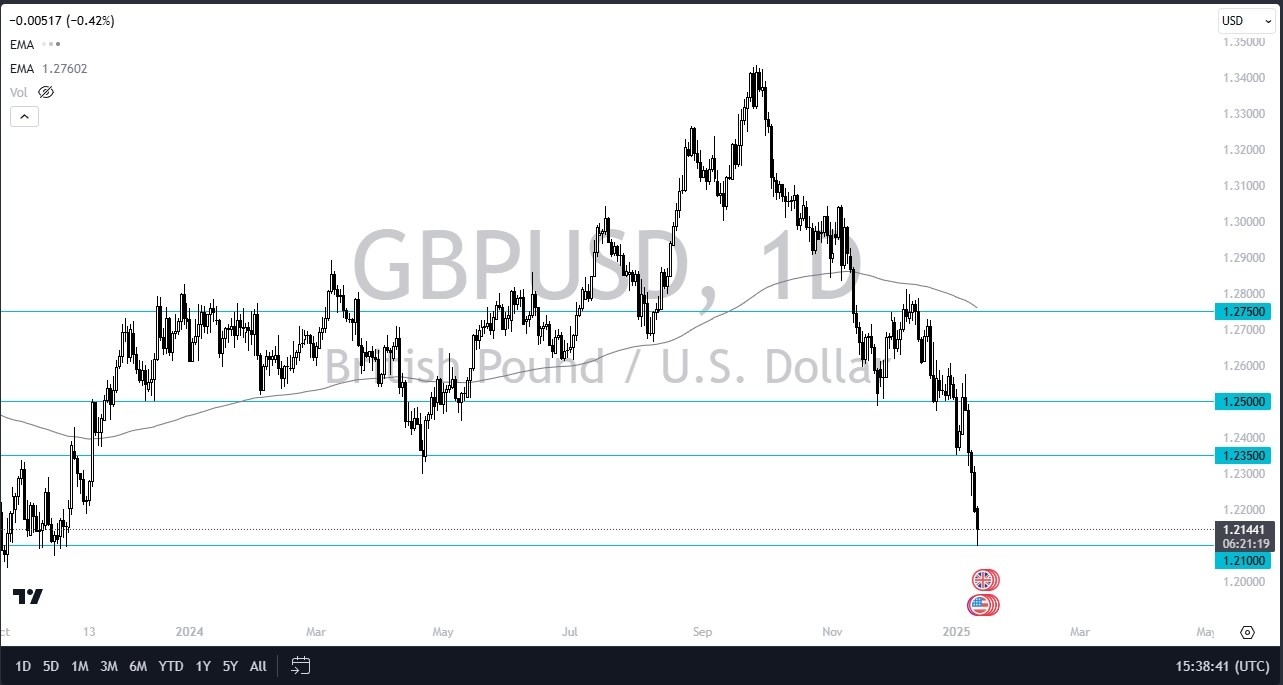
Based on the performance on the daily chart attached, the GBP/USD price is still trending downwards and the bears’ control over the trend will strengthen if the currency pair moves towards the support levels of 1.3000, 1.2940 and 1.2880 respectively. At the latter level, the technical indicators will move towards strong oversold levels. In contrast, and over the same period, the bulls’ control over the trend will return if the currency pair stabilizes above the resistance of 1.3200 again. Decisively, today’s US inflation figures will be the last to determine the path of the currency pair in the coming days.

Ready to trade our GBP/USD Forex forecast? Here’s some of the best forex broker UK reviews to check out. 

Source link

11 09, 2024

USD/JPY Analysis Today 11/9: Nears Year-to-Date Highs -Chart

By |2024-09-11T19:21:21+03:00September 11, 2024|Forex News, News|0 Comments

  • The Japanese yen has appreciated to over 141 yen against the US dollar, heading towards its highest levels this year amid divergent monetary policies between Japan and the United States.
  • In this regard, Bank of Japan board member Junko Nakagawa said the central bank will continue to raise interest rates if inflation moves in line with its expectations.
  • Also, she added that the tight Labor market and continued increases in import prices also pose upside risks to inflation. Moreover, she noted that real interest rates remain very negative despite the July interest rate hike.

In contrast, the US Federal Reserve is widely expected to start cutting interest rates this month, with Fed policymakers warning of rising risks to the Labor market. On the economic data front, a private survey showed that manufacturing sentiment in Japan fell to a seven-month low in September amid concerns about weak Chinese demand.

On the stock market platforms front, Japanese stocks declined due to the hawkish statements from the Bank of Japan. The Nikkei 225 index fell 1.49% to close at 35,620 points. Meanwhile, the broader TOPIX index fell 1.78% to close at 2,531 points on Wednesday, continuing the losses incurred in the previous session after hawkish remarks from a Bank of Japan policymaker. Furthermore, Bank of Japan board member Junko Nakagawa said that the central bank will continue to raise interest rates if the economy and inflation move in line with its expectations. As a result, the Japanese yen rose to near its highest levels since the beginning of the year following her comments, putting further downward pressure on domestic equities.

Elsewhere, the yield on the 10-year Japanese government bond fell to around 0.85% even after Bank of Japan board member Junko Nakagawa said the central bank would continue to raise interest rates if inflation moves in line with its expectations. Also, she added that the tight Labor market and continued increases in import prices pose upside risks to inflation. Moreover, she noted that real interest rates remain deeply negative despite the July rate hike.

Overall, markets are betting that the Bank of Japan will raise interest rates again before the end of the year in an attempt to steadily raise borrowing costs. On the data front, a private survey showed that manufacturing sentiment in Japan fell to a seven-month low in September amid concerns about weak Chinese demand.

Today, the annual inflation rate in the United States is likely to slow for the fifth straight month to 2.6% in August 2024, the lowest level since March 2021, from 2.9% in July. Compared to the previous month, the consumer price index is expected to rise 0.2%, the same as in July. Also, gasoline prices are expected to decline, while rents and auto insurance may show signs of slowing. Meanwhile, core US inflation is expected to remain steady at its lowest level in more than three years at 3.2%. The monthly core inflation rate is also expected to remain at 0.2%.

USD/JPY Technical Analysis and Expectations Today:

According to the performance on the daily chart attached, the USD/JPY is on a strong downward path. Also, we had indicated in the recent technical analysis of the currency pair that the bears are now closer to moving to break the most important support for that period of time, the 141.75 level, and indeed it is now below it. The psychological support of 140.00 may be the next stop, which in turn will move all technical indicators towards strong oversold levels. Technically, the current downward performance may remain until the markets and investors react to the upcoming announcements of both the US Federal Reserve and the Bank of Japan.

Ready to trade our daily forex forecast? Here are the best forex brokers in Japan to choose from. 

Source link

11 09, 2024

EUR/USD pressures 1.1000 after disappointing US CPI

By |2024-09-11T17:20:47+03:00September 11, 2024|Forex News, News|0 Comments

EUR/USD Current price: 1.1014

  • The United States core Consumer Price Index rose by more than anticipated in August.
  • Market participants reduced bets of a 50 basis points Federal Reserve’s cut next week.
  • EUR/USD bounced from near 1.1000 but the risk is still to the downside.

The EUR/USD pair heads into the United States (US) opening trading near a fresh four-week low of 1.1002, as the US Dollar surged following the release of Consumer Price Index (CPI) figures. The US CPI rose by 2.5% on a yearly basis in August, easing from 2.9% in July, while the core annual figure printed at 3.2%, unchanged from the previous month, according to the US Bureau of Labor Statistics (BLS).

Moreover, the core monthly index increased by 0.3%, higher than the 0.2% advance anticipated. The figures diluted hopes for an upcoming 50 basis points (bps) interest rate cut from the Federal Reserve (Fed) next week and spurred risk aversion. As a result, the USD is up against most major rivals.

Falling stocks add to the picture ahead of the European Central Bank (ECB) monetary policy decision. The ECB is widely anticipated to announce a second 25 bps rate cut on Thursday, with the focus then on any forward guidance.

EUR/USD short-term technical outlook

The EUR/USD pair is down for a fourth consecutive day, and the negative momentum will likely continue. In the daily chart, the 20 Simple Moving Average (SMA) has turned flat at around 1.1090, reinforcing a static resistance area. The longer moving averages remain over 150 pips below the current level, with only the 100 SMA showing modest upward strength. Finally, technical indicators lack directional strength but remain below their midlines, in line with another leg south.

In the near term, and according to the 4-hour chart, the risk skews to the downside. The pair met sellers around a bearish 20 SMA, which continues to accelerate south below a now flat 100 SMA. At the same time, EUR/USD is pressuring a mildly bullish 200 SMA for the first time in over a month. Finally, technical indicators head firmly south within negative levels, reflecting sellers’ strength.

Support levels: 1.0990 1.0950 1.0910

Resistance levels: 1.1050 1.1090  1.1140


(This story was corrected on September 11 at 13:25 GMT to clarify that US core inflation was higher than anticipated month-over-month, and not the headline reading.)

Source link

11 09, 2024

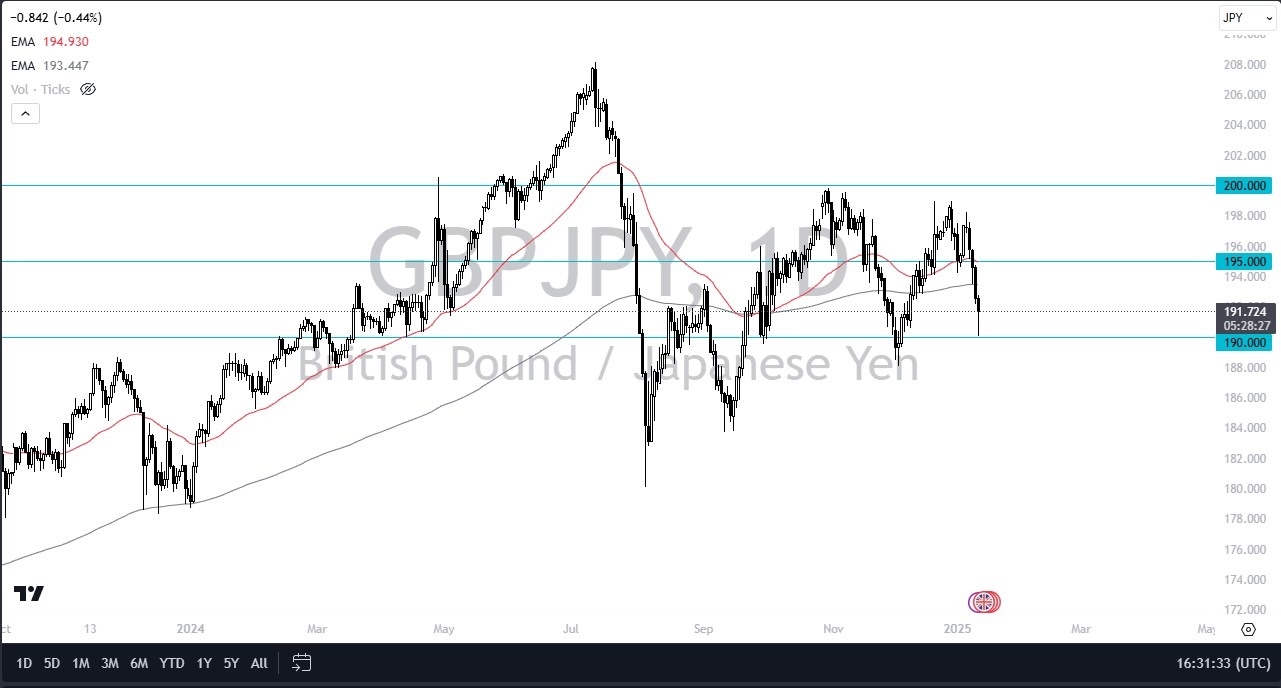
GBP/JPY Forecast Today 11/9: Volatile, Key Support (Video)

By |2024-09-11T15:19:37+03:00September 11, 2024|Forex News, News|0 Comments

  • We initially tried to rally during the early hours on Tuesday in the British pound against the Japanese yen, but then fell off of a cliff as we continue to see erratic and spastic behavior time and time again.
  • That being said, I think you also have a situation where people are starting to get whether or not there is going to be any risk on or risk off behavior.
  • Obviously, a safety trade would be to buy the Japanese yen.
  • But I do think that the 185 yen level is a large round psychologically significant figure that a lot of people are going to be paying attention to.

If we turn around and break above the 188.50 level, then I think we could go higher, perhaps reaching the 200 day EMA. Anything below the 185 yen level really starts to get a bit scary, perhaps reaching down to the 182 level. In general, this is a market that I think is going to continue to be very volatile, and that doesn’t do well for the carry trade because people don’t want to hold that type of risk.

Caution is the better part of valor

In general, though, this is a situation where we need to just simply wait to see whether or not we get enough stability or if we continue to shake weak hands out. I don’t like shorting this pair right now. I think we’ve fallen too far, but it’s difficult to buy as well. I think if we can break above the highs of both Monday and Tuesday, then you can make an argument for going higher. But right now, it’s all about trying to find the floor and that’s generally a messy set of circumstances. Ultimately, I do think that it sooner or later we will get some type of clarity, but right now it’s very difficult to make that decision, due to the fact that the markets continued to see so many different freak outs on an almost daily basis.

Ready to trade our daily Forex forecast? Here’s some of the best forex broker UK reviews to check out

Source link

11 09, 2024

Pound Sterling finds support but struggles to rebound

By |2024-09-11T13:18:11+03:00September 11, 2024|Forex News, News|0 Comments

  • GBP/USD trades in a tight range slightly below 1.3100 on Wednesday.
  • August inflation data from the US will be scrutinized by investors.
  • Disappointing data releases from the UK don’t allow Pound Sterling to gather strength.

Following Tuesday’s indecisive action, GBP/USD struggles to make a decisive move in either direction and trades in a tight channel slightly below 1.3100. August inflation data from the US could trigger the next big action in the pair.

British Pound PRICE This week

The table below shows the percentage change of British Pound (GBP) against listed major currencies this week. British Pound was the weakest against the Japanese Yen.

  USD EUR GBP JPY CAD AUD NZD CHF
USD   0.41% 0.36% -0.47% 0.16% 0.17% 0.54% 0.18%
EUR -0.41%   -0.10% -0.83% -0.25% -0.29% 0.15% -0.25%
GBP -0.36% 0.10%   -0.85% -0.14% -0.18% 0.23% -0.15%
JPY 0.47% 0.83% 0.85%   0.62% 0.65% 1.00% 0.84%
CAD -0.16% 0.25% 0.14% -0.62%   0.05% 0.37% 0.18%
AUD -0.17% 0.29% 0.18% -0.65% -0.05%   0.41% 0.00%
NZD -0.54% -0.15% -0.23% -1.00% -0.37% -0.41%   -0.37%
CHF -0.18% 0.25% 0.15% -0.84% -0.18% -0.01% 0.37%  

The heat map shows percentage changes of major currencies against each other. The base currency is picked from the left column, while the quote currency is picked from the top row. For example, if you pick the British Pound from the left column and move along the horizontal line to the US Dollar, the percentage change displayed in the box will represent GBP (base)/USD (quote).

Although the US Dollar (USD) stays under bearish pressure in the European session on Wednesday, GBP/USD finds it difficult to gain traction, with the latest data releases from the UK disappointing market participants.

The UK’s Office for National Statistics reported early Wednesday that Industrial Production and Manufacturing Production declined by 0.8% and 1%, respectively, on a monthly basis in July. Both of these prints fell short of analysts’ estimates. Other data from the UK showed that the monthly Gross Domestic Product (GDP) was unchanged in July.

In the second half of the day, the US Bureau of Labor Statistics will publish the Consumer Price Index (CPI) data for August. Investors are likely to react to a surprise in the monthly core CPI reading, which is not distorted by base effects and excludes volatile food and energy prices.

Markets expect an increase of 0.2% in the monthly core CPI in August. A stronger-than-forecast reading could provide a boost to the USD and pave the way for another leg lower in GBP/USD. On the flip side, investors could reassess the probability of a 50 basis points (bps) Federal Reserve rate cut in September, which currently stands at 35% according to the CME FedWatch Tool, on a soft print and cause the USD to come under renewed selling pressure.

GBP/USD Technical Analysis

GBP/USD stays below the 20-period, 50-period and 100-period Simple Moving Averages (SMA) on the 4-hour chart, while the Relative Strength Index (RSI) indicator stays near 40, suggesting that the bearish bias remains intact.

GBP/USD could meet first support at 1.3040 (Fibonacci 38.2% retracement level of the latest uptrend) before 1.3000 (psychological level, static level) and 1.2970 (Fibonacci 50% retracement, 200-period SMA).

On the upside, interim resistance is located at 1.3100 (static level) ahead of 1.3130 (50-period SMA, 100-period SMA) and 1.3200 (psychological level, static level).

Pound Sterling FAQs

The Pound Sterling (GBP) is the oldest currency in the world (886 AD) and the official currency of the United Kingdom. It is the fourth most traded unit for foreign exchange (FX) in the world, accounting for 12% of all transactions, averaging $630 billion a day, according to 2022 data. Its key trading pairs are GBP/USD, aka ‘Cable’, which accounts for 11% of FX, GBP/JPY, or the ‘Dragon’ as it is known by traders (3%), and EUR/GBP (2%). The Pound Sterling is issued by the Bank of England (BoE).

The single most important factor influencing the value of the Pound Sterling is monetary policy decided by the Bank of England. The BoE bases its decisions on whether it has achieved its primary goal of “price stability” – a steady inflation rate of around 2%. Its primary tool for achieving this is the adjustment of interest rates. When inflation is too high, the BoE will try to rein it in by raising interest rates, making it more expensive for people and businesses to access credit. This is generally positive for GBP, as higher interest rates make the UK a more attractive place for global investors to park their money. When inflation falls too low it is a sign economic growth is slowing. In this scenario, the BoE will consider lowering interest rates to cheapen credit so businesses will borrow more to invest in growth-generating projects.

Data releases gauge the health of the economy and can impact the value of the Pound Sterling. Indicators such as GDP, Manufacturing and Services PMIs, and employment can all influence the direction of the GBP. A strong economy is good for Sterling. Not only does it attract more foreign investment but it may encourage the BoE to put up interest rates, which will directly strengthen GBP. Otherwise, if economic data is weak, the Pound Sterling is likely to fall.

Another significant data release for the Pound Sterling is the Trade Balance. This indicator measures the difference between what a country earns from its exports and what it spends on imports over a given period. If a country produces highly sought-after exports, its currency will benefit purely from the extra demand created from foreign buyers seeking to purchase these goods. Therefore, a positive net Trade Balance strengthens a currency and vice versa for a negative balance.


Source link

11 09, 2024

Japanese Yen Forecast: USD/JPY Faces Pressure as US Inflation Data Looms

By |2024-09-11T05:14:19+03:00September 11, 2024|Forex News, News|0 Comments

“US Aug payrolls +142k,

Short-term Forecast: Bearish

USD/JPY trends will hinge on the upcoming inflation figures from the US and comments from the BoJ. A combination of hawkish comments from the BoJ and weaker US inflation could narrow the interest rate differential between the US and Japan, signaling a drop below 141.5.

Investors should remain alert with inflation data and central bank chatter likely to influence the BoJ and the Fed’s rate paths. Monitor real-time data, central bank insights, and expert commentary to adjust your trading strategies accordingly. Stay updated with our latest news and analysis to manage USD/JPY volatility.

USD/JPY Price Action

Daily Chart

The USD/JPY remained well below the 50-day and 200-day EMAs, confirming bearish price trends.

A USD/JPY breakout from 142.500 could signal a move toward the 143.495 resistance level. Furthermore, a break above the 143.495 resistance level may bring the 145.891 resistance level into play.

Central bank commentary and the US CPI Report require consideration.

Conversely, a break below 142 could indicate a drop toward the 141.032 support level.

The 14-day RSI at 34.54 indicates a USD/JPY drop below 142 before entering oversold territory.

Source link

11 09, 2024

Price action now looks at US CPI data

By |2024-09-11T01:12:33+03:00September 11, 2024|Forex News, News|0 Comments

  • EUR/USD extended its weekly leg lower and approaches the 1.1000 support.
  • The US Dollar traded with minimal gains ahead of US inflation data.
  • Investors look at US CPI and its impact on the size of the September rate cut.

EUR/USD experienced renewed downward momentum on turnaround Tuesday, continuing its losses from the beginning of the week and moving back towards the 1.1015-10101 area, driven by ongoing buying pressure on the US Dollar (USD).

Meanwhile, the US Dollar Index (DXY) stuck to the upper end of the recent range in the proximity of the 101.70 level in a context where US yields deepened their retracements across the curve.

In the meantime, market participants are expected to closely watch the release of US inflation figures gauged by the CPI on Wednesday, as it could give extra signals about the extent of the Fed’s expected rate cut this month, especially after Fed Chair Jerome Powell suggested at the Jackson Hole Symposium that it may be time to adjust monetary policy.

Also advocating for a rate cut later in the month appeared many Fed officials, namely San Francisco Fed President Mary Daly, New York Fed President John Williams, and Chicago Fed President Austan Goolsbee.

In this context, the upcoming US Consumer Price Index (CPI) report is set to be a key factor, especially given the Fed’s shift from a sole focus on managing inflation to avoiding job losses.

According to the CME Group’s FedWatch Tool, there is currently about a 63% probability of a 25 bps rate cut in September.

A shift to the European Central Bank’s (ECB) noted that recent Accounts showed that policymakers did not see a strong reason to cut interest rates last month. However, they noted that this decision could be revisited in September due to the impact of high rates on economic growth.

Recent reports indicate growing divisions among ECB policymakers regarding the growth outlook, which could affect future discussions on rate cuts. Some officials are concerned about a potential recession, while others remain focused on persistent inflationary pressures.

However, lower-than-expected preliminary CPI data for August in Germany and the Eurozone could challenge the cautious stance of some officials, potentially paving the way for the ECB to consider another rate cut at its September 12 meeting.

Overall, if the Fed proceeds with additional or larger rate cuts, the policy gap between the Fed and the ECB could narrow over the medium to long term, potentially supporting EUR/USD. This is particularly likely, as markets anticipate two more rate cuts from the ECB this year.

In the longer term, however, the US economy is expected to outperform the European economy, which could limit any prolonged weakness in the dollar.

Finally, according to the CFTC report for the week ending September 3, speculators (non-commercial traders) have increased their net long positions in the Euro (EUR) to the highest levels since January, while commercial traders (such as hedge funds) have raised their net short positions to multi-month highs amid a notable increase in open interest.

EUR/USD daily chart

EUR/USD short-term technical outlook

If bulls regain the upper hand, EUR/USD should face its initial hurdle at the September high of 1.1155 (September 6), prior to the 2024 top of 1.1201 (August 26), and the 2023 peak of 1.1275 (July 18).

On the other side, the pair’s next downside objective is the September low of 1.1015 (September 10), prior to the preliminary 55-day SMA at 1.10936 and the weekly low of 1.0881 (August 8). The crucial 200-day SMA is at 1.0858, preceding the weekly low of 1.0777 (August 1) ahead of the June low of 1.0666.

Meanwhile, the pair’s upward trend is projected to continue as long as it remains above the key 200-day SMA.

The four-hour chart suggests a minor rebound in negative sentiment. However, the initial resistance level is 1.1155, followed by 1.1190 and 1.1201. Instead, there is immediate support at 1.1015, before the 200-SMA of 1.1002, and then at 1.0949. The relative strength index (RSI) receded below 34.


Source link

10 09, 2024

USD/JPY Forecast – US Dollar Continues to Test Support

By |2024-09-10T23:11:48+03:00September 10, 2024|Forex News, News|0 Comments

US Dollar vs Japanese Yen Technical Analysis

The US Dollar rallied initially in the early hours on Tuesday, only to turn around and fall again. The 142 yen level underneath is a major support level and I think at this point in time, it’s worth noting that we also have the intersection of an uptrend line that a lot of people are paying attention to. I think at this point in time, we are in the midst of perhaps trying to form some type of double bottom. At this point, the double bottom of course is a sign that perhaps things are starting to turn around. We recognize, of course, that the Federal Reserve is likely to cut rates later this month.

But the question is how much do they cut? If they only cut this month and maybe one other time, the interest rate differential between the US dollar and the Japanese yen remains pretty much intact. Yes, it’s smaller, but it’s still enough that it will attract a certain amount of inflows. If we can turn around and break above the 145 yen pair higher, perhaps reaching the 149 yen level.

Furthermore, we have to keep in mind that both CPI and PPI come out later this week, so that will have a bit of an influence. And beyond that, we also have to keep a risk appetite in the back of our mind. If we were to close on a daily close below the 141 yen level, then I think the bottom falls out and we probably drop quite significantly.

For a look at all of today’s economic events, check out our economic calendar.

This article was originally posted on FX Empire

More From FXEMPIRE:

Source link

10 09, 2024

EUR/USD gaining bearish traction near 1.1000

By |2024-09-10T19:08:56+03:00September 10, 2024|Forex News, News|0 Comments

EUR/USD Current price: 1.1028

  • Germany confirmed the August Harmonized Index of Consumer Prices at 2% YoY.
  • Speculative interest awaits the United States Consumer Price Index.
  • EUR/USD pressures the 1.1020 support area, aims to break below it.

The EUR/USD pair is pressured, trading near its daily low at 1.1027. The US Dollar trades with a weaker tone against other major rivals on Tuesday, but the Euro can not attract investors. The looming European Central Bank (ECB) monetary policy announcement undermines demand for the Euro, as the ECB is widely anticipated to trim interest on the three benchmark rates by 25 basis points (bps) each. The latest data coming from the Eurozone fueled concerns about a potential recession in the area, which was led by an economic setback in Germany. An interest rate cut was priced long ago, yet recent concerns add to the Euro’s weakness.

The US Dollar, in the meantime, is in no better shape. Market players are waiting for an inflation update, as the country will release the August Consumer Price Index (CPI) on Wednesday. Price pressures are expected to have eased further in the month, although the index is still foreseen above the Federal Reserve (Fed) goal of around 2%.

Data-wise, Germany confirmed that the Harmonized Index of Consumer Prices (HICP) rose at an annualized pace of 2% in August. The United States (US) has a light macroeconomic calendar, as it published the NFIB Business Optimism Index, which contracted to 91.2 in August from 93.7 in July. Fed officials Michael Barr and Michelle Bowman are scheduled to speak after Wall Street’s opening, although no relevant comments about monetary policy are to be expected ahead of the Federal Open Market Committee (FOMC) meeting next week.

EUR/USD short-term technical outlook

The daily chart for the EUR/USD pair shows the risk remains skewed to the downside as it develops below a now flat 20 Simple Moving Average, which provides dynamic resistance at around 1.1090. The 100 SMA is slowly advancing above the 200 SMA, both well below the current level, losing their bullish relevance. Finally, technical indicators head south with uneven strength but within negative levels, in line with another leg lower.

Technical readings in the 4-hour chart support a downward extension. The EUR/USD pair is developing below the 20 and 100 SMAs, with the shorter one gaining bearish strength. At the same time, technical indicators maintain firm downward slopes near oversold readings, supporting a break below 1.1020, the immediate support level.

Support levels: 1.1020 1.0975 1.0930

Resistance levels: 1.1090 1.1115 1.1150  

Source link

Go to Top