The main tag of Forex News Today Articles.
You can use the search box below to find what you need.
[wd_asp id=1]

11 01, 2026
Continues to See Resilience (Chart)

By |2026-01-11T01:44:45+02:00January 11, 2026|Forex News, News|0 Comments

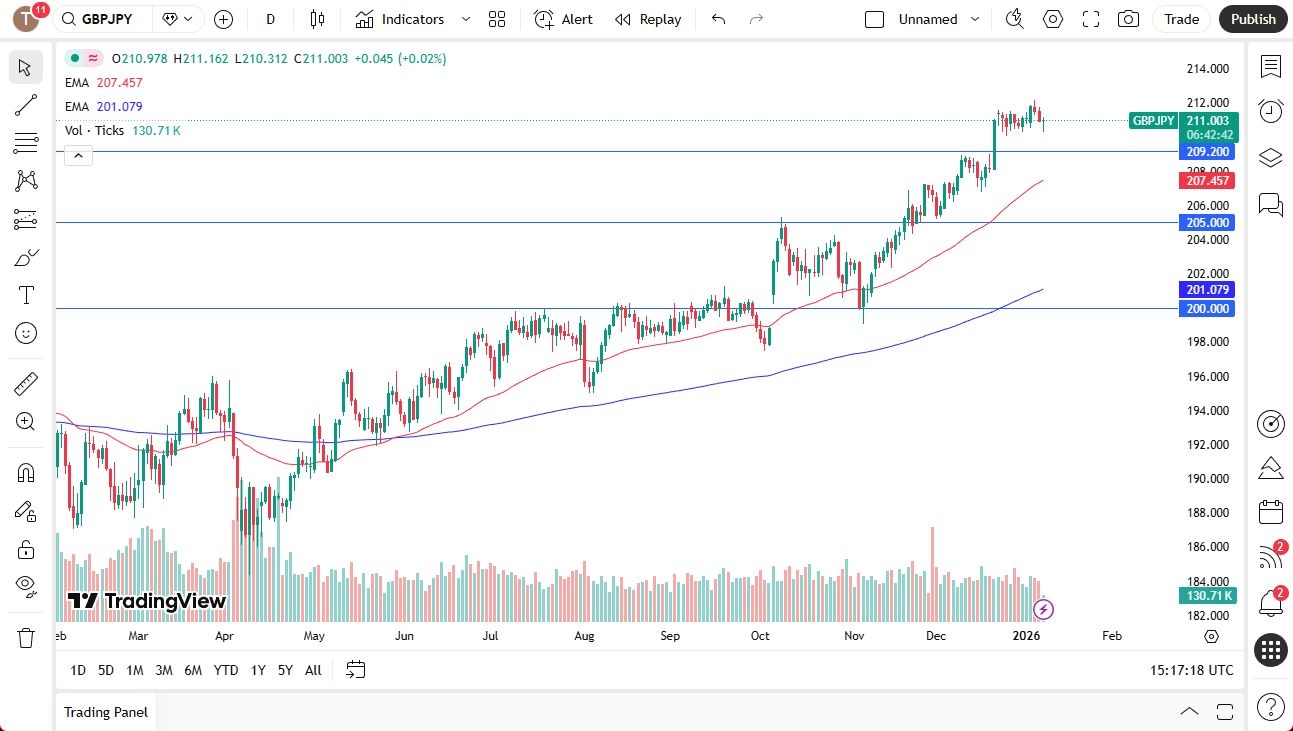
  • The British pound initially dipped against the Japanese yen during early trading on Thursday, as we continue to see a lot of consolidation in general.
  • For what it’s worth, we dropped pretty significant amounts in the early hours, but as I write this, we just went positive again for the day.
  • With this, I think that’s a good sign that there are still plenty of buyers out there willing to get involved. With that being proven during the day on Thursday, I think it remains a buy on the dip scenario.

Central Bank Divergence and the Carry Trade

In fact, you have to keep in mind that the interest rate differential is wide enough to drive a truck through, as the Bank of England, although it did recently cut 25 basis points, still is expected to be very slow about cutting its rate. At the same time, the Japanese yen and the Bank of Japan did see a rate hike recently, but it’s still only 0.75%, and they will have to be very cautious due to the heavy debt burden that Japan faces.

I think you continue to see a lot of back and forth trading here, but overall, I still favor the upside because not only are we in an uptrend, but we do get paid at the end of every day to hold this pair.

A breakdown could open up a move down toward the 209 level, which should be support, followed by the 207.50 level, where the 50-day EMA currently lives, which should also offer support. To the upside, I think we’re looking at a move toward the 215 level before it’s all said and done, but it’s going to take some time to get there, and you will have to be patient.

A lot of risk appetite could be influenced one way or the other on Friday after the jobs report in America. But at the end of the day, these central banks are moving in opposite directions at a snail’s pace, meaning that the carry trade will be very much alive.

Begin trading our daily forecasts and analysis. Here is a list of Forex brokers in Japan to work with.

Christopher Lewis has been trading Forex and has over 20 years experience in financial markets. Chris has been a regular contributor to Daily Forex since the early days of the site. He writes about Forex for several online publications, including FX Empire, Investing.com, and his own site, aptly named The Trader Guy. Chris favours technical analysis methods to identify his trades and likes to trade equity indices and commodities as well as Forex. He favours a longer-term trading style, and his trades often last for days or weeks.

Source link

10 01, 2026

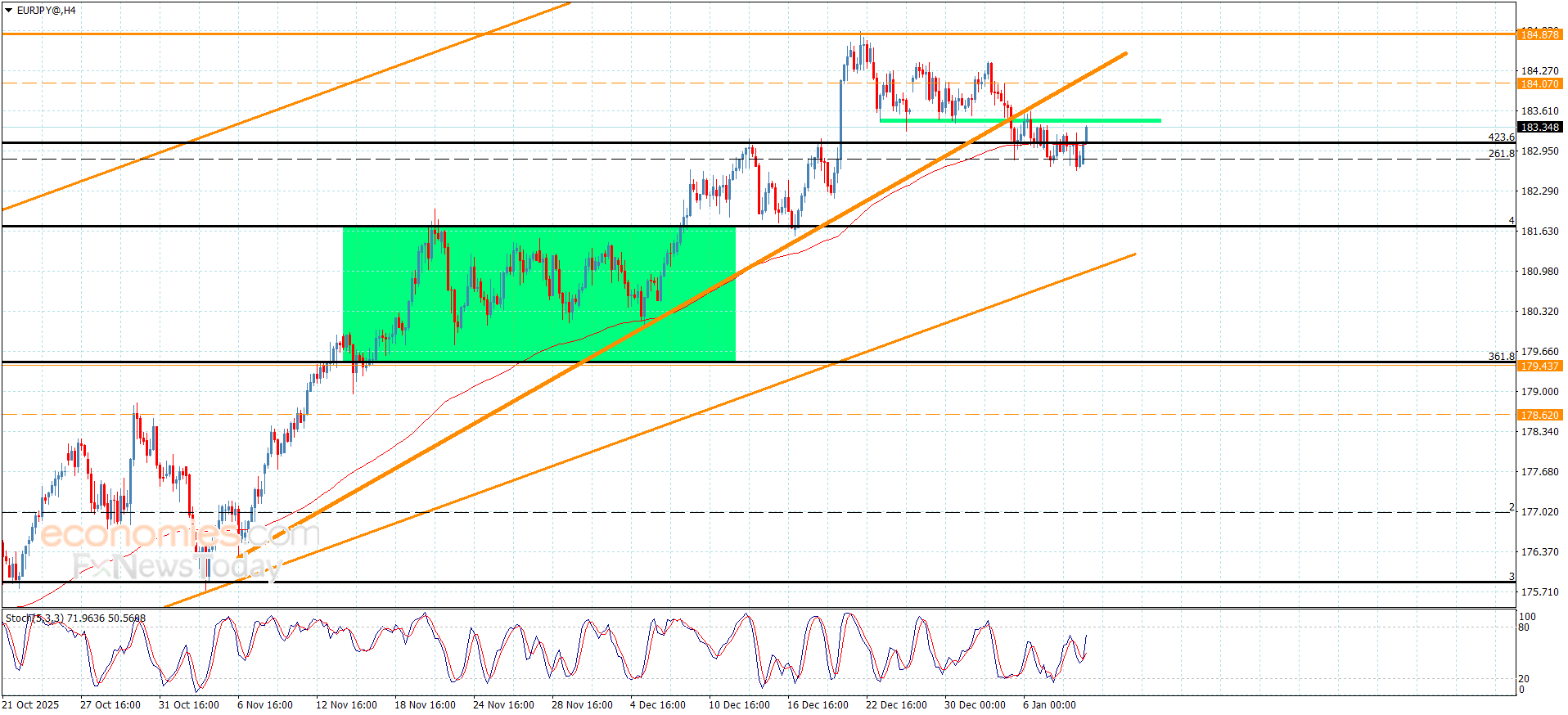
The EURJPY presses on the barrier– Forecast today – 9-1-2026

By |2026-01-10T21:43:37+02:00January 10, 2026|Forex News, News|0 Comments

Platinum price kept its stability below $2320.00 level, to confirm the stability of the bearish corrective scenario by hitting the target at $2180.00, to form some mixed waves by its fluctuation near $2260.00.


Note that the continuation of providing negative momentum by stochastic will push the price to renew the corrective attempts, to expect reaching $2180.00. breaking this barrier will extend the trading towards $2130.00, representing the next target of the current trading, while breaching $2320.00 level will cancel the negative scenario, which allows it to form new bullish waves to press again on the historical high at $2460.00 level.


The expected trading range for today is between $2180.00 and $2305.00


Trend forecast: Bearish


Source link

10 01, 2026

Bank Of America Predicts Significant Downside In 2026 As UK-EU Relations Strengthen

By |2026-01-10T17:42:40+02:00January 10, 2026|Forex News, News|0 Comments


Source link

10 01, 2026

GBP/USD Weekly Forecast: Extends Weakness Amid Resilient US Data

By |2026-01-10T13:41:39+02:00January 10, 2026|Forex News, News|0 Comments

  • The GBP/USD weekly forecast edges lower as the US dollar gains on upbeat economic data.
  • US services PMI and employment data revealed sufficient resilience to lift the dollar.
  • The coming week’s US CPI, PPI, and UK GDP are the events to watch.

GBP/USD fell last week as a string of better-than-expected US economic data indicated the dollar was strong and pushed back expectations for Federal Reserve rate cuts in the near future. The pair fell after failing to maintain its early-week gains. US services and labor data, not any UK developments, drove the move.

Are you interested in learning more about forex tools? Check our detailed guide-

The first pressure arose when the US ISM Services PMI came in higher than expected, indicating that the services sector is still growing despite high interest rates. The new orders and prices paid for parts stayed the same, which supports the idea that inflation risks in the service economy are still high. This helped the dollar and pushed US Treasury yields higher, which in turn pushed the GBP/USD down.

The ADP Employment Report, released mid-week, showed that hiring in the private sector remained stronger than expected. The data made markets less likely to expect aggressive easing and more likely to want the dollar ahead of Friday’s jobs report, even though it isn’t always a good predictor of official payrolls.

Following Friday’s Nonfarm Payrolls report, which showed that job growth remained strong and unemployment was lower than expected, the GBP/USD pair fell even faster. Wage growth also remained strong, which alleviated concerns about a rapid decline in the job market. The data made it less likely that the Fed would cut rates early, which helped the dollar end the week strong and put sterling on the defensive.

The market’s direction next week will hinge on whether the new data on inflation and activity reinforce the notion of a robust US economy or pave the way for earlier policy easing.

GBP/USD Major Events Next Week:

  • The US CPI inflation report will show whether price pressures are easing or staying the same
  • US PPI data, which shows how inflation is changing upstream
  • US retail sales, to gauge consumer demand
  • Weekly unemployment claims for unemployment benefits in the US provide insight into the job market in the near future.
  • UK GDP numbers, which could change expectations about the Bank of England’s policy outlook

If US inflation or consumer data worsens, the dollar will likely remain strong, and the GBP/USD will remain under pressure. On the other hand, lower prices or spending, along with weak UK GDP risks, could alter the market’s direction and allow sterling to stabilize or bounce back.

GBP/USD Weekly Technical Forecast: Critical Demand Zone at 1.3400

GBP/USD Weekly Forecast: Extends Weakness Amid Resilient US Data
GBP/USD daily chart

The daily chart for GBP/USD suggests a strong bearish momentum after falling below the 100-day MA with a bearish crossover of 20- and 50-day MAs. However, the price holds near the demand zone at 1.3400, while a breakout could push the price further lower towards the 200-day MA at 1.3350.

Are you interested in learning more about the best crypto exchange? Check our detailed guide- 

Alternatively, finding adequate buying around 1.3400 could push the price higher to test the confluence of 20- and 100-day MAs around 1.3450 ahead of 1.3500.

Looking to trade forex now? Invest at eToro!

68% of retail investor accounts lose money when trading CFDs with this provider. You should consider whether you can afford to take the high risk of losing your money.

Source link

9 01, 2026

Carry Trade Momentum Builds (Chart)

By |2026-01-09T16:31:35+02:00January 9, 2026|Forex News, News|0 Comments

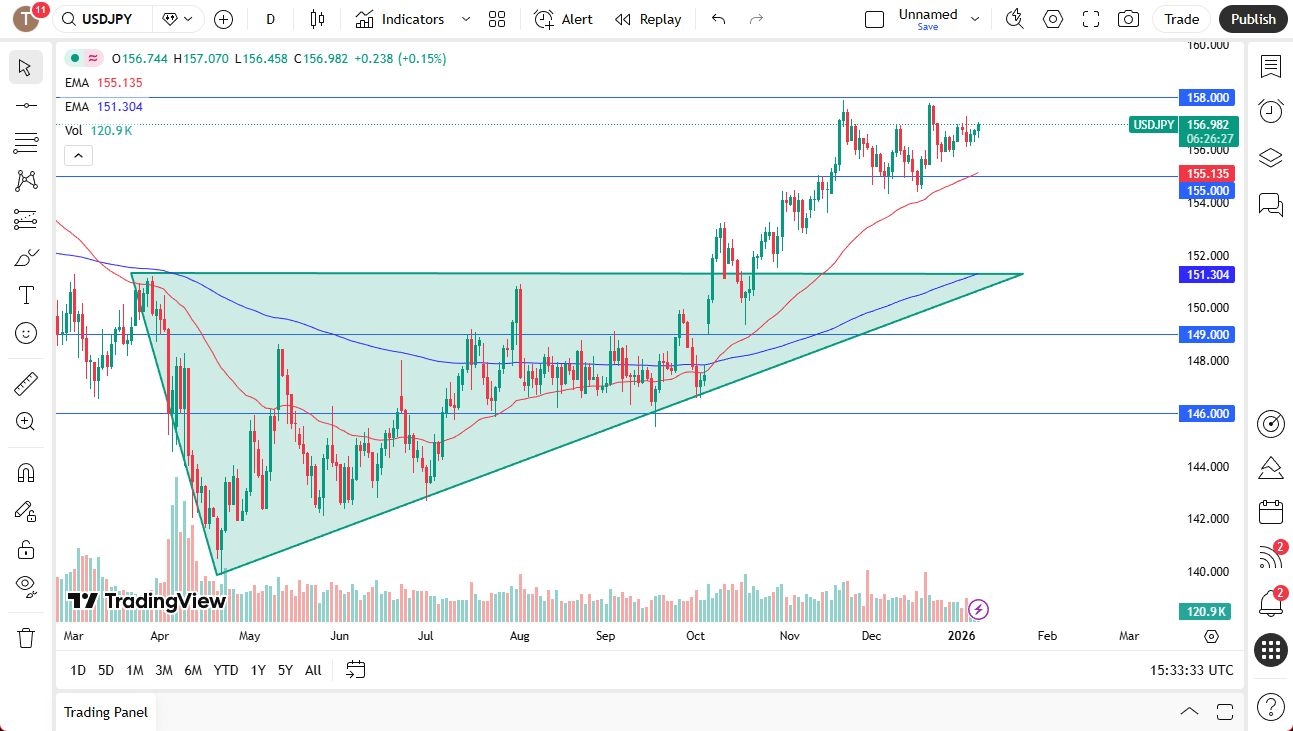
  • The carry trade is still a very strong driver at the moment in a lot of the Japanese yen-related pairs, including the USD/JPY market.
  • The US dollar drifted a bit lower against the Japanese yen to kick off the Thursday session, but we have seen a turnaround show us signs of upward momentum.
  • The carry trade is still a very strong driver at the moment in a lot of the Japanese yen-related pairs, so despite the fact that the Bank of Japan has recently raised interest rates, the reality is that they are light years away from trying to tighten monetary policy enough to really turn things around.

With this being said, the market will, of course, remain a little bit noisy, but if we can break to the upside and finally clear the 158 yen level, we could really take off. At that point, I think we could go looking to the 160 yen level, which is an area where the Bank of Japan intervened ages ago.

Technical Support and Future Targets

Short-term pullbacks will end up being buying opportunities, I believe, and as a result, the support levels that I’m watching include the 50-day EMA and the 155 yen level. These are areas that I think will remain very important, but I think it is difficult to break down below.

If we were to break down below that area, then you could have a lot of problems for the US dollar, and I think you have a situation where if that does in fact happen, the 152 yen level might be your next target.

Ultimately, though, despite the fact that the Bank of Japan has raised interest rates and the Federal Reserve has cut, you still have a pretty wide gap between the two, and therefore, if you’re looking for the carry trade to play out, you are looking for the US dollar to remain somewhat resilient against the Japanese yen. Beyond that, the US dollar itself is fairly resilient, mainly due to the fact that the economic numbers coming out of America are stubbornly strong, so even if the Federal Reserve does cut it can only do so in a limited way.

Want to trade our USD/JPY forex analysis and predictions? Here’s a list of forex brokers in Japan to check out.

Christopher Lewis has been trading Forex and has over 20 years experience in financial markets. Chris has been a regular contributor to Daily Forex since the early days of the site. He writes about Forex for several online publications, including FX Empire, Investing.com, and his own site, aptly named The Trader Guy. Chris favours technical analysis methods to identify his trades and likes to trade equity indices and commodities as well as Forex. He favours a longer-term trading style, and his trades often last for days or weeks.
Source link

9 01, 2026

Euro bears retain control as focus shifts to NFP

By |2026-01-09T14:30:42+02:00January 9, 2026|Forex News, News|0 Comments

EUR/USD stays on the back foot and trades near 1.1650 after closing in negative territory on Thursday. While investors prepare for the release of the key December employment data from the US, the pair’s technical outlook suggests that the bearish bias stays intact.

Euro Price This week

The table below shows the percentage change of Euro (EUR) against listed major currencies this week. Euro was the weakest against the Australian Dollar.

USD EUR GBP JPY CAD AUD NZD CHF
USD 0.70% 0.36% 0.39% 0.95% -0.10% 0.47% 0.99%
EUR -0.70% -0.34% -0.26% 0.25% -0.79% -0.23% 0.29%
GBP -0.36% 0.34% -0.02% 0.60% -0.45% 0.11% 0.63%
JPY -0.39% 0.26% 0.02% 0.53% -0.52% 0.04% 0.60%
CAD -0.95% -0.25% -0.60% -0.53% -0.89% -0.49% 0.04%
AUD 0.10% 0.79% 0.45% 0.52% 0.89% 0.57% 1.10%
NZD -0.47% 0.23% -0.11% -0.04% 0.49% -0.57% 0.52%
CHF -0.99% -0.29% -0.63% -0.60% -0.04% -1.10% -0.52%

The heat map shows percentage changes of major currencies against each other. The base currency is picked from the left column, while the quote currency is picked from the top row. For example, if you pick the Euro from the left column and move along the horizontal line to the US Dollar, the percentage change displayed in the box will represent EUR (base)/USD (quote).

The US Dollar (USD) benefited from the cautious market mood and a modest increase in the US Treasury bond yields on Thursday, causing EUR/USD to stretch lower.

Nonfarm Payrolls (NFP) in the US are forecast to rise by 60,000 in December following the 64,000 increase recorded in November. In this period, the Unemployment Rate is expected to edge lower to 4.5% from 4.6%.

According to the CME FedWatch Tool, markets see a less than 15% chance of a Federal Reserve (Fed) rate cut in January and price in about a 40% probability of a 25 basis points rate cut in March.

A significant positive surprise, with an NFP print of 80,000 or higher, could feed into expectations for two consecutive Fed policy holds in January and March. In this scenario, the USD could preserve its strength heading into the weekend and cause EUR/USD to extend its weekly slide. Conversely, investors could lean toward a rate cut in March and open the door for a recovery in the pair, if the employment report highlights worsening conditions in the labor market, with an uptick in the Unemployment Rate and an NFP reading of 30,000 or lower.

EUR/USD Technical Analysis:

In the 4-hour chart, EUR/USD trades at 1.1647. The 20-period Simple Moving Average (SMA) slopes lower beneath the 50- and 100-period measures, while the pair trades below all four key averages. The 100-period SMA softens and the 200-period one edges higher but remains above spot, maintaining overhead pressure. The Relative Strength Index (RSI) prints 32 (near oversold), signaling bearish momentum. A descending trend line from 1.1801 caps rebounds, with resistance marked at 1.1712.

Measured from the 1.1503 low to the 1.1800 high, the 50% retracement stands at 1.1652 and is being tested as support. A clear break would expose the 61.8% retracement at 1.1617 and 1.1600 (static level), while rebounds could stall beneath the descending trend line as long as the short-term SMAs continue to slope lower.

(The technical analysis of this story was written with the help of an AI tool)

Euro FAQs

The Euro is the currency for the 20 European Union countries that belong to the Eurozone. It is the second most heavily traded currency in the world behind the US Dollar. In 2022, it accounted for 31% of all foreign exchange transactions, with an average daily turnover of over $2.2 trillion a day.
EUR/USD is the most heavily traded currency pair in the world, accounting for an estimated 30% off all transactions, followed by EUR/JPY (4%), EUR/GBP (3%) and EUR/AUD (2%).

The European Central Bank (ECB) in Frankfurt, Germany, is the reserve bank for the Eurozone. The ECB sets interest rates and manages monetary policy.
The ECB’s primary mandate is to maintain price stability, which means either controlling inflation or stimulating growth. Its primary tool is the raising or lowering of interest rates. Relatively high interest rates – or the expectation of higher rates – will usually benefit the Euro and vice versa.
The ECB Governing Council makes monetary policy decisions at meetings held eight times a year. Decisions are made by heads of the Eurozone national banks and six permanent members, including the President of the ECB, Christine Lagarde.

Eurozone inflation data, measured by the Harmonized Index of Consumer Prices (HICP), is an important econometric for the Euro. If inflation rises more than expected, especially if above the ECB’s 2% target, it obliges the ECB to raise interest rates to bring it back under control.
Relatively high interest rates compared to its counterparts will usually benefit the Euro, as it makes the region more attractive as a place for global investors to park their money.

Data releases gauge the health of the economy and can impact on the Euro. Indicators such as GDP, Manufacturing and Services PMIs, employment, and consumer sentiment surveys can all influence the direction of the single currency.
A strong economy is good for the Euro. Not only does it attract more foreign investment but it may encourage the ECB to put up interest rates, which will directly strengthen the Euro. Otherwise, if economic data is weak, the Euro is likely to fall.
Economic data for the four largest economies in the euro area (Germany, France, Italy and Spain) are especially significant, as they account for 75% of the Eurozone’s economy.

Another significant data release for the Euro is the Trade Balance. This indicator measures the difference between what a country earns from its exports and what it spends on imports over a given period.
If a country produces highly sought after exports then its currency will gain in value purely from the extra demand created from foreign buyers seeking to purchase these goods. Therefore, a positive net Trade Balance strengthens a currency and vice versa for a negative balance.

Source link

9 01, 2026

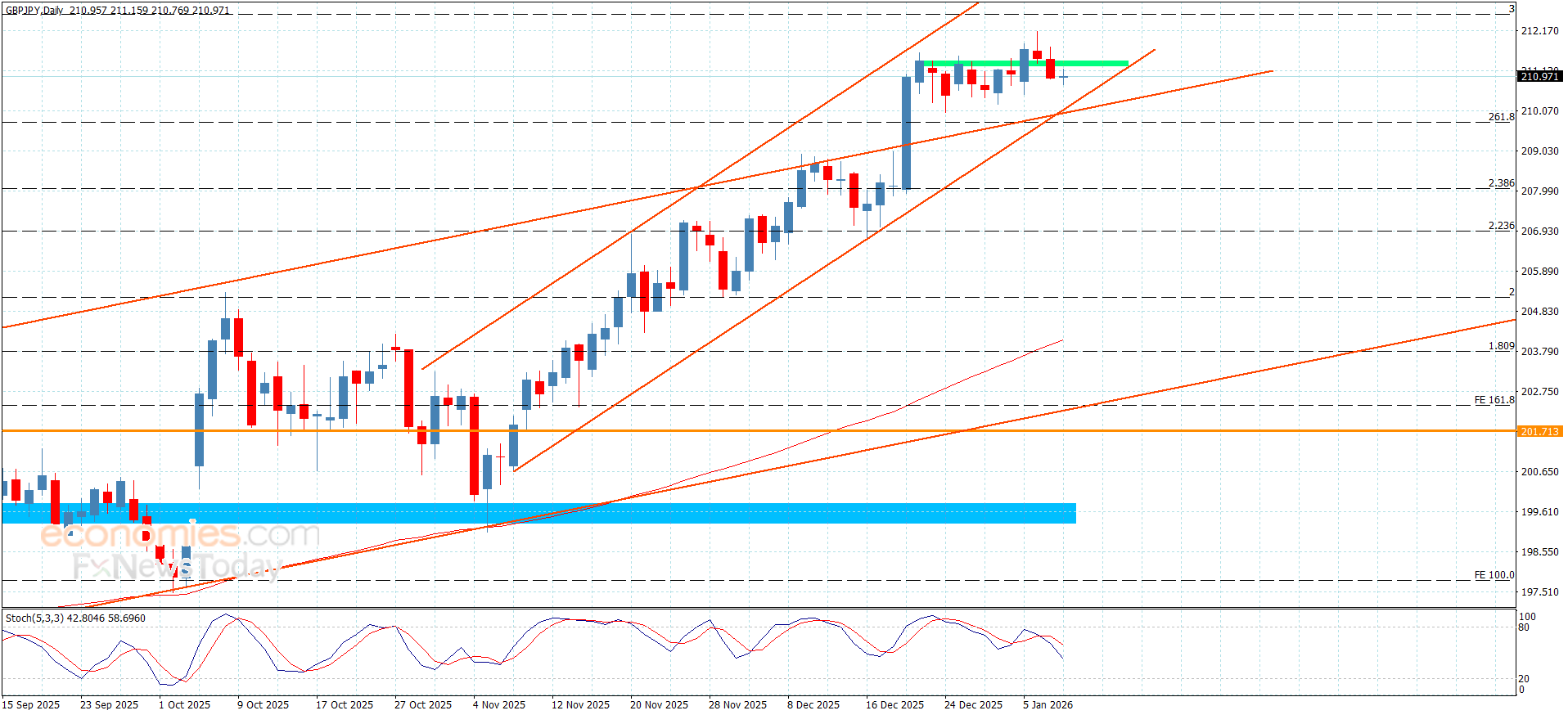
The GBPJPY loses the bullish momentum– Forecast today – 8-1-2026

By |2026-01-09T08:37:00+02:00January 9, 2026|Forex News, News|0 Comments

The GBPJPY pair lost the bullish momentum due to stochastic exit from the overbought level, which forces it to delay the bullish attack by reaching below 211.30 level, which keeps forming an important obstacle against the bullish attempts.


We expect providing new mixed trading with a chance of attacking the minor bullish channel’s support at 210.10, breaking this support makes us expect targeting extra corrective stations that might begin at 209.45 and 208.80, while the trading rally above the obstacle will increase the chances of recording new gains by targeting 212.55 and 213.75 level.


The expected trading range for today is between 210.10 and 211.50


Trend forecast: Fluctuated within the bullish trend


Source link

9 01, 2026

Rises above 183.00 to test nine-day EMA barrier

By |2026-01-09T06:35:22+02:00January 9, 2026|Forex News, News|0 Comments

EUR/JPY has recovered its recent losses registered in the previous session, trading around 183.20 during the Asian hours on Friday. The technical analysis of the daily chart suggests that the 14-day Relative Strength Index (RSI) at 54 (neutral) signals steady momentum after easing from overbought. RSI edging higher toward the mid-50s supports stabilization without signaling a stretch.

The 50-day Exponential Moving Average (EMA) rises to 181.43, underpinning the medium-term uptrend. The nine-day EMA has slipped and now caps intraday advances, pointing to consolidation above the 50-day line. The backdrop favors dip-buying while the rising medium-term average holds.

A close back above the nine-day EMA at 183.34 would improve near-term traction toward overhead barriers around the all-time high of 184.95, which was recorded on December 22, aligned with the psychological level of 185.00.

Failure to reclaim the short-term average would leave the cross vulnerable to a deeper mean-reversion phase. The EUR/JPY cross may navigate the region around the initial support at the four-week low of 181.57, recorded on December 17, followed by the 50-day EMA at 181.43. Holding above the medium-term average preserves the broader bullish bias.

EUR/JPY: Daily Chart

Euro Price Today

The table below shows the percentage change of Euro (EUR) against listed major currencies today. Euro was the strongest against the Japanese Yen.

USD EUR GBP JPY CAD AUD NZD CHF
USD -0.05% 0.02% 0.16% 0.10% 0.07% 0.14% 0.00%
EUR 0.05% 0.06% 0.20% 0.14% 0.12% 0.18% 0.05%
GBP -0.02% -0.06% 0.15% 0.08% 0.05% 0.12% -0.02%
JPY -0.16% -0.20% -0.15% -0.05% -0.09% -0.03% -0.16%
CAD -0.10% -0.14% -0.08% 0.05% -0.04% 0.03% -0.10%
AUD -0.07% -0.12% -0.05% 0.09% 0.04% 0.07% -0.07%
NZD -0.14% -0.18% -0.12% 0.03% -0.03% -0.07% -0.13%
CHF -0.00% -0.05% 0.02% 0.16% 0.10% 0.07% 0.13%

The heat map shows percentage changes of major currencies against each other. The base currency is picked from the left column, while the quote currency is picked from the top row. For example, if you pick the Euro from the left column and move along the horizontal line to the US Dollar, the percentage change displayed in the box will represent EUR (base)/USD (quote).

(The technical analysis of this story was written with the help of an AI tool.)

Source link

9 01, 2026

EUR/USD, GBP/USD and EUR/GBP Forecasts – Dollar Stubborn Early Thursday

By |2026-01-09T04:34:36+02:00January 9, 2026|Forex News, News|0 Comments

GBP/USD Technical Analysis

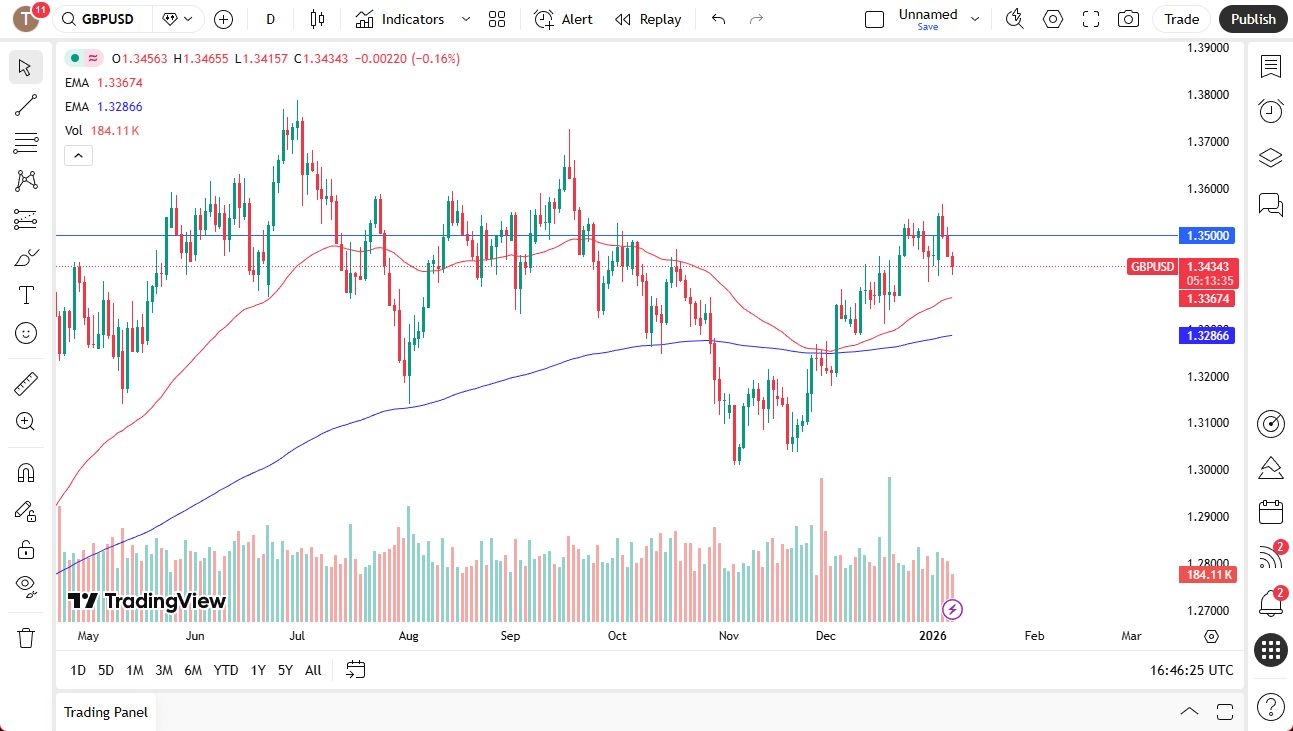
The British pound, of course, has drifted a little bit lower. We are in an area of consolidation. I don’t think that changes today. You could, in theory, see a little bit of a bounce when we get closer to 1.34, but really, I think this is the domain of short-term traders more than anything else, with 1.35 being a bit of a magnet for price.

The Bank of England is expected to cut rates as well, but it is expected to do so in a much slower and gradual manner than the market once thought, hence the British pound’s strength over the last couple of months. I think this is a currency that, relatively speaking, at least will fare better than many others against the greenback.

EUR/GBP Technical Analysis

The euro has climbed slightly against the British pound as we continue our bounce from the 200-day EMA, but I will direct you to my analysis from a couple of days ago. I think we’re going to start drifting towards the 0.8720 area and then maybe see some exhaustion that we can start shorting again.

While the Bank of England is expected to cut rates, it’s doing so at a much slower pace, and this, of course, is in comparison to the ECB, which is basically on hold, so we already know that the interest rate differential will continue to favor the pound for some time. That doesn’t necessarily mean that we fall apart. I just think that you’re going to continue to see more of a rally and then a fade type of situation going forward.

For a look at all of today’s economic events, check out our economic calendar.

Source link

9 01, 2026

GBP/USD Forecast 09/01: Testing Bottom Area (Video)

By |2026-01-09T02:33:38+02:00January 9, 2026|Forex News, News|0 Comments

The British pound continues to consolidate on Thursday, as we are waiting for the all-important Non-Farm Payroll numbers in the United States.

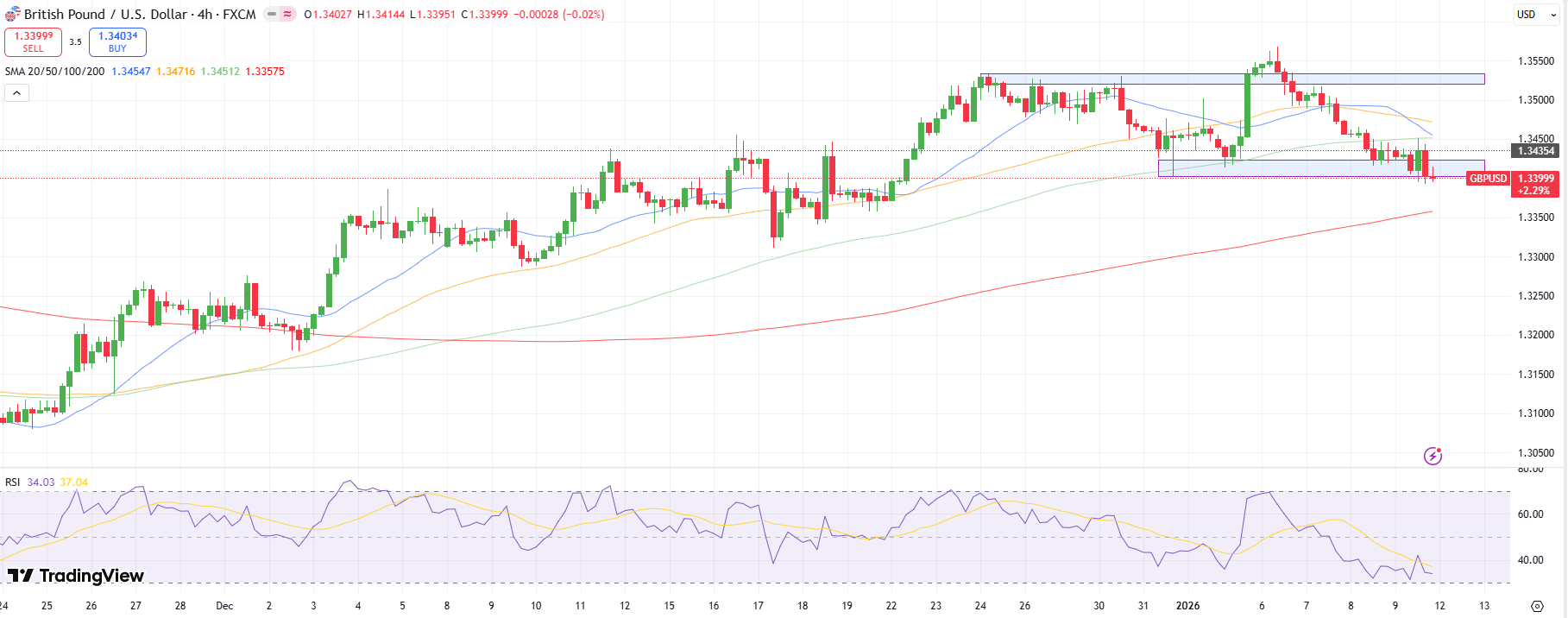
  • I am looking at the British pound against the US dollar. The British pound continues to consolidate, although it was somewhat negative during the trading session on Thursday, but I think you’ve got a situation where we’re basically bouncing around between 1.34 and 1.3550.
  • With that, we’re waiting on something. I think the most obvious candidate will be the non-farm payroll announcements coming out on Friday in the United States.

The non-farm payroll announcement, while in and of itself isn’t particularly interesting and not even particularly accurate, will have a major influence on what people think the Federal Reserve will do. The unemployment rate in America is expected to be 4.5%. The non-farm employment change is supposed to be an addition of 66,000 jobs.

With that being the case, I think it comes down to the number. The higher the number, the better off the US dollar does because we have a situation here where the Bank of England is cutting but is doing so slowly, and if the Federal Reserve has a reason to pause, then that means the dollar is mispriced.

Monitoring Support and Resistance

That being said, in the short term, it looks like we’re still range-bound. It will be interesting to see if we can break out of this little rectangle. A move above 1.36 would be bullish, especially if the US dollar is falling against everything else. In that case, then yes, the GBP rises here.

On the other hand, if we break down below the 50-day EMA currently right at the 1.3367 level, then I think you start to see the dollar strengthen against the pound quite a bit, maybe even a couple of handles.

Ready to trade our daily GBP/USD Forex forecast? Here’s some of the best forex broker UK reviews to check out.

Christopher Lewis has been trading Forex and has over 20 years experience in financial markets. Chris has been a regular contributor to Daily Forex since the early days of the site. He writes about Forex for several online publications, including FX Empire, Investing.com, and his own site, aptly named The Trader Guy. Chris favours technical analysis methods to identify his trades and likes to trade equity indices and commodities as well as Forex. He favours a longer-term trading style, and his trades often last for days or weeks.
Source link

Go to Top