The main tag of Forex News Today Articles.
You can use the search box below to find what you need.
[wd_asp id=1]

6 06, 2024

EUR/USD, GBP/USD, USD/CAD, USD/JPY Forecasts – U.S. Dollar Gains Ground As ISM Services PMI Beats Expectations

By |2024-06-06T02:18:43+03:00June 6, 2024|Forex News, News|0 Comments

Important DisclaimersThe content provided on the website includes general news and publications, our personal analysis and opinions, and contents provided by third parties, which are intended for educational and research purposes only. It does not constitute, and should not be read as, any recommendation or advice to take any action whatsoever, including to make any investment or buy any product. When making any financial decision, you should perform your own due diligence checks, apply your own discretion and consult your competent advisors. The content of the website is not personally directed to you, and we does not take into account your financial situation or needs.The information contained in this website is not necessarily provided in real-time nor is it necessarily accurate. Prices provided herein may be provided by market makers and not by exchanges.Any trading or other financial decision you make shall be at your full responsibility, and you must not rely on any information provided through the website. FX Empire does not provide any warranty regarding any of the information contained in the website, and shall bear no responsibility for any trading losses you might incur as a result of using any information contained in the website.The website may include advertisements and other promotional contents, and FX Empire may receive compensation from third parties in connection with the content. FX Empire does not endorse any third party or recommends using any third party’s services, and does not assume responsibility for your use of any such third party’s website or services.FX Empire and its employees, officers, subsidiaries and associates, are not liable nor shall they be held liable for any loss or damage resulting from your use of the website or reliance on the information provided on this website.Risk DisclaimersThis website includes information about cryptocurrencies, contracts for difference (CFDs) and other financial instruments, and about brokers, exchanges and other entities trading in such instruments. Both cryptocurrencies and CFDs are complex instruments and come with a high risk of losing money. You should carefully consider whether you understand how these instruments work and whether you can afford to take the high risk of losing your money.FX Empire encourages you to perform your own research before making any investment decision, and to avoid investing in any financial instrument which you do not fully understand how it works and what are the risks involved.

Source link

6 06, 2024

Bullish moves lack conviction so far

By |2024-06-06T00:16:29+03:00June 6, 2024|Forex News, News|0 Comments

You have reached your limit of 5 free articles for this month.

Get Premium without limits for only $9.99 for the first month

Access all our articles, insights, and analysts.

Your coupon code


UNLOCK OFFER

  • EUR/USD resumed the decline and approached 1.0850.
  • The US Dollar extended its rebound on robust data.
  • The US ADP report came in below expectations in May.

The US Dollar (USD) traded with decent gains on Wednesday, keeping the downside pressure on the risk-related sector well and sound and forcing EUR/USD to retreat further and revisit the area near 1.0850, or two-day lows.

In fact, the pair added to Tuesday’s retracement on the back of the Greenback’s fresh upward trend despite a continued decline in US yields across different maturity periods.

Despite we are transiting the Fed’s “blackout” period, it is worth recalling that recent hawkish remarks from Fed officials have sparked speculation that the Federal Reserve (Fed) may maintain its tight monetary policy stance longer than previously expected. However, disappointing US JOLTs Job Openings data in April published on Tuesday, and disheartening prints from the ADP Employment Change in May seem to have reignited speculation of a potential rate cut in November and December.

The CME Group’s FedWatch Tool indicates a nearly 80% chance of lower interest rates by the November 7 meeting.

Despite stronger inflation estimates in Germany and the whole of the eurozone in May, the European Central Bank (ECB) is expected to cut interest rates at its next meeting on June 6. However, doubts persist about further rate reductions after the summer.

Looking ahead, the Eurozone’s nascent economic recovery, coupled with a slowdown in the US economy, suggests a narrowing of the monetary policy gap between the Fed and the ECB, which should in turn limit the downside in EUR/USD.

Nevertheless, in the long term, given the increasing likelihood that the ECB will cut rates before the Fed, further EUR/USD depreciation should be anticipated in the coming months.

EUR/USD daily chart

EUR/USD short-term technical outlook

If bulls maintain control, EUR/USD may test the June high of 1.0916 (June 4), then the March top of 1.0981 (March 8) and the weekly peak of 1.0998 (January 11), all before reaching the important 1.1000 level.

If the bearish tone returns, the pair may initially retest the weekly low of 1.0788 (May 30), which is supported by the 200-day SMA. A drop below this area may push spot to the May low of 1.0649 (May 1), ahead of the 2024 bottom of 1.0601 (April 16).

So far, the 4-hour chart reveals some consolidative development in the near term. The next downward obstacle is the 55-SMA (1.0851), followed by 1.0788 and 1.0766. On the positive side, 1.0916 comes out ahead of 1.0942. The relative strength index (RSI) dropped to about 50.

  • EUR/USD resumed the decline and approached 1.0850.
  • The US Dollar extended its rebound on robust data.
  • The US ADP report came in below expectations in May.

The US Dollar (USD) traded with decent gains on Wednesday, keeping the downside pressure on the risk-related sector well and sound and forcing EUR/USD to retreat further and revisit the area near 1.0850, or two-day lows.

In fact, the pair added to Tuesday’s retracement on the back of the Greenback’s fresh upward trend despite a continued decline in US yields across different maturity periods.

Despite we are transiting the Fed’s “blackout” period, it is worth recalling that recent hawkish remarks from Fed officials have sparked speculation that the Federal Reserve (Fed) may maintain its tight monetary policy stance longer than previously expected. However, disappointing US JOLTs Job Openings data in April published on Tuesday, and disheartening prints from the ADP Employment Change in May seem to have reignited speculation of a potential rate cut in November and December.

The CME Group’s FedWatch Tool indicates a nearly 80% chance of lower interest rates by the November 7 meeting.

Despite stronger inflation estimates in Germany and the whole of the eurozone in May, the European Central Bank (ECB) is expected to cut interest rates at its next meeting on June 6. However, doubts persist about further rate reductions after the summer.

Looking ahead, the Eurozone’s nascent economic recovery, coupled with a slowdown in the US economy, suggests a narrowing of the monetary policy gap between the Fed and the ECB, which should in turn limit the downside in EUR/USD.

Nevertheless, in the long term, given the increasing likelihood that the ECB will cut rates before the Fed, further EUR/USD depreciation should be anticipated in the coming months.

EUR/USD daily chart

EUR/USD short-term technical outlook

If bulls maintain control, EUR/USD may test the June high of 1.0916 (June 4), then the March top of 1.0981 (March 8) and the weekly peak of 1.0998 (January 11), all before reaching the important 1.1000 level.

If the bearish tone returns, the pair may initially retest the weekly low of 1.0788 (May 30), which is supported by the 200-day SMA. A drop below this area may push spot to the May low of 1.0649 (May 1), ahead of the 2024 bottom of 1.0601 (April 16).

So far, the 4-hour chart reveals some consolidative development in the near term. The next downward obstacle is the 55-SMA (1.0851), followed by 1.0788 and 1.0766. On the positive side, 1.0916 comes out ahead of 1.0942. The relative strength index (RSI) dropped to about 50.

Source link

5 06, 2024

GBP/JPY Weekly Forecast – British Pound Recovers to Reach Fresh, New Highs

By |2024-06-05T22:15:09+03:00June 5, 2024|Forex News, News|0 Comments

GBP/JPY Forecast Video for 26.06.23

British Pound vs Japanese Yen Weekly Technical Analysis

The British pound fell initially against the Japanese yen during the week, to test the ¥180 level. At this point, the market then turned around to show signs of strength again, as the Bank of Japan continues its very loose monetary policy. Furthermore, we have the Bank of England surprising the market with a 50 basis point rate hike during the week, and therefore it makes quite a bit of sense that we would see more upward pressure. Quite frankly, we are reaching an overbought condition, but at this point it looks like as long as the Bank of Japan continues to see reasons to keep monetary policy loose, things are going to continue to be in a one direction type of situation.

If we turned around and break down below the ¥180 level, then we could get a deeper correction, but right now there seems to be a lot of momentum in this market, and therefore it’s going to be very difficult to imagine that happening in the short term. Quite frankly, you should be looking at pullbacks as an opportunity to take advantage of value, as interest-rate differential will continue to get you paid at the end of every session. I have no scenario in which I’m willing to sell this market, because quite frankly it just continues to get more fundamental reasons to continue going higher. Ultimately, this is a situation where you need to be cautious, but you should also pay close attention to the idea of looking at any pullback as an opportunity to “buying cheap British pounds and get paid.”

For a look at all of today’s economic events, check out our economic calendar.

This article was originally posted on FX Empire

More From FXEMPIRE:

Source link

5 06, 2024

Pound To Euro Forecast – When Is The Best Time To Buy Euros?

By |2024-06-05T20:14:25+03:00June 5, 2024|Forex News, News|0 Comments

The pound-to-euro forecast is an indication of where technical and fundamental analysts think the GBPEUR price may be in the future. You can use these exchange rate forecasts to help you decide if now is the right time to buy Euros, or if you should wait until the price improves.

GBPEUR Forecast Highlights

  • ECB is eyeing to cut policy rate ahead of the Bank of England
  • GBPEUR rebounds to the top of trading range on modest GBP strength
  • Range trading is expected for now; an upside breakout at 1.18 is not to be ruled out

How has the Pound performed against the Euro recently?

Until recently, GBPEUR traded in a tight range. Watching the rate is like watching paint dry.

Fortunately, UK politics shook things up and injected a dose of excitement in the market. The Prime Minister, after some deliberation, pencilled in a date in July for a General Election. Sterling firmed up in anticipation of this momentous event.

Against the Euro, the rate bounced up and down the 1.16-1.17 range before settling above 1.170. In fact, the exchange rate edged up (intraday) to its highest level since late 2022 (see below). This is interesting. Is the market expecting some disequilibrium factors between the UK and EU?

The European Central Bank (ECB) is meeting this week (6 June) to decide on the broad monetary policy. According to market expectations, the Eurozone governing council is set to cut interest rate for the first time in years. Riksbank, the central bank of Sweden, already slashed interest rate in May. So ECB’s cut is following the lead of fellow European banks. The ECB policy rate, currently at 4.5 percent, is expected to fall by about 25 basis points.

Two critical reasons are pushing the central bank to drop rates. One is falling inflation rates. The other is sluggish growth. The Eurozone suffered from a technical recession in the seance half of 2023.

The question is how far the ECB will drop the borrowing cost? For now, market participants are expecting no more than the 3 times in 2024. After all, we are already at half-way mark in 2024 and inflation rates are not really plunging into zones that inflation hawks feel comfortable.

Moreover, asset prices are generally holding up. The German DAX Index, for example, is trading near its all-time highs. As is the CAC 40. This signals to policymakers that the Eurozone economic conditions are not as bad as feared. At this point, there is no need for aggressive action in either direction.

As ECB is turning dovish first, GBPEUR may edge above the 1.175 range high.

Pound To Euro Forecast – When Is The Best Time To Buy Euros?

Source: Morningstar.co.uk

Is it a good time to buy Euros with Pounds?

Based on the above analysis, it is a good time to buy Euros now?

Summer is starting and if you’re in need of some Euros for holidays in the continent, now may not be a bad time to secure these Euros with a currency forward. The fx rate GBPEUR is pretty stable and trades near the upper side of the range.

Of course, you may wish to wait further – betting on further GBP strength. This only works if you can afford to delay buying the Euros. The risk is that Sterling may weaken due to underperforming GBP day-to-day macro dataflow or concerning political trend. Buying on the spot when you need the Euros always carries some risks.

Will the pound get stronger against the Euro in 2024?

Earlier this year, Sterling got off to a good start and outperformed 90 percent of all other currencies in the first quarter.

This heady sentiment subsided somewhat in spring. Only in recent days did GBPEUR staged a modest rebound. But will this new-found Sterling strength persist for the rest of the year?

Two factors need to keep in mind. The first is politics. While Labour is set to win the general election, its economic policy is yet to be determined fully. Shocks and surprises may still hit (or boost) the currency later this year.

The second factor is the GBP-EUR interest rate differential. If a rate cut did materialise in Europe in the coming days, the ECB is widening the rate differential between the UK and the Euro. This may boost the GBP temporarily – until the Bank of England also start to cut interest rates. Remember, economic synchronicity between UK and Europe is high.

In sum, GBP may continue to exhibit strength against the Euro, but this strength could be fleeting. Unless, of course, Britain generates a string of GBP positive newsflow, like a sudden improvement in consumer spending, exports, et cetera. At this point, do not expect a massive disequilibrium trade in the GBPEUR.


Source: Yardeni.com (June 2024)

What is the GBPEUR forecast in weeks, months, years?

GBPEUR is slowly trading in the upper side side of horizontal range (1.15-1.17). Despite Sterling’s recent strength, the market is still feeling slightly downbeat on the GBP.

If we look at the aggregate forecasts for the rate, GPBEUR, the consensus is that we may see a modest decline of the exchange rate int 1.15 later this year. The projection chart below is taken from Exchangerateforecast.org.uk.

This shows that most analysts are not convinced that Sterling will continue to show strength from here. There is too much economic synchronicity between the two trading partners. Even monetary policies are quite similar these days.

But these exchange rate predictions should be viewed with some scepticism given how dynamic the macro situations are right now. If, for instance, the economic performance deteriorates more than expected in Europe, that may alter the expected path of the policy rate and the GBPEUR rates.

Chartwise, GBPEUR is ranging at the band 1.150-1.180.

Source: Exchangerates.org.uk (June 2024)

Source link

5 06, 2024

Pound Sterling could stretch lower while 1.2800 resistance holds

By |2024-06-05T16:12:33+03:00June 5, 2024|Forex News, News|0 Comments

You have reached your limit of 5 free articles for this month.

Get Premium without limits for only $9.99 for the first month

Access all our articles, insights, and analysts.

Your coupon code


UNLOCK OFFER

  • GBP/USD moves sideways below 1.2800 in the European session on Wednesday.
  • US ISM Services PMI data could impact the US Dollar’s valuation.
  • 1.2800 aligns as strong near-term resistance for the pair.

GBP/USD lost 0.3% on Tuesday and snapped a three-day winning streak. The pair moves sideways in a narrow range below 1.2800 in the European session as market focus shifts to key data releases from the US.

Although the US Dollar (USD) struggled to gather strength after the disappointing job openings data on Tuesday, the cautious market mood made it difficult for GBP/USD to gather bullish momentum. The US Bureau of Labor Statistics reported that the number of Job Openings on the last business day of April stood at 8.059 million. This reading came in below the market expectation of 8.34 million.

British Pound PRICE This week

The table below shows the percentage change of British Pound (GBP) against listed major currencies this week. British Pound was the strongest against the Canadian Dollar.

  USD EUR GBP JPY CAD AUD NZD CHF
USD   -0.22% -0.25% -0.76% 0.39% 0.09% -0.76% -1.24%
EUR 0.22%   -0.01% -0.54% 0.62% 0.18% -0.54% -1.03%
GBP 0.25% 0.00%   -0.46% 0.62% 0.25% -0.58% -1.03%
JPY 0.76% 0.54% 0.46%   1.13% 0.90% 0.15% -0.31%
CAD -0.39% -0.62% -0.62% -1.13%   -0.33% -1.14% -1.64%
AUD -0.09% -0.18% -0.25% -0.90% 0.33%   -0.72% -1.23%
NZD 0.76% 0.54% 0.58% -0.15% 1.14% 0.72%   -0.54%
CHF 1.24% 1.03% 1.03% 0.31% 1.64% 1.23% 0.54%  

The heat map shows percentage changes of major currencies against each other. The base currency is picked from the left column, while the quote currency is picked from the top row. For example, if you pick the British Pound from the left column and move along the horizontal line to the US Dollar, the percentage change displayed in the box will represent GBP (base)/USD (quote).

Early Wednesday, the marginal improvement seen in market mood helps GBP/USD holds its ground. At the time of press, US stock index futures were up between 0.15% and 0.35%.

Later in the session, the ADP Employment Change and the ISM Services PMI data from the US will be looked upon for fresh impetus. Unless there is a significant divergence in the ADP Employment Change data from the market consensus of 173,000, investors are likely to ignore it ahead of Friday’s May jobs report.

The ISM Services PMI is forecast to edge higher to 50.5 from 49.4. A better-than-expected PMI print could support the USD and weigh on GBP/USD. On the other hand, the USD could start weakening against its rivals if the PMI data comes in weaker than April’s 49.4 to show an ongoing contraction in the sector’s activity at an accelerating pace.

GBP/USD Technical Analysis

The Relative Strength Index (RSI) indicator on the 4-hour chart moves sideways slightly above 50, reflecting a lack of bullish momentum. 1.2750, where the 20-period and the 50-period Simple Moving Averages (SMA) are located, aligns as immediate support for GBP/USD ahead of 1.2710-1.2700 (, 100-period SMA, lower limit of the ascending channel) and 1.2680 (20-day SMA).

On the upside, resistances could be seen at 1.2800 (mid-point of the ascending channel), 1.2850 (static level) and 1.2890 (upper limit of the ascending channel).

Pound Sterling FAQs

The Pound Sterling (GBP) is the oldest currency in the world (886 AD) and the official currency of the United Kingdom. It is the fourth most traded unit for foreign exchange (FX) in the world, accounting for 12% of all transactions, averaging $630 billion a day, according to 2022 data. Its key trading pairs are GBP/USD, aka ‘Cable’, which accounts for 11% of FX, GBP/JPY, or the ‘Dragon’ as it is known by traders (3%), and EUR/GBP (2%). The Pound Sterling is issued by the Bank of England (BoE).

The single most important factor influencing the value of the Pound Sterling is monetary policy decided by the Bank of England. The BoE bases its decisions on whether it has achieved its primary goal of “price stability” – a steady inflation rate of around 2%. Its primary tool for achieving this is the adjustment of interest rates. When inflation is too high, the BoE will try to rein it in by raising interest rates, making it more expensive for people and businesses to access credit. This is generally positive for GBP, as higher interest rates make the UK a more attractive place for global investors to park their money. When inflation falls too low it is a sign economic growth is slowing. In this scenario, the BoE will consider lowering interest rates to cheapen credit so businesses will borrow more to invest in growth-generating projects.

Data releases gauge the health of the economy and can impact the value of the Pound Sterling. Indicators such as GDP, Manufacturing and Services PMIs, and employment can all influence the direction of the GBP. A strong economy is good for Sterling. Not only does it attract more foreign investment but it may encourage the BoE to put up interest rates, which will directly strengthen GBP. Otherwise, if economic data is weak, the Pound Sterling is likely to fall.

Another significant data release for the Pound Sterling is the Trade Balance. This indicator measures the difference between what a country earns from its exports and what it spends on imports over a given period. If a country produces highly sought-after exports, its currency will benefit purely from the extra demand created from foreign buyers seeking to purchase these goods. Therefore, a positive net Trade Balance strengthens a currency and vice versa for a negative balance.


  • GBP/USD moves sideways below 1.2800 in the European session on Wednesday.
  • US ISM Services PMI data could impact the US Dollar’s valuation.
  • 1.2800 aligns as strong near-term resistance for the pair.

GBP/USD lost 0.3% on Tuesday and snapped a three-day winning streak. The pair moves sideways in a narrow range below 1.2800 in the European session as market focus shifts to key data releases from the US.

Although the US Dollar (USD) struggled to gather strength after the disappointing job openings data on Tuesday, the cautious market mood made it difficult for GBP/USD to gather bullish momentum. The US Bureau of Labor Statistics reported that the number of Job Openings on the last business day of April stood at 8.059 million. This reading came in below the market expectation of 8.34 million.

British Pound PRICE This week

The table below shows the percentage change of British Pound (GBP) against listed major currencies this week. British Pound was the strongest against the Canadian Dollar.

  USD EUR GBP JPY CAD AUD NZD CHF
USD   -0.22% -0.25% -0.76% 0.39% 0.09% -0.76% -1.24%
EUR 0.22%   -0.01% -0.54% 0.62% 0.18% -0.54% -1.03%
GBP 0.25% 0.00%   -0.46% 0.62% 0.25% -0.58% -1.03%
JPY 0.76% 0.54% 0.46%   1.13% 0.90% 0.15% -0.31%
CAD -0.39% -0.62% -0.62% -1.13%   -0.33% -1.14% -1.64%
AUD -0.09% -0.18% -0.25% -0.90% 0.33%   -0.72% -1.23%
NZD 0.76% 0.54% 0.58% -0.15% 1.14% 0.72%   -0.54%
CHF 1.24% 1.03% 1.03% 0.31% 1.64% 1.23% 0.54%  

The heat map shows percentage changes of major currencies against each other. The base currency is picked from the left column, while the quote currency is picked from the top row. For example, if you pick the British Pound from the left column and move along the horizontal line to the US Dollar, the percentage change displayed in the box will represent GBP (base)/USD (quote).

Early Wednesday, the marginal improvement seen in market mood helps GBP/USD holds its ground. At the time of press, US stock index futures were up between 0.15% and 0.35%.

Later in the session, the ADP Employment Change and the ISM Services PMI data from the US will be looked upon for fresh impetus. Unless there is a significant divergence in the ADP Employment Change data from the market consensus of 173,000, investors are likely to ignore it ahead of Friday’s May jobs report.

The ISM Services PMI is forecast to edge higher to 50.5 from 49.4. A better-than-expected PMI print could support the USD and weigh on GBP/USD. On the other hand, the USD could start weakening against its rivals if the PMI data comes in weaker than April’s 49.4 to show an ongoing contraction in the sector’s activity at an accelerating pace.

GBP/USD Technical Analysis

The Relative Strength Index (RSI) indicator on the 4-hour chart moves sideways slightly above 50, reflecting a lack of bullish momentum. 1.2750, where the 20-period and the 50-period Simple Moving Averages (SMA) are located, aligns as immediate support for GBP/USD ahead of 1.2710-1.2700 (, 100-period SMA, lower limit of the ascending channel) and 1.2680 (20-day SMA).

On the upside, resistances could be seen at 1.2800 (mid-point of the ascending channel), 1.2850 (static level) and 1.2890 (upper limit of the ascending channel).

Pound Sterling FAQs

The Pound Sterling (GBP) is the oldest currency in the world (886 AD) and the official currency of the United Kingdom. It is the fourth most traded unit for foreign exchange (FX) in the world, accounting for 12% of all transactions, averaging $630 billion a day, according to 2022 data. Its key trading pairs are GBP/USD, aka ‘Cable’, which accounts for 11% of FX, GBP/JPY, or the ‘Dragon’ as it is known by traders (3%), and EUR/GBP (2%). The Pound Sterling is issued by the Bank of England (BoE).

The single most important factor influencing the value of the Pound Sterling is monetary policy decided by the Bank of England. The BoE bases its decisions on whether it has achieved its primary goal of “price stability” – a steady inflation rate of around 2%. Its primary tool for achieving this is the adjustment of interest rates. When inflation is too high, the BoE will try to rein it in by raising interest rates, making it more expensive for people and businesses to access credit. This is generally positive for GBP, as higher interest rates make the UK a more attractive place for global investors to park their money. When inflation falls too low it is a sign economic growth is slowing. In this scenario, the BoE will consider lowering interest rates to cheapen credit so businesses will borrow more to invest in growth-generating projects.

Data releases gauge the health of the economy and can impact the value of the Pound Sterling. Indicators such as GDP, Manufacturing and Services PMIs, and employment can all influence the direction of the GBP. A strong economy is good for Sterling. Not only does it attract more foreign investment but it may encourage the BoE to put up interest rates, which will directly strengthen GBP. Otherwise, if economic data is weak, the Pound Sterling is likely to fall.

Another significant data release for the Pound Sterling is the Trade Balance. This indicator measures the difference between what a country earns from its exports and what it spends on imports over a given period. If a country produces highly sought-after exports, its currency will benefit purely from the extra demand created from foreign buyers seeking to purchase these goods. Therefore, a positive net Trade Balance strengthens a currency and vice versa for a negative balance.


Source link

5 06, 2024

Euro struggles to clear key resistance

By |2024-06-05T14:11:13+03:00June 5, 2024|Forex News, News|0 Comments

You have reached your limit of 5 free articles for this month.

Get Premium without limits for only $9.99 for the first month

Access all our articles, insights, and analysts.

Your coupon code


UNLOCK OFFER

  • EUR/USD fluctuates in a tight range below 1.0900 on Wednesday.
  • ISM Services PMI and ADP Employment Change from the US will be watched closely by investors.
  • Near-term technical outlook points to a lack of bullish momentum.

After reaching its highest level since late March above 1.0900 on Tuesday, EUR/USD lost its traction and closed the day in negative territory. The pair’s near-term technical picture points to a lack of bullish momentum as market focus shifts to macroeconomic data releases from the US.

The US Bureau of Labor Statistics reported on Tuesday that the number of Job Openings on the last business day of April stood at 8.059 million. This reading came in below the market expectation of 8.34 million and made it difficult for the US Dollar (USD) to gather strength. The cautious market stance, however, didn’t allow EUR/USD to gain traction.

Euro PRICE This week

The table below shows the percentage change of Euro (EUR) against listed major currencies this week. Euro was the strongest against the Canadian Dollar.

  USD EUR GBP JPY CAD AUD NZD CHF
USD   -0.26% -0.24% -0.61% 0.32% 0.00% -0.80% -1.21%
EUR 0.26%   0.05% -0.36% 0.58% 0.14% -0.55% -0.97%
GBP 0.24% -0.05%   -0.34% 0.51% 0.17% -0.65% -1.02%
JPY 0.61% 0.36% 0.34%   0.90% 0.66% -0.05% -0.45%
CAD -0.32% -0.58% -0.51% -0.90%   -0.34% -1.12% -1.54%
AUD -0.01% -0.14% -0.17% -0.66% 0.34%   -0.69% -1.14%
NZD 0.80% 0.55% 0.65% 0.05% 1.12% 0.69%   -0.46%
CHF 1.21% 0.97% 1.02% 0.45% 1.54% 1.14% 0.46%  

The heat map shows percentage changes of major currencies against each other. The base currency is picked from the left column, while the quote currency is picked from the top row. For example, if you pick the Euro from the left column and move along the horizontal line to the US Dollar, the percentage change displayed in the box will represent EUR (base)/USD (quote).

Early Wednesday, US stock index futures trade modestly higher on the day and helps EUR/USD hold its ground.

Later in the day, ADP Employment Change and ISM Services PMI data for May will be featured in the US economic docket. Investors expect the employment in the private sector to rise 173,000 in May and see the ISM Services PMI recovering back above 50 from 49.4 in April.

Earlier in the week, the disappointing ISM Manufacturing PMI triggered a USD selloff. In case the ISM Services PMI disappoints and shows an ongoing contraction in the service sector’s activity, the USD could come under a renewed selling pressure and open the door for a rebound in EUR/USD. On the other hand, an upbeat ISM Services PMI could support the USD and limit the pair’s upside.

EUR/USD Technical Analysis

EUR/USD remains within the ascending regression channel but the Relative Strength Index (RSI) indicator stays near 50, suggesting that the pair is having a difficult time gathering bullish momentum.

On the downside, 1.0850-1.0840 (100-period Simple Moving Average (SMA), lower limit of the ascending channel) aligns as first support before 1.0800 (psychological level, static level) and 1.0780 (200-period SMA).

Resistances could be seen at 1.0900 (mid-point of the ascending channel, static level) ahead of 1.0950 (upper limit of the ascending channel).

Economic Indicator

ISM Services PMI

The Institute for Supply Management (ISM) Services Purchasing Managers Index (PMI), released on a monthly basis, is a leading indicator gauging business activity in the US services sector, which makes up most of the economy. The indicator is obtained from a survey of supply executives across the US based on information they have collected within their respective organizations. Survey responses reflect the change, if any, in the current month compared to the previous month. A reading above 50 indicates that the services economy is generally expanding, a bullish sign for the US Dollar (USD). A reading below 50 signals that services sector activity is generally declining, which is seen as bearish for USD.

Read more.


  • EUR/USD fluctuates in a tight range below 1.0900 on Wednesday.
  • ISM Services PMI and ADP Employment Change from the US will be watched closely by investors.
  • Near-term technical outlook points to a lack of bullish momentum.

After reaching its highest level since late March above 1.0900 on Tuesday, EUR/USD lost its traction and closed the day in negative territory. The pair’s near-term technical picture points to a lack of bullish momentum as market focus shifts to macroeconomic data releases from the US.

The US Bureau of Labor Statistics reported on Tuesday that the number of Job Openings on the last business day of April stood at 8.059 million. This reading came in below the market expectation of 8.34 million and made it difficult for the US Dollar (USD) to gather strength. The cautious market stance, however, didn’t allow EUR/USD to gain traction.

Euro PRICE This week

The table below shows the percentage change of Euro (EUR) against listed major currencies this week. Euro was the strongest against the Canadian Dollar.

  USD EUR GBP JPY CAD AUD NZD CHF
USD   -0.26% -0.24% -0.61% 0.32% 0.00% -0.80% -1.21%
EUR 0.26%   0.05% -0.36% 0.58% 0.14% -0.55% -0.97%
GBP 0.24% -0.05%   -0.34% 0.51% 0.17% -0.65% -1.02%
JPY 0.61% 0.36% 0.34%   0.90% 0.66% -0.05% -0.45%
CAD -0.32% -0.58% -0.51% -0.90%   -0.34% -1.12% -1.54%
AUD -0.01% -0.14% -0.17% -0.66% 0.34%   -0.69% -1.14%
NZD 0.80% 0.55% 0.65% 0.05% 1.12% 0.69%   -0.46%
CHF 1.21% 0.97% 1.02% 0.45% 1.54% 1.14% 0.46%  

The heat map shows percentage changes of major currencies against each other. The base currency is picked from the left column, while the quote currency is picked from the top row. For example, if you pick the Euro from the left column and move along the horizontal line to the US Dollar, the percentage change displayed in the box will represent EUR (base)/USD (quote).

Early Wednesday, US stock index futures trade modestly higher on the day and helps EUR/USD hold its ground.

Later in the day, ADP Employment Change and ISM Services PMI data for May will be featured in the US economic docket. Investors expect the employment in the private sector to rise 173,000 in May and see the ISM Services PMI recovering back above 50 from 49.4 in April.

Earlier in the week, the disappointing ISM Manufacturing PMI triggered a USD selloff. In case the ISM Services PMI disappoints and shows an ongoing contraction in the service sector’s activity, the USD could come under a renewed selling pressure and open the door for a rebound in EUR/USD. On the other hand, an upbeat ISM Services PMI could support the USD and limit the pair’s upside.

EUR/USD Technical Analysis

EUR/USD remains within the ascending regression channel but the Relative Strength Index (RSI) indicator stays near 50, suggesting that the pair is having a difficult time gathering bullish momentum.

On the downside, 1.0850-1.0840 (100-period Simple Moving Average (SMA), lower limit of the ascending channel) aligns as first support before 1.0800 (psychological level, static level) and 1.0780 (200-period SMA).

Resistances could be seen at 1.0900 (mid-point of the ascending channel, static level) ahead of 1.0950 (upper limit of the ascending channel).

Economic Indicator

ISM Services PMI

The Institute for Supply Management (ISM) Services Purchasing Managers Index (PMI), released on a monthly basis, is a leading indicator gauging business activity in the US services sector, which makes up most of the economy. The indicator is obtained from a survey of supply executives across the US based on information they have collected within their respective organizations. Survey responses reflect the change, if any, in the current month compared to the previous month. A reading above 50 indicates that the services economy is generally expanding, a bullish sign for the US Dollar (USD). A reading below 50 signals that services sector activity is generally declining, which is seen as bearish for USD.

Read more.


Source link

5 06, 2024

GBP/USD Forecast Today- 05/06: GBP Recovers Post-Dip (Chart)

By |2024-06-05T12:09:55+03:00June 5, 2024|Forex News, News|0 Comments

  • The British pound has fallen rather significantly to kick off the trading session on Tuesday but has turned around to show signs of life as we now are trying to recapture the 1.28 level.
  • If we can break above the 1.28 level on a sustainable type of mood, it’s likely that the British pound could go looking to the 1.29 level, followed by the 1.31 level which is an area that we had seen a lot of resistance at previously.

Keep in mind that this pair continues to try to rally, and this is mainly predicated upon by the idea that US economic figures have been getting worse as of late. Underneath, the 1.2675 level is an area that we see support multiple times, and it is worth noting that we have bounce from there in the last couple of days.

Expect Choppy Behavior

I think at this point in time it’s probably obvious that you can expect quite a bit of choppy behavior, but that’s typical for the British pound against the US dollar, due to the fact that we are trying to sort out where we are going next, as the US dollar is considered to be a “safety currency”, while the British pound is considered to be a currency that you will take on risk using. Ultimately, if we can continue to rally it makes quite a bit of sense that the market will continue to see people chasing momentum. If we pull back from here, and we break down below the 1.2675 level, then it’s possible that we could threaten the 50-Day EMA. After that, we then have the 200-Day EMA coming into the picture.

Make sure your position size is correct, because quite frankly this is a market that right along with the rest of all the other ones, will probably remain very noisy in the next several sessions, as we try to sort out what’s going on with the global economy. As there is so much uncertainty, we will continue to see volatility.

Ready to trade our Forex daily analysis and predictions? Here’s the best forex trading company in UK to trade with. 

Source link

5 06, 2024

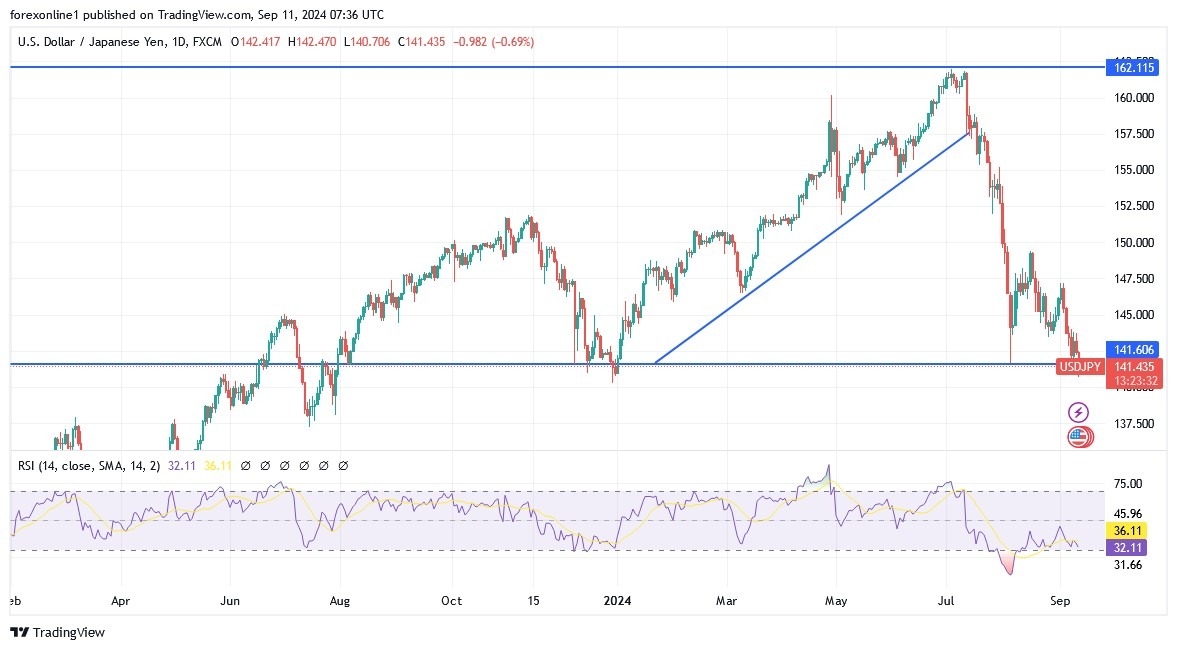
USD/JPY Forecast: Wage Trends and US Services PMI Drive Yen Price Movements

By |2024-06-05T04:05:34+03:00June 5, 2024|Forex News, News|0 Comments

Softer-than-expected figures could increase investor bets on a September Fed rate cut. Weaker labor market conditions could impact consumer confidence, wages, and disposable income. The net effect could be a pullback in consumer spending, dampening demand-driven inflation.

However, investors should also consider the ISM Services PMI. Economists forecast the ISM Services PMI to increase from 49.4 to 50.5. Hotter-than-expected numbers could affect the Fed rate path. The services sector contributes over 70% to the US economy and influences inflation trends.

Beyond the headline figure, investors should consider the subcomponents, including prices and employment.

Short-term Forecast

Near-term trends for the USD/JPY will hinge on the Services PMIs, US labor market data, and household spending numbers from Japan. Tighter US labor market conditions and a pickup in US services sector activity could tilt monetary policy divergence toward the US dollar.

USD/JPY Price Action

Daily Chart

The USD/JPY remained above the 50-day and 200-day EMAs, sending bullish price signals.

A USD/JPY breakout from the 156 handle would support a move toward the 158 handle. Furthermore, a USD/JPY move to the 158 handle could give the bulls a run at the April 29 high of 160.209.

Service sector PMIs and US labor market data need investor consideration.

Conversely, a USD/JPY break below the 50-day EMA would give the bears a run at the 151.685 support level.

The 14-day RSI at 45.55 indicates a USD/JPY fall to the 151.685 support level before entering oversold territory.

Source link

5 06, 2024

USD/JPY Forecast – US Dollar Continues to Look For Floor

By |2024-06-05T02:04:41+03:00June 5, 2024|Forex News, News|0 Comments

US Dollar vs Japanese Yen Technical Analysis

The US dollar has fallen rather hard against the Japanese yen in early trading on Tuesday to test the crucial 155 yen level, an area that I’ve mentioned more than once. This is a very interesting area for the market to find itself in, and we could see value hunters coming back into the picture, trying to take advantage of this value. The 50-day EMA was touched, and now it looks like we are trying to turn things around. The market may have gotten a little ahead of itself, and we have had a few ugly economic numbers coming out of the United States, but really at the end of the day, we are light years away from the Federal Reserve cutting.

And even if they did, the interest rate difference between the US dollar and the Japanese yen still gets you paid quite handsomely at the end of every session. So not much has changed really. A little bit of panic selling, I suppose, had some people nervous, but right now I’m just looking for an opportunity to get long. 158 yen above could be the target. If we can break above there, then we could be looking at the 160 yen level. Breaking down below the 50 day EMA.

It just has me looking for potentially an entry at 152 yen below. This is a pair, like I said, you get paid at the end of every day and institutional traders love that. So, it makes quite a bit of sense that we should continue to see traders jump in and take advantage of this dip.

For a look at all of today’s economic events, check out our economic calendar.

This article was originally posted on FX Empire

More From FXEMPIRE:

Source link

5 06, 2024

Immediately to the upside emerges 1.0980

By |2024-06-05T00:03:31+03:00June 5, 2024|Forex News, News|0 Comments

You have reached your limit of 5 free articles for this month.

Get Premium without limits for only $9.99 for the first month

Access all our articles, insights, and analysts.

Your coupon code


UNLOCK OFFER

  • EUR/USD rose further and surpassed the 1.0900 barrier.
  • The Greenback regained the smile and advanced slightly.
  • The German labour market came in mixed in May.

The US Dollar (USD) traded marginally on the upside on Tuesday, putting the risk-related sector under some mild downside pressure and motivating EUR/USD to recede from earlier tops north of 1.0900 the figure, or multi-week tops.

The pair reversed three consecutive daily advances following the Greenback’s fresh upward trend and the continuation of the decline in US yields across the board.

Meanwhile, recent hawkish statements from Fed officials have fueled speculation that the Federal Reserve (Fed) may retain its tight posture for a longer period of time than predicted. However, disheartening US JOLTs Job Opening prints appear to have underpinned an interest rate reduction in November.

Indeed, the CME Group’s FedWatch Tool predicts a roughly 80% chance of lower interest rates by the November 7 meeting.

Despite stronger inflation estimates in Germany and the rest of the eurozone in May, the European Central Bank (ECB) is expected to decrease interest rates at its next meeting on June 6. Doubts remain, however, when it comes to considering prospective cutbacks after the summer.

Looking ahead, the Eurozone’s incipient recovery in some economic fundamentals, together with the US economy’s loss of momentum, reinforces the shrinking of the monetary policy difference between the Fed and the ECB, supporting a comeback in EUR/USD.

However, in the long run, given the increasing possibility that the ECB would cut rates before the Fed, additional EUR/USD depreciation should be expected in the coming months.

EUR/USD daily chart

EUR/USD short-term technical outlook

If bulls retain control, EUR/USD may test the June high of 1.0916 (June 4), then the March top of 1.0981 (March 8) and the weekly peak of 1.0998 (January 11), all before reaching the important 1.1000 level.

The resumption of the bearish tone, on the other hand, might push the pair below the weekly low of 1.0788 (May 30), which is supported by the 200-day SMA. The fall below this area might push the spot to the May low of 1.0649 (May 1), ahead of the 2024 bottom of 1.0601 (April 16) and the November 2023 low of 1.0516 (November 1). Once this zone is breached, the pair may head for the weekly low of 1.0495 (October 13, 2023) or the 2023 bottom of 1.0448 (October

So far, the 4-hour chart shows a small knee-jerk amidst the current upward bias. The 55-SMA at 1.0847 is the next downward barrier, followed by 1.0788 and 1.0781. On the upside, 1.0916 comes first ahead of 1.0942. The relative strength index (RSI) surged to around 56.

  • EUR/USD rose further and surpassed the 1.0900 barrier.
  • The Greenback regained the smile and advanced slightly.
  • The German labour market came in mixed in May.

The US Dollar (USD) traded marginally on the upside on Tuesday, putting the risk-related sector under some mild downside pressure and motivating EUR/USD to recede from earlier tops north of 1.0900 the figure, or multi-week tops.

The pair reversed three consecutive daily advances following the Greenback’s fresh upward trend and the continuation of the decline in US yields across the board.

Meanwhile, recent hawkish statements from Fed officials have fueled speculation that the Federal Reserve (Fed) may retain its tight posture for a longer period of time than predicted. However, disheartening US JOLTs Job Opening prints appear to have underpinned an interest rate reduction in November.

Indeed, the CME Group’s FedWatch Tool predicts a roughly 80% chance of lower interest rates by the November 7 meeting.

Despite stronger inflation estimates in Germany and the rest of the eurozone in May, the European Central Bank (ECB) is expected to decrease interest rates at its next meeting on June 6. Doubts remain, however, when it comes to considering prospective cutbacks after the summer.

Looking ahead, the Eurozone’s incipient recovery in some economic fundamentals, together with the US economy’s loss of momentum, reinforces the shrinking of the monetary policy difference between the Fed and the ECB, supporting a comeback in EUR/USD.

However, in the long run, given the increasing possibility that the ECB would cut rates before the Fed, additional EUR/USD depreciation should be expected in the coming months.

EUR/USD daily chart

EUR/USD short-term technical outlook

If bulls retain control, EUR/USD may test the June high of 1.0916 (June 4), then the March top of 1.0981 (March 8) and the weekly peak of 1.0998 (January 11), all before reaching the important 1.1000 level.

The resumption of the bearish tone, on the other hand, might push the pair below the weekly low of 1.0788 (May 30), which is supported by the 200-day SMA. The fall below this area might push the spot to the May low of 1.0649 (May 1), ahead of the 2024 bottom of 1.0601 (April 16) and the November 2023 low of 1.0516 (November 1). Once this zone is breached, the pair may head for the weekly low of 1.0495 (October 13, 2023) or the 2023 bottom of 1.0448 (October

So far, the 4-hour chart shows a small knee-jerk amidst the current upward bias. The 55-SMA at 1.0847 is the next downward barrier, followed by 1.0788 and 1.0781. On the upside, 1.0916 comes first ahead of 1.0942. The relative strength index (RSI) surged to around 56.

Source link

Go to Top