The main tag of Forex News Today Articles.
You can use the search box below to find what you need.
[wd_asp id=1]

19 03, 2026

Currency Pair Plummets as Safe-Haven Yen Surges on Intense Risk Aversion

By |2026-03-19T22:40:28+02:00March 19, 2026|Forex News, News|0 Comments

BitcoinWorld
BitcoinWorld
GBP/JPY Forecast: Currency Pair Plummets as Safe-Haven Yen Surges on Intense Risk Aversion

The GBP/JPY currency pair experienced significant downward pressure in early 2025 trading sessions, slumping to multi-week lows as investors flocked to the Japanese yen amid intensifying global risk aversion. Market analysts now scrutinize this sharp movement, which reflects broader financial market anxieties and divergent central bank policy trajectories. Consequently, traders reassess their positions while institutional investors seek shelter in traditional safe-haven assets.

GBP/JPY Technical Breakdown and Price Action

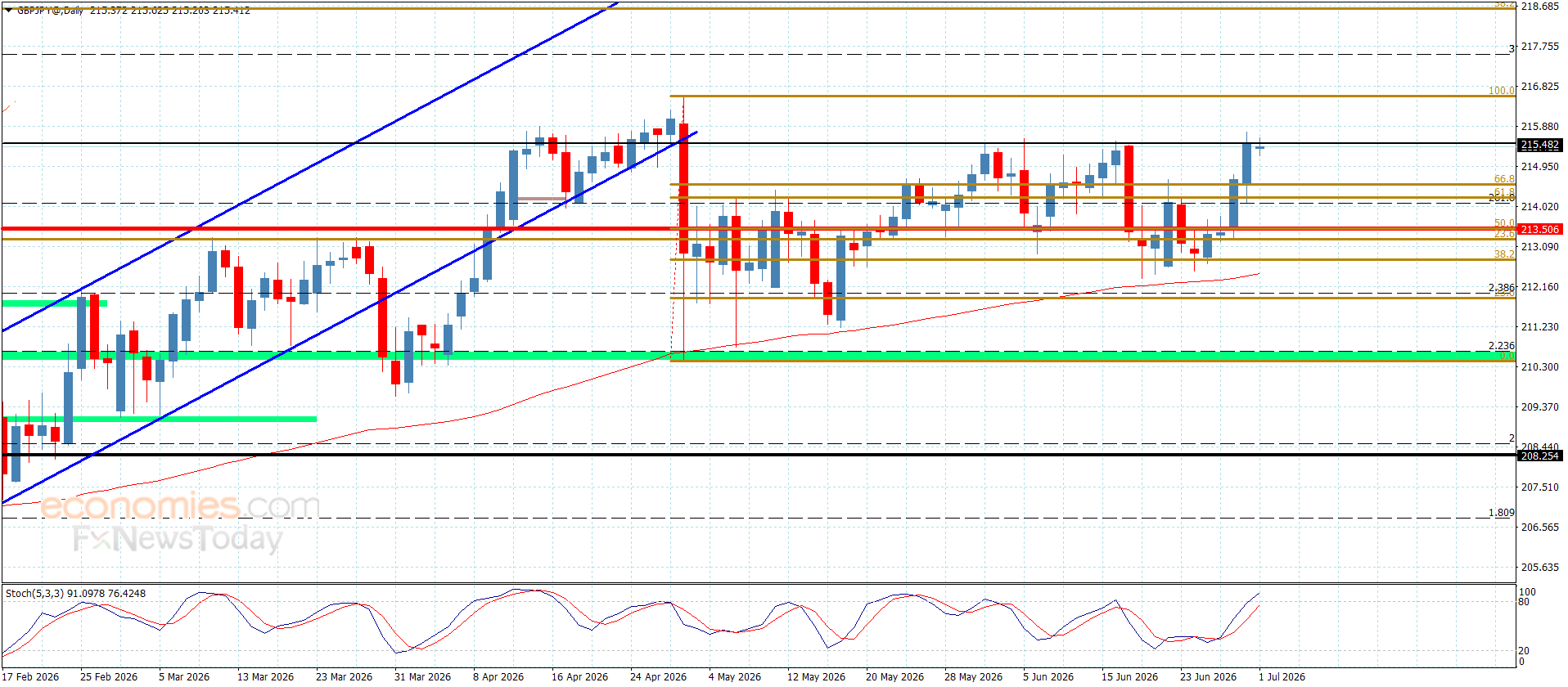
Recent trading sessions witnessed the GBP/JPY pair breaking below several key technical support levels. The pair declined approximately 2.8% from its monthly high, testing crucial Fibonacci retracement zones. Market data reveals increased trading volume during the sell-off, confirming genuine bearish sentiment rather than mere profit-taking. Furthermore, moving average convergences turned negative, signaling potential sustained downward momentum.

Technical indicators now paint a cautious picture for the currency pair. The Relative Strength Index (RSI) entered oversold territory briefly before modest recovery. Meanwhile, the Moving Average Convergence Divergence (MACD) histogram shows strengthening bearish momentum. Key support and resistance levels for GBP/JPY currently cluster around psychological price points that previously served as consolidation zones.

Technical Level Price Zone Significance
Immediate Resistance 188.50-189.00 Previous support turned resistance
Primary Support 185.00-185.50 200-day moving average convergence
Critical Breakdown Below 184.80 Opens path to 182.00 level

Fundamental Drivers Behind Yen Strength

The Japanese yen’s appreciation stems from multiple converging fundamental factors. Global equity markets faced substantial volatility as geopolitical tensions resurfaced in several regions. Additionally, disappointing economic data from major economies heightened recession concerns. Investors consequently reduced exposure to riskier assets and sought currency havens.

Bank of Japan policy expectations further influenced yen dynamics. Although the BOJ maintains its ultra-accommodative stance, market participants increasingly anticipate gradual normalization. Recent commentary from central bank officials suggested growing discomfort with prolonged yield curve control. This subtle shift in rhetoric provided additional support for the yen against risk-sensitive currencies.

Comparative interest rate expectations also favored the Japanese currency. The Bank of England faces mounting pressure to ease monetary policy amid softening UK economic indicators. Conversely, even modest BOJ tightening prospects created favorable interest rate differential movements for yen bulls. These macroeconomic crosscurrents significantly impacted the GBP/JPY exchange rate trajectory.

Expert Analysis on Currency Pair Dynamics

Financial market strategists emphasize the interconnected nature of recent GBP/JPY movements. “The yen traditionally functions as a barometer for global risk sentiment,” noted Dr. Akiko Tanaka, Chief Currency Strategist at Tokyo Financial Institute. “Current appreciation reflects genuine capital preservation efforts rather than speculative positioning.” Her analysis highlights how institutional flows disproportionately affect this currency pair during volatility episodes.

London-based forex analysts simultaneously point to structural vulnerabilities in the British pound. UK economic data continues to show mixed signals, with persistent inflation concerns balanced against weakening consumption patterns. This economic uncertainty limits the Bank of England’s policy flexibility, potentially creating sustained headwinds for sterling against more predictable currencies like the yen.

Historical correlation patterns provide additional context for current movements. The GBP/JPY pair typically exhibits heightened sensitivity during market stress periods, often amplifying broader risk-off movements. Current volatility measures indeed show elevated readings compared to three-month averages, suggesting sustained trader focus on this currency cross.

Global Risk Aversion and Market Implications

Widespread risk aversion manifested across multiple asset classes simultaneously. Equity markets experienced broad-based declines, particularly in technology and cyclical sectors. Commodity prices retreated as growth concerns dampened demand expectations. Even traditional hedges like gold witnessed unusual correlation patterns with risk assets.

The flight to safety extended beyond currencies into sovereign debt markets. Japanese government bond yields compressed despite global yield increases, demonstrating exceptional demand for Japanese assets. This capital flow dynamic naturally supported yen appreciation across all major currency pairs, with particularly pronounced effects on GBP/JPY due to sterling’s own vulnerabilities.

Several specific events triggered the latest risk-off episode:

  • Geopolitical developments in key trade regions disrupted supply chain expectations
  • Central bank communication revealed divergent inflation management approaches
  • Corporate earnings guidance reductions across multiple sectors
  • Energy market volatility renewed stagflation concerns among institutional investors

Comparative Central Bank Policy Trajectories

Monetary policy divergence represents a crucial medium-term factor for GBP/JPY direction. The Bank of England maintains a delicate balancing act between persistent service-sector inflation and weakening economic activity. Recent meeting minutes revealed growing internal debate about appropriate policy stance, creating uncertainty that typically weighs on currency valuation.

The Bank of Japan meanwhile navigates its own policy normalization path. While incremental compared to other major central banks, even modest adjustments to yield curve control parameters could significantly impact yen valuation. Market participants closely monitor any signals about timing and magnitude of potential policy shifts, creating asymmetric sensitivity to BOJ communications.

Interest rate differential projections now favor yen appreciation against sterling through mid-2025. Forward rate agreements price in greater BOE easing than previously anticipated, while BOJ tightening expectations gradually increase. This convergence in rate expectations reduces the traditional yield advantage that supported GBP/JPY during previous expansion cycles.

Historical Context and Pattern Recognition

Currency analysts examine historical precedents for similar GBP/JPY movements during risk aversion periods. The pair demonstrated comparable sensitivity during 2020 pandemic volatility and 2022 monetary policy transition phases. Recovery patterns typically involved extended consolidation periods rather than V-shaped rebounds, suggesting patience required for sustained reversal.

Seasonal factors may also influence near-term price action. Japanese fiscal year-end flows traditionally support yen demand during March, potentially extending current trends. Meanwhile, UK budget announcements scheduled for spring could provide catalysts for sterling direction. These calendar considerations add layers to technical and fundamental analysis.

Correlation analysis reveals strengthening relationship between GBP/JPY and global equity volatility indices. The 30-day correlation coefficient reached its highest level in twelve months, indicating synchronized movements across risk assets. This statistical relationship helps institutional investors construct more effective hedging strategies during turbulent periods.

Conclusion

The GBP/JPY forecast remains cautiously bearish amid persistent risk aversion and yen strength. Technical breakdowns below key support levels suggest further downside potential unless fundamental conditions improve substantially. Meanwhile, divergent central bank policy paths create structural headwinds for sterling against the Japanese currency. Traders should monitor global risk indicators and central bank communications for directional cues, while recognizing that volatility likely persists across currency markets. Ultimately, the currency pair’s trajectory will reflect broader financial market confidence and comparative economic resilience between the UK and Japan.

FAQs

Q1: What caused the recent GBP/JPY decline?
The GBP/JPY pair slumped due to combined yen strength from global risk aversion and sterling weakness from UK economic uncertainty. Investors sought safe-haven assets amid geopolitical tensions and growth concerns.

Q2: How does Bank of Japan policy affect GBP/JPY?
Even modest Bank of Japan policy normalization expectations support yen appreciation. As the BOJ considers adjusting its yield curve control, while the Bank of England faces easing pressure, interest rate differentials shift against sterling.

Q3: What technical levels are important for GBP/JPY?
Key levels include resistance at 188.50-189.00 (previous support), primary support at 185.00-185.50 (200-day MA), and critical breakdown below 184.80 opening path to 182.00.

Q4: Is the yen considered a safe-haven currency?
Yes, the Japanese yen traditionally strengthens during market stress as investors repatriate capital to Japan’s stable financial system and current account surplus provides structural support.

Q5: What should traders monitor for GBP/JPY direction?
Traders should watch global equity volatility, UK economic data, Bank of England communications, Bank of Japan policy signals, and geopolitical developments affecting risk sentiment.

This post GBP/JPY Forecast: Currency Pair Plummets as Safe-Haven Yen Surges on Intense Risk Aversion first appeared on BitcoinWorld.

Source link

19 03, 2026

Critical Test Looms as Price Battles Key 183.50 Resistance

By |2026-03-19T18:39:01+02:00March 19, 2026|Forex News, News|0 Comments

BitcoinWorld
BitcoinWorld
EUR/JPY Forecast: Critical Test Looms as Price Battles Key 183.50 Resistance

The EUR/JPY currency pair enters a decisive phase in early 2025, as its price action tests the upper boundary of a significant descending triangle pattern near the 183.50 level. This technical juncture represents a pivotal moment for traders and analysts, with the outcome likely to dictate the medium-term trajectory for the Euro against the Japanese Yen. Consequently, market participants globally are scrutinizing this consolidation for signals of the next major directional move.

EUR/JPY Technical Analysis: Deciphering the Descending Triangle

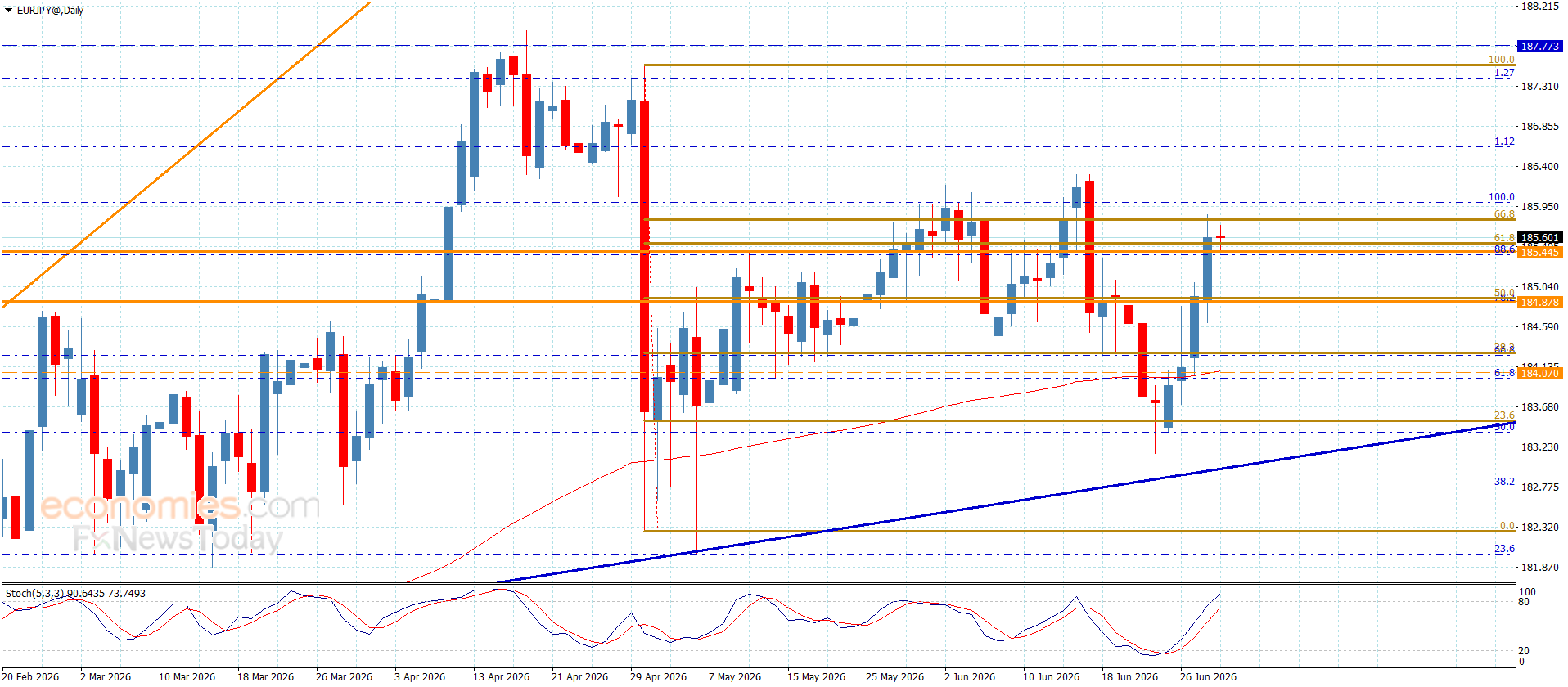
A descending triangle is a classic chart pattern signaling a potential continuation of a prior downtrend or a bearish breakout. For EUR/JPY, this pattern has formed over several weeks. The structure features a flat, horizontal support level and a series of lower highs that create a descending resistance line. Currently, the pair is challenging this upper boundary near the 183.50 handle. A confirmed breakout above this descending trendline, especially on a daily closing basis, would invalidate the bearish pattern. Conversely, a rejection here could see price retreat toward the horizontal support, setting the stage for a subsequent breakdown.

Key technical indicators provide additional context for this setup. The 50-day and 200-day simple moving averages are converging, reflecting market indecision. Furthermore, the Relative Strength Index (RSI) is hovering near the 50 midline, showing neither overbought nor oversold conditions. This neutrality suggests the market is in a state of equilibrium, awaiting a fundamental catalyst. Volume analysis during the recent tests of resistance will be crucial for confirming the strength of any breakout or rejection.

Comparing Recent EUR/JPY Price Patterns

To understand the current pattern’s significance, analysts often compare it to previous market structures. The table below outlines key technical characteristics of the current setup versus a similar consolidation observed in late 2024.

Feature Current Pattern (Q1 2025) Previous Pattern (Q4 2024)
Pattern Type Descending Triangle Symmetrical Triangle
Key Resistance ~183.50 (Descending) ~181.80 (Static)
Key Support ~181.00 (Horizontal) ~179.50 (Ascending)
Duration (Weeks) 6-8 5-7
Preceding Trend Sideways Consolidation Moderate Uptrend

Fundamental Drivers: Central Bank Policy Divergence

The technical battle at 183.50 is fundamentally rooted in the monetary policy divergence between the European Central Bank (ECB) and the Bank of Japan (BoJ). In 2025, the ECB’s path remains a primary focus. The bank has signaled a cautious approach to further interest rate adjustments following its initial cutting cycle. Market consensus, as reflected in overnight index swaps, prices in a gradual normalization path. However, persistent concerns about regional growth and inflation metrics create uncertainty.

Conversely, the Bank of Japan continues its nuanced exit from ultra-accommodative policy. While it has abandoned negative interest rates and Yield Curve Control (YCC), its policy stance remains the most dovish among major central banks. The pace of future hikes is expected to be exceptionally slow. This enduring policy gap is the core fundamental tension driving EUR/JPY volatility. Key data points influencing this dynamic include:

  • Eurozone HICP Inflation: Core metrics remain critical for ECB guidance.
  • Japanese Wage Growth (Shunto): Sustained increases are necessary for the BoJ to justify further tightening.
  • EU/Japan GDP Data: Relative economic resilience directly impacts currency strength.

Expert Market Sentiment and Positioning

According to recent Commitments of Traders (COT) reports from major exchanges, speculative positioning in EUR/JPY has become less extreme. Previously large net-long positions have been reduced, indicating that the market has taken profit and is reassessing the direction. This reduction in positioning risk often precedes a significant new trend. Several institutional analysts note that a clean break above 184.00 could trigger algorithmic buying and attract fresh capital. Alternatively, a failure here may see the pair target the 180.00 psychological support zone.

Macroeconomic Context and Risk Environment

The broader risk environment in 2025 significantly impacts this cross. EUR/JPY often functions as a barometer for global risk sentiment due to the Euro’s moderate risk profile and the Yen’s traditional role as a safe-haven currency. Recent stability in global equity markets and commodity prices has provided a modest tailwind for the Euro. However, geopolitical tensions and concerns about debt sustainability in certain economies linger as potential catalysts for safe-haven flows into the Yen. This external risk factor adds a layer of complexity to the purely technical and policy-driven analysis.

Furthermore, real-world impacts extend beyond trading desks. For European exporters to Japan, a stronger Euro makes goods more expensive for Japanese buyers, potentially affecting trade volumes. For Japanese investors holding European assets, currency fluctuations can significantly amplify or erode returns. This interplay between financial markets and real economic activity underscores the importance of monitoring this currency pair.

Conclusion

The EUR/JPY forecast hinges on the outcome of the current test at the 183.50 resistance level. The descending triangle pattern presents a clear technical framework, while the fundamental backdrop of central bank policy divergence provides the underlying narrative. A confirmed breakout above this level would signal a shift in momentum and potentially open the path toward higher resistance zones. A rejection, however, would reinforce the pattern’s bearish implications and focus attention on key support levels near 181.00. Traders and analysts should monitor price action, volume, and upcoming central bank communications for confirmation of the next major directional move in this significant currency cross.

FAQs

Q1: What is a descending triangle pattern in technical analysis?
A descending triangle is a bearish chart pattern characterized by a horizontal support level and a descending trendline of lower highs. It typically suggests consolidation before a potential breakdown, but a breakout above the descending resistance can invalidate the pattern.

Q2: Why is the 183.50 level specifically important for EUR/JPY?
The 183.50 level represents the approximate point where the current price action is testing the upper, descending trendline of the triangle. It has also acted as a previous area of resistance and support, giving it technical significance as a key pivot point for market sentiment.

Q3: How do ECB and BoJ policies currently affect EUR/JPY?
The ECB, while past its peak hawkishness, maintains higher interest rates than the BoJ. The BoJ is in the early stages of a very gradual policy normalization. This divergence in interest rates generally supports a stronger Euro against the Yen, making central bank communication a key driver.

Q4: What would a breakout above 183.50 signal for EUR/JPY?
A sustained daily close above the descending trendline near 183.50 would break the bearish structure of the triangle. This could trigger technical buying, with initial targets potentially near the 185.00 and 186.50 levels, depending on momentum and volume.

Q5: What are the main risks to this technical forecast?
The primary risks are unexpected shifts in central bank policy rhetoric, sudden changes in global risk sentiment favoring the safe-haven Yen, or economic data from the Eurozone or Japan that dramatically alters growth and inflation expectations.

This post EUR/JPY Forecast: Critical Test Looms as Price Battles Key 183.50 Resistance first appeared on BitcoinWorld.

Source link

19 03, 2026

Pound to Dollar Forecast: GBP Sub 1.33 on FED Powell Warning

By |2026-03-19T14:38:19+02:00March 19, 2026|Forex News, News|0 Comments


– Written by

The Pound to Dollar exchange rate (GBP/USD) held below 1.33, trading near 1.3289 as markets reacted to Wednesday’s key Federal Reserve meeting.

A modest retreat in oil prices has eased pressure on Sterling, but with central bank guidance and energy risks still in focus, traders remain wary of renewed dollar strength.

GBP/USD Forecasts: Held Below 1.34

The Pound to Dollar (GBP/USD) exchange rate maintained a firm tone on Tuesday and hit highs at 1.3375 in Asia on Wednesday before settling close to 1.3350.

The dollar has lost some ground in global markets as oil prices edged lower and overall risk conditions held steady ahead of key central bank rate calls.

GBP/USD will need to move above 1.34 to potentially break out of the downtrend seen from above 1.3850 in late January.

According to UoB; “The slight increase in momentum suggests GBP could edge higher to 1.3410. Based on the current momentum, a clear break above this level appears unlikely.

Save on Your GBP/USD Transfer

Get better rates and lower fees on your next international money transfer.
Compare TorFX with top UK banks in seconds and see how much you could save.


Compare the Best GBP/USD Rates »

It added; “To sustain the mild momentum, GBP must hold above 1.3270.”

Although market conditions are calmer, there is still the risk of rapid and substantial moves.

Central bank developments will also be a key element over the next 36 hours. The Federal Reserve will announce its interest rate decision on Wednesday, with rates expected to be held at 3.75%, while the Bank of England will release its decision on Thursday.

The Fed committee members will also release their updated forecasts or “dot plots” of interest rates. At the December update, the median projection was for one cut during 2026.

ING commented; “The Fed will keep rates on hold, but the risks are clearly of a hawkish revision in the Dot Plot projections, with the median currently signalling one rate cut by year-end. The dollar should benefit from a revision to no cuts in 2026.”

MUFG took a different stance; “The obvious statement he will make is that the longer the conflict lasts the greater the upside risks to energy prices and hence inflation will be. We therefore do not expect the FOMC to alter the median dot profile which in December revealed a profile of one rate cut in 2026 and one in 2027.”

The statement and comments from Chair Powell will also be watched closely. ING did add; “In terms of dovish risks, reintroducing “downside risks” mentioned in the statement’s section about jobs could help markets maintain expectations for a cut on a dual-mandate rationale.”

Central banks will also be uneasy over inflation implications if energy prices remain elevated.

In this context, Danske Bank still sees scope for renewed dollar gains; “irrespective of one’s view on what global central banks should do to address the energy shock, markets are increasingly pricing in a scenario where central banks will tighten financial conditions relative to the pre-war scenario. All else being equal, a stronger USD plays a key role in tightening global financial conditions.”

Like this piece? Please share with your friends and colleagues:


International Money Transfer? Ask our resident FX expert a money transfer question or try John’s new, free, no-obligation personal service! ,where he helps every step of the way,
ensuring you get the best exchange rates on your currency requirements.

TAGS: Pound Dollar Forecasts

Source link

19 03, 2026

Retreats below 159.50, bullish bias intact

By |2026-03-19T10:36:36+02:00March 19, 2026|Forex News, News|0 Comments

The USD/JPY pair attracts some sellers on Thursday and erodes a part of the previous day’s strong move up to its highest level since July 2024. Spot prices, however, trim a part of modest intraday losses and trade just below the 159.50 area during the early European session. Meanwhile, the broader setup favors bulls and suggests that the path of least resistance for the pair remains to the upside.

The Bank of Japan (BoJ) decided to keep rates unchanged for the second consecutive meeting, citing risks from the Middle East conflict as a reason for caution. Furthermore, investors remain concerned that the war-driven surge in Crude Oil prices could weaken Japan’s economic growth and rekindle inflationary pressures, create a classic stagflationary environment, and further complicate the BoJ’s normalization efforts. This, in turn, fails to assist the Japanese Yen (JPY) in attracting any meaningful buyers and acts as a tailwind for the USD/JPY pair.

The US Dollar (USD), on the other hand, preserves the previous day’s strong gains in the wake of the Federal Reserve’s (Fed) hawkish outlook. In fact, the US central bank raised the year-end inflation outlook (PCE), citing risks from higher energy prices due to the Iran war. The Fed also upgraded its 2026 growth projection and projected only one rate reduction this year, and one in 2027. This, in turn, favours the USD and validates the near-term positive outlook for the USD/JPY pair as traders now look to the second-tier US economic data for a fresh impetus.

The near-term bias is mildly bullish as the USD/JPY pair holds comfortably above the rising 100-period Exponential Moving Average (EMA) on the 4-hour chart, keeping the broader uptrend intact within the ascending parallel channel whose lower boundary stands around 158.92. Momentum has improved after a brief loss of traction, with the Moving Average Convergence Divergence (MACD) indicator (12, 26, 9) turning back toward the zero line and the Relative Strength Index at 62.49, showing buyers regaining control but still away from overbought territory.

Initial resistance sits at the channel top near 160.79, where prior failures and the upper boundary converge to cap the upside. A clear break above this area would open the way toward the 161.50 region. On the downside, immediate support aligns with the lower channel boundary at 158.92, followed by stronger support around 158.00 at the 100-period EMA, where a break would weaken the bullish bias and expose 157.50 next.

(The technical analysis of this story was written with the help of an AI tool.)

USD/JPY 4-hour chart

Japanese Yen Price Today

The table below shows the percentage change of Japanese Yen (JPY) against listed major currencies today. Japanese Yen was the strongest against the US Dollar.

USD EUR GBP JPY CAD AUD NZD CHF
USD -0.18% -0.11% -0.32% -0.04% -0.29% -0.40% -0.21%
EUR 0.18% 0.07% -0.13% 0.13% -0.11% -0.22% -0.03%
GBP 0.11% -0.07% -0.21% 0.07% -0.18% -0.29% -0.11%
JPY 0.32% 0.13% 0.21% 0.25% -0.01% -0.14% 0.10%
CAD 0.04% -0.13% -0.07% -0.25% -0.24% -0.37% -0.17%
AUD 0.29% 0.11% 0.18% 0.00% 0.24% -0.12% 0.07%
NZD 0.40% 0.22% 0.29% 0.14% 0.37% 0.12% 0.19%
CHF 0.21% 0.03% 0.11% -0.10% 0.17% -0.07% -0.19%

The heat map shows percentage changes of major currencies against each other. The base currency is picked from the left column, while the quote currency is picked from the top row. For example, if you pick the Japanese Yen from the left column and move along the horizontal line to the US Dollar, the percentage change displayed in the box will represent JPY (base)/USD (quote).

Source link

19 03, 2026

Forecast update for EURUSD -18-03-2026.

By |2026-03-19T06:35:03+02:00March 19, 2026|Forex News, News|0 Comments

The EURJPY repeated attempts to form bullish waves due to providing positive momentum by the main indicators in the last period, to move away from the support at 182.00 and recording some gains by reaching 183.55.


We couldn’t confirm regaining the bullish bias unless breaching the barrier at 184.40 level and holding above it, therefore, we expect forming unstable mixed trading, to keep waiting for surpassing the main levels to confirm the main trend in the upcoming period.


The expected trading range for today is between 182.55 and 184.00


Trend forecast: Fluctuating within the bearish track


Source link

19 03, 2026

GBP/USD Forecast: Pound Sterling Steady Ahead of Fed Decision

By |2026-03-19T02:34:06+02:00March 19, 2026|Forex News, News|0 Comments


– Written by

The Pound to US Dollar (GBP/USD) exchange rate moved little on Wednesday, with traders opting for caution ahead of the Federal Reserve’s upcoming interest rate decision.

At the time of writing, GBP/USD hovered around $1.3358, showing minimal movement from the start of the session.

The US Dollar remained confined to a tight range during European trading hours, as investors held back from making significant moves ahead of the Federal Reserve’s latest policy announcement.

Although no changes to interest rates are expected, attention is firmly on the Fed’s guidance and remarks from Chair Jerome Powell for clues on the direction of future monetary policy.

Markets are particularly focused on how policymakers interpret the inflationary impact of the ongoing tensions in the Middle East, which have pushed global energy prices sharply higher in recent weeks.

Fears that inflation could remain elevated for longer have already led some analysts to delay their expectations for when the Federal Reserve might begin easing policy.

Should the Fed signal a later timeline for rate cuts, or even hint at further tightening, the US Dollar could jump.

Save on Your GBP/USD Transfer

Get better rates and lower fees on your next international money transfer.
Compare TorFX with top UK banks in seconds and see how much you could save.


Compare the Best GBP/USD Rates »

The Pound was largely stable, as a modest decline in energy prices offered some respite to UK bond markets.

Government borrowing costs edged lower, with two-year yields slipping as falling oil prices helped ease some of the immediate inflationary pressure on the UK economy.

At the same time, investors remained cautious toward Sterling, refraining from placing strong directional bets ahead of the Bank of England’s own policy decision.

Short-Term GBP/USD Forecast: BoE Guidance in Focus

Attention will shift to the Bank of England’s interest rate announcement, which is expected to be the next major driver for the Pound to US Dollar exchange rate.

As with the Federal Reserve, policymakers are not expected to alter rates at this meeting, leaving forward guidance as the key area of interest. Any indication that rates may need to rise again to counter inflation could provide support for the Pound.

For the US Dollar, geopolitical developments will remain important, with any escalation in the Middle East likely to revive demand for safe-haven assets.

Like this piece? Please share with your friends and colleagues:


International Money Transfer? Ask our resident FX expert a money transfer question or try John’s new, free, no-obligation personal service! ,where he helps every step of the way,
ensuring you get the best exchange rates on your currency requirements.

TAGS: Pound Dollar Forecasts

Source link

18 03, 2026

Yen Gains Ground As BoJ Expected to Adopt Hawkish Tone. Forecast as of 18.03.2026

By |2026-03-18T22:33:07+02:00March 18, 2026|Forex News, News|0 Comments

The Bank of Japan’s main advantage is timing. By the time it acts, the outcome of the Fed meeting and the markets’ reaction will already be clear, allowing it to adjust its own accompanying statement accordingly. Will the USD/JPY pair benefit from this? Let’s discuss this topic and make a trading plan.

The article covers the following subjects:

Major Takeaways

  • Rising oil prices and a weaker yen are spurring inflation in Japan.
  • The Bank of Japan’s cautious stance could continue to weigh on the yen.
  • Timing is on the BoJ’s side, allowing it to react after the Fed’s policy decisions.
  • Pullbacks toward 158.3 and 157.7 may offer opportunities to open long positions on the USD/JPY.

Weekly Fundamental Forecast for Yen

Ignoring the problem will not make it disappear. Markets are closely watching how central banks will respond to the potential combination of rising inflation and slowing economic growth amid the Middle East conflict. The challenge is particularly acute for the Bank of Japan, as Japan relies on imports for roughly 90% of its energy needs. Rising oil prices, coupled with a weak yen, could push consumer prices sharply higher. At the same time, Sanae Takaichi’s government has shown little enthusiasm for raising the overnight rate.

USD/JPY and Crude Price

Source: Bloomberg.

None of the 51 Bloomberg analysts expect the Bank of Japan to tighten monetary policy in March, but the futures market puts a 60% probability on this happening in April. The question remains: will the BoJ dash these expectations by citing caution due to the Middle East conflict, or will it provide a clear signal that it will resume monetary tightening?

The BoJ’s hesitancy could weigh heavily on the yen. The Reserve Bank of Australia has already raised rates, and the derivatives market suggests a 69% probability that the European Central Bank will follow suit by June. Hawkish signals from the Fed are likely to push USD/JPY quotes higher. Geopolitical tensions have driven the pair above 20-month highs, but ahead of a series of central bank meetings, speculators have begun taking profits on their long positions.

USD/JPY Price and Speculative Positions on Japanese Yen

Source: Bloomberg.

The Bank of Japan’s main advantage is timing. Its upcoming meeting is scheduled just a few hours after the Federal Reserve releases its results, including revised forecasts for the federal funds rate. This allows the BoJ to observe how USD/JPY quotes react to Jerome Powell’s comments and adjust its accompanying statement accordingly.

Japanese officials appear to view the current USD/JPY rally as unfavorable. Finance Minister Satsuki Katayama continues to caution investors through verbal interventions, noting that financial markets are experiencing heightened volatility. At the same time, the pair has become detached from fundamental factors, with the current deviation particularly pronounced. Under these conditions, Japanese officials remain ready to take action at any moment, maintaining close coordination with Washington.

While there is no doubt about the Japanese government’s willingness to intervene in the Forex market, success is likely to be limited when the rally is driven primarily by oil prices and the US dollar, factors largely outside the BoJ’s control. If the Fed fails to temper bulls, the BoJ is unlikely to succeed either. In such a scenario, the Ministry of Finance may have no choice but to wait for a more favorable moment to act.

Weekly USDJPY Trading Plan

Against this backdrop, a pullback in USD/JPY quotes toward support levels at 158.3 and 157.7, or a rebound above the resistance at 159.1, could present a buying opportunity. At the same time, upcoming central bank meetings may trigger increased volatility.


This forecast is based on the analysis of fundamental factors, including official statements from financial institutions and regulators, various geopolitical and economic developments, and statistical data. Historical market data are also considered.

Price chart of USDJPY in real time mode

The content of this article reflects the author’s opinion and does not necessarily reflect the official position of LiteFinance broker. The material published on this page is provided for informational purposes only and should not be considered as the provision of investment advice for the purposes of Directive 2014/65/EU.


According to copyright law, this article is considered intellectual property, which includes a prohibition on copying and distributing it without consent.

Rate this article:

{{value}} ( {{count}} {{title}} )


Source link

18 03, 2026

Euro stabilizes ahead of critical Fed decision

By |2026-03-18T18:32:01+02:00March 18, 2026|Forex News, News|0 Comments

EUR/USD stays in a consolidation phase above 1.1500 after posting gains on Monday and Tuesday. The pair’s near-term technical outlook points to a loss of bearish momentum as focus shifts to the Federal Reserve’s (Fed) policy announcements.

Euro Price This week

The table below shows the percentage change of Euro (EUR) against listed major currencies this week. Euro was the strongest against the US Dollar.

USD EUR GBP JPY CAD AUD NZD CHF
USD -0.93% -0.78% -0.33% -0.20% -1.58% -1.14% -0.48%
EUR 0.93% 0.18% 0.53% 0.72% -0.65% -0.23% 0.45%
GBP 0.78% -0.18% 0.49% 0.56% -0.80% -0.39% 0.35%
JPY 0.33% -0.53% -0.49% 0.14% -1.24% -0.80% -0.16%
CAD 0.20% -0.72% -0.56% -0.14% -1.42% -0.94% -0.27%
AUD 1.58% 0.65% 0.80% 1.24% 1.42% 0.42% 1.12%
NZD 1.14% 0.23% 0.39% 0.80% 0.94% -0.42% 0.65%
CHF 0.48% -0.45% -0.35% 0.16% 0.27% -1.12% -0.65%

The heat map shows percentage changes of major currencies against each other. The base currency is picked from the left column, while the quote currency is picked from the top row. For example, if you pick the Euro from the left column and move along the horizontal line to the US Dollar, the percentage change displayed in the box will represent EUR (base)/USD (quote).

The improvement seen in risk mood, as reflected by the modest recovery in Wall Street’s main indexes after the opening bell, helped EUR/USD edge higher in the American session on Tuesday.

Early Wednesday, US stock index futures stay in positive territory, limiting the USD’s gains and allowing EUR/USD to hold its ground.

In the second half of the day, market participants will take a break from the Middle East conflict and shift their attention to the Fed event.

The US central bank is widely expected to leave the policy rate unchanged after the March meeting. Alongside the policy statement, the Fed will publish the Summary of Economic Projections (SEP), which will highlight policymakers’ inflation, growth and interest rate expectations.

In December, the SEP showed that officials’ projections implied one 25 basis-points (bps) rate cut in 2026. In case the publication shows that a majority of policymakers see the interest rate remaining unchanged for the rest of the year, the immediate reaction could trigger a USD rally and weigh on EUR/USD. Conversely, the USD could have a hard time finding demand if the SEP points to at least one rate cut in 2026. According to the CME FedWatch Tool, markets are currently pricing in about a 30% probability that the policy rate will hold steady at 3.5%-3.75% by end-2026.

Investors will also pay close attention to comments from Fed Chair Jerome Powell. If Powell hints that they will have to be more attentive to inflation risks, because of rising Oil prices due to the US-Iran war, the USD could preserve its strength. On the other hand, EUR/USD could gain traction in case Powell voices growing concerns over the labor market outlook after the February employment report showed a significant 92,000 decline in Nonfarm Payrolls (NFP).

EUR/USD Technical Analysis:

In the 4-hour chart, EUR/USD trades at 1.1523. The near-term bias is mildly bullish after the pair rebounded from the 1.1500 support area and broke above the descending resistance trend line that originated near 1.1817 and was intersecting around 1.1509. Price now holds just above the 20-period Moving Average (MA) at 1.1487 and closes in on the 50-period MA at 1.1544, while remaining capped well below the flattening 100- and 200-period MAs clustered above 1.1630, which tempers upside conviction. The Relative Strength Index (RSI) hovers around 51, reflecting balanced but recovering momentum that favors a gradual upside extension as long as the recent breakout is preserved.

Immediate support is located at 1.1500, reinforced by the nearby 20-period MA, with the next cushion at 1.1460 ahead of a stronger structural floor at 1.1410. Holding above 1.1500 would keep buyers in control and maintain the post-breakout structure. On the upside, initial resistance is seen near the 1.1600 area (static level), followed by the 100-period SMA at 1.1630 and 1.1670 (static level).

(The technical analysis of this story was written with the help of an AI tool.)

Euro FAQs

The Euro is the currency for the 20 European Union countries that belong to the Eurozone. It is the second most heavily traded currency in the world behind the US Dollar. In 2022, it accounted for 31% of all foreign exchange transactions, with an average daily turnover of over $2.2 trillion a day.
EUR/USD is the most heavily traded currency pair in the world, accounting for an estimated 30% off all transactions, followed by EUR/JPY (4%), EUR/GBP (3%) and EUR/AUD (2%).

The European Central Bank (ECB) in Frankfurt, Germany, is the reserve bank for the Eurozone. The ECB sets interest rates and manages monetary policy.
The ECB’s primary mandate is to maintain price stability, which means either controlling inflation or stimulating growth. Its primary tool is the raising or lowering of interest rates. Relatively high interest rates – or the expectation of higher rates – will usually benefit the Euro and vice versa.
The ECB Governing Council makes monetary policy decisions at meetings held eight times a year. Decisions are made by heads of the Eurozone national banks and six permanent members, including the President of the ECB, Christine Lagarde.

Eurozone inflation data, measured by the Harmonized Index of Consumer Prices (HICP), is an important econometric for the Euro. If inflation rises more than expected, especially if above the ECB’s 2% target, it obliges the ECB to raise interest rates to bring it back under control.
Relatively high interest rates compared to its counterparts will usually benefit the Euro, as it makes the region more attractive as a place for global investors to park their money.

Data releases gauge the health of the economy and can impact on the Euro. Indicators such as GDP, Manufacturing and Services PMIs, employment, and consumer sentiment surveys can all influence the direction of the single currency.
A strong economy is good for the Euro. Not only does it attract more foreign investment but it may encourage the ECB to put up interest rates, which will directly strengthen the Euro. Otherwise, if economic data is weak, the Euro is likely to fall.
Economic data for the four largest economies in the euro area (Germany, France, Italy and Spain) are especially significant, as they account for 75% of the Eurozone’s economy.

Another significant data release for the Euro is the Trade Balance. This indicator measures the difference between what a country earns from its exports and what it spends on imports over a given period.
If a country produces highly sought after exports then its currency will gain in value purely from the extra demand created from foreign buyers seeking to purchase these goods. Therefore, a positive net Trade Balance strengthens a currency and vice versa for a negative balance.

Source link

18 03, 2026

The EURJPY activate with the indicator’s positivity– Forecast today – 18-3-2026

By |2026-03-18T14:30:40+02:00March 18, 2026|Forex News, News|0 Comments

The EURJPY repeated attempts to form bullish waves due to providing positive momentum by the main indicators in the last period, to move away from the support at 182.00 and recording some gains by reaching 183.55.


We couldn’t confirm regaining the bullish bias unless breaching the barrier at 184.40 level and holding above it, therefore, we expect forming unstable mixed trading, to keep waiting for surpassing the main levels to confirm the main trend in the upcoming period.


The expected trading range for today is between 182.55 and 184.00


Trend forecast: Fluctuating within the bearish track


Source link

18 03, 2026

The EURGBP is preparing to a new decline– Forecast today – 18-3-2026

By |2026-03-18T10:29:04+02:00March 18, 2026|Forex News, News|0 Comments

The EURJPY repeated attempts to form bullish waves due to providing positive momentum by the main indicators in the last period, to move away from the support at 182.00 and recording some gains by reaching 183.55.


We couldn’t confirm regaining the bullish bias unless breaching the barrier at 184.40 level and holding above it, therefore, we expect forming unstable mixed trading, to keep waiting for surpassing the main levels to confirm the main trend in the upcoming period.


The expected trading range for today is between 182.55 and 184.00


Trend forecast: Fluctuating within the bearish track


Source link

Go to Top