The main tag of Gold Today Price Articles.

You can use the search box below to find what you need.

[wd_asp id=1]

10 07, 2026

Silver Price Forecast: XAG/USD Surges To Near $59 As US Dollar Weakens

By |2026-07-10T16:01:03+03:00July 10, 2026|Forex News, News|0 Comments


Source link

10 07, 2026

Coffee prices today July 10th: Continue to increase sharply, approaching 100,000 VND/kg

By |2026-07-10T11:58:44+03:00July 10, 2026|Forex News, News|0 Comments


Domestic coffee prices today

Coffee prices today in the domestic market simultaneously increased very strongly in key production areas. The average price was recorded at 98,300 VND/kg, an increase of 6,000 VND/kg compared to the previous update.

In Dak Lak, coffee prices increased by 6,000 VND/kg, to 98,200 VND/kg. In Gia Lai, coffee prices reached 98,300 VND/kg, also increasing by 6,000 VND/kg.

In Lam Dong, coffee prices today increased by 6,100 VND/kg, to 97,900 VND/kg. This is still the lowest level among the surveyed areas.

The old Dak Nong area recorded the highest purchase price, reaching 98,400 VND/kg, an increase of 6,100 VND/kg compared to the previous update.

Thus, domestic coffee prices currently fluctuate from 97. 900-98. 400 VND/kg. The gap between the region with the highest and lowest prices is 500 VND/kg.

After a strong increase session, the domestic coffee price level has approached the threshold of 100,000 VND/kg. This is a notable increase after two previous deep decline sessions.

The USD/VND exchange rate according to Vietcombank is recorded at 26,074 VND/USD.

World coffee prices

World coffee prices simultaneously increased sharply in the most recent trading session. Both Robusta on the London exchange and Arabica on the New York exchange recorded large increases.

On the London exchange, the September 2026 Robusta futures contract increased by 302 USD/ton, equivalent to 8.07%, to 4,043 USD/ton.

During the session, this contract at one point increased to 4,066 USD/ton. Trading volume reached 14,265 lots.

Robusta for November 2026 delivery increased by 290 USD/ton, equivalent to 7.81%, to 4,002 USD/ton.

The January and March 2027 terms increased by 285 USD/ton and 282 USD/ton respectively, to 3,967 USD/ton and 3,933 USD/ton.

The July 2026 Robusta contract reached 4,603 USD/ton, up 171 USD/ton. However, this term has low trading volume because it is close to maturity, so the September contract reflects the market trend more clearly.

On the New York exchange, Arabica increased very strongly. September 2026 Arabica futures contract increased by 38.10 US cents/lb, equivalent to 12.30%, to 347.90 US cents/lb.

During the session, this contract at one point increased to 348.55 US cents/lb. Trading volume reached 34,370 lots.

Arabica December 2026 futures increased by 30.95 US cents/lb, equivalent to 10.41%, to 328.20 US cents/lb.

The March and May 2027 terms increased by 28.80 US cents/lb and 27.85 US cents/lb respectively, to 321.00 US cents/lb and 318.30 US cents/lb.

The July 2026 Arabica contract increased by 32.70 US cents/lb, to 356.95 US cents/lb. However, this term has lower volume than long-term contracts because it is close to maturity.

Coffee price assessment

Domestic coffee prices surged sharply after two consecutive deep declines. This development is accompanied by a very strong recovery of Robusta and Arabica prices in the world market.

In the short term, the coffee market is fluctuating strongly due to the intertwined impact between profit-taking activities, buying force returning after deep declines and cautious psychology in the face of weather risks in large production areas.

The fact that Arabica prices increased by more than 12% and Robusta increased by more than 8% shows that buying power has returned quite strongly on the two exchanges. With the domestic market, the upward momentum of world prices often quickly affects buying and selling sentiment, especially when the price level has fluctuated strongly in recent sessions.

However, it should be noted that too strong uptrends often come with technical correction risks. After coffee prices increase rapidly, profit-taking activities may appear in the market, causing prices to continue to fluctuate strongly in the following sessions.

From a global supply-demand perspective, a report by the International Coffee Organization (ICO) shows that the market previously reacted to the prospect of improved supply. This is a factor that may limit the upward momentum of coffee prices in the medium term.

For Brazil, the Foreign Agricultural Services Agency of the US Department of Agriculture (USDA/FAS) said that the Brazilian National Supply Company (CONAB) forecasts Brazil’s coffee production in the 2026-2027 crop year to reach 66.7 million bags, an increase of 18% compared to 2025.

Brazil is the world’s largest Arabica producer. Therefore, the prospect of a large crop in this country is still an important factor that could put pressure on Arabica prices, although the short-term market is still sensitive to weather risks and harvest progress.

Rabobank of the Netherlands also assessed that the expectation of a large coffee crop in Brazil may put pressure on global prices, in the context of generally favorable weather conditions for crop development.

With Robusta, supply from our country continues to be a noteworthy factor. The USDA/FAS report in Vietnam forecasts that Vietnam’s coffee production in the 2026-2027 crop year will increase to 32.5 million bags converted to green beans, thanks to production expansion after a period of high coffee prices.

Our country is the world’s largest Robusta producer, so the prospect of increased production may put pressure on Robusta in the medium term. However, in the short term, prices may still fluctuate sharply due to export demand, inventory and developments on international exchanges.


Source link

10 07, 2026

WTI Crude Oil Price Forecast: US-Iran Conflict Reignites, Will a New Round of Oil Price Rises Begin?

By |2026-07-10T07:57:10+03:00July 10, 2026|Forex News, News|0 Comments


TradingKey – As of the Asian session on July 9, after WTI ( USOIL) crude oil prices rebounded sharply for two consecutive trading days, oil prices hovered and adjusted around $73.30 today. From the technical chart, due to the recent deterioration of the US-Iran situation and the resumption of fire between the two sides, oil prices were driven to rebound significantly for two consecutive trading days, with a cumulative rebound of nearly 11%. However, yesterday oil prices failed to stand firmly above the resistance level of $75, causing oil prices to enter an adjustment phase today.

From a fundamental perspective, the core factor dominating recent oil price trends remains the situation between the US and Iran.

The latest news indicates that the US has launched a new round of military strikes against Iran, targeting missiles, drones, radar, and naval-related facilities. This has significantly cooled market expectations for a ceasefire and negotiations between the US and Iran, while reigniting investor concerns over supply disruptions in the Middle East.

Trump’s latest remarks have further amplified bullish sentiment in the market. He stated that the ceasefire between the US and Iran has ended and remarked that dealing with Iran is a waste of time. This stance implies that the US government’s attitude toward Iran has shifted back to a hawkish stance, leaving the market concerned that it will be difficult for both sides to return to a stable negotiation framework in the short term.

Iran has also taken retaliatory action. According to reports, Iran launched attacks on US military bases in the Gulf region, targeting US facilities in places like Bahrain and Kuwait. This means the conflict is no longer confined to the Iranian mainland and single military targets, but has begun to spill over into the broader Gulf region. As the Gulf region concentrates major global crude oil export routes, any spread of military risk will directly impact tanker shipping, insurance costs, and export stability.

In the short term, as long as the US-Iran conflict does not de-escalate, WTI is likely to maintain high-level volatility and may even continue to challenge higher resistance levels. However, if both sides send signals of resuming negotiations, or if navigation through the Strait of Hormuz recovers faster than expected, the risk premium in oil prices could rapidly recede.

WTI crude oil daily chart, Source: TradingView

Looking at the daily chart of WTI crude oil, the oil price has successfully established a foothold above the $70 threshold during its strong rebound over the past two trading days. Previously, the oil price had been consistently suppressed below $70, and the overall market sentiment was weak. As the oil price broke through the two resistance levels of $70 and $73, long sentiment in the market was significantly amplified.

However, it is worth noting that although the oil price briefly broke through the $75 resistance level yesterday, reaching a high of $76.08, yesterday’s closing price remained below the $75 resistance level. The oil price exhibited a false breakout pattern, which in turn put downward pressure on the oil price today.

As things stand, the oil price faces a resistance level at $75 above. If it can break through and hold above this level, the upside space for the oil price will open up, with the next target testing the $80 mark. On the downside, it faces a support level at $73; if the oil price falls below this level, it may decline further toward the $70 mark.

This content was translated using AI and reviewed for clarity. It is for informational purposes only.


Source link

10 07, 2026

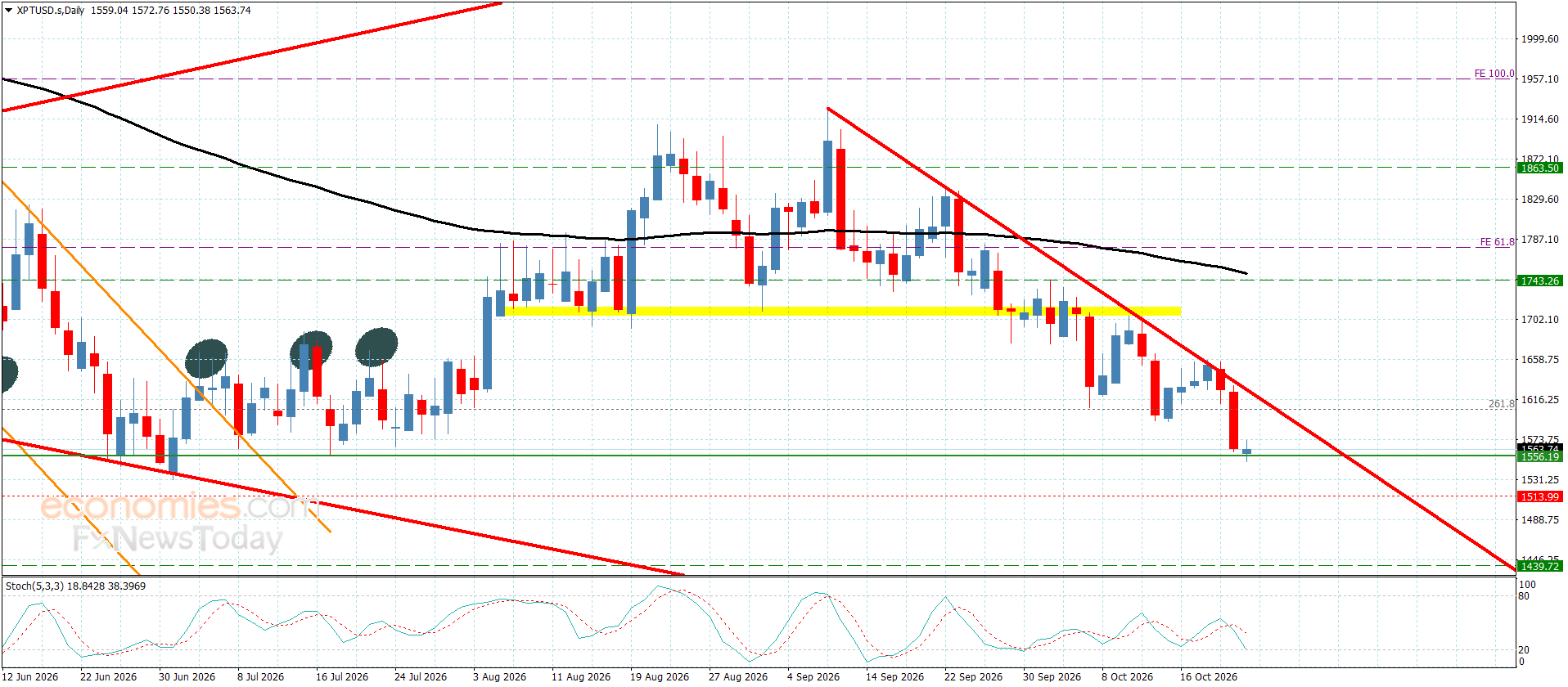
Platinum price keeps the bearish track– Forecast today – 9-7-2026

By |2026-07-10T03:55:48+03:00July 10, 2026|Forex News, News|0 Comments


Platinum price formed some bearish waves, to settle below $1605.00 level, attempting to settle again within the minor bearish channel’s levels, to confirm the continuation of the previously suggested bearish scenario, recording initial negative target at $1570.00.


Providing negative momentum by the main indicators will increase the chances of attacking $1530.00 barrier, and surpassing it will open the way for reaching extra stations that are represented by $1510.00 reaching $1445.00


The expected trading range for today is between $1510.00 and $1630.00


Trend forecast: Bearish


Source link

9 07, 2026

Today’s Platinum Price in Amravati – Live Platinum Rate per Gram & Kg

By |2026-07-09T23:54:17+03:00July 9, 2026|Forex News, News|0 Comments


Platinum price updates for Amravati show the current rates as ₹48,770 (10g),
₹4,87,700 (100g), and ₹48,77,000 (1kg). Over July, prices changed
frequently. The 100g rate peaked at ₹5,07,100 and dropped to
₹4,66,700. For 1kg, it fluctuated between
₹46,67,000 and ₹50,71,000.

The cost of platinum is influenced by mining output, global market demand, and
geopolitical stability. Industrial reliance—mainly in cars and electronics—drives
additional volatility. Shifts in currency, especially the US dollar, as well as
macroeconomic indicators like inflation and interest rate policies, strongly shape its
pricing.


Source link

9 07, 2026

Silver Price Forecast: XAG/USD jumps to near $59 as US Dollar declines

By |2026-07-09T19:52:50+03:00July 9, 2026|Forex News, News|0 Comments


Silver price (XAG/USD) is up over 1% to near $59.00 during the European trading session on Thursday. The white metal gains as the US Dollar (USD) faces selling pressure despite multiple tailwinds.

At press time, the US Dollar Index (DXY), which tracks the Greenback’s value against six major currencies, trades 0.25% lower to near 100.80.

US Dollar Price Today

The table below shows the percentage change of US Dollar (USD) against listed major currencies today. US Dollar was the weakest against the New Zealand Dollar.

USD EUR GBP JPY CAD AUD NZD CHF
USD -0.24% -0.28% -0.18% -0.10% -0.18% -0.58% -0.33%
EUR 0.24% -0.04% 0.04% 0.13% 0.09% -0.31% -0.09%
GBP 0.28% 0.04% 0.07% 0.17% 0.12% -0.27% -0.04%
JPY 0.18% -0.04% -0.07% 0.07% 0.05% -0.38% -0.13%
CAD 0.10% -0.13% -0.17% -0.07% -0.04% -0.44% -0.21%
AUD 0.18% -0.09% -0.12% -0.05% 0.04% -0.39% -0.17%
NZD 0.58% 0.31% 0.27% 0.38% 0.44% 0.39% 0.23%
CHF 0.33% 0.09% 0.04% 0.13% 0.21% 0.17% -0.23%

The heat map shows percentage changes of major currencies against each other. The base currency is picked from the left column, while the quote currency is picked from the top row. For example, if you pick the US Dollar from the left column and move along the horizontal line to the Japanese Yen, the percentage change displayed in the box will represent USD (base)/JPY (quote).

Technically, a lower US Dollar makes the Silver price a favorable risk-reward bet for investors.

The US Dollar struggles to get support despite renewed high United States (US) inflation concerns amid the restart of the war in the Middle East.

Rising oil prices due to the exchange of attacks between the US and Iran, and strikes on Iranian infrastructure have refreshed global upside inflation risks.

In the FOMC minutes of the June policy meeting, released on Wednesday, the bottom line was that policymakers see inflation as dominant risk and favored monetary tightening moving ahead.

Going forward, the next major trigger for the US Dollar will be the US Consumer Price Index (CPI) data for June, which will be released on Tuesday.

Silver technical analysis

XAG/USD trades higher at around $59; however, it retains a bearish near-term bias as spot holds beneath the 20-day exponential moving average (EMA) at $62.38. The downside tilt is reinforced by the Relative Strength Index (14) hovering around 37, which stays below the neutral 50 line but above oversold territory, suggesting persistent selling pressure without capitulation.

On the topside, initial resistance is the round-level of $60.00, followed by the 20-day EMA at $62.38. Looking down, the Silver price could enter a fresh downside leg if it declines below the June 24 low at $55.63.

(The technical analysis of this story was written with the help of an AI tool. Know more.)

Silver FAQs

Silver is a precious metal highly traded among investors. It has been historically used as a store of value and a medium of exchange. Although less popular than Gold, traders may turn to Silver to diversify their investment portfolio, for its intrinsic value or as a potential hedge during high-inflation periods. Investors can buy physical Silver, in coins or in bars, or trade it through vehicles such as Exchange Traded Funds, which track its price on international markets.

Silver prices can move due to a wide range of factors. Geopolitical instability or fears of a deep recession can make Silver price escalate due to its safe-haven status, although to a lesser extent than Gold’s. As a yieldless asset, Silver tends to rise with lower interest rates. Its moves also depend on how the US Dollar (USD) behaves as the asset is priced in dollars (XAG/USD). A strong Dollar tends to keep the price of Silver at bay, whereas a weaker Dollar is likely to propel prices up. Other factors such as investment demand, mining supply – Silver is much more abundant than Gold – and recycling rates can also affect prices.

Silver is widely used in industry, particularly in sectors such as electronics or solar energy, as it has one of the highest electric conductivity of all metals – more than Copper and Gold. A surge in demand can increase prices, while a decline tends to lower them. Dynamics in the US, Chinese and Indian economies can also contribute to price swings: for the US and particularly China, their big industrial sectors use Silver in various processes; in India, consumers’ demand for the precious metal for jewellery also plays a key role in setting prices.

Silver prices tend to follow Gold’s moves. When Gold prices rise, Silver typically follows suit, as their status as safe-haven assets is similar. The Gold/Silver ratio, which shows the number of ounces of Silver needed to equal the value of one ounce of Gold, may help to determine the relative valuation between both metals. Some investors may consider a high ratio as an indicator that Silver is undervalued, or Gold is overvalued. On the contrary, a low ratio might suggest that Gold is undervalued relative to Silver.


Source link

9 07, 2026

Coffee price today 9.7: Falling another 2,500 VND/kg

By |2026-07-09T15:51:41+03:00July 9, 2026|Forex News, News|0 Comments


Domestic coffee prices today

Coffee prices today in the domestic market simultaneously decreased sharply in key production areas. The average price was recorded at 92,300 VND/kg, down 2,500 VND/kg compared to the previous update.

In Dak Lak, coffee prices decreased by 2,500 VND/kg, down to 92,200 VND/kg. In Gia Lai, coffee prices also decreased by 2,500 VND/kg, reaching 92,300 VND/kg.

In Lam Dong, coffee prices today decreased by 2,500 VND/kg, down to 91,800 VND/kg. This is the lowest level among the surveyed areas.

The old Dak Nong area recorded a purchase price of 92,300 VND/kg, down 2,500 VND/kg compared to the previous update.

After two consecutive sharp declines, the domestic coffee price level has receded far from the previously recorded 96,000-97,000 VND/kg range.

The USD/VND exchange rate according to Vietcombank was recorded at 26,081 VND/USD, up 5 VND.

World coffee prices

World coffee prices continued to fall sharply in the most recent trading session. Both Robusta on the London exchange and Arabica on the New York exchange sank into red.

On the London exchange, the September 2026 Robusta futures contract fell 131 USD/ton, equivalent to 3.38%, to 3,741/ton.

During the session, this contract at one point increased to 3,914 USD/ton but then reversed to a sharp decrease, sometimes down to 3,709 USD/ton. Trading volume reached 13,281 lots.

Robusta futures for November 2026 decreased by 127 USD/ton, equivalent to 3.31%, to 3,712 USD/ton.

The January and March 2027 terms decreased by 124 USD/ton and 122 USD/ton, respectively, to 3,682 USD/ton and 3,651 USD/ton.

The July 2026 Robusta contract decreased by 303 USD/ton, to 3,761/ton. However, this term has low trading volume because it is close to maturity, so the September contract reflects the market trend more clearly.

On the New York floor, Arabica also continued to decline. The Arabica futures contract for September 2026 decreased by 7.80 US cents/lb, equivalent to 2.46%, to 309.80 US cents/lb.

Arabica futures for December 2026 decreased by 7.75 US cents/lb, equivalent to 2.54%, to 297.25 US cents/lb.

The March and May 2027 terms decreased by 8.05 US cents/lb and 8.70 US cents/lb, respectively, to 292.20 US cents/lb and 290.45 US cents/lb.

Arabica contract for July 2026 decreased by 7.35 US cents/lb, to 324.25 US cents/lb. However, this term has very low trading volume, so it is not the main reference for market trends.

Coffee price assessment

Coffee prices continued to adjust after the previous hot increase. The fact that Robusta and Arabica prices both decreased shows that profit-taking pressure is still high in the international market.

In the short term, after prices increase too quickly, coffee contracts are likely to fall into a state of technical adjustment. When new buying power weakens, selling activity may pull prices down deeper, especially for items that have increased sharply in previous sessions.

However, the current decline does not mean that price supporting factors have disappeared. The market is still closely monitoring weather developments in Brazil, especially during the harvest period and preparing to enter the coffee tree flowering period.

Brazil is the world’s largest Arabica producer. Therefore, weather risks, harvest progress or grain quality in this country can still strongly impact Arabica prices on the New York exchange.

From a global supply-demand perspective, the International Coffee Organization (ICO) once recorded a decrease in the ICO aggregate price index in May 2026, in the context of the market reacting to the prospect of improved supply.

Supply prospects are also a factor putting pressure on prices in the medium term. The Foreign Agricultural Services Agency of the US Department of Agriculture (USDA/FAS) forecasts that Brazil will have a large coffee crop in the 2026-2027 crop year, thanks to the recovery of Arabica production.

Rabobank of the Netherlands also assessed that the expectation of a large coffee crop in Brazil may put pressure on global prices, as general weather conditions are favorable for crop development.

For Robusta, supply from Vietnam continues to be an important factor. The USDA/FAS report in Vietnam forecasts that Vietnam’s coffee production in the 2026-2027 crop year will increase to 32.5 million bags converted to green beans, thanks to production expansion after a period of high coffee prices.

This shows that the Robusta market may be under pressure from the prospect of improved supply. Vietnam is the world’s largest Robusta producer, so information about Vietnam’s output and exports still has a major impact on international Robusta prices.

However, the coffee market still has potential for major fluctuations. Inventory, weather in Brazil, El Niño developments and farmers’ sales activities in major producing countries will continue to dominate prices in the coming time.


Source link

9 07, 2026

Copper price attacks the moving average 55 – Forecast today – 9-7-2026

By |2026-07-09T11:49:58+03:00July 9, 2026|Forex News, News|0 Comments


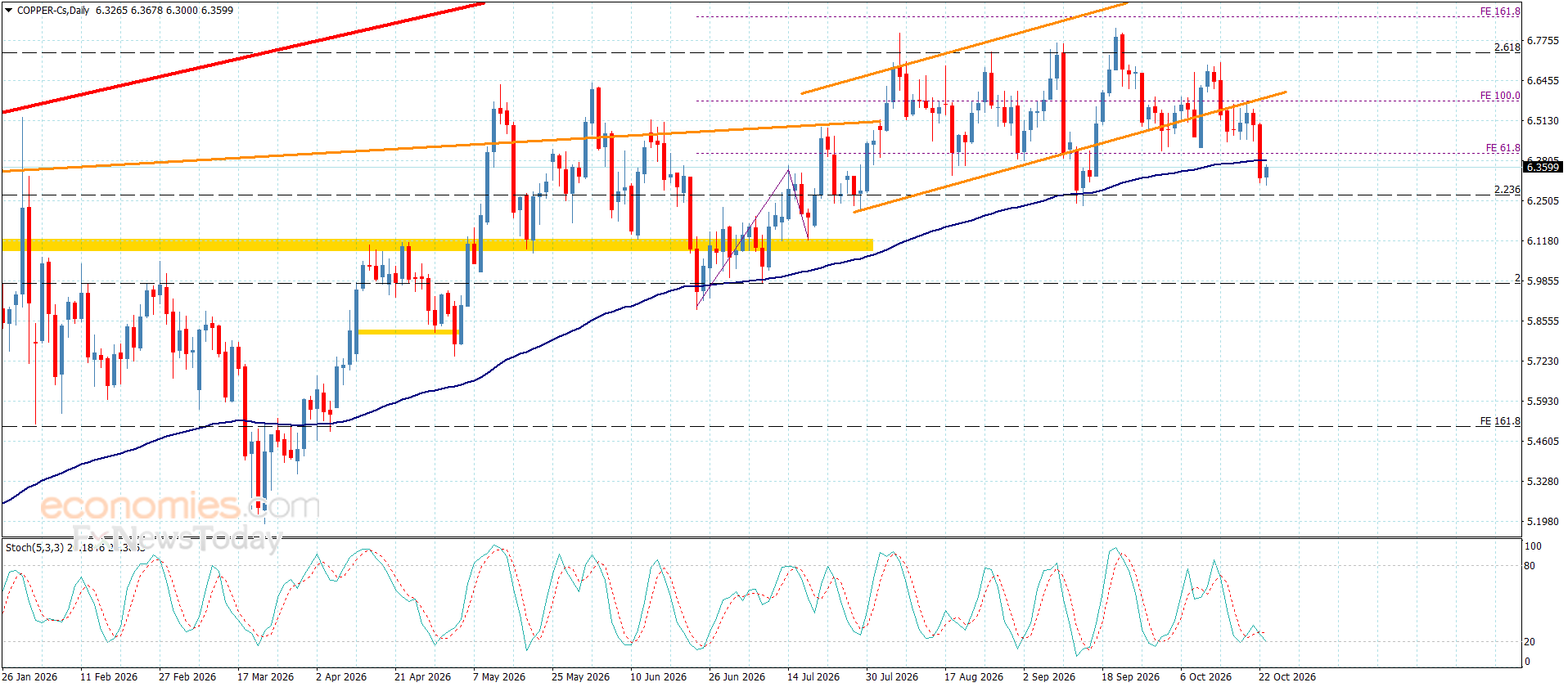
Copper price activated the negative attempts, to press on the moving average 55, approaching the initial target at $5.9500 to settle near $6.0500.


Reminding you that the stability below the barrier near $6.3000, beside stochastic attempt to provide negative momentum supports the chances of resuming the bearish corrective attempts by reaching below the moving average 55 and reaching the extra negative stations near $5.8200 and $5.7100.


The expected trading range for today is between $5.8200 and $6.1500


Trend forecast: Bearish


Source link

9 07, 2026

Oil Price Surges as US-Iran Ceasefire Over. Forecast as of 08.07.2026

By |2026-07-09T03:47:01+03:00July 9, 2026|Forex News, News|0 Comments


The escalation of the conflict in the Middle East has given Donald Trump an opportunity to declare that it’s all over. The deal is canceled, and everything is back to square one. Judging by the rally in Brent, that seems to be the case. However, are investors being led up the garden path? Let’s discuss this and develop a trading plan.

The article covers the following subjects:

Major Takeaways

  • The US is ready to withdraw from the deal with Iran.
  • The oil market turned bullish again.
  • China continues to stabilize the market.
  • Long positions on Brent can be considered with targets of $82.5 and $84.5.

Weekly Fundamental Forecast for Oil

Don’t count your chickens before they hatch. In recent weeks, the markets have lived with the sense that the worst of the conflict in the Middle East was behind them. Brent quickly returned to pre-war levels, and Macquarie and Citigroup predicted that prices would fall to $60 per barrel in the coming months. Iran’s attacks on tankers in the Strait of Hormuz, followed by the US response, appeared at first glance to be a black swan event. In reality, it was entirely predictable. The positions of the two sides were simply too far apart.

The main drivers behind Brent’s drop to February lows were record US exports—which allowed Europe and Asia to meet demand for the next 2–3 months—a reduction in global reserves to their lowest level since December 1990, and a sharp decline in Chinese imports. Against this backdrop, the resumption of traffic through the Strait of Hormuz resulted in oil shipments that proved unnecessary.

OECD Government Oil Stocks

Source: Bloomberg.

Adding to the bearish pressure are OPEC+ plans to raise production by 180,000 bpd, Iran’s rapid increase in exports, and the swift recovery of output in Gulf states. As a result, even 30–60 tankers passing through the world’s key oil chokepoint were enough to fuel concerns about a potential supply surplus. According to Vortexa, oil flows through the Strait of Hormuz before the escalation reached 40% of pre-conflict levels.

Interestingly, China has once again increased its oil purchases. While some have described Beijing as a savior of the global economy, its actions are largely driven by market conditions: China tends to buy more when Brent prices decline and scale back imports when prices rise.

Chinese Oil Imports

Source: Bloomberg.

In general, given the reluctance of OECD countries to quickly rebuild their stockpiles prior to Iran’s attacks on tankers in the Strait of Hormuz, Brent crude was indeed closer to $60 than to $80 per barrel. The escalation of the conflict in the Middle East changed everything. The oil market quickly shifted from contango to backwardation, where more distant contracts are cheaper than those for immediate delivery. This indicates either strong demand or supply constraints. Clearly, the latter is the case.

Donald Trump’s words that it’s all over and he doesn’t want to deal with Iran suggest that investors can expect more intense hostilities than before unless the US leader changes his mind.

Weekly Trading Plan for Brent

Brents rebound from the lower boundary of the $70–80 range signaled profit-taking on short positions and triggered a reversal. A further escalation of the conflict in the Middle East would provide grounds for increasing long positions with targets of $82.5 and $84.5. Alternatively, if the US and Iran return to the negotiating table, Brent crude will likely remain stuck in this consolidation range.


This forecast is based on the analysis of fundamental factors, including official statements from financial institutions and regulators, various geopolitical and economic developments, and statistical data. Historical market data are also considered.

Price chart of UKBRENT in real time mode

The content of this article reflects the author’s opinion and does not necessarily reflect the official position of LiteFinance broker. The material published on this page is provided for informational purposes only and should not be considered as the provision of investment advice for the purposes of Directive 2014/65/EU.


According to copyright law, this article is considered intellectual property, which includes a prohibition on copying and distributing it without consent.

Rate this article:

{{value}} ( {{count}} {{title}} )


Source link

8 07, 2026

Copper price is slow– Forecast today – 8-7-2026

By |2026-07-08T23:45:33+03:00July 8, 2026|Forex News, News|0 Comments


Copper price forced to provide slow sideways trading, due to the contradiction of the main indicators against holding below $6.3000 barrier, the price needs to settle below $5.9500 level, reinforcing the chances of targeting the corrective stations, which might begin at $5.8200 and $5.7100.


Surpassing the barrier will cancel the corrective scenario, to open the way for recording clear gains by its rally towards $5.4300 initially, to attempt to surpass $6.5200, to confirm the continuation of the positivity in the upcoming trading.


The expected trading range for today is between $5.9500 and $6.2600


Trend forecast: Bearish


Source link

Go to Top