The S&P 500 Index SPY today is up +0.11%, the Dow Jones Industrial Average DIA is up +0.57%, and the Nasdaq 100 Index QQQ is down -0.18%. June E-mini S&P futures (ESM26) are up +0.09%, and June E-mini Nasdaq futures (NQM26) are down -0.14%.
Stock indexes are mixed today, with the Dow Jones Industrials posting a new all-time high. Stocks are supported as crude oil prices dropped another -3% today to a 3.25-month low, easing inflation expectations and supporting stocks and bonds. Stocks have carryover support from Monday’s surge after the US and Iran agreed to end their war and reopen the Strait of Hormuz, stoking risk-on sentiment in asset markets. The 10-year T-note yield is down -2 bp to 4.45%.
Gains in stocks are limited today amid weakness in energy producers from the plunge in crude oil prices and today’s weaker-than-expected US housing starts and building permits reports.
The market’s focus will turn to the 2-day FOMC meeting that begins today, which will be the first under the leadership of new Fed Chair Kevin Warsh. While the Fed is expected to keep interest rates unchanged, the spotlight will be on how Mr. Warsh navigates the post-meeting press conference and the outlook for inflation.
US May housing starts fell -15.4% m/m to a 6-year low of 1.177 million, weaker than expectations of 1.430 million. May building permits, a proxy for future construction, fell -0.7% m/m to 1.413 million, weaker than expectations of 1.418 million.
The US May import price index ex-petroleum rose +0.8% m/m, stronger than expectations of +0.5% m/m.
WTI crude oil prices (CLN26) are down more than -3% today at a 3.25-month low due to the US-Iran deal to reopen the Strait of Hormuz, boosting expectations for a revival in oil supplies. Goldman Sachs today cut its price forecast on Brent crude to $80 a barrel in Q4 of this year, down from $90 a barrel, and said it expects Persian Gulf crude exports to return to pre-war levels by the end of July, one month earlier than previously expected.
The markets are discounting a 4% chance of a +25 bp rate hike at the conclusion of the Tue/Wed FOMC meeting.
Overseas stock markets are mixed today. The Euro Stoxx 50 is up +0.61%. China’s Shanghai Composite fell from a 1.5-week high and closed down -0.11%. Japan’s Nikkei-225 Stock Average rose to a new all-time high and closed up +0.13%.
Interest Rates
September 10-year T-notes (ZNU6) today are up +4 ticks, and the 10-year T-note yield is down -2.0 bp to 4.453%. Sep T-notes are moving higher today amid the fall in WTI crude oil to a 3.25-month low, which has reduced inflation expectations and is bullish for T-notes. Also, weaker-than-expected US May housing starts and building permits are supportive of T-notes. In addition, markets are hoping for a less hawkish FOMC meeting this week, given that oil prices should decline over time if the Strait of Hormuz reopens as expected.
European government bond yields are moving lower today. The 10-year German bund yield fell to an 8-week low of 2.921% and is down -3.0 bp to 2.924%. The 10-year UK gilt yield is down -3.0 bp to 4.782%.
Eurozone Q1 labor costs were revised downward to +3.2% y/y from the previously reported +3.4% y/y.
The German Jun ZEW survey expectations of economic growth rose +20.7 to a 4-month high of 10.5, stronger than expectations of -5.5.
Swaps are discounting an 17% chance of a +25 bp ECB rate hike at its next policy meeting on July 23.
US Stock Movers
Chipmakers and AI infrastructure stocks are pushing higher today, supporting gains in the broader market. Western Digital WDC is up more than +6% to lead gainers in the S&P 500 and Nasdaq 100, and Seagate Technology Holdings Plc STX and Qualcomm QCOM are up more than +4%. Also, ARM Holdings Plc ARM is up more than +2%, and Analog Devices ADI, SanDisk SNDK, and Microchip Technology MCHP are up more than +1%.
Airline stocks and cruise line operators are rallying today as the -3% decline in WTI crude oil prices lowers fuel costs and boosts the profitability prospects for the companies. American Airlines Group AAL and Southwest Airlines LUV are up more than +3%, and Carnival CCCL, Alaska Air Group ALK, and Norwegian Cruise Line Holdings NCLH are up more than +2%. Also, Royal Caribbean Cruises RCL, United Airlines Holdings UAL, and Delta Air Lines DAL are up more than +1%.
Mining stocks are climbing today with rallies in gold, silver, and copper prices. Coeur Mining CDE is up more than +3%, and Hecla Mining HL, Newmont Corp NEM, Barrick Mining B, and Southern Copper SCCO are up more than +2%. Also, Freeport McMoRan FCX and Anglogold Ashanti AU are up more than +1%.
Cybersecurity stocks are under pressure today, limiting gains in the broader market. Palo Alto Networks PANW, Zscaler ZS, and Fortinet FTNT are down more than -2%, and CrowdStrike Holdings CRWD is down more than -1%.
Energy stocks and service providers are moving lower today with WTI crude oil down more than -3% to a 3.25-month low. Valero Energy VLO is down more than -2%. Also, ConocoPhillips COP, Diamondback Energy FANG, Devon Energy DVN, Haliburton HAL, APA Corp APA, and Marathon Petroleum MPC are down more than -1%.
Space Exploration Technologies SPCX is up more than +13%, adding to the +37% gain over the past two sessions on positive carryover from its record $75 billion initial public offering (IPO) late last week, which was more than four times oversubscribed, indicating strong demand for the stock.
Mobileye Global MBLY is up by more than +5% after announcing plans to expand its robotaxi activities beyond self-driving technology into full ownership of an autonomous ride-hailing business.
Valmont Industries VMI is up more than +3% after projecting a goal of $5.4 billion in organic net sales and an EPS target of $35 by the end of 2029.
Edwards Lifesciences EW is up more than +3% after the US government published a coverage proposal for transcatheter aortic valve replacement, a positive development for the company.
Huntsman HUN is down more than -13% after agreeing to merge with Olin in an all-stock merger of equals.
Dave & Buster’s Entertainment PLAY is down more than -6% after reporting Q1 revenue of $559.2 million, weaker than the consensus of $580.3 million.
Tractor Supply Co TSCO is down more than -3% to lead losers in the S&P 500 after several analysts cut their price targets on the stock.
Huson Pacific Properties HPP is down more than -1% after Bank of America Global Research downgraded the stock to underperform from neutral with a price target of $14.
Tanger SKT is down more than -1% after Bank of America Global Research downgraded the stock to underperform from neutral with a price target of $38.
Earnings Reports(6/16/2026)
John Wiley & Sons Inc (WLY) and La-Z-Boy Inc (LZB).
On the date of publication, Rich Asplund did not have (either directly or indirectly) positions in any of the securities mentioned in this article. All information and data in this article is solely for informational purposes.For more information please view the Barchart Disclosure Policy here.
More news from Barchart
This Analyst Just Upgraded Palantir Stock. Here’s Why.
Rocket Lab vs. Redwire: 1 Stock Has the Stronger Growth Story for the Next Decade
Rocket Lab Stock Sinks After SpaceX IPO. If You’re In It for the Long Haul, Buy the Dip.
TradingKey – As of today’s (June 16) European session, the crude oil market has continued to weaken on expectations of an impending preliminary US-Iran agreement. The market may begin trading on the supply recovery logic, increasing downward pressure on oil prices. As of press time, WTI crude ( USOIL) fell 1.63% to $79.85.
Recently, as a preliminary peace framework between the U.S. and Iran nears completion, the market’s trading logic has begun to shift. Trump has signaled a push to sign the agreement, reopen the Strait of Hormuz, and lift some blockades, while Iran has also confirmed progress on the text of the agreement, prompting the crude market to potentially price in a supply recovery ahead of schedule. Looking at the chart, WTI fell to near $80, indicating that the market is rapidly squeezing out the risk premium previously generated by geopolitical tensions.
However, a recovery in supply does not mean oil prices will experience a one-way decline. Even if the Strait of Hormuz is reopened, actual tanker transit, shipping insurance, port scheduling, and the resumption of buyer purchases will all take time. Market analysts believe that restoring tanker traffic could take several weeks, and the resumption of production and exports may also proceed in phases. As long as the agreement has not been officially signed, or if the implementation details remain unclear after signing, oil prices still have room for volatile fluctuations.
Meanwhile, inventories are also providing some support for oil prices. The EIA’s latest Short-Term Energy Outlook shows that restricted transit through the Strait of Hormuz has already significantly tightened the global oil market, with global petroleum inventories projected to decline by an average of 8.5 million barrels per day in the second quarter of 2026. This indicates that the prior conflict in the Middle East was not just sentiment-driven but has caused actual inventory depletion. Even if the U.S.-Iran agreement progresses, replenishing global inventories will take time. If summer travel demand rebounds, low inventory levels could limit the room for further deep declines in WTI.
On the demand side, this remains the key factor capping any rebound in oil prices. Currently, global crude demand is sluggish, with Asian demand performing particularly weakly. China’s crude imports in May fell 29% year-on-year to an eight-year low, indicating that high oil prices, supply instability, and pressure on refining margins have significantly dampened buying interest. Weakness on the demand side means that once Middle Eastern supply recovers, it will be difficult for the market to continue justifying high oil prices with supply tightness. Meanwhile, U.S. crude and refined product exports remain high, mitigating the Middle East supply gap to some extent and leaving the spot market less tight than previously expected.
From WTI’s weekly chart, following a sharp 6.6% drop last week, oil prices opened lower with a gap and continued to decline this week, significantly boosting bearish momentum in the market. The downward trend could persist for the remainder of the trading week.
Currently, WTI’s primary downside target is to test the support at the April low of $78.97. If this level fails to hold, oil prices could open up room for further decline toward the $76.60 support level, and potentially even move lower to fill the gap between $67.28 and $75.00.
On the upside, if WTI fails to break below the $78.97 support, oil prices may see a short-term technical rebound, with the primary target of filling the $84.28-$81.40 gap.
This content was translated using AI and reviewed for clarity. It is for informational purposes only.
Silver Price (XAG/USD) trades in negative territory around $69.85 during the early European trading hours on Tuesday. The white metal retreats from a weekly high as traders book some profits ahead of the US Federal Reserve (Fed) interest rate decision.
The US central bank is widely expected to keep its benchmark interest rate unchanged at a target range of 3.50% to 3.75% at its upcoming policy meeting on Wednesday.
Traders will closely monitor the developments surrounding the US-Iran peace deal. The progress of a preliminary framework agreement between both countries has significantly eased geopolitical tensions and might help limit Silver’s losses in the near term.
Bets on Fed rate hikes receded after the framework deal, supporting the precious metals, non-yielding assets. Markets cut the chance of a US rate hike in December to 58% from nearly 70% last week, according to the CME FedWatch tool.
Technical Analysis:
In the daily chart, XAG/USD remains under clear downside pressure as price holds below the Bollinger Bands’ 20-day simple moving average and the 100-day simple moving average, keeping the broader trend tilted lower. The Relative Strength Index (14) hovers just below the midline, hinting at weak but not extreme bearish momentum while silver consolidates in the lower half of its recent volatility envelope.
On the topside, initial resistance is located at the Bollinger Bands’ middle line around $72.25. The next hurdle to watch is the June 5 high of $74.14, en route to the 100-day SMA near $78.55 and the upper Bollinger band around $80.72. On the downside, the next notable support aligns with the lower Bollinger band at roughly $63.80, where volatility-based demand could attempt to slow the current bearish phase.
(The technical analysis of this story was written with the help of an AI tool.)
Silver FAQs
Silver is a precious metal highly traded among investors. It has been historically used as a store of value and a medium of exchange. Although less popular than Gold, traders may turn to Silver to diversify their investment portfolio, for its intrinsic value or as a potential hedge during high-inflation periods. Investors can buy physical Silver, in coins or in bars, or trade it through vehicles such as Exchange Traded Funds, which track its price on international markets.
Silver prices can move due to a wide range of factors. Geopolitical instability or fears of a deep recession can make Silver price escalate due to its safe-haven status, although to a lesser extent than Gold’s. As a yieldless asset, Silver tends to rise with lower interest rates. Its moves also depend on how the US Dollar (USD) behaves as the asset is priced in dollars (XAG/USD). A strong Dollar tends to keep the price of Silver at bay, whereas a weaker Dollar is likely to propel prices up. Other factors such as investment demand, mining supply – Silver is much more abundant than Gold – and recycling rates can also affect prices.
Silver is widely used in industry, particularly in sectors such as electronics or solar energy, as it has one of the highest electric conductivity of all metals – more than Copper and Gold. A surge in demand can increase prices, while a decline tends to lower them. Dynamics in the US, Chinese and Indian economies can also contribute to price swings: for the US and particularly China, their big industrial sectors use Silver in various processes; in India, consumers’ demand for the precious metal for jewellery also plays a key role in setting prices.
Silver prices tend to follow Gold’s moves. When Gold prices rise, Silver typically follows suit, as their status as safe-haven assets is similar. The Gold/Silver ratio, which shows the number of ounces of Silver needed to equal the value of one ounce of Gold, may help to determine the relative valuation between both metals. Some investors may consider a high ratio as an indicator that Silver is undervalued, or Gold is overvalued. On the contrary, a low ratio might suggest that Gold is undervalued relative to Silver.
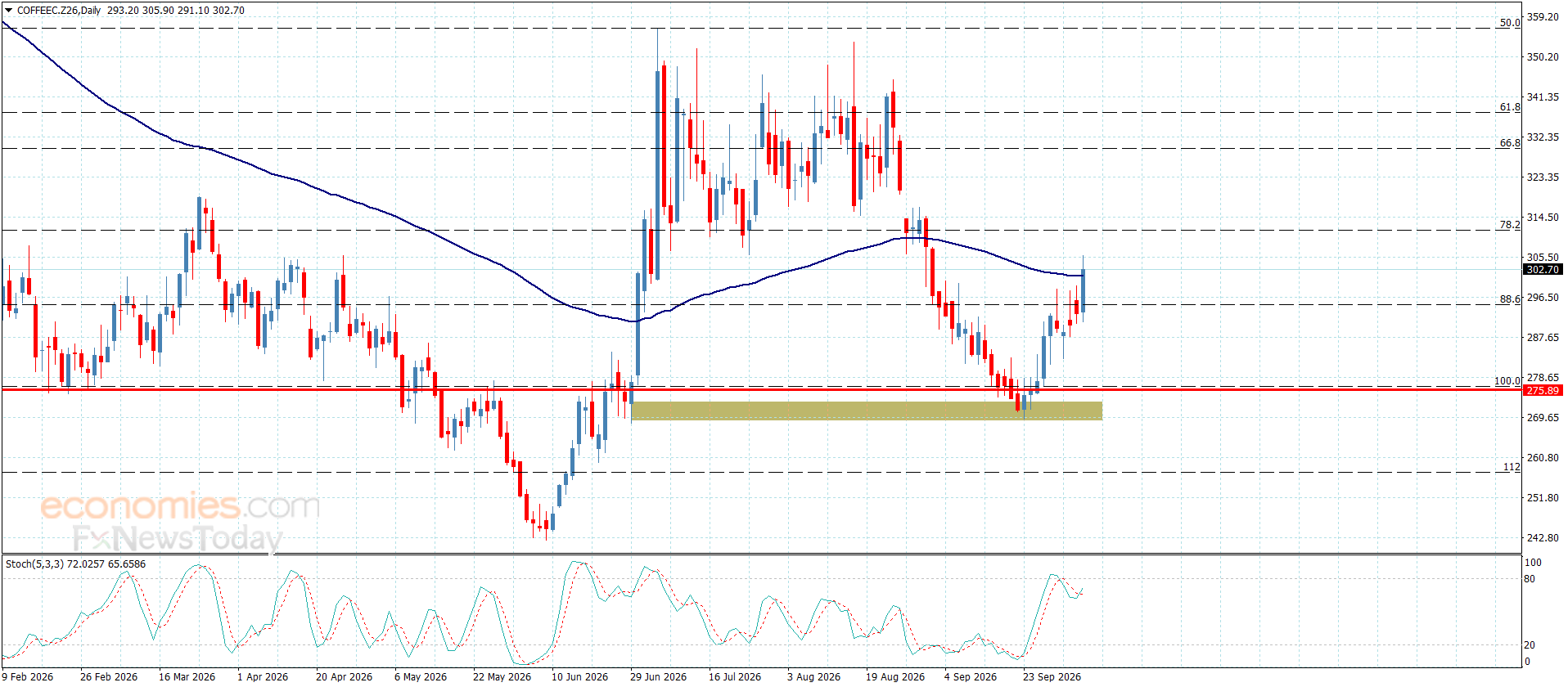
Coffee prices today in the domestic market recorded a slight downward trend in some key localities. According to records, the average coffee price reached 89,300 VND/kg, down 300 VND/kg compared to the previous session.
In Dak Lak, coffee prices were recorded at 89,300 VND/kg, down 200 VND/kg. Gia Lai also had a price of 89,300 VND/kg, down 200 VND/kg.
In Lam Dong, coffee prices today reached 89,000 VND/kg, not recording changes compared to the previous session. Meanwhile, the old Dak Nong area was recorded at 89,300 VND/kg, down 400 VND/kg.
Thus, domestic coffee prices currently fluctuate around 89,000-89,300 VND/kg. The highest price in the survey group is 89,300 VND/kg in Dak Lak, Gia Lai and the old Dak Nong area.
The USD/VND exchange rate according to Vietcombank is recorded at 26,073 VND/USD.
World coffee prices
On the London exchange, the price of Robusta coffee futures in July 2026 reached 3,607 USD/ton, an increase of 13 USD/ton, equivalent to 0.36%. The term for September 2026 reached 3,529 USD/ton, an increase of 4 USD/ton, equivalent to 0.11%.
Further terms also increased slightly. Robusta November 2026 term reached 3,466 USD/ton, up 14 USD/ton; January 2027 term reached 3,409 USD/ton, up 19 USD/ton; March 2027 term reached 3,375 USD/ton, up 21 USD/ton.
On the New York exchange, Arabica coffee prices increased more strongly than Robusta. July 2026 futures reached 262.95 US cents/lb, up 5.75 cents/lb, equivalent to 2.24%. September 2026 futures reached 259.20 US cents/lb, up 5.80 cents/lb, equivalent to 2.29%.
In distant terms, Arabica in December 2026 reached 251.75 US cents/lb, an increase of 5.30 cents/lb; March 2027 futures reached 249.15 US cents/lb, an increase of 4.95 cents/lb; May 2027 futures reached 249.10 US cents/lb, an increase of 4.95 cents/lb.
This development shows that world coffee prices continue to maintain the recovery momentum, although domestic coffee prices have not reflected the same direction in today’s session.
Coffee price assessment
According to Barchart, world coffee prices continued to rise in the first session of the week, with Arabica reaching a 2-week high and Robusta reaching a 5-week high. The main driver came from concerns that prolonged rain in Brazil could slow down coffee harvest progress.
Weather factors in Brazil are being closely monitored by the market. Light to heavy rain in coffee growing areas can disrupt harvesting and drying operations and affect the quality of seeds. This is the reason for supporting coffee prices in the short term, especially for Arabica.
Coffee inventory on the ICE exchange decreasing in recent months is also a factor supporting prices. Arabica inventory on the ICE fell to its lowest level in more than 6 months last weekend. Robusta inventory also touched a 2-year low in May and is still in the low zone.
However, the coffee market still faces pressure factors. USDA/FAS forecasts that Brazil’s coffee output in the 2026/27 crop year may reach 71.9 million bags, an increase of about 14% over the same period. Rabobank also raised its global Arabica surplus forecast to 9.5 million bags, higher than the previous level of 7 million bags.
On the Robusta side, increased Vietnamese coffee exports are a factor that can limit price increases. According to data from the Customs Department (Ministry of Finance), Vietnam’s coffee exports in the first 5 months of 2026 reached 922,000 tons, an increase of 7.9% compared to the same period.
In general, world coffee prices are being supported by Brazilian weather risks, low inventories and concerns that El Niño may affect the flowering cycle in the near future. However, the prospect of large supply from Brazil and Robusta exports from Vietnam are still factors that can curb the increase in coffee prices.
Copper price activated since this morning’s trading to the positive signals from the main indicators, maintaining its position above the stable support level at $6.1000, as we notice the beginning of forming new upward waves that have settled it near $6.5000.
We reiterate that confirmation of the price’s readiness to resume the upward momentum will remain valid unless the resistance level at $6.6000 is broken. In that case, the price may shift into new sideways trading. However, a successful breakout and stability above this resistance would make it easier for the price to reach additional targets, which may start at $6.7800 and $6.9200.
The expected trading range for today is between $5.3500 and $6.6000
WTI crude
oil traded at $80.73 per barrel on Monday, June 15, 2026, down almost 5% from
Friday’s $84.88 close, after the United States and Iran reached an interim deal
to reopen the Strait of Hormuz and drain the war premium from the oil market.
Brent fell more than 4% to below $84, a fresh three-month low.
The deal,
set to be signed June 19 in Switzerland, would restart a waterway that once
carried about a fifth of global oil supply. Traders now weigh a slow physical
recovery against a 60-day window of US-Iran nuclear talks that could still
collapse.
In this
article I am showing why oil prices are falling down today, how low can oil go,
and what are the newest oil price predictions from big banks.
Follow
me on X for real-time market analysis: @ChmielDk
That break
ejects WTI from the choppy consolidation it has held since March, a range
without clean edges that traded between roughly $85 to $88 on the floor and
$110 to $115 on the ceiling.
WTI oil technical analysis: the test of the 200 EMA. Source: Tradingview.com
The
boundaries are not random. The upper zone aligns with the 2022 highs I flagged when Brent
topped $115, when
WTI briefly ran toward $125 before stalling; this cycle’s war spike topped out
near $120. The lower edge near $85 to $88 matches the April and July 2024
peaks. With that floor broken, the old support now flips to resistance.
The 200 EMA
read carries weight because it sits near $80, almost to the pip on the January
2025 highs, stacked on the round number and the June 2025 highs into one dense
support shelf.
In 15-plus
years as a trader and analyst, 10 of them at FinanceMagnates.com, I have rarely
seen technical levels matter less than they do in this oil market. My prior
calls are archived on my analyst page, from the $112 April peak down to today’s reversal. Price is
being written by the US, Iran and Trump, not by moving averages.
For now the
daily trend is still up. The consolidation has broken, but the 200 EMA is
printing a first demand reaction. My question is simple: does a bounce reclaim
the range, or does the former floor, now resistance, cap the buyers before a
stronger charge?
Level
Type
Notes
$110 to $120
Resistance
2022
highs; this cycle’s war spike near $120
$85 to $88
Resistance (flipped)
Old
consolidation floor; April and July 2024 peaks
$80.73
Spot / 200 EMA
Monday,
June 15, 2026; first touch in 4+ months
$80
Support
Round
level; June 2025 highs; January 2025 highs
$72
Support
April 2025 reference level
Why Oil Is Falling Today?
Oil dropped
after Washington and Tehran agreed to halt a war that erupted in late February,
when US and Israeli strikes on Iran’s nuclear program shut the Strait of Hormuz in early
March.
Officials
will meet in Switzerland on June 19 to sign the text, which neither side has
released, according to Bloomberg reporting. President Donald Trump said the
strait would reopen once mines are cleared from the waterway.
Before the
blockade, the strait handled roughly a fifth of the world’s oil supply in a
market of more than 100 million barrels a day. Nearly 600 vessels remain stuck
in the Persian Gulf awaiting departure, data firm Kpler told Bloomberg.
The unwind
already shows in the futures curve: Brent’s prompt spread narrowed to less than
$1 a barrel in backwardation, down from more than $12 in April.
Goldman
Sachs added a counterintuitive twist on June 12. The bank kept its Q4 2026
Brent forecast at $90, holding to near-term geopolitical risk, while cutting
its 2027 average to $80, down $5, according to Reuters reporting. The message
is that the current war premium does not become a lasting price surge.
Goldman
pointed to stronger supply from the US, Brazil, Guyana, Venezuela and the UAE,
alongside weaker demand tied partly to China’s shift to electric vehicles. The
bank assumes just over 10% of the demand lost during the shock sticks.
It stops
short of calling a collapse, because the physical market is still tight, the
same oversupply-versus-scarcity tension I covered when oil slipped after the Maduro
capture.
US crude
inventories underline that tightness. Stockpiles fell 7.2 million barrels to
426.5 million in the latest week, nearly 5% below the five-year average, while
distillates sat 13% below normal, per Investing data. Oil trading volumes climbed through Q1 as volatility
intensified.
The 2027
downgrade rests on:
Non-OPEC supply growth from the US, Brazil, Guyana,
Venezuela and the UAE
Structural demand loss, with Goldman assuming over
10% of the shock-driven drop persists
China EV penetration eroding gasoline and diesel
demand
Still-tight inventories, which keep Goldman from
forecasting a deeper slide
How Low Can Oil Go? Oil
Price Predictions
How low oil
can go depends on whether the Hormuz reopening holds. Goldman’s $90 Q4 2026
Brent call still bakes in a war premium that is actively draining, so I read it
as a ceiling rather than a base if the deal sticks. Its $80 cut for 2027
matches my own bias: once Gulf barrels return, the structural surplus reasserts
and rallies get sold.
The
official forecasters agree on direction. The EIA’s June outlook sees Brent
easing to $89 in Q4 2026 and averaging $79 in 2027, assuming Hormuz reopens in
the third quarter. JPMorgan is more bearish at $75 for 2027, the lowest of the
majors, and that number looks reasonable to me if demand stays soft and US
output holds near record highs.
How low can WTI crude oil go according to my technical analysis? Source: Tradingview.com
On my
chart, the first WTI support is the $80 shelf, where the 200 EMA, the June 2025
highs and the round number converge. Lose it, and $72 from April 2025 opens up.
The bull case is a deal collapse: mines, insurance friction or a failed nuclear
track snap the premium back and drive WTI into the $110 to $120 consolidation
again.
Source
Target
Notes
Goldman Sachs
Brent $90
Q4 2026,
kept; near-term war premium
Goldman Sachs
Brent $80
2027
average, cut $5 on supply growth
EIA (June STEO)
Brent $89 / $79
Q4 2026 / 2027; Hormuz reopens Q3
JPMorgan
Brent $75
2027 average; deepest major call
My TA
WTI $80, then $72
200 EMA
shelf, then April 2025 level
My TA (bull)
WTI $110 to $120
If deal
collapses, back into consolidation
Bull
case (deal fails, premium returns):
Mine-clearing or insurance
friction delays Hormuz transits past June 19
Iran-Oman control of the strait
reignites supply fears
Nuclear talks collapse inside
the 60-day window, risking renewed strikes
Bear
case (deal holds, surplus returns):
Gulf shut-ins restart, adding
back more than 10 million barrels per day of disrupted output
Non-OPEC supply from the US,
Brazil and Guyana keeps building
China EV demand and record US
production cap any rebound
FAQ, OIL Price Analysis
Why is oil falling today?
WTI crude
fell almost 5% to $80.73 on June 15, 2026, and Brent dropped below $84 after
the US and Iran agreed to an interim deal to reopen the Strait of Hormuz. The
waterway carried about a fifth of global oil supply before the war, so its
reopening drains the geopolitical premium that had lifted crude since late
February.
How low can oil prices go?
My
technical analysis puts the first WTI support at the $80 shelf, where the
200-day EMA and June 2025 highs converge. A break below it opens $72, the April
2025 level. The EIA sees Brent averaging $79 in 2027, while JPMorgan models
$75, so a move into the $70s is credible if the deal holds.
What is the Goldman Sachs
oil price forecast for 2027?
Goldman
Sachs cut its 2027 average Brent forecast to $80 a barrel on June 12, 2026, a
$5 reduction. The bank kept its Q4 2026 Brent call at $90 but expects stronger
supply from the US, Brazil, Guyana, Venezuela and the UAE, plus weaker Chinese
demand, to weigh on prices next year.
When will the Strait of
Hormuz reopen?
The US and
Iran are due to sign their interim deal on June 19, 2026, in Switzerland, after
which the strait is set to reopen once mines are cleared. The EIA assumes
shipments resume in the third quarter of 2026, with traffic taking until early
2027 to return to pre-conflict levels.
Is WTI crude still in an
uptrend?
Yes, for
now. WTI broke its three-month consolidation on June 15, 2026, but the daily
trend remains up while the 200-day EMA near $80 holds. My read hinges on
whether a bounce reclaims the old range or the former floor at $85 to $88, now
resistance, caps the rebound.
WTI crude
oil traded at $80.73 per barrel on Monday, June 15, 2026, down almost 5% from
Friday’s $84.88 close, after the United States and Iran reached an interim deal
to reopen the Strait of Hormuz and drain the war premium from the oil market.
Brent fell more than 4% to below $84, a fresh three-month low.
The deal,
set to be signed June 19 in Switzerland, would restart a waterway that once
carried about a fifth of global oil supply. Traders now weigh a slow physical
recovery against a 60-day window of US-Iran nuclear talks that could still
collapse.
In this
article I am showing why oil prices are falling down today, how low can oil go,
and what are the newest oil price predictions from big banks.
Follow
me on X for real-time market analysis: @ChmielDk
That break
ejects WTI from the choppy consolidation it has held since March, a range
without clean edges that traded between roughly $85 to $88 on the floor and
$110 to $115 on the ceiling.
WTI oil technical analysis: the test of the 200 EMA. Source: Tradingview.com
The
boundaries are not random. The upper zone aligns with the 2022 highs I flagged when Brent
topped $115, when
WTI briefly ran toward $125 before stalling; this cycle’s war spike topped out
near $120. The lower edge near $85 to $88 matches the April and July 2024
peaks. With that floor broken, the old support now flips to resistance.
The 200 EMA
read carries weight because it sits near $80, almost to the pip on the January
2025 highs, stacked on the round number and the June 2025 highs into one dense
support shelf.
In 15-plus
years as a trader and analyst, 10 of them at FinanceMagnates.com, I have rarely
seen technical levels matter less than they do in this oil market. My prior
calls are archived on my analyst page, from the $112 April peak down to today’s reversal. Price is
being written by the US, Iran and Trump, not by moving averages.
For now the
daily trend is still up. The consolidation has broken, but the 200 EMA is
printing a first demand reaction. My question is simple: does a bounce reclaim
the range, or does the former floor, now resistance, cap the buyers before a
stronger charge?
Level
Type
Notes
$110 to $120
Resistance
2022
highs; this cycle’s war spike near $120
$85 to $88
Resistance (flipped)
Old
consolidation floor; April and July 2024 peaks
$80.73
Spot / 200 EMA
Monday,
June 15, 2026; first touch in 4+ months
$80
Support
Round
level; June 2025 highs; January 2025 highs
$72
Support
April 2025 reference level
Why Oil Is Falling Today?
Oil dropped
after Washington and Tehran agreed to halt a war that erupted in late February,
when US and Israeli strikes on Iran’s nuclear program shut the Strait of Hormuz in early
March.
Officials
will meet in Switzerland on June 19 to sign the text, which neither side has
released, according to Bloomberg reporting. President Donald Trump said the
strait would reopen once mines are cleared from the waterway.
Before the
blockade, the strait handled roughly a fifth of the world’s oil supply in a
market of more than 100 million barrels a day. Nearly 600 vessels remain stuck
in the Persian Gulf awaiting departure, data firm Kpler told Bloomberg.
The unwind
already shows in the futures curve: Brent’s prompt spread narrowed to less than
$1 a barrel in backwardation, down from more than $12 in April.
Goldman
Sachs added a counterintuitive twist on June 12. The bank kept its Q4 2026
Brent forecast at $90, holding to near-term geopolitical risk, while cutting
its 2027 average to $80, down $5, according to Reuters reporting. The message
is that the current war premium does not become a lasting price surge.
Goldman
pointed to stronger supply from the US, Brazil, Guyana, Venezuela and the UAE,
alongside weaker demand tied partly to China’s shift to electric vehicles. The
bank assumes just over 10% of the demand lost during the shock sticks.
It stops
short of calling a collapse, because the physical market is still tight, the
same oversupply-versus-scarcity tension I covered when oil slipped after the Maduro
capture.
US crude
inventories underline that tightness. Stockpiles fell 7.2 million barrels to
426.5 million in the latest week, nearly 5% below the five-year average, while
distillates sat 13% below normal, per Investing data. Oil trading volumes climbed through Q1 as volatility
intensified.
The 2027
downgrade rests on:
Non-OPEC supply growth from the US, Brazil, Guyana,
Venezuela and the UAE
Structural demand loss, with Goldman assuming over
10% of the shock-driven drop persists
China EV penetration eroding gasoline and diesel
demand
Still-tight inventories, which keep Goldman from
forecasting a deeper slide
How Low Can Oil Go? Oil
Price Predictions
How low oil
can go depends on whether the Hormuz reopening holds. Goldman’s $90 Q4 2026
Brent call still bakes in a war premium that is actively draining, so I read it
as a ceiling rather than a base if the deal sticks. Its $80 cut for 2027
matches my own bias: once Gulf barrels return, the structural surplus reasserts
and rallies get sold.
The
official forecasters agree on direction. The EIA’s June outlook sees Brent
easing to $89 in Q4 2026 and averaging $79 in 2027, assuming Hormuz reopens in
the third quarter. JPMorgan is more bearish at $75 for 2027, the lowest of the
majors, and that number looks reasonable to me if demand stays soft and US
output holds near record highs.
How low can WTI crude oil go according to my technical analysis? Source: Tradingview.com
On my
chart, the first WTI support is the $80 shelf, where the 200 EMA, the June 2025
highs and the round number converge. Lose it, and $72 from April 2025 opens up.
The bull case is a deal collapse: mines, insurance friction or a failed nuclear
track snap the premium back and drive WTI into the $110 to $120 consolidation
again.
Source
Target
Notes
Goldman Sachs
Brent $90
Q4 2026,
kept; near-term war premium
Goldman Sachs
Brent $80
2027
average, cut $5 on supply growth
EIA (June STEO)
Brent $89 / $79
Q4 2026 / 2027; Hormuz reopens Q3
JPMorgan
Brent $75
2027 average; deepest major call
My TA
WTI $80, then $72
200 EMA
shelf, then April 2025 level
My TA (bull)
WTI $110 to $120
If deal
collapses, back into consolidation
Bull
case (deal fails, premium returns):
Mine-clearing or insurance
friction delays Hormuz transits past June 19
Iran-Oman control of the strait
reignites supply fears
Nuclear talks collapse inside
the 60-day window, risking renewed strikes
Bear
case (deal holds, surplus returns):
Gulf shut-ins restart, adding
back more than 10 million barrels per day of disrupted output
Non-OPEC supply from the US,
Brazil and Guyana keeps building
China EV demand and record US
production cap any rebound
FAQ, OIL Price Analysis
Why is oil falling today?
WTI crude
fell almost 5% to $80.73 on June 15, 2026, and Brent dropped below $84 after
the US and Iran agreed to an interim deal to reopen the Strait of Hormuz. The
waterway carried about a fifth of global oil supply before the war, so its
reopening drains the geopolitical premium that had lifted crude since late
February.
How low can oil prices go?
My
technical analysis puts the first WTI support at the $80 shelf, where the
200-day EMA and June 2025 highs converge. A break below it opens $72, the April
2025 level. The EIA sees Brent averaging $79 in 2027, while JPMorgan models
$75, so a move into the $70s is credible if the deal holds.
What is the Goldman Sachs
oil price forecast for 2027?
Goldman
Sachs cut its 2027 average Brent forecast to $80 a barrel on June 12, 2026, a
$5 reduction. The bank kept its Q4 2026 Brent call at $90 but expects stronger
supply from the US, Brazil, Guyana, Venezuela and the UAE, plus weaker Chinese
demand, to weigh on prices next year.
When will the Strait of
Hormuz reopen?
The US and
Iran are due to sign their interim deal on June 19, 2026, in Switzerland, after
which the strait is set to reopen once mines are cleared. The EIA assumes
shipments resume in the third quarter of 2026, with traffic taking until early
2027 to return to pre-conflict levels.
Is WTI crude still in an
uptrend?
Yes, for
now. WTI broke its three-month consolidation on June 15, 2026, but the daily
trend remains up while the 200-day EMA near $80 holds. My read hinges on
whether a bounce reclaims the old range or the former floor at $85 to $88, now
resistance, caps the rebound.
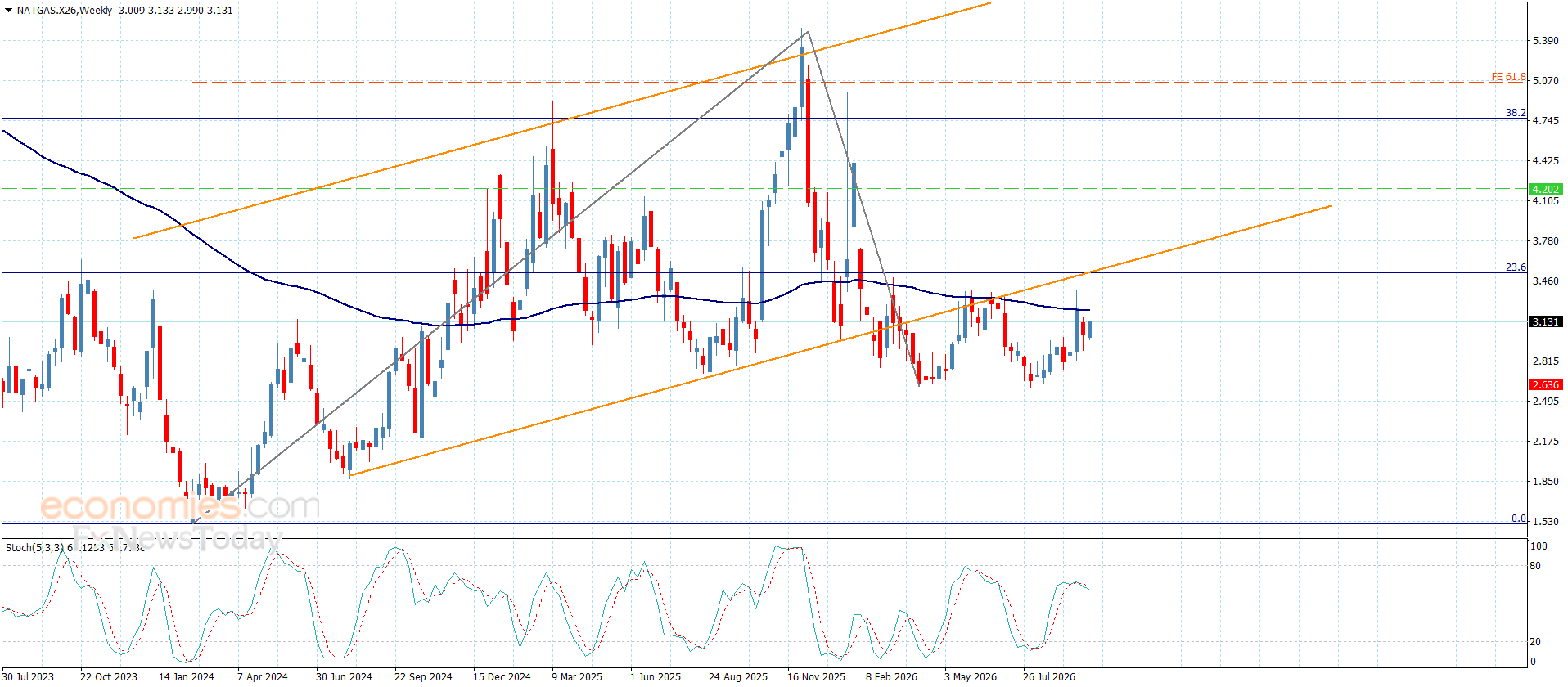
Natural gas price started forming slow bearish waves, attempting to activate the previously suggested downside scenario as it moves toward $3.070, moving away from the resistance level at $3.350.
Currently, with the main indicators providing negative momentum, increasing the chances of attacking the $2.920 level. A break below this level would open the door toward additional bearish targets, potentially starting at $2.800, and extending to the support near $2.620.
On the other hand, a shift back into an upward trend would require a strong bullish surge, allowing the price to stabilize above $3.520. This would enable it to record further gains, gradually targeting $3.710 and $3.950 respectively.
The expected trading range for today is between $2.920 and $3.180.
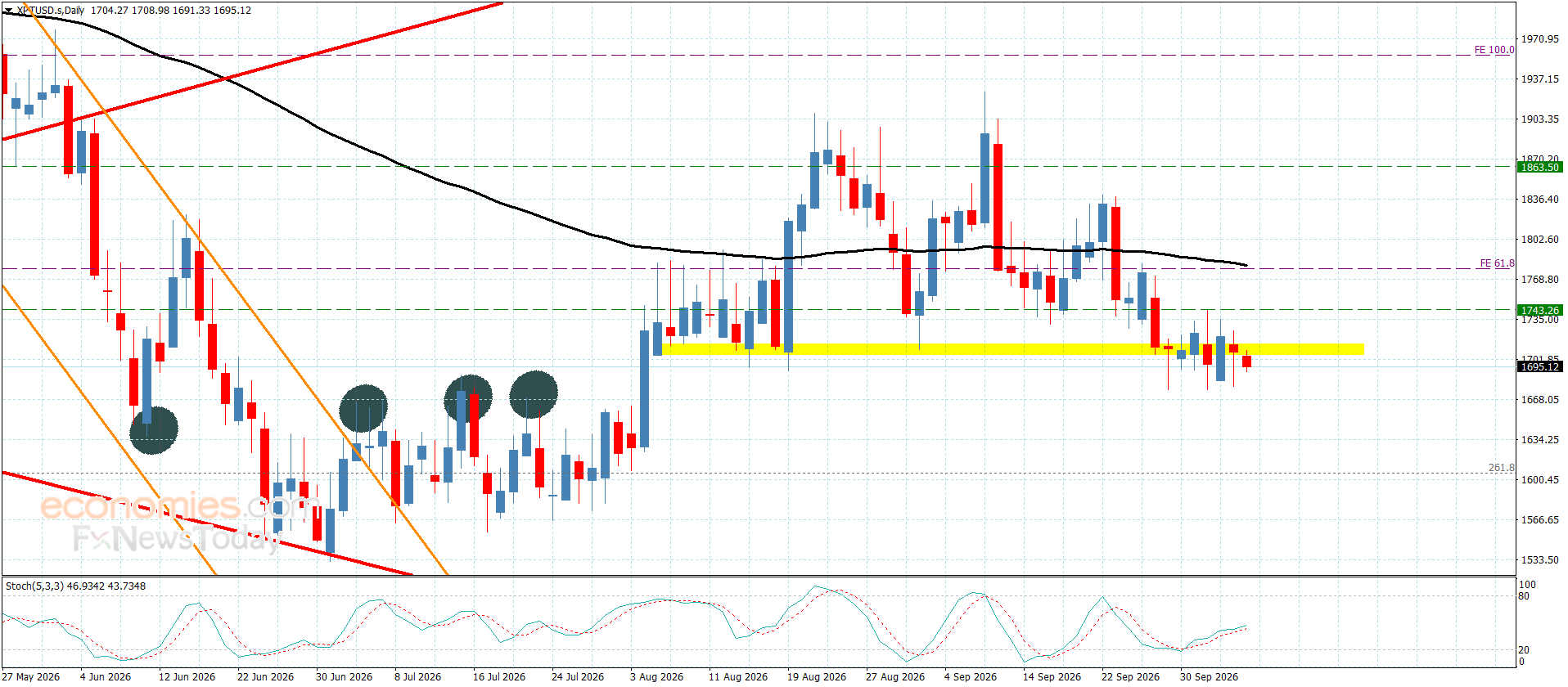
Platinum price continued to form positive trading, benefiting from the formation of the $1640.00 level as a strong additional support, leading to its current attempt to attack the initial barrier at $1770.00, to find a path for further upward waves in the near term.
Note that the attempt of stochastic to provide positive momentum could push the price to surpass the current barrier, to expect reaching $1865.00, to attempt to test the main resistance located around $1922.00. On the other hand, failure to break out would force mixed trading, with a renewed chance of declining toward $1690.00.
The expected trading range for today is between $1720.00 and $1865.00.
Goldman Sachs has lowered its average Brent crude oil price forecast for 2027 to $80 per barrel, citing stronger global supply growth and continued weakness in demand, particularly in China. According to a research note from the investment bank via Reuters, rising oil production from the United States, Brazil, Guyana, Venezuela, and the United Arab Emirates, combined with structural shifts in energy consumption, is expected to weigh on prices over the longer term. Goldman said it expects more than 10% of the current weakness in demand to persist as China’s transition toward alternative energy sources, including electric vehicles, accelerates.
Despite lowering its 2027 outlook, Goldman maintained its expectation that Brent crude will average $90 per barrel during the fourth quarter of 2026. The bank noted that the effects of a prolonged disruption in the Strait of Hormuz have been moderated by a smaller-than-anticipated supply shortfall and weaker global demand.
Goldman estimated that disruptions to Middle Eastern production initially reduced regional liquids output significantly, but the resulting global deficit during the second quarter amounted to approximately 5 million to 6 million barrels per day. Existing oversupply and lower demand helped cushion the impact. The bank now expects oil exports from Gulf producers to normalize by late August, compared with its previous expectation of late June.
The bank outlined several scenarios for oil prices. Under an adverse scenario involving prolonged export disruptions, Brent could average slightly above $110 per barrel in late 2026. A more severe scenario, in which disruptions in the Strait of Hormuz continue through 2027, could send prices as high as $140 per barrel.
On the other hand, Goldman said that a quicker recovery in supply and weaker-than-expected demand could push Brent prices down to around $70 per barrel by the end of 2026 and approximately $60 per barrel in 2027.
The revised forecast reflects the growing influence of both supply growth and changing consumption patterns on global energy markets, even as geopolitical developments continue to create the potential for significant price volatility.