The $2 level underneath should be a major support level, so we’ll see how that plays out. As for myself, I still have some ETF positions left. Doesn’t really matter. It’s something that I will hang on to until fall. So the day to day fluctuations can be sat through. It’s not a huge part of your portfolio, or at least it shouldn’t be, although any time this happens in natural gas, my email or email box gets full of people begging me to turn the market around.
Somehow, because of this, retail traders really have no business trading natural gas. Unless of course, you are apprised of what’s going on in the northeast in the United States as far as weather is concerned. Transmission through natural gas pipelines in the United States, specifically east of the Mississippi River, the weather in the Gulf of Mexico, and of course, production in places like Henry, Louisiana, which is what this contract is based on, is the Henry Hub contract. Because of this, you can play the cyclicality, but you don’t want to get married to your position. You don’t want a huge position on.
For a look at all of today’s economic events, check out our economic calendar.
The natural gas markets fell a bit during the course of the early hours on Monday, testing the $2.25 level.
The natural gas market is one that I get a lot of interest from, and in my daily analysis of the natural gas markets, it’s hard not to notice that the market is definitely looking for some type of support.
That being said, this is a market that I am very cautious with, and I generally tell retail traders that they have to be very cautious about trading. Unfortunately, I get emails throughout the year from retail traders that have gone into the natural gas markets with a massive amount of leverage, and now desperately hoping for some type of miracle to turn the market around. Quite frankly, the natural gas markets move on fundamentals more than most other assets, as you have a situation where traders will begin to worry about hurricanes in the Gulf of Mexico, weather patterns in the northeastern part of the United States, and of course the amount of transmission that is currently going through the US natural gas pipelines.
It’s an American Market
One thing that a lot of traders forget is that most natural gas CFD markets are based on the Henry Hub Contract, which is a measurement of price in Henry, Louisiana. In other words, it’s a very US centric market and a lot of people will naturally try to equate what’s going on in Europe with what’s going on in Louisiana, which of course is nonsense.
It can be influential when euro is hurting for supply, mainly due to the fact that the US will then export natural gas to the European Union, but that is somewhat limited in the sense that most US natural gas is already spoken for as far as exports are concerned, and that generally means Asia. In other words, you need to be cognizant and up to the task when it comes to US demand more than anything else.
That being said, we are in an area that could very well provide a bit of an uplift, as the 61.8% Fibonacci retracement level is here, and of course the $2.25 level will attract a lot of attention. That being said, we also have the 50-Day EMA breaking below the 200-Day EMA, kicking off the “so-called death cross.” Unfortunately for this indicator, it’s typically late, so I only read so much into it. If you are a longer-term trader, this is a potential investment, but the key word here of course is going to be investment.
Gold price consolidates before the next push higher on Tuesday, as US Retail Sales data loom.
The US Dollar tracks the USD/JPY rebound amid a cautious mood, US Treasury bond yields nurse losses.
Gold price could retake $2,450 due to favorable technicals and increased September Fed rate cut bets.
Gold price is looking to extend previous gains early Tuesday, having clinched a new two-month high at $2,440 a day ago. Growing expectations that a US Federal Reserve (Fed) interest-rate cut in September is a done deal continue to underpin the non-interest-bearing Gold price.
Gold price capitalizes on Fed rate cut bets
Fed Chairman Jerome Powell’s comments affirmed bets for a rate reduction in September after he said Monday that the central bank will not wait until inflation hits 2% to lower interest rates. The Fed is looking for “greater confidence” that inflation will return to the 2% level, Powell added.
Those remarks by the Fed Chief fuelled a fresh leg down in the US Dollar (USD) alongside the US Treasury bond yields, driving Gold price back toward an all-time high of $2,450.
Earlier in the day, Gold price witnessed some corrective moves, as the Greenback took advantage of risk-aversion induced by the weekend’s assassination attempt on ex-US President Donald Trump during his Pennsylvania rally. Investors digested the fateful Trump attack and ramped up the odds of his win in the US Presidential race.
Further, investors flocked to safety in the USD following China’s second-quarter GDP miss in Asian hours on Monday. Data released by the National Bureau of Statistics (NBS) showed Monday that the world’s second-largest economy grew 4.7% year-on-year in April-June, slowing from 5.3% in the previous three months while recording the weakest growth since the third quarter of 2023.
In Tuesday’s trading so far, Gold price is gathering strength for the next push higher even as the US Dollar stages a modest comeback. The rebound in the USD/JPY pair could be attributed to the USD uptick. However, weak US Treasury bond yields continue to support the non-yielding Gold price.
The bright metal also cheers the dovish comments from San Francisco Fed President Mary Daly. In her speech overnight, Daly said that she has confidence that inflation is heading lower.
Later in the day, the US Retail Sales report and Fedspeak will grab the eyeballs, as traders look to seal in a September Fed rate cut. Weaker-than-expected US Retail Sales data could reinforce the USD selling, lifting the Gold price northward.
Meanwhile, speculations that China could roll out stimulus measures to boost economic performance could also render Gold positive in the near term.
Gold price technical analysis: Daily chart
Gold price keeps sight on the all-time high at $2,450, as the 14-day Relative Strength Index (RSI) looks north near 65, at the press time.
The Bull Cross, represented by the 21-day Simple Moving Average (SMA) settling above the 50-day SMA on Friday, adds credence to the bullish potential.
Gold buyers, however, need to yield a daily closing above the previous two-month high of $2,425 to challenge the record highs of $2,450.
Ahead of that, the new two-month high of $2,440 could challenge the bearish commitments.
Alternatively, any pullback in Gold price could warrant a test of the $2,400 round level, below which Friday’s low of $2,391 could be tested.
The next relevant support levels are seen at the July 11 low of $2,371 and the $2,350 psychological levels.
Gold FAQs
Gold has played a key role in human’s history as it has been widely used as a store of value and medium of exchange. Currently, apart from its shine and usage for jewelry, the precious metal is widely seen as a safe-haven asset, meaning that it is considered a good investment during turbulent times. Gold is also widely seen as a hedge against inflation and against depreciating currencies as it doesn’t rely on any specific issuer or government.
Central banks are the biggest Gold holders. In their aim to support their currencies in turbulent times, central banks tend to diversify their reserves and buy Gold to improve the perceived strength of the economy and the currency. High Gold reserves can be a source of trust for a country’s solvency. Central banks added 1,136 tonnes of Gold worth around $70 billion to their reserves in 2022, according to data from the World Gold Council. This is the highest yearly purchase since records began. Central banks from emerging economies such as China, India and Turkey are quickly increasing their Gold reserves.
Gold has an inverse correlation with the US Dollar and US Treasuries, which are both major reserve and safe-haven assets. When the Dollar depreciates, Gold tends to rise, enabling investors and central banks to diversify their assets in turbulent times. Gold is also inversely correlated with risk assets. A rally in the stock market tends to weaken Gold price, while sell-offs in riskier markets tend to favor the precious metal.
The price can move due to a wide range of factors. Geopolitical instability or fears of a deep recession can quickly make Gold price escalate due to its safe-haven status. As a yield-less asset, Gold tends to rise with lower interest rates, while higher cost of money usually weighs down on the yellow metal. Still, most moves depend on how the US Dollar (USD) behaves as the asset is priced in dollars (XAU/USD). A strong Dollar tends to keep the price of Gold controlled, whereas a weaker Dollar is likely to push Gold prices up.
Gold price consolidates before the next push higher on Tuesday, as US Retail Sales data loom.
The US Dollar tracks the USD/JPY rebound amid a cautious mood, US Treasury bond yields nurse losses.
Gold price could retake $2,450 due to favorable technicals and increased September Fed rate cut bets.
Gold price is looking to extend previous gains early Tuesday, having clinched a new two-month high at $2,440 a day ago. Growing expectations that a US Federal Reserve (Fed) interest-rate cut in September is a done deal continue to underpin the non-interest-bearing Gold price.
Gold price capitalizes on Fed rate cut bets
Fed Chairman Jerome Powell’s comments affirmed bets for a rate reduction in September after he said Monday that the central bank will not wait until inflation hits 2% to lower interest rates. The Fed is looking for “greater confidence” that inflation will return to the 2% level, Powell added.
Those remarks by the Fed Chief fuelled a fresh leg down in the US Dollar (USD) alongside the US Treasury bond yields, driving Gold price back toward an all-time high of $2,450.
Earlier in the day, Gold price witnessed some corrective moves, as the Greenback took advantage of risk-aversion induced by the weekend’s assassination attempt on ex-US President Donald Trump during his Pennsylvania rally. Investors digested the fateful Trump attack and ramped up the odds of his win in the US Presidential race.
Further, investors flocked to safety in the USD following China’s second-quarter GDP miss in Asian hours on Monday. Data released by the National Bureau of Statistics (NBS) showed Monday that the world’s second-largest economy grew 4.7% year-on-year in April-June, slowing from 5.3% in the previous three months while recording the weakest growth since the third quarter of 2023.
In Tuesday’s trading so far, Gold price is gathering strength for the next push higher even as the US Dollar stages a modest comeback. The rebound in the USD/JPY pair could be attributed to the USD uptick. However, weak US Treasury bond yields continue to support the non-yielding Gold price.
The bright metal also cheers the dovish comments from San Francisco Fed President Mary Daly. In her speech overnight, Daly said that she has confidence that inflation is heading lower.
Later in the day, the US Retail Sales report and Fedspeak will grab the eyeballs, as traders look to seal in a September Fed rate cut. Weaker-than-expected US Retail Sales data could reinforce the USD selling, lifting the Gold price northward.
Meanwhile, speculations that China could roll out stimulus measures to boost economic performance could also render Gold positive in the near term.
Gold price technical analysis: Daily chart
Gold price keeps sight on the all-time high at $2,450, as the 14-day Relative Strength Index (RSI) looks north near 65, at the press time.
The Bull Cross, represented by the 21-day Simple Moving Average (SMA) settling above the 50-day SMA on Friday, adds credence to the bullish potential.
Gold buyers, however, need to yield a daily closing above the previous two-month high of $2,425 to challenge the record highs of $2,450.
Ahead of that, the new two-month high of $2,440 could challenge the bearish commitments.
Alternatively, any pullback in Gold price could warrant a test of the $2,400 round level, below which Friday’s low of $2,391 could be tested.
The next relevant support levels are seen at the July 11 low of $2,371 and the $2,350 psychological levels.
Gold FAQs
Gold has played a key role in human’s history as it has been widely used as a store of value and medium of exchange. Currently, apart from its shine and usage for jewelry, the precious metal is widely seen as a safe-haven asset, meaning that it is considered a good investment during turbulent times. Gold is also widely seen as a hedge against inflation and against depreciating currencies as it doesn’t rely on any specific issuer or government.
Central banks are the biggest Gold holders. In their aim to support their currencies in turbulent times, central banks tend to diversify their reserves and buy Gold to improve the perceived strength of the economy and the currency. High Gold reserves can be a source of trust for a country’s solvency. Central banks added 1,136 tonnes of Gold worth around $70 billion to their reserves in 2022, according to data from the World Gold Council. This is the highest yearly purchase since records began. Central banks from emerging economies such as China, India and Turkey are quickly increasing their Gold reserves.
Gold has an inverse correlation with the US Dollar and US Treasuries, which are both major reserve and safe-haven assets. When the Dollar depreciates, Gold tends to rise, enabling investors and central banks to diversify their assets in turbulent times. Gold is also inversely correlated with risk assets. A rally in the stock market tends to weaken Gold price, while sell-offs in riskier markets tend to favor the precious metal.
The price can move due to a wide range of factors. Geopolitical instability or fears of a deep recession can quickly make Gold price escalate due to its safe-haven status. As a yield-less asset, Gold tends to rise with lower interest rates, while higher cost of money usually weighs down on the yellow metal. Still, most moves depend on how the US Dollar (USD) behaves as the asset is priced in dollars (XAU/USD). A strong Dollar tends to keep the price of Gold controlled, whereas a weaker Dollar is likely to push Gold prices up.
Gold price consolidates before the next push higher on Tuesday, as US Retail Sales data loom.
The US Dollar tracks the USD/JPY rebound amid a cautious mood, US Treasury bond yields nurse losses.
Gold price could retake $2,450 due to favorable technicals and increased September Fed rate cut bets.
Gold price is looking to extend previous gains early Tuesday, having clinched a new two-month high at $2,440 a day ago. Growing expectations that a US Federal Reserve (Fed) interest-rate cut in September is a done deal continue to underpin the non-interest-bearing Gold price.
Gold price capitalizes on Fed rate cut bets
Fed Chairman Jerome Powell’s comments affirmed bets for a rate reduction in September after he said Monday that the central bank will not wait until inflation hits 2% to lower interest rates. The Fed is looking for “greater confidence” that inflation will return to the 2% level, Powell added.
Those remarks by the Fed Chief fuelled a fresh leg down in the US Dollar (USD) alongside the US Treasury bond yields, driving Gold price back toward an all-time high of $2,450.
Earlier in the day, Gold price witnessed some corrective moves, as the Greenback took advantage of risk-aversion induced by the weekend’s assassination attempt on ex-US President Donald Trump during his Pennsylvania rally. Investors digested the fateful Trump attack and ramped up the odds of his win in the US Presidential race.
Further, investors flocked to safety in the USD following China’s second-quarter GDP miss in Asian hours on Monday. Data released by the National Bureau of Statistics (NBS) showed Monday that the world’s second-largest economy grew 4.7% year-on-year in April-June, slowing from 5.3% in the previous three months while recording the weakest growth since the third quarter of 2023.
In Tuesday’s trading so far, Gold price is gathering strength for the next push higher even as the US Dollar stages a modest comeback. The rebound in the USD/JPY pair could be attributed to the USD uptick. However, weak US Treasury bond yields continue to support the non-yielding Gold price.
The bright metal also cheers the dovish comments from San Francisco Fed President Mary Daly. In her speech overnight, Daly said that she has confidence that inflation is heading lower.
Later in the day, the US Retail Sales report and Fedspeak will grab the eyeballs, as traders look to seal in a September Fed rate cut. Weaker-than-expected US Retail Sales data could reinforce the USD selling, lifting the Gold price northward.
Meanwhile, speculations that China could roll out stimulus measures to boost economic performance could also render Gold positive in the near term.
Gold price technical analysis: Daily chart
Gold price keeps sight on the all-time high at $2,450, as the 14-day Relative Strength Index (RSI) looks north near 65, at the press time.
The Bull Cross, represented by the 21-day Simple Moving Average (SMA) settling above the 50-day SMA on Friday, adds credence to the bullish potential.
Gold buyers, however, need to yield a daily closing above the previous two-month high of $2,425 to challenge the record highs of $2,450.
Ahead of that, the new two-month high of $2,440 could challenge the bearish commitments.
Alternatively, any pullback in Gold price could warrant a test of the $2,400 round level, below which Friday’s low of $2,391 could be tested.
The next relevant support levels are seen at the July 11 low of $2,371 and the $2,350 psychological levels.
Gold FAQs
Gold has played a key role in human’s history as it has been widely used as a store of value and medium of exchange. Currently, apart from its shine and usage for jewelry, the precious metal is widely seen as a safe-haven asset, meaning that it is considered a good investment during turbulent times. Gold is also widely seen as a hedge against inflation and against depreciating currencies as it doesn’t rely on any specific issuer or government.
Central banks are the biggest Gold holders. In their aim to support their currencies in turbulent times, central banks tend to diversify their reserves and buy Gold to improve the perceived strength of the economy and the currency. High Gold reserves can be a source of trust for a country’s solvency. Central banks added 1,136 tonnes of Gold worth around $70 billion to their reserves in 2022, according to data from the World Gold Council. This is the highest yearly purchase since records began. Central banks from emerging economies such as China, India and Turkey are quickly increasing their Gold reserves.
Gold has an inverse correlation with the US Dollar and US Treasuries, which are both major reserve and safe-haven assets. When the Dollar depreciates, Gold tends to rise, enabling investors and central banks to diversify their assets in turbulent times. Gold is also inversely correlated with risk assets. A rally in the stock market tends to weaken Gold price, while sell-offs in riskier markets tend to favor the precious metal.
The price can move due to a wide range of factors. Geopolitical instability or fears of a deep recession can quickly make Gold price escalate due to its safe-haven status. As a yield-less asset, Gold tends to rise with lower interest rates, while higher cost of money usually weighs down on the yellow metal. Still, most moves depend on how the US Dollar (USD) behaves as the asset is priced in dollars (XAU/USD). A strong Dollar tends to keep the price of Gold controlled, whereas a weaker Dollar is likely to push Gold prices up.
Markets turned optimistic amid fresh bets Donald Trump could win the US presidential election.
Federal Reserve Chairman Jerome Powell delivered comments with a dovish tilt.
XAU/USD bullish case gains strength, aims to retest its record high at $2,450.
Gold price extends gains above the $2.400 mark, approaching its all-time high of $2,449.92. XAU/USD shed some ground at the beginning of the day amid resurgent US Dollar demand on the back of weekend news. Former President and current Republican candidate Donald Trump suffered an assassination attempt while on campaign in Pennsylvania, a headline that initially spurred risk-aversion.
However, the Greenback quickly lost ground as investors lifted bets that Trump could win the upcoming presidential election and loosen the fiscal policy. Meanwhile, Moody’s Credit Rating Agency said the Federal Reserve (Fed) could begin easing the monetary policy as soon as this month, as the central bank is scheduled to meet on July 30-31. Furthermore, analysts at Moody’s expect the Fed Funds Rate to be reduced by 50-75 bp in 2024 and another 100-125 bp through 2025. As a result, stock markets rallied, and Wall Street hit record highs.
Fed Chairman Jerome Powell spoke at the Economic Club of Washington DC and said that if the Fed waits for inflation to get to 2% to cut, it has waited too long, further fueling optimism. He also welcomed easing inflationary pressures in the second quarter of the year and added that an unexpected weakening in the labor market would merit a reaction from policymakers. Powell’s dovish tilt halted the stocks´ rally and helped the USD recover some modest ground.
XAU/USD short-term technical outlook
From a technical point of view, XAU/USD retreats from intraday highs mid-American afternoon, but the daily chart shows the bullish case is alive and kicking. The pair is rallying far above bullish moving averages as technical indicators picked up upward momentum, approaching overbought readings and without signs of giving up.
In the near term, and according to the 4-hour chart, XAU/USD may struggle to extend gains. Technical indicators are retreating from overbought readings with uneven strength, still far from suggesting an upcoming slide. Nevertheless, the pair is developing above a bullish 20 Simple Moving Average (SMA) currently at around $2,403, while the longer moving averages slowly gain upward traction, but are far below the shorter one to become relevant.
Support levels: 2,418.10 2,403.00 2,391.20
Resistance levels: 2,439.60 2,450.00 2,465.00
XAU/USD Current price: $2,426.35
Markets turned optimistic amid fresh bets Donald Trump could win the US presidential election.
Federal Reserve Chairman Jerome Powell delivered comments with a dovish tilt.
XAU/USD bullish case gains strength, aims to retest its record high at $2,450.
Gold price extends gains above the $2.400 mark, approaching its all-time high of $2,449.92. XAU/USD shed some ground at the beginning of the day amid resurgent US Dollar demand on the back of weekend news. Former President and current Republican candidate Donald Trump suffered an assassination attempt while on campaign in Pennsylvania, a headline that initially spurred risk-aversion.
However, the Greenback quickly lost ground as investors lifted bets that Trump could win the upcoming presidential election and loosen the fiscal policy. Meanwhile, Moody’s Credit Rating Agency said the Federal Reserve (Fed) could begin easing the monetary policy as soon as this month, as the central bank is scheduled to meet on July 30-31. Furthermore, analysts at Moody’s expect the Fed Funds Rate to be reduced by 50-75 bp in 2024 and another 100-125 bp through 2025. As a result, stock markets rallied, and Wall Street hit record highs.
Fed Chairman Jerome Powell spoke at the Economic Club of Washington DC and said that if the Fed waits for inflation to get to 2% to cut, it has waited too long, further fueling optimism. He also welcomed easing inflationary pressures in the second quarter of the year and added that an unexpected weakening in the labor market would merit a reaction from policymakers. Powell’s dovish tilt halted the stocks´ rally and helped the USD recover some modest ground.
XAU/USD short-term technical outlook
From a technical point of view, XAU/USD retreats from intraday highs mid-American afternoon, but the daily chart shows the bullish case is alive and kicking. The pair is rallying far above bullish moving averages as technical indicators picked up upward momentum, approaching overbought readings and without signs of giving up.
In the near term, and according to the 4-hour chart, XAU/USD may struggle to extend gains. Technical indicators are retreating from overbought readings with uneven strength, still far from suggesting an upcoming slide. Nevertheless, the pair is developing above a bullish 20 Simple Moving Average (SMA) currently at around $2,403, while the longer moving averages slowly gain upward traction, but are far below the shorter one to become relevant.
Two Fibonacci targets were tested as support, and they failed to stop the decline. A descending ABCD pattern completed at 2.20. The target comes from an extended version of the pattern where the second decline marked by CD is 127.2% the distance in price for the first leg down, from point A to point B. The 127.2% Fibonacci ratio is derived from square root of 1.618 (the golden ratio) multiplied by 100. Further, a 61.8% Fibonacci retracement completed at 2.18. The low of the potential support zone as highlighted on the chart was 2.17.
Close Below 2.17 Points to Lower Prices
Since the bottom of the support zone has been broken to the downside the next lower support zone is at risk of being reached. Nevertheless, support zones are areas of possible support. If a daily close occurs today above 2.17, natural gas may have a chance to bounce in the short-term.
Otherwise, a daily close below 2.17, points to lower prices in the near-term. There looks to be an interim price level around 2.09, from a prior internal swing high. But the next key lower price zone where support may be seen is down to around 2.00. That is an even number and where the recent rise in prices began.
Lower 2.00 Support Zone
The initial bullish advance off the confirmed an upside breakout of a symmetrical triangle bottom consolidation pattern at 2.00. That was the top of the triangle pattern where a rise above further confirms the bull breakout. There is also the completion of another lower target for an extended falling ABCD pattern at 2.02. In this case, the extension utilized the 161.8% ratio to identify a lower target for the CD leg of the decline. Lower still is the 78.6% Fibonacci ratio at 1.92.
For a look at all of today’s economic events, check out our economic calendar.
I do think natural gas rallies, and I think it rallies quite nicely, but we need to find the bottom first, and therefore you have to be willing to sit and ride out the negativity which will end whenever it ends. We just don’t know. We are hanging around the $2.25 level. That’s an area that some people will pay attention to.
And I do recognize that above the $2.50 level is a significant barrier. If we can break that, then we really will start to take off to the upside in my estimation. But we are just as likely to drop down to $2.15 before seeing that. So, I’m waiting for a bounce and some type of follow through. I already have a position through an ETF that is a little bit better than breakeven at the moment, and I did collect some profit several weeks ago, but at this point in time I am looking to reload that position.
I haven’t seen the market do enough for me to get involved yet, but it is something that I’ll be buying and probably more likely than not selling sometime in fall or maybe even early winter. Once the high season for heating comes back to play.
For a look at all of today’s economic events, check out our economic calendar.
Gold price holds correction to near $2,400 early Monday amid a mixed market mood.
The US Dollar tracks Treasury bond yields higher, taking account of the Trump attack.
Gold price stays bullish amid a favorable daily technical setup and ahead of Fed Chair Powell’s speech.
Gold price is defending the $2,400 threshold early Monday, holding its corrective mode from a two-month top set at $2,425 on Thursday.
Gold price looks to US politics and Powell
The subdued performance in Gold price could be attributed to a broad-based US Dollar (USD) rebound alongside firmer US 10-year Treasury bond yields, as investors digest Saturday’s fateful incident at former US President Donald Trump’s Pennsylvania rally, where several bullets were shot and one such shot ripped the upper part of his right ear.
The assassination attempt on ex-US President Trump fuelled a fresh bout of risk-aversion in the early Asian hours, helping the Greenback stage a modest comeback after the previous week’s slump. The attack made Trump’s victory more likely, although it poses a new level of political uncertainty for markets, lifting the US Treasury bond yields higher at the expense of the government bonds.
Amidst broad US Dollar firmness and higher yields, the non-yielding Gold price remains on the back foot. The Gold price downside, however, appears capped amid slower-than-expected China economic growth and heightened bets for a US Federal Reserve (Fed) interest-rate cut in September.
Data released by the National Bureau of Statistics (NBS) showed Monday that the world’s second-largest economy grew 4.7% year-on-year in April-June, slowing from 5.3% in the previous three months while recording the weakest growth since the third quarter of 2023. The market forecast was for a 5.1% readout. Dwindling Chinese growth prospects fan expectations that China could roll out stimulus measures sooner rather than later to stimulate the economy.
Meanwhile, markets are now pricing in an over 90% chance that the Fed will lower rates in September, especially after the US Consumer Price Index (CPI), released last Thursday, climbed 3.0% YoY in June, slowing from a 3.3% increase in May and below the 3.1% expected print.
Later in the day, Gold traders will pay a close ear to Fed Chairman Jerome Powell’s appearance at the Economic Club of Washington for fresh policy cues and their implications on the bright metal. Additionally, US political developments will grab attention, as they could have a significant impact on the value of the USD and the Gold price.
Gold price technical analysis: Daily chart
Gold price remains on track to retest the all-time high at $2,450, as the 14-day Relative Strength Index (RSI) holds firm above the 50 level.
Further, the 21-day Simple Moving Average (SMA) settled above the 50-day SMA on Friday, confirming a Bull Cross and making another case for additional upside in Gold price.
Gold buyers, however, need to yield a decisive break above the two-month high of $2,425 to challenge the record highs of $2,450.
A sustained move above the latter will open the door toward the $2,500 key level.
On the flip side, Gold price could face immediate support at Friday’s low of $2,391 should the correction gather strength.
The next relevant downside cushion is seen at the July 11 low of $2,371, below which the $2,350 psychological level could act as a tough nut to crack for Gold sellers.
Gold FAQs
Gold has played a key role in human’s history as it has been widely used as a store of value and medium of exchange. Currently, apart from its shine and usage for jewelry, the precious metal is widely seen as a safe-haven asset, meaning that it is considered a good investment during turbulent times. Gold is also widely seen as a hedge against inflation and against depreciating currencies as it doesn’t rely on any specific issuer or government.
Central banks are the biggest Gold holders. In their aim to support their currencies in turbulent times, central banks tend to diversify their reserves and buy Gold to improve the perceived strength of the economy and the currency. High Gold reserves can be a source of trust for a country’s solvency. Central banks added 1,136 tonnes of Gold worth around $70 billion to their reserves in 2022, according to data from the World Gold Council. This is the highest yearly purchase since records began. Central banks from emerging economies such as China, India and Turkey are quickly increasing their Gold reserves.
Gold has an inverse correlation with the US Dollar and US Treasuries, which are both major reserve and safe-haven assets. When the Dollar depreciates, Gold tends to rise, enabling investors and central banks to diversify their assets in turbulent times. Gold is also inversely correlated with risk assets. A rally in the stock market tends to weaken Gold price, while sell-offs in riskier markets tend to favor the precious metal.
The price can move due to a wide range of factors. Geopolitical instability or fears of a deep recession can quickly make Gold price escalate due to its safe-haven status. As a yield-less asset, Gold tends to rise with lower interest rates, while higher cost of money usually weighs down on the yellow metal. Still, most moves depend on how the US Dollar (USD) behaves as the asset is priced in dollars (XAU/USD). A strong Dollar tends to keep the price of Gold controlled, whereas a weaker Dollar is likely to push Gold prices up.
Gold price holds correction to near $2,400 early Monday amid a mixed market mood.
The US Dollar tracks Treasury bond yields higher, taking account of the Trump attack.
Gold price stays bullish amid a favorable daily technical setup and ahead of Fed Chair Powell’s speech.
Gold price is defending the $2,400 threshold early Monday, holding its corrective mode from a two-month top set at $2,425 on Thursday.
Gold price looks to US politics and Powell
The subdued performance in Gold price could be attributed to a broad-based US Dollar (USD) rebound alongside firmer US 10-year Treasury bond yields, as investors digest Saturday’s fateful incident at former US President Donald Trump’s Pennsylvania rally, where several bullets were shot and one such shot ripped the upper part of his right ear.
The assassination attempt on ex-US President Trump fuelled a fresh bout of risk-aversion in the early Asian hours, helping the Greenback stage a modest comeback after the previous week’s slump. The attack made Trump’s victory more likely, although it poses a new level of political uncertainty for markets, lifting the US Treasury bond yields higher at the expense of the government bonds.
Amidst broad US Dollar firmness and higher yields, the non-yielding Gold price remains on the back foot. The Gold price downside, however, appears capped amid slower-than-expected China economic growth and heightened bets for a US Federal Reserve (Fed) interest-rate cut in September.
Data released by the National Bureau of Statistics (NBS) showed Monday that the world’s second-largest economy grew 4.7% year-on-year in April-June, slowing from 5.3% in the previous three months while recording the weakest growth since the third quarter of 2023. The market forecast was for a 5.1% readout. Dwindling Chinese growth prospects fan expectations that China could roll out stimulus measures sooner rather than later to stimulate the economy.
Meanwhile, markets are now pricing in an over 90% chance that the Fed will lower rates in September, especially after the US Consumer Price Index (CPI), released last Thursday, climbed 3.0% YoY in June, slowing from a 3.3% increase in May and below the 3.1% expected print.
Later in the day, Gold traders will pay a close ear to Fed Chairman Jerome Powell’s appearance at the Economic Club of Washington for fresh policy cues and their implications on the bright metal. Additionally, US political developments will grab attention, as they could have a significant impact on the value of the USD and the Gold price.
Gold price technical analysis: Daily chart
Gold price remains on track to retest the all-time high at $2,450, as the 14-day Relative Strength Index (RSI) holds firm above the 50 level.
Further, the 21-day Simple Moving Average (SMA) settled above the 50-day SMA on Friday, confirming a Bull Cross and making another case for additional upside in Gold price.
Gold buyers, however, need to yield a decisive break above the two-month high of $2,425 to challenge the record highs of $2,450.
A sustained move above the latter will open the door toward the $2,500 key level.
On the flip side, Gold price could face immediate support at Friday’s low of $2,391 should the correction gather strength.
The next relevant downside cushion is seen at the July 11 low of $2,371, below which the $2,350 psychological level could act as a tough nut to crack for Gold sellers.
Gold FAQs
Gold has played a key role in human’s history as it has been widely used as a store of value and medium of exchange. Currently, apart from its shine and usage for jewelry, the precious metal is widely seen as a safe-haven asset, meaning that it is considered a good investment during turbulent times. Gold is also widely seen as a hedge against inflation and against depreciating currencies as it doesn’t rely on any specific issuer or government.
Central banks are the biggest Gold holders. In their aim to support their currencies in turbulent times, central banks tend to diversify their reserves and buy Gold to improve the perceived strength of the economy and the currency. High Gold reserves can be a source of trust for a country’s solvency. Central banks added 1,136 tonnes of Gold worth around $70 billion to their reserves in 2022, according to data from the World Gold Council. This is the highest yearly purchase since records began. Central banks from emerging economies such as China, India and Turkey are quickly increasing their Gold reserves.
Gold has an inverse correlation with the US Dollar and US Treasuries, which are both major reserve and safe-haven assets. When the Dollar depreciates, Gold tends to rise, enabling investors and central banks to diversify their assets in turbulent times. Gold is also inversely correlated with risk assets. A rally in the stock market tends to weaken Gold price, while sell-offs in riskier markets tend to favor the precious metal.
The price can move due to a wide range of factors. Geopolitical instability or fears of a deep recession can quickly make Gold price escalate due to its safe-haven status. As a yield-less asset, Gold tends to rise with lower interest rates, while higher cost of money usually weighs down on the yellow metal. Still, most moves depend on how the US Dollar (USD) behaves as the asset is priced in dollars (XAU/USD). A strong Dollar tends to keep the price of Gold controlled, whereas a weaker Dollar is likely to push Gold prices up.
Oil: Oil markets rebounded last month after a reassurance from OPEC+ that supply discipline would be maintained. Our view remains that the voluntary cuts will remain in place until Q1 2025, given market weakness, robust non-OPEC supply and perpetual bearish price action this year.
Natural gas: We upgraded our natural gas price forecasts in the US and Europe due to greater demand from air conditioning over the summer months. However, our price forecast upgrade for Europe is more bearish than current market expectations as gas in storage will reach capacity by September with evidence of a structural decline in gas demand.
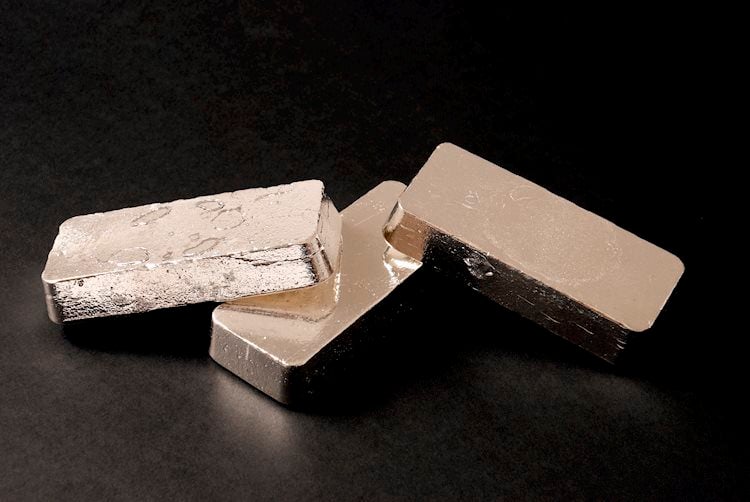
Gold: We continue to see bullish fundamentals ahead and expect gold prices to trade above US$2,500/oz by mid-2025, with stabilising core yields that will soon add to the upward pressure.
To learn more about our price forecasts for base metals, precious metals, battery raw materials and soft commodities, please submit the form to download the full report.
Eurozone: Why food prices are a channel for more frequent supply shocks
More frequent adverse supply shocks mean eurozone inflation is likely to be more volatile and possibly higher on average in the future. Food prices are a key channel through which these global shocks will be transmitted, according to our analysis. We provide a quantitative assessment of the impact of a wide range of supply shocks on eurozone inflation.
WTI Crude Oil went to a low of nearly 80.880 last Wednesday, but then buyers reemerged and the known price realms of the commodity remained within its higher range as the week concluded.
Following the long holiday weekend in the U.S, speculators returned to the WTI Crude Oil market and trading incrementally produced lower prices starting last Monday.
Entering last week near the 83.000 ratio, the downwards slope of WTI Crude Oil continued into Wednesday when a low of nearly 80.880 was tested.
However, after the lower depth was hit the commodity began to incrementally move higher.
And although a slight reversal lower was seen on Wednesday again, WTI Crude Oil proved that support levels near the 81.000 mark were strong.
The commodity touched a high around the 83.770 level on Friday as speculators brought WTI back into the known higher realms of its mid-term price charts. Crude Oil entered this weekend near the 82.260 level and this did show a rather strong amount of selling. Tomorrow opening in WTI Crude Oil will prove intriguing to see if the 82.000 mark can prove durable as support.
WTI Crude Oil Testing its Known Range
Day traders who want to wager on the direction of WTI Crude Oil may want to watch price action as the Americans return to the market on Monday. However it appears for the moment via technical glances the commodity is tucked away into a known price range that may allow for tests of support and resistance levels rather comfortably. One concern for traders may be questions about demand as the U.S economy continues to show some signs of weakness. This thought may cause some headwinds for WTI Crude Oil in the near-term, but fundamentals often do not translate into direct price direction in the commodity.
A look at a one month chart of Crude Oil highlights the higher elements of price remain intact. Also interesting is the ability of 81.000 as a support level since about the 18th of June. Yes, there have been outliers lower, but when the 81.000 realm has been tested the past four weeks WTI Crude Oil has produced upwards momentum and this might be a wagering device for retail traders who are cautious.
Last Week’s Charge Higher Ran out of Power in WTI Crude Oil
The inability of WTI Crude Oil to sustain its higher prices before going into the weekend may raise eyebrows among its doubters, and they may compare last week’s highs to the results of the previous week. The lack of a real challenge to the 84.000 level may prove attractive for speculators who believe WTI Crude Oil may still be in overbought territory and they may believe selling positions which seek quickly hitting moves lower are attractive.
However, the opening on Monday and trading into Tuesday will certain affect behavioral sentiment.
If the 82.000 realm proves vulnerable early this week and trading is sustained beneath, this may entice some speculators to aim for lower targets.
WTI Crude Oil Weekly Outlook:
Speculative price range for WTI Crude Oil is 80.500 to 84.100
The ability of WTI Crude Oil to remain within its rather bullish one month trend must be watched this week by day traders. If the commodity produces early buying power this would indicate notions about a stronger selloff may prove to be only wishful thinking. If the price of WTI Crude Oil suddenly tops 83.000 early this week and shows the ability to remain above this value, it will indicate speculative buyers remain a force.
The U.S will not publish major economic data this week which should have a big impact on the WTI Crude Oil price. Technical traders may find they have an opportunity to test the known range and attempt quick hitting trades that take advantage of trends that are influenced by technical considerations.