The main tag of GoldPrice Articles.
You can use the search box below to find what you need.
[wd_asp id=1]
The main tag of GoldPrice Articles.
You can use the search box below to find what you need.
[wd_asp id=1]
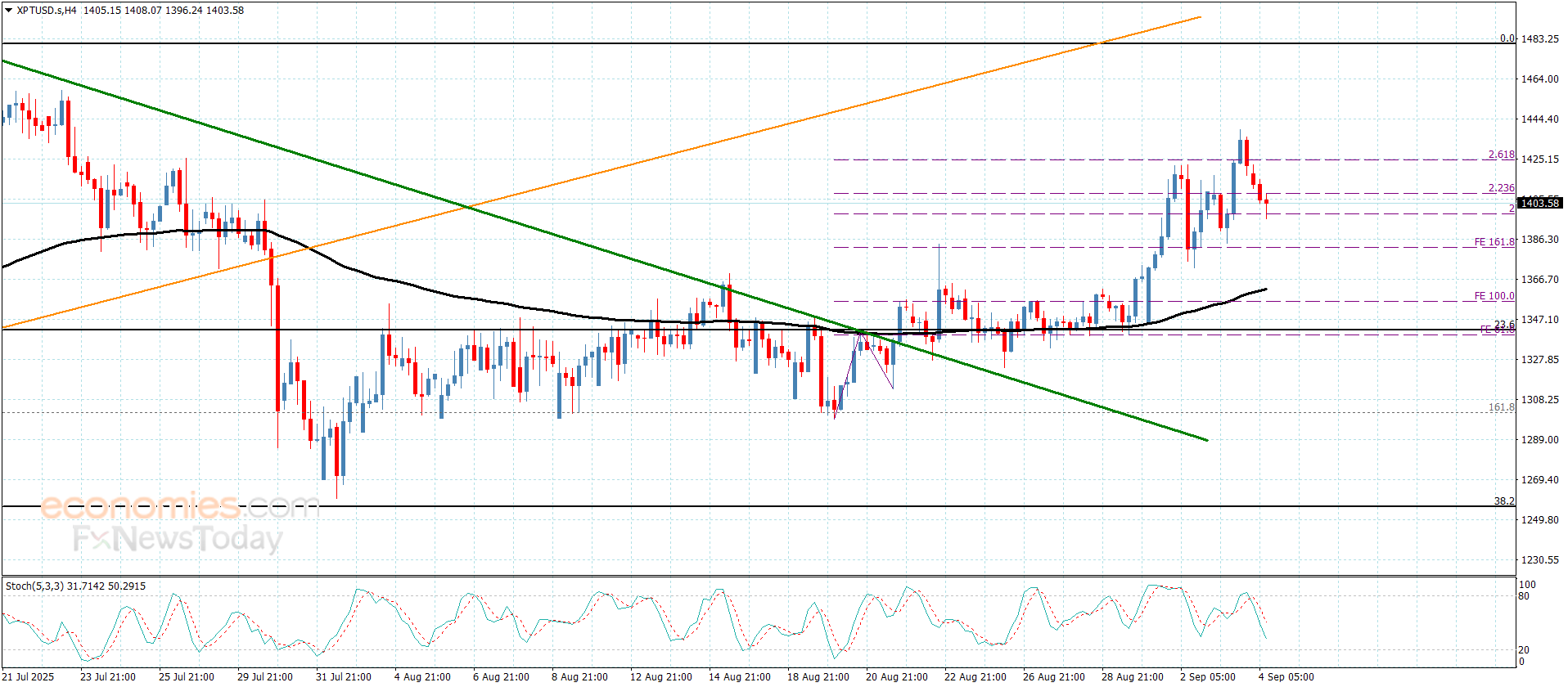
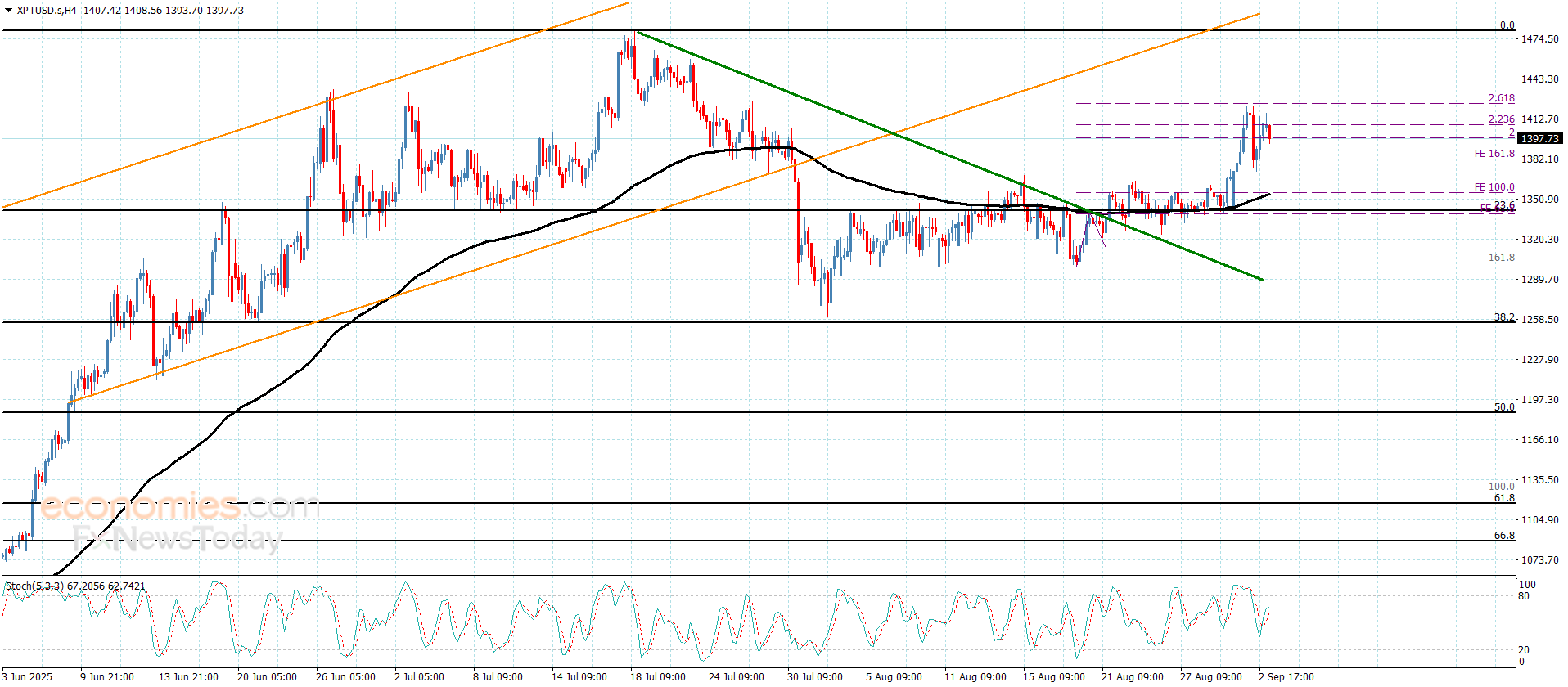
Copper price touched $4.5950 yesterday, to approach from the initial positive target, which forces it to form sideways fluctuation, due to its neediness to the positive momentum by the stability of stochastic with the oversold level.
While the stability of the price is within the bullish track, by moving away from the extra support at $4.2600, by providing positive momentum by the moving average 55, these factors make us keep the bullish suggestion, to expect surpassing $4.6200 level and reaching the next target near $4.7500.
The expected trading range for today is between $4.4200 and $4.7500
Trend forecast: Bullish
The session low of $2.96 was a higher daily low and marked a successful test of support around the anchored volume-weighted average price (AVWAP) from the 2024 trend bottom. After several failed attempts to sustain a breakout above that level, Wednesday’s bullish action cleared the AVWAP zone convincingly. It was the first day where the full range of the session was above that AVWAP. This follows a string of technical improvements beginning last Thursday with a break of the 20-Day moving average, a trendline breakout, and a move through the center line of a descending channel.
Despite the recent bullish momentum, natural gas faces a confluence of potentially significant resistance. This includes the falling 50-Day average and two prior swing highs, all clustered between $3.15 and $3.19. The 50-Day moving average is particularly noteworthy as this marks the first test of the indicator as resistance since it failed as support in late June. The fact that the average is declining may shift resistance slightly lower, but it still represents the most important barrier to watch. A daily close above this level would be required before higher objectives can be considered.
A decisive move above the resistance cluster would also represent a failed breakdown from the long-term uptrend line. Traders should remain aware, however, that natural gas could continue to grind higher in the coming weeks while still trading beneath that angled uptrend line. For now, momentum favors the bulls, but the upcoming test of the 50-Day average will likely determine whether the counter-trend rally extends toward higher levels or stalls beneath resistance.
For a look at all of today’s economic events, check out our economic calendar.
Oil markets entered September under renewed pressure, with WTI crude (CL=F) sliding to $63.91 per barrel and Brent crude (BZ=F) retreating to $67.57, both down more than 2% intraday. The pullback followed reports that OPEC+ members are considering raising production targets at the upcoming September 7 meeting. The group, which still has about 1.65 million barrels per day of voluntary cuts in reserve, may tap into this buffer earlier than scheduled, shifting strategy back toward market share instead of price defense. Traders see this as a bearish tilt that could push the market into surplus by late 2025 unless countered by strong demand growth.
Fresh surveys show OPEC crude output rising by 400,000 barrels per day in August, with total group production hitting 28.55 million bpd. Saudi Arabia accounted for over half of the increase, restoring barrels previously curbed. The United Arab Emirates, Nigeria, and Libya also contributed to the month-on-month gains. Kazakhstan overshot its quota by more than 2% while Iraq boosted exports despite disputes with the Kurdistan Regional Government. These developments underscore the difficulty of enforcing compliance when oil trades above $60, incentivizing members to maximize revenues. Market reaction was swift, with Brent slipping below $68 immediately after the survey release, highlighting how even incremental OPEC supply adjustments ripple through benchmarks.
Geopolitics added another layer of risk this week. A new EU-imposed price cap on Russian crude lowered the ceiling to $47.6 per barrel, down from the previous $60. Moscow has already discounted exports to India and Asia to stay competitive, with Indian refiners saving an estimated $12.6 billion in import costs so far in 2025 due to these discounts. U.S. sanctions have also intensified against networks disguising Iranian oil as Iraqi crude, constraining flows but creating alternative trade routes through Asia. While sanctions reduce headline exports from Iran and Russia, the rerouted barrels keep physical supply flowing, limiting the bullish impact.
The demand side showed cracks as well. U.S. job openings fell to 7.18 million in July, below expectations of 7.37 million, feeding into recession fears and weighing on consumption outlooks. Manufacturing activity in the U.S. contracted for a sixth consecutive month, intensifying concerns about industrial oil demand. Europe’s inventories remain above seasonal averages, further dampening near-term bullish cases. China continues to absorb discounted Russian crude, shielding state-owned refiners like Petrobras from U.S. tariff fallout, but broader demand growth remains patchy outside Asia.
WTI crude (CL=F) is testing critical technical markers. The $65 zone aligns with the 50-day moving average, acting as a battleground for bulls and bears. Tuesday’s session brought heavy volume into this area, but sellers regained control by Wednesday, showing a lack of conviction for sustained upside. Support is visible around $63.50–$64.00, while resistance sits overhead at $67. A decisive break below $63 would expose WTI to April’s low near $58, a level last tested when oversupply concerns peaked earlier this year. Brent (BZ=F) shows a similarly tight range, with $67 acting as near-term support and resistance building around $69.50–$70, where the 200-day EMA is located.
Oil’s weakness is reshaping corporate strategies. Equinor (NYSE:EQNR) was downgraded by Morgan Stanley to Underweight, with the bank highlighting that if Brent averages $60 in 2026, Equinor’s free cash flow could drop to $2.7 billion, barely covering its $4 billion dividend outlay. Buybacks are unlikely under that scenario, pressuring the stock. Meanwhile, BP (NYSE:BP) and Eni (BIT:ENI) confirmed a $5 billion investment in Angola to redevelop fields after national output fell below 1 million bpd, a move aimed at shoring up long-term supply despite weak spot prices. In Iraq, BP has also launched a $25 billion project in Kirkuk, targeting an extra 50,000–100,000 bpd of production in coming years, reinforcing that supermajors are still expanding capacity even as the market debates oversupply.
The oil market’s balance hangs on OPEC+ decisions this weekend. If the group authorizes additional output increases beyond the 2.2 million bpd already scheduled for September, the market could enter a pronounced surplus, with inventories swelling through 2026. Conversely, renewed geopolitical escalation—from Houthis targeting tankers in the Red Sea to new Trump administration sanctions on Russia and Iran—could restore a geopolitical premium that has recently faded. With WTI trading at $63.91 and Brent at $67.57, oil remains in bearish short-term territory, but its sensitivity to political shocks and supply compliance makes the outlook highly volatile.
Copper (HF=F) has once again become the focal point of the industrial metals trade, with prices on the London Metal Exchange holding just under the symbolic $10,000 per ton level and COMEX futures settling at $4.598 per pound, equivalent to $10,137 per ton. On September 2, three-month copper on the LME slipped fractionally to $9,882 per ton, while the most-traded Shanghai Futures Exchange contract traded at 79,660 yuan ($11,137), reflecting a narrow pullback after weeks of strength. Despite short-term hesitation linked to trade war concerns and a firmer U.S. dollar, copper remains supported by steady Chinese demand, institutional accumulation, and tightening long-term supply prospects.
Expectations that the U.S. Federal Reserve could cut interest rates at its September meeting have weighed heavily on the dollar, supporting copper’s resilience. The dollar index climbed 0.2% to 97.873, putting pressure on commodities, yet copper’s dip remained shallow as China’s August PMI showed the fastest expansion in five months, driven by strong new orders. China continues to account for over 50% of global copper consumption, with visible demand rising nearly 10% year-over-year in H1 2025, according to Zijin Mining Group. This consumption trend, even amid patchy macro data, has prevented a deeper correction in copper despite broader trade frictions.
Copper’s breakout above its four-week consolidation phase in late August pushed LME contracts to $9,928 per ton, marking the start of a new uptrend that is still technically intact. Resistance remains firm at $10,200–$10,300 per ton, where selling has capped upside multiple times this year. On the downside, immediate support sits near $9,700, a level highlighted in late August forecasts, with a deeper floor at $9,300 if profit-taking accelerates. Technical traders argue that only a sustained close above $10,300 would unlock the pathway toward $11,000, last seen in early 2022.
A parallel story is developing in the copper scrap market. Chinese imports of European copper scrap rose 3.5% year-over-year in the first seven months of 2025, totaling more than 204,000 tons, creating severe shortages for German and EU smelters. German Economy Minister Katherina Reiche has publicly warned that large smelters are “no longer getting raw materials,” as Chinese buyers consistently outbid European competitors. Scrap represents a critical piece of the copper equation, requiring 85% less energy to process than primary ore and forming the backbone of Europe’s circular economy plans. With LME prices already volatile between $9,000–$10,000 per ton, the loss of scrap supply could further tighten European manufacturing chains, particularly in automotive and electrical equipment.
The supply gap looms large over copper’s medium-term outlook. Average ore grades have fallen from 1.6% in 1900 to just 0.6% today, according to USGS, raising extraction costs and slowing output growth. Chile’s Codelco, the world’s largest producer, continues to struggle with higher costs from deeper mining, while new large-scale projects face 15–20 year development timelines. Years of underinvestment in exploration during periods of weak prices mean the pipeline of future mines is thin. The International Energy Agency projects global copper demand will rise from 25.2 million tonnes in 2023 to 30.1 million tonnes by 2030, driven primarily by electrification, EV infrastructure, and renewable energy projects. This sets the stage for a structural deficit in the late 2020s.
In the U.S., copper has become a central driver of rising construction costs. National building costs climbed 2.7% in Q2 and 5.4% year-over-year, with Milwaukee posting a sharper 4.5% quarterly increase. Copper pipe prices rose 20% over two years, while copper wire added 10%, contributing to a 6.7% YoY construction cost spike in the region. Data center construction is a key demand driver, supported by growth in cloud and AI infrastructure. At the same time, tariffs on Canadian lumber have surged to 35%, lifting other material costs and magnifying copper’s role in total project budgets. Contractors report “hyper awareness” of copper prices as volatility threatens to derail project margins.
The current environment has drawn investor attention to copper producers and project developers. Companies like Axo Copper, Nicola Mining, and American West Metals are advancing exploration in anticipation of a market squeeze. At Axo’s La Huerta project in Jalisco, drill results have shown up to 7.4% copper over 7.6 meters, highlighting high-grade potential at a time when new supply is scarce. Investors comparing copper to uranium note similarities with the 2018–2020 period when weak prices masked future deficits, only for prices to later deliver triple-digit returns.
With HG=F trading around $9,882–$10,137 per ton, the market remains caught between macro headwinds from trade policy and a strong long-term bullish setup built on supply deficits, China’s scrap acquisitions, and electrification demand. Technical levels at $10,300 are crucial to breaking higher, while downside risks hinge on dollar strength and profit-taking. The evidence from demand, constrained supply, and construction cost pressures indicates that copper retains a bullish profile. Despite short-term volatility, the imbalance between growing consumption and limited new supply argues in favor of further upside, positioning copper as a Buy on weakness and a core industrial metal play heading into 2026.
Crude oil markets remain volatile as WTI (CL=F) trades at $64.01, down 0.91%, and Brent (BZ=F) holds near $67.48, lower by 0.74%, reflecting the tug of war between strong U.S. supply, escalating geopolitical conflicts, and shifting demand flows from Asia and Europe. Despite steady demand, the equilibrium has been challenged by Russia-Ukraine tensions, tariff pressures, and heavy investment in renewables, while speculative flows continue to dictate weekly swings.
The war in Ukraine has reintroduced a meaningful geopolitical premium into both WTI and Brent benchmarks. Ukrainian drone strikes on Russia’s energy infrastructure hit eight refineries in August, cutting roughly 10% of refining capacity, and temporarily disrupting flows through the Druzhba pipeline, which supplies Hungary and Slovakia. Over the weekend, a strike at Russia’s Baltic export port near St. Petersburg added to concerns. Russia, already struggling with seaborne oil shipments that hit a six-month low, now faces possible gasoline shortages at home, prompting the Kremlin to consider extending its export ban. Each incremental attack further tightens global supply expectations, making the $65–$70 per barrel range highly sensitive to further escalations. Analysts warn that each 500,000 barrels removed from Russian exports could shift Brent toward $75–$78 in a matter of weeks.
Saudi Arabia’s Q2 oil export value fell 16% YoY, reflecting weaker pricing and pressure from record U.S. output. The Kingdom continues to balance fiscal needs with OPEC+ strategy, wary of pushing cuts too aggressively as it weighs competition with U.S. shale. The OPEC basket price sits at $69.65, marginally lower, suggesting member states are absorbing reduced revenues amid discounting to key buyers in Asia. India has ramped up U.S. crude imports as prices remain favorable, while still taking Russian barrels despite tariffs. Saudi Arabia, meanwhile, faces a delicate fiscal situation, with breakeven budgets requiring oil closer to $80–85. This mismatch between current Brent levels at $67–68 and fiscal needs could force further production adjustments heading into Q4.
According to the EIA, U.S. crude production hit a record in 2024, though growth has slowed compared to earlier years. Weekly output in June beat estimates, reinforcing America’s role as the swing producer. WTI’s rangebound action between $62.70 and $64.95 last week showed how resilient U.S. supply is at these levels. Even with strong exports to India and Europe, domestic production ensures no acute shortage is forming. Inventories, however, have drawn sharply, which, combined with a weaker dollar and speculation about Fed rate cuts, has kept a floor under WTI. Traders point to the $62.30–$65.20 speculative range as defining the short-term technical setup, with upside capped near $66 absent new geopolitical shocks.
Europe is leaning more heavily on jet fuel imports from Asia, reaching record highs, while refining disruptions in California and ongoing Norwegian pipeline maintenance have added regional volatility. India’s refiners have expanded U.S. purchases, while also increasing discounted Russian crude despite tariff threats. China remains opportunistic, but its slowing industrial profits—down 1.7% in July—weigh on long-term demand growth. Still, Asia’s appetite remains strong enough to soak up discounted cargoes, preventing a steeper collapse in Brent. On the flip side, Chinese LNG imports have declined, reflecting a broader recalibration of its energy mix toward renewables and storage investments, leaving oil markets more sensitive to temporary demand shocks rather than structural growth.
WTI struggled to sustain gains above $64.40 last week, reversing lower into the weekend and signaling exhaustion. The inability to clear the $65–$66 resistance highlights bearish undertones, even as speculative flows support short-term rallies. On the downside, $63.00 to $62.50 represents immediate support, with risks of a deeper slide toward $61.70 if macro sentiment worsens. Brent faces a similar picture, with resistance at $68.50–$69.20 and downside support at $66.00. A decisive break below these levels would invite a sharper selloff toward $63 for Brent, narrowing the spread to WTI. The technical picture suggests rangebound trading but with clear downside vulnerability unless geopolitical shocks intensify.
Speculative positioning in crude remains cautious, with traders unwilling to bid aggressively higher given ample U.S. supply and weak macro data from China. Large players are expected to return after the holiday weekend with volumes, but the overhang of geopolitical risk prevents aggressive shorting. Goldman Sachs projects oil falling below $55 in 2026, a reminder that current rallies may be short-lived unless backed by sustained supply disruptions. At present, crude appears in a fragile balance between bearish fundamentals and bullish geopolitical shocks, leaving sentiment prone to quick reversals.
At $64 for WTI and $67 for Brent, oil is trading below the fiscal comfort levels of OPEC producers, with downside risks capped by geopolitical events in Russia and Ukraine. Fundamentals lean bearish with U.S. output at record highs and Chinese demand still fragile, but the geopolitical premium is back in play and could lift prices $5–10 above current ranges if attacks intensify. The technical picture argues for consolidation, but the risk-reward skews cautiously bullish given supply risks. Based on the current setup, WTI (CL=F) is a speculative Buy on dips near $62, while Brent (BZ=F) is a Hold, with a breakout above $70 required to confirm renewed momentum.
Oil markets began the week with WTI crude climbing 0.94% to $64.61 per barrel and Brent crude advancing 0.99% to $68.15. The rally coincides with thin U.S. holiday trading volumes but sits directly on the 50-day moving averages, a technical battleground where bulls and bears are both positioned aggressively. For WTI, $65 is the immediate pivot. A sustained move above opens the path toward $67, while repeated failures leave the market locked in the noisy consolidation that has defined the past two weeks. Brent shows a similar setup, with $67 serving as initial support and $70 the psychological target just beneath its 200-day moving average. Both benchmarks are range-bound, offering short-term trading windows rather than long-lasting trends, yet the balance may shift quickly as fundamental shocks mount.
Despite U.S. tariffs escalating to 50% on Indian goods, aimed at punishing New Delhi for its continued Russian crude purchases, India shows no signs of backing down. Data confirms that Russia accounted for 31.4% of Indian oil imports in July, well above Iraq at 17.1% and Saudi Arabia at 16.1%. The value of Russian barrels entering India reached $3.6 billion, versus around $2 billion for Iraqi and Saudi volumes. Indian refiners are still importing more than 1.5 million barrels per day of Russian crude, a scale too large to replace quickly. For Washington, the dilemma is clear: squeezing India risks lifting global oil above $100 and reigniting U.S. inflation, yet stepping back exposes the limits of Western sanctions. China is already absorbing additional Russian barrels, and its ability to undercut sanctions further strengthens BRICS alignment. Oil prices remain hostage to these geopolitical calculations, where barrels are traded as much for political leverage as for supply and demand balance.
Fresh tension emerged after Saudi Arabia and Iraq suspended shipments to an Indian refiner targeted by sanctions, underscoring how energy flows are increasingly politicized. While volumes remain modest compared to Russian supply, the move highlights that even Middle Eastern producers are not immune to Western pressure. Markets are weighing whether this suspension is symbolic or the start of a broader realignment. Should Indian refiners lean further on Russia to compensate, Moscow’s influence will strengthen, while Middle Eastern producers may quietly redirect barrels to Europe and China. That shift would alter tanker routes, insurance exposure, and freight costs, feeding volatility into already fragile oil pricing structures.
The U.S. Energy Information Administration projects Brent crude to average $58 per barrel in Q4 2025, with WTI near $59.65. The bearish outlook reflects OPEC+ gradually unwinding production cuts and higher output from South America, tipping balances into oversupply. Wall Street banks echo this sentiment, with Goldman Sachs, JPMorgan, and Morgan Stanley collectively forecasting Brent in the low $60s for early 2026. For U.S. shale, the implications are severe. Breakeven levels for new wells hover just above $60, and if WTI dips beneath this threshold, rig counts and frac crews will contract further. Rig activity is already declining, though efficiency gains mask the immediate impact on output. A glut-driven slump below $60 would force the shale patch into another round of capex cuts, deepening the cycle of volatility.
Malaysia’s Petronas posted a 24% revenue decline and a 19% drop in after-tax profit in H1 2025, weighed down by weaker benchmark oil prices, foreign exchange pressures, and divestments. Production slipped 3.2% year-on-year to 2.403 million boepd, down from 2.482 million boepd. Domestic gas production and international liquid output were both lower. The company announced plans to trim its workforce by 10% to weather what it called “increasingly daunting headwinds.” Petronas expects subdued pricing conditions to persist, citing geopolitical tensions, macroeconomic uncertainties, and OPEC+’s unwinding of cuts. For global traders, these results confirm how weaker benchmarks filter through to national oil companies, forcing structural adjustments. Petronas’ challenges illustrate broader struggles among producers caught between sluggish demand recovery and rising geopolitical risk.
Attacks on Russian refineries, drone strikes on South Sudanese flows, and Houthi missile claims against Red Sea tankers all remind investors that geopolitical risks are never far from the surface. Supply disruptions remain sporadic, but each incident reintroduces a risk premium that traders must price in. Europe is simultaneously importing record jet fuel volumes from Asia, underscoring how the supply chain remains fractured. These shifts in refined product flows ripple back into crude benchmarks, complicating demand forecasts. Markets are also watching the East Africa pipeline project and Congo offshore developments, both of which could modestly alter medium-term balances if they achieve scale. But near-term price action is more about political flashpoints than new supply coming online.
From a chart perspective, both WTI and Brent are wrestling with their 50-day moving averages. For WTI, holding above $65 is crucial, as a break could push quickly to $67 and then $70. Failure here risks another slide toward $62, where prior demand has emerged. Brent’s test at $68.15 sits in a congested band, with upside capped by $70–$71 and downside limited at $66. Momentum oscillators show neutral-to-weak bias, reflecting the indecision. The U.S. Dollar Index, trading around 97.70 after four straight declines, provides temporary support, as a weaker dollar typically boosts oil. But structural oversupply fears remain dominant, with technicals likely to follow fundamentals rather than dictate them.
With WTI crude (CL=F) at $64.61 and Brent (BZ=F) at $68.15, traders face a market torn between short-term bullish catalysts and looming oversupply. On the bullish side, geopolitical risks, U.S. dollar softness, and India’s defiance on Russian barrels inject strength. On the bearish side, EIA’s projection of Brent at $58 and WTI at $59 in early 2026, coupled with Wall Street consensus in the low $60s, casts a heavy shadow. For now, oil is a hold—attractive for tactical long positions into $67–$70 resistance but dangerous for long-term accumulation given looming supply. The next decisive move will hinge on OPEC+ policy, U.S. shale reaction, and whether geopolitical sparks ignite sustained disruption rather than sporadic risk premiums.
Gold price (XAU/USD) extends its winning streak for the seventh trading day on Wednesday. The precious metal posts a fresh all-time high near $3,550 as investors have dumped long-dated government bonds across the globe.
Lower yields on interest-bearing assets increase demand for non-yielding assets, such as Gold.
Surging government bond yields signify mounting concerns over government fiscal debt, which often lead to a decline in welfare spending, and henceforth increases appeal of safe-haven bets.
Another reason behind strength in the Gold price is firm expectations that the Federal Reserve (Fed) will cut interest rates in the policy meeting this month. According to the CME FedWatch tool, there is an almost 92% chance that the Fed will cut interest rates in the September policy meeting.
Lower interest rates by the Fed bode well for non-yielding assets, such as Gold.
Lately, Federal Open Market Committee (FOMC) members supported interest rate cuts amid escalating downside employment risks.
Meanwhile, investors await United States (US) JOLTS Job Openings data for July, which will be published at 14:00 GMT. Investors will pay close attention to the job data to get cues about the current status of the labor demand.
US employers are expected to have posted fresh 7.4 million jobs, almost in line with the prior reading of 7.44 million.
Gold price trades in uncharted territory after a breakout of the Symmetrical Triangle formation on a daily timeframe. A breakout of the above-mentioned chart pattern often leads to high volume and wider ticks on the upside.
Rising 20-day Exponential Moving Average (EMA) around $3,410 indicates that the near-term trend is bullish.
The 14-day Relative Strength Index (RSI) jumps to near 75.00. A corrective move in the Gold price looks likely as the momentum oscillator turns overbought.
Looking down, the 20-day will act as key support for the major. On the upside, the round figure of $3,600 would be the key hurdle for the pair.
Gold has played a key role in human’s history as it has been widely used as a store of value and medium of exchange. Currently, apart from its shine and usage for jewelry, the precious metal is widely seen as a safe-haven asset, meaning that it is considered a good investment during turbulent times. Gold is also widely seen as a hedge against inflation and against depreciating currencies as it doesn’t rely on any specific issuer or government.
Central banks are the biggest Gold holders. In their aim to support their currencies in turbulent times, central banks tend to diversify their reserves and buy Gold to improve the perceived strength of the economy and the currency. High Gold reserves can be a source of trust for a country’s solvency. Central banks added 1,136 tonnes of Gold worth around $70 billion to their reserves in 2022, according to data from the World Gold Council. This is the highest yearly purchase since records began. Central banks from emerging economies such as China, India and Turkey are quickly increasing their Gold reserves.
Gold has an inverse correlation with the US Dollar and US Treasuries, which are both major reserve and safe-haven assets. When the Dollar depreciates, Gold tends to rise, enabling investors and central banks to diversify their assets in turbulent times. Gold is also inversely correlated with risk assets. A rally in the stock market tends to weaken Gold price, while sell-offs in riskier markets tend to favor the precious metal.
The price can move due to a wide range of factors. Geopolitical instability or fears of a deep recession can quickly make Gold price escalate due to its safe-haven status. As a yield-less asset, Gold tends to rise with lower interest rates, while higher cost of money usually weighs down on the yellow metal. Still, most moves depend on how the US Dollar (USD) behaves as the asset is priced in dollars (XAU/USD). A strong Dollar tends to keep the price of Gold controlled, whereas a weaker Dollar is likely to push Gold prices up.
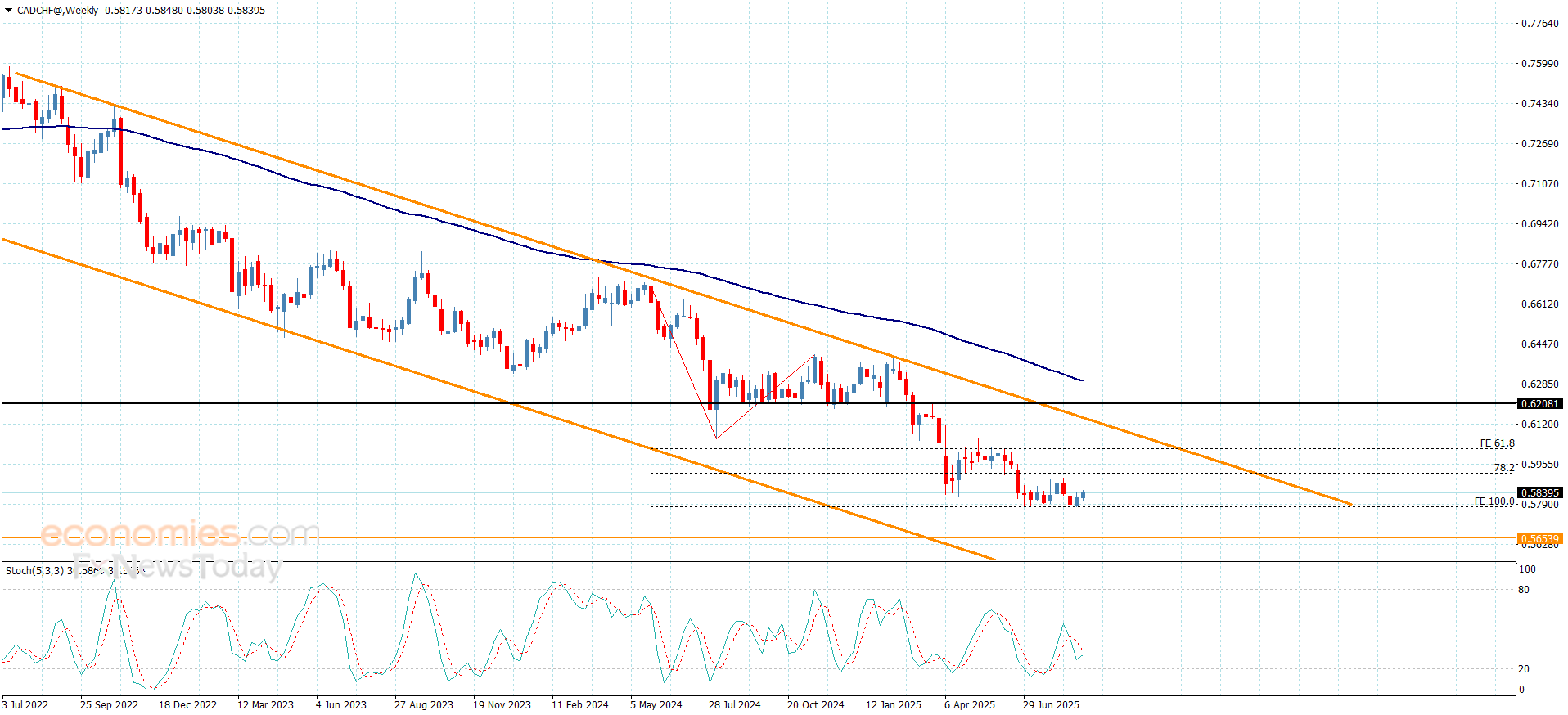
Despite the neediness of the CADCHF to the positive momentum in the last period, but it its positive stability above the support at 0.5780 supports the chances of activating the suggested bullish correctional attempts, to fluctuate near 0.5830.
By the above image, we notice stochastic attempt to provide positive momentum by its stability above 20 level, to increase the chances for targeting the positive stations by its rally towards 0.5910, surpassing it might succeed in renewing the pressure on the barrier at 0.6020 level.
The expected trading range for today is between 0.5800 and 0.5910
Trend forecast: Bullish
The (ETHUSD) price witnessed fluctuated trading in its last intraday levels, due to the stability of the key support at $4,250, gaining the bullish momentum that helped it to settle temporarily, as the price is under negative pressure that comes from its trading below EMA50, amid the dominance of the bearish correctional trend on the short-term basis, and its trading alongside a bias line, besides the emergence of the negative signals on the (RSI), after reaching overbought levels.
Get high-accuracy trading signals delivered directly to your Telegram. Subscribe to specialized packages tailored for the world’s top markets:
Full VIP signals performance report for August 25–29, 2025:
The chart highlights measured moves that preceded the triangle breakout, producing targets that match percentage gains of 11.4% and 18.4%, or price increases of $356 and $543. Using the $3,423 high as the breakout level, projected measured move targets sit at $3,779 and $3,966 based on price. These align with the continuation potential implied by the triangle formation.
Gold is now advancing toward the first target zone at $3,563 to $3,603, derived from a long-term 223.6% Fibonacci extension and a rising ABCD projection. Given the strength of the current trend, this zone may not provide significant resistance, though interim pauses cannot be ruled out. Key support rests at the prior breakout point of $3,500, followed by former swing highs at $3,451 and $3,439. Holding above these levels maintains the breakout structure and preserves bullish momentum.
Beyond the $3,603 zone, traders should watch for potential resistance around $3,664 to $3,668, where two indicators converge. While the higher measured move target near $3,966 could be reached longer term, shorter-term resistance zones may provide reaction points and consolidation phases along the way.
Gold confirmed a long-term bullish breakout last week, closing at its highest monthly level ever after overcoming resistance from the past two months. The last comparable rally out of consolidation produced four consecutive weeks of gains. With this being the first week of a new breakout phase, historical precedent suggests further upside is favored before the current move exhausts.
For a look at all of today’s economic events, check out our economic calendar.