
Category: Forex News, News
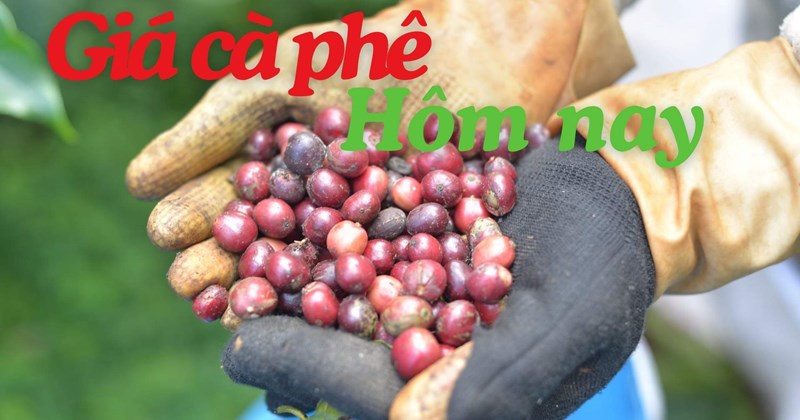
Coffee price today July 7: Increased by 4,000 VND/kg
Domestic coffee prices today
Coffee prices today in the domestic market simultaneously increased sharply in key production areas. The average price was recorded at 96,800 VND/kg, an increase of 4,000 VND/kg compared to the previous update.
In Dak Lak, coffee prices increased by 3,900 VND/kg, reaching 96,700 VND/kg. In Gia Lai, coffee prices increased by 4,000 VND/kg, reaching 96,800 VND/kg.
In Lam Dong, coffee prices today increased by 3,900 VND/kg, to 96,200 VND/kg. This is still the lowest level among the surveyed areas.
The old Dak Nong area continued to have the highest purchase price, reaching 97,000 VND/kg, an increase of 4,000 VND/kg.
Thus, domestic coffee prices currently fluctuate from 96. 200-97. 000 VND/kg. The gap between the region with the highest and lowest prices is 800 VND/kg.
After a strong increase, the domestic coffee price level has approached the 110,000 VND/kg mark. This is a notable increase after a period of strong market fluctuations at the end of June and the beginning of July.
The USD/VND exchange rate according to Vietcombank is recorded at 26,072 VND/USD.

World coffee prices
World coffee prices increased very strongly in the most recent trading session. Both Robusta on the London exchange and Arabica on the New York exchange simultaneously went up.
On the London exchange, the September 2026 Robusta futures contract increased by 328 USD/ton, equivalent to 8.83%, to 4,044 USD/ton.
During the session, this contract at one point increased to 4,110 USD/ton. Trading volume reached 15,802 lots.
Robusta for November 2026 delivery increased by 328 USD/ton, equivalent to 8.92%, to 4,007 USD/ton.
The January and March 2027 terms also increased by 328 USD/ton, to 3,974 USD/ton and 3,942 USD/ton respectively.
The July 2026 Robusta contract was recorded at 4,604 USD/ton, up 161 USD/ton. However, the trading volume only reached 21 lots because this term was close to maturity. Therefore, the September contract more clearly reflects the market trend.
On the New York exchange, Arabica coffee prices surged. The September 2026 Arabica futures contract increased by 48.75 US cents/lb, equivalent to 16.19%, to 349.95 US cents/lb.
During the session, this contract at one point touched 357.00 US cents/lb. Trading volume reached 47,909 lots.
Arabica December 2026 futures increased by 49.10 US cents/lb, equivalent to 17.15%, to 335.40 US cents/lb.
The March and May 2027 terms increased by 48.65 US cents/lb and 47.20 US cents/lb respectively, to 329.75 US cents/lb and 328.10 US cents/lb.
This development shows that world coffee prices are reacting very strongly to information about harvest progress in Brazil, low inventories and weather risks in the coming months.
Coffee price assessment
According to data from Barchart, coffee prices surged in the first session of the week, in which Arabica rose to a high of about 5 and a half months, and Robusta rose to a high of about 5 months.
The main supporting factor comes from the slow harvest progress in Brazil. Brazil’s consulting firm Safras & Mercado said that the 2026-2027 coffee crop harvest in this country has only completed 52% as of July 1.
This level is lower than 60% in the same period last year and also lower than the 5-year average of 55%. Slow harvest progress increases concerns that spot supply will be tightened in the short term.
The rise in coffee prices is also supported by unfavorable weather forecasts. Brazil’s Rural Climate Meteorological Company said that widespread rain may occur in Brazil in mid-July, adversely affecting some crops, including coffee.
Rain in harvest season can hinder harvesting, transportation and drying. If humidity persists, coffee bean quality is also at risk of being affected.
However, the Brazilian meteorological company Somar Meteorologia said that Minas Gerais state, the country’s largest coffee growing region, did not record rain in the week ending July 5. This shows that weather risks still need to be monitored for each production region.
Another factor supporting the price is the Brazilian real rising to a 2-week high against the USD. A strong real often causes Brazilian farmers to reduce export sales motivation, as revenue converted into domestic currency is less attractive.
Standard Arabica coffee inventories on the US Intercontinental Exchange continued to fall sharply, to 3,66,756 bags. This is the lowest level in more than 2 years, making the market more sensitive to unfavorable information about supply.
Meanwhile, Robusta inventories on the European Intercontinental Exchange increased to 4,109 lots last weekend, the highest level in about 3 months. This factor partly creates resistance for Robusta, but is not enough to stop the strong increase in the latest session.
El Niño risk continues to be monitored by businesses. The US National Oceanic and Atmospheric Administration (NOAA) assesses that there is a 63% chance that El Niño will reach very strong intensity in the period from November 2026 to January 2027.
El Niño may change rainfall in Brazil during the coffee tree flowering period in September and October, and also affect Robusta production conditions in some Asian countries. However, the specific impact depends on the intensity and timing of appearance in each region.
In terms of pressure, the Foreign Agricultural Services Agency of the US Department of Agriculture (USDA/FAS) still forecasts Brazil to have a large coffee crop in the 2026-2027 crop year. Rabobank of the Netherlands also raised its global Arabica surplus forecast for the 2026-2027 crop year from 7 million bags to 9.5 million bags.
Regarding Robusta, the Statistics Department (Ministry of Finance) said that Vietnam’s coffee exports in the first 6 months of 2026 reached about 1.05 million tons, an increase of 7.3% compared to the same period. Vietnam is the world’s largest Robusta producer, so increased supply is still a factor that can curb price increases in the medium term.



Written by : Editorial team of BIPNs
Main team of content of bipns.com. Any type of content should be approved by us.





Share this article: