About Editorial team of BIPNs

Main team of content of bipns.com. Any type of content should be approved by us.
19 12, 2025

Henry Hub Hovers Near $3.92 as Asia LNG Slides and Europe TTF Firms on Wind Dip

By |2025-12-19T18:58:40+02:00December 19, 2025|Forex News, News|0 Comments


NEW YORK / LONDON / SINGAPORE — December 19, 2025 (9:39 a.m. ET) — U.S. natural gas prices are trying to steady after a choppy December stretch that saw early-month spikes fade into a late-week pullback. As of 9:39 a.m. ET, Henry Hub natural gas futures were around $3.92 per mmBtu, edging above the prior close after opening near $3.94, with the session range roughly $3.84 to $3.96 so far. [1]

The story behind today’s tape is global: Asian spot LNG has slipped to a fresh 20‑month low, Europe’s hub prices are ticking up on weaker wind output, and traders everywhere are weighing one key question—whether late‑December weather stays mild enough to cap heating demand, or turns just cold enough (and long enough) to tighten balances into early 2026. [2]

Natural gas price today: where Henry Hub stands at 9:39 a.m. ET

The benchmark U.S. contract is being pulled in opposite directions:

  • Supportive: winter still isn’t over, LNG export demand remains a major structural bid for U.S. gas, and any surprise cold burst can tighten the prompt balance fast.
  • Bearish: forecasts leaning warmer reduce heating demand, production has been resilient, and global gas prices have softened, easing the urgency for marginal LNG purchases.

On the screen this morning, market data show Natural Gas futures near $3.92/mmBtu with a “Strong Sell” technical signal on daily indicators—an illustration of how quickly sentiment has swung from early‑December enthusiasm to late‑week caution. [3]

A broader macro snapshot also reflects that cooling tone: Trading Economics shows U.S. natural gas around $3.91/mmBtu on Dec. 19. [4]

The biggest near-term driver: weather expectations into late December

In winter, weather isn’t just another variable—it’s the variable. Heating demand dominates short-term consumption, and the market tends to reprice quickly when model runs shift.

A recent industry note from the American Gas Association highlighted that Henry Hub prompt-month futures traded above $5.20/mmBtu early in December before dropping back as forecasts for late December trended warmer—an important reminder that even a few mild runs can knock the risk premium out of the front of the curve. [5]

For traders, the setup into the Christmas-to-New Year window typically comes down to three weather-linked questions:

  1. How cold does it get—really? (and how widespread is the cold across major demand regions)
  2. How long does it last? (a short cold snap can be noisy; a persistent pattern matters)
  3. How do exports and storage react? (the “plumbing” variables can amplify or mute the weather signal)

Global LNG: Asia spot prices hit a fresh 20-month low

The most telling global headline today is in LNG.

A Reuters-reported Global LNG assessment published today says Asian spot LNG prices slipped to a fresh 20‑month low, with the average price for February delivery into Northeast Asia estimated at about $9.50/mmBtu, down from roughly $10 the prior week and the lowest since April 2024. [6]

What’s driving the softness?

  • Analysts cited weak Northeast Asian gas demand, helped along by firm pipeline gas supplies into China and strong renewable generation in Japan, which reduces gas burn in the power stack. [7]
  • Expectations remain “slightly bearish” in the near term due to warmer-than-seasonal temperatures and ample Pacific supply, according to market commentary in that report. [8]
  • Importers that are more price-sensitive have shown interest, but China’s incremental demand is still muted; some buyers are reportedly eyeing prices in the mid‑$8s/mmBtu before stepping in more aggressively. [9]

Why this matters to U.S. natural gas: when Asia and Europe LNG benchmarks soften, the global arbitrage that supports marginal U.S. LNG flows can narrow—especially once shipping, fuel, and regas costs are included. That doesn’t automatically shut off exports, but it can reduce the market’s willingness to pay up for U.S. feedgas during mild-demand periods.

Europe: gas prices edge higher as wind output fades, storage at ~68%

Europe’s gas market sent a different signal Friday morning.

A Reuters update published via TradingView reported that Dutch and British wholesale gas prices edged higher as forecasts called for lower wind power output, which typically increases gas burn for power generation. [10]

Key datapoints from that European session:

  • The Dutch TTF front-month was reported up ~€0.70 to €28.05/MWh (about $9.63/mmBtu) by 09:18 GMT. [11]
  • Britain’s day-ahead gas contract rose as well, and analysts pointed to higher power-related demand as wind generation dips. [12]
  • Norwegian export nominations were steady around 348 million cubic meters/day, helping keep supply conditions comfortable. [13]
  • European gas storage was reported at ~68.2% full (Gas Infrastructure Europe data cited in the same update). [14]

Trading Economics also shows Europe’s benchmark TTF gas around €27.98/MWh on Dec. 19 (up modestly on the day), underscoring how the European market is moving more on power-sector variability and storage pace than on panic about supply. [15]

Europe LNG markers: below the hub, but colder forecasts lurk in the background

Europe may be “well supplied” right now, but the market is also looking beyond the next few days.

In the same Reuters-reported LNG coverage published today, the Northwest Europe LNG Marker for February deliveries was assessed around $8.881/mmBtu on Dec. 18, at a discount to hub pricing, with other price assessments in a similar neighborhood. [16]

That report also noted a balancing act Europe is living with:

  • Fundamentals look supplied (pipeline flows and U.S. LNG arrivals).
  • Sentiment stays guarded because there are forecasts for colder conditions early in the new year, and storage levels are described as lower than recent years—a setup that could force more procurement if winter bites. [17]

LNG shipping and arbitrage: signals are pointing toward Europe

One of the more practical “tell” signals in global gas is freight and route economics.

The Reuters-reported LNG market update published today said LNG freight rates softened again, and that front-month arbitrage economics to Northeast Asia were pointing toward Europe via common routes—another sign that, for now, Europe remains the marginal sink for flexible supply. [18]

For U.S. natural gas bulls, that’s a mixed message:

  • It supports U.S. LNG utilization if Europe remains a reliable destination.
  • But it also confirms that Asia’s incremental pull is currently limited—typically a softer backdrop for global prices.

Forecasts: what the next few weeks (and 2026) could look like

U.S. official outlook: winter prices near the low-$4s on average

The U.S. Energy Information Administration’s Short‑Term Energy Outlook (Dec. 9, 2025) says the Henry Hub spot price in its forecast rises to an average of almost $4.30/mmBtu this winter (November–March), driven primarily by expectations of higher space-heating demand tied to colder weather. [19]

That’s a crucial framing point for today: even if the market is soft this morning, the official baseline still assumes winter averages in the low‑$4s.

Bank outlook: Goldman’s 2026 gas view

In a separate Reuters report on major commodity forecasts this week, Goldman Sachs projected 2026 European TTF natural gas prices around €29/MWh and U.S. gas prices around $4.60/mmBtu, with lower prices in 2027 to encourage supply/demand adjustments. [20]

Whether or not traders agree with those precise levels, the message is clear: banks are increasingly treating gas as a structurally “tighter” commodity than the post-2022 shock period might suggest—especially with power demand growth and LNG dynamics reshaping the long-run call on U.S. supply.

Natural gas technical outlook: key levels traders are watching today

From a short-term, trading-oriented lens, one technical forecast published today flagged:

  • A resistance zone around $4.20
  • Support near $3.88
  • A projected daily range roughly $3.68 to $4.07
  • A bearish near-term bias [21]

Technical views vary widely—and fundamentals usually win over time—but those levels align closely with what the market is already expressing: rallies are being sold into resistance, while dips are being measured against support in the high‑$3s.

The LNG project signal: Energy Transfer pauses Lake Charles LNG

One more piece of “bigger picture” LNG news still rippling through the market: Energy Transfer announced it was suspending development of its Lake Charles LNG export project in Louisiana amid rising costs and what Reuters described as a global LNG supply glut. [22]

This matters for natural gas traders because U.S. LNG capacity decisions shape the long-term demand “floor” for feedgas. A high-profile pause reinforces that the next wave of LNG growth may not be linear—even in a policy environment that is generally supportive of permitting.

What to watch next: the catalysts that can move prices fast

Heading into the final stretch of 2025, natural gas traders will typically focus on a tight set of catalysts:

  1. Weather model shifts (especially 10–15 day trends across the Midwest, Northeast, and Texas)
  2. European wind generation forecasts (because lower wind often means higher gas burn and firmer TTF) [23]
  3. Asian LNG demand signals (spot tenders, China re-entry thresholds, and regional temperature anomalies) [24]
  4. Storage withdrawal pace (as a reality check versus expectations)
  5. LNG utilization and shipping economics (whether flexible cargoes keep flowing to Europe) [25]

Bottom line: a market caught between mild weather and global gas crosscurrents

As of 9:39 a.m. ET on Dec. 19, U.S. natural gas is trading like a market trying to find balance: prices near $3.92 suggest the front end has cooled from early-December highs, but the global picture—Europe’s wind-driven demand swings, Asia’s lower spot LNG prices, and the ever-present risk of winter volatility—means complacency can be costly. [26]

References

1. www.investing.com, 2. www.brecorder.com, 3. www.investing.com, 4. tradingeconomics.com, 5. www.aga.org, 6. www.brecorder.com, 7. www.brecorder.com, 8. www.brecorder.com, 9. www.brecorder.com, 10. www.tradingview.com, 11. www.tradingview.com, 12. www.tradingview.com, 13. www.tradingview.com, 14. www.tradingview.com, 15. tradingeconomics.com, 16. www.brecorder.com, 17. www.brecorder.com, 18. www.brecorder.com, 19. www.eia.gov, 20. www.reuters.com, 21. www.economies.com, 22. www.reuters.com, 23. www.tradingview.com, 24. www.brecorder.com, 25. www.brecorder.com, 26. www.investing.com


Source link

19 12, 2025

Hits fresh highs above 209.00 due to persistent bullish bias

By |2025-12-19T18:25:36+02:00December 19, 2025|Forex News, News|0 Comments

GBP/JPY reaches fresh record highs after registering little losses in the previous session, trading at 209.18 during the early European hours on Friday. A look at the daily chart shows the currency cross is moving upwards within an ascending channel pattern, indicating a persistent bullish bias.

The nine-day Exponential Moving Average (EMA) rises above the 50-day EMA, reinforcing the upside. The GBP/JPY cross holds above both averages, confirming trend strength. Additionally, the 14-day Relative Strength Index (RSI), a key momentum gauge, at 66.90 remains bullish, shy of overbought. RSI has improved in recent sessions, supporting continuation.

The GBP/JPY cross may further hit fresh highs near 210.00. A break above this psychological level could extend the advance toward the upper boundary of the ascending channel around 213.10. Short-term momentum stays firm as ascending averages help contain pullbacks and preserve the upward bias.

On the downside, the GBP/JPY cross may find its primary support at the nine-day EMA of 208.10, followed by the lower ascending channel boundary around 207.50. Further declines below the channel would weaken the bullish bias and put downward pressure on the currency cross to test the 50-day EMA at 205.10.

GBP/JPY: Daily Chart

Japanese Yen Price Today

The table below shows the percentage change of Japanese Yen (JPY) against listed major currencies today. Japanese Yen was the weakest against the British Pound.

USD EUR GBP JPY CAD AUD NZD CHF
USD 0.07% -0.01% 0.37% 0.06% 0.07% 0.22% 0.15%
EUR -0.07% -0.08% 0.33% -0.00% -0.00% 0.16% 0.08%
GBP 0.01% 0.08% 0.42% 0.08% 0.07% 0.23% 0.16%
JPY -0.37% -0.33% -0.42% -0.32% -0.32% -0.18% -0.24%
CAD -0.06% 0.00% -0.08% 0.32% -0.01% 0.14% 0.08%
AUD -0.07% 0.00% -0.07% 0.32% 0.00% 0.15% 0.08%
NZD -0.22% -0.16% -0.23% 0.18% -0.14% -0.15% -0.07%
CHF -0.15% -0.08% -0.16% 0.24% -0.08% -0.08% 0.07%

The heat map shows percentage changes of major currencies against each other. The base currency is picked from the left column, while the quote currency is picked from the top row. For example, if you pick the Japanese Yen from the left column and move along the horizontal line to the US Dollar, the percentage change displayed in the box will represent JPY (base)/USD (quote).

(The technical analysis of this story was written with the help of an AI tool.)

Source link

19 12, 2025

FDA is considering controversial rule change around supplements

By |2025-12-19T18:16:38+02:00December 19, 2025|Dietary Supplements News, News|0 Comments


The way dietary supplements are regulated in the United States is on the brink of change, with experts concerned of possible health implications.

The Council for Responsible Nutrition (CRN) reported that three quarters of Americans take dietary supplements, with some of the most popular being Vitamin D, biotin, magnesium, calcium, and iron, as per BBC Good Food.

Unlike medications, the Food and Drug Administration (FDA) doesn’t usually approve these tablets for safety and effectiveness.

Instead, the agency requires manufacturers to list active and inactive ingredients, the serving size, and amount per serving.

A disclaimer that reads ‘This statement has not been evaluated by the Food and Drug Administration. This product is not intended to diagnose, treat, cure, or prevent any disease’ must also be present on the packaging.

The FDA is considering relaxing its supplement label rules (Getty Stock Image)

This notice should be present after every bold health claim, including ‘promoting heart health’ and ‘improving immune health’.

According to a new report, the FDA is considering scrapping the need for this dispensation to be stated every time a health claim appears.

Instead, the agency is suggesting it be written just once on the tablet bottle, as per NBC News.

Kyle Diamantas, the head of the FDA’s food division, reasoned that in the past, the agency has seldom enforced this rule.

He claimed that the new strategy would also help cut down on label costs.

The outlet reported that the agency representative failed to state when this rule change would come into effect.

Diamantas said in a letter that the agency will not enforce the existing requirement while the policy is under review.

“If FDA does not identify significant concerns as we continue our review of the available data and information regarding this request, we are likely to propose a rule to amend this requirement,” Diamantas stated.

Dr. Pieter Cohen, an associate professor of medicine at Harvard Medical School, has raised concerns about the FDA relaxing regulations, claiming it could be the catalyst for further changes.

“Then you start saying things like, ‘We only need it on the actual bottle,’” he told the publication. “Then you say, ‘It only needs to be on the back.’ Then you let the print get smaller.”

A Harvard Medical School professor has already expressed his concerns (Getty Stock Image)

A Harvard Medical School professor has already expressed his concerns (Getty Stock Image)

In a statement, Andrew Nixon, a spokesperson for the Department of Health and Human Services, which oversees the FDA, insisted the change would not make it more difficult for consumers to heed the warning.

He added that a ‘growing number of Americans are paying closer attention to product labels’.

Earlier this month, Republicans urged US President Donald Trump to help ‘protect’ the nation’s vitamin supply.

In a letter, highlighting concerns about the US’s ‘overreliance on China for the supply of its vitamins and amino acids used in both human and animal food’, the American Feed Industry Association president and chief executive officer Constance Cullman claimed he was America could face a ‘national security risk’.

“Working with several champions in Congress – Republican Representatives Ashley Hinson and Brad Finstad – and now their Republican colleagues, we believe we have the momentum needed to proactively address this issue,” he continued, as per Feedstuffs.

“We know the Trump Administration is committed to investigating the situation further and look forward to working with the president on next steps.”


Source link

19 12, 2025

XRP Near $1.87 as CPI Whipsaw, BoJ Hike and ETF Inflows Shape the Outlook

By |2025-12-19T18:10:20+02:00December 19, 2025|Crypto News, News|0 Comments

At around 9:37 a.m. ET (UTC‑05:00) on Friday, December 19, 2025, XRP was trading near $1.87, after a volatile session that saw the token dip toward $1.77 and rebound as buyers defended the $1.80 area. In the latest intraday range, XRP has traded between roughly $1.77 and $1.93, underscoring how sensitive the market remains to macro headlines and liquidity conditions into year‑end. [1]

On major price trackers, XRP is down about 2% over the past 24 hours, with 24‑hour trading volume around $4.4 billion and a market cap near $113 billion, keeping it among the largest cryptocurrencies by value. [2]

So what’s driving XRP price action today? The short version: inflation data and interest‑rate expectations are colliding with crypto‑specific flows—especially the market’s ongoing focus on U.S.-listed XRP spot ETFs and derivatives positioning. [3]


Why XRP is moving today: inflation, central banks, and risk sentiment

1) A CPI “relief” print sparked a whipsaw—then reality set back in

U.S. inflation data showing headline CPI at 2.7% (below expectations cited by several market reports) helped fuel a rebound in risk assets, including crypto. But the reaction has been choppy: several analysts described the broader crypto tape as still seller‑dominated, where rallies are quickly tested by profit‑taking and macro uncertainty. [4]

Barron’s reported that even after the bounce, the market’s reaction suggested caution rather than a clean “risk‑on” reversal, with Fed rate‑cut expectations shifting only modestly—its cited FedWatch probabilities rose to roughly 27% for a January cut and 57% for March. [5]

2) Fed pushback: “no urgency” for another cut

Adding to the mixed signal, New York Fed President John Williams said on December 19 that he didn’t see an imminent need to follow last week’s rate cut with another easing move, explicitly noting a lack of “sense of urgency.” For crypto traders, that matters: fewer (or slower) cuts can mean tighter liquidity assumptions—usually a headwind for speculative assets. [6]

3) Bank of Japan hike: the yen carry‑trade fear returns

Overnight, the Bank of Japan raised rates to 0.75%, a three‑decade high, while leaving room for further tightening. Global macro desks have been watching this closely because a stronger yen and narrowing rate differentials can pressure leveraged “carry” strategies—and that can spill over into crypto when traders reduce risk. [7]

FXEmpire specifically flagged the risk that a more hawkish BoJ combined with a more dovish Fed path can increase the odds of a yen carry unwind, a dynamic the outlet says has historically coincided with sharper risk‑asset drawdowns. [8]


XRP-specific catalyst: ETF inflows are strong, but retail demand looks softer

One of the most closely watched XRP narratives in late 2025 has been the emergence and growth of U.S. spot XRP ETFs—and today’s coverage leans heavily on that theme.

ETF flows: steady institutional bids

FXStreet reported that U.S.-listed XRP spot ETFs recorded about $30 million of inflows on Thursday, with cumulative inflows cited at roughly $1.06 billion and average net assets around $1.14 billion, referencing SoSoValue data. The takeaway: even with price volatility, the ETF channel has continued to signal institutional appetite. [9]

FXEmpire similarly described an extended inflow streak and placed total net inflows since launch at roughly $1.03 billion, while also noting XRP’s pullback since one ETF launch date in mid‑November. [10]

Derivatives: open interest points to cautious positioning

While ETF flows look constructive, FXStreet also highlighted softer retail/derivatives participation: futures open interest around $3.21 billion, down versus earlier in the week and far below levels seen earlier in 2025, which it framed as a sign that traders are still hesitant to lever up. [11]

That push‑pull—institutional accumulation via ETFs vs. muted retail leverage—helps explain why XRP can bounce sharply off lows yet struggle to sustain breakouts.


XRP technical analysis today: the levels traders are watching

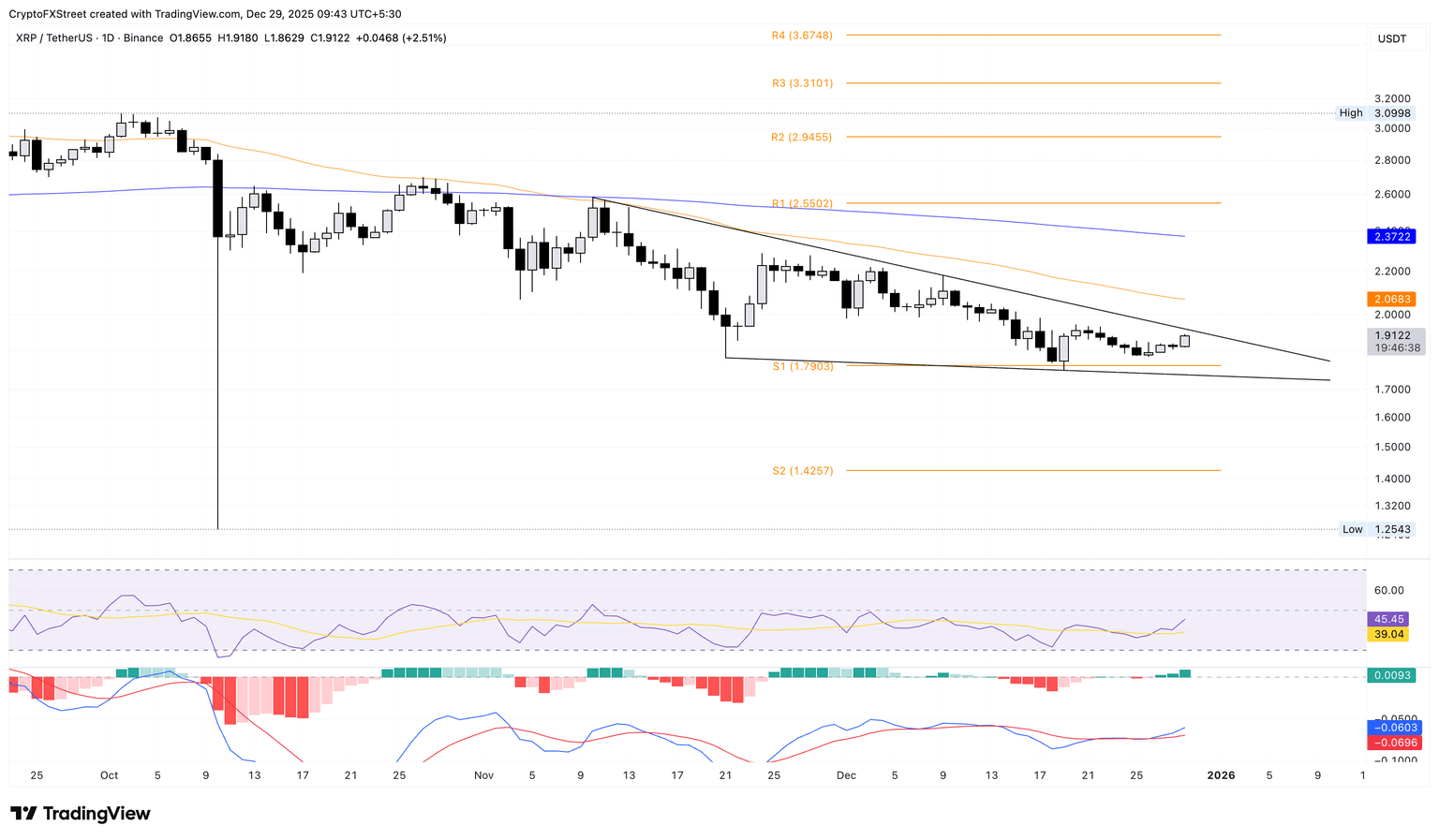
Volatility today has been defined by two zones: support around $1.80 and resistance around $2.00.

Key support levels

  • $1.80: A psychological and frequently referenced support area; today’s dip tested this region before rebounding. [12]
  • $1.77: The session’s notable intraday low highlighted by multiple trackers and market commentary. [13]
  • $1.75 then $1.50: FXEmpire framed $1.75 as a key downside level, with $1.50 as a deeper support if risk sentiment deteriorates. [14]

Key resistance levels

  • $1.90–$1.93: The upper end of today’s range; a zone that has acted as a “cap” during rebounds. [15]
  • $2.00: The “pivot” level. FXStreet suggested a close above $2.00 could reinforce a short‑term bullish shift—though it cautioned that several indicators still lean bearish. [16]
  • $2.15 and $2.42 (moving averages): FXStreet and FXEmpire both referenced the 50‑day EMA near $2.15 and the 200‑day EMA near $2.42 as milestones bulls would want to reclaim for a more durable trend reversal. [17]

Market context: crypto is “making new lows,” but not collapsing

A broader market read from Investing.com described an environment where crypto has repeatedly “trapped” bulls—brief spikes followed by fadeouts—while noting that major altcoins (including XRP) have shown signs of drifting lower over recent months. Its assessment leaned on the idea that large holders may have been gradually reducing exposure, even as Bitcoin finds buyers on sharper dips. [18]

This matters for XRP because it suggests rallies may keep facing overhead supply unless a clear catalyst (macro easing, legislation clarity, or sustained ETF acceleration) shifts positioning.


XRP forecasts and price predictions: what analysts and models say next

Forecasts are mixed—and in crypto, they always deserve skepticism. Still, today’s coverage converges around a few scenario ranges.

Scenario A: A push back above $2.00

  • FXStreet’s near-term roadmap: a sustained move above $2.00 improves the short‑term setup, but the outlet emphasized that trend measures (including moving averages) remain a hurdle; it also pointed to the need for higher derivatives participation to support follow‑through. [19]
  • FXEmpire’s medium-term targets: if ETF flows remain resilient and policy catalysts improve, FXEmpire outlined $2.5 (4–8 weeks) and $3.0 (8–12 weeks) as upside targets—while still calling the very near‑term outlook cautious due to BoJ‑driven risk. [20]

Scenario B: Another dip toward $1.75

If the BoJ shock spills into broader risk reduction—or if ETF flows cool—several analyses stress that $1.75 is a key level. A break below it could change market structure quickly, especially into holiday liquidity. [21]

Model-based projections: small moves, not moonshots

Algorithmic forecast pages updated today generally point to modest near‑term fluctuations around current prices rather than extreme targets:

  • Changelly listed $1.87 for December 19 and projected moves into the $1.84–$1.91 area through late December/early January in its short-horizon table. [22]
  • CoinCodex similarly projected XRP near $1.87 over the next day and around $1.85 about a month out (mid‑January), according to its forecast snippet and FAQ section. [23]

These aren’t “predictions” in the traditional analyst sense—they’re model outputs that can change rapidly with volatility.


Policy and regulation backdrop: why Ripple’s “bank” news still matters

Although not dated today, one of the most consequential late‑2025 developments still influencing XRP narratives is Ripple’s regulatory positioning.

Reuters reported on December 12 that the Office of the Comptroller of the Currency (OCC) granted Ripple conditional approval tied to a national trust bank charter framework (along with other crypto firms). The charter structure—if finalized—would allow custody/settlement style activities but would not allow taking deposits or making loans, a detail that matters when investors try to translate “bank” headlines into business-model implications. [24]

Separately, FXEmpire’s Dec. 19 analysis emphasized that U.S. legislative progress around crypto market structure remains a notable medium‑term driver for XRP sentiment, highlighting commentary that a markup on “Clarity” legislation is expected in January. [25]


What to watch next for XRP today and into the weekend

XRP’s next directional move likely hinges on a short list of catalysts:

  1. Whether XRP can reclaim $2.00 on a closing basis (and whether momentum holds above $1.90–$1.93). [26]
  2. BoJ follow-through: markets will continue digesting what 0.75% means for global rates, FX, and leveraged risk positions. [27]
  3. Fed communication: Williams’ “no urgency” message is a reminder that rate cuts may not be a straight line, even after cooler inflation prints. [28]
  4. XRP ETF flow updates vs. derivatives demand: strong inflows can support sentiment, but low open interest suggests breakouts may struggle without broader participation. [29]

Bottom line: At 9:37 a.m. ET on December 19, XRP is holding near $1.87, caught between macro-driven volatility (CPI, BoJ, Fed messaging) and crypto-specific crosscurrents (ETF inflows vs. softer retail leverage). The market’s “line in the sand” levels remain $1.75–$1.80 on the downside and $2.00 on the upside—with the next decisive break likely tied to liquidity and policy headlines rather than purely technical factors. [30]

References

1. coinmarketcap.com, 2. coinmarketcap.com, 3. www.barrons.com, 4. www.barrons.com, 5. www.barrons.com, 6. www.reuters.com, 7. www.reuters.com, 8. www.fxempire.com, 9. www.fxstreet.com, 10. www.fxempire.com, 11. www.fxstreet.com, 12. coinmarketcap.com, 13. coinmarketcap.com, 14. www.fxempire.com, 15. coinmarketcap.com, 16. www.fxstreet.com, 17. www.fxstreet.com, 18. www.investing.com, 19. www.fxstreet.com, 20. www.fxempire.com, 21. www.fxempire.com, 22. changelly.com, 23. coincodex.com, 24. www.reuters.com, 25. www.fxempire.com, 26. www.fxstreet.com, 27. www.reuters.com, 28. www.reuters.com, 29. www.fxstreet.com, 30. coinmarketcap.com

Source link

19 12, 2025

XAG/USD rebounds from 100-hour SMA support

By |2025-12-19T16:57:36+02:00December 19, 2025|Forex News, News|0 Comments


Silver (XAG/USD) attracts some dip-buying near mid-$64.00s during the Asian session on Friday and stalls the previous day’s modest retracement slide. The white metal climb back closer to the $66.00 round figure in the last hour and remain well within the striking distance of the all-time peak touched on Wednesday.

The XAG/USD once again finds decent support near the upward-sloping 100-hour Simple Moving Average (SMA), keeping buyers in control. It offers dynamic support at $64.75, and holding above this rising average would preserve the bullish tone. The Moving Average Convergence Divergence (MACD) histogram has turned positive and is expanding, suggesting the MACD line has crossed above the Signal line near the zero level. Momentum improves, and a sustained push further into positive territory would bolster the upside bias.

The Relative Strength Index (RSI) stands at 56, neutral-to-bullish and below overbought, supporting scope for further gains if buyers maintain control. However, the daily RSI is flashing overstretched conditions, which makes it prudent to wait for some near-term consolidation or a modest pullback before positioning for any further appreciating move. This, in turn, suggests that the XAG/USD could face some intermediate hurdle near the $66.50-$66.55 region.

This is followed by the record high, around the $67.00 neighborhood, which should cap the upside for the XAG/USD. A sustained strength beyond the said handle, however, will be seen as a fresh trigger for bullish traders and reaffirm the near-term positive outlook.

On the flip side, the $65.40-$65.35 region now seems to protect the immediate downside ahead of the $65.00 psychological mark. This is closely followed by the 100-hour SMA pivotal support, around the $64.75 region, which, if broken decisively, might prompt some technical selling and pave the way for a deeper corrective decline. The XAG/USD might then accelerate the downfall towards testing sub-$64.00 levels before eventually dropping to the $63.35 intermediate support en route to the $63.00 mark.

(A part of the technical analysis of this story was written with the help of an AI tool)

XAG/USD 1-hour chart

Silver FAQs

Silver is a precious metal highly traded among investors. It has been historically used as a store of value and a medium of exchange. Although less popular than Gold, traders may turn to Silver to diversify their investment portfolio, for its intrinsic value or as a potential hedge during high-inflation periods. Investors can buy physical Silver, in coins or in bars, or trade it through vehicles such as Exchange Traded Funds, which track its price on international markets.

Silver prices can move due to a wide range of factors. Geopolitical instability or fears of a deep recession can make Silver price escalate due to its safe-haven status, although to a lesser extent than Gold’s. As a yieldless asset, Silver tends to rise with lower interest rates. Its moves also depend on how the US Dollar (USD) behaves as the asset is priced in dollars (XAG/USD). A strong Dollar tends to keep the price of Silver at bay, whereas a weaker Dollar is likely to propel prices up. Other factors such as investment demand, mining supply – Silver is much more abundant than Gold – and recycling rates can also affect prices.

Silver is widely used in industry, particularly in sectors such as electronics or solar energy, as it has one of the highest electric conductivity of all metals – more than Copper and Gold. A surge in demand can increase prices, while a decline tends to lower them. Dynamics in the US, Chinese and Indian economies can also contribute to price swings: for the US and particularly China, their big industrial sectors use Silver in various processes; in India, consumers’ demand for the precious metal for jewellery also plays a key role in setting prices.

Silver prices tend to follow Gold’s moves. When Gold prices rise, Silver typically follows suit, as their status as safe-haven assets is similar. The Gold/Silver ratio, which shows the number of ounces of Silver needed to equal the value of one ounce of Gold, may help to determine the relative valuation between both metals. Some investors may consider a high ratio as an indicator that Silver is undervalued, or Gold is overvalued. On the contrary, a low ratio might suggest that Gold is undervalued relative to Silver.


Source link

19 12, 2025

USDJPY News Today: Yen Weakens as Bank of Japan Hikes Rates, December

By |2025-12-19T16:24:35+02:00December 19, 2025|Forex News, News|0 Comments

The Bank of Japan’s recent decision to hike interest rates to unprecedented levels has sent the Japanese yen weaker against the dollar. This move reflects Japan’s ongoing efforts to normalize its monetary policy, marking the highest rates in 30 years. The implications are significant, not only for the USDJPY currency pair but also for Japanese government bond (JGB) yields, impacting traders and investors globally.

Bank of Japan’s Rate Hike and Its Implications

The Bank of Japan’s decision to increase interest rates is a noteworthy shift from its long-standing low-rate environment. This push is part of a broader strategy to combat inflation while moving towards policy normalization. By raising rates, the central bank aims to stabilize the economy without stifacing growth, a delicate balance following years of economic stagnation.

This decision has led to the depreciation of the Japanese yen, which has softened against the US dollar. The USDJPY fluctuation reflects global investor reactions, with currency traders adjusting positions in anticipation of further policy changes. For Japan, this is a step towards aligning with other major economies that have been gradually hiking rates post-pandemic.

Impact on Japanese Government Bond Yields

As the Bank of Japan hikes rates, Japanese government bond (JGB) yields have naturally risen, attracting attention from both domestic and international investors. Higher yields often mean better returns, driving more investment into these bonds.

However, the rise in yields also points to potential risks. If yields rise too sharply, it could disrupt Japan’s financial markets by increasing government borrowing costs. This can impact fiscal policies and potentially slow down economic recovery efforts. Currently, the JGB market remains under close watch, as increased yields signal shifting investor sentiment and potential adjustments in inflation expectations.

USDJPY Forecast and Market Sentiment

The impact of Japan’s rate hike is visible in the USDJPY trading dynamics, with further volatility expected. Market analysts are now revising their forecasts for USDJPY, considering the dual influence of US monetary policies and Japan’s rate changes.

According to a forecast by Forex.com, we could see the USDJPY move in a tight range until further definitive policy statements are made by the Bank of Japan (source). Meanwhile, the Nikkei 225 (^N225) has experienced minor fluctuations, indicating uncertainty amidst investors processing the rate news and its broader market implications.

Investor Insights from the Meyka Platform

Investors using Meyka, an AI-powered platform, have access to real-time financial insights and predictive analytics. These tools are particularly valuable in volatile periods like these, where data-driven decisions can significantly impact portfolio performance.

By employing Meyka’s analytics, traders can monitor key indicators, such as changes in currency pairs and bond yields. This empowers them to make informed decisions, navigate market volatility, and optimize trading strategies, ensuring they stay ahead in a fast-evolving financial landscape.

Final Thoughts

The Bank of Japan’s rate hike has ripple effects across the financial landscape. As the yen weakens and bond yields rise, investors remain on high alert for further policy shifts. Understanding these developments is crucial for those trading in USDJPY or holding JGBs.

Platforms like Meyka offer invaluable tools for investors to track these changes and predict future trends. Staying informed and adaptable has never been more crucial as global economic policies continue to evolve. By leveraging data and insights, investors can better navigate these uncertain tides and align their strategies with emerging financial realities.

FAQs

How does the Bank of Japan’s rate hike impact the Japanese yen?

The rate hike has led to a weaker Japanese yen against the U.S. dollar as investors adjust to new economic signals and altered yield expectations. This impacts currency traders and cross-border financial dynamics.

What are Japanese government bonds and how do they respond to rate changes?

Japanese government bonds (JGBs) are debt securities issued by Japan. When rates rise, JGB yields typically increase, attracting more investors but also raising borrowing costs, which can influence fiscal policies.

What is the future outlook for the USDJPY currency pair?

The USDJPY is expected to experience continued volatility as both U.S. and Japanese monetary policies evolve. Traders should monitor policy announcements from the Bank of Japan and Federal Reserve for further insight.

Disclaimer:

The content shared by Meyka AI PTY LTD is solely for research and informational purposes. 
Meyka is not a financial advisory service, and the information provided should not be considered investment or trading advice.

Source link

19 12, 2025

Impact of novel probiotic strains isolated from Algerian fermented butter and green tea waste on broilers’ production quality

By |2025-12-19T16:16:00+02:00December 19, 2025|Dietary Supplements News, News|0 Comments


  • Krysiak, K., Konkol, D. & Korczyński, M. Overview of the use of probiotics in poultry production. Animals 11 (6), 1620 (2021).

    Article 
    PubMed 
    PubMed Central 

    Google Scholar
     

  • Halder, N., Sunder, J., De, A. K., Bhattacharya, D. & Joardar, S. N. Probiotics in poultry: a comprehensive review. J. Basic. Appl. Zool. 85 (1), 23 (2024).

    Article 

    Google Scholar
     

  • Sugiharto, S. & Ranjitkar, S. Recent advances in fermented feeds towards improved broiler chicken performance, Gastrointestinal tract microecology and immune responses: A review. Anim. Nutr. 5 (1), 1–10 (2019).

    Article 
    PubMed 

    Google Scholar
     

  • Wang, H. et al. Dietary Bacillus subtilis benefits meat quality by regulating the muscle fiber type and antioxidant capacity of broilers. Poult. Sci. 103 (12), 104267 (2024).

    Article 
    CAS 
    PubMed 
    PubMed Central 

    Google Scholar
     

  • Bentahar, M. C. et al. Evaluation of probiotic potential and functional properties of Lactobacillus strains isolated from Dhan, traditional Algerian goat milk butter. Foods 13 (23), 3781 (2024).

    Article 
    MathSciNet 
    CAS 
    PubMed 
    PubMed Central 

    Google Scholar
     

  • Ludfiani, D., Asmara, W., Wahyuni, A. & Astuti, P. Identification of Lactobacillus spp. on basis morphological, physiological, and biochemical characteristic from Jawa super chicken excreta, in BIO Web of Conferences, EDP Sciences, p. 6012. (2021).

  • Qadi, W. S. M. et al. Biological characterization and metabolic variations among Cell-Free supernatants produced by selected Plant-Based lactic acid bacteria. Metabolites 13 (7), 849 (2023).

    Article 
    CAS 
    PubMed 
    PubMed Central 

    Google Scholar
     

  • Sjofjan, O. & Adli, D. N. The effect of replacing fish meal with fermented Sago larvae (FSL) on broiler performance. Livest Res. Rural Dev, 33 2 (2021).

  • Popova, T. Effect of probiotics in poultry for improving meat quality. Curr. Opin. Food Sci. 14, 72–77 (2017).

    Article 

    Google Scholar
     

  • Yousaf, S. et al. A review of probiotic applications in poultry: improving immunity and having beneficial effects on production and health. Adv Microbiol, 61 (3), 115–123 (2022).

  • Tang, X., Liu, X. & Liu, H. Effects of dietary probiotic (Bacillus subtilis) supplementation on carcass traits, meat quality, amino acid, and fatty acid profile of broiler chickens. Front. Vet. Sci. 8, 767802 (2021).

    Article 
    PubMed 
    PubMed Central 

    Google Scholar
     

  • Mohammed, A. A., Zaki, R. S., Negm, E. A., Mahmoud, M. A. & Cheng, H. W. Effects of dietary supplementation of a probiotic (Bacillus subtilis) on bone mass and meat quality of broiler chickens. Poult. Sci. 100 (3), 100906 (2021).

    Article 
    CAS 
    PubMed 

    Google Scholar
     

  • Soumeh, E. A., Cedeno, A. D. R. C., Niknafs, S., Bromfield, J. & Hoffman, L. C. The efficiency of probiotics administrated via different routes and doses in enhancing production performance, meat quality, gut morphology, and microbial profile of broiler chickens. Animals 11 (12), 3607 (2021).

    Article 
    PubMed 
    PubMed Central 

    Google Scholar
     

  • Amarantini, C., Satwika, D., Budiarso, T. Y., Yunita, E. R. & Laheba, E. A. Screening of antimicrobial-producing lactic acid bacteria isolated from traditional fish fermentation against pathogenic bacteria, in Journal of Physics: Conference Series, IOP Publishing, p. 12045. (2019).

  • Ludwig, W., Schleifer, K. & Whitman, W. B. Lactobacillales ord. nov, Bergey’s Man. Syst. archaea Bact., (eds M.E. Trujillo, S. Dedysh, P. DeVos, B. Hedlund, P. Kämpfer, F.A. Rainey and W.B. Whitman). p. 1, (2015).

  • Vasiliauskaite, A. et al. Application of edible coating based on liquid acid Whey protein concentrate with Indigenous Lactobacillus helveticus for acid-curd cheese quality improvement. Foods 11 (21), 3353 (2022).

    Article 
    CAS 
    PubMed 
    PubMed Central 

    Google Scholar
     

  • Boucard, A-S. et al. Age and giardia intestinalis infection impact canine gut microbiota. Microorganisms 9 (9), 1862 (2021).

    Article 
    CAS 
    PubMed 
    PubMed Central 

    Google Scholar
     

  • Sukrama, I. D. M., Pinatih, K. J. P. & Suardana, I. W. Molecular analysis of lactic acid bacteria isolate Sr2 from Bali cattle rumen. J. Glob Pharma Technol. 5 (9), 44–49 (2017).


    Google Scholar
     

  • Sreepathi, N. et al. Screening for potential novel probiotic Levilactobacillus brevis RAMULAB52 with antihyperglycemic property from fermented carica Papaya L. Front. Microbiol. 14, 1168102 (2023).

    Article 
    PubMed 
    PubMed Central 

    Google Scholar
     

  • Rose, R., Golosova, O., Sukhomlinov, D., Tiunov, A. & Prosperi, M. Flexible design of multiple metagenomics classification pipelines with UGENE. Bioinformatics 35 (11), 1963–1965 (2019).

    Article 
    CAS 
    PubMed 

    Google Scholar
     

  • Okonechnikov, K., Golosova, O., Fursov, M. & Team, U. G. E. N. E. Unipro UGENE: a unified bioinformatics toolkit. Bioinformatics 28 (8), 1166–1167 (2012).

    Article 
    CAS 
    PubMed 

    Google Scholar
     

  • Carvalho, L., Fernandes, N., Silva, B. N., Gonzales-Barron, U. & Cadavez, V. Molecular Identification and Phylogenetic Inference of Lactic Acid Bacteria Isolated from Goat’s Raw Milk Cheese, in Biology and Life Sciences Forum, MDPI, p. 39. (2023).

  • Sureshkumar, S. et al. Inclusion of Lactobacillus salivarius strain revealed a positive effect on improving growth performance, fecal microbiota and immunological responses in chicken. Arch. Microbiol. 203, 847–853 (2021).

    Article 
    CAS 
    PubMed 

    Google Scholar
     

  • Yoon, S. H. et al. Introducing ezbiocloud: a taxonomically united database of 16S rRNA gene sequences and whole-genome assemblies. Int. J. Syst. Evol. Microbiol. 67 (5), 1613–1617 (2017).

    Article 
    CAS 
    PubMed 
    PubMed Central 

    Google Scholar
     

  • Kumar, S., Kashyap, P. L., Singh, R. & Srivastava, A. K. Preservation and maintenance of microbial cultures. In Analyzing Microbes. Springer Protocols Handbooks (eds Arora, D. et al.) (Springer, 2013). https://doi.org/10.1007/978-3-642-34410-7_11.

    Chapter 

    Google Scholar
     

  • Tamura, K., Stecher, G. & Kumar, S. MEGA11: molecular evolutionary genetics analysis version 11. Mol. Biol. Evol. 38 (7), 3022–3027 (2021).

    Article 
    CAS 
    PubMed 
    PubMed Central 

    Google Scholar
     

  • Yasmin, I. et al. In vitro probiotic potential and safety evaluation (hemolytic, cytotoxic activity) of bifidobacterium strains isolated from Raw camel milk. Microorganisms 8 (3), 354 (2020).

    Article 
    CAS 
    PubMed 
    PubMed Central 

    Google Scholar
     

  • Casarotti, S. N. et al. In vitro assessment of safety and probiotic potential characteristics of Lactobacillus strains isolated from water Buffalo mozzarella cheese. Ann. Microbiol. 67, 289–301 (2017).

    Article 
    CAS 

    Google Scholar
     

  • Colombo, M., Nero, L. A. & Todorov, S. D. Safety profiles of beneficial lactic acid bacteria isolated from dairy systems. Brazilian J. Microbiol. 51 (2), 787–795 (2020).

    Article 
    CAS 

    Google Scholar
     

  • Dela Cruz, T. E. E. & Torres, J. M. O. Gelatin hydrolysis test protocol. Am. Soc. Microbiol. 1, 1–10 (2012).


    Google Scholar
     

  • Qadi, W. S. M. et al. Characterization of Physicochemical, Biological, and Chemical Changes Associated with Coconut Milk Fermentation and Correlation Revealed by 1H NMR-Based Metabolomics, Foods, vol. 12, no. 10, p. 2023. (1971).

  • Bambace, M. F., Alvarez, M. V. & Moreira, M. R. Novel functional blueberries: Fructo-oligosaccharides and probiotic lactobacilli incorporated into alginate edible coatings. Food Res. Int. 122, 653–660 (2019).

    Article 
    CAS 
    PubMed 

    Google Scholar
     

  • Hocquette, J. F. et al. Intramuscular fat content in meat-producing animals: development, genetic and nutritional control, and identification of putative markers. Animal 4 (2), 303–319. https://doi.org/10.1017/S1751731109991091 (2010).

    Article 
    CAS 
    PubMed 

    Google Scholar
     

  • Zineb, B., Said, D. & Djilali, B. Impact of both early-age acclimation and linseed dietary inclusion on fat deposition and fatty acids’ meat traits in heat-stressed broiler chickens. J. Adv. Veterinary Anim. Res. 8 (2), 237 (2021).

    Article 

    Google Scholar
     

  • Abudabos, A. M., Alyemni, A. H., Dafalla, Y. M. & Khan, R. U. The effect of phytogenics on growth traits, blood biochemical and intestinal histology in broiler chickens exposed to clostridium perfringens challenge. J. Appl. Anim. Res. 46 (1), 691–695 (2018).

    Article 
    CAS 

    Google Scholar
     

  • Abudabos, A. M., Alyemni, A. H., Dafalla, Y. M. & Khan, R. U. .The effect of phytogenic feed additives to substitute in-feed antibiotics on growth traits and blood biochemical parameters in broiler chicks challenged with Salmonella typhimurium. Environ. Sci. Pollut Res. 23, 24151–24157 (2016).

    Article 
    CAS 

    Google Scholar
     

  • Sugiharto, S., Yudiarti, T., Isroli, I., Widiastuti, E. & Putra, F. D. Effects of feeding cassava pulp fermented with acremonium charticola on growth performance, nutrient digestibility and meat quality of broiler chicks. S Afr. J. Anim. Sci. 47 (2), 130–138 (2017).

    Article 
    CAS 

    Google Scholar
     

  • Association of Official Analytical Chemists (AOAC). 920.125, Official methods of analysis, 2005, Association of Official Analytical Chemists Arlington, VA, USA.

  • Folch, J., Lees, M. & Sloane Stanley, G. H. A simple method for the isolation and purification of total lipids from animal tissues. J. biol. Chem. 226, 498–509 (1957).

    Article 

    Google Scholar
     

  • Botsoglou, N. A. et al. Rapid, sensitive, and specific thiobarbituric acid method for measuring lipid peroxidation in animal tissue, food, and feedstuff samples. J Agric. Food Chem, 42, 9, pp. 1931–1937, 1994.

  • Christie, W. W. & Han, X. Lipid Analysis: isolation, separation, Identification and Lipidomic Analysis (Elsevier, 2010).

  • Sharma, A., Lee, S. & Park, Y. S. Molecular typing tools for identifying and characterizing lactic acid bacteria: a review. Food Sci. Biotechnol. 29, 1301–1318 (2020).

    Article 
    PubMed 
    PubMed Central 

    Google Scholar
     

  • Tamime, A. Y. & Thomas, L. V. (eds) Probiotic Dairy Products (Wiley, 2018).

  • Zheng, J. et al. A taxonomic note on the genus lactobacillus: description of 23 novel genera, emended description of the genus Lactobacillus Beijerinck 1901, and union of lactobacillaceae and Leuconostocaceae. Int. J. Syst. Evol. Microbiol. 70 (4), 2782–2858 (2020).

    Article 
    CAS 
    PubMed 

    Google Scholar
     

  • Yarza, P. et al. Uniting the classification of cultured and uncultured bacteria and archaea using 16S rRNA gene sequences. Nat. Rev. Microbiol. 12 (9), 635–645 (2014).

    Article 
    CAS 
    PubMed 

    Google Scholar
     

  • dR Altavas, P. J. et al. Safety assessment of five candidate probiotic lactobacilli using comparative genome analysis. Access. Microbiol. 6 (1), 000715–v4 (2024).

    Article 

    Google Scholar
     

  • Colautti, A., Arnoldi, M., Comi, G. & Iacumin, L. Antibiotic resistance and virulence factors in lactobacilli: something to carefully consider. Food Microbiol. 103, 103934 (2022).

    Article 
    CAS 
    PubMed 

    Google Scholar
     

  • Pradhan, D., Mallappa, R. H. & Grover, S. Comprehensive approaches for assessing the safety of probiotic bacteria. Food Control. 108, 106872 (2020).

    Article 
    CAS 

    Google Scholar
     

  • Liao, C., Mao, F., Qian, M. & Wang, X. Pathogen-derived nucleases: an effective weapon for escaping extracellular traps. Front. Immunol. 13, 899890 (2022).

    Article 
    CAS 
    PubMed 
    PubMed Central 

    Google Scholar
     

  • Kang, M. S., Yeu, J. E. & Hong, S. P. Safety evaluation of oral care probiotics Weissella Cibaria CMU and CMS1 by phenotypic and genotypic analysis. Int. J. Mol. Sci. 20 (11), 2693 (2019).

    Article 
    CAS 
    PubMed 
    PubMed Central 

    Google Scholar
     

  • Chen, T. et al. In vitro and in vivo genome-based safety evaluation of Lacticaseibacillus rhamnosus LRa05. Food Chem. Toxicol. 186, 114600 (2024).

    Article 
    CAS 
    PubMed 

    Google Scholar
     

  • da Silva, L. A., Lopes Neto, J. H. P. & Cardarelli, H. R. .Safety and probiotic functionality of isolated goat milk lactic acid bacteria. Ann. Microbiol. 69, 1497–1505 (2019).

    Article 

    Google Scholar
     

  • Todorov, S. D., Tome, E. & Nero, L. A. Not everything is a question of reputation: safety of bacteriocinogenic LAB isolated from smoked salmon. CET Journal-Chemical Eng. Trans, 75, 451–456 (2019).

  • Gupta, A. & Sharma, N. Characterization of potential probiotic lactic acid bacteria-Pediococcus acidilactici Ch-2 isolated from Chuli-A traditional apricot product of Himalayan region for the production of novel bioactive compounds with special therapeutic properties. J. Food Microbiol. Saf. Hyg. 2 (1), 119 (2017).

    Article 

    Google Scholar
     

  • Zaaraoui, L. et al. Typical Moroccan goat Lactic acid bacteria and their assay as starters. Nova Biotechnol. Et Chim. 10, 958 (2021).


    Google Scholar
     

  • Grujović, M. Ž., Marković, K. G., Morais, S. & Semedo-Lemsaddek, T. Unveiling the Potential of Lactic Acid Bacteria from Serbian Goat Cheese, Foods, vol. 13, no. 13, p. 2024. (2065).

  • Lando, V., Valduga, N. Z. & Moroni, L. S. Functional characterization of lactobacilli strains with antimicrobial activity against Salmonella spp. And cell viability in fermented dairy product. Biocatal. Agric. Biotechnol. 47, 102605 (2023).

    Article 
    CAS 

    Google Scholar
     

  • Unban, K. et al. Probiotic and antioxidant properties of lactic acid bacteria isolated from Indigenous fermented tea leaves (Miang) of North Thailand and promising application in synbiotic formulation. Fermentation 7 (3), 195 (2021).

    Article 
    CAS 

    Google Scholar
     

  • Fesseha, H., Demlie, T., Mathewos, M. & Eshetu, E. Effect of Lactobacillus species probiotics on growth performance of dual-purpose chicken. Vet. Med. Res. Rep. 12, 75–83 (2021).


    Google Scholar
     

  • Ye, Y. et al. Effects of probiotic supplements on growth performance and intestinal microbiota of Partridge Shank broiler chicks. PeerJ 9, e12538 (2021).

    Article 
    PubMed 
    PubMed Central 

    Google Scholar
     

  • Shah, M. et al. Mitigating heat stress in broiler chickens using dietary onion (Allium cepa) and ginger (Zingiber officinale) supplementation. S Afr. J. Anim. Sci. 52 (6), 811–818 (2022).

    Article 
    CAS 

    Google Scholar
     

  • Poberezhets, J. & Kupchuk, I. Effectiveness of the use of probiotics in the diet of broiler chickens. Rocz Nauk. Pol. Tow Zootech, 17, 4, (2021).

  • Derakhshan, M., Ghasemian, S. O. & Gholami-Ahangaran, M. The effects of probiotic and phytase on growth performance, biochemical parameters and antioxidant capacity in broiler chickens. Vet. Med. Sci. 9 (2), 860–866 (2023).

    Article 
    CAS 
    PubMed 
    PubMed Central 

    Google Scholar
     

  • Abdel-Hafeez, H. M., Saleh, E. S. E., Tawfeek, S. S., Youssef, I. M. I. & Abdel-Daim, A. S. A. Effects of probiotic, prebiotic, and synbiotic with and without feed restriction on performance, hematological indices and carcass characteristics of broiler chickens. Asian-Australasian J. Anim. Sci. 30 (5), 672 (2016).

    Article 

    Google Scholar
     

  • Bitterncourt, L. C. et al. Influence of a probiotic on broiler performance. Rev. Bras. Zootec. 40, 2739–2743 (2011).

    Article 

    Google Scholar
     

  • He, Y. et al. Enterococcus faecium PNC01 isolated from the intestinal mucosa of chicken as an alternative for antibiotics to reduce feed conversion rate in broiler chickens. Microb. Cell. Fact. 20, 1–14 (2021).

    Article 

    Google Scholar
     

  • Suvorov, A. et al. Evaluation of the efficacy of Enterococcus faecium L3 as a feed probiotic additive in chicken. Probiotics Antimicrob. Proteins. 15 (5), 1169–1179 (2023).

    Article 
    CAS 
    PubMed 

    Google Scholar
     

  • Skvortsova, L. N. et al. The use of probiotics for improving the biological potential of broiler chickens. Int. J. Pharm. Res. 10 (4), 760 (2018).

    Article 
    MathSciNet 

    Google Scholar
     

  • Akbarimehr, M. et al. Multi-strain probiotic improved feed conversion ratio and selected health indicators in Japanese quail. Anim. Sci. Pap Rep. 41 (4), 345–358 (2023).


    Google Scholar
     

  • Patel, S. G. et al. Effects of probiotics supplementation on growth performance, feed conversion ratio and economics of broilers. J. Anim. Res. 5 (1), 155 (2015).

    Article 
    MathSciNet 

    Google Scholar
     

  • Salahshour, A., Vakili, R. & Nameghi, A. H. Effect of different conditioning temperatures and times on the pellet quality, performance, intestinal morphology, ileal microbial population, and apparent metabolizable energy in broiler chickens. Brazilian Journal of Poultry Science, vol. 25, no. 3, p. 2023. (2023).

  • Swamy, M., Upendra, H. G., Performance, C. & Protein Ether extract and total Ash in the breast muscle of broiler chickens supplemented with probiotics. Int. J. Sci. Environ. Technol. 2, 1000–1007 (2013).


    Google Scholar
     

  • Podolian, J. N. Effect of probiotics on the chemical, mineral, and amino acid composition of broiler chicken meat. Ukr. J. Ecol. 7 (1), 61–65 (2017).

    Article 

    Google Scholar
     

  • Khaksefidi, A. & Rahimi, S. Effect of probiotic inclusion in the diet of broiler chickens on performance, feed efficiency and carcass quality. Asian-Australasian J. Anim. Sci. 18 (8), 1153–1156 (2005).

    Article 
    CAS 

    Google Scholar
     

  • Świątkiewicz, S., Arczewska-Włosek, A. & Jozefiak, D. The efficacy of organic minerals in poultry nutrition: review and implications of recent studies. Worlds Poult. Sci. J. 70 (3), 475–486 (2014).

    Article 

    Google Scholar
     

  • Niknia, A. D., Vakili, R. & Tahmasbi, A. M. Role of zinc-methionine chelate on bone health and eggshell quality in late–phase laying hens. All life, 16, 1, p. 2162609, (2023).

  • Nduku, X. P., Mabusela, S. P. & Nkukwana, T. T. Growth and meat quality of broiler chickens fed Moringa Oleifera leaf meal, a probiotic and an organic acid. S Afr. J. Anim. Sci, 50, 5, (2020).

  • Wahyono, T. et al. Thiobarbituric acid reactive substances (TBARS) and quality of poultry meat as affected by electron beam irradiation: A meta-analysis study, in Developing Modern Livestock Production in Tropical Countries, CRC, 34–38. (2023).

  • Djilali, B., Benmehel, B., Farouk, B. & Miloud, H. Effects of genotype and sex on lipid oxidation and fatty acid profile of chicken breast meat. Pakistan J. Nutr. 15 (2), 187 (2016).

    Article 
    CAS 

    Google Scholar
     

  • Ahmad, A. et al. Improvement in oxidative stability and quality characteristics of functional chicken meat product supplemented with aqueous coriander extract. Int. J. Food Prop. 26 (1), 855–865 (2023).

    Article 
    CAS 

    Google Scholar
     

  • Vakili, R., Toroghian, M. & Torshizi, M. E. Saffron extract feed improves the antioxidant status of laying hens and the inhibitory effect on cancer cells (PC3 and MCF7) growth. Veterinary Medicine and Science, 8, 6, pp. 2494–2503, (2022).

  • Esposito, L., Mastrocola, D. & Martuscelli, M. Approaching to biogenic amines as quality markers in packaged chicken meat. Front. Nutr. 9, 966790 (2022).

    Article 
    PubMed 
    PubMed Central 

    Google Scholar
     

  • Martuscelli, M., Esposito, L. & Mastrocola, D. The role of coffee silver skin against oxidative phenomena in newly formulated chicken meat burgers after cooking. Foods 10 (8), 1833 (2021).

    Article 
    CAS 
    PubMed 
    PubMed Central 

    Google Scholar
     

  • Mancinelli, A. C. et al. Fatty acid profile, oxidative status, and content of volatile organic compounds in Raw and cooked meat of different chicken strains. Poult. Sci. 100 (2), 1273–1282 (2021).

    Article 
    MathSciNet 

    Google Scholar
     

  • Vakili, R., Rashidi, A. A. & Sobhanirad, S. Effects of dietary fat, vitamin E and zinc supplementation on tibia breaking strength in female broilers under heat stress. Afr J. Agric. Res 5. (2010).

  • Abdulla, N. R., Sabow, A. B., Foo, H. L., Loh, T. C. & Zamri, A. M. Growth performance, fatty acid profile and lipid oxidative stability of breast muscle in chickens fed probiotics and antibiotics or their mixture. S Afr. J. Anim. Sci, 48, 6, (2018).

  • Wang, H. et al. Live probiotic Lactobacillus Johnsonii BS15 promotes growth performance and lowers fat deposition by improving lipid metabolism, intestinal development, and gut microflora in broilers. Front. Microbiol. 8, 1073 (2017).

    Article 
    PubMed 
    PubMed Central 

    Google Scholar
     

  • Gheorghe, A. et al. ,Effects of dietary mixture enriched in polyunsaturated fatty acids and probiotic on performance, biochemical response, breast meat fatty acids, and lipid indices in broiler chickens. Agriculture 12 (8), 1120 (2022).

    Article 
    CAS 

    Google Scholar
     

  • Liu, L., Li, Q., Yang, Y. & Guo, A. Biological function of short-chain fatty acids and its regulation on intestinal health of poultry. Front. Vet. Sci. 8, 736739 (2021).

    Article 
    PubMed 
    PubMed Central 

    Google Scholar
     

  • Naeem, M. & Bourassa, D. Probiotics in poultry: unlocking productivity through Microbiome modulation and gut health. Microorganisms 13 (2), 257 (2025).

    Article 
    CAS 
    PubMed 
    PubMed Central 

    Google Scholar
     

  • Yang, X., Bist, R. B., Subedi, S., Guo, Y. & Chai, L. The application of probiotics and prebiotics in poultry production and impacts on environment: A review. Encyclopedia 5 (1), 35 (2025).

    Article 

    Google Scholar
     

  • Vakili, R. & Ebrahimnezhad, Y. Impact of dietary supplementation of unsaturated and saturated fatty acids on bone strength, fatty acids profile of thigh muscle and immune responses in broiler chickens under heat stress. Veterinary Med. Sci. 9 (1), 252–262 (2023).

    Article 
    CAS 

    Google Scholar


  • Source link

    19 12, 2025

    Can ADA Reach $2 by 2030?

    By |2025-12-19T16:09:37+02:00December 19, 2025|Crypto News, News|0 Comments

    BitcoinWorld

    Cardano Price Prediction: Can ADA Reach $2 by 2030?

    Will Cardano’s ADA token finally break through the $2 barrier in the coming years? As one of the most established blockchain platforms in the cryptocurrency space, Cardano has captured the attention of investors and developers alike. This comprehensive Cardano price prediction analysis examines the factors that could drive ADA’s value from 2026 through 2030, providing you with the insights needed to make informed decisions about this promising cryptocurrency.

    Understanding Cardano’s Current Market Position

    Cardano stands as a third-generation blockchain platform that has consistently ranked among the top cryptocurrencies by market capitalization. Unlike many projects that rushed to market, Cardano has followed a research-driven, peer-reviewed development approach. The current ADA price reflects both the platform’s technological achievements and market sentiment toward its gradual but methodical progress. As we look toward 2026 and beyond, several key factors will determine whether ADA can achieve the elusive $2 milestone that many investors have been anticipating.

    Technical Analysis: Cardano Price Prediction for 2026

    Looking specifically at 2026, our Cardano price prediction considers both historical patterns and future developments. By this time, Cardano’s ecosystem should be substantially more mature, with numerous decentralized applications (dApps) fully operational and generating real usage.

    Key factors influencing ADA in 2026:

    • Network adoption and transaction volume
    • DeFi and NFT ecosystem growth
    • Regulatory developments affecting the broader cryptocurrency market
    • Technological upgrades and scalability improvements
    Year Conservative Prediction Moderate Prediction Optimistic Prediction
    2026 $1.20 – $1.50 $1.50 – $1.80 $1.80 – $2.20
    2027 $1.40 – $1.70 $1.70 – $2.10 $2.10 – $2.60
    2030 $1.80 – $2.50 $2.50 – $3.50 $3.50 – $5.00

    The Road to 2027: Will ADA Price Show Sustained Growth?

    By 2027, Cardano’s development roadmap should be largely complete, with the platform operating at full capacity. The critical question for investors is whether the ADA price will reflect this technological maturity. Several scenarios could unfold:

    Bullish factors for 2027:

    • Mainstream adoption of Cardano-based applications
    • Increased institutional investment in the Cardano cryptocurrency
    • Successful implementation of governance mechanisms
    • Growing developer activity and community support

    Potential challenges:

    • Competition from other blockchain platforms
    • Regulatory uncertainty in key markets
    • Technical hurdles in scaling the network
    • Market volatility affecting all cryptocurrencies

    Cardano 2030: Long-Term Vision and Price Potential

    Looking further ahead to 2030, our Cardano 2030 analysis considers the platform’s potential to become a foundational layer for global financial systems and decentralized applications. The long-term success of any Cardano cryptocurrency investment depends on several macroeconomic and technological trends.

    Critical developments needed for ADA to reach $2+ by 2030:

    • Mass adoption of blockchain technology in traditional industries
    • Cardano’s successful implementation of its full roadmap
    • Regulatory clarity that supports innovation while protecting users
    • Demonstrated real-world utility beyond speculative trading

    What Could Drive ADA to $2 and Beyond?

    The $2 price point represents a significant psychological barrier for ADA price movements. Reaching and sustaining this level would require more than just market speculation—it would need tangible evidence of Cardano’s utility and adoption.

    Key drivers for reaching $2:

    1. Ecosystem Growth: A thriving network of dApps with substantial user bases
    2. Institutional Adoption: Major companies and governments building on Cardano
    3. Technological Superiority: Demonstrated advantages over competing platforms
    4. Market Conditions: Favorable cryptocurrency market trends and investor sentiment

    Risks and Challenges in Cardano’s Path

    While our Cardano price prediction considers optimistic scenarios, investors must also understand the risks. The cryptocurrency market remains highly volatile, and even established projects like Cardano face significant challenges.

    Major risk factors:

    • Regulatory changes that could limit adoption
    • Security vulnerabilities or network attacks
    • Failure to execute the development roadmap effectively
    • Shifts in developer and community support to competing platforms
    • Broader economic factors affecting all risk assets

    Expert Insights: What Analysts Say About ADA’s Future

    Financial analysts and blockchain experts offer varying perspectives on ADA 2026 and beyond. While some remain bullish based on Cardano’s methodological approach, others caution that the platform must deliver tangible results to justify higher valuations.

    Common themes in expert analysis:

    • The importance of real-world adoption over theoretical advantages
    • Cardano’s need to capture market share from established competitors
    • The role of community governance in long-term sustainability
    • How macroeconomic trends will affect all cryptocurrency investments

    Actionable Insights for ADA Investors

    Based on our comprehensive analysis of Cardano cryptocurrency prospects, here are practical considerations for investors:

    Investment strategies to consider:

    • Dollar-cost averaging to manage volatility risk
    • Portfolio diversification beyond Cardano alone
    • Regular review of Cardano’s development progress and ecosystem growth
    • Attention to regulatory developments affecting cryptocurrency markets
    • Setting realistic profit targets and risk management parameters

    Frequently Asked Questions

    What is Cardano and who created it?
    Cardano is a blockchain platform founded by Charles Hoskinson, who co-founded Ethereum before creating Input Output Hong Kong (IOHK) to develop Cardano. The platform emphasizes peer-reviewed research and formal verification methods.

    How does Cardano differ from other cryptocurrencies?
    Cardano uses a proof-of-stake consensus mechanism called Ouroboros and follows a research-driven development approach. Unlike many blockchain projects, Cardano’s development undergoes academic peer review before implementation.

    What factors most influence ADA’s price?
    ADA’s price responds to overall cryptocurrency market trends, Cardano-specific developments, adoption metrics, regulatory news, and broader economic factors affecting risk assets.

    Is Cardano a good long-term investment?
    Like all cryptocurrencies, Cardano carries significant risk but also potential reward. Its methodical development approach and strong academic foundation differentiate it from many projects, though success depends on execution and adoption.

    Where can I buy and store ADA safely?
    ADA is available on major cryptocurrency exchanges including Binance, Coinbase, and Kraken. For secure storage, consider hardware wallets like those from Ledger or Trezor.

    Conclusion: The Path Forward for Cardano

    Our analysis suggests that Cardano’s journey to $2 depends on a combination of technological execution, ecosystem growth, and favorable market conditions. While the ADA price has shown volatility in recent years, the platform’s research-driven approach provides a solid foundation for future development. The period from 2026 to 2030 will be crucial in determining whether Cardano can translate its technological promise into widespread adoption and corresponding value appreciation. Investors should monitor both Cardano-specific developments and broader cryptocurrency market trends when making decisions about ADA.

    To learn more about the latest cryptocurrency market trends, explore our articles on key developments shaping blockchain technology and digital asset adoption in the coming years.

    This post Cardano Price Prediction: Can ADA Reach $2 by 2030? first appeared on BitcoinWorld.

    Source link

    19 12, 2025

    XAU/USD fails to extend gains beyond $4,355

    By |2025-12-19T14:56:39+02:00December 19, 2025|Forex News, News|0 Comments


    Gold (XAU/USD) is posting marginal losses on Friday, but it keeps hovering without a clear bias above $4,300, with upside attempts capped below $4,355. The long wicks seen on the daily chart highlight a hesitant market, and the moderate US Dollar recovery is acting as a headwind for precious metals.

    The US Dollar Index, which measures the value of the Greenback against a basket of currencies, is trading at one-week highs above 98.50, unfazed by the weak US inflation data released on Thursday. That said, market expectations that the US Federal Reserve (Fed) will cut rates further in 2026 are likely to keep US dollar rallies limited, and support Gold near record highs.

    Technical Analysis: Gold is trading within a triangle pattern

    The 4-hour chart shows XAU/USD trading at $4,325, little changed on the daily chart, with price action trapped below an ascending triangle, with its top at the $4,355 area.

    Technical indicators are mixed. The Moving Average Convergence Divergence (MACD) stays below zero, with the histogram flattening, which hints at a fading bearish pressure. The Relative Strength Index (RSI) prints 54.64, holding above the 50 midline and supporting a mild bullish tilt.

    The $4,300 level has been supporting the pair over the last two days. ahead of the triangle bottom, around $4,290. Further down, the target is the December 12 low, at $4,257. To the upside, above the mentioned $4,355, the 127.2% Fibonacci extension of the December 9-12 rally is at $4,400. The Triangle’s measured target is at $4,450.

    (The technical analysis of this story was written with the help of an AI tool.)

    (This story was corrected on December 19 at 09:55 GMT to say that $4,357 is the December 12 low, and not the December 123 low as previously reported)

    US Dollar Price Today

    The table below shows the percentage change of US Dollar (USD) against listed major currencies today. US Dollar was the strongest against the Japanese Yen.

    USD EUR GBP JPY CAD AUD NZD CHF
    USD 0.08% 0.01% 0.94% 0.10% 0.08% 0.43% 0.13%
    EUR -0.08% -0.06% 0.86% 0.03% 0.00% 0.36% 0.05%
    GBP -0.01% 0.06% 0.95% 0.09% 0.06% 0.42% 0.11%
    JPY -0.94% -0.86% -0.95% -0.82% -0.86% -0.52% -0.82%
    CAD -0.10% -0.03% -0.09% 0.82% -0.03% 0.31% 0.02%
    AUD -0.08% -0.00% -0.06% 0.86% 0.03% 0.35% 0.03%
    NZD -0.43% -0.36% -0.42% 0.52% -0.31% -0.35% -0.30%
    CHF -0.13% -0.05% -0.11% 0.82% -0.02% -0.03% 0.30%

    The heat map shows percentage changes of major currencies against each other. The base currency is picked from the left column, while the quote currency is picked from the top row. For example, if you pick the US Dollar from the left column and move along the horizontal line to the Japanese Yen, the percentage change displayed in the box will represent USD (base)/JPY (quote).


    Source link

    19 12, 2025

    Bulls show signs of exhaustion after key events

    By |2025-12-19T14:23:35+02:00December 19, 2025|Forex News, News|0 Comments

    EUR/USD fluctuates in a tight channel above 1.1700 after posting marginal losses on Thursday. The pair’s technical outlook points to a lack of buyer interest in the short term.

    Euro Price This week

    The table below shows the percentage change of Euro (EUR) against listed major currencies this week. Euro was the strongest against the New Zealand Dollar.

    USD EUR GBP JPY CAD AUD NZD CHF
    USD 0.22% 0.06% 0.33% 0.17% 0.66% 0.73% -0.11%
    EUR -0.22% -0.16% 0.09% -0.05% 0.47% 0.50% -0.32%
    GBP -0.06% 0.16% 0.38% 0.12% 0.63% 0.67% -0.17%
    JPY -0.33% -0.09% -0.38% -0.15% 0.35% 0.39% -0.22%
    CAD -0.17% 0.05% -0.12% 0.15% 0.49% 0.55% -0.13%
    AUD -0.66% -0.47% -0.63% -0.35% -0.49% 0.04% -0.79%
    NZD -0.73% -0.50% -0.67% -0.39% -0.55% -0.04% -0.83%
    CHF 0.11% 0.32% 0.17% 0.22% 0.13% 0.79% 0.83%

    The heat map shows percentage changes of major currencies against each other. The base currency is picked from the left column, while the quote currency is picked from the top row. For example, if you pick the Euro from the left column and move along the horizontal line to the US Dollar, the percentage change displayed in the box will represent EUR (base)/USD (quote).

    EUR/USD gathered bullish momentum and climbed above 1.1760 in the early American session on Thursday as markets reacted to the European Central Bank’s (ECB) policy announcements and soft inflation data from the US.

    The ECB left key rates unchanged as widely expected and the new economic projections showed that the economic growth forecasts has been revised up to 1.4% in 2025, 1.2% in 2026 and 1.4% in 2027. In the post-meeting press conference, ECB President Christine Lagarde explained that they can’t offer forward guidance on policy, given the uncertainty surrounding the outlook. Lagarde also noted that they don’t target exchange rates but added that they pay close attention to the Euro’s appreciation.

    The US Bureau of Labor Statistics (BLS) reported on Thursday that annual inflation, as measured by the Consumer Price Index (CPI), softened to 2.7% in November. In this period, the core CPI rose by 2.6%. Both of these readings came in below analysts’ estimate and caused the USD to come under bearish pressure with the immediate reaction.

    Later in the American session, the negative shift seen in risk mood supported the USD and forced EUR/USD to reverse its direction. Existing Home Sales data for November and the final revision to the University of Michigan’s Consumer Sentiment Index data for December will be featured in the economic calendar, which are unlikely to trigger a significant market reaction.

    In case markets remain risk-averse with a bearish opening in Wall Street, EUR/USD could have a difficult time regaining its traction heading into the weekend. At the time of press, US stock index futures were trading mixed. Additionally, end-of-the-week flows ahead of the Christmas holiday could ramp up the pair’s volatility and cause irregular movements.

    Technical Analysis:

    The 20-period Simple Moving Average (SMA) has flattened just above price at 1.1738, capping near-term upside. The 50-period SMA rises at 1.1715, while the 100- and 200-period SMAs climb at 1.1670 and 1.1615, keeping the broader tone supported. However, the Relative Strength Index (14) sits at 46, below the midline, pointing to subdued momentum.

    The lower limit of the ascending regression channel and the 50-period SMA offer immediate support at 1.1715, just before the rising trend line at 1.1695. Below the latter, 1.1670 (100-period SMA) and 1.1615 (200-period SMA) could be seen as next support levels.

    On the upside, immediate resistance aligns at 1.1765 (mid-point of the ascending channel), followed by 1.1820 (upper limit of the ascending channel).

    (The technical analysis of this story was written with the help of an AI tool)

    Euro FAQs

    The Euro is the currency for the 20 European Union countries that belong to the Eurozone. It is the second most heavily traded currency in the world behind the US Dollar. In 2022, it accounted for 31% of all foreign exchange transactions, with an average daily turnover of over $2.2 trillion a day.
    EUR/USD is the most heavily traded currency pair in the world, accounting for an estimated 30% off all transactions, followed by EUR/JPY (4%), EUR/GBP (3%) and EUR/AUD (2%).

    The European Central Bank (ECB) in Frankfurt, Germany, is the reserve bank for the Eurozone. The ECB sets interest rates and manages monetary policy.
    The ECB’s primary mandate is to maintain price stability, which means either controlling inflation or stimulating growth. Its primary tool is the raising or lowering of interest rates. Relatively high interest rates – or the expectation of higher rates – will usually benefit the Euro and vice versa.
    The ECB Governing Council makes monetary policy decisions at meetings held eight times a year. Decisions are made by heads of the Eurozone national banks and six permanent members, including the President of the ECB, Christine Lagarde.

    Eurozone inflation data, measured by the Harmonized Index of Consumer Prices (HICP), is an important econometric for the Euro. If inflation rises more than expected, especially if above the ECB’s 2% target, it obliges the ECB to raise interest rates to bring it back under control.
    Relatively high interest rates compared to its counterparts will usually benefit the Euro, as it makes the region more attractive as a place for global investors to park their money.

    Data releases gauge the health of the economy and can impact on the Euro. Indicators such as GDP, Manufacturing and Services PMIs, employment, and consumer sentiment surveys can all influence the direction of the single currency.
    A strong economy is good for the Euro. Not only does it attract more foreign investment but it may encourage the ECB to put up interest rates, which will directly strengthen the Euro. Otherwise, if economic data is weak, the Euro is likely to fall.
    Economic data for the four largest economies in the euro area (Germany, France, Italy and Spain) are especially significant, as they account for 75% of the Eurozone’s economy.

    Another significant data release for the Euro is the Trade Balance. This indicator measures the difference between what a country earns from its exports and what it spends on imports over a given period.
    If a country produces highly sought after exports then its currency will gain in value purely from the extra demand created from foreign buyers seeking to purchase these goods. Therefore, a positive net Trade Balance strengthens a currency and vice versa for a negative balance.

    Source link

    Go to Top