About Editorial team of BIPNs

Main team of content of bipns.com. Any type of content should be approved by us.
2 07, 2026

U.S. Dollar Gains Ground As Traders React To ISM Manufacturing PMI: Analysis For EUR/USD, GBP/USD, USD/CAD, USD/JPY

By |2026-07-02T03:17:48+03:00July 2, 2026|Forex News, News|0 Comments

ADP Employment Change report showed that private businesses added 98,000 jobs in June, compared to analyst forecast of 113,000. Tomorrow, traders will focus on the Non Farm Payrolls report, which is expected to show that U.S. economy added 110,000 jobs in June. The Non Farm Payrolls data will likely have a material impact on forex market dynamics.

In case U.S. Dollar Index settles above 101.15 – 101.30, it will head towards the nearest resistance level, which is located in the 101.85 – 102.00 range. On the support side, a move below the 101.15 level will push U.S. Dollar Index towards the next support at 100.50 – 100.65.

EUR/USD Retreats As Euro Area Inflation Rate Drops To 2.8%

Source link

1 07, 2026

EUR/USD Analysis 01/07: Attempting to Recover

By |2026-07-01T23:17:15+03:00July 1, 2026|Forex News, News|0 Comments

EUR/USD Analysis Summary Today

  • Overall Trend: Still bearish.

  • Support Levels for EUR/USD Today: 1.1375 – 1.1320 – 1.1250

  • Resistance Levels for EUR/USD Today: 1.1470 – 1.1530 – 1.1580

EUR/USD Trading Signals:

  • Buy scenario: From the support level of 1.1365 with a target of 1.1430 and a stop-loss at 1.1300

  • Sell scenario: From the resistance level of 1.1530 with a target of 1.1400 and a stop-loss at 1.1600

Technical Analysis of EUR/USD Today

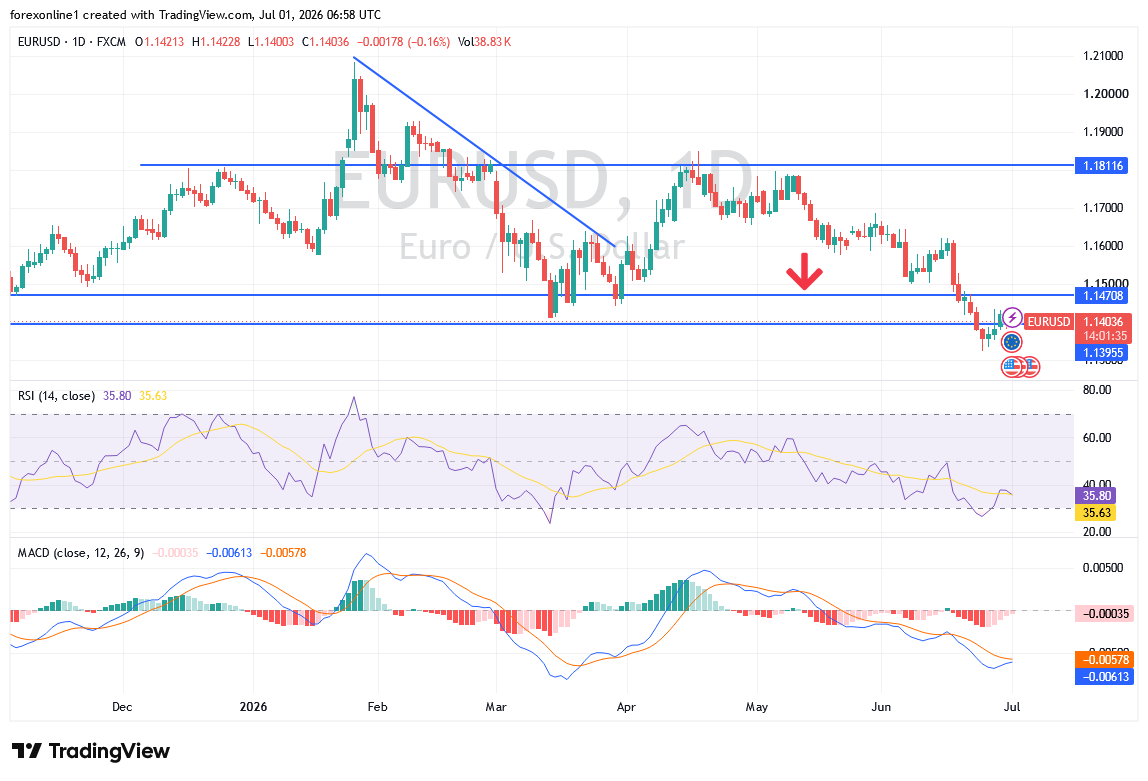
The EUR/USD currency pair is attempting to recover a portion of its losses at the start of July trading, after ending June with its steepest monthly bearish wave in several months. This comes amid persistent pressure stemming from slowing European inflation and as markets closely await comments from central bank officials. The sharp losses suffered last month dragged the pair down to the support level of 1.1324, its lowest level in over a year. At the time of writing, the Euro is stabilizing around $1.1425.

The technical outlook for the currency pair remains bearish. According to the performance on the daily chart, the Relative Strength Index (RSI) stabilizing below the 50 level reflects continued seller dominance. Meanwhile, the negative slope of the MACD indicator indicates weakening buying momentum and the likelihood of sustained selling pressure. The movement of the Simple Moving Averages (SMAs) warns of further downward movement as long as the currency pair remains below the 1.1400 level.

Conversely, an upside scenario on the daily chart would require the EUR/USD pair to head toward breaking the resistance barrier at 1.1580, and then 1.1700 respectively.

Today, the currency pair will be influenced by market and investor reactions to statements from central bank officials, particularly the heads of the European Central Bank (ECB) and the Federal Reserve, during an event hosted by the ECB that gathers a number of global central bank policymakers.

Falling Inflation Weighs on the Euro

Across top trading platforms, the Euro faces mounting pressure following the release of French and German inflation data that came in lower than market expectations. This has reinforced expectations that the European Central Bank’s need to continue raising interest rates in the coming period is diminishing.

Data showed that inflation in Germany fell by 0.3% on a monthly basis, while the annual rate slowed to 2.3% against expectations of 2.6%. In France, the Consumer Price Index (CPI) dropped 0.3% during June, bringing the annual inflation rate down to 1.8% compared to a forecast of 2.1%.

Analysts believe that the ongoing slowdown in inflation could prompt markets to pare back bets on any additional interest rate hikes, which may cap the Euro’s gains against major currencies. Andreas Steno Larsen of Real Vision noted that the recent data strengthens the likelihood of the ECB shifting its approach in the coming period.

Despite this, ECB officials maintain a cautious stance. ECB President Christine Lagarde emphasized that monetary policy decisions will remain data-dependent, while Bundesbank President Joachim Nagel warned that energy price pressures could keep inflation above the target level for some time.

For its part, ING Bank expects a temporary spike in inflation during the second half of the year due to base effects in energy prices, before it returns to levels below 2% over the medium term. The bank stressed that current conditions differ from the severe inflationary wave witnessed globally in 2022, noting the absence of indicators pointing to a new inflationary spiral.

Consequently, the Euro may receive limited support in the short term due to the ECB’s continued cautious tone. However, the persistent slowdown in inflation could drive markets to lower interest rate hike expectations, potentially keeping the single currency under pressure in the coming months.

Trading Advice:

The Euro may remain under selling pressure until the market reacts to upcoming high-impact data releases. Regardless of your bullish or bearish convictions, strict risk management is absolutely essential.

Ready to trade our EUR/USD analysis and predictions? Here are the best European brokers to choose from.

Mahmoud Abdullah is a financial markets analyst who has been covering global market movements for several years, with a particular focus on forex trading, commodities, indices, and macroeconomic price action analysis. He has been analyzing global financial markets since 2006 and currently serves as the Chief Analyst and Editor-in-Chief of the well-known website Traders Up. Mahmoud Abdullah combines technical analysis with macroeconomic context to understand market trends, paying close attention to price behavior, momentum, support and resistance levels, risk management, and evaluating high-probability market opportunities.

As seen on: mahmoud.a@dailyforex.com

Source link

1 07, 2026

oil prices today: Why are oil prices down today, and will Brent futures and US WTI crude prices continue to fall or rise again? Iran-US talks, Strait of Hormuz recovery and US inventory data keep crude market under focus

By |2026-07-01T22:56:35+03:00July 1, 2026|Forex News, News|0 Comments


Oil prices remained under pressure on Wednesday as traders closely monitored negotiations between Iran and the United States while waiting for fresh data on US crude oil inventories. Brent futures and US West Texas Intermediate (WTI) crude both declined as investors assessed whether easing tensions in the Middle East could improve global oil supply. The reopening of shipping through the Strait of Hormuz has also reduced fears of major supply disruptions. Market participants are now focusing on inventory data, diplomatic developments, and future supply conditions to understand where oil prices may move in the coming weeks.

Oil prices fall explained

Oil prices moved lower during Wednesday’s trading session as markets reacted to continued diplomatic discussions between Iran and the United States. Investors believe progress in the talks could reduce the risk of further disruptions to global oil supplies.

Brent crude futures dropped by 62 cents, or around 0.9%, to $72.33 per barrel at 1156 GMT. US West Texas Intermediate crude futures fell by 38 cents, or about 0.6%, to $69.12 per barrel, marking their lowest level since February 27.

The decline reflects changing market expectations. During the recent conflict in the Middle East, concerns about possible supply shortages pushed oil prices sharply higher. However, hopes that diplomatic efforts may prevent further escalation have reduced those fears. As supply risks appear to be easing, traders have become more willing to sell oil futures, putting downward pressure on prices.

Iran-US negotiations remain the biggest market driver

One of the biggest reasons behind the latest movement in crude prices is the ongoing dialogue between Iran and the United States. According to sources familiar with the discussions, both countries held technical talks in Doha. The negotiations are aimed at reaching an agreement on shipping through the Strait of Hormuz while also working toward a lasting ceasefire.


The Strait of Hormuz remains one of the world’s most important oil transport routes. A large share of globally traded crude oil passes through this narrow waterway every day. Any threat to shipping in the strait can quickly push oil prices higher because it raises concerns over global supply. On the other hand, signs that shipping can continue without disruption often reduce those concerns and support lower prices. The ongoing negotiations have therefore become one of the most closely watched events in the energy market.

Shipping recovery eases supply concerns

Another important factor influencing crude prices is the recovery in tanker movement through the Strait of Hormuz. Shipping activity has started returning to normal levels after disruptions caused by the recent conflict. US Vice President JD Vance stated that oil flows through the strategic waterway have returned to levels seen before the conflict began.This recovery has improved market confidence that global crude supplies will continue moving without major interruptions. The reopening of the shipping route has also encouraged analysts to lower concerns about long-term supply shortages. As supply fears ease, traders generally expect less pressure on oil prices unless fresh geopolitical events emerge.

Market waits for US crude inventory data

Apart from geopolitical developments, investors are also waiting for fresh information on US crude oil inventories. The US Energy Information Administration (EIA) is scheduled to release its official weekly oil stock report. Before the government report, market sources cited data from the American Petroleum Institute (API), showing that US crude inventories declined again during the previous week.

Oil inventory data often affects crude prices because it provides insight into supply and demand conditions. A larger-than-expected decline in inventories may suggest stronger demand or tighter supplies, which can support higher prices. If inventory levels rise instead, it may indicate weaker demand or stronger production, which could put additional pressure on oil prices. Because of this, traders are carefully watching the official EIA figures before making major trading decisions.

Analysts explain why prices remain under pressure

Analysts believe that current market sentiment remains cautious despite ongoing negotiations. PVM Associates analyst Tamas Varga said that discussions between the United States and Iran continue to create uncertainty about future supply conditions. He noted that investors believe the issues delaying negotiations will eventually be resolved.

According to Varga, the market currently maintains a downward bias. However, stronger evidence of falling inventories or any renewed closure of the Strait of Hormuz could quickly change investor sentiment. This means that while oil prices are currently under pressure, fresh developments could reverse the trend if supply risks return.

Recent quarterly losses show changing market expectations

Oil prices have experienced major changes over recent months. Brent crude recorded a decline of around $45 per barrel during the second quarter of the year. This represented its biggest quarterly fall since the global financial crisis in 2008.

US WTI crude also recorded a large quarterly decline of around $31 per barrel, marking its largest quarterly loss since 2020, when the COVID-19 pandemic reduced global fuel demand. These losses followed progress toward easing tensions in the Middle East after earlier gains triggered by the outbreak of conflict. The sharp movement highlights how quickly geopolitical developments can influence energy markets.

Analysts revise oil price forecasts

Market expectations have also changed for the longer term. After five consecutive months of increasing forecasts, analysts have reduced their 2026 oil price estimates for the first time since the Iran conflict began. A Reuters poll found that the reopening of the Strait of Hormuz has reduced concerns over long-lasting supply disruptions.

With shipping activity improving, many analysts now expect a more balanced oil market than they anticipated during the height of the conflict. Petrobras Chief Executive Magda Chambriard also told Reuters that oil prices appear to have entered a trading range of $72 to $75 per barrel. However, she noted that the market has not fully returned to normal because uncertainty surrounding the Middle East conflict remains.

What should investors do now?

Investors should continue monitoring several important factors before making decisions in the oil market. The outcome of Iran-US negotiations remains one of the biggest influences on future prices. Any agreement that improves regional stability could reduce supply concerns and keep prices under pressure.

At the same time, unexpected developments affecting the Strait of Hormuz could quickly reverse market sentiment and support higher crude prices. Investors should also closely watch US crude inventory reports, global demand trends, and production decisions by major oil-producing countries. While Brent futures and US WTI crude have recently fallen, future price movements will depend on whether supply remains stable and whether geopolitical tensions continue to ease.

FAQs

Q1. Why are oil prices down today?
Oil prices declined because investors expect Iran-US talks to reduce supply risks, shipping through the Strait of Hormuz has improved, and markets are waiting for US crude inventory data.

Q2. Will Brent futures and US WTI crude prices rise again?
Brent and WTI prices may rise if supply disruptions return, inventories fall sharply, or geopolitical tensions increase. Stable shipping, easing conflicts, and stronger supplies could keep prices under pressure.


Source link

1 07, 2026

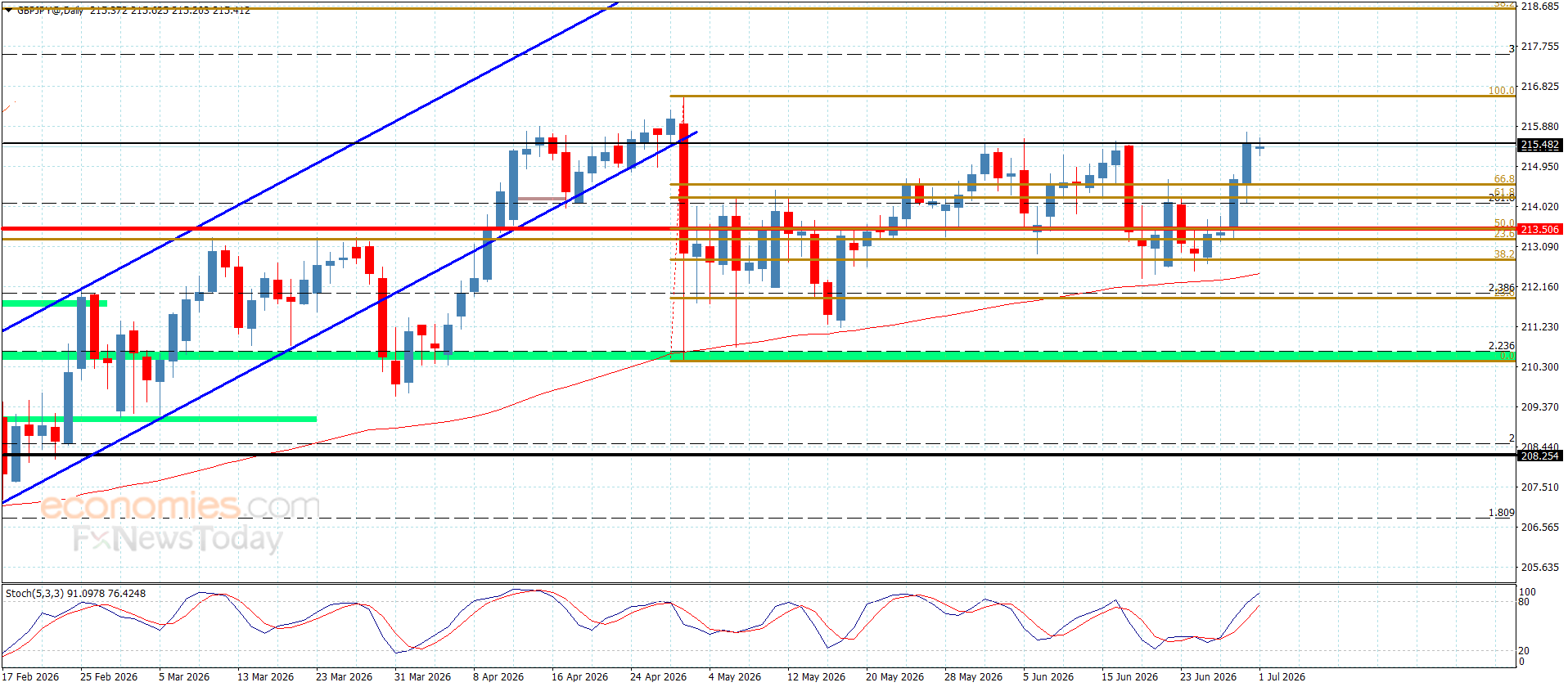
The GBPJPY achieves the targets– Forecast today – 1-7-2026

By |2026-07-01T19:15:29+03:00July 1, 2026|Forex News, News|0 Comments

Copper price ended the last positive rebound by reaching $6.2000 level, to begin forming bearish corrective trading, affected by the stability below $6.300 barrier, to reach $6.0500 currently.


Gathering extra negative momentum is important for reinforcing the chances of surpassing the barrier at $5.9500, to open the way for targeting more corrective stations, which might begin at $5.8200 and $5.7100.


The expected trading range for today is between $5.820 and $6.1500


Trend forecast: Bearish


Source link

1 07, 2026

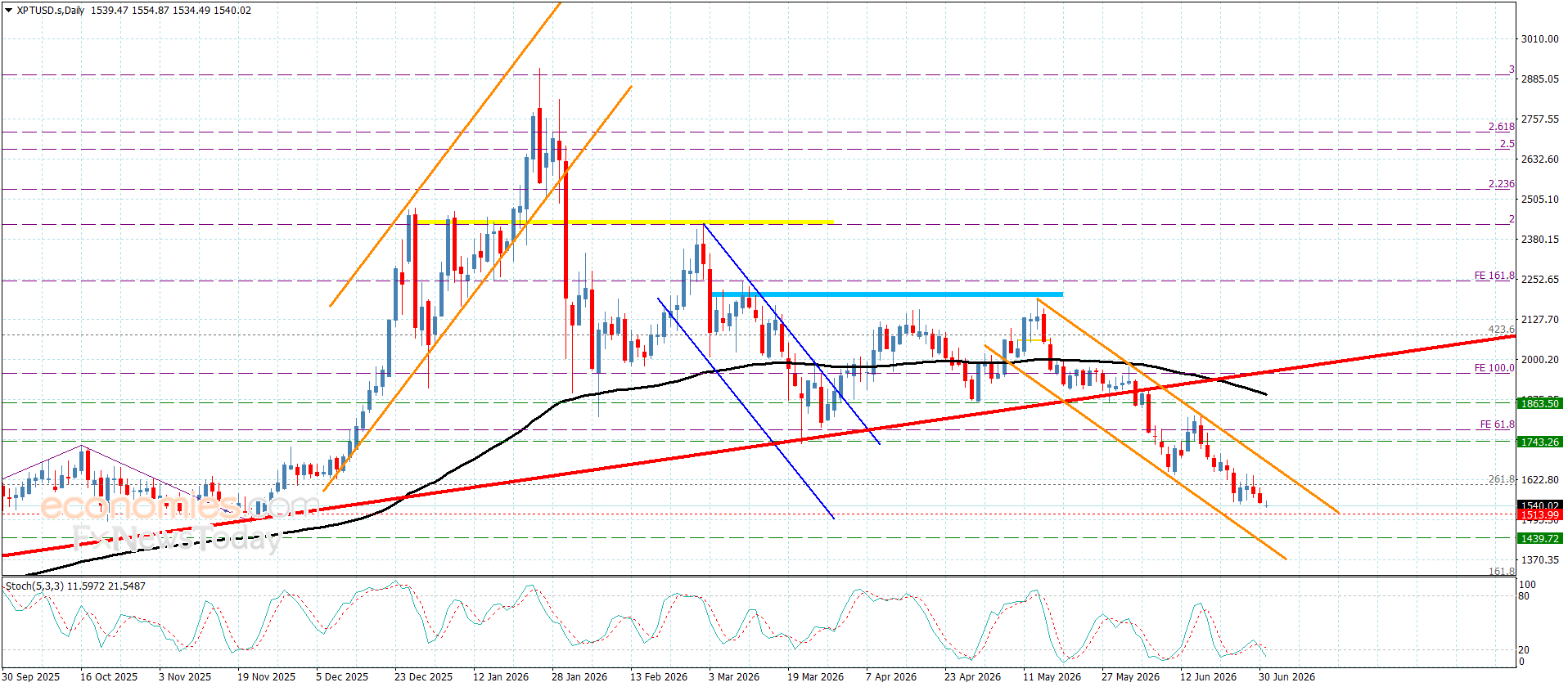
Platinum price keeps moving negatively– Forecast today – 1-7-2026

By |2026-07-01T18:55:30+03:00July 1, 2026|Forex News, News|0 Comments


Copper price ended the last positive rebound by reaching $6.2000 level, to begin forming bearish corrective trading, affected by the stability below $6.300 barrier, to reach $6.0500 currently.


Gathering extra negative momentum is important for reinforcing the chances of surpassing the barrier at $5.9500, to open the way for targeting more corrective stations, which might begin at $5.8200 and $5.7100.


The expected trading range for today is between $5.820 and $6.1500


Trend forecast: Bearish


Source link

1 07, 2026

The EURJPY achieves the target– Forecast today – 1-7-2026

By |2026-07-01T15:14:32+03:00July 1, 2026|Forex News, News|0 Comments


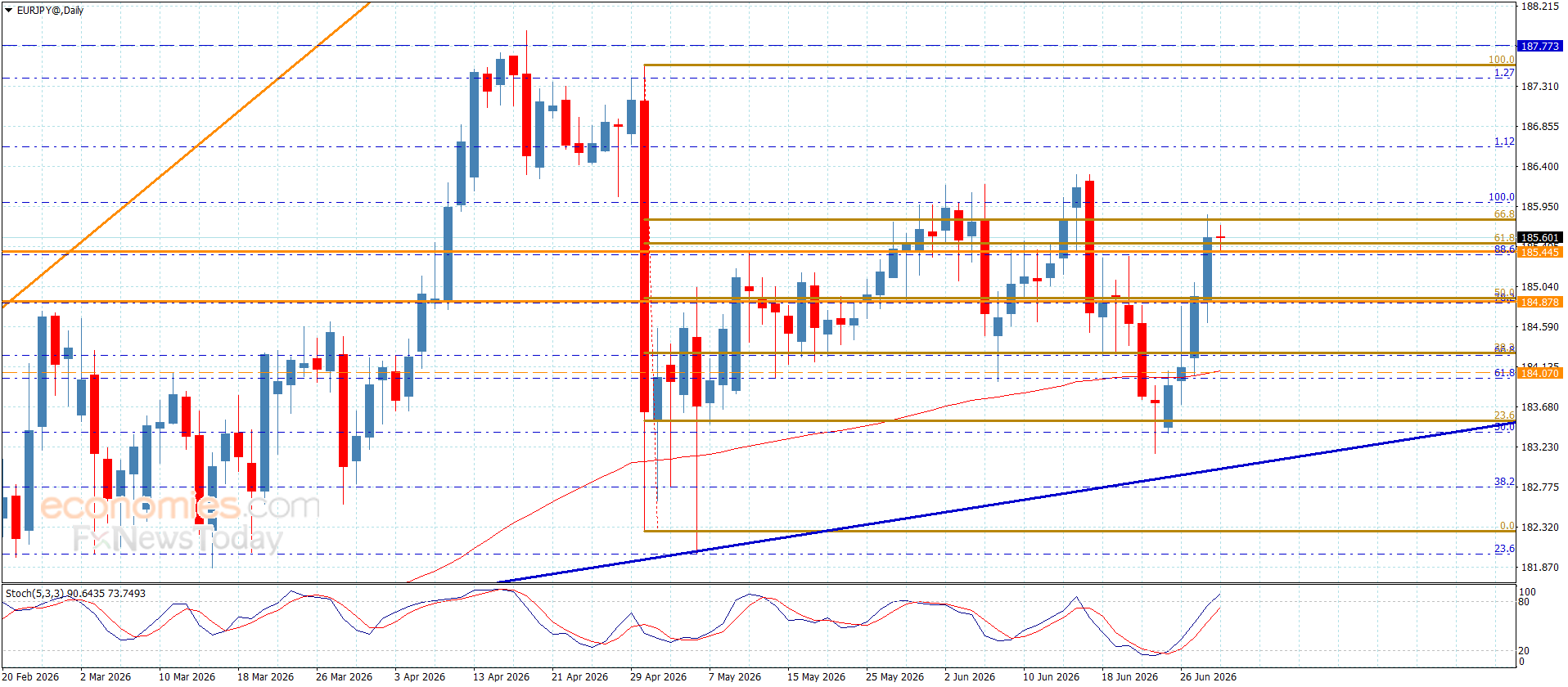
The EURJPY pair succeeded in holding above 184.20 level, to reinforce its surrender to the bullish scenario, to record the previously suggested main target at 185.80.


Facing %66.8 Fibonacci correction level makes us monitor its behavior and wait for the next close to detect the main trend, so the stability above 185.80 will provide a chance for targeting more positive stations by its rally towards 186.20 and 186.60, while the failure to breach it will force the price to provide mixed sideways trading, with a chance to decline towards 184.90 before any attempt to record the suggested targets.


The expected trading range for today is between 185.30 and 186.20


Trend forecast: Bullish


Source link

1 07, 2026

Silver Price Forecast: XAG/USD Recovers Toward $60.00, But Bearish Bias Persists

By |2026-07-01T14:54:32+03:00July 1, 2026|Forex News, News|0 Comments


Source link

1 07, 2026

GBP/USD Forecast: Slips below 1.3250 as 23.6% Fibo. caps recovery

By |2026-07-01T11:13:43+03:00July 1, 2026|Forex News, News|0 Comments

The GBP/USD pair meets with a fresh supply during the Asian session on Wednesday and moves away from a nearly two-week high around the 1.3275 region, touched the previous day. Spot prices currently trade around the 1.3235 zone, down 0.20% for the day, as traders look to speeches from Bank of England (BoE) Governor Andrew Bailey and Federal Reserve (Fed) Chair Kevin Warsh for a fresh impetus.

From a technical perspective, the GBP/USD pair has been struggling to make it through the 23.6% Fibonacci retracement level of the May-June downfall. This comes on top of the recent repeated failures near the 200-period Simple Moving Average (SMA) on the 4-hour chart and a breakdown below the 1.3300 mark, which, in turn, favors bearish traders. However, mixed momentum indicators warrant some caution before positioning for deeper losses.

In fact, the Relative Strength Index (RSI) is hovering near 52, while the Moving Average Convergence Divergence (MACD) is showing a fading positive bias. This, in turn, hints at limited upside while the GBP/USD pair remains capped by the clustered resistance overhead. In the meantime, the key support around 1.3139 remains the key structural floor, and a clear break below would open the door for a continuation of the broader downtrend.

On the topside, immediate resistance emerges at the 23.6% Fibo. level at 1.3260, with further barriers aligned at the 38.2% retracement around 1.3335 and the 200-period SMA at 1.3360, ahead of the 50.0% retracement near 1.3396. A sustained move beyond the said barriers would start to ease the broader bearish bias and pave the way for a more convincing recovery phase. However, a failure would leave the GBP/USD pair vulnerable to slide further.

(The technical analysis of this story was written with the help of an AI tool.)

GBP/USD 4-hour chart

Economic Indicator

BoE’s Governor Bailey speech

Andrew Bailey is the Bank of England‘s Governor. He took office on March 16th, 2020, at the end of Mark Carney’s term. Bailey was serving as the Chief Executive of the Financial Conduct Authority before being designated. This British central banker was also the Deputy Governor of the Bank of England from April 2013 to July 2016 and the Chief Cashier of the Bank of England from January 2004 until April 2011.


Read more.

Next release:
Wed Jul 01, 2026 13:30

Frequency:
Irregular

Consensus:
–

Previous:
–

Source:

Bank of England

Source link

1 07, 2026

Coffee prices today, July 1: Rebounding

By |2026-07-01T10:53:44+03:00July 1, 2026|Forex News, News|0 Comments


Domestic coffee prices today

Coffee prices today in key production areas simultaneously increased after a decrease of 700 VND/kg. The average price was recorded at 90,400 VND/kg, an increase of 1,200 VND/kg compared to the previous update.

In Dak Lak, coffee prices increased by 1,200 VND/kg, reaching 90,400 VND/kg. Gia Lai also recorded a similar increase, bringing the purchase price above the threshold of 90,000 VND/kg.

In Lam Dong, coffee prices today increased by 1,200 VND/kg, listed at the threshold of 90,000 VND/kg and continue to be the lowest level among the surveyed areas.

The old Dak Nong area had the highest purchase price, reaching 90,500 VND/kg.

Thus, domestic coffee prices currently range from 90,000-90,500 VND/kg. The gap between the region with the highest and lowest prices is 500 VND/kg.

World coffee prices

World coffee prices fluctuated in the same direction in the most recent trading session.

On the London exchange, the September 2026 Robusta futures contract increased by 94 USD/ton, equivalent to 2.64%, to the threshold of 3,658 USD/ton.

Robusta futures in November 2026 increased by 102 USD/ton, equivalent to 2.91%, reaching 3,612 USD/ton. The January 2027 term increased by 111 USD/ton, listed at 3,664 USD/ton.

Robusta futures for March 2027 increased to a maximum of 120 USD/ton, equivalent to 3.5%, reaching 3,549 USD/ton.

The July 2026 contract was recorded at 3,845 USD/ton, an increase of 84 USD/ton. However, the trading volume of this term is only 2 lots because the contract has approached maturity, so it does not fully reflect the general diễn biến of the market.

On the New York exchange, Arabica futures in September 2026 increased by 18.65 US cents/lb, equivalent to 6.71%, to 296.45 US cents/lb.

Arabica futures in December 2026 increased by 18.70 US cents/lb, reaching 282.1 US cents/lb. March 2027 futures increased by 18.9 US cents/lb, to 277.6 US cents/lb.

May 2027 futures increased by 19.4 US cents/lb, equivalent to 7.49%, reaching 278.30 US cents/lb.

Coffee preview

Coffee prices rose sharply to their highest level in 4.5 months, as heavy rains in Brazil slowed down harvest progress and raised concerns about crop quality.

In the past two weeks, coffee prices have continuously increased due to heavy rain hindering harvesting activities in the fields, and at the same time posing a risk of affecting the quality of coffee beans.

In addition, coffee inventory on the ICE exchange continuously decreased in the last 3 months, also supporting prices.

The market is also supported by concerns that El Nino may negatively affect the Brazilian coffee crop for the 2026-2027 crop year.

According to Commercial trading firm, El Nino may cause late rain in Brazil in September – October, when coffee trees enter the flowering stage. This may reduce crop yields in 2026 – 2027.

The US National Oceanic and Atmospheric Administration (NOAA) estimates there is a 67% chance of a “Super El Nino” outbreak, possibly the strongest ever recorded.

On June 10, the Japan Meteorological Agency also confirmed that El Nino has formed in the equatorial Pacific region. This increases the risk of floods, droughts and temperature fluctuations in the coming months, affecting coffee production in Asia and South America.

Although prices are increasing sharply, the market is still under pressure from the prospect of large supply.

On June 9, Arabica prices fell to a 19-month low, while Robusta fell to a 2-month low, as the market expected Brazil to have a bumper crop.

The robusta supply from Vietnam – the world’s largest robusta producer – continues to put downward pressure on prices.

According to the General Statistics Office, Vietnam’s coffee exports in the first 5 months of 2026 reached 922,000 tons, an increase of 7.9% compared to the same period last year. In the whole year of 2025, Vietnam’s coffee exports increased by 17.5%, to 1.58 million tons.

Vietnam’s coffee production in the 2025-2026 crop year is also forecast to increase by 6%, reaching 1.76 million tons (equivalent to 29.4 million bags), the highest level in 4 years.




Source link

1 07, 2026

EUR/USD, USD/CAD and USD/JPY Forecasts – US Dollar Fighting Back on Tuesday

By |2026-07-01T07:13:08+03:00July 1, 2026|Forex News, News|0 Comments

The US dollar, of course, is rallying against the Canadian dollar, with the 1.42 level offering a little bit of support and the 1.4250 level being a little bit of resistance. This is a strong uptrend for multiple reasons, not the least of which would be the fact that oil had sold off, but more importantly, in this pair, the interest rate differential favors the United States, not to mention the fact that the Federal Reserve is likely to raise rates a couple of times between now and the end of the year.

The 1.43 level will be targeted. After that, we could be talking about 1.45.

USD/JPY Technical Analysis

Source link

Go to Top