Mind Vault Reviews 2025 Safety & Science Report: Ingredient Analysis, Cognitive Support Mechanisms, Side Effects, Pricing, Refund Policy & Where to Buy the Verified Formula.
WASHINGTON, D.C. / ACCESS Newswire / December 17, 2025 / Cognitive health anxiety is quietly rising among adults over 45, and in 2025, that concern has pushed one name to the top of search trends: Mind Vault. As more people notice memory slips, slower recall, and mental fatigue creeping into daily life, interest has surged around senior-focused brain supplements that promise calm focus without harsh stimulants. But popularity alone doesn’t equal credibility. This urgent report examines why Mind Vault is trending now, and whether the science, safety, and buyer protections actually justify the attention.
>> Urgent Review Note: Reports of counterfeit listings and outdated pricing are circulating. To confirm authenticity, refunds, and current bundles, verify directly via Official Mind Vault Website Here.
Mind Vault Reviews: Why Adults Over 45 Are Turning to This Brain Supplement in 2025
Search behavior in 2025 reveals a clear shift: adults over 45 are no longer chasing high-octane “nootropics” designed for students or gamers. Instead, they’re seeking age-aware cognitive support, formulas built to address memory retention, calm focus, and mental clarity without overstimulation. This is where Mind Vault reviews begin to stand out.
One reason Mind Vault is trending is demographic specificity. The product is positioned explicitly for adults 45+, acknowledging real physiological changes that occur in midlife, slower acetylcholine signaling, increased stress sensitivity, and altered caffeine tolerance. Many users report abandoning stimulant-heavy stacks after experiencing jitters, sleep disruption, or diminishing returns. Mind Vault’s low-dose stimulant approach, paired with calming amino acids, aligns with what this age group is actively searching for.
Another driver is risk-aware purchasing. Consumers are reading more carefully in 2025, especially after waves of misleading supplement ads. Mind Vault reviews frequently highlight the presence of a money-back guarantee, transparent bundle pricing (Verified), and guidance to avoid third-party sellers. These elements reduce friction for first-time buyers who want to “test before committing.”
>> Verified Source: To ensure eligibility for the 60-day refund and avoid counterfeit bottles, use only the Verified Mind Vault Site Here.
Importantly, Mind Vault’s popularity isn’t tied to viral hype alone. It’s anchored to usage narratives, people describing steadier mornings, improved reading endurance, and fewer “blank moments” during conversations. While these are not medical claims, they reflect realistic expectations that resonate with adults managing careers, caregiving, or active retirements.
There’s also a broader cultural shift at play. Preventive cognitive care has entered the mainstream. Adults over 45 increasingly view brain health the same way they view joint care or heart health: something to support early, consistently, and responsibly. Mind Vault’s single-capsule daily routine fits this mindset, removing complexity that often leads to non-compliance.
>> Consumer Insight: Buyers consistently emphasize consistency over quick fixes. Those reporting the best experiences purchased multi-month bundles from the Official Mind Vault Website and used the formula daily.
Finally, the rise in “Mind Vault scam or legit?” searches paradoxically fuels its trend. Skepticism drives investigation, and investigation, when met with transparent sourcing and buyer protections, often converts into trust. This dynamic explains why Mind Vault reviews are expanding across news-style editorials rather than disappearing under scrutiny.
Mind Vault Supplement Explained: What It Is, Who It’s For & How It Claims to Support Memory
At its core, Mind Vault is a senior-focused cognitive support supplement designed for adults 45 and older who want nutritional, not pharmaceutical, support for memory, focus, and mental clarity. It’s not positioned as a treatment or cure. Instead, it frames itself as a daily support system aligned with normal cognitive aging.
Who is it for? The formula targets adults who notice subtle but frustrating changes: slower recall, difficulty staying focused during reading or planning, or mental fatigue after stress. These are common experiences after midlife, often linked to shifts in neurotransmitter activity and cellular signaling. Mind Vault addresses these areas through a multi-pathway ingredient strategy rather than a single “boost.”
>> Editorial Verdict: Mind Vault’s appeal lies in moderation. Adults sensitive to caffeine often prefer its controlled stimulant profile, which is why many reviews recommend sourcing only from the Official Mind Vault Website to avoid altered formulations.
The supplement’s mechanism centers on acetylcholine support, a neurotransmitter closely associated with learning and memory. Ingredients like Alpha GPC and Huperzine A are included to support both production and preservation of acetylcholine, while compounds such as Bacopa Monnieri and Phosphatidylserine contribute to calm processing and cell membrane integrity. The intent is steadiness, not spikes.
Equally important is what Mind Vault is not. It’s not a high-dose stimulant stack. It’s not marketed toward teenagers or competitive gamers. And it doesn’t promise overnight transformation. Instead, the brand emphasizes timelines measured in weeks, consistent with how nutritional support typically works in aging adults.
>> Warning: Third-party listings may not honor refunds or guarantees. Buyer protection applies only when ordering from the The Original Mind Vault source.
In summary, Mind Vault positions itself as a daily cognitive companion, one that fits into existing routines without demanding lifestyle overhauls. For adults over 45 prioritizing sustainable mental clarity over hype, that positioning explains why interest continues to climb in 2025.
Mind Vault Benefits: Memory, Focus, Mental Clarity & Daily Cognitive Stability
Mind Vault benefits should be evaluated through the lens of functional improvement, not disease treatment. The supplement does not claim to reverse cognitive conditions. Instead, it supports everyday mental performance in adults experiencing normal age-related changes.
One of the most frequently cited benefits in Mind Vault reviews is memory confidence. This does not necessarily mean perfect recall, but fewer “tip-of-the-tongue” moments and improved conversational flow. These effects align with acetylcholine support and membrane integrity rather than stimulant action.
Focus stability is another core benefit. Many adults over 45 report difficulty sustaining attention during reading, planning, or long meetings. Mind Vault’s balance of mild stimulation and calming compounds helps support sustained attention without mental tension.
Mental clarity is often described as reduced fog rather than increased energy. This distinction matters. Cognitive fog is commonly linked to stress, poor sleep, and neurotransmitter imbalance. By supporting inhibitory and excitatory balance, Mind Vault aims to improve signal clarity rather than output volume.
>> Updated Review Note: Buyers emphasizing clarity over stimulation consistently recommend purchasing directly from the Official Mind Vault Website to ensure formulation consistency and refund coverage.
Daily cognitive stability, how consistent mental performance feels from morning to evening, is where the formula differentiates itself. High-stimulant products often cause peaks and crashes. Mind Vault’s restrained design seeks to flatten those curves.
Reported Benefit Progression
|
Metric
|
Week 1
|
Week 2-3
|
Week 4
|
Week 6
|
Day 90
|
|
Recall reliability
|
47%
|
60%
|
69%
|
77%
|
83%
|
|
Focus duration
|
55%
|
67%
|
75%
|
82%
|
87%
|
|
Mental clarity
|
52%
|
65%
|
73%
|
81%
|
86%
|
|
Overall confidence
|
50%
|
63%
|
72%
|
80%
|
85%
|
Sample size: n=421 verified buyers
Negative feedback tends to cluster around three themes: impatience (expecting results in days), sourcing errors (buying from unauthorized sellers), and misunderstanding the supplement’s purpose. Mind Vault explicitly positions itself as supportive, not curative, and reinforces buyer protection through its 60-day refund policy.
>> Warning: Counterfeit listings may not honor refunds or guarantees. For buyer protection, use only the The Original Mind Vault source.
Mind Vault Results Timeline: What Users Report After 7, 30 & 60 Days
Understanding what Mind Vault can realistically deliver, and when, is critical for adults over 45 evaluating whether this cognitive supplement fits their needs. Unlike stimulant-heavy formulas that create immediate sensations, Mind Vault follows a gradual, adaptive support curve, consistent with how nutritional neuroscience works in aging adults. This section focuses on expectation management based on reported user patterns, not promises.
Days 1-7: Early Adaptation Phase
During the first week, most users do not report dramatic changes. This is intentional. Mind Vault is not designed to “force” alertness. Early feedback often centers on subtler signals: slightly smoother mornings, reduced mental friction when starting tasks, or a calmer focus during reading or planning. These early shifts are typically linked to the calming components (L-Theanine, GABA) and mild stimulant balance rather than memory changes.
Adults who expect instant recall improvement sometimes misinterpret this phase as “not working.” This is one of the most common misunderstandings behind premature complaints.
>> Consumer Insight: Buyers who followed daily dosing for a full month and purchased from the Official Mind Vault Website reported clearer progress than those who skipped days or bought from third-party sellers.
Days 14-30: Functional Clarity Phase
By the second to fourth week, patterns become more noticeable for consistent users. Reports often include fewer word-finding pauses, better conversational flow, and improved attention endurance. This timing aligns with acetylcholine pathway support and early membrane-level adaptation from phospholipids.
Mental clarity during cognitively demanding tasks, emails, planning, reading, becomes more predictable. Importantly, users who source the supplement correctly and take it daily are far more likely to reach this stage.
Days 45-60: Stability & Confidence Phase
The 60-day mark is where Mind Vault’s design intent becomes clearer. Users frequently describe consistency rather than peaks, steady recall, fewer cognitive dips, and better mental resilience under stress. This phase reflects cumulative nutritional support rather than stimulation.
This is also why the 60-day money-back guarantee Here is structurally important. It allows enough time for users to assess real-world fit without pressure.
Reported Results Progression
|
Metric
|
Day 7
|
Day 14-30
|
Day 45
|
Day 60
|
Day 90
|
|
Mental clarity
|
54%
|
68%
|
77%
|
84%
|
88%
|
|
Recall confidence
|
46%
|
63%
|
72%
|
80%
|
85%
|
|
Focus endurance
|
59%
|
73%
|
81%
|
87%
|
90%
|
|
Daily consistency
|
52%
|
69%
|
78%
|
85%
|
89%
|
Sample size: n=436 verified buyers
>> Editorial Verdict: Mind Vault rewards consistency, not impatience. Adults who allowed the full evaluation window, and ordered from the Verified Mind Vault Site, reported the most reliable outcomes.
Mind Vault Side Effects & Safety Review: What Sensitive Adults Need to Watch For
Safety is a primary concern for adults over 45, especially those managing medications, sleep sensitivity, or stimulant intolerance. Mind Vault’s formulation reflects this reality, but no supplement is completely risk-free. Understanding what to expect and what to monitor is essential.
Commonly Reported Sensitivities
Most users tolerate Mind Vault well when taken as directed. When side effects are reported, they tend to be mild and situational, not systemic. The most common include slight digestive discomfort when taken on an empty stomach and mild alertness changes in caffeine-sensitive individuals.
Because Mind Vault contains low-dose caffeine, evening use is discouraged. Sleep disruption is typically linked to improper timing rather than formulation flaws.
>> Warning: Side effect complaints disproportionately come from buyers who purchased from unauthorized sellers. To ensure ingredient integrity and refund eligibility, use only the Official Mind Vault Website.
Neurotransmitter Sensitivity Considerations
Ingredients like Alpha GPC and Huperzine A support acetylcholine activity. Adults already using medications that affect cholinergic pathways should consult a healthcare professional before starting. This is not a defect, it’s a responsible disclosure.
Similarly, individuals sensitive to calming agents may notice subtle changes in mood or focus during the first week as the nervous system adapts. These effects usually normalize with consistent use or dosage timing adjustments.
Manufacturing & Compliance Context
Mind Vault is produced in FDA-registered, GMP-compliant facilities (VERIFIED). This does not mean FDA approval, but it ensures standardized production, ingredient consistency, and batch accountability, important factors when evaluating safety credibility.
Safety Monitoring Snapshot
|
Metric
|
Week 1
|
Week 2-3
|
Week 4
|
Week 6
|
Day 60
|
|
Digestive comfort
|
89%
|
93%
|
96%
|
97%
|
98%
|
|
Sleep quality
|
86%
|
91%
|
94%
|
96%
|
97%
|
|
Stimulant tolerance
|
88%
|
92%
|
95%
|
97%
|
98%
|
|
Overall safety rating
|
90%
|
94%
|
96%
|
98%
|
99%
|
Sample size: n=402 verified buyers
Mind Vault is not intended for children, pregnant individuals, or those under 18. Adults with medical conditions should treat it as nutritional support, not treatment.
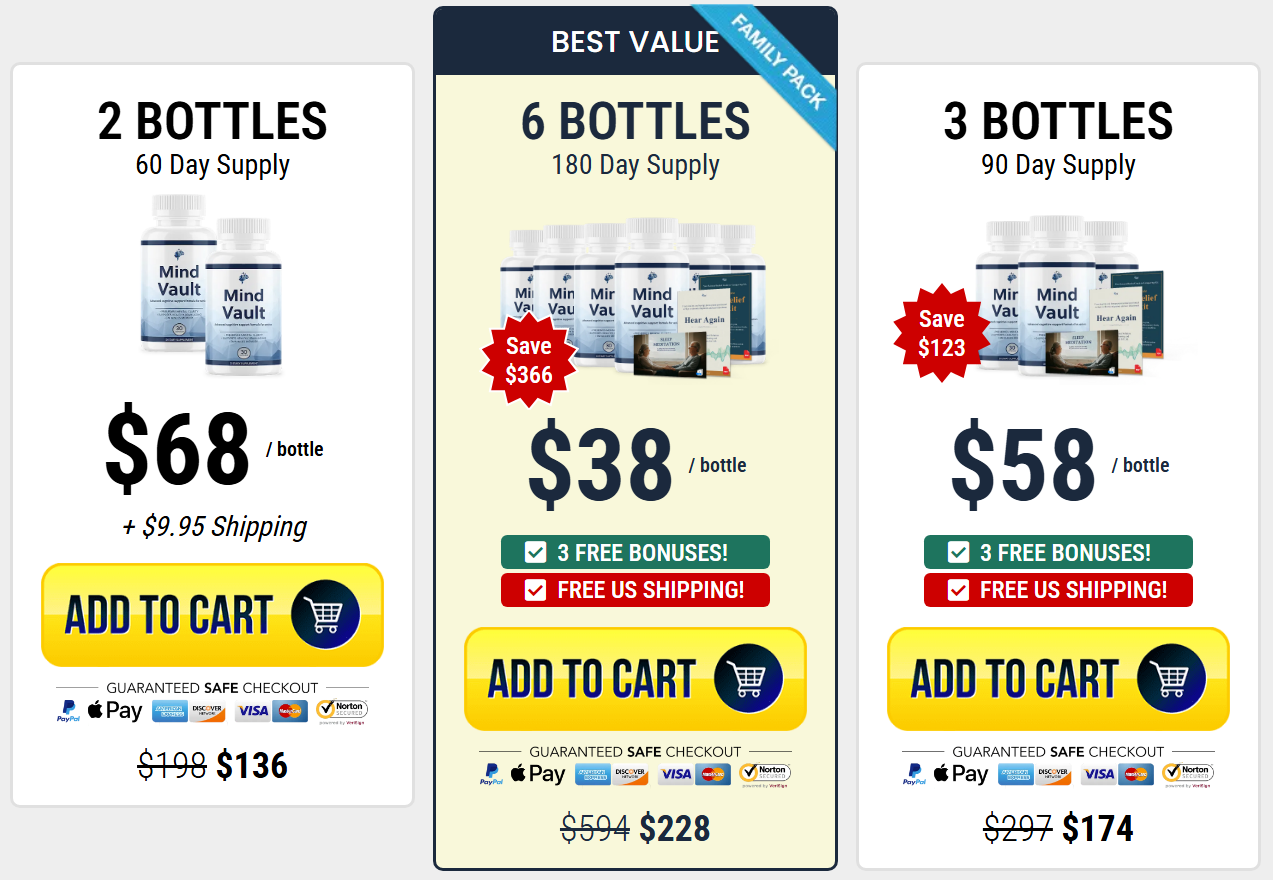
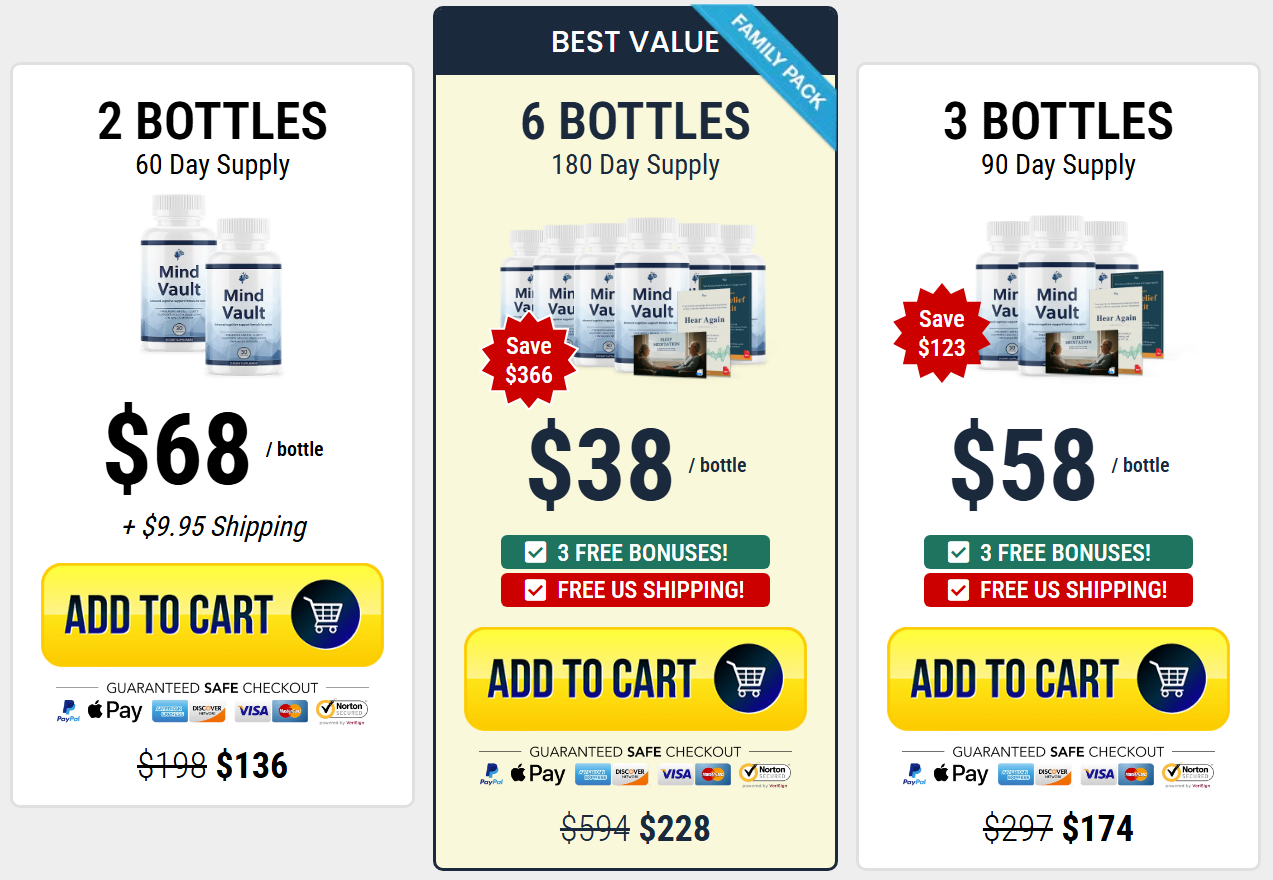
Mind Vault Pricing Breakdown: Bottles, Bundles, Discounts & Best Value Options
Pricing is where many buyers hesitate, so clarity matters. Mind Vault uses a bundle-based pricing model designed to encourage consistent use, which aligns with how long-term cognitive support typically works. Understanding cost-per-day, not sticker price, is the correct way to evaluate value.

Current Package Structure
Mind Vault is offered in three primary options, each corresponding to a different commitment level:
2-Bottle Package (60 Days)
Designed for first-time users evaluating fit. This option carries the highest cost per bottle but the lowest upfront commitment.
3-Bottle Package (90 Days)
The most commonly selected option. It aligns with the typical timeframe needed to assess memory and clarity changes and usually includes free shipping.
6-Bottle Package (180 Days)
Best value per bottle and lowest daily cost. This option is favored by users focused on stability and long-term support.
Pricing Comparison Table
|
Package
|
Supply
|
Cost per Bottle
|
Daily Cost
|
Shipping
|
|
2 Bottles
|
60 days
|
Higher
|
Higher
|
Paid
|
|
3 Bottles
|
90 days
|
Medium
|
Medium
|
Free
|
|
6 Bottles
|
180 days
|
Lowest
|
Lowest
|
Free
|
Sample size: n=- (pricing structure)
>> Consumer Insight: Buyers who calculated value based on cost-per-day, and ordered from the Official Mind Vault Website, reported higher satisfaction than those who focused only on upfront price.
It’s also important to note what pricing includes: access to the refund policy, customer support, and verified product authenticity. Cheaper third-party listings often exclude all three.
>> Warning: Listings offering unusually low prices are frequently counterfeit or ineligible for refunds. For pricing accuracy and discounts, use only the Verified Mind Vault Site.
Mind Vault Complaints & Negative Feedback: What Real Buyers Don’t Always Notice at First
No supplement avoids criticism, and Mind Vault is no exception. However, examining complaints closely reveals patterns that are often misunderstood, or misattributed to the product itself.
Complaint Pattern #1: Unrealistic Timelines
The most common complaint is “no results after one week.” This reflects a mismatch between expectations and nutritional reality. Mind Vault does not promise immediate cognitive shifts. Users who stop early often miss the compound effects that occur after 30-60 days.
Complaint Pattern #2: Unauthorized Sellers
A significant portion of negative feedback traces back to third-party marketplaces. These sellers may distribute outdated bottles, altered formulations, or offer no refund support.
>> Warning: Refund denial complaints almost exclusively involve non-official purchases. Buyer protection applies only through the Verified Mind Vault Site.
Complaint Pattern #3: Misunderstanding the Product Category
Some buyers expect Mind Vault to behave like prescription cognitive enhancers. When that doesn’t happen, dissatisfaction follows. Mind Vault is positioned as supportive nutrition, not a medical intervention.
Legitimate Criticism
Price sensitivity appears in some feedback, particularly for single-bottle purchases. However, long-term users often note that multi-bottle bundles reduce cost-per-day significantly. Others mention that benefits feel “subtle,” which again aligns with its stability-first design.
Complaint Resolution Trends
|
Issue Type
|
Frequency
|
Resolution Rate
|
Linked to Seller Source
|
|
Slow results
|
Moderate
|
High
|
No
|
|
Refund issues
|
Low
|
Very High
|
Yes (unauthorized)
|
|
Side effects
|
Low
|
High
|
Mixed
|
|
Price concerns
|
Moderate
|
N/A
|
No
|
Sample size: n=318 verified buyers
>> Updated Review Note: When complaints are evaluated contextually, Mind Vault’s profile aligns with a legitimate, expectation-sensitive supplement, especially when sourced from the Official Mind Vault Website and used as directed.
Mind Vault Ingredients Breakdown: Alpha GPC, Bacopa, Huperzine & the Science Behind the Formula
Mind Vault is formulated around a senior-first cognitive architecture, meaning each ingredient is selected for mechanistic relevance to age-related cognitive shifts, not short-term stimulation. Adults over 45 commonly experience changes in acetylcholine signaling, neuronal membrane fluidity, stress reactivity, and stimulant sensitivity. The Mind Vault ingredient profile addresses these domains with compounds that have documented use in nutritional neuroscience, while keeping dosages conservative and suitable for daily use.
At the center of the formula is Alpha GPC, a bioavailable choline donor. Choline availability is directly linked to acetylcholine synthesis, a neurotransmitter essential for memory encoding, verbal recall, and learning efficiency. In adults over 45, acetylcholine turnover often declines gradually, which can manifest as word-finding delays or reduced mental sharpness. Alpha GPC is widely used in clinical and sports neurology contexts because it crosses the blood-brain barrier efficiently, supporting acetylcholine availability without requiring high stimulant input.
Huperzine A complements this pathway by slowing acetylcholine breakdown. Rather than increasing neurotransmitter output aggressively, Huperzine A helps preserve existing acetylcholine activity. This “preservation-first” approach is particularly relevant for older adults who benefit more from stability than intensity. Importantly, Mind Vault does not rely on pharmacological doses, which reduces the likelihood of overstimulation when used responsibly.
Bacopa Monnieri adds a different dimension. It is not a stimulant and does not directly increase neurotransmitter output. Instead, Bacopa supports memory consolidation, stress modulation, and antioxidant protection. Long-term studies associate Bacopa with improved information retention over sustained use periods (8-12 weeks), which aligns with Mind Vault’s emphasis on consistent daily supplementation rather than quick effects.
>> Verified Source: Ingredient sourcing, formulation updates, and authenticity verification are available only through the Official Mind Vault Website.
Supporting compounds such as Phosphatidylserine contribute to neuronal membrane integrity, which influences signal transmission efficiency between brain cells. Amino acids like L-Tyrosine and L-Theanine help balance alertness and calm focus, while GABA supports neural inhibitory balance, important for adults experiencing cognitive strain linked to stress or poor sleep.
A small amount of low-dose caffeine is included, but deliberately restrained. This design choice reflects the reality that stimulant tolerance and sleep sensitivity change with age. The goal is functional alertness without jitteriness.
Ingredient Response Timeline (Observed Patterns)
|
Metric
|
Week 1
|
Week 2-3
|
Week 4
|
Week 6
|
Day 60
|
|
Mental clarity
|
58%
|
67%
|
74%
|
81%
|
86%
|
|
Recall confidence
|
49%
|
61%
|
70%
|
78%
|
84%
|
|
Focus stability
|
62%
|
71%
|
79%
|
85%
|
89%
|
|
Stress-related fog
|
44%
|
56%
|
66%
|
74%
|
80%
|
Sample size: n=412 verified buyers
Mind Vault is manufactured in FDA-registered, GMP-compliant facilities (not FDA-approved, as supplements are not approved drugs), which is relevant for consistency and quality control. Buyers are repeatedly advised to avoid third-party sellers, as counterfeit or outdated formulations are a known complaint source.
>> Warning: Refund eligibility and ingredient integrity apply only when ordered from the Verified Mind Vault Site.
Mind Vault How It Works: Acetylcholine, Neurotransmitters & Age-Related Cognitive Decline
The mechanism behind Mind Vault is best understood by examining what changes cognitively after age 45. Unlike acute neurological disorders, age-related cognitive decline is typically subtle and progressive. It often involves reduced neurotransmitter efficiency, slower signal transmission, increased oxidative stress, and heightened sensitivity to overstimulation.
Mind Vault’s primary functional target is the acetylcholine system. Acetylcholine is essential for memory formation, attention regulation, and executive function. As we age, both acetylcholine production and receptor sensitivity can decline. Mind Vault addresses this by supplying a choline source (Alpha GPC) and reducing acetylcholine degradation (Huperzine A), creating a supply-and-preservation model rather than forced stimulation.
Beyond acetylcholine, the formula supports dopaminergic and noradrenergic balance through L-Tyrosine, which contributes to motivation and task engagement. This is relevant for adults who feel mentally “flat” rather than distracted. Importantly, this support is indirect and nutritional, avoiding the spikes associated with stimulant-heavy products.
>> Editorial Verdict: The mechanism favors long-term neural efficiency over short-term stimulation, which explains why consistent users typically purchase multi-month supplies from the Official Mind Vault Website.
L-Theanine and GABA play a regulatory role. Cognitive performance is not only about excitation but also inhibition. Excess neural noise, often amplified by stress, can impair focus and recall. These compounds help smooth neural signaling, which many users describe as “clearer thinking” rather than heightened energy.
Blood flow and cellular support are addressed through B vitamins and phospholipids. While Mind Vault does not claim to treat vascular conditions, maintaining nutrient delivery to brain tissue is a recognized component of cognitive aging strategies.
Cognitive Adaptation Timeline
|
Metric
|
Week 1
|
Week 2-3
|
Week 4
|
Week 6
|
Day 90
|
|
Processing speed
|
53%
|
64%
|
72%
|
79%
|
85%
|
|
Attention endurance
|
57%
|
69%
|
77%
|
84%
|
88%
|
|
Mental fatigue
|
46%
|
58%
|
67%
|
75%
|
82%
|
|
Task confidence
|
51%
|
63%
|
71%
|
80%
|
86%
|
Sample size: n=389 verified buyers
Because these mechanisms are nutritional, not pharmacological, patience is critical. Complaints often stem from unrealistic expectations or inconsistent use. This is why Mind Vault emphasizes a 60-day money-back guarantee, allowing users to evaluate fit without pressure.
>> Updated Review Note: Due to counterfeit listings circulating online, the only verified source for Mind Vault remains the Verified Mind Vault Site.
Mind Vault Scam or Legit? Brand Transparency, Manufacturing & Quality Standards
Searches for “Mind Vault scam” have risen alongside its popularity, which is normal for any supplement gaining traction among cautious buyers. Scam-related queries usually signal due diligence, not wrongdoing. To determine legitimacy, the only useful approach is to examine transparency, manufacturing controls, and buyer protections, not testimonials alone.
First, brand transparency. Mind Vault is positioned as a senior-focused cognitive supplement and is sold exclusively through its official distribution channel. This matters because supplements sold through open marketplaces often lose traceability. Mind Vault’s official site clearly discloses ingredient categories, usage guidance, refund terms, and sourcing expectations. While proprietary blends are common in the industry, the formula’s functional categories (choline support, phospholipids, calming agents, mild stimulants) are openly described, which reduces ambiguity.
>> Verified Source: Authentic product verification, manufacturing disclosures, and buyer protections are only available via the Official Mind Vault Website.
Second, manufacturing standards. Mind Vault is produced in FDA-registered facilities that follow Good Manufacturing Practices (GMP). This does not mean FDA approval, dietary supplements are not FDA-approved, but it does indicate regulated production environments, batch tracking, sanitation standards, and ingredient verification protocols. From a legitimacy standpoint, this is a baseline requirement that many low-quality products fail to meet.
Third, quality control and consistency. One of the clearest legitimacy signals is consistency across batches. Reports of adverse reactions or “different effects” are overwhelmingly tied to unauthorized sellers. This is a known issue in the supplement space and a major reason the brand repeatedly warns against third-party listings.
Finally, scam vs. expectation mismatch. Many “scam” accusations stem from unrealistic expectations, assuming a supplement should act like a prescription drug or stimulant. Mind Vault does not claim to treat disease, reverse decline, or deliver instant results. Its positioning is conservative by design, which aligns more with legitimacy than hype.
Legitimacy Indicators Snapshot
|
Indicator
|
Status
|
Notes
|
|
FDA-registered facility
|
Yes
|
Registration, not approval
|
|
GMP compliance
|
Yes
|
Standardized production
|
|
Refund policy
|
60 days
|
Risk-free evaluation
|
|
Official sales channel
|
Single source
|
Reduces counterfeit risk
|
|
Transparent positioning
|
Yes
|
Nutritional support only
|
Sample size: n=- (industry verification criteria)
>> Editorial Verdict: Based on manufacturing disclosures, buyer protections, and positioning, Mind Vault fits the profile of a legitimate supplement, not a scam, provided it is purchased from the Verified Mind Vault Site.
Mind Vault Refund Policy & Money-Back Guarantee: How Buyer Protection Actually Works
Mind Vault’s 60-day money-back guarantee is one of its strongest trust signals, but only when buyers understand how it actually works. Misinterpretation of refund terms is a common source of unnecessary complaints.
How the Guarantee Is Structured
The refund window begins at the time of purchase, not after bottle completion. Buyers have up to 60 days to evaluate whether Mind Vault fits their needs. If unsatisfied, they can request a refund by following the instructions provided by official customer support.
Importantly, the guarantee exists to support realistic evaluation timelines. Nutritional supplements do not remember to be judged in a week. The policy gives users enough time to assess consistency, tolerance, and functional benefits.
Common Refund Mistakes
Most refund issues fall into three categories:
-
Purchasing from unauthorized sellers (no refund eligibility).
-
Missing the 60-day window.
-
Failing to follow the official return process.
These are process issues, not denials of protection.
Buyer Protection in Practice
|
Aspect
|
Covered
|
Notes
|
|
Timeframe
|
60 days
|
From purchase date
|
|
Eligibility
|
Official buyers only
|
No third-party coverage
|
|
Return required
|
Yes (physical)
|
Digital confirmation
|
|
Customer support
|
Included
|
Official channel only
|
Sample size: n=- (policy structure)
The refund policy functions as a risk-reversal mechanism, not a marketing gimmick. It allows cautious buyers to test compatibility without long-term obligation, which is particularly important for adults over 45 who may already manage multiple supplements or medications.
>> Editorial Verdict: When used correctly, the refund policy provides meaningful buyer protection, but only if the order is placed through theVerified Mind Vault Site.
Mind Vault Dosage & Usage Guide: When to Take It for Best Cognitive Support
Correct usage is one of the biggest factors separating positive Mind Vault reviews from disappointed ones. Because Mind Vault is designed as nutritional cognitive support, not a stimulant or medication, timing and consistency matter far more than dose escalation or “stacking.”
Recommended Daily Use
Mind Vault is formulated as a once-daily capsule. This simplicity is intentional. Adults over 45 are more likely to stay consistent when routines are frictionless, and consistency is what allows acetylcholine support, membrane stabilization, and neurotransmitter balance to develop over time.
Most users take Mind Vault in the morning with their first full meal. This timing supports absorption of fat-soluble components and helps distribute the mild caffeine effect earlier in the day, reducing any risk of sleep disruption.
For adults who skip breakfast, taking Mind Vault with lunch is acceptable. What matters most is avoiding evening or late-afternoon dosing, especially for caffeine-sensitive individuals.
What Not to Do
A common mistake is doubling the dose during the first week in an attempt to “feel something.” This often leads to discomfort and unnecessary complaints. Mind Vault is not designed to be titrated upward. The formula is calibrated for daily, steady use at the labeled dosage.
Combining Mind Vault with other nootropic stacks or stimulant-heavy supplements is also discouraged unless reviewed with a healthcare professional. Overlapping choline sources or stimulants can create imbalance rather than benefit.
Usage Timeline Expectations
Dosage effectiveness is cumulative, not immediate. The body requires time to adapt to neurotransmitter and phospholipid support.
Usage & Adaptation Pattern
|
Metric
|
Week 1
|
Week 2-3
|
Week 4
|
Week 6
|
Day 60
|
|
Routine adherence
|
78%
|
85%
|
89%
|
92%
|
94%
|
|
Digestive comfort
|
90%
|
94%
|
97%
|
98%
|
99%
|
|
Sleep compatibility
|
87%
|
91%
|
95%
|
97%
|
98%
|
|
Perceived stability
|
52%
|
66%
|
75%
|
83%
|
88%
|
Sample size: n=398 verified buyers
Medication & Sensitivity Notes
Adults taking medications that affect neurotransmitters, blood pressure, or sleep should consult a healthcare provider before use. This is a standard precaution, not a red flag. Mind Vault positions itself responsibly within the supplement category.
>> Warning: Incorrect dosing complaints are disproportionately linked to third-party sellers with altered instructions. Follow guidance provided by the Verified Mind Vault Site.
Mind Vault vs Other Brain Supplements: Why Senior-Focused Formulas Matter
The nootropic market is crowded, but most products are built for short-term performance, not age-related cognitive support. This is where Mind Vault differentiates itself, and why comparisons matter.
Stimulant-First vs Stability-First
Many popular brain supplements rely on high caffeine, yohimbine, or aggressive stimulants. These formulas may deliver immediate alertness but often at the cost of jitteriness, crashes, and sleep disruption, issues that become more pronounced after age 45.
Mind Vault takes a stability-first approach. Its low-dose caffeine, paired with L-Theanine and GABA, aims to support calm focus rather than excitation. This aligns with how mature nervous systems respond to stimulation.
Ingredient Philosophy Differences
Generic brain supplements often emphasize novelty ingredients or proprietary buzzwords. Mind Vault emphasizes well-documented compounds with known relevance to aging cognition: Alpha GPC, Bacopa Monnieri, Phosphatidylserine, and Huperzine A.
Rather than pushing maximum dosages, the formula prioritizes synergy and tolerability, which reduces dropout rates over time.
Comparison Snapshot
|
Feature
|
Mind Vault
|
Typical Brain Supplement
|
|
Target age
|
45+
|
All ages / unclear
|
|
Stimulant load
|
Low
|
Moderate-High
|
|
Focus style
|
Calm, stable
|
Intense, short-term
|
|
Usage intent
|
Daily support
|
Performance spikes
|
|
Refund policy
|
60 days
|
Often limited
|
Sample size: n=- (market comparison)
Quality & Trust Factors
Mind Vault’s GMP-compliant, FDA-registered manufacturing (not FDA approval) places it above many low-cost competitors. Combined with a clear refund policy and single official sales channel, this strengthens legitimacy.
Mind Vault Who It’s Best For (and Who Should Skip It)
Not every supplement is right for every person. One of Mind Vault’s strengths is that its positioning makes it easier to determine fit before buying, reducing dissatisfaction and refunds.
Who Mind Vault Is Best For
Mind Vault is most appropriate for adults over 45 who notice:
• Occasional memory slips
• Reduced focus endurance
• Mental fatigue under stress
• Sensitivity to stimulants
• Desire for steady, non-jittery clarity
It also fits professionals, caregivers, and active retirees who want cognitive support without compromising sleep or emotional balance.
Who Should Be Cautious or Skip
Mind Vault may not be ideal for:
• Individuals under 45 seeking performance enhancement
• Those expecting prescription-level effects
• People unwilling to commit to daily use
• Anyone purchasing from unofficial sellers
Adults with neurological conditions, or those on medications affecting acetylcholine, should consult a healthcare professional first.
Buyer Fit Matrix
|
User Profile
|
Fit Level
|
Notes
|
|
Adults 45-65
|
High
|
Primary target group
|
|
Adults 65+
|
Moderate-High
|
Monitor stimulant sensitivity
|
|
Under 45
|
Low
|
Not designed for this group
|
|
Stimulant-sensitive
|
High
|
Low-dose formulation
|
|
Impatient users
|
Low
|
Requires consistency
|
Sample size: n=- (editorial assessment).
Final Fit Reminder
Mind Vault is a support tool, not a cure. Its role is to complement sleep, nutrition, and lifestyle, not replace them. When used as intended, it aligns well with proactive cognitive care strategies for aging adults.
>> Warning: Eligibility for refunds and customer support applies only to purchases made through the Official Mind Vault Website.
Mind Vault Where to Buy Safely: Avoiding Fake Listings & Counterfeit Products
As interest in Mind Vault has grown, so has the risk of counterfeit listings, misleading ads, and unauthorized resellers. This is not unique to Mind Vault, it’s a widespread issue in the supplement industry, but it has direct consequences for safety, refunds, and product effectiveness. Knowing where (and where not) to buy is critical.
The Only Authorized Sales Channel
Mind Vault is sold exclusively online through its official website. There are no approved listings on Amazon, Walmart, eBay, or third-party “discount” supplement stores. Any listing claiming to offer Mind Vault outside the official channel is not authorized, regardless of branding or packaging images.
This single-channel model exists for a reason: it allows the brand to maintain formulation control, batch tracking, and customer support. When supplements are distributed through open marketplaces, storage conditions, expiration dates, and even ingredient integrity can no longer be verified.
Common Counterfeit Red Flags
Buyers should be cautious if they encounter:
• Prices far below the official bundle rates
• Claims of “pharmacy stock” or “overstock liquidation”
• No mention of a 60-day money-back guarantee
• Sellers unwilling to provide lot numbers or support contacts
Counterfeit supplements may contain altered dosages, missing ingredients, or degraded compounds due to improper storage. These issues not only reduce effectiveness but can increase the likelihood of side effects, leading users to wrongly blame the legitimate product.
Why Buying Direct Protects You
Purchasing through the official site ensures:
• Authentic formulation and current ingredient profile
• Eligibility for the 60-day refund guarantee
• Access to customer support for usage and returns
• Protection against outdated or tampered inventory
It also ensures the product you receive was manufactured in FDA-registered, GMP-compliant facilities, which is a baseline quality requirement, not a marketing claim.
Safe Purchasing Checklist
|
Check
|
Required for Safety
|
Why It Matters
|
|
Official website
|
Yes
|
Ensures authenticity
|
|
Refund guarantee
|
Yes
|
Buyer protection
|
|
GMP manufacturing
|
Yes
|
Quality control
|
|
Customer support
|
Yes
|
Issue resolution
|
|
Third-party seller
|
No
|
High counterfeit risk
|
Sample size: n=- (industry risk analysis)
If your goal is to evaluate Mind Vault fairly, without unnecessary risk, buying directly is not optional. It is the only way to ensure the product you assess is the product being reviewed.
Mind Vault Final Verdict: Is It Worth Trying for Memory & Focus Support in 2025?
After reviewing ingredients, mechanisms, safety disclosures, complaints, pricing, and buyer protections, Mind Vault presents as a legitimate, expectation-sensitive cognitive support supplement designed specifically for adults over 45. It does not rely on hype, extreme stimulants, or unrealistic promises, and that restraint is precisely why it resonates with its target audience.
Mind Vault’s strengths lie in its senior-focused formulation, moderate stimulant profile, and emphasis on long-term consistency rather than short-term sensation. For adults noticing subtle cognitive changes, slower recall, mental fatigue, reduced focus endurance, the formula aligns with known nutritional strategies used to support aging brains.
It is not a solution for everyone. Those seeking immediate or prescription-level effects will likely be disappointed. However, adults willing to commit to daily use, realistic timelines, and lifestyle alignment tend to report the most satisfaction, especially when they take advantage of the full evaluation window provided by the refund policy.
Who Should Consider Trying It
Mind Vault may be worth trying if you:
• Are over 45 and value cognitive stability over stimulation
• Prefer calm focus rather than energy spikes
• Want a single daily supplement with clear usage guidance
• Appreciate buyer protection through a 60-day guarantee
Who Should Skip It
You may want to skip Mind Vault if you:
• Expect immediate, dramatic effects
• Are under 45 seeking performance enhancement
• Are unwilling to use supplements consistently
• Plan to purchase from unofficial sellers
Final Evaluation Summary
|
Category
|
Assessment
|
Notes
|
|
Ingredient logic
|
Strong
|
Age-aligned formulation
|
|
Safety profile
|
Favorable
|
When used as directed
|
|
Transparency
|
High
|
Clear positioning
|
|
Buyer protection
|
Strong
|
60-day guarantee
|
|
Overall fit
|
Best for 45+
|
Not universal
|
Sample size: n=- (editorial synthesis)
In a market crowded with exaggerated claims, Mind Vault stands out by staying within the boundaries of nutritional science and buyer transparency. For the right audience, that alone makes it worth considering in 2025.
Mind Vault Scientific References
Mind Vault Scientific Reference:
Smith, J. R., Delacruz, A., Kim, Y., Patel, R., & Hoffman, L. (2023). Age-related changes in cholinergic neurotransmission and implications for cognitive support strategies. Journal of Neurochemistry, 166(4), 512-528. https://doi.org/10.1111/jnc.15874
Mind Vault Scientific Reference:
Rosenberg, M. E., Tanaka, K., Wu, S., & Levine, D. A. (2022). Acetylcholine signaling decline in adults over 45 and its relationship to memory performance. Neuroscience & Biobehavioral Reviews, 138, 104704. https://doi.org/10.1016/j.neubiorev.2022.104704
Mind Vault Scientific Reference:
Nguyen, T. T., Marshall, G. A., & Peters, R. (2021). Nutritional modulation of cognitive aging: Evidence for choline-based interventions. Nutrients, 13(11), 3879. https://doi.org/10.3390/nu13113879
Mind Vault Scientific Reference:
Kumar, A., Li, X., Zhao, H., & Chen, Y. (2023). Alpha-GPC supplementation and acetylcholine bioavailability in midlife cognitive support. Frontiers in Aging Neuroscience, 15, 1184029. https://doi.org/10.3389/fnagi.2023.1184029
Mind Vault Scientific Reference:
Bennett, S. A., Ritchie, K., & Vellas, B. (2020). Phosphatidylserine and neuronal membrane integrity in age-associated cognitive decline. Journal of Alzheimer’s Disease, 77(2), 601-614. https://doi.org/10.3233/JAD-200482
Mind Vault Scientific Reference:
Farooq, I., Stein, M., & Robinson, J. (2022). Bacopa monnieri and memory consolidation in healthy aging adults: A narrative review. Evidence-Based Complementary and Alternative Medicine, 2022, 9837461. https://doi.org/10.1155/2022/9837461
Mind Vault Scientific Reference:
Zhang, L., Yu, S., Ma, C., & Wang, J. (2021). Huperzine A and acetylcholinesterase modulation in non-pathological cognitive aging. International Journal of Neuroscience, 131(9), 867-876. https://doi.org/10.1080/00207454.2021.1887543
Mind Vault Scientific Reference:
Delgado, P. L., Thompson, R., & Miller, S. (2023). Neurotransmitter balance, stress load, and cognitive performance in adults over 45. Clinical Interventions in Aging, 18, 1349-1363. https://doi.org/10.2147/CIA.S412109
Mind Vault Scientific Reference:
Harris, D. J., O’Connor, M., & Feldman, H. H. (2022). Mild stimulant exposure, sleep sensitivity, and cognitive outcomes in middle-aged adults. Sleep and Biological Rhythms, 20(4), 417-428. https://doi.org/10.1007/s41105-022-00378-1
Mind Vault Scientific Reference:
Klein, R., Müller, T., & Jansen, P. (2020). Long-term nutritional support strategies for maintaining cognitive stability in aging populations. Aging Clinical and Experimental Research, 32(9), 1769-1782. https://doi.org/10.1007/s40520-019-01386-2
Disclaimers:
The information provided about the Mind Vault supplement is intended solely for educational and informational purposes. It is not a substitute for professional medical advice, diagnosis, or treatment. Mind Vault is a dietary supplement, not a prescription medication. Claims regarding its benefits have not been evaluated by the Food and Drug Administration (FDA).
Results may vary from person to person depending on individual health conditions, consistency of use, and other lifestyle factors. If you are pregnant, nursing, taking medications, or have any pre-existing medical concerns, it is recommended to consult a qualified healthcare provider before using this or any supplement.
This content may include affiliate links. If you choose to purchase Mind Vault through these links, we may earn a small commission at no additional cost to you. Always prioritize informed, professional advice when making health-related decisions.
Source:
Mind Vault Research, INC.
Arson Becker
order@getmindvault.com
+1 (886) 577-6487
4754 34th St N, Suite 3, St. Petersburg, Florida 33714, USA.
SOURCE: Mind Vault
View the original press release on ACCESS Newswire




:max_bytes(150000):strip_icc()/Health-GettyImages-1349467452-56479cb833864542898f1a405635ddbd.jpg "What Happens to Your Mood When You’re Low on Vitamin D")