The main category of Forex News.
You can use the search box below to find what you need.
[wd_asp id=1]
The main category of Forex News.
You can use the search box below to find what you need.
[wd_asp id=1]
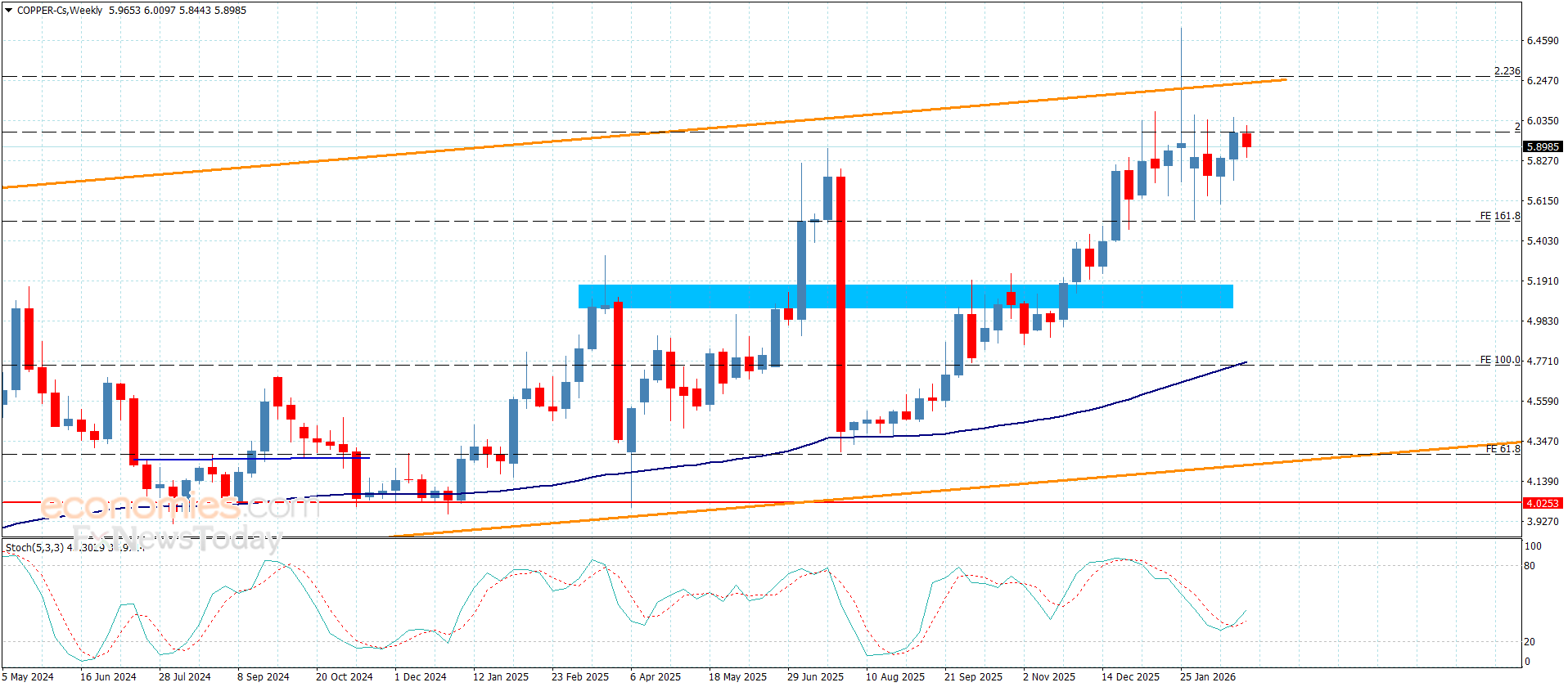
Copper price lost the positive momentum in yesterday’s trading, to force it to settle below $5.9700 barrier, forming some bearish corrective trading by targeting $5.6700 level, to provide some mixed trading.
Note that stochastic attempts to provide extra negative momentum will increase the bearish corrective track in the current period, and the stability of the price below the previously mentioned barrier is important to make us expect targeting $5.6200 level, to attempt to press on the extra support near $5.5100.
The expected trading range for today is between $5.5100 and $5.8500
Trend forecast: Bearish
BitcoinWorld
USD/JPY Price Forecast: Resilient Pair Holds Critical Gains Near 157.00 Monthly Peak
TOKYO, May 2025 – The USD/JPY currency pair demonstrates remarkable resilience in Asian trading sessions, maintaining its position near monthly highs above the psychologically significant 157.00 level. This sustained strength follows a period of heightened volatility driven by divergent monetary policies between the Federal Reserve and Bank of Japan. Market participants now closely monitor technical indicators and fundamental developments that could determine the pair’s next directional move. The current consolidation near monthly peaks suggests potential for further appreciation, though several critical resistance levels loom overhead.
Technical analysis reveals the USD/JPY pair has established a firm foothold above the 157.00 handle, a level that previously served as both support and resistance throughout April 2025. The daily chart shows the pair trading approximately 1.2% above its 50-day moving average, indicating sustained bullish momentum. Furthermore, the Relative Strength Index (RSI) currently reads 62, placing it in bullish territory while remaining below overbought conditions. This technical positioning suggests room for additional upside movement before encountering significant selling pressure.
Several critical technical levels now define the trading landscape. Immediate resistance appears at 157.50, followed by the more substantial 158.00 psychological barrier. On the downside, support clusters emerge at 156.80, 156.30, and the crucial 155.50 level. The 155.50 mark represents the pair’s 100-day moving average and has provided reliable support during previous pullbacks. Market analysts note that a decisive break above 158.00 could trigger accelerated buying, potentially targeting the 160.00 handle last tested in late 2024.
Recent price action reveals the formation of an ascending triangle pattern on the four-hour chart, typically considered a continuation pattern in technical analysis. This pattern features a flat upper resistance near 157.50 and rising lower trendline support. Trading volume has remained consistent during this consolidation phase, suggesting genuine accumulation rather than speculative positioning. The measured move target from this pattern’s completion projects toward the 159.00-159.50 region, aligning with previous areas of historical resistance.
The fundamental backdrop continues to favor US dollar strength against the Japanese yen, primarily driven by widening interest rate differentials. The Federal Reserve maintains its benchmark rate within the 5.25%-5.50% range as of May 2025, while the Bank of Japan has only cautiously normalized its negative interest rate policy. This substantial rate gap, exceeding 500 basis points, creates powerful carry trade incentives that naturally support USD/JPY appreciation. Institutional investors frequently borrow in low-yielding yen to purchase higher-yielding dollar assets, generating consistent demand for the currency pair.
Recent economic data releases have further reinforced this dynamic. United States inflation metrics, particularly core PCE, remain persistently above the Fed’s 2% target, suggesting continued restrictive monetary policy. Conversely, Japan’s core inflation has moderated to approximately 2.2% year-over-year, reducing pressure on the Bank of Japan to implement aggressive tightening measures. This policy divergence represents the primary fundamental driver behind the pair’s sustained upward trajectory since 2022.
Market expectations regarding future central bank actions significantly influence USD/JPY price dynamics. According to CME FedWatch Tool data, traders currently price in approximately 50 basis points of Federal Reserve rate cuts through December 2025. Meanwhile, expectations for additional Bank of Japan rate hikes remain modest, with most analysts projecting only 10-25 basis points of tightening during the same period. This anticipated policy path suggests interest rate differentials will remain historically wide, continuing to support USD/JPY strength throughout 2025.
The Bank of Japan faces particular challenges in normalizing policy without triggering excessive yen appreciation that could harm export competitiveness. Governor Kazuo Ueda has repeatedly emphasized a data-dependent approach with gradual adjustments. This cautious stance contrasts with the Federal Reserve’s continued focus on inflation containment, creating what analysts describe as a “perfect storm” for USD/JPY appreciation. The table below summarizes key policy differences:
| Central Bank | Current Policy Rate | 2025 Projected Changes | Primary Policy Focus |
|---|---|---|---|
| Federal Reserve | 5.25%-5.50% | 50 bps cuts expected | Inflation containment |
| Bank of Japan | 0.00%-0.10% | 10-25 bps hikes expected | Gradual normalization |
Commitment of Traders (COT) reports from the Commodity Futures Trading Commission reveal substantial net short positioning in Japanese yen futures, reaching near-extreme levels not seen since 2022. This positioning data indicates that professional traders maintain overwhelmingly bearish views on the yen relative to the US dollar. However, some analysts caution that such extreme positioning often precedes sharp reversals when sentiment eventually shifts. The current structure suggests that any dovish Federal Reserve signals or unexpectedly hawkish Bank of Japan communications could trigger rapid yen appreciation as traders unwind crowded positions.
Meanwhile, options market data shows increased demand for USD/JPY call options at strike prices of 158.00 and 159.00, suggesting institutional expectations for further near-term appreciation. The one-month risk reversal, which measures the premium of calls over puts, remains positive at +0.85%, confirming continued bullish bias among options traders. This derivatives market activity provides valuable insight into professional expectations beyond simple spot price movements.
Geopolitical developments frequently influence USD/JPY dynamics through safe-haven flows. The Japanese yen traditionally strengthens during periods of market stress or geopolitical uncertainty, while the US dollar benefits from its status as the global reserve currency. Recent tensions in the Asia-Pacific region have created competing influences on the currency pair. On one hand, regional instability typically supports yen strength. On the other hand, dollar demand increases during global uncertainty. The net effect has been relatively balanced, allowing interest rate differentials to remain the dominant driver of USD/JPY price action.
The USD/JPY pair has experienced significant appreciation since 2021, rising from approximately 103.00 to current levels near 157.00—a remarkable 52% increase over four years. This sustained uptrend represents the pair’s most substantial rally since the Plaza Accord era of the mid-1980s. Historical analysis reveals that USD/JPY typically experiences multi-year trending periods followed by extended consolidation phases. The current rally has now exceeded the duration of the 2012-2015 uptrend, suggesting increased potential for either acceleration or correction in coming months.
Previous periods of extreme USD/JPY valuation have often prompted coordinated intervention by Japanese monetary authorities. The Ministry of Finance last intervened in currency markets during September and October 2022 when USD/JPY approached 152.00. With the pair now trading approximately 500 pips above those intervention levels, market participants carefully monitor official communications for any hints of renewed currency stabilization efforts. Japanese Finance Minister Shunichi Suzuki recently stated that authorities would take “appropriate action against excessive moves” without specifying particular levels.
The USD/JPY’s performance significantly outperforms other major dollar pairs in 2025. While EUR/USD has declined approximately 4% year-to-date and GBP/USD has fallen roughly 3%, USD/JPY has appreciated nearly 8% during the same period. This relative strength highlights the unique dynamics between US and Japanese monetary policies compared to other developed economies. The European Central Bank and Bank of England have implemented more aggressive tightening cycles than the Bank of Japan, resulting in narrower interest rate differentials with the Federal Reserve.
Key factors distinguishing USD/JPY from other major pairs include:
Despite the prevailing bullish trend, several risk factors could trigger USD/JPY correction or reversal. First, any acceleration in Bank of Japan policy normalization would immediately narrow interest rate differentials, reducing the pair’s fundamental support. Second, unexpected Federal Reserve dovishness, perhaps in response to weakening labor market data, could diminish dollar appeal. Third, coordinated G7 currency intervention remains a possibility if officials deem yen weakness excessive or disorderly. Fourth, deteriorating risk sentiment in global equity markets typically benefits the yen as a traditional safe-haven currency.
Technical analysts identify additional warning signs that could precede trend changes. A daily close below the 155.50 support level would break the 100-day moving average and potentially signal deeper correction toward 153.00. Furthermore, bearish divergence on momentum oscillators, where price makes higher highs while indicators make lower highs, would suggest weakening underlying strength. Market participants should monitor these technical developments alongside fundamental catalysts for comprehensive risk assessment.
Historical analysis reveals distinct seasonal patterns in USD/JPY price action. The pair typically demonstrates strength during the first and fourth quarters, while experiencing more mixed performance during mid-year months. This pattern correlates with Japanese corporate repatriation flows ahead of fiscal year-end in March and semi-annual dividend payments in September. Additionally, the pair often exhibits increased volatility during Bank of Japan policy meetings, which occur eight times annually. The next scheduled meeting in June 2025 represents a potential catalyst for renewed directional movement depending on policy communications.
The USD/JPY price forecast remains cautiously bullish as the pair maintains gains near monthly highs above 157.00. Technical analysis suggests potential for further appreciation toward 158.00-159.00 resistance zones, though overextended positioning increases vulnerability to corrections. Fundamentally, persistent policy divergence between the Federal Reserve and Bank of Japan continues to provide structural support for dollar strength against the yen. Market participants should monitor upcoming economic data releases, central bank communications, and technical developments around key levels. The USD/JPY forecast ultimately depends on the evolving balance between interest rate differentials, risk sentiment, and potential currency intervention by Japanese authorities.
Q1: What key technical levels should traders watch for USD/JPY?
A1: Immediate resistance appears at 157.50 and 158.00, while support clusters at 156.80, 156.30, and the crucial 155.50 level representing the 100-day moving average.
Q2: Why does USD/JPY remain strong despite potential Federal Reserve rate cuts?
A2: Interest rate differentials remain historically wide even with expected Fed cuts, as the Bank of Japan maintains ultra-accommodative policy with only gradual normalization anticipated.
Q3: What would trigger Japanese currency intervention in USD/JPY?
A3: Japanese authorities typically intervene when they perceive “excessive volatility” or “disorderly moves” rather than specific levels, though previous intervention occurred near 152.00 in 2022.
Q4: How do carry trades influence USD/JPY price action?
A4: Investors borrow low-yielding yen to purchase higher-yielding dollar assets, creating consistent demand for USD/JPY that strengthens during periods of market stability and risk appetite.
Q5: What economic indicators most impact USD/JPY direction?
A5: US inflation data (CPI, PCE), Federal Reserve communications, Japanese wage growth figures, and Bank of Japan policy decisions represent the most significant fundamental drivers.
This post USD/JPY Price Forecast: Resilient Pair Holds Critical Gains Near 157.00 Monthly Peak first appeared on BitcoinWorld.
The GBPCAD faced strong bearish pressures, which force it to break the bullish channel’s support at 1.8425, to begin forming strong bearish waves, targeting 1.8220 level.
We notice providing negative momentum by the main indicators to confirm the surrender of the negative scenario, to keep preferring the bearish attempts, which might target extra stations that begin at 1.8160 and 1.8080.
The expected trading range for today is between 1.8160 and 1.8355
Trend forecast: Bearish
This article provides a comprehensive overview of the USCRUDE trading instrument, addressing crucial components such as the current state of the oil market, influential factors affecting oil price shifts, and future forecasts. The outlook for oil prices employs a multifaceted approach, encompassing fundamental and technical analysis to provide a nuanced and informed market assessment.
In addition, the article offers a detailed long-term trading strategy, empowering investors to accurately identify optimal entry and exit points, thereby minimizing risk while maximizing returns. Furthermore, the article draws upon the insights of industry experts and examines prevailing sentiments on social media concerning crude oil prices, offering a well-rounded and informed analysis of the current and future state of the oil market.
The article covers the following subjects:
Oil is trading at $74.678 as of 04.03.2026.
To make informed decisions, it is essential to closely monitor key indicators that reflect the current oil price landscape, including historical trends and investment potential. By leveraging this comprehensive data set, you can assess market trends, identify correlations with macroeconomic factors, and forecast price changes.
|
Indicator |
Value |
|
All-time low |
$-40.32 |
|
All-time high |
$147.27 |
|
Price change over the last 12 months |
+17.16% |
|
US crude production (bpd) |
13.655 million |
Oil continued to trade in an uptrend last week, reaching the Target Zone 3 of 68.08–67.66. If the price breaks above this zone, the next bullish target will be the Target Zone 4 of 72.34–71.92.
If the oil price remains below the Target Zone 3, a correction may unfold, dragging the asset down to the support A of 63.47–63.05. Once this zone is tested, consider long trades with the first target at 65.39 and the second one at 67.73. The trend boundary is shifting to 61.34–60.70.
Buy at support A of 63.47–63.05. TakeProfit: 65.39, 67.73. StopLoss: 61.95.
Technical analysis based on the margin zones methodology is presented by an independent analyst, Alex Rodionov.
The price of USCrude has broken out of the descending trading channel, and the trend has changed to an upward one, with swing lows gradually rising. MACD values are in the positive zone, steadily increasing, while the RSI has climbed above 70. The SMA50 has turned upward and is drifting away from the SMA200, confirming the trend reversal.
The nearest support level has shifted to the $65–$68 area. While the asset is trading above this level, oil remains a viable purchase.
Below are the projected price levels for US Crude (WTI) over the next 12 months:
|
Month |
Minimum, $ |
Average, $ |
Maximum, $ |
|
March 2026 |
66.4 |
71.2 |
75.8 |
|
April 2026 |
68.1 |
73.6 |
78.9 |
|
May 2026 |
69.3 |
75.4 |
80.6 |
|
June 2026 |
67.8 |
73.1 |
79.2 |
|
July 2026 |
70.5 |
76.8 |
82.0 |
|
August 2026 |
72.1 |
78.4 |
83.5 |
|
September 2026 |
69.9 |
75.6 |
81.3 |
|
October 2026 |
71.2 |
77.9 |
84.1 |
|
November 2026 |
73.0 |
79.6 |
85.8 |
|
December 2026 |
74.5 |
81.2 |
88.4 |
|
January 2027 |
72.8 |
78.7 |
84.6 |
|
February 2027 |
73.9 |
80.4 |
86.2 |
The trading strategy suggests buying oil on pullbacks to the $65–68 area when the RSI and MACD provide bullish signals simultaneously, confirming upward momentum. Aggressive entry: open long positions if the price settles above swing highs.
A take-profit order can be placed at $80, with profits taken in parts as the price hits new swing highs. A stop-loss order can be set just below $65.
Analysts have different predictions for 2026, ranging from steady growth to a correction. Their estimates take into account demand trends and market volatility.
Price range: $58.23–$70.40.
WalletInvestor expects crude prices to fall during the year. In the summer, the price may stabilize slightly above $70, but will then continue to fall. By December, the price of oil could drop to $58.23.
|
Month |
Minimum, $ |
Average, $ |
Maximum, $ |
|
April |
67.27 |
67.40 |
68.74 |
|
May |
67.03 |
68.28 |
69.49 |
|
June |
69.57 |
69.91 |
70.40 |
|
July |
68.17 |
69.20 |
70.36 |
|
August |
66.03 |
66.98 |
67.75 |
|
September |
65.12 |
65.66 |
66.37 |
|
October |
62.91 |
64.08 |
65.26 |
|
November |
59.27 |
60.95 |
62.64 |
|
December |
58.23 |
59.22 |
59.36 |
Price range: $64.22 – $73.76.
According to CoinCodex, the USCrude price will likely rise in 2026. By summer, the average price may fall to $65, after which a bullish trend will begin. By December, quotes may reach a high of $73.76.
|
Month |
Minimum, $ |
Average, $ |
Maximum, $ |
|
March |
66.22 |
67.41 |
68.47 |
|
April |
64.62 |
66.45 |
68.21 |
|
May |
64.22 |
65.90 |
67.93 |
|
June |
64.53 |
66.50 |
67.78 |
|
July |
64.53 |
65.60 |
66.72 |
|
August |
64.70 |
66.37 |
67.28 |
|
September |
65.73 |
66.25 |
66.63 |
|
October |
66.68 |
68.55 |
69.65 |
|
November |
69.27 |
72.30 |
73.76 |
|
December |
69.60 |
70.98 |
72.77 |
Price range: $64.73–$86.80.
LongForecast projects that USCrude will grow, facing high volatility. In the first half of the year, crude prices may exceed $86. However, the rate will be corrected later. By the end of the year, the average price will trade near $73.61.
|
Month |
Minimum, $ |
Average, $ |
Maximum, $ |
|
March |
64.73 |
70.61 |
76.48 |
|
April |
69.13 |
74.49 |
79.85 |
|
May |
73.95 |
77.84 |
81.73 |
|
June |
77.84 |
82.32 |
86.80 |
|
July |
77.06 |
81.12 |
85.18 |
|
August |
74.09 |
77.99 |
81.89 |
|
September |
72.28 |
76.08 |
79.88 |
|
October |
70.49 |
74.20 |
77.91 |
|
November |
66.12 |
70.16 |
74.20 |
|
December |
69.60 |
73.61 |
77.62 |
Forecasts for 2027 take into account possible OPEC+ decisions, global economic growth rates, and potential supply disruptions. Analysts’ estimates vary considerably.
Note: The price ranges reflect the asset's expected volatility throughout the year. Lows and highs may not be shown in the summary tables.
Price range: $54.17–$66.33.
According to WalletInvestor, the price of USCrude will likely decline in 2027. In the first half of the year, crude quotes may trade between $65 and $66, and then begin to slide. In December, the price may reach a low of $54.17.
|
Quarter |
Minimum, $ |
Average, $ |
Maximum, $ |
|
Q1 |
59.30 |
61.15 |
63.53 |
|
Q2 |
62.98 |
64.78 |
66.33 |
|
Q3 |
61.09 |
62.55 |
66.34 |
|
Q4 |
54.17 |
57.08 |
61.13 |
Price range: $55.08–$69.75.
CoinCodex predicts that oil prices will decline. At the beginning of the year, the average price will trade near $68. In the summer, it will fall to $64. By the end of December, oil may drop to a low of $55.08.
|
Quarter |
Minimum, $ |
Average, $ |
Maximum, $ |
|
Q1 |
65.83 |
68.08 |
69.75 |
|
Q2 |
62.97 |
64.80 |
67.66 |
|
Q3 |
56.02 |
59.81 |
67.60 |
|
Q4 |
55.08 |
58.31 |
60.20 |
Price range: $64.67–$86.01.
According to LongForecast, the price of USCrude is expected to drop in 2027. By the end of June, the average price will be around $76. The yearly low of $64.67 is expected in the fourth quarter.
|
Quarter |
Minimum, $ |
Average, $ |
Maximum, $ |
|
Q1 |
72.99 |
79.08 |
86.01 |
|
Q2 |
70.62 |
76.39 |
82.36 |
|
Q3 |
74.03 |
79.63 |
84.71 |
|
Q4 |
64.67 |
71.33 |
80.27 |
Projections for 2028 reflect potential changes in global oil demand, output, and investment activity in the energy sector. Analysts explore various scenarios, including both recovery and decline phases.
Price range: $50.12–$62.31.
According to WalletInvestor, the price of USCrude is projected to decline. At the beginning of the year, oil quotes may stabilize above $59–$60, but a downward trend will likely follow. In December, the price may reach a low of $50.12.
|
Quarter |
Minimum, $ |
Average, $ |
Maximum, $ |
|
Q1 |
55.39 |
57.11 |
59.51 |
|
Q2 |
58.94 |
60.95 |
62.31 |
|
Q3 |
57.05 |
58.44 |
62.12 |
|
Q4 |
50.12 |
53.31 |
57.11 |
Price range: $58.76–$69.74.
CoinCodex predicts that oil prices will continue to decline. In the first quarter, crude prices may reach a yearly high of $69.74. However, the price will likely drop to $62–$65 in the summer. In late December, the price may fall to a low of $58.76.
|
Quarter |
Minimum, $ |
Average, $ |
Maximum, $ |
|
Q1 |
59.34 |
63.91 |
69.74 |
|
Q2 |
61.91 |
63.26 |
65.63 |
|
Q3 |
59.93 |
60.99 |
62.55 |
|
Q4 |
58.76 |
60.72 |
62.75 |
Price range: $61.22–$81.51.
LongForecast forecasts an increase in oil prices, though with high volatility. In summer, prices may reach a yearly high of $81.51. A downward correction is possible in the fall, but the upward trend will resume thereafter, and the average price in December will be $70.9.
|
Quarter |
Minimum, $ |
Average, $ |
Maximum, $ |
|
Q1 |
63.37 |
68.82 |
75.35 |
|
Q2 |
66.71 |
73.85 |
81.51 |
|
Q3 |
61.22 |
68.79 |
77.63 |
|
Q4 |
64.44 |
70.90 |
78.02 |
In 2029, USCrude prices will depend on US shale oil production volume and OPEC+ policies. Any supply disruptions could fuel volatility. Most experts predict a decline in oil prices.
Price range: $46.08–$58.27.
WalletInvestor predicts a decline in USCrude prices. In the first half of the year, the asset will trade above $55, followed by a bearish trend. By the end of December, the price may decline to a minimum of $46.08.
|
Quarter |
Minimum, $ |
Average, $ |
Maximum, $ |
|
Q1 |
51.26 |
53.96 |
55.50 |
|
Q2 |
54.90 |
56.90 |
58.27 |
|
Q3 |
53.02 |
54.35 |
58.12 |
|
Q4 |
46.08 |
48.94 |
53.08 |
Price range: $54.35–$62.58.
According to CoinCodex, the average price of oil may trade around $58 in the first quarter. A sustained decline is forecast thereafter, with the price potentially falling to $54.35 by autumn. However, the price will begin to rise in the fourth quarter and could reach a high of $62.58 in December.
|
Quarter |
Minimum, $ |
Average, $ |
Maximum, $ |
|
Q1 |
55.43 |
58.06 |
60.14 |
|
Q2 |
56.74 |
57.72 |
58.67 |
|
Q3 |
54.35 |
55.74 |
57.91 |
|
Q4 |
55.67 |
58.59 |
62.58 |
Price range: $54.03–$81.34.
LongForecast predicts a gradual decline in USCrude. The asset is expected to peak at $81.34 at the beginning of the year. However, the average price will be $70.7 in June, sliding to a low of $54.03 in December.
|
Quarter |
Minimum, $ |
Average, $ |
Maximum, $ |
|
Q1 |
69.04 |
74.57 |
81.34 |
|
Q2 |
65.70 |
70.70 |
76.09 |
|
Q3 |
61.65 |
67.66 |
72.64 |
|
Q4 |
54.03 |
60.71 |
68.91 |
In 2030, the oil market may be affected by oil production cuts, developments in the US shale sector, and potential changes in the global energy landscape. The price of USCrude will also depend on the geopolitical situation.
Price range: $42.05–$54.22.
WalletInvestor expects USCrude prices to fall. In the first half of the year, oil prices will likely fluctuate between $47 and $54. However, by the end of the year, the price is projected to fall below $50. In December, the asset may reach a low of $42.05.
|
Quarter |
Minimum, $ |
Average, $ |
Maximum, $ |
|
Q1 |
47.16 |
49.30 |
51.47 |
|
Q2 |
50.87 |
52.35 |
54.22 |
|
Q3 |
48.96 |
51.17 |
54.12 |
|
Q4 |
42.05 |
45.21 |
49.05 |
Price range: $56.89–$66.97.
According to CoinCodex, USCrude quotes may increase. The average price will fluctuate between $59 and $61 for most of the year. In December, the price may reach a yearly high of $66.97.
|
Quarter |
Minimum, $ |
Average, $ |
Maximum, $ |
|
Q1 |
56.89 |
59.60 |
62.03 |
|
Q2 |
58.05 |
59.97 |
61.78 |
|
Q3 |
58.34 |
59.79 |
60.91 |
|
Q4 |
60.48 |
64.04 |
66.97 |
Long-term estimates for US crude oil until 2050 vary significantly. Analysts predict different trajectories for the energy market, ranging from a gradual decline in prices amid the transition to alternative energy sources to sustained demand for oil.
CoinCodex expects a long-term downward trend. In 2040, the average price of crude oil will be $43.96. The decline will continue, and by the end of 2050, the price may drop to $37.98.
CoinPriceForecast, by contrast, predicts an increase in oil prices. By 2034, the price could reach $117.14, and by 2037, it may surge to $140.79.
|
Year |
CoinCodex, $ |
CoinPriceForecast, $ |
|
2034 |
– |
117.14 |
|
2037 |
– |
140.79 |
|
2040 |
43.96 |
– |
|
2050 |
37.98 |
– |
Media sentiment can influence short-term fluctuations in oil prices. When most social media users express optimism about future growth, bullish momentum may strengthen. During periods of uncertainty, negative comments may trigger high volatility.
User @TradzoIndia gives a bullish forecast. Due to the conflict in the Middle East, oil prices may reach $90.
User @3Xtraders also expects crude prices to surge. Due to US military operations, the price of oil will likely exceed $81.
In general, social media sentiment remains predominantly positive. Against the backdrop of geopolitical conflict, oil prices may rise significantly. Before making trading and investment decisions, it is necessary to conduct technical and fundamental analysis and study expert reports.
Oil (USCrude) reached its all-time high of $147.27 on 11.07.2008.
The lowest price of oil (USCrude) was recorded on 20.04.2020 and reached $-40.32.
Below is a chart showing the performance of USCrude quotes over the last ten years. In this connection, it is important to evaluate historical data to make predictions as accurate as possible.
The USCrude price has displayed considerable volatility since 2003, reflecting economic and political developments worldwide. In 2008, oil prices surged to an all-time high of $147 per barrel, driven by rising demand in developing countries and constrained supply. However, the global financial crisis triggered a significant drop in prices, reaching $40, one of the steepest declines in history.
In 2014–2015, the price of oil substantially declined due to an oversupply in the market and a surge in shale oil production in the US. This marked a pivotal shift in the industry’s landscape and the global oil trade sector.
In 2020, the global oil demand experienced a significant decline due to the impact of the pandemic, resulting in a temporary decline in crude prices below zero.
In 2021, the market began to recover amid a gradual increase in oil consumption. In 2022, US Crude prices traded in the $70–120 per barrel range, reflecting geopolitical tensions, supply constraints, and rising inflation.
From early 2024, USCrude prices were highly volatile. In the first quarter, prices rose to $87.10 amid geopolitical tensions and expectations of stronger demand. However, from the second quarter through year-end, prices fell to $75.71 amid increased production and recession concerns.
The downtrend gained momentum in the early months of 2025. By early May, the asset’s price had fallen to $55.04. By mid-June, the price had rebounded to $76.59, but from August onward it declined gradually. Toward the end of the year, prices traded within a broad $55–62 range.
In early 2026, WTI showed no clear trend. However, the military conflict in the Middle East brought about a sudden change in the situation. Volatility spiked, with prices reaching $70–73. The nearest support level is located at $68–69.
Fundamental analysis is the key to understanding the factors that influence oil prices. This section focuses on the economic, political, and environmental factors that determine supply and demand, as well as the fluctuations in the value of US Crude in the global market. Understanding these aspects provides a more accurate assessment of the asset’s long-term prospects. The analysis also includes an evaluation of the impact of energy policy and technological advancements in the industry.
The price of oil is shaped by a variety of fundamental factors that reflect the state of the global economy and geopolitical environment:
The level of global oil demand, especially in the major economies.
The volume of oil production by the largest oil-producing countries.
Oil reserves in strategic storage facilities.
Political stability in oil-rich regions.
Transportation costs and infrastructure constraints.
The exchange rate of the US dollar, as oil is quoted in the US currency.
Development of alternative energy sources and environmental initiatives.
Force majeure, including natural and technological disasters.
Seasonal changes in fuel demand, especially during heating and summer periods.
Government subsidies or tax policies that affect the cost of oil production and transportation.
These factors play a key role in determining oil prices. They should be considered when making short- and long-term forecasts.
Oil is a valuable natural resource that plays a key role in the world economy. This versatile hydrocarbon product is used in the production of fuel, plastics, chemicals, and electricity. Crude oil is classified into different types, including Brent, WTI, and Dubai benchmark grades, each with its own characteristics and designated applications.
Oil is extracted in various regions worldwide, with Saudi Arabia, Russia, the United States, and Canada being the leading producers. The primary extraction methods include conventional drilling and shale oil extraction. Transportation is facilitated through pipelines, tankers, and railroad trains.
The pricing of oil is influenced by a variety of factors, including supply and demand shifts, geopolitical events, and decisions made by organizations such as OPEC. It is traded on global exchanges, such as NYMEX and ICE.
The history of oil spans more than 150 years, beginning with the first commercial production in 1859 in the US. Despite the emergence of alternative energy sources such as solar and wind power, oil continues to dominate the global energy landscape.
Investing in oil is a common strategy for diversifying an investment portfolio, given its high liquidity and profit potential. However, it is essential for investors to carefully assess the risks associated with price volatility and external factors.
High liquidity: oil is actively traded on global exchanges, making it easy to buy and sell.
Growth potential: oil prices can rise significantly on the back of increased demand, especially during an economic recovery
Inflation hedging: investing in oil can help safeguard a portfolio against inflation and the potential loss of purchasing power.
Portfolio diversification: investing in oil reduces overall risk by adding commodity assets that are not correlated with equities.
Opportunity for speculation: the high volatility of oil provides ample opportunity for short-term strategies, allowing you to capitalize on sharp changes in quotes.
Global importance: oil remains a key commodity for the global economy, ensuring its stable demand.
High volatility: oil prices are subject to sharp fluctuations due to external factors such as crises or changes in demand.
Dependence on geopolitics: instability in oil-producing regions can lead to sharp price changes, representing an additional risk.
Environmental risks: growing environmental requirements may limit production and increase production and transportation costs.
Long-term uncertainty: alternative energy may reduce oil demand, affecting its prospects as an asset.
Limited access: for retail investors, access to oil markets may be restricted by the intricacies of futures trading.
Dependence on macroeconomic factors: economic downturns or slowdowns can adversely impact the value of USCrude.
Investing in oil can present both significant opportunities for high returns and considerable risks. Consequently, it is essential to carefully consider global economic and political factors while monitoring trends within the energy industry to make informed investment decisions.
The forecasting methodology involves analyzing data over three time horizons: short, medium, and long term. Each approach employs specific tools and analysis methods.
Short-term forecasts rely on technical indicators such as moving averages, the RSI, and support and resistance levels. In addition, relevant news and geopolitical events help predict short-term price swings.
The medium-term outlook focuses on key fundamental data, including production volumes, oil reserves, and economic indicators such as demand in major economies. Seasonal changes in supply and demand are also evaluated.
Long-term forecasts are based on a comprehensive assessment of global trends, including the transition to green energy, changes in OPEC policies, and technological advancements. In addition, price history analysis and scenario modeling complement the outlook.
This comprehensive approach allows us to consider various factors affecting the oil market and deliver precise forecasts.
Oil may be an attractive investment, provided the investor is prepared for high volatility and understands the market’s cyclical nature. Long-term price expectations remain mixed: some forecasts allow for recovery and growth, while others point to downside risks and the persistence of sideways movement. In such conditions, oil is often better suited for portfolio diversification and tactical trades than for long-term passive holding. An optimal approach typically involves choosing a well-timed entry, accounting for the prevailing trend, and being ready to reassess the position as the market phase changes.
The content of this article reflects the author’s opinion and does not necessarily reflect the official position of LiteFinance broker. The material published on this page is provided for informational purposes only and should not be considered as the provision of investment advice for the purposes of Directive 2014/65/EU.
According to copyright law, this article is considered intellectual property, which includes a prohibition on copying and distributing it without consent.
The GBPJPY pair activated the bullish attempts, to achieve the suggested target by reaching 211.25, facing a key barrier which forces it to form new negative rebound, to settle near the initial support at 210.65 level.
Note that the continuation of the main indicators contradiction by the price stability below 211.25 might push it to form new bearish waves, attempting to reach 209.85 to press on 209.15 support, while confirming the positivity requires forming strong bullish rally, to settle above 211.25, to ease the mission of targeting the next positive level at 212.05.
The expected trading range for today is between 209.80 and 211.00
Trend forecast: Bearish
The GBPCAD faced strong bearish pressures, which force it to break the bullish channel’s support at 1.8425, to begin forming strong bearish waves, targeting 1.8220 level.
We notice providing negative momentum by the main indicators to confirm the surrender of the negative scenario, to keep preferring the bearish attempts, which might target extra stations that begin at 1.8160 and 1.8080.
The expected trading range for today is between 1.8160 and 1.8355
Trend forecast: Bearish
Important DisclaimersFXEmpire is owned and operated by Empire Media Network LTD., Company Registration Number 514641786, registered at 7 Jabotinsky Road, Ramat Gan 5252007, Israel. The content provided on this website includes general news and publications, our personal analysis and opinions, and materials provided by third parties. This content is intended for educational and research purposes only. It does not constitute, and should not be interpreted as, a recommendation or advice to take any action, including making any investment or purchasing any product. Before making any financial decision, you should conduct your own due diligence, exercise your own discretion, and consult with competent advisors. The content on this website is not personally directed to you, and we do not take into account your individual financial situation or needs. The information contained on this website is not necessarily provided in real time, nor is it guaranteed to be accurate. Prices displayed may be provided by market makers and not by exchanges. Any trading or other financial decision you make is entirely your own responsibility, and you must not rely solely on any information provided through the website. FXEmpire does not provide any warranty regarding the accuracy, completeness, or reliability of any information contained on the website and shall bear no responsibility for any trading losses you may incur as a result of using such information. The website may include advertisements and other promotional content. FXEmpire may receive compensation from third parties in connection with such content. FXEmpire does not endorse, recommend, or assume responsibility for the use of any third-party services or websites. Empire Media Network LTD., its employees, officers, subsidiaries, and affiliates shall not be liable for any loss or damage resulting from your use of the website or reliance on the information provided herein.Risk DisclaimersThis website contains information about cryptocurrencies, contracts for difference (CFDs), and other financial instruments, as well as about brokers, exchanges, and other entities trading in such instruments. Both cryptocurrencies and CFDs are complex instruments and involve a high risk of losing money. You should carefully consider whether you understand how these instruments work and whether you can afford to take the high risk of losing your money. FX Empire encourages you to conduct your own research before making any investment decision and to avoid investing in any financial instrument unless you fully understand how it works and the risks involved.
Copper price hasn’t moved anything since yesterday, due to its fluctuation below $5.9700 barrier, announcing its surrender to the sideways bias dominance, forming weak trading by its stability near $5.9000.
The continuation of the main indicators contradiction might push the price to provide more sideways trading, and its rally above the barrier and holding above it will open the way for recording extra gains, which might begin at $6.1200 and $6.2400.
The expected trading range for today is between $5.8500 and $6.1200
Trend forecast: Bullish