The main category of All News Articles.
You can use the search box below to find what you need.
[wd_asp id=1]
The main category of All News Articles.
You can use the search box below to find what you need.
[wd_asp id=1]
The USD/JPY pair finds some support near the 155.35 area on Wednesday and stalls its retracement slide from a two-week high, touched the previous day. Spot prices currently trade around the 155.75 region, nearly unchanged for the day, and look to build on the upward trajectory witnessed over the past week or so.
Despite the US Federal Reserve’s (Fed) hawkish outlook, the US Dollar (USD) meets with a fresh supply as investors remain concerned about renewed turbulence over US President Donald Trump’s trade policies. This, along with geopolitical risks, underpins demand for traditional safe-haven assets, including the Japanese Yen (JPY), and prompts some intraday selling around the USD/JPY pair.
Meanwhile, reports suggest that Japan’s Prime Minister Sanae Takaichi was apprehensive about more rate hikes in a meeting last week with the Bank of Japan (BoJ) Governor Kazuo Ueda. Moreover, the government nominated two reflationists to join the BoJ board, forcing investors to trim expectations about the speed of interest rate hikes. This caps gains for the JPY and offers some support to the USD/JPY pair.
From a technical perspective, the recent repeated rebounds from the 200-day Exponential Moving Average (EMA) breakout zone and the subsequent move up favor bullish traders. The Moving Average Convergence Divergence (MACD) line has turned higher above its signal and is now back in positive territory, suggesting improving upside momentum after a mid-month loss of traction. The Relative Strength Index around 54 stays above its midline without approaching overbought, aligning with a gradual recovery.
Immediate resistance emerges at 156.90, the recent swing high ahead of 158.40, where the latest advance stalled, and supply reasserted. A daily close above 156.90 would open the way toward 158.40, with a break there exposing the 160.00 region as the next upside objective. On the downside, initial support stands at 155.00, guarding a deeper retracement toward 153.50, where prior lows converge with the short-term consolidation base. A loss of 153.50 would weaken the bullish bias and shift focus to the 152.70 area defined by the 200-day EMA.
(The technical analysis of this story was written with the help of an AI tool.)
The Bank of Japan (BoJ) is the Japanese central bank, which sets monetary policy in the country. Its mandate is to issue banknotes and carry out currency and monetary control to ensure price stability, which means an inflation target of around 2%.
The Bank of Japan embarked in an ultra-loose monetary policy in 2013 in order to stimulate the economy and fuel inflation amid a low-inflationary environment. The bank’s policy is based on Quantitative and Qualitative Easing (QQE), or printing notes to buy assets such as government or corporate bonds to provide liquidity. In 2016, the bank doubled down on its strategy and further loosened policy by first introducing negative interest rates and then directly controlling the yield of its 10-year government bonds. In March 2024, the BoJ lifted interest rates, effectively retreating from the ultra-loose monetary policy stance.
The Bank’s massive stimulus caused the Yen to depreciate against its main currency peers. This process exacerbated in 2022 and 2023 due to an increasing policy divergence between the Bank of Japan and other main central banks, which opted to increase interest rates sharply to fight decades-high levels of inflation. The BoJ’s policy led to a widening differential with other currencies, dragging down the value of the Yen. This trend partly reversed in 2024, when the BoJ decided to abandon its ultra-loose policy stance.
A weaker Yen and the spike in global energy prices led to an increase in Japanese inflation, which exceeded the BoJ’s 2% target. The prospect of rising salaries in the country – a key element fuelling inflation – also contributed to the move.
After fluctuating in a relatively wide range at the beginning of the week, EUR/USD edged lower on Tuesday but managed to find support. The pair was last seen trading moderatly higher on the day, at around 1.1800.
The table below shows the percentage change of Euro (EUR) against listed major currencies today. Euro was the strongest against the Japanese Yen.
| USD | EUR | GBP | JPY | CAD | AUD | NZD | CHF | |
|---|---|---|---|---|---|---|---|---|
| USD | -0.13% | -0.15% | 0.38% | -0.08% | -0.53% | -0.13% | 0.02% | |
| EUR | 0.13% | -0.01% | 0.50% | 0.06% | -0.40% | 0.00% | 0.15% | |
| GBP | 0.15% | 0.01% | 0.55% | 0.06% | -0.39% | 0.01% | 0.17% | |
| JPY | -0.38% | -0.50% | -0.55% | -0.44% | -0.89% | -0.50% | -0.34% | |
| CAD | 0.08% | -0.06% | -0.06% | 0.44% | -0.45% | -0.06% | 0.10% | |
| AUD | 0.53% | 0.40% | 0.39% | 0.89% | 0.45% | 0.40% | 0.58% | |
| NZD | 0.13% | -0.00% | -0.01% | 0.50% | 0.06% | -0.40% | 0.15% | |
| CHF | -0.02% | -0.15% | -0.17% | 0.34% | -0.10% | -0.58% | -0.15% |
The heat map shows percentage changes of major currencies against each other. The base currency is picked from the left column, while the quote currency is picked from the top row. For example, if you pick the Euro from the left column and move along the horizontal line to the US Dollar, the percentage change displayed in the box will represent EUR (base)/USD (quote).
The positive shift seen in risk mood made it difficult for the US Dollar (USD) to preserve its strength and helped EUR/USD hold its ground. Wall Street’s main indexes recovered decisively on Tuesday after suffering large losses on Monday, as the negative impact of the uncertainty surrounding the US trade policy faded away.
In his State of the Union speech, US President Donald Trump said that there is no inflation and there is “tremendous growth,” pointing to tariffs as one of the main reasons behind the economic turnaround. Trump further added that almost all trading partners want to keep the trade deals they already made despite the Supreme Court’s ruling.
Early Wednesday, US stock index futures rise about 0.2%. Anoter day of bullish action in Wall Street could allow EUR/USD to stretch higher in the near term.
The economic calendar will not feature any high-impact data releases. In the second half of the day, several Federal Reserve (Fed) policymakers will be delivering speeches. The CME FedWatch Tool shows virtually no chance of a Fed rate cut in March and points to about an 85% probability of one more policy hold in April. The market positioning suggests that the USD doesn’t have a lot of room left on the upside even if Fed policymakers reiterate a cautious approach to policy-easing. Conversely, dovish hints could weigh on the USD.
In the 4-hour chart, EUR/USD trades at 1.1791. The near-term bias is mildly bearish as the pair holds below the downward-sloping 50- and 100-period Simple Moving Averages (SMAs) while clinging to the 200-period SMA around 1.1792. Price action remains capped beneath the descending resistance trend line from 1.2023, which continues to limit recovery attempts after the recent bounce failed near the 1.1810 area. The Relative Strength Index (RSI) hovers just below the 50 mark, indicating weak upside momentum and aligning with a downside-tilted consolidation rather than a clear reversal higher.
Immediate resistance emerges at the 50.0% Fibonacci retracement of the 1.1590–1.2027 advance at 1.1809, followed by the 38.2% retracement at 1.1860, where the cluster of declining SMAs and the descending trend line reinforce a heavier supply zone. On the downside, the 61.8% retracement at 1.1757 forms initial support just beneath current levels, with a sustained break exposing the 1.1684 area at the 78.6% retracement. As long as the pair trades below 1.1809, rallies are vulnerable to selling pressure, and a close under 1.1757 would strengthen the bearish tone.
(The technical analysis of this story was written with the help of an AI tool.)
The Euro is the currency for the 20 European Union countries that belong to the Eurozone. It is the second most heavily traded currency in the world behind the US Dollar. In 2022, it accounted for 31% of all foreign exchange transactions, with an average daily turnover of over $2.2 trillion a day.
EUR/USD is the most heavily traded currency pair in the world, accounting for an estimated 30% off all transactions, followed by EUR/JPY (4%), EUR/GBP (3%) and EUR/AUD (2%).
The European Central Bank (ECB) in Frankfurt, Germany, is the reserve bank for the Eurozone. The ECB sets interest rates and manages monetary policy.
The ECB’s primary mandate is to maintain price stability, which means either controlling inflation or stimulating growth. Its primary tool is the raising or lowering of interest rates. Relatively high interest rates – or the expectation of higher rates – will usually benefit the Euro and vice versa.
The ECB Governing Council makes monetary policy decisions at meetings held eight times a year. Decisions are made by heads of the Eurozone national banks and six permanent members, including the President of the ECB, Christine Lagarde.
Eurozone inflation data, measured by the Harmonized Index of Consumer Prices (HICP), is an important econometric for the Euro. If inflation rises more than expected, especially if above the ECB’s 2% target, it obliges the ECB to raise interest rates to bring it back under control.
Relatively high interest rates compared to its counterparts will usually benefit the Euro, as it makes the region more attractive as a place for global investors to park their money.
Data releases gauge the health of the economy and can impact on the Euro. Indicators such as GDP, Manufacturing and Services PMIs, employment, and consumer sentiment surveys can all influence the direction of the single currency.
A strong economy is good for the Euro. Not only does it attract more foreign investment but it may encourage the ECB to put up interest rates, which will directly strengthen the Euro. Otherwise, if economic data is weak, the Euro is likely to fall.
Economic data for the four largest economies in the euro area (Germany, France, Italy and Spain) are especially significant, as they account for 75% of the Eurozone’s economy.
Another significant data release for the Euro is the Trade Balance. This indicator measures the difference between what a country earns from its exports and what it spends on imports over a given period.
If a country produces highly sought after exports then its currency will gain in value purely from the extra demand created from foreign buyers seeking to purchase these goods. Therefore, a positive net Trade Balance strengthens a currency and vice versa for a negative balance.
BitcoinWorld
Silver Price Forecast: XAG/USD Defiantly Holds Above $88.00 Amid Sustained Positive Bias
Global precious metals markets witnessed a significant development this week as silver prices demonstrated remarkable resilience, with the XAG/USD pair maintaining a firm position above the critical $88.00 threshold. This sustained performance, observed across major trading platforms from London to New York, reflects a complex interplay of macroeconomic factors, technical patterns, and shifting investor sentiment that demands thorough examination. Market analysts now scrutinize whether this consolidation represents a temporary pause or a foundation for further appreciation in the coming quarters.
Technical analysis reveals that the $88.00 level for XAG/USD has transformed from a previous resistance point into a robust support zone. This transition occurred gradually throughout the first quarter of 2025, following three consecutive weekly closes above this psychological barrier. Furthermore, the 50-day and 200-day moving averages recently completed a bullish crossover beneath the current price action, traditionally signaling sustained upward momentum. Chart patterns indicate that silver has established a higher low structure since December 2024, with each retracement finding buyers at progressively elevated levels.
Volume analysis provides additional confirmation of this positive bias. Trading volumes during upward movements consistently exceed those during minor pullbacks, suggesting institutional accumulation rather than speculative retail activity. The Relative Strength Index (RSI) currently reads 58 on daily timeframes, comfortably within neutral territory and avoiding overbought conditions that might trigger corrective pressure. Bollinger Band width has contracted significantly over the past fortnight, indicating a period of consolidation that typically precedes substantial directional moves.
| Support Levels | Resistance Levels | Significance |
|---|---|---|
| $88.00 | $92.50 | Psychological round number & recent consolidation zone |
| $85.30 | $95.80 | 200-day moving average & 2024 yearly high |
| $82.75 | $100.00 | Major Fibonacci retracement & psychological century mark |
Multiple macroeconomic factors contribute to silver’s current positive bias. Central bank policies remain accommodative in several major economies, maintaining real interest rates at historically low or negative levels. This environment traditionally diminishes the opportunity cost of holding non-yielding assets like precious metals. Industrial demand continues its steady recovery, particularly from the renewable energy and electronics sectors, which collectively account for approximately 60% of annual silver consumption according to the Silver Institute’s 2024 report.
Geopolitical tensions in resource-producing regions have prompted increased safe-haven allocations to precious metals. Currency dynamics also play a crucial role, as the U.S. dollar index has shown modest weakness against a basket of major currencies throughout early 2025, reducing the local-currency cost of dollar-denominated commodities for international buyers. Supply-side constraints further support prices, with mine production growth lagging behind demand projections for the third consecutive year.
Silver’s performance must be contextualized within the broader precious metals complex. While gold often dominates headlines, silver frequently exhibits greater volatility due to its dual nature as both monetary metal and industrial commodity. Year-to-date performance data reveals that silver has outperformed gold by approximately 8% in 2025, continuing a pattern observed during early-cycle economic recoveries. Platinum and palladium, by contrast, have shown more modest gains, constrained by specific automotive sector dynamics and substitution threats.
The gold-to-silver ratio, a closely watched metric among precious metals investors, currently stands at 72:1, slightly below its five-year average of 78:1. Historical analysis suggests that ratios below 70:1 often precede periods of silver outperformance, particularly when industrial demand accelerates concurrently with monetary concerns. This positioning indicates that silver may possess additional room for appreciation relative to gold, assuming supportive macroeconomic conditions persist through 2025.
Market analysts offer nuanced views on silver’s medium-term prospects. Dr. Elena Rodriguez, Chief Commodities Strategist at Global Markets Research, notes, “The $88.00 level represents more than just a technical threshold—it coincides with the production cost curve’s 75th percentile. Sustained trading above this level suggests the market is pricing in structural deficits rather than transient factors.” Meanwhile, portfolio managers report increasing institutional interest, with pension funds and sovereign wealth funds modestly expanding their precious metals allocations after years of underinvestment.
Manufacturing data provides tangible evidence of demand strength. The Global Electronics Manufacturing Index registered its highest reading since 2022 last month, with semiconductor and connector production requiring substantial silver inputs. Simultaneously, solar panel installations continue to accelerate globally, with China, the European Union, and the United States all reporting record quarterly additions. Each gigawatt of solar capacity typically requires approximately 20 metric tons of silver, creating a consistent demand baseline that supports price floors.
Silver’s current positioning above $88.00 gains significance when examined through historical lenses. The last sustained period above this level occurred during the 2011-2013 timeframe, when prices briefly surpassed $49.00 before entering a prolonged correction. However, today’s market structure differs substantially, with exchange-traded products holding approximately 40% more physical silver than during previous peaks, according to Bloomberg data. This suggests a more stable ownership base less prone to rapid liquidation during temporary setbacks.
Market sentiment indicators reveal cautious optimism rather than euphoria. The Commitments of Traders report shows commercial hedgers maintaining relatively neutral positions, unlike the extreme net-short positioning that often precedes major tops. Retail interest, while growing, remains below levels observed during previous speculative episodes. This combination of steady accumulation without excessive speculation typically supports sustainable advances rather than parabolic moves vulnerable to sharp reversals.
Despite the prevailing positive bias, several factors could challenge silver’s current trajectory. Accelerated monetary tightening by major central banks would increase the opportunity cost of holding non-yielding assets. Technological substitution in industrial applications, particularly in photovoltaic manufacturing, could moderate demand growth over the medium term. Additionally, renewed dollar strength would create headwinds for dollar-denominated commodities, while recessionary pressures might temporarily reduce industrial consumption despite potential safe-haven inflows.
Conversely, several catalysts could propel prices beyond current ranges. Escalation of geopolitical conflicts typically drives flight-to-quality flows into precious metals. Accelerated green energy transitions would amplify industrial demand beyond current projections. Persistent inflation above central bank targets would enhance silver’s appeal as an inflation hedge, while coordinated central bank purchases of gold—often followed by increased silver interest—could create positive spillover effects across the precious metals complex.
The silver price forecast remains cautiously optimistic as XAG/USD maintains its position above the critical $88.00 support level. This technical achievement reflects fundamental strength across multiple dimensions, including industrial demand recovery, accommodative monetary policies, and supply constraints. While risks persist, particularly regarding monetary policy normalization and potential economic slowdowns, the current market structure suggests silver has established a foundation for potential further appreciation. Investors should monitor the $88.00 level closely, as sustained trading above this threshold would confirm the positive bias, while a decisive break below might signal a reassessment of the near-term outlook. The coming months will determine whether this consolidation represents a launching pad for the next leg higher or merely a temporary pause in silver’s complex journey.
Q1: What does XAG/USD represent in silver trading?
XAG/USD represents the price of one troy ounce of silver quoted in U.S. dollars. XAG is the ISO 4217 currency code for silver, while USD represents the U.S. dollar, forming the standard forex pair for silver trading globally.
Q2: Why is the $88.00 level particularly significant for silver prices?
The $88.00 level represents a major psychological threshold and technical support zone that previously acted as resistance. Sustained trading above this level suggests underlying market strength and often attracts additional buying interest from both technical and fundamental traders.
Q3: How does industrial demand affect silver prices compared to gold?
Industrial applications account for approximately 60% of annual silver demand, making prices more sensitive to economic cycles than gold. This industrial component can provide support during economic expansions while monetary attributes offer protection during uncertainties.
Q4: What is the gold-to-silver ratio and why do traders monitor it?
The gold-to-silver ratio measures how many ounces of silver are needed to purchase one ounce of gold. Traders monitor this ratio for relative valuation signals, with historically high ratios suggesting silver may be undervalued relative to gold, and vice versa.
Q5: What are the main risk factors that could push silver below $88.00?
Key risks include accelerated monetary tightening by central banks, technological substitution reducing industrial demand, renewed U.S. dollar strength, economic recession reducing industrial consumption, and increased mine supply exceeding demand projections.
This post Silver Price Forecast: XAG/USD Defiantly Holds Above $88.00 Amid Sustained Positive Bias first appeared on BitcoinWorld.
The GBPJPY pair activated with the positivity of the main indicators, breaching 209.15 barrier, to confirm regaining the bullish trend, recording the initial target by its rally towards 210.65.
Despite forming extra barrier at 210.65 level, the stability of the moving average 5 below the current trading reinforces the chances of gathering extra positive momentum, to ease the mission of resuming the rise to expect targeting 211.15, to extend the trading towards 211.70, which represents the next main target in the current trading.
The expected trading range for today is between 210.10 and 211.70
Trend forecast: Bullish
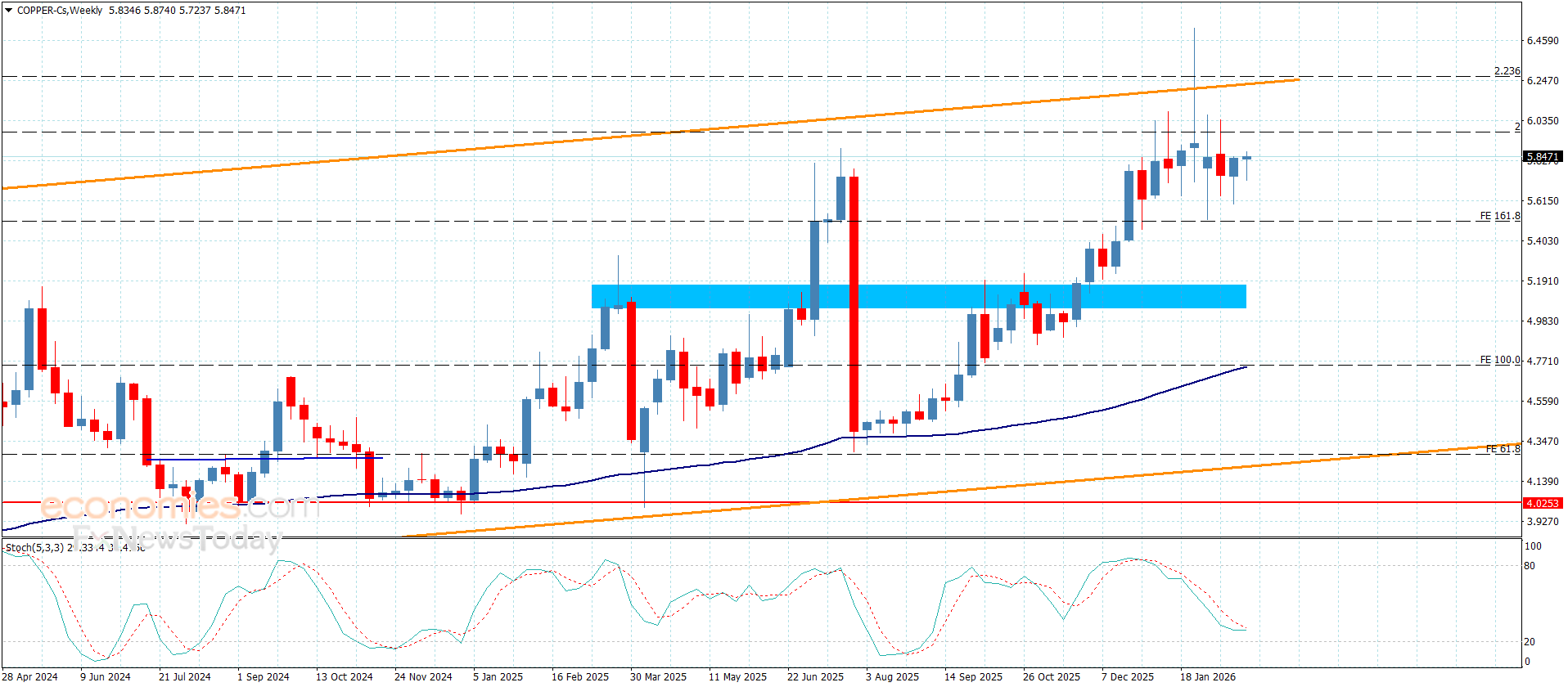
Copper price kept providing bullish trading, to move away from $5.5100 support, taking advantage of providing bullish momentum by the main indicators, to settle near $5.8500.
The price needs extra positive momentum, which allows it to settle above $5.9700 level, to confirm its readiness to record extra gains by its rally towards $6.1200 and $6.2400, while the failure to breach $5.9700 might force it to provide mixed trading with a new chance to activate the bearish corrective track in the upcoming period trading.
The expected trading range for today is between $5.7200 and $5.9700
Trend forecast: Bullish
Even if it maintains the view of global oversupply this year, Goldman Sachs has raised its oil price forecast for the fourth quarter by $6 per barrel as inventories in advanced economies remain low.
The Wall Street bank lifted its Q4 2026 price estimate by $6 to $60 per barrel Brent Crude and made the same upward revision of its WTI Crude price outlook, to $56 per barrel at year-end, on the back of lower-than-expected stocks in the OECD countries, according to a Sunday note cited by Reuters.
Early on Monday in Asian trade, the U.S. benchmark WTI Crude was trading 1% lower at $65 per barrel, and Brent Crude was down 1% at $71 a barrel amid uncertainties over the U.S. trade policies after the Supreme Court struck down President Trump’s so-called retaliatory tariffs.
Oil prices have jumped in recent weeks on the prospect of a U.S. military campaign in Iran.
The investment bank’s base-case scenario continues to assume there would be no supply disruptions related to Iran.
Goldman’s supply-demand balance for 2026 remains at a surplus of 2.3 million barrels per day (bpd), assuming no major supply disruptions and no peace reached in the Russia-Ukraine talks.
Goldman lifted its Q4 2026 Brent forecast to $60 and WTI to $56 per barrel, citing lower-than-expected OECD stock levels.
The bank still projects a 2.3 million bpd surplus in 2026, assuming no major supply disruptions.
OPEC+ may resume production increases in 2026 amid limited inventory builds and shifting market dynamics.
Lower OECD inventories, however, have prompted the bank to hike its year-end oil price forecast.
Last month, Goldman Sachs said that WTI could drop all the way to $50 per barrel towards the end of this year, amid expected excess supply that would put pressure on benchmarks.
OPEC+ could reinstate production increases in the second quarter of 2026, considering the lack of meaningful builds in OECD stocks so far this year, the bank said on Sunday.
Reports emerged earlier this month that the OPEC+ alliance is leaning toward resuming production increases from April following a pause in output hikes in the first quarter.
By Tsvetana Paraskova for Oilprice.com
– Written by
Frank Davies
STORY LINK Pound to Dollar Forecast: GBP Reclaims 1.35 as Tariff Chaos Hits USD
The Pound to Dollar exchange rate (GBP/USD) has regained the 1.3500 level as renewed US trade policy uncertainty weighs on the dollar following a Supreme Court ruling against President Trump’s tariff regime.
After initial volatility triggered by weaker US GDP data and confusion over the administration’s next steps on tariffs, the greenback has struggled to maintain momentum, allowing Sterling to recover from recent lows despite lingering UK fundamental concerns.
The dollar lost ground in US trading on Friday with initial disappointment over the latest GDP data compounded by the US Supreme Court ruling on US tariffs.
Danske Bank commented; “The knee-jerk reaction following the US Supreme Court ruling was for the unusual combination of higher rates and weaker USD. The changes were however relatively modest.”
The US currency also lost ground on Monday with the Pound to Dollar (GBP/USD) exchange rate trading just above the 1.3500 level. The first short-term resistance area is around 1.3550.
According to UoB; “While it is currently unclear whether GBP can break clearly above this level, the major resistance at 1.3605 is unlikely to come under threat. It added; “Support is at 1.3480; a breach of 1.3460 would mean that the current upward pressure has eased.”
Get better rates and lower fees on your next international money transfer.
Compare TorFX with top UK banks in seconds and see how much you could save.
ING commented; “The fact that the US did not launch a military strike on Iran this weekend is probably one factor behind the dollar selling, but trade uncertainty and what it means for the US economy is another.
Danske Bank also noted the high degree of uncertainty; “Focus at the start of the week will be on the union speech by President Trump tomorrow which will be particularly interesting given the latest trade policy developments as well as the geopolitical developments surrounding Iran.”
On Friday, the US Supreme Court ruled that the Administration’s tariffs under emergency legislation (IEEPA) were unconstitutional and the policy would have to be scrapped.
Almost immediately, President Trump announced the 10% tariff rate under Section 122 and then raised this to 15%.
There is a high degree of uncertainty whether there will be refunds to importers who have been paying the tariffs. There are also important uncertainties whether these new tariffs will apply to the bilateral trade deal such as the US-UK deal.
Any overall decline in tariff levels could underpin the global economy. OCBC currency strategist Sim Moh Siong commented; “It weakens the dollar in the sense that it potentially benefits non-U.S. growth. There will, however, be concerns that the uncertainty will trigger another dip in UK business confidence.
As far as the US economy is concerned, MUFG noted; “The reduction in the overall average effective tariff rate could be viewed as a positive for the US economy as well. However, the increased level of trade policy uncertainty, at least initially, could work to offset that and hence we view the Supreme Court ruling as being mildly dollar negative.”

The bank also discussed other potential implications; “We also need to monitor closely the Trump administration’s views on the US dollar. We have assumed that ultimately some of the key members of the Trump administration want a weaker US dollar and there is a risk that the administration lean on this more explicitly given the set-back on its reciprocal tariff regime.”
International Money Transfer? Ask our resident FX expert a money transfer question or try John’s new, free, no-obligation personal service! ,where he helps every step of the way,
ensuring you get the best exchange rates on your currency requirements.
TAGS: Pound Dollar Forecasts
Tariff uncertainty boosted demand for safe-haven assets, which was bullish for gold. However, it looks that traders want to see more positive catalysts before they will be ready to push gold prices towards new highs.
The rebound in U.S. equity markets has also put pressure on gold in today’s trading session. Yesterday, software stocks got decimated as traders worried that AI will eliminate businesses of software companies.
The huge sell-off in IBM stock, which was triggered by new features of Anthropic’s Claude, served as a positive catalyst for gold as traders rushed for safety.
Today, the rebound in the U.S. equity markets signals that investors’ appetite for risk increased, so it’s not surprising to see that gold has found itself under pressure.
The absence of news from Iran has also served as a negative catalyst for gold prices. For days, traders waited for a potential U.S. strike against Iran. However, U.S. – Iran negotiations are set to continue, so geopolitical premium declined. Traders should note that geopolitical premium may skyrocket in case U.S. strikes Iran, which remains a viable scenario.
From the technical point of view, gold pulled back towards the nearest support level, which is located in the $5100 – $5120 range. A successful test of the support at $5100 – $5120 will open the way to the test of the next support at $4880 – $4900.
Important DisclaimersFXEmpire is owned and operated by Empire Media Network LTD., Company Registration Number 514641786, registered at 7 Jabotinsky Road, Ramat Gan 5252007, Israel. The content provided on this website includes general news and publications, our personal analysis and opinions, and materials provided by third parties. This content is intended for educational and research purposes only. It does not constitute, and should not be interpreted as, a recommendation or advice to take any action, including making any investment or purchasing any product. Before making any financial decision, you should conduct your own due diligence, exercise your own discretion, and consult with competent advisors. The content on this website is not personally directed to you, and we do not take into account your individual financial situation or needs. The information contained on this website is not necessarily provided in real time, nor is it guaranteed to be accurate. Prices displayed may be provided by market makers and not by exchanges. Any trading or other financial decision you make is entirely your own responsibility, and you must not rely solely on any information provided through the website. FXEmpire does not provide any warranty regarding the accuracy, completeness, or reliability of any information contained on the website and shall bear no responsibility for any trading losses you may incur as a result of using such information. The website may include advertisements and other promotional content. FXEmpire may receive compensation from third parties in connection with such content. FXEmpire does not endorse, recommend, or assume responsibility for the use of any third-party services or websites. Empire Media Network LTD., its employees, officers, subsidiaries, and affiliates shall not be liable for any loss or damage resulting from your use of the website or reliance on the information provided herein.Risk DisclaimersThis website contains information about cryptocurrencies, contracts for difference (CFDs), and other financial instruments, as well as about brokers, exchanges, and other entities trading in such instruments. Both cryptocurrencies and CFDs are complex instruments and involve a high risk of losing money. You should carefully consider whether you understand how these instruments work and whether you can afford to take the high risk of losing your money. FX Empire encourages you to conduct your own research before making any investment decision and to avoid investing in any financial instrument unless you fully understand how it works and the risks involved.