The main category of All News Articles.
You can use the search box below to find what you need.
[wd_asp id=1]
The main category of All News Articles.
You can use the search box below to find what you need.
[wd_asp id=1]
Consumers are moving away from ‘quick fixes’ and shifting towards more holistic, long-term, preventative health strategies.
Aaron Quinn, Deputy General Manager at Vantage Nutrition, believes that in 2026, we will see continued and sustained growth in everyday supplementation and offers his predictions for the year ahead.
Consumers increasingly understand that sleep is essential to their health and well-being and are looking to supplements to help them unwind and recover.
The markets agree. According to a recent report from Future Market Insights, the sleep supplement market is growing steadily and will continue to do so into next year and beyond.
Estimated to be valued at $7.5bn in 2025, it is projected to reach $12.8bn by 2035, registering a compound annual growth rate (CAGR) of 5.4% more than the forecast period.
Anecdotal evidence from our customers also suggests that when it comes to sleep supplements, consumers are more confident and comfortable with trusted, evidence-backed formulations such as lavender, saffron and vitamin B6.
I believe that this trend for research-led supplements that promote clarity, calm, deep rest and cognitive recovery will lead the market in 2026 and beyond.
The rapid rise in prescriptions for GLP-1 medications to help treat obesity and reduce weight-related health risks is transforming the dietary patterns, appetite regulation and body composition for people around the world.
However, the significant weight loss associated with these drugs is not without its side effects, which can range from muscle loss to fatigue.
As such, I believe we will see further development – and demand – for GLP-1 companion nutrition, such as supplements that support muscle retention, fibre intake, gut health, micronutrient balance and sustained metabolic energy.
The days of ‘anti-ageing’ creams, serums and supplements are numbered.
While the desire for longevity shows no signs of slowing, the language and focus are changing from one of denial to that of awareness.
It is no longer just about living longer, but about putting healthcare regimes in place to help us achieve a better quality of life as we age.
We will see this trend toward ‘positive ageing’ continue to grow in 2026, with millennials – and increasingly younger consumers – investing in maintaining or improving their mobility, cognition, immunity and recovery.
I predict product development will follow suit. We will continue to see steady growth next year in supplement areas including joint health, bone density, cognitive performance and sustained vitality.
This expansion is being driven by increased consumer awareness of factors that impact long-term health and functional well-being.
A key example of the growing prevalence of targeted nutrition, female-focused wellness will continue to accelerate in 2026. Even though this sector is heavily promoted, it is far from saturated.
Increased awareness campaigns from Hollywood stars through to local GPs are helping to remove the taboo of talking about women’s health and supporting this growth trend across a range of categories, including hormonal balance, fertility, menopause, cognitive wellbeing and sexual wellness.
Building on the positive ageing trend mentioned above, I believe we will also see rising demand for ingestible supplements designed to improve beauty from within. This includes products that help to brighten and balance skin tone and increase elasticity.
Reflecting the broader shift in health from reactive ‘quick fixes’ toward proactive self-management, personalised nutrition is moving into the mainstream.
In 2026, I expect this trend to manifest in increasingly targeted formulations – from gender- and age-specific supplements through to personalised ‘biohacking kits.’
These customisable systems will allow consumers to tailor their own support for sleep, stress, mood, metabolic health and performance.
Hindustan Copper Ltd (NSE: HINDCOPPER, BSE: 513599) surged in Thursday’s trade (December 18, 2025), climbing about 5% and hovering just shy of its 52-week high zone. By early afternoon, the stock was trading around ₹387–₹388, while the broader metal pack also stayed positive. [1]
What made the move stand out wasn’t only the price: it was the activity. Hindustan Copper featured among the day’s most actively traded names by value, with turnover around ₹401.8 crore and volume above 1.06 crore shares in the session’s early hours—classic “crowd just showed up” behaviour. [2]
Below is a detailed news-and-analysis wrap of what’s happening as of 18.12.2025, plus the major forecasts (commodity and company-related), broker views, and the key risks market participants are watching.
Intraday data points were loud and clear: buyers were willing to chase the stock closer to its 52-week ceiling.
At the sector level, the BSE Metal index was also higher (around +0.7% at the time of reporting), which matters because metals rallies often move in packs—macro tailwinds first, stock-specific momentum second. [7]
One caution flag inside the excitement: MarketsMojo noted that delivery volume (a proxy for “I’m holding this overnight”) on Dec 17 was lower than the 5-day average, even as intraday turnover spiked—suggesting a meaningful chunk of the day’s action could be short-term trading rather than long-term accumulation. [8]
Hindustan Copper is, at heart, a copper-linked business—so the global copper tape matters even when there’s no company-specific announcement on the day.
Reuters reported copper moving toward $12,000/ton, driven by tightening supply and demand growth linked to AI data centers and power infrastructure, with analysts projecting deficits continuing into 2026. [9]
But forecasts are not unanimous in tone:
Translation: copper’s structural story (electrification + AI + grid buildout) remains compelling, but the “straight line up” narrative is contested—even among big-name research desks.
A key reason Hindustan Copper continues to get “re-rated” attention in 2025 is the capacity-expansion storyline.
Moneycontrol previously highlighted the company’s plan to increase mining capacity to 12.2 MT by FY31 (from 3.47 MT in FY25) and outlined ~₹2,000 crore in capex over 5–6 years. [12]
Separately, credit rating agency ICRA reiterated an expectation of healthy FY2026 performance and referenced ongoing capex plans (₹2,000 crore) aimed at scaling mine capacity, while also flagging the dependence on copper prices. [13]
When a commodity producer pairs a favourable tape with a credible multi-year volume ramp, markets tend to do what markets do: price the optionality early and argue about execution later.
One of the most concrete recent corporate developments is the 02.12.2025 MoU with NTPC Mining Ltd.
In its exchange intimation, Hindustan Copper said it executed an MoU to jointly participate in copper and critical minerals block auctions, develop/operationalize blocks, and explore collaboration across domestic and overseas copper/critical mineral projects. [14]
For investors, this matters less as an immediate earnings trigger and more as a signal: the company is positioning itself as a broader “critical minerals” participant, not only a legacy copper miner.
Hindustan Copper’s Chile angle has been building through 2025.
A Government of India Press Information Bureau release (June 2025) noted that a CODELCO delegation visited India, following an MoU focused on knowledge sharing in exploration, mining, beneficiation, and capacity building. [15]
On the deal-speculation/strategic front, NDTV Profit reported in October 2025 that Hindustan Copper was assessing acquisition of two Chile copper mines via a JV with CODELCO, citing sources and noting an HCL team would visit Chile for assessment. [16]
And Business Today also reported (Nov 2025) that India’s mines secretary said HCL was in discussions with CODELCO, describing the possibility of a JV framework. [17]
For the stock, offshore optionality tends to function like narrative leverage: it can amplify optimism during upcycles, but it also raises the bar for execution discipline and capital allocation.
Even “other-company” news can be a breadcrumb for HCL capex activity.
On Dec 11, 2025, The Economic Times (PTI) reported SEPC settled a dispute with Hindustan Copper (₹30.45 crore settlement) and received a supplementary work order worth ₹72.5 crore tied to an ongoing vertical shaft sinking project. [18]
This doesn’t automatically mean a meaningful earnings impact for HCL, but it does reinforce that mine-related project execution is actively progressing in the ecosystem around it.
Hindustan Copper’s most recent quarterly print helped keep sentiment buoyant going into year-end.
The Economic Times (PTI) reported that for Q2 FY26 (Sep quarter), the company posted consolidated net profit of ₹186.02 crore (up ~85% YoY), with income rising to ₹728.95 crore. [19]
The same report also noted that some smelting/refining operations at Jhagadia and Ghatsila have been suspended since 2019 due to business considerations—important context when modelling how the company participates across the copper value chain. [20]
According to Trendlyne’s aggregation of broker research, Hindustan Copper has an average share price target of ₹450, implying about 16% upside from ~₹386.85, based on 1 analyst / 1 report. [21]
A single-analyst consensus is not a “consensus” in the way Nifty50 mega-caps have one—so treat it as a reference point, not a crowd-sourced truth.
Investing.com’s daily technical read (timestamped Dec 18, 2025) showed a “Strong Buy” summary across both technical indicators and moving averages. At the same time, some oscillators flashed overbought conditions (for example, RSI(14) ~71 and StochRSI showing overbought). [22]
This combination—strong trend + overbought signals—often translates into two plausible near-term paths:
ICRA’s Oct 2025 report said the rating reaffirmation factors in an expectation of healthy financial performance in FY2026, supported by firm copper prices and improving operating performance, while also acknowledging exposure to copper-price fluctuations and execution factors. [23]
With the stock trading within striking distance of its 52-week high band, the chart conversation gets simple (and intense):
Also notable: the stock’s run-up is happening with significant intraday participation, which can exaggerate both breakouts and shakeouts. [26]
A rally this strong naturally raises the uncomfortable dinner-table question: “Is it getting expensive?”
Equitymaster pegged Hindustan Copper’s trailing P/E around 65.5 at the time of its Dec 18 market update. [27]
High multiples don’t automatically mean “overvalued” in a commodity-linked name—sometimes they reflect peak-cycle earnings skepticism, sometimes growth optionality, sometimes pure momentum. But they do mean expectations are elevated, and disappointment gets punished faster.
A non-exhaustive reality check (because markets love humility):
As of Dec 18, Hindustan Copper is behaving like a stock the market wants to own right now: strong sector tape, strong intraday demand, and price action pressing into the 52-week high ceiling. [33]
The bull case continues to lean on a powerful trio:
The bear case is equally classic:
1. www.equitymaster.com, 2. www.marketsmojo.com, 3. www.equitymaster.com, 4. www.marketsmojo.com, 5. www.tickertape.in, 6. www.marketsmojo.com, 7. www.equitymaster.com, 8. www.marketsmojo.com, 9. www.reuters.com, 10. www.reuters.com, 11. www.goldmansachs.com, 12. www.moneycontrol.com, 13. www.icra.in, 14. nsearchives.nseindia.com, 15. www.pib.gov.in, 16. www.ndtvprofit.com, 17. www.businesstoday.in, 18. m.economictimes.com, 19. m.economictimes.com, 20. m.economictimes.com, 21. trendlyne.com, 22. www.investing.com, 23. www.icra.in, 24. www.tickertape.in, 25. www.investing.com, 26. www.marketsmojo.com, 27. www.equitymaster.com, 28. www.reuters.com, 29. www.investing.com, 30. www.moneycontrol.com, 31. www.marketsmojo.com, 32. www.ndtvprofit.com, 33. www.equitymaster.com, 34. www.reuters.com, 35. www.investing.com
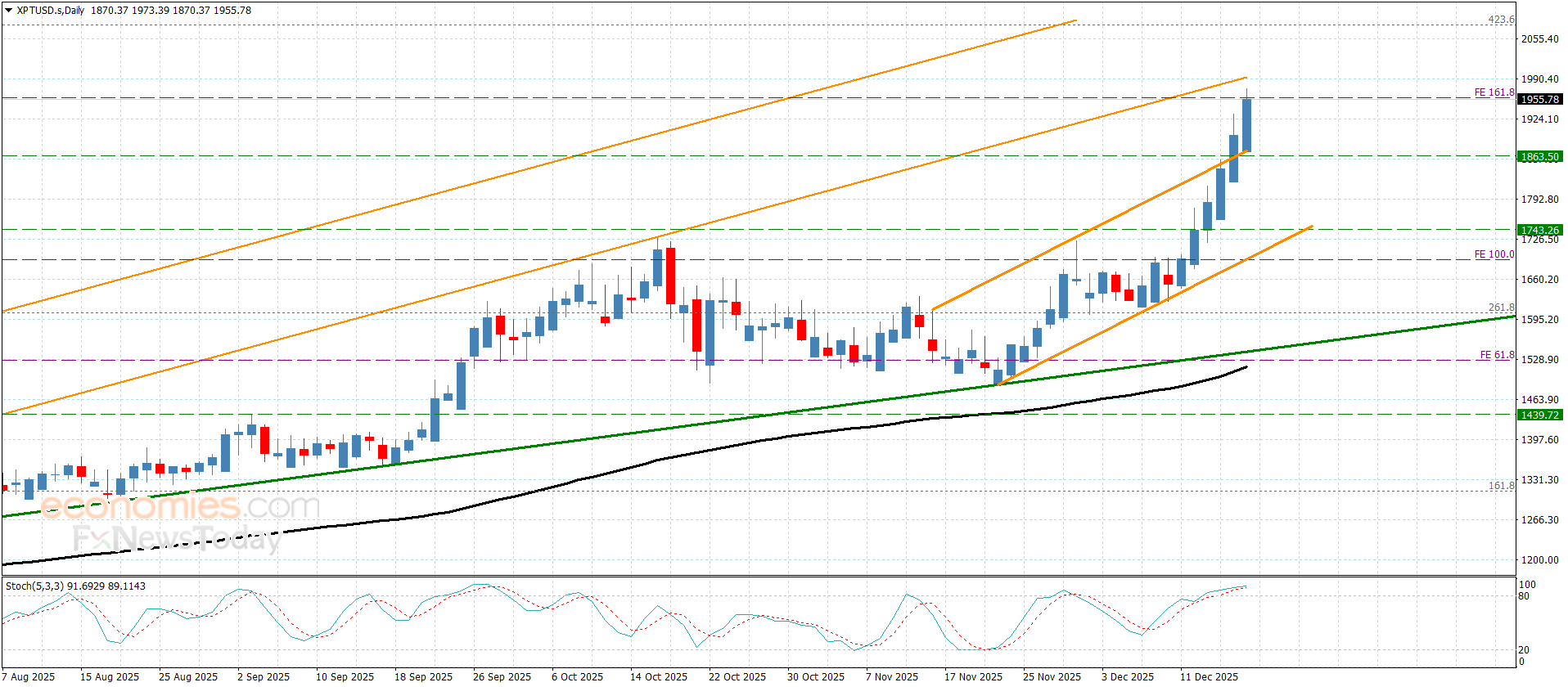
Platinum price succeeded in forming a new bullish rally this morning, achieving the previously suggested main target by reaching $1973.00, facing a %161.8 Fibonacci extension level which forms strong barrier against bullish trading.
The stability of the trading below this barrier might activate the attempts of gathering some gains, to reach $1900.00 then attempts to test the extra support at $1860.00, while breaching the barrier and holding above it will ease the mission of recording new historical gains that might extend towards 2000.00 psychological barrier.
The expected trading range for today is between $1890.00 and $1970.00
Trend forecast: Fluctuated within the bullish track
The global Vitamin D market is entering a transformative phase, driven by rising consumer awareness, evolving health priorities, and expanding applications across industries. From nutrition to pharmaceuticals and animal feed, Vitamin D continues to be a cornerstone of wellness and industrial innovation.
🌍 Market Overview
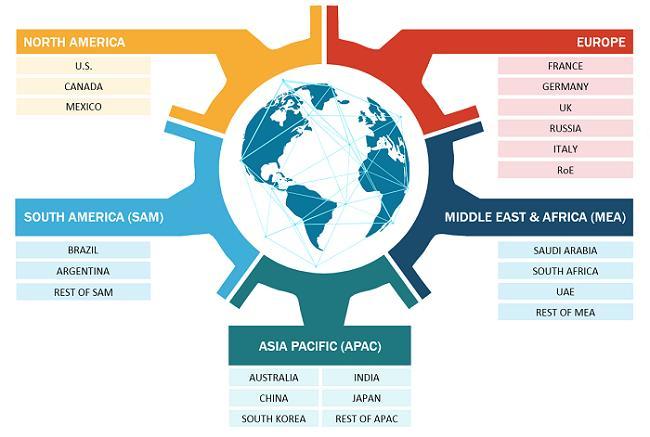
The Vitamin D market, segmented by type (Vitamin D2 and Vitamin D3), end use (food industry, pharmaceuticals industry, feed industry), and geography (North America, Europe, Asia Pacific, South and Central America), is witnessing dynamic growth. With increasing emphasis on preventive healthcare and fortified nutrition, Vitamin D has become more than just a supplement-it is now a strategic ingredient in global health and industrial ecosystems.
Get More Details with Sample PDF Copy @: https://www.theinsightpartners.com/sample/TIPRE00021914/?utm_source=OpenPR&utm_medium=10188
Vitamin D : Competitive Landscape and Key Developments:
Zhejiang Garden Biochemical High-tech
Taizhou Hisound Pharmaceutical
Kingdomway
NHU
DSM
BASF
Zhejiang Medicine
Fermenta
Divi’s Nutraceuticals
📌 Key Market Highlights (Forecast to 2031)
Market Size & Share
Expanding presence across food, pharma, and feed industries.
Growing adoption of Vitamin D3 due to its higher bioavailability.
Vitamin D2 continues to hold relevance in plant-based and vegan formulations.
Trends
Rising demand for fortified foods and beverages.
Increased focus on immunity and bone health post-pandemic.
Expansion of Vitamin D applications in animal nutrition and feed.
Technological advancements in synthetic and natural production methods.
Analysis
Food industry: Leveraging Vitamin D for functional foods and dietary supplements.
Pharmaceuticals: Strong pipeline of therapies targeting osteoporosis, rickets, and autoimmune disorders.
Feed industry: Essential for livestock health, productivity, and sustainable farming practices.
Forecast by 2031
Sustained growth across all regions, with Asia Pacific emerging as a high-potential market.
North America and Europe to remain mature markets with strong regulatory frameworks.
South and Central America showing rising adoption in both food and feed industries.
Sources:
🌐 Regional Insights
North America: A mature market with strong demand for dietary supplements and fortified foods. Regulatory support and consumer awareness drive consistent growth.
Europe: Focused on sustainability and plant-based nutrition, Vitamin D2 finds strong traction alongside D3. Pharmaceutical applications remain robust.
Asia Pacific: Rapidly growing due to urbanization, rising middle-class health awareness, and government initiatives promoting nutrition.
South and Central America: Emerging opportunities in feed and agriculture, coupled with increasing consumer demand for fortified products.
📰 Updated Market News
Pharmaceutical companies are innovating with Vitamin D therapies targeting bone health and autoimmune disorders.
Food manufacturers are launching fortified dairy, cereals, and beverages to meet consumer demand for immunity-boosting nutrition.
Feed industry players are integrating Vitamin D into livestock diets to enhance productivity and sustainability.
✨ Human-Centric Perspective
Vitamin D is no longer just a nutrient-it represents hope, resilience, and proactive health management. Consumers today are not merely buying supplements; they are investing in their long-term well-being. Farmers are not just feeding livestock; they are ensuring sustainable food systems. Pharmaceutical innovators are not just creating drugs; they are shaping healthier futures.
This human connection underscores why Vitamin D is central to the evolving narrative of global health and industry.
Contact Us:
If you have any queries about this report or if you would like further information, please
Contact Person: Ankit Mathur
Sr. Vice President – Research
Phone: +1-646-491-9876
About Us:
The Insight Partners is a one stop industry research provider of actionable intelligence. We help our clients in getting solutions to their research requirements through our syndicated and consulting research services. We specialize in industries such as Semiconductor and Electronics, Aerospace and Defense, Automotive and Transportation, Biotechnology, Healthcare IT, Manufacturing and Construction, Medical Device, Technology, Media and Telecommunications, Chemicals and Materials.
This release was published on openPR.
Dogecoin (DOGE) trades in the red on Thursday, following a 4% decline on the previous day. The DOGE supply in profit declines as large wallet investors trim their portfolios. Derivatives data shows a surge in bearish positions amid declining retail interest. The technical outlook for Dogecoin indicates bearish bias as DOGE breaks below April’s low, targeting $0.1000.
Cardano (ADA) price trades in the red, slipping below $0.37 on Thursday after correcting more than 7% so far this week. The ongoing pullback could deepen further as ADA’s social dominance declines and dormant wallet activity rises, suggesting bearish sentiment among traders. On the technical side, deteriorating momentum indicators suggest further downside.

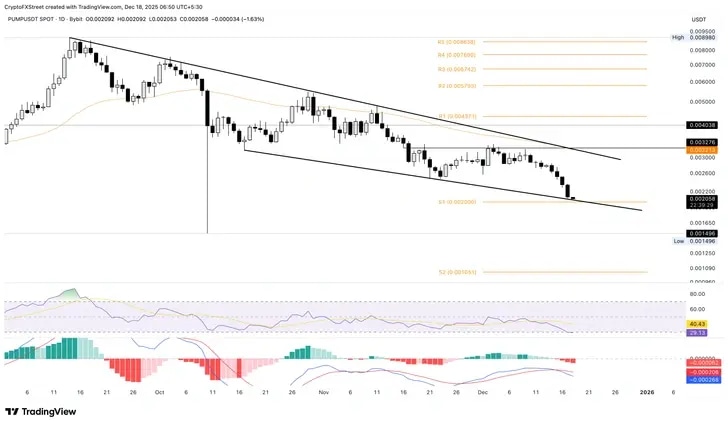
Pump.fun edges lower by nearly 2% at press time on Thursday, extending the 10% decline from the previous day. The meme coin launchpad token approaches the support trendline connecting the November 17 and 21 lows, part of a falling wedge pattern. If PUMP marks a decisive close below the S1 Pivot Point at $0.002000, it would confirm the bearish breakout. The declining trend in PUMP could find support at the October 10 low at $0.001496 or the S2 Pivot Point at $0.001051.
Platinum price succeeded in forming a new bullish rally this morning, achieving the previously suggested main target by reaching $1973.00, facing a %161.8 Fibonacci extension level which forms strong barrier against bullish trading.
The stability of the trading below this barrier might activate the attempts of gathering some gains, to reach $1900.00 then attempts to test the extra support at $1860.00, while breaching the barrier and holding above it will ease the mission of recording new historical gains that might extend towards 2000.00 psychological barrier.
The expected trading range for today is between $1890.00 and $1970.00
Trend forecast: Fluctuated within the bullish track
Platinum price succeeded in forming a new bullish rally this morning, achieving the previously suggested main target by reaching $1973.00, facing a %161.8 Fibonacci extension level which forms strong barrier against bullish trading.
The stability of the trading below this barrier might activate the attempts of gathering some gains, to reach $1900.00 then attempts to test the extra support at $1860.00, while breaching the barrier and holding above it will ease the mission of recording new historical gains that might extend towards 2000.00 psychological barrier.
The expected trading range for today is between $1890.00 and $1970.00
Trend forecast: Fluctuated within the bullish track
The Bird and Blend matcha maker (Image: Hanna )
Flavoured matcha lattes are everywhere at the moment – from plain vanilla to blueberry, gingersnap and even banana bread, the possibilities are endless. Matcha, the bright green powder made from shade-grown green tea leaves, is said to have health benefits. It’s rich in antioxidants, which have anti-inflammatory properties, and studies have shown that it may help lower blood pressure and cholesterol levels.
While the flavoured versions might not be as virtuous as the plain, non-sweetened options, I’m hooked. But at a cost of around £4 per cup from a coffee shop, my favourite afternoon treat is becoming a pricey habit.
So, I was thrilled when I got the chance to try Bird & Blend Tea Co’s Matcha Latte Magic Whisk. Retailing at £99, it claims to be the world’s first machine “designed for perfect hot or iced matcha lattes at home”. Bird & Blend also sent me its Magical Matcha Selection Box with 12 flavours including peaches and cream, birthday cake, buttermint and lemon matcha.
The short answer is no. Many people make matcha lattes at home, and there are various methods for doing so. Unlike instant coffee or chocolate powder, matcha doesn’t dissolve, and aficionados say that it needs to be rapidly aerated to achieve the velvety, smooth texture we’ve come to expect from our drinks.
Some swear by a traditional bamboo whisk – a chasen – which can be bought widely for under £10. These have finer, flexible prongs than kitchen whisks. Another option is a hand-held electric milk frother. While a standard one will do, some report that they are prone to producing bigger bubbles and can struggle to tackle lumps. Aerolatte makes a £19 model specifically designed for matcha. The brand says this goes at the optimum speed, and has a nylon whisk head for making silky, frothy matcha lattes.
All of these options are more faff and messier than a one-and-done machine, but are also considerably cheaper. I was intrigued to see whether the Bird & Blend machine would be worth the considerable spend.

First the milk goes into the Magic Whisk (Image: Hanna Geissler)
The Magic Whisk comes in two styles – Bamboo Gloss, the one I tried (pictured), or a brushed stainless steel. The large black ‘power’ button doesn’t do much for aesthetics, but it looks fine on the counter top or can be stashed away in a cupboard.
I found the blending process surprisingly simple. For a hot drink, you add 250ml of milk and press the button to set the whisk attachment spinning.
After a couple of seconds, sprinkle half a teaspoon of your chosen matcha powder over the milk. You then put the lid on and wait around two minutes for the whisk to stop, before pouring the frothy latte into a mug.
To make an iced latte, use 125ml of milk, follow the same steps and pour the mixture into a glass filled with ice before topping up with 125ml cold milk.

Then the matcha powder goes in (Image: Hanna Geissler)
Taking less than three minutes from preparation to steaming cup, the matcha maker delivered a perfectly smooth, slightly frothy cup every time with not a clump in sight.
The lattes were not as sweet as my usual coffee shop selection, but this was easily remedied by adding a few drops of syrup to the spinning milk.
You have to be a little careful when washing out the whisk to ensure the base does not get wet, but this was easy enough.

My finished smooth and lump-free creation (Image: Hanna Geissler)
I was impressed by the results, but the machine is undoubtedly an investment. To weigh up the value, I looked at my own matcha habit.
Refill packs of matcha cost around £22 for 30 cups. If you set aside the initial £99 cost for the machine, then this works out at around 73p per cup.
Buying an average of two matcha lattes per week at a coffee shop would set me back around £416 per year, compared to roughly £75.92 per year with the Magic Whisk. According to my matcha maths, that means I could save around £340 annually by making all my lattes at home.
If you’re a fairly frequent matcha drinker, this could definitely work out as the cheaper option. Having tried it, I’m confident that I would use it often enough to recoup the money back. I do think it would make a great gift for any matcha latte lovers.
Shoppers mostly seem to agree. One review describes the machine as an “absolute game-changer”. That user adds: “This is the best kitchen gadget I’ve bought in years.”
Another describes the drinks as “super creamy and delicious”, adding: “Very easy to clean after use. I bought the matcha selection box and working my way through the different flavours, I’ve loved them all so far.”
However, one user complains that you have to wait for the matcha to cool down if making an iced latte. They add: “If it was half the price I’d be fine with it but struggling to see why it’s £99.”
Cardano price is testing the crucial $0.38 support zone as bearish technical signals raise the risk of a deeper pullback towards $0.29, keeping participants cautious on near-term direction.
Cardano price is trading near a technically sensitive zone as price action consolidates around the $0.38 level, a threshold analysts consider critical for near-term stability. While ADA has avoided an aggressive breakdown so far, multiple technical signals suggest downside risk remains if buyers fail to defend current levels.
Despite modest intraday strength, the broader structure continues to reflect weakness, keeping participants cautious as Cardano searches for directional clarity.
As of December 17, 2025, Cardano price was trading around $0.38, posting minor gains on the day but remaining under pressure on higher timeframes. Price action has slipped below previous consolidation ranges, leaving Cardano price vulnerable to further downside if demand fails to step in.
Cardano trades near $0.38 as price tests a key short-term demand area. Source: Brave New Coin
From a technical perspective, the $0.38–$0.36 region stands out as the nearest support band where buyers have historically attempted to slow declines. A clean hold above this zone could allow for short-term stabilization, while a decisive breakdown would weaken the structure further.
Technical analyst Ali Martinez recently highlighted a bearish development on Cardano’s higher timeframe chart, noting that the SuperTrend indicator has flipped bearish. Historically, similar signal shifts on ADA have coincided with extended corrective phases rather than brief pullbacks.

Previous SuperTrend reversals on ADA coincided with major corrective phases. Source: Ali Martinez via X
Ali pointed out that the last comparable SuperTrend reversal preceded a sharp decline, reinforcing the importance of current support levels. While historical comparisons do not guarantee identical outcomes, the signal adds weight to the broader bearish bias unless structure improves.
Adding to downside concerns, Cardano price has recently broken down from a long-standing price channel on the daily timeframe. In another chart from Ali Martinez, the analyst points out that this structural failure places the $0.29 level into focus as the next major area of interest.

A confirmed channel breakdown places $0.29 as a key downside reference. Source: Ali Martinez via X
This level aligns with prior accumulation zones and historically strong demand, suggesting it could act as a reaction point if selling pressure accelerates. However, a move towards $0.29 would represent a continuation of the current downtrend rather than a confirmed bottom.
While price structure remains fragile, Cardano’s on-chain metrics paint a more mixed picture. Recent data indicates that Cardano DEX volumes have increased 2–3x on average following recent ecosystem developments tied to the NIGHT protocol.

Cardano DEX activity shows elevated volumes despite price consolidation. Source: melon via X
Rising decentralized exchange activity suggests growing network usage, even as price struggles to regain momentum. Melon notes that increased on-chain activity does not always translate into immediate price appreciation, particularly during broader market corrections.
Adding to the mixed outlook, Cardano price continues to see strong adoption in key markets. Recent data indicates that ADA ranks among the top 10 most held cryptocurrencies in India, overtaking assets such as Solana (SOL) and Polygon (POL) in investor ownership.

ADA ranks among the top 10 most held cryptocurrencies in India. Source: MinswapIntern via X
While adoption metrics support Cardano’s long-term relevance, short-term price action remains driven primarily by technical structure and overall market sentiment.
Cardano remains significantly below its 2021 all-time high of $3.09, reflecting a prolonged corrective phase shared by many large-cap altcoins. Short-term traders remain focused on defending the $0.38 region, while longer-term investors view deeper pullbacks as potential structural retests rather than a breakdown of fundamentals. Market sentiment around ADA remains mixed, with price direction likely influenced by broader crypto market conditions, particularly Bitcoin’s trend.
Cardano price is at a pivotal point. The $0.38 support level serves as a key reference for short-term stability, while a confirmed breakdown could expose ADA to a move towards $0.29. Technical indicators lean cautiously, though on-chain activity and adoption trends provide partial balance to the bearish narrative.
For now, ADA’s outlook remains conditional. Holding current support could allow consolidation, while further weakness would reinforce the broader downtrend. Monitoring structural levels and broader market cues remains essential for assessing Cardano’s next move.
Silver continues to trade near all-time highs, showing resilience even as other precious metals experience rotational pullbacks. Unlike gold, which is predominantly driven by monetary policy expectations and geopolitical hedging, silver benefits from a dual demand profile—acting both as a precious metal and a critical industrial input.
This unique positioning allows silver to sustain momentum during periods when gold consolidates. Current price behavior reflects acceptance at elevated levels, not rejection. Rather than sharply selling off from the highs, silver has transitioned into controlled consolidation, a hallmark of strong trending markets.
From a broader macro perspective, silver’s strength remains supported by:
As a result, silver has been able to hold premium pricing, keeping it near record levels while gold digests earlier gains.
Silver’s outperformance relative to gold is structural, not coincidental.
Silver plays a crucial role in:
This means silver demand persists even during periods of macro stabilization. Gold, by contrast, relies more heavily on fear-based or policy-driven flows.
Silver supply growth remains structurally constrained, with mine output struggling to keep pace with demand. Gold markets are deeper and more liquid, making silver more responsive to demand shocks and allowing trends to persist longer once momentum builds.
While both metals respond to inflation expectations, silver tends to outperform when growth and inflation risks coexist. Gold typically leads during crisis hedging phases; silver leads during inflationary expansion phases, which better describes the current environment.

Previous expectations for silver emphasized continuation rather than reversal, with pullbacks expected to remain corrective as long as structure held.

That view has been validated:
This confirms that recent price action reflects acceptance at higher value, not speculative excess.

From a technical standpoint, silver continues to validate bullish structure.
After the most recent impulsive rally, XAG/USD retraced into a clearly defined 4-hour Fair Value Gap (FVG) and reacted precisely as expected. Buyers stepped in aggressively, rejecting lower prices and pushing the market back into balance above the FVG.
This reaction confirms that:
Following the bounce, silver entered a tight consolidation just below recent highs. Rather than breaking down, price is coiling—suggesting liquidity absorption and position building, not exit.
As long as silver continues to hold above the 4-hour FVG, the probability favors directional expansion, not deeper rotation.

The bullish scenario remains favored if silver:
In this scenario:
This outcome aligns with:
A clean upside resolution would reinforce silver’s role as the higher-beta expression of precious metals strength.

The bearish scenario only develops if silver fails to hold the 4-hour FVG and price begins accepting below it.
If that occurs:
Importantly, this would still be viewed as rebalancing, not reversal, unless daily structure breaks decisively. As long as silver remains above major breakout levels on the daily chart, downside moves remain corrective in nature.
|
Factor |
Silver |
Gold |
|---|---|---|
|
Industrial Demand |
High |
Minimal |
|
Inflation Sensitivity |
High |
Moderate |
|
Supply Constraints |
Tight |
More Flexible |
|
Volatility |
Higher |
Lower |
|
Trend Acceleration |
Faster |
Slower |
This structural advantage explains why silver continues to hold near all-time highs while gold consolidates.
Silver’s strength is not accidental. It is driven by structural demand, constrained supply, and favorable macro conditions.
The clean reaction from the 4-hour FVG and ongoing consolidation near highs suggest the market is preparing for its next expansion, not rolling over. As long as price holds above key value zones, the broader bullish narrative remains intact.
Silver continues to lead—not lag—the precious metals complex.