The main category of All News Articles.
You can use the search box below to find what you need.
[wd_asp id=1]
The main category of All News Articles.
You can use the search box below to find what you need.
[wd_asp id=1]
The British pound has been all over the place during the session on Wednesday, which is not a surprise considering that we have the Bank of England interest rate decision coming out on Thursday. With that being the case, I think it’s very difficult to get overly aggressive here. But I also recognize that market participants will continue to perhaps extract a little bit of momentum from the idea that although there’s probably going to be a rate cut coming out of London, it will be the statement and the press conference that will drive everything.

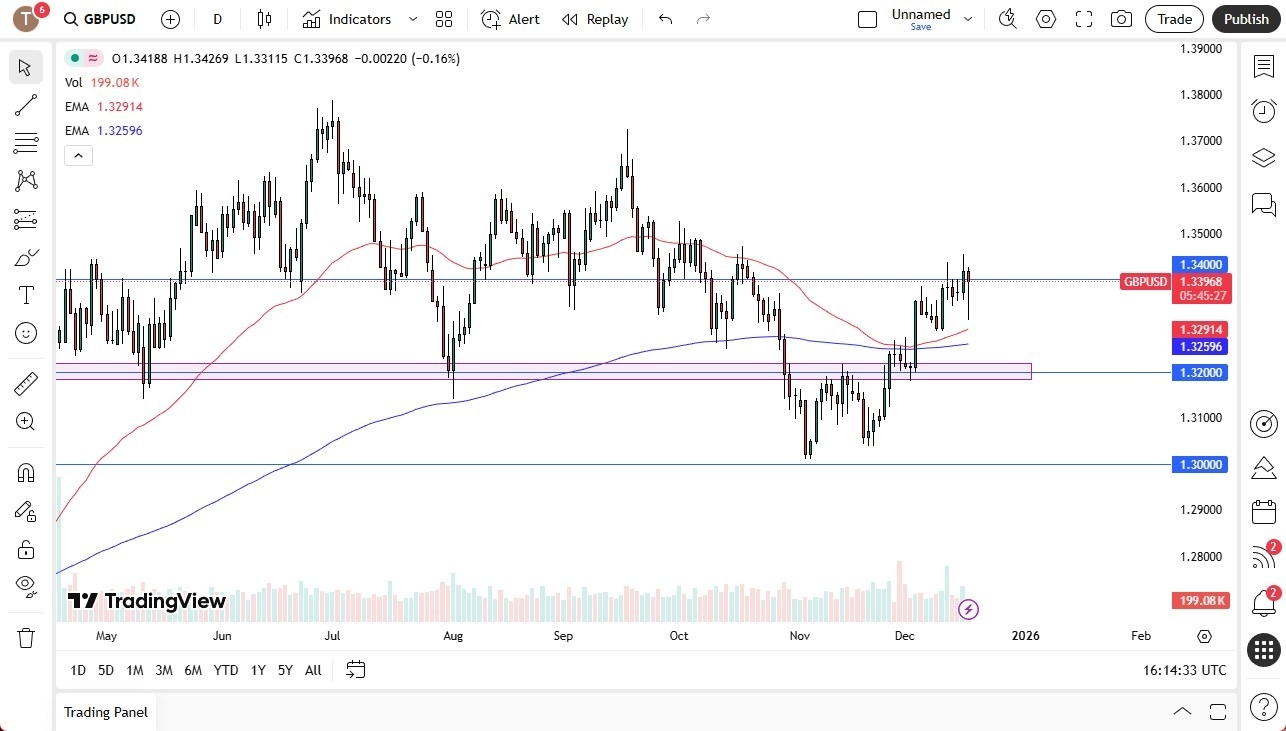
After all, people will want to know the forward guidance. It was interesting because the British pound sold pretty early during the day, but as soon as the Americans came on board, they started buying it back up, shorting the US dollar. This has been the pattern for a while, where the US dollar loses strength once the Americans start trading it. Europeans seem to want it, and at this point, I think there isn’t too much to read from this chart.
Going into the central bank decision, other than people are nervous. The 1.34 level has been like a significant magnet for price. And if we can break above the 1.35 level, then I think we clear resistance and start going much higher. If we turn around and fall from here, then we go looking at the 200-day EMA.
All things being equal, I do think that the British pound probably performs better than many other currencies against the dollar, be it up or down. While England does have an interest rate cut in its short-term future, the reality is that inflation has been a little sticky, so we’ll have to wait and see how that plays out. But this may be very much like about a year and a half ago, when, while the US dollar strengthened and the British pound fell, it didn’t fall as much as other currencies.
And then when the US dollar started weakening, the British pound was a huge winner. With all that being said, I think we see more of that. I think the US dollar will determine where we go next, not necessarily the British pound, but the British pound will outperform others. And therefore, I watch this chart quite closely.
Ready to trade our daily GBP/USD Forex forecast? Here’s some of the best forex broker UK reviews to check out.
As the global food and dietary supplements industry grows, companies are navigating both increased demand and greater regulatory scrutiny. For importers, one of the biggest challenges lies at U.S. entry points, where delays can hold up shipments for days or even weeks—disrupting manufacturing schedules, straining distribution timelines, and creating uncertainty for customers.
To address these issues, the Food and Drug Administration (FDA) established the Voluntary Qualified Importer Program (VQIP). VQIP, created under the Food Safety Modernization Act, provides a more efficient and predictable process for companies with strong food safety systems and compliance records. In practice, this means faster entry of approved food and dietary supplement imports, fewer border delays, and increased confidence in meeting production and distribution targets. Participation in VQIP intends to provide nutrition businesses with efficiency, dependability, and a clear competitive advantage when bringing products to market.
When FSMA was signed into law in 2011, it marked the most sweeping reform of U.S. food safety laws in more than 70 years. Before FSMA, FDA was largely reactive—responding to contamination events, recalls, or outbreaks once they were already underway. FSMA transformed that model and focused the agency’s efforts on prevention of food safety issues.
Today, a single nutrition bar could contain protein from Europe, vitamins from Asia, and flavors developed in South America, all assembled and packaged in North America. These interconnected supply chains provide tremendous opportunities for innovation while also adding layers of complexity and risk. FSMA was enacted to reflect this reality, giving FDA new tools to monitor imported foods and hold corporations accountable for assuring safety across the supply chain.
Key provisions of FSMA included:
In this same act, FSMA added a new section, 806, VQIP, which allowed FDA to streamline imports for companies that consistently meet the highest safety standards. Section 806(a)(2) of this Act required FDA to issue a guidance document related to participating in VQIP, much of which is described in this article.
Absent VQIP, FDA faced a bottleneck: every shipment had to be treated equally, whether from a well-established, compliant importer or a new operation. VQIP developed a more efficient approach. By identifying “trusted” importers, FDA could focus its resources where they were most needed, while allowing low-risk shipments to move quickly. Importers with strong systems and clean compliance histories can move through the process more quickly, while shipments that require closer scrutiny receive the attention they deserve.
Benefits of Participation: VQIP offers a suite of benefits that directly address common pain points in food and supplement imports.
Shipments move quickly through FDA’s PREDICT system, which reduces bottlenecks at borders.
PREDICT (Predictive Risk-Based Evaluation for Dynamic Import Compliance Targeting) uses advanced analytics to score shipments based on risk. For VQIP-approved foods, FDA configures PREDICT to recognize these shipments and, in most cases, immediately release them without further examination or sampling.
Reliable clearance timelines support better planning for production schedules, product launches, and promotional campaigns.
Improved Supply Chain Efficiency
Fewer delays mean reduced warehousing costs, smoother distribution, and stronger retail relationships.
Priority Laboratory Testing
If FDA sampling is required, VQIP entries receive priority testing in FDA labs, which shortens wait times and accelerates release decisions.
Participants gain access to a dedicated FDA VQIP Importers Help Desk and CBP assistance. The Help Desk supports completion of applications, answers questions, and facilitates review of shipments that don’t receive immediate release.
FDA maintains a publicly available list of approved VQIP importers on its website, enhancing importer visibility and credibility. (Importers may opt out without affecting participation.)
Certification requirements, supplier oversight, and FDA audits ensure high safety standards across the supply chain, supporting consumer confidence.
For food and dietary supplement companies, these advantages translate into more efficient ingredient sourcing, fewer disruptions in manufacturing pipelines, and faster access to the U.S. market. However, there are certain conditions and limitations. Even under VQIP, FDA has the authority to conduct examinations or sampling “for cause” (e.g., suspected health risks), risk-based microbiological sampling, or auditing. Furthermore, expedited treatment is only applicable to foods listed in an approved VQIP application; non-covered imports are not eligible. Finally, if the importer fails to meet the eligibility requirements, FDA reserves the right to suspend any or all of the benefits.
Quality Assurance Program
As FDA guidance highlights, the Quality Assurance Program (QAP) is a key component of VQIP. This document demonstrates that an importer has implemented measures to maintain food safety and security across the supply chain. A strong QAP typically includes:
FDA evaluates each QAP for adequacy and may inspect facilities to ensure its implementation in practice.
Who Can Participate: The VQIP is a voluntary, fee-based program. Participation is limited to companies that can demonstrate compliance with U.S. food safety regulations and strong supplier oversight.
Key eligibility requirements include:
At least three years of experience importing food or dietary supplements into the U.S.
No significant violations, such as import alerts, detentions, debarments, or major recalls.
A valid Dun & Bradstreet (DUNS) number for each applicant location and related entity.
Paperless Brokers and Filers
Use of filers or brokers that have acceptable evaluations from FDA.
Foreign Supplier Certification
Suppliers’ facilities must be certified by FDA-accredited third-party certification bodies, ensuring they meet U.S. standards.
Quality Assurance Program (QAP)
A comprehensive written plan describing the importer’s policies for food safety, food defense, organizational responsibilities, employee qualifications, and record keeping.
Applications are submitted online through the FDA Industry Systems portal between January 1 and September 1 each year. FDA may conduct a VQIP inspection to verify eligibility and may request product labels to evaluate for any labeling gaps or deficiencies.
VQIP is a continuous approval process. Importers are required to update their applications anytime something changes, including:
If issues arise, such as supplier violations, noncompliance, or inaccurate information, FDA reserves the right to revoke participation. In many cases, companies can correct deficiencies and regain eligibility. Serious violations, such as fraud, may result in immediate revocation and no reinstatement for the remainder of the fiscal year.
User fees
Each year, FDA sets the user fee for VQIP participation. The user fee for Fiscal Year (FY) 2026 is $9,620andmust be paid by October 1 to secure participation in the following fiscal year, as set in the Federal Register, 90 Fed. Reg. 35863.
The fee supports program administration, application review, inspections, and IT systems. While the cost may be significant, especially for smaller companies, many importers view it as an investment in efficiency.
When compared to the costs associated with delayed shipments (such as demurrage fees, warehousing costs, lost sales, or broken retailer commitments), the potential savings can outweigh the annual fee. For large-volume importers, the financial case for participation can be especially compelling.
Conclusion
VQIP provides a pathway to faster, more predictable imports while reinforcing a commitment to high compliance standards. This alignment is particularly valuable in a market where consumers increasingly expect transparency and accountability. A company’s inclusion on FDA’s public list of approved VQIP importers can serve as a visible sign of commitment to both safety and efficiency.
December 18, 2025 — Ethereum’s dollar price (ETH-USD) is trading around $2,941, roughly flat on the session after a notably volatile day that saw ETH swing between an intraday low near $2,793 and a high around $3,024.
That “whipsaw range” tells you almost everything you need to know about the current Ethereum setup: buyers are still defending the psychologically important $2,800 area, but upside momentum keeps running into supply near $3,000+, especially while U.S. spot Ethereum ETF flows remain negative and crypto regulation headlines keep landing like anvils on risk sentiment. [1]
What follows is a roundup of the key Ethereum price news, forecasts, and market analyses published on December 18, 2025, plus a scenario-based ETH-USD forecast built from today’s most-cited support/resistance levels and the day’s major catalysts.
As of the latest market print on Dec. 18, 2025, ETH-USD is near $2,941 with:
The broader context: multiple market updates today framed Ethereum as stuck below $3,000, with analysts describing ETH as stabilizing only because buyers keep stepping in around the high-$2,700s to low-$2,800s. [2]
A central theme in today’s reports is that U.S. spot Ethereum ETFs extended a streak of outflows, even as Bitcoin’s ETF complex showed a burst of inflows.
This matters for ETH-USD forecasting because ETF flows are one of the few “institutional tape” signals that can overpower short-term chart patterns. When ETH ETFs are consistently bleeding while BTC ETFs are gathering inflows, it often expresses itself as relative weakness in ETH vs. BTC and repeated failures to sustain breaks above major round-number resistance (like $3,000). [5]
Another recurring driver today was Washington risk. An Economic Times market report (dated Dec. 18) tied a broader crypto pullback to the U.S. Senate deferring key crypto legislation until 2026, arguing this extended regulatory uncertainty into the new year. [6]
Even if you don’t treat one headline as destiny, the mechanism is straightforward: in thin year-end liquidity, “rules uncertainty” tends to widen spreads, amplify liquidations, and increase the odds that rallies get sold quickly.
Today’s market read was less “crypto is dead” and more “crypto is rotating.” Several updates described a tape where Bitcoin holds steadier (helped by ETF inflows) while Ethereum and other major alts struggle to regain their footing.
FXStreet explicitly framed the day as Bitcoin attempting to hold above $87,000 while Ethereum “defends support around $2,800” but remains pressured by ETF outflows. [7]
One widely circulated analysis today focused on upcoming Ethereum scaling work. FX Leaders reported that developers are preparing to raise Ethereum’s gas limit from 60 million to 80 million, a change that could increase throughput and potentially reduce fees—though it also highlighted weakening on-chain engagement and the drag from ETF outflows in the near term. [8]
Whether you’re a fundamentals purist or a chart maximalist, this type of “capacity expansion” story matters because it feeds the long-running ETH valuation debate: is Ethereum’s base layer becoming a more efficient settlement engine, or are users continuing to migrate activity to Layer-2 networks in a way that suppresses fee-driven narratives?
A second Ethereum-specific headline theme today: complexity is a risk factor.
A Cointelegraph-sourced report circulated on Dec. 18 quoted Vitalik Buterin arguing that a key (often overlooked) aspect of trustlessness is increasing the number of people who can understand the protocol end-to-end, and that Ethereum should “get better at this” by making the protocol simpler—even if that sometimes means fewer features. [9]
This aligns with Buterin’s broader 2025 writing on simplifying Layer 1 design (including discussions of making Ethereum more “Bitcoin-simple” over a multi‑year horizon). [10]
From a price/forecast perspective, this “simplification” discourse is not a same-day catalyst like an ETF flow print—but it does influence the longer-term institutional story: protocol robustness, auditability, and decentralization are increasingly part of what big allocators claim to care about when they decide whether ETH is a core holding or a trading vehicle.
Forecasting crypto is like forecasting a cat’s next decision: it will do something, and it will be emotionally confident about it. So instead of pretending there’s one “correct” ETH-USD forecast, today’s professional-style coverage mostly converged on scenarios driven by support/resistance and flow trends.
Support
Resistance
If ETF flows remain negative and macro/regulatory headlines keep risk appetite constrained, the most likely near-term behavior is a choppy range:
This is essentially what much of today’s “ETH holds steady but can’t recover” framing points to.
Some shorter-term “price prediction” coverage today leaned rebound-ish, arguing that oversold conditions could fuel a recovery leg.
For this bullish scenario to look credible on the chart, today’s coverage implies ETH would need to:
If the $2,800 floor fails decisively, multiple analyses point to “air pockets” below:
A practical takeaway: $2,800 is not just a number today—it’s the narrative anchor. Lose it, and the forecast shifts from “range and rebound attempts” to “find the next durable bid.”
A lot of “ETH price prediction” content comes from algorithmic models. They’re useful as sentiment signals (what the crowd is being told), but they are not consensus truth.
For example:
These projections can be directionally interesting, but they often diverge wildly from one another over longer horizons. The higher-quality way to use them in a news-style forecast is simple: compare them to the hard levels ($2,800 / $3,000) and to real flow data (ETF inflows/outflows). [25]
On December 18, 2025, ETH-USD is hovering around $2,940 after a volatile session that reinforced the current regime: $2,800 is the battlefield, $3,000 is the ceiling, and ETF flows are the gravity. [30]
The near-term forecast is best expressed in scenarios:
If you invest in Ethereum.. HOLD ON!! ETH to skyrocket 🚀📈
1. www.fxstreet.com, 2. www.fxstreet.com, 3. www.fxstreet.com, 4. farside.co.uk, 5. www.fxstreet.com, 6. m.economictimes.com, 7. www.fxstreet.com, 8. www.fxleaders.com, 9. openexo.com, 10. vitalik.eth.limo, 11. www.fxstreet.com, 12. bravenewcoin.com, 13. www.fxleaders.com, 14. www.fxstreet.com, 15. www.fxleaders.com, 16. www.fxstreet.com, 17. www.fxstreet.com, 18. blockchain.news, 19. www.investing.com, 20. www.fxstreet.com, 21. www.fxleaders.com, 22. bravenewcoin.com, 23. changelly.com, 24. coincodex.com, 25. farside.co.uk, 26. farside.co.uk, 27. www.fxstreet.com, 28. m.economictimes.com, 29. www.fxleaders.com, 30. www.fxstreet.com, 31. blockchain.news, 32. www.fxleaders.com
Important DisclaimersFXEmpire is owned and operated by Empire Media Network LTD., Company Registration Number 514641786, registered at 7 Jabotinsky Road, Ramat Gan 5252007, Israel. The content provided on this website includes general news and publications, our personal analysis and opinions, and materials provided by third parties. This content is intended for educational and research purposes only. It does not constitute, and should not be interpreted as, a recommendation or advice to take any action, including making any investment or purchasing any product. Before making any financial decision, you should conduct your own due diligence, exercise your own discretion, and consult with competent advisors. The content on this website is not personally directed to you, and we do not take into account your individual financial situation or needs. The information contained on this website is not necessarily provided in real time, nor is it guaranteed to be accurate. Prices displayed may be provided by market makers and not by exchanges. Any trading or other financial decision you make is entirely your own responsibility, and you must not rely solely on any information provided through the website. FXEmpire does not provide any warranty regarding the accuracy, completeness, or reliability of any information contained on the website and shall bear no responsibility for any trading losses you may incur as a result of using such information. The website may include advertisements and other promotional content. FXEmpire may receive compensation from third parties in connection with such content. FXEmpire does not endorse, recommend, or assume responsibility for the use of any third-party services or websites. Empire Media Network LTD., its employees, officers, subsidiaries, and affiliates shall not be liable for any loss or damage resulting from your use of the website or reliance on the information provided herein.Risk DisclaimersThis website contains information about cryptocurrencies, contracts for difference (CFDs), and other financial instruments, as well as about brokers, exchanges, and other entities trading in such instruments. Both cryptocurrencies and CFDs are complex instruments and involve a high risk of losing money. You should carefully consider whether you understand how these instruments work and whether you can afford to take the high risk of losing your money. FX Empire encourages you to conduct your own research before making any investment decision and to avoid investing in any financial instrument unless you fully understand how it works and the risks involved.
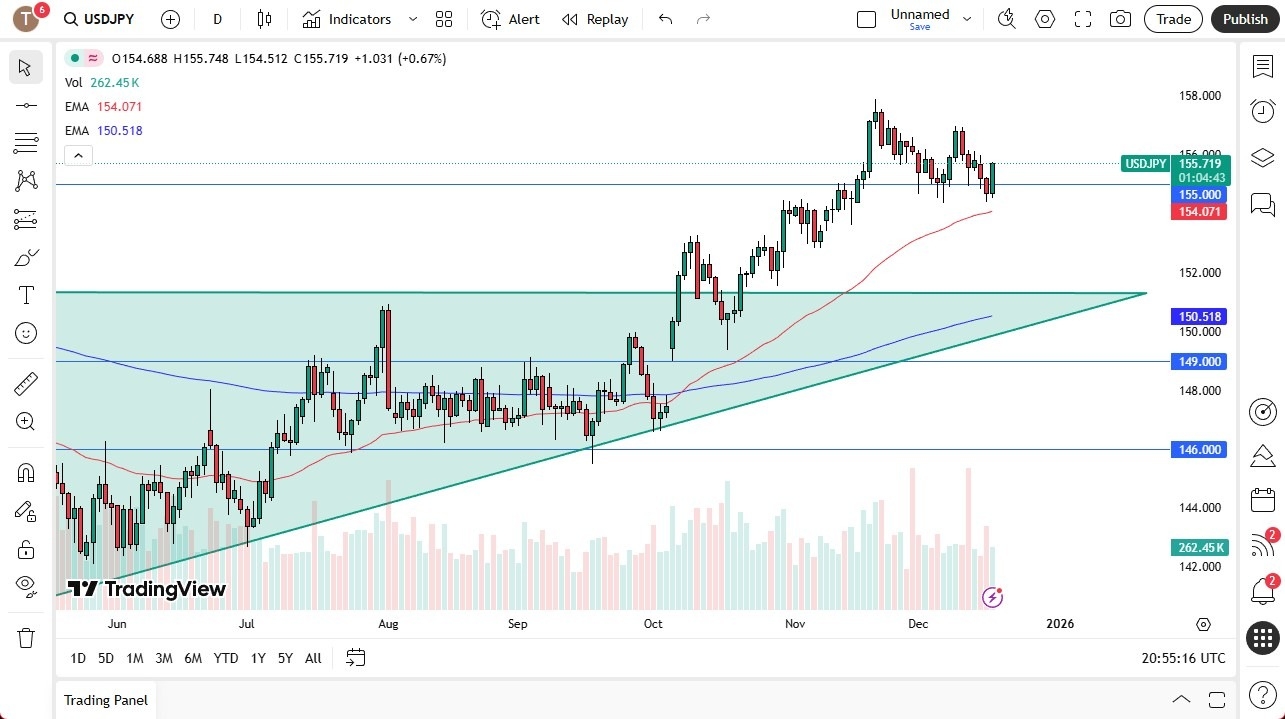
The US dollar has risen quite nicely against the Japanese yen during trading here on Wednesday as we continue to see the area just below the 155 yen level offer a bit of a floor. Furthermore, the 50-day EMA sits underneath there as well, offering support. So, really, at this point in time, I think you have a buy on the dip situation. If the market can rally from here, the 157 yen level is an area that I’ll be watching, but let’s also keep in the back of our mind that we have the Bank of Japan interest rate decision on Friday.
Now, while I fully anticipate that the interest rate differential will continue to favor the United States, the reality is that there could be a little bit of volatility around that interest rate decision. So be aware of that. I don’t necessarily think that is a good or bad thing. I think it’s just a thing. So, with this, I remain fairly confident in the overall trend of this market. I think it is probably only a matter of time before it goes higher.
But the question now is, will the 50-day EMA hold? We will probably know midday on Friday whether or not the market has the momentum to continue racing towards 158 yen or if we need to pull back a little further in order to start buying. I have no interest in shorting this pair. Quite frankly, there’s really nothing on this chart that even remotely suggests that you should be doing it. Although you can make an argument, maybe we can consolidate between 154 and 158 over the next several weeks, especially as we go into the holiday season. But beyond that, I don’t really see anything negative here.
Want to trade our USD/JPY forex analysis and predictions? Here’s a list of forex brokers in Japan to check out.
Christopher Lewis has been trading Forex and has over 20 years experience in financial markets. Chris has been a regular contributor to Daily Forex since the early days of the site. He writes about Forex for several online publications, including FX Empire, Investing.com, and his own site, aptly named The Trader Guy. Chris favours technical analysis methods to identify his trades and likes to trade equity indices and commodities as well as Forex. He favours a longer-term trading style, and his trades often last for days or weeks.
In the mood for an energizing sip, a palate cleanser, a thirst-quenching beverage or a calming escape? Brewing a cup of tea can tick all the boxes. Tea has been enjoyed since ancient times, and it’s one of the most popular beverage in the world. From green tea to white and black teas, variations are plentiful, and you can even mix tea leaves together to craft a new taste experience each time you put on the kettle.
Each cup of tea is also packed with health benefits. In fact, tea can be a major source of antioxidants that help reduce inflammation. Below, we reveal six of the best antioxidant-rich teas, as recommended by registered dietitians, plus a few ways to enjoy them.
Black tea is the most-consumed tea across the globe. It’s the base for beloved beverages like masala chai, Thai tea and boba tea. Black tea, along with green, white and oolong teas, all come from the same plant, Camellia sinensis. Each tea undergoes different preparation methods. Black tea, for example, uses leaves which are fully fermented.
“Black tea contains a number of polyphenols including flavonoids, catechins and theaflavins. Because black tea leaves are allowed to oxidize completely, they are especially rich in theaflavins and thearubigins, a type of flavonoid,” says Marie Spano, M.S., RD, CSSD, CSCS.
She also points out health benefits of drinking tea, “Observational studies suggest drinking 2 to 3 cups of tea per day is associated with a reduced risk of death from all causes, heart disease, stroke and type 2 diabetes.”
Enjoy black tea hot, iced, or craft up homemade delights like Boba Tea, Thai Iced Tea or Chai Tea. As with all drinks, just be mindful of the amount of sugar you’re adding to the teas you regularly consume.
Green tea takes second place in global tea popularity. It’s touted for its numerous health benefits, ranging from enhanced brain function to reduced blood sugar and gut inflammation. Unlike black tea, green tea is made from unfermented fresh tea leaves.
Green tea is rich in catechins, a type of antioxidant and polyphenol. It boasts a higher concentration of catechins than black or oolong tea. Barbara Ruhs, M.S., RD explains the most prevalent catechin, “Epigallocatechin-3-gallate (EGCG) is the most abundant polyphenol in green tea that lowers inflammation and is associated with lowering the risk of cancer, cardiovascular disease and neurodegenerative disorders.” She adds that research suggests green tea may combat sun damage, particularly important for those living in sunny regions. However, most of the studies were done with green tea supplements or extracts and more research is needed.
Green tea tastes delicious hot, iced or even added to a smoothie. Try our refreshing Green Tea–Fruit Smoothie for something flavorful and bright.
Deliciously tart, hibiscus tea will awaken your taste buds and delight your eyes with its vibrant ruby red color. Hibiscus tea is brewed from the Hibiscus sabdariffa plant. Hibiscus tea has been linked to several health benefits, including improved heart health, diabetes management and potentially aiding weight loss.
Spanos highlights its heart-health benefits: “Hibiscus tea is packed with flavonoids, including anthocyanins and quercetin. Hibiscus tea seems to lower LDL cholesterol and triglycerides.” Research also suggests hibiscus tea may function similarly to blood pressure medication, potentially aiding in lowering blood pressure. Spano adds that hibiscus tea’s anthocyanins may also offer antiviral properties.
Hibiscus tea is naturally caffeine-free, making it a delightful beverage to enjoy any time of day, hot or cold.
Oolong tea is a traditional Chinese tea that falls between green and black tea in both flavor and processing. Because it’s partially fermented, it contains a unique mix of antioxidants found in both green and black teas.
Ruhs expands on oolong tea’s benefits: “The antioxidants in oolong tea have also demonstrated promise as an aid for weight loss and managing blood sugar.” Like black and green tea, oolong tea contains L-theanine. Ruh says, “Oolong tea also contains L-theanine, an amino acid that can aid in relaxation, improve sleep, reduce anxiety and stress and boost cognitive performance.”
Whether you’re in need of relaxation or a boost in brain function, brew up a batch of oolong and enjoy it hot, cold or shaken into one of our mocktail recipes.
White tea is consumed around the world and is most popular in China. Spano explains how it’s made: “White tea is made from immature leaves which are picked, steamed or fired and then dried.” She explains that white tea is minimally oxidized and contains a high amount of catechins, along with flavonoids and theaflavins.
Some studies suggest white tea contains the highest concentration of antioxidants compared to other teas, and that it also contains less caffeine. Research has also shown promise for white tea’s potential to improve cholesterol and triglycerides levels. However, Spano cautions that most research has been conducted in cell cultures and on animals, and more human studies are needed to clarify these findings.
Sip on the light, floral taste of white tea hot or cold, or use brewed white tea in place of water when making a pitcher of infused water.
Rooibos tea tastes naturally sweet and slightly nutty. “Rooibos tea is caffeine-free and made from fermented leaves and stems of a shrub, Aspalathus linearis,” explains Ruhs. She says, “It is widely consumed throughout South Africa.” The main polyphenols in rooibos tea are aspalathin and quercetin. Research has linked aspalathin to potentially lowering blood sugar, and quercetin to anti-inflammatory properties and potential benefits for blood sugar regulation.
Rooibos tea can be enjoyed plain, or look for tea bags or loose tea with other flavors like chocolate or vanilla, which makes for a delicious calorie-free dessert drink. For a comforting caffeine-free latte, steam your favorite milk and pour it over a cup of brewed rooibos tea.
Antioxidants are compounds found in plant foods like fruits and vegetables, whole grains, nuts, seeds, coffee and tea. “[Eating patterns] that contain an array of antioxidant-rich foods, including fruits, vegetables, nuts and seeds, are tied to better health and reduced risk of disease,” says Spano.
Ruhs explains how antioxidants help protect the body against harmful free radicals. She says, “Similar to a Roomba that autonomously vacuums your home and keeps it tidy, antioxidants scavenge materials that can do harm in the body if they accumulate too much.”
Free radicals are unstable molecules that are produced naturally within the body and through exposure to smoke, pollution and UV light. While we can’t control the number of free radicals our bodies produce, aiming to prevent free radicals from accumulating can help reduce the harm they cause in the body. One strategy is to include more protective antioxidants through food and drink choices. And steeping up a cup of tea is a great way to do it.
Tea is a delicious and easy way to get a hefty dose of health-promoting antioxidants. Enjoy it year-round, hot or cold, or use it to make mocktails or smoothies. Tea is naturally calorie-free, making it a great substitute for sugar-sweetened drinks. Whether you prefer black, white, green, oolong, hibiscus or rooibos, you’ll be sipping your way to better health. So put on the kettle and discover the delicious and antioxidant-rich world of tea.
Dogecoin price continued its downward trend as headwinds in the crypto market rose and demand for its ETFs plunged. DOGE was trading at a crucial support level at $0.1265, down by nearly 60% from its highest point in September.
The main reason why the Dogecoin price has crashed recently is that sentiment in the crypto industry has waned. A closer look at the sector shows that Bitcoin and most altcoins have been in the red as the Fear and Greed Index remains in the fear zone.
DOGE price has also slumped as demand for its exchange-traded funds remained muted. Data shows that the Grayscale and Bitwise DOGE ETFs have had no inflows since December 11. The last date these funds had inflows was on December 10 when an investor bought ETFs worth $171k.
Therefore, these funds have brought in $2 million in inflows since their inception in November, and they now hold $5.2 million in assets, which is equivalent to 0.03% of the market capitalization.
Grayscale’s GDOG has $3.95 million in assets, while Bitwise’s BWOW has $1.25 million. Therefore, the implication of all this is that these companies may ultimately decide to shutter the funds in the future if they fail to attract enough assets.
GDOG has an expanse ratio of 0.35%, meaning that its annual revenue will be less than $14,000 if the assets remain this low. Similarly, BWOW will make Bitwise less than $5,000 a year, which is not much for a company with billions of dollars in assets
The ongoing DOGE ETF woes are a sharp contrast to the performance of other altcoin ETFs. For example, the recently launched XRP ETFs have accumulated over $1 billion in inflows, while Solana funds have gained $725 million in inflows.
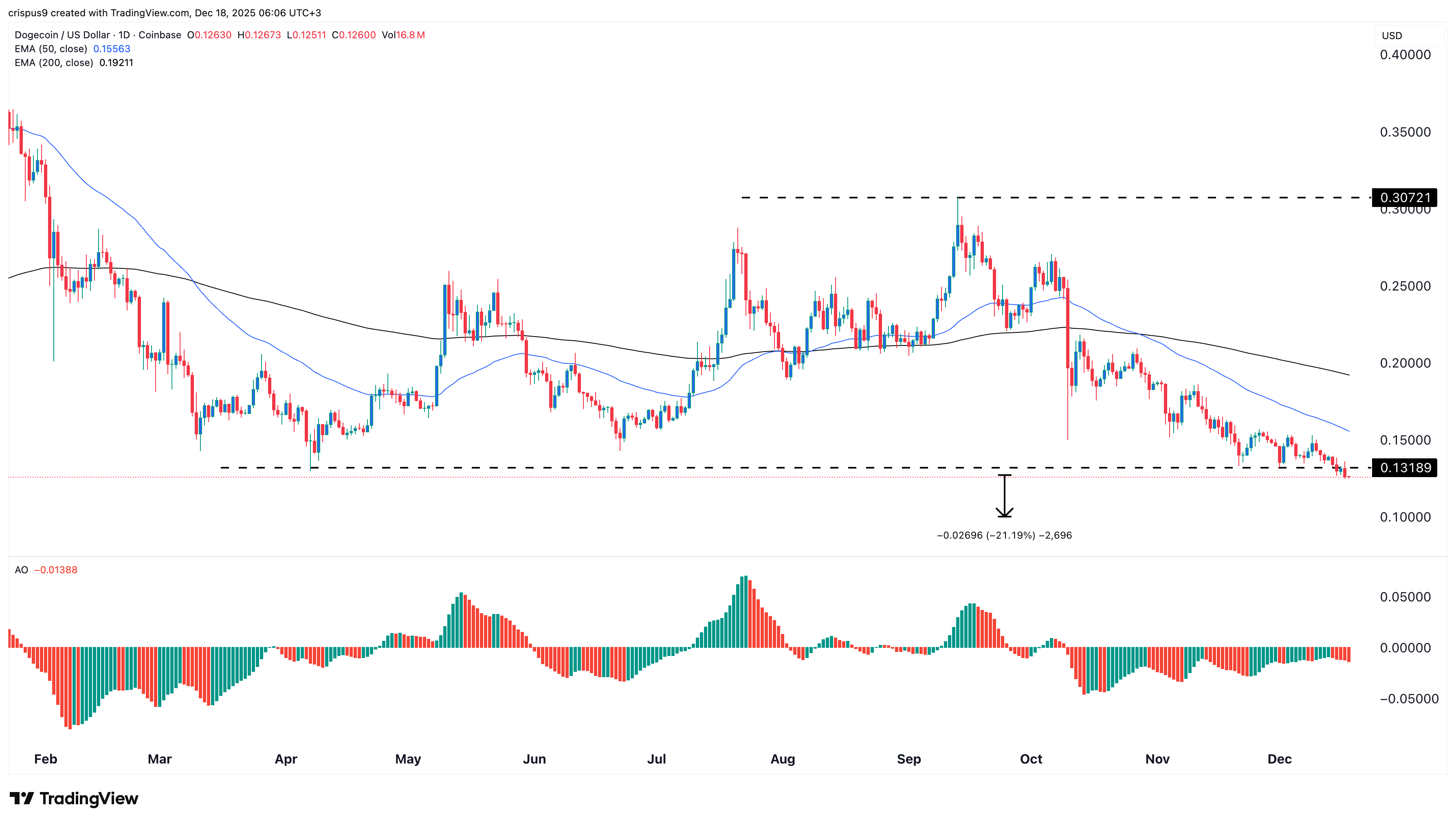
The daily chart shows that the DOGE price sits at a crucial support level today. It has dropped to $0.1260, a level it has failed to move below several times since April 7 this year.
Dogecoin price has remained below the 50-day and 100-day Exponential Moving Averages (EMA), while the Awesome Oscillator has remained below the zero line since October 9.
Therefore, the most likely DOGE price forecast is bearish as buyers have remained in the sidelines. If this happens, the next key support level to watch will be at the psychological level at $0.10, which is about 20% below the current level.
READ MORE: Top Catalysts for an Altcoin Season in 2026
The price of Moonie NFT USD (MNYUSD) has held steady at exactly $2.687992e-06, with no changes in its percentage or volume. Despite a lack of current movement, there are key insights and forecasts that shed light on this cryptocurrency’s status and potential future.
MNYUSD has shown remarkable stability with a steady price of $2.687992e-06 and no percentage change in value over recent trading periods. Both the daily high and low are set at this exact price, suggesting a period of low volatility. This lack of movement is mirrored by a zero market cap and no recorded volume, highlighting its extremely niche or inactive market status.
A quick glance at the technical indicators shows that MNYUSD is currently in an oversold position. Key indicators such as the Relative Strength Index (RSI) and the Average Directional Index (ADX) are both at 0.00, suggesting minimal momentum and no clear trend direction. The Moving Average Convergence Divergence (MACD) also shows a neutral position, indicating a balanced phase with no strong buying or selling signals.
Historically, MNYUSD has faced a massive decline, with its yearly to five-year changes showing significant reductions, including a 99.99624% drop since its peak. Looking forward, forecasts are limited, but there is a minor increase anticipated in the seven-year projection, bringing the price to $0.0005484566649282696. Forecasts can change due to macroeconomic shifts, regulations, or unexpected events affecting the crypto market.
Market sentiment around MNYUSD appears to be static, largely driven by its low activity and trading volume. This absence of movement might attract risk-takers looking for potential undervalued assets. Tools like Meyka AI could help traders explore MNYUSD’s market behavior through AI-powered analysis, offering insights beyond the current stability.
MNYUSD stands at a crossroads of stability and uncertainty. While its current inactivity might suggest a dormant phase, long-term forecasts show potential growth. The technical indicators point to an oversold market, which could attract interest if external conditions shift. As always, staying informed through platforms like Meyka AI can provide valuable insights into potential market changes.
MNYUSD is currently priced at $2.687992e-06 with no recent changes in value or percentage movement reported as of today’s data update on December 18, 2025.
MNYUSD’s lack of movement is due to its low market activity, with no recorded volume or market cap, indicating minimal trading interest at present. This might change with increased engagement or market shifts.
Technical indicators like RSI, MACD, and ADX show a neutral to oversold status for MNYUSD, suggesting minimal momentum and no definitive trend direction currently.
Historically, MNYUSD has experienced severe declines, with a 99.99624% decrease over five years, reflecting significant long-term challenges in value retention.
Yes, there is a modest forecasted increase over the next seven years, with MNYUSD expected to reach $0.0005484566649282696, although these projections can vary with market conditions.
Disclaimer:
Cryptocurrency markets are highly volatile. This content is for informational purposes only.
The Forecast Prediction Model is provided for informational purposes only and should not be considered financial advice.
Meyka AI PTY LTD provides market data and sentiment analysis, not financial advice.
Always do your own research and consider consulting a licensed financial advisor before making investment decisions.
Natural gas price attempted to resist the negative pressures by ending the negative trading after testing the bullish channel’s support to $3.880, forming a positive rebound by its stability near $4.080.
We couldn’t confirm regaining the bullish attempts unless breaching the barrier at $4.200 and providing positive close above it, therefore, we expect providing mixed trading and there is a chance for providing new pressures on the main support, while breaching the barrier and holding above will provide strong chance to begin achieving several gains, to expect its rally initially towards $4.510.
The expected trading range for today is between $3.900 and $4.200
Trend forecast: Bearish
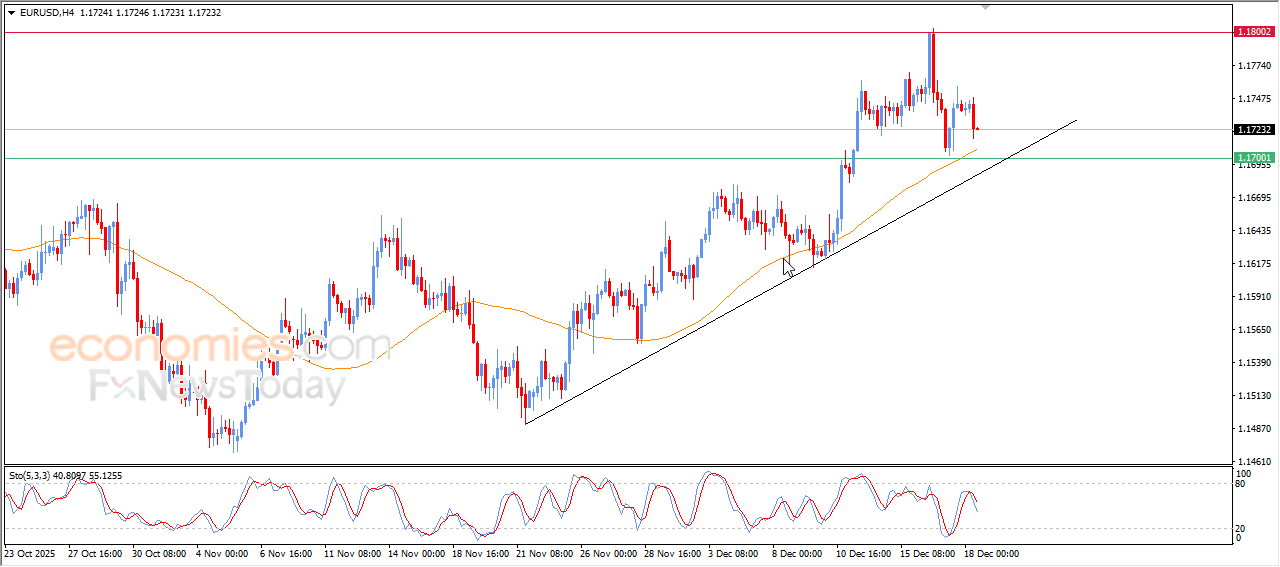
After spending the first half of the day under bearish pressure on Wednesday, EUR/USD stage a late rebound to close marginally lower. The pair stays quiet near 1.1750 in the European morning on Thursday as investors stay on the sidelines ahead of the European Central Bank’s (ECB) monetary policy announcements and November inflation data from the US.
The table below shows the percentage change of Euro (EUR) against listed major currencies this week. Euro was the strongest against the New Zealand Dollar.
| USD | EUR | GBP | JPY | CAD | AUD | NZD | CHF | |
|---|---|---|---|---|---|---|---|---|
| USD | -0.01% | 0.12% | 0.03% | 0.06% | 0.65% | 0.68% | -0.12% | |
| EUR | 0.00% | 0.13% | 0.02% | 0.06% | 0.69% | 0.69% | -0.10% | |
| GBP | -0.12% | -0.13% | 0.00% | -0.07% | 0.55% | 0.55% | -0.24% | |
| JPY | -0.03% | -0.02% | 0.00% | 0.04% | 0.64% | 0.64% | 0.08% | |
| CAD | -0.06% | -0.06% | 0.07% | -0.04% | 0.62% | 0.62% | -0.02% | |
| AUD | -0.65% | -0.69% | -0.55% | -0.64% | -0.62% | 0.00% | -0.79% | |
| NZD | -0.68% | -0.69% | -0.55% | -0.64% | -0.62% | -0.00% | -0.79% | |
| CHF | 0.12% | 0.10% | 0.24% | -0.08% | 0.02% | 0.79% | 0.79% |
The heat map shows percentage changes of major currencies against each other. The base currency is picked from the left column, while the quote currency is picked from the top row. For example, if you pick the Euro from the left column and move along the horizontal line to the US Dollar, the percentage change displayed in the box will represent EUR (base)/USD (quote).
The ECB is widely anticipated to leave key rates unchanged after the last meeting of the year. Revised macroeconomic projections could influence the Euro’s valuation. In case there is a positive revision to Eurozone growth expectations, investors could see this as a sign of a neutral/hawkish policy outlook next year. In this scenario, EUR/USD could regather its bullish momentum. Conversely, a downward revision to inflation forecasts, combined with a weaker growth outlook, could weigh on the Euro with the immediate reaction.
Following the ECB event, investors will pay close attention to the US inflation data. On a yearly basis, the Consumer Price Index (CPI) and the core CPI are forecast to rise by 3.1% and 3%, respectively, in November. In case the headline CPI comes in above the market expectation, the USD could hold its ground and cause EUR/USD to stretch lower. On the other hand, a soft CPI print could revive expectations for another Federal Reserve (Fed) rate cut in January and trigger another leg lower in the USD, opening the door for a bullish EUR/USD action in the American session.
According to the CME FedWatch Tool, markets are currently pricing in about a 25% probability of a 25-basis-points Fed rate cut next month.
The 20-period Simple Moving Average (SMA) has flattened around price, while the 50-, 100- and 200-period SMAs rise at 1.1705, 1.1662 and 1.1608, keeping a bullish alignment with spot above them. The Relative Strength Index (14) stands at 54, neutral and edging higher.
Immediate resistance aligns at 1.1765 (mid-point of the ascending regression channel), followed by 1.1800-1.1810 (round level, upper limit of the ascending channel).
The lower limit of the ascending channel and the 50-period SMA form a support area at 1.1700-1.1700, followed immediately by the rising trend line near 1.1680. A close below the latter could attract technical sellers and trigger another lef lower toward the 100-period SMA near 1.1660.
(The technical analysis of this story was written with the help of an AI tool).
The Euro is the currency for the 20 European Union countries that belong to the Eurozone. It is the second most heavily traded currency in the world behind the US Dollar. In 2022, it accounted for 31% of all foreign exchange transactions, with an average daily turnover of over $2.2 trillion a day.
EUR/USD is the most heavily traded currency pair in the world, accounting for an estimated 30% off all transactions, followed by EUR/JPY (4%), EUR/GBP (3%) and EUR/AUD (2%).
The European Central Bank (ECB) in Frankfurt, Germany, is the reserve bank for the Eurozone. The ECB sets interest rates and manages monetary policy.
The ECB’s primary mandate is to maintain price stability, which means either controlling inflation or stimulating growth. Its primary tool is the raising or lowering of interest rates. Relatively high interest rates – or the expectation of higher rates – will usually benefit the Euro and vice versa.
The ECB Governing Council makes monetary policy decisions at meetings held eight times a year. Decisions are made by heads of the Eurozone national banks and six permanent members, including the President of the ECB, Christine Lagarde.
Eurozone inflation data, measured by the Harmonized Index of Consumer Prices (HICP), is an important econometric for the Euro. If inflation rises more than expected, especially if above the ECB’s 2% target, it obliges the ECB to raise interest rates to bring it back under control.
Relatively high interest rates compared to its counterparts will usually benefit the Euro, as it makes the region more attractive as a place for global investors to park their money.
Data releases gauge the health of the economy and can impact on the Euro. Indicators such as GDP, Manufacturing and Services PMIs, employment, and consumer sentiment surveys can all influence the direction of the single currency.
A strong economy is good for the Euro. Not only does it attract more foreign investment but it may encourage the ECB to put up interest rates, which will directly strengthen the Euro. Otherwise, if economic data is weak, the Euro is likely to fall.
Economic data for the four largest economies in the euro area (Germany, France, Italy and Spain) are especially significant, as they account for 75% of the Eurozone’s economy.
Another significant data release for the Euro is the Trade Balance. This indicator measures the difference between what a country earns from its exports and what it spends on imports over a given period.
If a country produces highly sought after exports then its currency will gain in value purely from the extra demand created from foreign buyers seeking to purchase these goods. Therefore, a positive net Trade Balance strengthens a currency and vice versa for a negative balance.



:max_bytes(150000):strip_icc()/Best-Antioxidant-Rich-Teas-According-to-Dietitians-40d1b31fabe64e0aa5b16b20d2b11aa6.jpg "The 6 Best Antioxidant-Rich Teas")