The main category of All News Articles.
You can use the search box below to find what you need.
[wd_asp id=1]
The main category of All News Articles.
You can use the search box below to find what you need.
[wd_asp id=1]
As Web3 gaming continues to accelerate, Hamster Kombat remains one of the most talked-about play-to-earn titles in the industry. The game’s Daily Combo feature, introduced as a strategic reward mechanic, has turned into a daily ritual for millions of players across the globe. Whether you are a newcomer exploring the basics or a long-time player hunting for higher earnings, today’s Daily Combo for 11 December 2025 brings another opportunity to secure substantial in-game rewards, including the highly sought-after 5 million coin bonus.
With its growing ecosystem, seamless Telegram integration, and consistent reward updates, Hamster Kombat has positioned itself as a leader in mobile-first Web3 gaming. Today’s coverage will walk you through everything you need to know about the Daily Combo, how to complete it efficiently, and why this feature has become one of the most popular reward systems in the game.
The Daily Combo is a structured reward event designed to encourage players to interact with specific in-game assets, strengthen their card collection, and explore new mechanics. Unlike the traditional coin-mining flow, the Daily Combo requires players to complete or upgrade a set of three designated cards to unlock a fixed reward of 5 million coins. These cards may come from various categories such as Markets, PR and Team, Legal, or Specials.
The concept is simple but impactful: every day, a unique combination is released, promoting both engagement and progression. This ensures that the community remains active while continuously advancing through the game’s leveling and skill-building systems.
The Daily Combo banner appears at the top of the “Mine” interface, making it easy for players to locate and participate. Once the necessary cards are upgraded or purchased, players simply need to click the “Complete Combo” button to receive their reward instantly.
This feature also aligns with Hamster Kombat’s broader mission of blending gamification with blockchain-based incentives. By tying rewards to upgraded assets rather than random tasks, the system reinforces a sense of strategy and long-term progression.
Today’s Daily Combo challenges players to acquire or level up a specific set of cards. While the exact cards may vary per user and time zone, the mechanics remain consistent across the global player base.
The available Daily Combo can be accessed through the Mine menu. Players should check the promotion carefully, as December’s Daily Combo events change frequently. Participating promptly is crucial since each combination is only available for a 24-hour period.
This daily activity is part of the marketing section of the game, and completing it provides not only the 5 million coin reward but also contributes to account progression, helping players unlock more powerful features and new areas of gameplay.
Despite the high rewards offered, the Daily Combo remains easy to complete. Here is a detailed breakdown of the process for players at all levels:

Hamster Kombat runs entirely through Telegram, making it one of the most accessible blockchain games available. You do not need separate applications, EVM wallets, or complex onboarding procedures.
After launching the bot, open the main game interface.
Once the interface loads, tap the “Mine” button. This section displays your mining tools, upgrades, and the Daily Combo prompt.
At the top of the screen, you will see the Daily Combo banner, which highlights the three target cards for the day.
Cards are typically categorized in one of the following sections:
Markets
PR and Team
Legal
Specials
Players must either buy the designated cards or upgrade their existing versions to meet the required level.
This step may require some planning, especially for newer players who are still building up their basic coin reserves.
After the required upgrades are completed, simply tap the “Complete Combo” button. The system will confirm your action and immediately credit your account with 5 million coins.
This reward is consistent for all players and remains one of the most valuable daily bonuses available in the game.
The Daily Combo is far more than a routine bonus. It represents a carefully crafted incentive system designed to promote healthy gameplay patterns, retain users, and accelerate economic progression within the game.
The most active Hamster Kombat users often engage with the Daily Combo system as part of their daily habit. Completing it each day generates a steady stream of coins that can be used for:
Players who remain consistent benefit significantly more than those who log in sporadically.
Each required card upgrade strengthens a player’s overall mining capability and efficiency. Over time, these improvements compound, enabling users to generate more coins even when they are not actively playing.
With the Daily Combo awarding 5 million coins, new players can catch up with long-time users much faster than before. This inclusive pacing is one reason Hamster Kombat continues to attract widespread adoption.
Hamster Kombat consistently updates events such as:
Daily Cipher
Mini-games
Toxin Challenges
Elite Missions
Community Events
The Daily Combo acts as a central pillar of these activities, providing baseline rewards that help players participate more competitively in other parts of the ecosystem.
To optimize your $HMSTR coin balance, it is important to combine the Daily Combo with other earning methods. Players who diversify their efforts typically earn significantly more each day.
Daily tasks offer some of the highest coin payouts in the game. Completing each task regularly builds a strong base of earnings.
This competitive mode provides one of the largest rewards available: up to 1 million coins daily for tournament winners.
Mini-games offer quick, enjoyable ways to collect additional tokens. While their rewards are smaller compared to major challenges, they help boost your balance steadily.
Elite Missions represent advanced tasks designed for experienced players. These missions often offer exclusive rewards that can significantly speed up progression.
Hamster Kombat rewards consistent activity. Logging in daily ensures access to all bonus features, event notifications, and special promotions.
Hamster Kombat’s success is attributed to its simplicity, instant accessibility, and reliable reward mechanics. By integrating blockchain-based rewards into a Telegram interface, the game removes barriers that traditionally limit Web3 adoption. Players of all backgrounds can participate without requiring prior crypto knowledge.
The Daily Combo feature is an example of how Hamster Kombat continues to innovate. By offering large but achievable rewards, the game encourages sustained engagement while allowing users to enjoy meaningful progress regardless of their experience level.
As the ecosystem expands, many analysts expect Hamster Kombat to introduce additional layers of gameplay, new token utilities, and more structured events. For now, the Daily Combo remains one of the most reliable and rewarding features available to users.
The Hamster Kombat Daily Combo for 11 December 2025 offers yet another opportunity for players to earn a substantial 5 million coins with just a few simple steps. By completing the required card upgrades, participating in daily events, and maintaining consistent engagement, players can significantly enhance their progression within the game’s fast-growing ecosystem.
For both beginners and long-term players, the Daily Combo remains a crucial part of the Hamster Kombat experience. With its seamless integration, high payout, and role in strengthening player development, this feature continues to be a pillar of the game’s daily reward system.
Whether you are playing casually or pursuing top-tier rankings, taking advantage of the Daily Combo is essential to maximizing your potential earnings and maintaining a competitive edge in the world of Hamster Kombat.
hokanews.com – Not Just Crypto News. It’s Crypto Culture.
Writer
@Erlin
Erlin is an experienced crypto writer who loves to explore the intersection of blockchain technology and financial markets. She regularly provides insights into the latest trends and innovations in the digital currency space.
Check out other news and articles on Google News
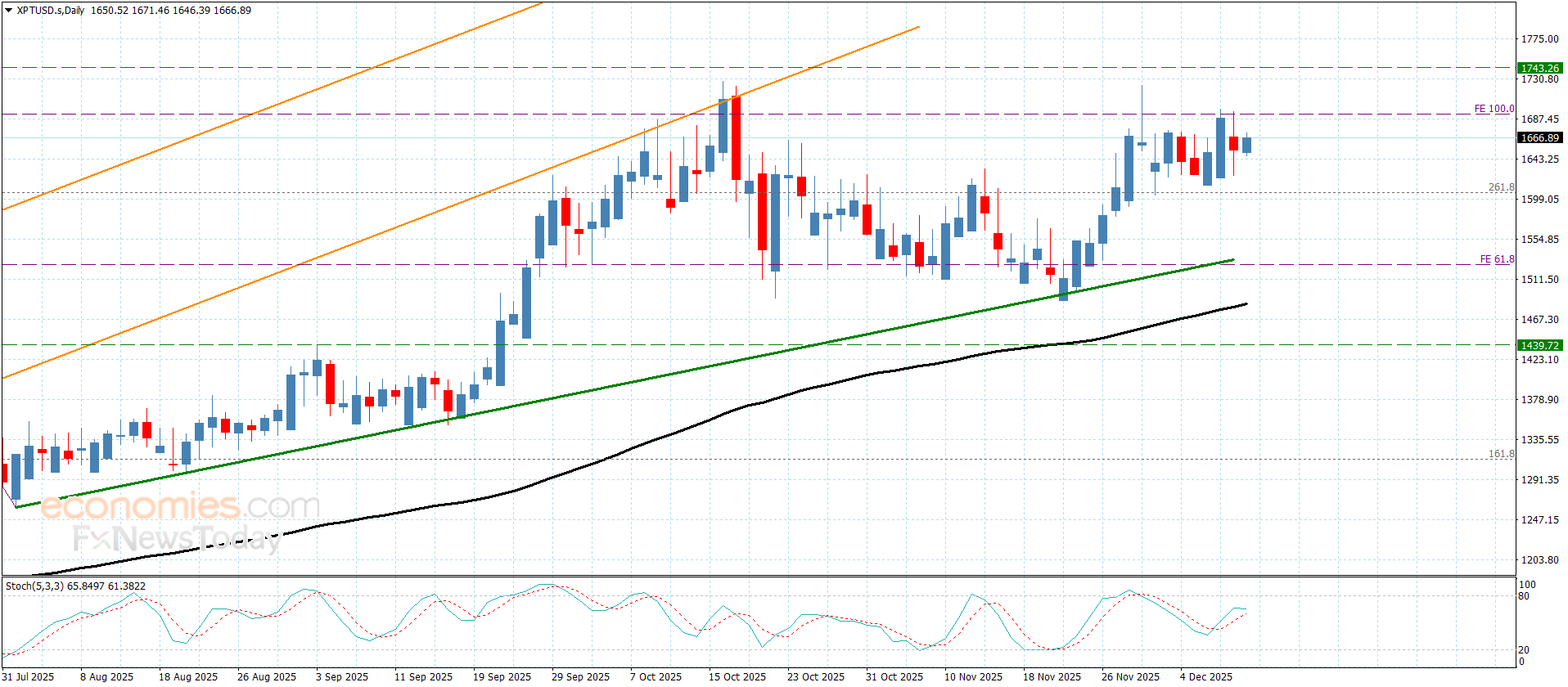
Platinum price surrendered to the sideways bias dominance, to fluctuate slowly near$1660.00 level, affected by the stability at $1695.00 barrier, which obstructs the chances of resuming the main bullish attack.
The price might keep providing sideways trading, however the stability above the extra support of $1605.00 supports the chances of renewing the bullish attempts, therefore, we will keep waiting for breaching the current barrier, to open the way for recording new gains that might begin at $1715.00 and $1745.00.
The expected trading range for today is between $1635.00 and $1695.00
Trend forecast: Sideways until achieving the breach
Platinum price surrendered to the sideways bias dominance, to fluctuate slowly near$1660.00 level, affected by the stability at $1695.00 barrier, which obstructs the chances of resuming the main bullish attack.
The price might keep providing sideways trading, however the stability above the extra support of $1605.00 supports the chances of renewing the bullish attempts, therefore, we will keep waiting for breaching the current barrier, to open the way for recording new gains that might begin at $1715.00 and $1745.00.
The expected trading range for today is between $1635.00 and $1695.00
Trend forecast: Sideways until achieving the breach
Spotlighted in Innova Market Insights’ Top Trends for 2025, the “Taste the Glow” consumer trend embodies the expansion of beauty-related claims into food and beverage products. Key advances in the field include a precision probiotic isolated from kimchi to target skin conditions. Meanwhile, collagen remains a leading inclusion, boosted by complementary ingredients like OptiMSM that improves skin thickness and hydration.
As drivers of demand behind functional beauty ingredients, the majority of Gen Z and Millennial consumers surveyed by Innova Market Insights say that they want to buy food, beverage, or supplement products for their personal appearance. Younger consumers crave functional soft drinks, tea, and chocolate, and are highly receptive to novelty and creative packaging.
Nutrition Insight speaks with Bioiberica, AB-Biotics, Balchem Human Nutrition & Health, and ADM on the latest market insights and scientific advances propelling ingestible beauty.
Around two-thirds of consumers now recognize skin health as a key indicator of overall health, highlights Mónica Gomez Navarro, marketing manager of Branded Ingredients at Bioiberica.
“This helps explain why demand for skin-focused products is expanding beyond the traditional demographic of older women, with consumers across age groups and genders actively seeking out products that allow them to both feel and look their best.”
Gomez Navarro adds that the fundamentals of popular nutricosmetic formats tend to remain consistent, even as specific ingredients or benefits fall in and out of fashion. “Consumers want what they’ve always wanted: convenience, reassurance, and enjoyment.”
“Right now, the hottest formats fulfilling these needs are products like fortified teas, yogurts, and other dairy products that lend themselves to a moment of ‘me’ time. Quick and easy options like fortified gummies also remain firm favorites.”
.webp) Biotics are increasingly paired with complementary nutrients that have established roles in skin function.Miquel Bonachera, co-founder at AB-Biotics, observes that biotics are increasingly paired with complementary nutrients that have established roles in skin function. “Probiotics or postbiotics combined with zinc, support skin maintenance, while pairings with niacin or vitamin C target oxidative stress and antioxidant defense.”
Biotics are increasingly paired with complementary nutrients that have established roles in skin function.Miquel Bonachera, co-founder at AB-Biotics, observes that biotics are increasingly paired with complementary nutrients that have established roles in skin function. “Probiotics or postbiotics combined with zinc, support skin maintenance, while pairings with niacin or vitamin C target oxidative stress and antioxidant defense.”
“Hyaluronic acid also appears frequently in hydration-focused formulations. There’s also a growing interest in psychobiotics combined with melatonin in markets where it’s permitted, as brands and consumers alike recognize the role of stress management in holistic skin care.”
In terms of geographic activity, Bonachera says Asia-Pacific continues to lead in innovation due to strong consumer awareness of inside-out beauty approaches. Holistic formulations addressing both appearance and emotional well-being are rapidly growing in North America, while European demand maintains its focus on regulatory compliance and evidence-backed ingredients.
While the beauty-from-within market as a whole is booming, Jessica Arnaly, senior marketing and business development manager at Balchem Human Nutrition & Health highlights that collagen’s mainstay status is sustained by “especially strong growth.”
She says Balchem’s OptiMSM is a “perfect complement” to collagen for skin health. “Our methylsulfonylmethane (MSM) ingredient is a source of organic sulfur that aids collagen formation and other key building blocks of skin, like dermatan sulfate and hyaluronic acid.”
“It also supports the body’s network of defenses through production of glutathione, a crucial antioxidant that helps support the immune system via methylation and other epigenetic processes. All this helps keep our hair, nails, and skin looking their best as we age.”
A recent, double-blind, randomized, placebo-controlled trial compared the effects of 12 weeks of daily supplementation with either collagen alone, collagen plus MSM, or placebo on various skin parameters.
Arnaly says the results were significant: “While the group receiving collagen showed a noticeable improvement in skin density and wrinkle depth compared to both their baseline and the placebo, participants who received both MSM and collagen experienced additional and enhanced skin benefits.”
“Skin roughness was reduced in both supplement groups, but to a greater extent in those receiving both MSM and collagen,” she continues. “Additionally, only participants taking collagen plus MSM showed increased skin thickness and hydration.”
 Combining collagen with MSM, OptiMSM is ideal for inclusion in increasingly popular functional food and beverage products marketed as “GLP-1 receptor agonist companions.”While avoiding clumping and residue, Arnaly touts OptiMSM as ideal for inclusion in increasingly popular functional food and beverage products marketed as “GLP-1 receptor agonist companions.” Products of this type are nutritionally dense foods or supplements designed to minimize skin issues that can occur as a result of rapid weight loss.
“This can include deflation, dehydration, and sagging — symptoms often referred to as ‘Ozempic face,’” she notes. “Thanks to its skin firmness benefits, OptiMSM makes an effective addition to any food and beverage solution that aims to support users throughout their GLP-1 journey.”
Bioiberica spotlights a recently published peer-reviewed study published in Dermatology and Therapy supporting the skin health benefits of its hyaluronic acid matrix ingredient, Dermial.
Featuring a high concentration of hyaluronic acid (>60%), collagen, and other glycosaminoglycans, including dermatan sulfate, Dermial is marketed as the first hyaluronic acid matrix ingredient for beauty-from-within.
“The results showed its powerful regenerative and moisturizing properties, alongside a unique ‘glow’ effect, all of which was achieved at six weeks with the low daily dose of 60 mg per day,” says Gomez Navarro.
The trial involved 60 healthy female participants aged 35–65 with signs of natural skin aging, who were assigned either a daily supplement of 60 mg of Dermial or a placebo. At six and 12 weeks, researchers observed significant improvements in skin wrinkles and smoothness (at six weeks), as well as roughness and pH balance (at 12 weeks), compared with the placebo group.
“Participants in the Dermial supplement group also displayed a significant increase in skin brightness and hydration, as well as decreased scaliness and skin temperature at six and 12 weeks,” Gomez Navarro elaborates.
“Participants over 55 years old showed significant improvements across many skin barrier function parameters and skin properties, including brightness or glow, hydration, deformability, smoothness, roughness, scaliness, and temperature.”
Bioiberica has created concept formulations for yogurts and milk beverages featuring Dermial — trending formats that demonstrate the ingredient’s stability and adaptability, even when subject to pasteurization or ultra-heat treatment.
Studies investigating ingestible beauty options through the gut-skin axis are on the rise, indicating opportunities to leverage microbiome-supporting solutions
“The most recent introduction to our postbiotics suite, Lactobacillus gasseri CP2305, has clinical evidence demonstrating outcomes associated with stress management, mood support, and sleep quality in addition to support for specific demographics,” says Vaughn DuBow, senior director, Product Portfolio Marketing, Health & Wellness at ADM.
He details that research on healthy young women (average age of 21.5 years) experiencing premenstrual symptoms indicate that supplementing with L. gasseri CP2305 postbiotic may help improve skin appearance. “The data also shows L. gasseri CP2305 postbiotic may support positive moods, reduce stress or anxiety, help improve vaginal discharge, and help reduce occasional constipation for these healthy young women.”
This research also finds that the effects of L. gasseri CP2305 postbiotic on skin appearance and vaginal discharge may be mediated through the hypothalamus-pituitary-gonadal axis. “During the premenstrual period, supplementation with L. gasseri CP2305 postbiotic maintained estradiol levels and increased progesterone during the luteal phase,” notes DuBow.
ADM has also explored probiotic blends that address tailored skin health concerns with probiotics Bifidobacterium longum CECT7347 (ES1), B. animalis subsp. lactis CECT8145 (BPL1), and L. casei CECT9104 (BPL4). DuBow says the blend may help support relief for dry, itchy skin and help improve skin health.
“We have also assessed our Smooth Skin Formulation containing ES1, BPL1, and L. rhamnosus CECT8361 (BPL15), with findings showing it may support overall skin health, gut microbiome diversity, and clear and healthy skin.”
ADM’s beauty and wellness library is continuously expanding its range of bioactives and other plant-derived compounds. “A key example is our recently published study on Novasoy. The triple-blind, randomized, parallel, placebo-controlled pilot study examined, in postmenopausal women, the effects of oral soy isoflavone supplementation (Novasoy 400) for 12 weeks, compared to a placebo,” says DuBow
“Although statistical differences between groups were not reported, preliminary findings revealed a correlation between women who produced higher levels of S-equol (a gut-derived metabolite formed from soy isoflavones) and positive effects on skin under-eye smoothness, skin hydration, and barrier function. Further research would elucidate these findings.”
AB-Biotics’ AB-Sakei 65 is a probiotic ingredient that taps into the gut-skin axis, details Bonachera. “AB-Sakei 65 consists of our proprietary strain, L. sakei proBio65 — isolated from kimchi, is designed specifically for people managing sensitive or reactive skin and experiencing dryness, tightness, or occasional flare-prone discomfort.”
It works by modulating systemic immune activity associated with skin barrier balance as seen in clinical trials where AB-Sakei 65 was associated with reduced levels of the pro-inflammatory cytokines IL-4 and IL-6, as well as the allergen specific antibody IgE.
Additionally, Bonachera notes people taking the probiotic showed reduced levels of molecules that are associated with the severity and discomfort of flare-ups in sensitive and atopic-prone skin.
“In addition to these immune-related findings, participants receiving AB-Sakei 65 also saw improvements in skin hydration parameters, including moisture and sebum balance,” he adds.
Looking at future product development, he anticipates research will focus on a more integrated approach that explores how internal and external solutions work together. “As consumer understanding of the skin microbiome deepens, we’re seeing growing interest in combining ingestible products with topical applications built on the same scientific principles.”
“This creates a natural opportunity for us to explore cosmetic formats that complement our oral solutions, particularly using inactivated strains that offer the stability and texture compatibility that topical formulations demand.”
Solana (SOL) price is trading below $130 at the time of writing on Thursday, after being rejected at the upper boundary of its falling wedge pattern. The broader market weakness following the Federal Reserve’s hawkish rate cut has added to downside momentum. Additionally, SOL’s on-chain data suggest further downside, with rising sell-side dominance.
The broader crypto market softened after the Federal Open Market Committee (FOMC) meeting on Wednesday. In a widely expected move, the US Federal Reserve (Fed) lowered interest rates by 25 basis points to 3.50%-3.75% at the end of its two-day policy meeting but signaled a likely pause in January.
Adding to the cautious tone, policymakers projected only a one-quarter-percentage-point cut in 2026, the same outlook as in September, which tempered market expectations and contributed to short-term pressure on risk assets. This hawkish rate cut and the Fed’s cautious stance triggered a slight risk-off sentiment, weighing on riskier assets, with major cryptocurrencies such as Bitcoin, Ethereum, Ripple, and Solana trading lower as of Thursday.
CryptoQuant data, as shown in the graph below, highlights selling pressure on Solana. The Taker CVD (Cumulative Volume Delta) for SOL turned negative on Wednesday. This indicator measures the cumulative difference between market buy and sell volumes over three months. When the 90-day CVD is positive and increasing, it suggests the Taker Buy Dominant Phase, while a negative and decreasing value indicates the Taker Sell Dominant Phase.
CryptoQuant’s Futures Average Order Size indicator — which tracks the average size of executed SOL futures trades — shows a rise in smaller order sizes, signaling increased retail activity in the market that does not bode well with the SOL price.
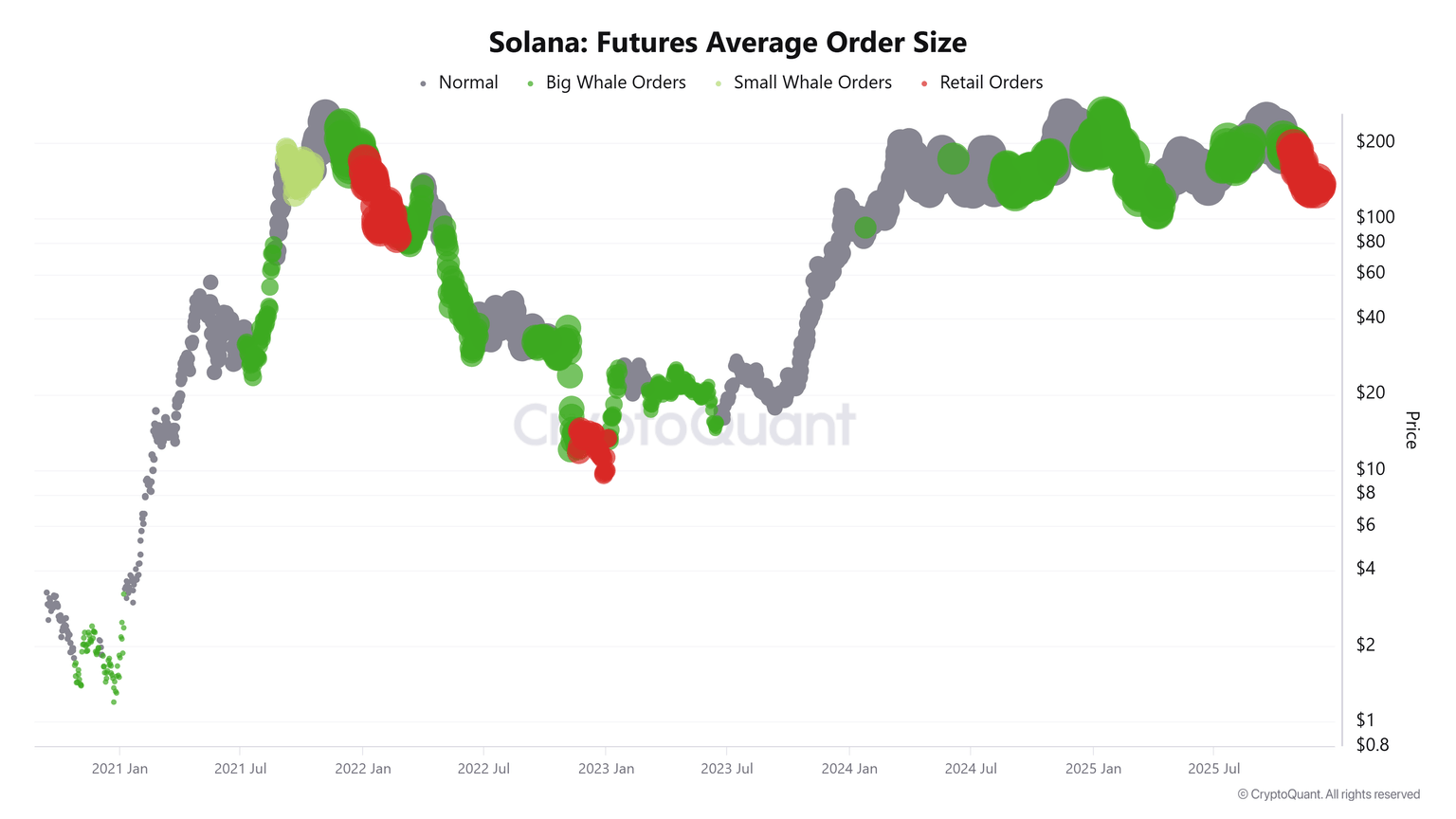
Solana price faced rejection from the upper trendline boundary of the falling wedge pattern (drawn ) on Wednesday. As of Thursday, SOL is down 3.87% to around $130.99.
If SOL continues its downward trend, it could extend the decline toward the November 21 low of $121.66.
The Relative Strength Index (RSI) on the daily reads 40, below its neutral level of 50 and pointing downward, indicating bearish momentum.
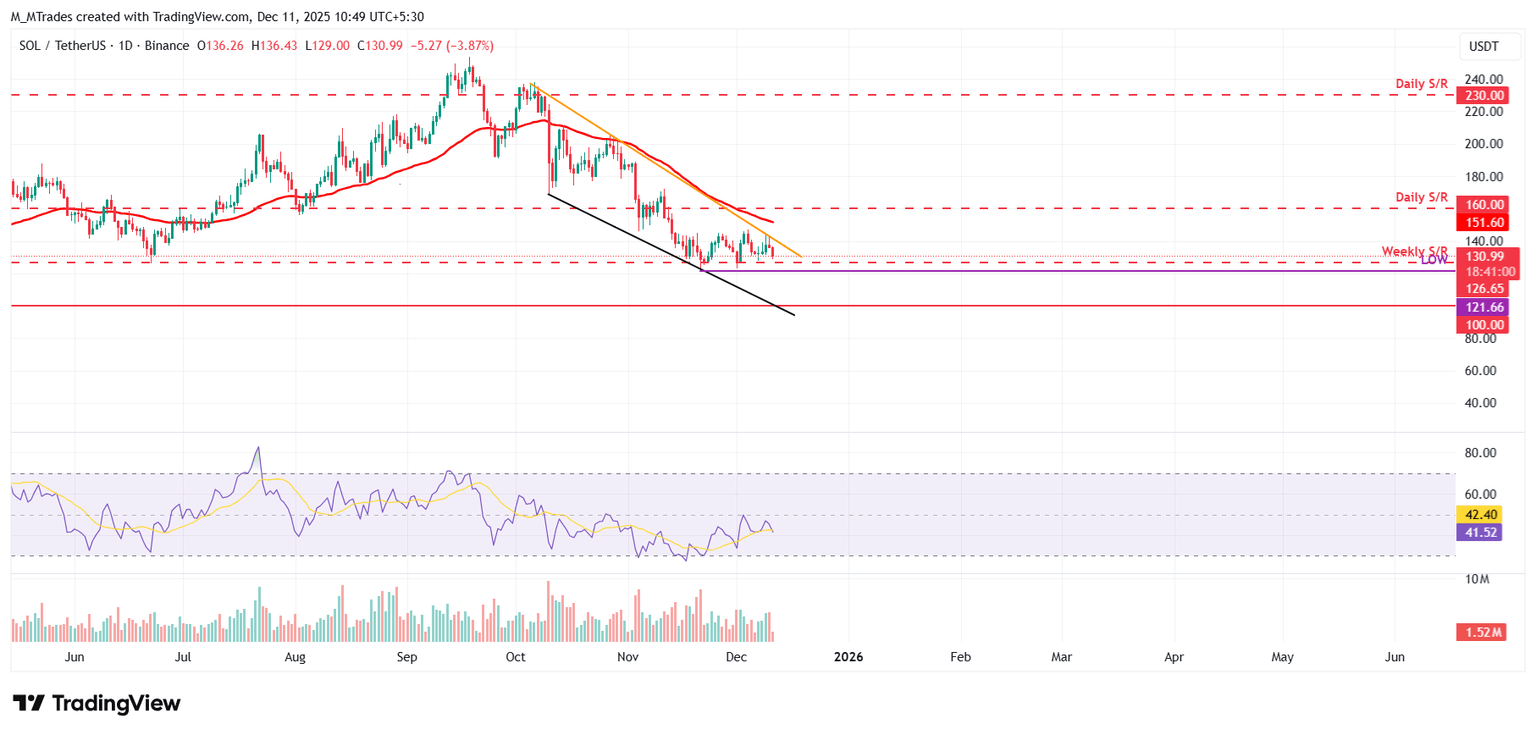
However, if SOL recovers, it could extend the recovery toward the 50-day EMA at $151.60.
Gold is testing bearish commitments at the $4,250 psychological level on Thursday, pausing a two-day uptrend as markets weigh a less hawkish than feared US Federal Reserve (Fed) policy announcements.
Gold extended its overnight advance into early Asian trading on Thursday before witnessing a profit-taking pullback as sellers jumped in once again at the $4,250 level.
Non-yielding assets such as Gold built on its recent bullish momentum after the Fed delivered on the expected 25 basis points (bps) interest rate cut to 3.5%-3.75% on Wednesday.
Despite the widely anticipated rate cut, the US Dollar was slammed across the board alongside the US Treasury bond yields as Fed Chairman Jerome Powell at his post-meeting press conference stuck to a cautious tone, disappointing those who had been positioned for a more hawkish one.
Markets continued to price in two more rate cuts next year, against the Fed’s median expectation for a single quarter-percentage-point cut next year, powering Gold at the expense of the Greenback.
Traders picked up on the Fed’s concerns over a slowing labor market, lending further support to the bright metal.
Now, with the critical Fed event risk out of the way, the focus turns toward the US employment data, with the Jobless Claims eagerly wait for fresh insights on the state of the labor market ahead of next week’s delayed Nonfarm Payrolls releases.
In the daily chart, XAU/USD trades at $4,225.19. The 21-, 50-, 100- and 200-day Simple Moving Averages (SMAs) climb in bullish alignment, with the shorter ones above the longer ones. Price holds above all these references, reinforcing buyers’ control. The Relative Strength Index (14) prints at 61.83, positive and shy of overbought. Measured from the $4,381.17 high to the $3,885.84 low, the 61.8% retracement at $4,191.95 has been reclaimed, while the 78.6% retracement at $4,275.16 caps the topside.
On dips, the 21-day SMA at $4,157.88 offers initial support, with the 50-day at $4,105.76 cushioning deeper pullbacks. Momentum stays firm while the RSI holds above 50; a loss of the 21-day average could slow the rally and send price toward the 50-day SMA.
(The technical analysis of this story was written with the help of an AI tool)
Gold has played a key role in human’s history as it has been widely used as a store of value and medium of exchange. Currently, apart from its shine and usage for jewelry, the precious metal is widely seen as a safe-haven asset, meaning that it is considered a good investment during turbulent times. Gold is also widely seen as a hedge against inflation and against depreciating currencies as it doesn’t rely on any specific issuer or government.
Central banks are the biggest Gold holders. In their aim to support their currencies in turbulent times, central banks tend to diversify their reserves and buy Gold to improve the perceived strength of the economy and the currency. High Gold reserves can be a source of trust for a country’s solvency. Central banks added 1,136 tonnes of Gold worth around $70 billion to their reserves in 2022, according to data from the World Gold Council. This is the highest yearly purchase since records began. Central banks from emerging economies such as China, India and Turkey are quickly increasing their Gold reserves.
Gold has an inverse correlation with the US Dollar and US Treasuries, which are both major reserve and safe-haven assets. When the Dollar depreciates, Gold tends to rise, enabling investors and central banks to diversify their assets in turbulent times. Gold is also inversely correlated with risk assets. A rally in the stock market tends to weaken Gold price, while sell-offs in riskier markets tend to favor the precious metal.
The price can move due to a wide range of factors. Geopolitical instability or fears of a deep recession can quickly make Gold price escalate due to its safe-haven status. As a yield-less asset, Gold tends to rise with lower interest rates, while higher cost of money usually weighs down on the yellow metal. Still, most moves depend on how the US Dollar (USD) behaves as the asset is priced in dollars (XAU/USD). A strong Dollar tends to keep the price of Gold controlled, whereas a weaker Dollar is likely to push Gold prices up.
The GBP/USD price is trading lower near 1.3365 on Thursday ahead of the London session, pressured by a modest rebound in the US dollar following Wednesday’s Federal Reserve meeting. Despite the pullback, the downside remains limited as the Fed ultimately delivered a dovish tone, encouraging investors to sell the greenback into any strength.
If you are interested in automated forex trading, check our detailed guide-
The Fed cuts the rate by 25 bps for the third straight meeting. However, the voting split, with two members favoring a pause and Trump-appointed Stephen Miran requesting a more substantial move, reflects the growing division within the committee.
In Powell’s press conference, he emphasized that policymakers need time to assess the impact of the easing on the economy. Meanwhile, the Fed projected only one cut in 2026, but traders are speculating on two more cuts, especially after Powell flagged the downside risk to the labor market. The shift in tone triggered a broad dollar sell-off, with the Dollar Index falling to the lowest level since October 21, while the GBP/USD marked a fresh top at 1.3391 before falling.
US yields also slid after the Fed announced fresh Treasury bill purchases, starting from December 12, initiating $40 billion program to stabilize liquidity. The earlier-than-expected balance sheet expansion plan weighed on the yields, adding more pressure on the dollar.
However, the GBP outlook remains complex amid the Bank of England’s easing expectations. Markets now price in an 88% probability of a BoE rate cut next week, following a series of softer UK data that signals easing inflationary pressure. The divergence, with the Fed being flexible and the BoE moving sooner than expected, is limiting the GBP/USD from extending its rally despite dollar weakness.
The broad market sentiment remains cautious as the GBP/USD is left to balance between the dovish Fed and the vulnerability in the pound linked to the BoE. Traders now await the US initial Jobless Claims data due in Thursday’s New York Session for intraday direction.

The GBP/USD 4-hour chart shows the price drifting slowly towards the 20-period MA at around 1.3350. The RSI is off the overbought zone but remains stable, indicating a temporary choppiness before an upside continuation.
–Are you interested to learn more about forex options trading? Check our detailed guide-
However, breaching the 20-period MA could push the price further down towards the 50-period MA at 1.3330, ahead of the demand zone around 1.3275. On the upside, today’s top at 1.3391 remains a key resistance ahead of 1.3420.
Looking to trade forex now? Invest at eToro!
68% of retail investor accounts lose money when trading CFDs with this provider. You should consider whether you can afford to take the high risk of losing your money.
Cardano is back in the headlines after its privacy-focused sidechain, Midnight, secured a listing on Binance for its native token, NIGHT. The listing gained attention because NIGHT was featured on Binance Alpha’s front page and came with airdrop perks for eligible users. The move coincides with renewed momentum for ADA.
As per the Coingecko data, the token has risen nearly +10% over the past week and is trading around $0.4325.
Binance Wallet confirmed that Binance Alpha listed NIGHT on December 9. Binance added that supporting the token aligns with its goal of promoting “rational privacy,” a core principle behind Midnight’s design.
The project aims to provide users with private transactions while still meeting regulatory standards that many older privacy networks struggle with.
Midnight operates as a hybrid model, offering confidentiality without compromising compliance. This approach sets it apart from traditional privacy-focused chains. Interest in Midnight’s launch has spread across major exchanges. Bybit, OKX, Bitpanda, MEXC, and Gate.io all confirmed plans to list NIGHT.
DISCOVER: The 12+ Hottest Crypto Presales to Buy Right Now
Crypto analyst Ali Martinez noted on X that the increasing supply of Cardano (ADA) entering circulation is putting downward pressure on its price, pointing to potential short-term weakness for the network’s native token.
Meanwhile, Cardano’s ADA broke through a key downtrend this week. The move has sparked renewed optimism among traders after months of declining prices.
The move came shortly after crypto analyst Captain Faibik reported a confirmed breakout on X, noting, “$ADA #Cardano Major trendline Breakout is Confirmed.. +10% Profit so far in a few hours..”
Cardano (ADA) is showing signs of a potential trend reversal on the 4-hour chart.
DISCOVER: 9+ Best Memecoin to Buy in 2025
The price has broken above a long-standing descending trendline that has kept the market under pressure since early October.
The breakout candle is strong and clean, signaling solid buying interest. ADA moved sharply from the $0.43–$0.44 range and is now trading above a level that had repeatedly blocked upward attempts in recent weeks.
The chart also highlights a shift in momentum. After a stretch of lower highs and lower lows, ADA formed a rounded bottom pattern through late November and early December.
This breakout confirms that buyers have gained control for the first time in two months.
Volume is rising around the breakout, adding credibility to the move and suggesting that the upward push has underlying strength.
The 20-day average at $4.68—decisively broken on Tuesday—was tested and rejected as resistance Wednesday with the session high of $4.70, delivering textbook bearish behavior where prior dynamic support transforms into overhead supply. Yesterday’s daily close below that average locked in the breakdown, immediately shifting focus to the 50-day average as the next prominent dynamic support line on the downside path.
Compounding the bearish case, the lower boundary line of the ascending wedge pattern was violated as well, providing additional technical confirmation for the corrective thrust. Although a brief bounce could materialize before natural gas presses lower, the overall trajectory suggests it will eventually unfold that way after the hard sell-off that followed last week’s $5.50 high.
That $5.50 peak looks to have completed the short-term trend for now, with the decisive selling immediately after and the failure of a key trend indicator like the 20-day average tipping the scales heavily toward bears. Any potential bounce in the near term may encounter resistance at higher price levels, including not just the 20-day average but also the 10-day line at $4.87. Monday’s low found support right around that average, only for Tuesday’s high to meet it as resistance, again illustrating how prior dynamic support is now showing as resistance and providing even further evidence for the bears.
Further bearish alignment appears on the weekly chart, where a one-week reversal has already triggered this week and there is a good chance the close will confirm the breakdown below last week’s low of $4.76. The weekly trend has held strong since the October higher swing low at $2.89, marking seven straight weeks up. This represents the first decisive breakdown of a prior week’s low since then, a development that underscores the shift in sentiment.
The relationship to a couple of rising trend channels provides further indications that the price of natural gas got severely overextended and was due for this bearish correction. Bullish momentum had accelerated sharply following a reclaim of the 200-day average, culminating in natural gas breaking out of a trend channel where the top channel line connects directly to the early-October swing high at $3.59. Then, on the new high day last week, there was a sharp breakout above the top channel line (200%) of the second channel—but that has proven to be a false breakout, as the swift reversal now validates.
Natural gas continues to exhibit clear bearish control with the 20-day breakdown, wedge violation, and emerging weekly reversal all pointing to further downside toward the 50-day average. While a bounce testing the 10-day or 20-day as resistance fits the pattern, the overextended advance demands correction until excess unwinds—defense at the 50-day would signal possible stabilization, but momentum stays firmly with sellers for now.
EUR/USD traded sharply higher following the Federal Reserve’s December rate cut, a move that financial markets had largely priced in—but the reaction shows that the tone of Powell’s press conference carried even more weight.
Instead of signaling a one-and-done scenario, the Fed emphasized:
This pushed markets into a deeper dovish repricing, sending Treasury yields lower and undermining USD strength. EUR/USD immediately capitalized, breaking above previous swing highs and tapping levels not seen in weeks.

Even though the ECB is not aggressively hawkish, the euro benefits from:
The result: EUR/USD has shifted into a clearer bullish trend structure, supported by both fundamentals and technicals.
Impact: Bearish USD → bullish EUR/USD
Impact: Reinforces downside pressure on the USD
Powell acknowledged slowing demand and hinted that the balance of risks is shifting. He avoided sounding restrictive—this alone added fuel to EUR/USD buyers.
Impact: Encourages further EUR/USD upside unless future data reverses sentiment
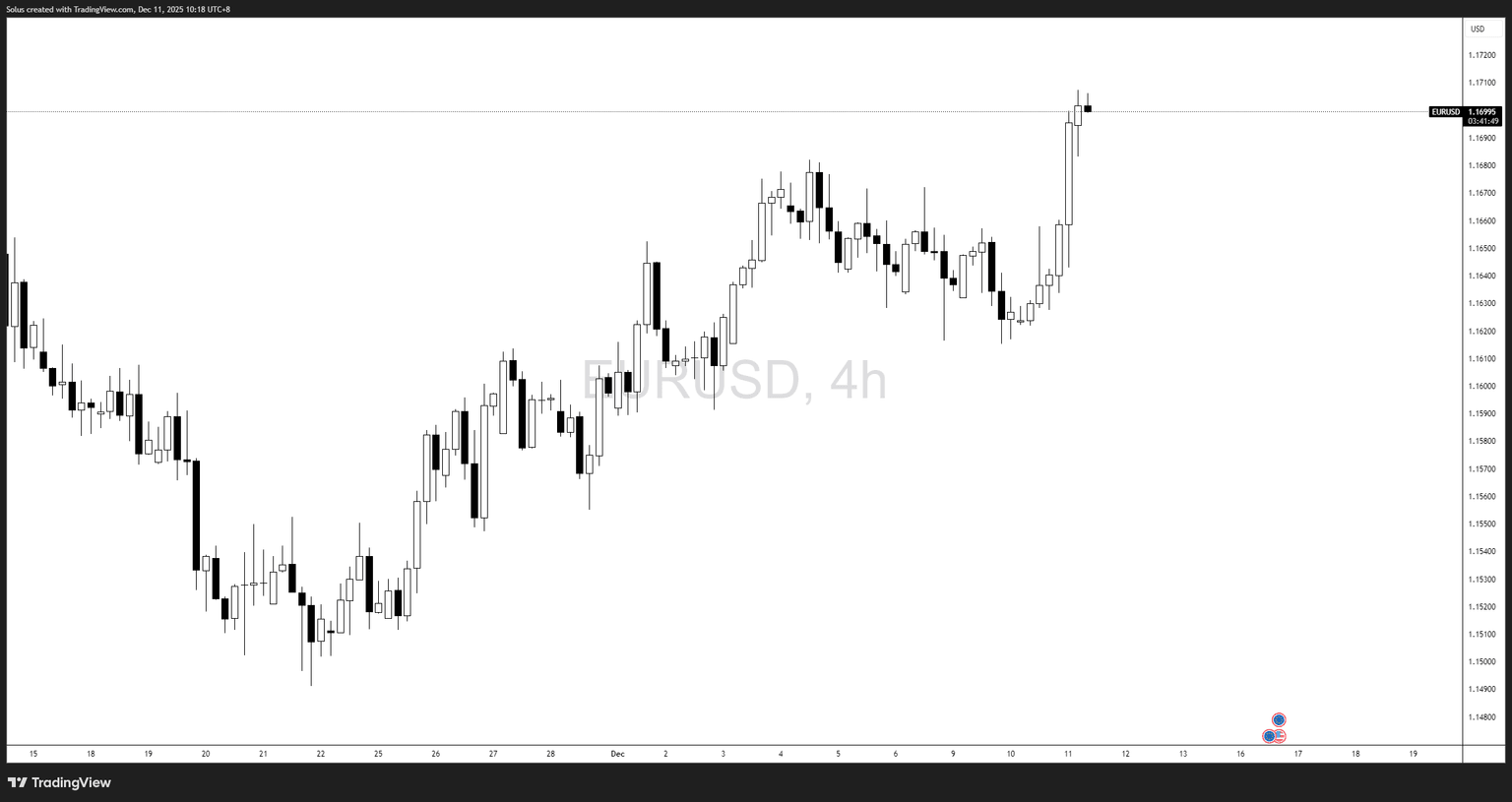
Your 4H charts show a newly formed bullish Fair Value Gap (FVG) following the impulsive rally post-FOMC. Price is currently sitting above the multi-week high around 1.1728, but short-term exhaustion is visible.
The rally has extended aggressively, suggesting that a corrective move into the 4H FVG is possible before continuation. The broader daily structure remains bullish, with clean displacement and a shift toward higher highs.
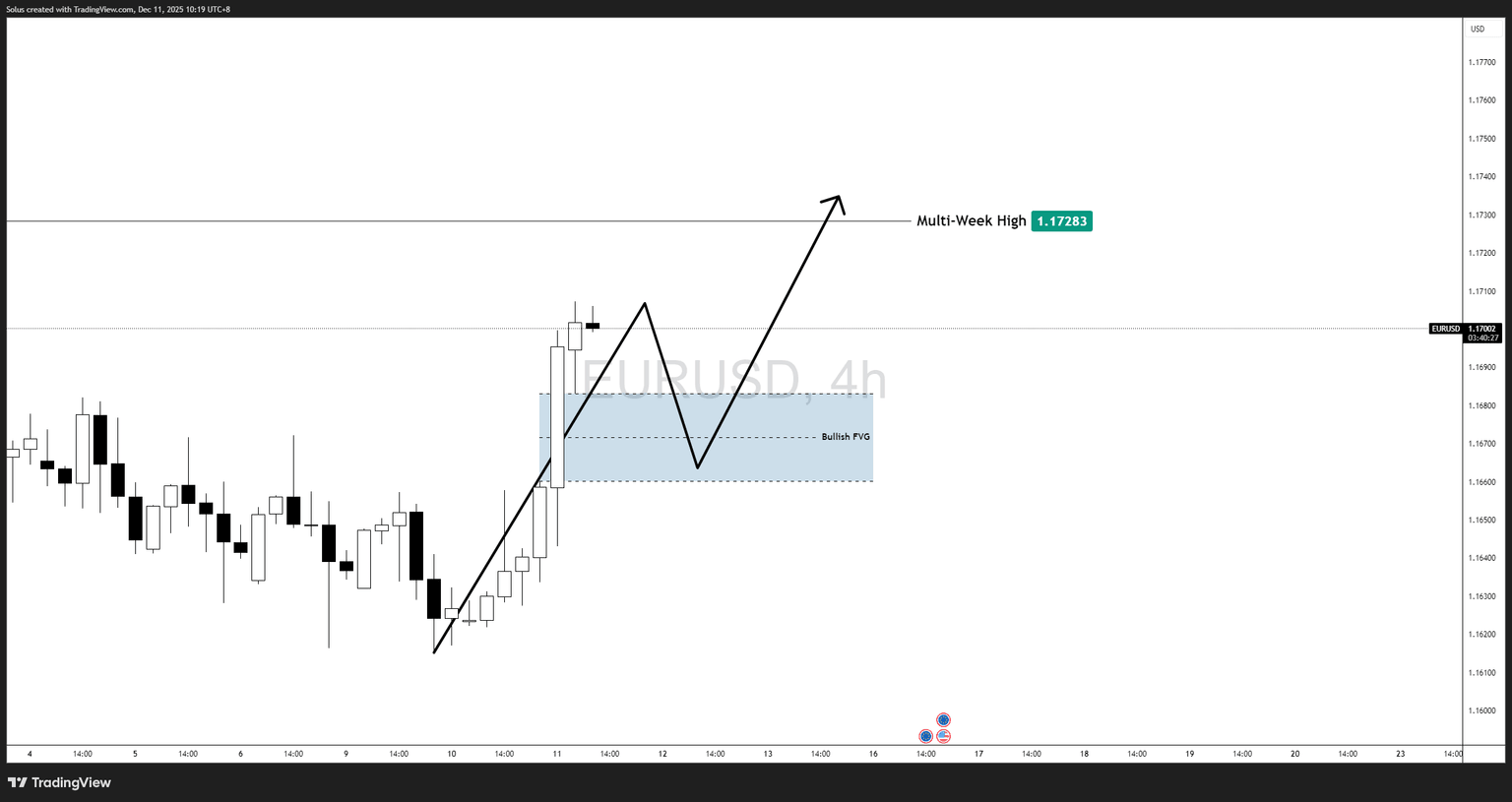
A bullish continuation remains the higher-probability path if:
Upside targets:
A dovish Fed + structural breakout supports this idea.
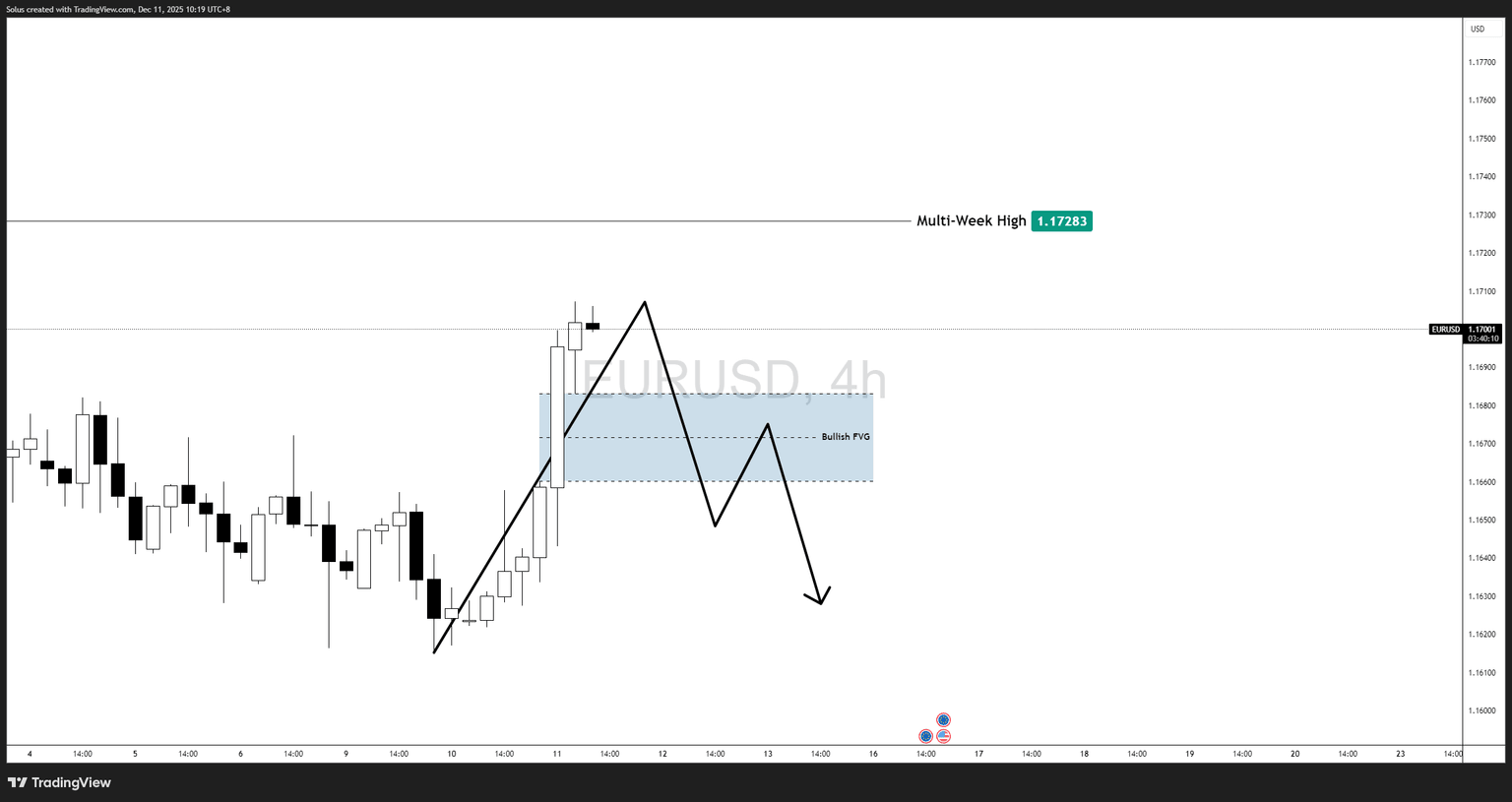
A corrective decline may unfold if:
Downside levels:
This would not break the overall bullish narrative but would reset the trend.
The December Fed rate cut has already reshaped USD expectations. With the door open for further easing and the U.S. economy cooling, EUR/USD now has fundamental backing for medium-term upside—provided the Eurozone doesn’t weaken sharply in upcoming data.
Technically, the market wants a pullback. Fundamentally, the dollar wants to soften.
Put together, EUR/USD favors buy-the-dip conditions into the 4H FVG unless macro data flips the narrative.
.webp "Precision probiotics from kimchi and collagen companions")