The main category of All News Articles.
You can use the search box below to find what you need.
[wd_asp id=1]
The main category of All News Articles.
You can use the search box below to find what you need.
[wd_asp id=1]
Important DisclaimersFXEmpire is owned and operated by Empire Media Network LTD., Company Registration Number 514641786, registered at 7 Jabotinsky Road, Ramat Gan 5252007, Israel. The content provided on this website includes general news and publications, our personal analysis and opinions, and materials provided by third parties. This content is intended for educational and research purposes only. It does not constitute, and should not be interpreted as, a recommendation or advice to take any action, including making any investment or purchasing any product. Before making any financial decision, you should conduct your own due diligence, exercise your own discretion, and consult with competent advisors. The content on this website is not personally directed to you, and we do not take into account your individual financial situation or needs. The information contained on this website is not necessarily provided in real time, nor is it guaranteed to be accurate. Prices displayed may be provided by market makers and not by exchanges. Any trading or other financial decision you make is entirely your own responsibility, and you must not rely solely on any information provided through the website. FXEmpire does not provide any warranty regarding the accuracy, completeness, or reliability of any information contained on the website and shall bear no responsibility for any trading losses you may incur as a result of using such information. The website may include advertisements and other promotional content. FXEmpire may receive compensation from third parties in connection with such content. FXEmpire does not endorse, recommend, or assume responsibility for the use of any third-party services or websites. Empire Media Network LTD., its employees, officers, subsidiaries, and affiliates shall not be liable for any loss or damage resulting from your use of the website or reliance on the information provided herein.Risk DisclaimersThis website contains information about cryptocurrencies, contracts for difference (CFDs), and other financial instruments, as well as about brokers, exchanges, and other entities trading in such instruments. Both cryptocurrencies and CFDs are complex instruments and involve a high risk of losing money. You should carefully consider whether you understand how these instruments work and whether you can afford to take the high risk of losing your money. FX Empire encourages you to conduct your own research before making any investment decision and to avoid investing in any financial instrument unless you fully understand how it works and the risks involved.
According to ADM’s Sleep, Stress & Mood Report, 76% of global consumers agree that sleep quality affects how they feel throughout the day, and 74% believe it influences their overall quality of life.
However, less than half reported usually feeling refreshed upon waking, and nearly half described feeling sluggish or tired during the day — factors that can affect mood, stress resilience, and sustained energy levels.
In fact, only around two-thirds feel satisfied with their mental wellness.
While many are addressing this through exercise or improving sleep habits, just over 20% are turning to dietary changes or supplements as a solution.
“This points to a meaningful opportunity for functional food and beverage brands to support consumers in closing the sleep satisfaction gap. Convenient formats, such as ready-to-drink (RTD) teas, gummies, smoothies, snack bars, baked goods, and tablets, that meet high sensory expectations, are particularly appealing as they encourage regular use,” Lois Mo, Marketing Director for Health & Wellness, APAC at ADM, told NutraIngredients.
“By offering tailored wellness solutions that help improve restfulness, brands can positively influence consumers’ day-to-day mood and overall mental well-being.”
Across regions, almost one in three consumers report feeling “extremely or very stressed” on a daily basis, highlighting the impact of modern routines on sleep quality and daily functioning.
At the same time, growing awareness of the connection between sleep, stress, and mood is opening opportunities for functional nutrition products that address these concerns simultaneously.
“Consumers are motivated not only by immediate benefits, such as reduced stress or increased energy, but also by long-term objectives like improved physical health and quality of life,” said Mo.
Additionally, ADM’s report shows that 62% of global consumers believe digestive health is directly linked to better sleep, accelerating interest in gut-brain axis ingredients across Asia-Pacific (APAC).
This places biotics in a strong position as multifunctional solutions that support better sleep, promote emotional regulation, and cater to broader wellness goals.
In China, respondents showed the highest interest in probiotics/postbiotics (43%) and prebiotics/fiber (45%), significantly above the global average of 20%, reflecting regional curiosity about the role of gut health in mood, stress, and sleep.
In South East Asia (SEA), consumers also increasingly view sleep through a well-being lens. For instance, in Malaysia (31%) and Thailand (34%), fatigue, stress, hydration, and sleep quality are often linked to visible skin concerns such as dark under-eyes and dryness.
“This wider sleep-stress-skin connection has driven interest in everyday functional formats, such as juice, coffee, tea, and other hydration-driven categories, which easily incorporate biotics and postbiotics. These formats offer a simple, habitual way for consumers to support both restfulness and overall well-being,” said Mo.

Mo added that consumers are increasingly seeking ingredients that support better rest. Although traditional botanicals, vitamins, and minerals continue to play a major role, they are looking beyond familiar solutions.
“Chamomile and lavender are popular botanicals known for their calming effects, and magnesium and B, C, and D vitamins help support overall mental and physical wellness. Melatonin remains widely recognized for its role in regulating sleep specifically.”
A growing body of clinical research indicate that resilient postbiotics, such as Lactobacillus gasseri CP2305, may improve sleep quality, efficiency, and duration, while also supporting emotional well-being by reducing stress.
Traditional probiotics are highly sensitive to heat, moisture, and oxygen, which limits their use. In contrast, heat-stable postbiotics such as Lactobacillus gasseri CP2305 retain their health-promoting properties without refrigeration, enabling broad applications across supplement and functional food products.
Importantly, brands can meet rising demand for sleep and mood support by offering convenient, appealing products that fit into busy lifestyles.
Based on ADM’s report, RTD teas are the top format consumers want for sleep support, closely followed by baked goods like cookies, with melatonin and chamomile remaining highly trusted ingredients.
“Regional preferences further shape opportunity areas. In SEA, Malaysia favours formats such as juices, smoothies, dairy drinks, and supplements, while Thailand leans toward bottled water, coffee, tea, and smoothies,” said Mo.
There is also strong trust in expert recommendations among consumers in this region, especially Malaysia and Thailand, where healthcare professionals are top influencers, underscoring the need for clinically supported claims and transparent communication.
“Rising concerns related to stress, hydration, appearance, and sleep quality indicate strong demand for multifunctional products. Brands that can deliver holistic, science-backed solutions that address multiple needs simultaneously will be well positioned to stand out,” Mo concluded.
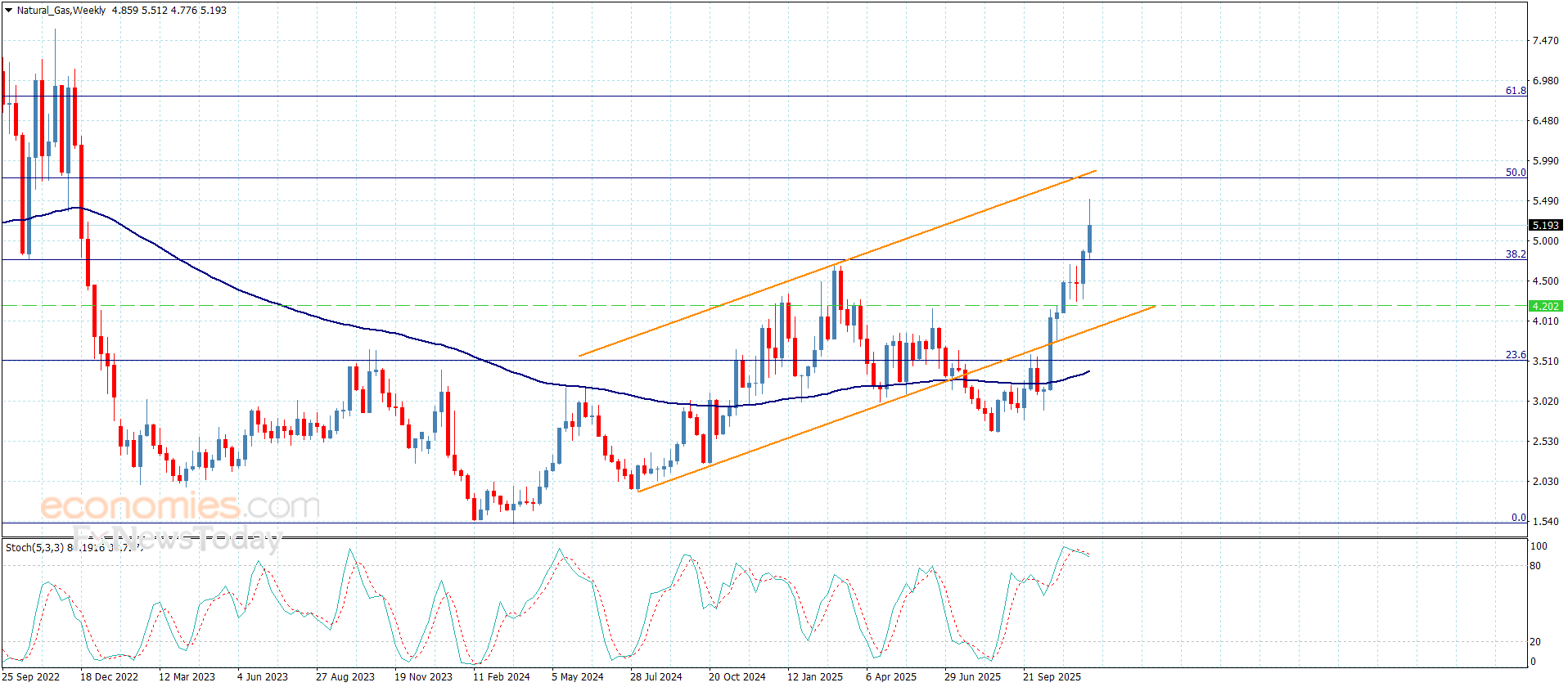
Natural gas price reached $5.510 level in Friday’s trading, to record the previously suggested initial main target, which forces it to form quick rebound towards $5.150, affected by stochastic attempt to exit the overbought level.
This will not threaten the main bullish scenario due to the stability within the bullish channel, besides the continuation of forming extra support at $4.750 level against the current trading, therefore, we will keep waiting for gathering extra bullish momentum, to ease the mission of its stability above $5.450 level, then wait for recording the next main target near $5.710.
The expected trading range for today is between $5.000 and $5.450
Trend forecast: Bullish
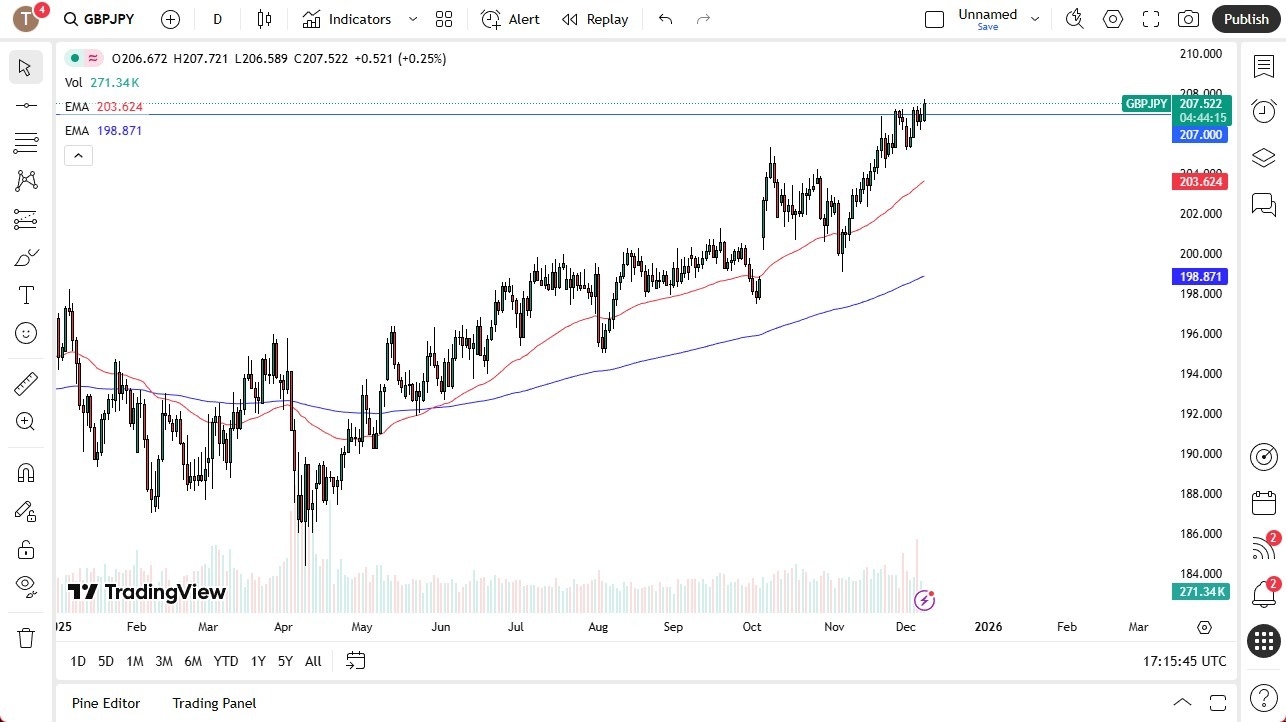
The British Pound has rallied a bit during the trading session on Monday, breaking above the 207 Yen level, and in fact is looking like it’s trying to get to the 208 Yen level. This is a pair that is focusing, I believe, mainly on the Yen because, quite frankly, the Bank of England is likely to cut rates this month.

But at the same time, the Bank of Japan is so stuck in its loose monetary policy that even if it did raise rates, it wouldn’t be enough to make the difference up. Global liquidity requires cheap funding out of Japan, and I think that will continue to be the mainstay of the asset bubbles that everybody enjoys.
Short-term pullbacks are buying opportunities, and I do believe that the 50-day EMA at the very least is your floor, and that is right around the 203.62 Yen level and rising. As long as we don’t get some type of major meltdown on a global stage, I expect the Japanese Yen to continue to weaken, but I don’t know that we won’t get the occasional pullback. You’ll just have to make sure that you have enough space for your stop loss to take advantage of these dips and, more importantly, hang on to the trend.
You get paid at the end of every day to hold this pair, and that’s something that I like. It helps soften the pullbacks, and of course, you also have to keep in mind that even if the Bank of England cuts rates, you can still drive a truck through the interest rate differential when it comes to these two currencies.
Ready to trade our daily forecast and analysis? Here’s a list of some of the top forex brokers UK to check out.
Christopher Lewis has been trading Forex and has over 20 years experience in financial markets. Chris has been a regular contributor to Daily Forex since the early days of the site. He writes about Forex for several online publications, including FX Empire, Investing.com, and his own site, aptly named The Trader Guy. Chris favours technical analysis methods to identify his trades and likes to trade equity indices and commodities as well as Forex. He favours a longer-term trading style, and his trades often last for days or weeks.
Notable Japanese Tea Varieties Beyond Matcha: Workshops Showcasing the Appeal of Matcha and Roasted Green Tea to be Held in Two U.S. Cities
—The GREEN TEA Room JFOODO PODCAST launches December 8—
The Japan Food Product Overseas Promotion Center (JFOODO) has been engaging U.S. millennials since 2017. In FY2025, they will hold two Japanese tea workshops in the United States (U.S.) as part of their efforts to promote understanding of the high quality that Japanese tea leaves boast and to further expand the Japanese tea fan community.
This press release features multimedia. View the full release here: https://www.businesswire.com/news/home/20251208596856/en/
Japanese tea, a key export item targeted by the Japanese government for its export value goal of 5 trillion yen by 2030, is one of Japan’s representative agricultural, forestry, and fishery products. Demand is growing, driven by factors such as rising health consciousness and increased interest in Japanese cuisine overseas, particularly in the United States. Japan’s global tea exports from January to August 2025 totaled 38 billion yen, already significantly surpassing the 36.3 billion yen recorded last year.
With the growing demand for matcha, this workshop aims to explore the expanding world of Japanese tea. Participants will learn how to utilize matcha according to its quality while also deepening their understanding of the appeal of Japanese tea, which encompasses a wide variety of tea types beyond matcha, including roasted green tea (hojicha), sencha, and gyokuro.
The workshop will offer opportunities to learn about various Japanese teas, including the characteristics of roasted green tea—which has been gaining attention in the U.S. in recent years—and brown rice tea (genmaicha), a traditional Japanese blended tea. Additionally, activities such as matcha preparation demonstrations and tea tasting sessions (Chakabuki) will be conducted. The aim is to boost the fan community by providing opportunities for participants to interact with each other.
The workshop will be held in two cities: Los Angeles and New York. The Los Angeles workshop will feature Zach Mangan, owner of the Japanese tea specialty cafe Kettl, as an instructor. Additionally, talk sessions are scheduled with wellness creator and founder of Frauth Matcha Remy Morimoto Park, as well as Alyssa Antoci, lifestyle creator. The event will be streamed and recorded on Instagram Live; all are welcome to participate.
[Workshop Overview]
Session 1
Location: Los Angeles
Instructor: Zach Mangan
Guests:
Remy Morimoto Park (@veggiekins) — Cookbook author, wellness creator and founder of Frauth Matcha
Alyssa Antoci (@alyssaantoci) — Lifestyle creator
The workshop will consist of three 30-minute sessions.
Part 1: Learning Session (30 minutes) “Discover Matcha: Learn & Experience Tea Whisking”
Part 2: Japanese Green Tea Real Connection (30 minutes) “Your Matcha Story”
Part 3: Community Circle (30 minutes) “Tasting & Expressing like Chakabuki”
Session 2
Location: New York
Instructor: Zach Mangan
Guest: Sean Considine (among others)
*The in-person participants for the second session will be selected via lottery on Instagram at a later date. Details will be announced on the official account.
[Instagram Live account]
https://www.instagram.com/justteayourself/
The GREEN TEA Room JFOODO PODCAST launches December 8
JFOODO utilizes its official Instagram account to promote Japanese tea in the U.S. market, expanding awareness of Japanese tea’s appeal and broadening its fan base. As of December 1, 2025, the account has grown to 55 thousand followers.
This fiscal year, in response to the growing demand for Japanese tea in the U.S., JFOODO will launch an official podcast channel and begin streaming starting December 8. On the podcast, Remy—who is also a guest at the first workshop—serves as this year’s host. We’ll deliver content where you can enjoy learning about the charm and knowledge of Japanese tea, including visits to tea fields and Japanese tea cafes in Japan, as well as scenes from talk sessions held locally in the U.S.
Official podcast information
https://creators.spotify.com/pod/profile/jfoodogreenteaus/
About JFOODO
The Japan Food Overseas Promotion Center (JFOODO) was established on April 1, 2017, to lead nationwide consumer-facing promotion efforts aimed at branding Japanese agricultural, forestry, and fishery products as well as foods. To further expand exports of Japanese agricultural, forestry, and fishery products and foods, it is essential to stimulate additional demand overseas. JFOODO will stimulate demand by strengthening overseas consumer promotions and contribute to expanding exports of Japan’s agricultural, forestry, and fishery products.
Website: https://www.jetro.go.jp/en/jfoodo/
Media contact:
The Japan Food Product Overseas Promotion Center Public Relations Office (within Dentsu PRC)
Email: JGT_JFOODO@group.dentsuprc.co.jp
View source version on businesswire.com: https://www.businesswire.com/news/home/20251208596856/en/
Dogecoin is trading near $0.1438 as it struggles to build momentum after several failed recovery attempts. The broader trend still leans lower because the price remains capped under the short-term and long-term EMAs.
Consequently, sellers continue to shape market direction, and buyers show limited strength at current levels. Besides this technical pressure, traders now watch liquidity signals and spot flows for clues about the next major move. Sentiment remains cautious because the market has not confirmed any strong shift in direction.
DOGE continues to move inside a descending c…
Read The Full Article Dogecoin Price Prediction: DOGE Faces Pressure as Downtrend Persists Despite Anniversary Milestone On Coin Edition.
Occidental Petroleum Corporation (OXY) declined slightly in its latest intraday trading after the stock collided with the resistance of its previous 50-day SMA, as it attempts to acquire positive momentum that may help it overcome its negative pressure. This comes under the dominance of a short-term corrective ascending trend, with the price moving alongside a supporting trendline, accompanied by positive signals from the RSI indicators.
Therefore we expect the stock to rise in its upcoming trading, but only if it first breaks the resistance level of $43.45, targeting thereafter its next resistance at $46.00.
Today’s price forecast: Neutral
The British pound looks like it is rolling over a little bit. And that’s not a huge surprise because we had that explosive move a couple of days back due to the budget. The question is, will that budget change the trajectory of the economy? The answer, of course, is no. And recently, the Bank of England came within a whisker of cutting the rate. So, I think the market is starting to focus on that again.
At this point, we’ll be watching 1.32 to see if we can break down below it. If we can, then that’s a very negative sign. If we bounce from there, then we could head back into the previous consolidation. And just like in the case of the euro, I think it’s the Federal Reserve that determines the next move.
The euro rallied slightly during the trading session on Monday, but it’s hanging around the 50-day EMA. And I think this is an area that is going to continue to be somewhat noisy. All things being equal, I think we’re just killing time here. But if we were to break down below the 0.87 level, then I think the market really starts to drop. If we rally from here and clear the 0.875 level, then I think we go looking at the 0.8850 level again. That being said, this is a very choppy market. It always is choppy. So, I’m not looking for rapid or quick moves.
For a look at all of today’s economic events, check out our economic calendar.
Creatine is popping up everywhere, from new innovations at SupplySide Global to emerging research on the beneficial effects for women in all life stages. And the sales data support this observation. Nutrition Business Journal estimates total creatine sales will top $10 million in 2026 and reach an annual growth of 7-8% between 2025 and 2028, according to analyst Erika Craft.
Creatine aligns perfectly with a key consumer concern – loss of muscle mass. From being a possible side effect of GLP-1 (glucagon-like peptide-1) medications to an aging concern, muscle mass and strength are trending in dietary supplements well outside of the sports nutrition category.
For this reason, researchers in Spain investigated the impact of creatine and beta-hydroxy-beta-methylbutyrate (HMB, a metabolite of leucine) supplementation on body composition and functional strength in older adults.
Nutrition experts widely regard creatine as a top nutritional strategy for improving muscle strength, in combination with strength training, for individuals ranging from the average to elite athletes and beyond.
Another ingredient – beta-hydroxy-beta-methylbutyrate, or HMB – also supports muscle mass, although the gains are modest and HMB does not result in significant body composition improvements.
However, little data exist to show how the combination of creatine and HMB impacts strength in older adults. Research on the benefits of creatine and HMB supplementation in an aging population presents a compelling opportunity for the dietary supplement industry to support healthy aging.
Older adults can support healthy aging by coupling creatine and HMB supplementation with strength training. This strategy helps preserve functional strength and improve quality of life.
A combination of creatine monohydrate (CM) and beta-hydroxy-beta-methylbutyrate (HMB).
Design: Randomized, double-blind, placebo-controlled crossover trial.
Study size: 30 physically active adults aged 60 years or older (20 men and 10 women).
Length: Two 6-week periods with a 3-week washout in between.
Dosage: 3 grams CM plus 3 grams HMB. Sachets with active ingredients were mixed with yogurt or fruit juice and consumed daily shortly before bedtime.
Outcomes measured: Functional strength assessment, including handgrip strength, isometric leg and back strength and isometric arm flexion strength; body composition, including height, body mass, body mass index (BMI), fat mass and muscle mass; and nutritional evaluation via food frequency questionnaires.
Integral physical conditioning (IPC): All subjects participated in four supervised IPC sessions per week, including exercise circuits and high-intensity interval training (HIIT).
Participants experienced decreases in fat mass and fat percentage when supplementing with CM and HMB and underwent slight increases in functional strength measurements. “Improvements were largely independent of changes in muscle mass, supporting a potential neuromuscular mechanism,” the authors noted.
This study is the first glimpse into how co-supplementation of creatine and HMB benefits older populations. Prior research shows creatine supplementation benefits vascular health and supports cognition in older adults, in addition to supporting muscle strength and lean body mass.
Researchers found HMB supplementation attenuated muscle atrophy brought on by inactivity in a rat model, indicating the potential benefit of HMB in older individuals. However, to date, there are no data suggesting HMB provides benefits in individuals with sarcopenia.
While the current clinical trial was small and limited the ability to detect sex-specific effects of creatine and HMB supplementation, the results provide a clear basis for designing future clinical trials. The authors noted that direct neuromuscular measurements should be used in further studies to confirm functional improvements were because of neuromuscular mechanisms and independent of muscle mass changes.
XRP is approaching a key decision zone, and analysts are watching whether the price can break major resistance to confirm a Wave-3 move toward $2.73.
At the time of writing, XRP trades near $2.07, while traders assess tightening chart structures, Ripple’s evolving regulatory position, and a cautiously improving macro backdrop. With market volatility compressing across multiple timeframes, XRP is now approaching an inflection point that traders have been anticipating for weeks.
XRP remains steady near $2.07, reflecting a 1% daily gain as it continues to defend short-term support. According to Brave New Coin’s latest chart data, XRP’s 24-hour trading volume stands at $3.44 billion, signaling active participation despite lower volatility across major altcoins.
XRP was trading at around 2.07, up 1.01% in the last 24 hours at press time. Source: XRP price via Brave New Coin
XRP continues to draw attention following Ripple’s recent procedural progress in the SEC lawsuit and renewed focus from institutional participants exploring the XRP Ledger for cross-border liquidity solutions.
Crypto trader PrecisionTrade3, known for applying Elliott Wave analysis across Bitcoin and large-cap altcoins since 2019, outlines a potential five-wave impulse structure forming on XRP’s 4-hour chart. “My next target is $2.73 for Wave 3, but we need to break the two local resistances at $2.18 and $2.30 first,” he wrote on X.
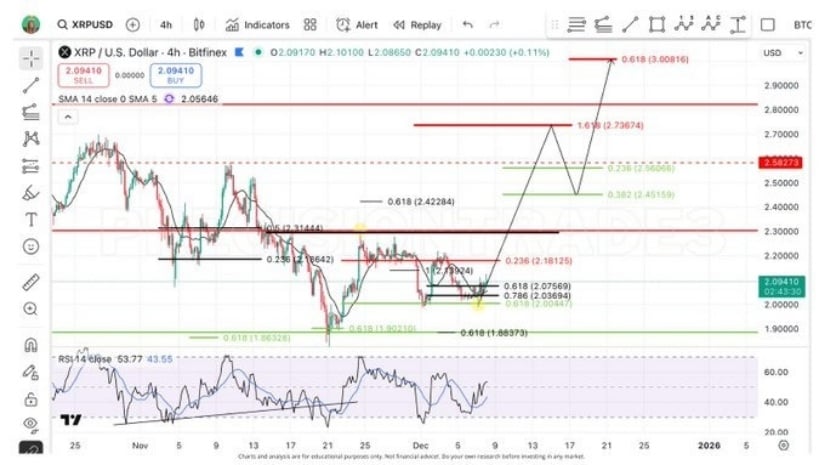
XRP eyes a Wave-3 move toward $2.73, needing to break $2.18 and $2.30 resistance while holding support at $2.07. Source: @PrecisionTrade3 via X
His analysis shows XRP potentially completing a corrective Wave 2 and preparing for an expansion phase—if price can reclaim overhead resistance with supporting volume.The post has accumulated more than 26,000 views, indicating strong community interest.
Market analyst Ali Martínez (@ali_charts)—followed by over 50,000 traders for his pattern-based analytics—identified a descending triangle on the XRP 1-hour chart, showing price tightening between $2.05 support and the upper trendline near $2.10. “XRP is set up for a 16% move once it breaks out of this triangle,” Ali noted.

XRP could gain 16% on a breakout from its current triangle pattern. Source: @ali_charts via X
A breakout above the trendline could target $2.38, with potential to revisit the price zone that historically produced strong volatility spikes in earlier cycles.
Ali also noted XRP’s 25% monthly rally, partly influenced by positive developments in Ripple’s legal case and increased institutional flows.
A separate review from TradingView analyst MonoCoinSignal shows XRP struggling beneath a tight cluster of moving averages on the 1-hour chart, including the EMA50 at $2.07 acting as support, and the EMA20, EMA200, and HMA55 all stacked between $2.08–$2.09 as resistance. This compression suggests sellers continue to defend the upper band aggressively.
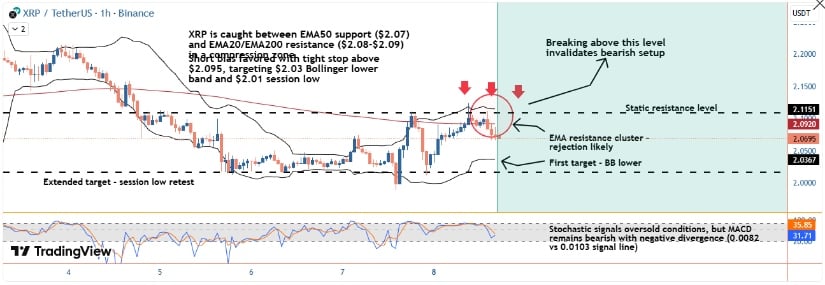
XRP trades in a tight $2.07–$2.09 compression zone, with key moving averages and low volume hinting at a potential short-term breakout or breakdown. Source: MonoCoinSignal on TradingView
MonoCoinSignal adds that trading volume is nearly 50% below the daily average, signaling a lack of strong buyer commitment. Until XRP reclaims the $2.09 level with convincing volume, the short-term bias remains neutral to slightly bearish.
Stochastic: Oversold at 12.2 (may support short-term bounce potential)
MACD: Bearish alignment remains intact
RSI: Neutral at 48.5
ADX: 33.5, signaling a directional trend rather than consolidation
The presence of lower-high structures supports a mildly bearish near-term bias.A breakdown below $2.07 could open the path toward $2.03 or the $2.01 session low, while reclaiming $2.09 with strong volume would be the first sign of bullish momentum rebuilding.
While Ripple’s legal battle with the SEC remains ongoing, recent procedural steps—including rulings limiting the SEC’s ability to classify XRP as a security in secondary markets—have contributed to improved sentiment. However, final outcomes remain uncertain, and legal risk is still an active factor in XRP volatility.
Institutional interest in the XRP Ledger has also increased in 2024–2025, with new pilots in remittance corridors and liquidity-on-demand use cases, particularly in Asia. These developments support longer-term utility discussions but do not guarantee short-term price performance.
Bitcoin’s approach toward key resistance levels above $100,000 continues to shape broader market confidence. Historically, XRP has reacted strongly during periods when Bitcoin stabilizes after major runs.