The main tag of Forex News Today Articles.
You can use the search box below to find what you need.
[wd_asp id=1]

24 04, 2026

EUR/USD: Elliott Wave Analysis and Forecast for 24.04.26–01.05.26

By |2026-04-24T15:33:12+03:00April 24, 2026|Forex News, News|0 Comments

The article covers the following subjects:

Major Takeaways

  • Main scenario: Consider long positions from corrections above 1.1445 with a target of 1.2088–1.2400. A buy signal: the price holds above 1.1445. Stop Loss: below 1.1405, Take Profit: 1.2088–1.2400.
  • Alternative scenario: Breakout and consolidation below 1.1445 will allow the pair to continue declining to the levels of 1.1185–1.1000. A sell signal: the 1.1445 level is broken to the downside. Stop Loss: above 1.1485, Take Profit: 1.1185–1.1000.

Main Scenario

Consider long positions above the level of 1.1445 with a target of 1.2088–1.2400 once the correction ends.

Alternative Scenario

Breakout and consolidation below 1.1445 will allow the pair to continue declining to the levels of 1.1185–1.1000.

Analysis

On the weekly timeframe, an ascending wave of larger degree B is developing, with wave (A) of B forming as its part. On the daily timeframe, the third wave 3 of (A) is apparently unfolding. Within it, wave i of 3 has formed, corrective wave ii of 3 has been completed, and wave iii of 3 has started developing. The first wave of smaller degree (i) of iii is forming on the H4 chart. As its parts, wave iii of (i) has been completed, and a local correction iv of (i) is nearing completion. If the presumption is correct, EUR/USD will continue to rise to the levels of 1.2088–1.2400 after the correction ends. The level of 1.1445 is critical in this scenario. A breakout below it will allow the pair to continue falling to the levels of 1.1185–1.1000.


This forecast is based on the Elliott Wave Theory. When developing trading strategies, it is essential to consider fundamental factors, as the market situation can change at any time.

Price chart of EURUSD in real time mode

The content of this article reflects the author’s opinion and does not necessarily reflect the official position of LiteFinance broker. The material published on this page is provided for informational purposes only and should not be considered as the provision of investment advice for the purposes of Directive 2014/65/EU.


According to copyright law, this article is considered intellectual property, which includes a prohibition on copying and distributing it without consent.

Rate this article:

{{value}} ( {{count}} {{title}} )


Source link

24 04, 2026

GBP/JPY Price Forecast: Pound rejected at 216.00, risks deepen below 215.00

By |2026-04-24T11:31:59+03:00April 24, 2026|Forex News, News|0 Comments

GBP/JPY advance stalled around 215.70 on Thursday, retreating to 215.00 as risk appetite deteriorated amid Middle East headlines, leaving traders uncertain about the conflict’s outcome. The cross trades at 215.06 at the time of writing.

GBP/JPY Price Forecast: Technical Outlook

The GBP/JPY pair is consolidating for the second straight day, suggesting that further gains are off the table, with the psychological 216.00 level not yet tested. Worth noting that every upside move towards the latter was rejected, with the 214.00 figure capping downward moves.

Momentum is bullish, as depicted by the Relative Strength Index (RSI), though moving gradually towards its 50 neutral level.

If GBP/JPY closes daily below 215.00, the potential to test the April 17 swing low of 214.00 increases. On further weakness, the next support would be the 20-day Simple Moving Average (SMA) at 213.35, followed by the 50-day SMA at 211.98.

On the other hand, if GBP/JPY registers a new yearly high above 215.91, the chance of clearing 216.00 increases.

GBP/JPY Price Chart – Daily

GBP/JPY daily chart

Japanese Yen Price This week

The table below shows the percentage change of Japanese Yen (JPY) against listed major currencies this week. Japanese Yen was the strongest against the Swiss Franc.

USD EUR GBP JPY CAD AUD NZD CHF
USD 0.50% 0.17% 0.59% 0.09% -0.05% 0.15% 0.64%
EUR -0.50% -0.32% 0.07% -0.39% -0.52% -0.39% 0.14%
GBP -0.17% 0.32% 0.41% -0.06% -0.19% -0.06% 0.47%
JPY -0.59% -0.07% -0.41% -0.51% -0.58% -0.45% 0.07%
CAD -0.09% 0.39% 0.06% 0.51% -0.03% 0.05% 0.53%
AUD 0.05% 0.52% 0.19% 0.58% 0.03% 0.20% 0.70%
NZD -0.15% 0.39% 0.06% 0.45% -0.05% -0.20% 0.50%
CHF -0.64% -0.14% -0.47% -0.07% -0.53% -0.70% -0.50%

The heat map shows percentage changes of major currencies against each other. The base currency is picked from the left column, while the quote currency is picked from the top row. For example, if you pick the Japanese Yen from the left column and move along the horizontal line to the US Dollar, the percentage change displayed in the box will represent JPY (base)/USD (quote).

Source link

24 04, 2026

EUR/JPY Price Forecast: Holds above 186.50 to test nine-day EMA barrier

By |2026-04-24T07:31:06+03:00April 24, 2026|Forex News, News|0 Comments

EUR/JPY inches higher after three days of gains, trading around 186.60 during Asian hours on Friday. The technical analysis of the daily chart indicates the currency cross is positioned slightly below the ascending channel, signaling potential for a bearish reversal.

However, the EUR/JPY cross holds a constructive bullish bias as it remains above the 50-day Exponential Moving Average (EMA) while facing immediate friction at the nine-day EMA.

Additionally, the 14-day Relative Strength Index sits around 58, comfortably above the midline yet below overbought territory, which suggests positive but not overstretched momentum that could favor further upside as long as the EUR/JPY cross holds over the underlying average.

The EUR/JPY cross is testing the immediate barrier at the nine-day EMA of 186.69. A rebound back to the ascending channel would reinforce the bullish bias and support the EUR/JPY cross to test the all-time high of 187.95, which was recorded on April 17. Further advances above this level would support the currency cross to explore the region around the upper boundary of the channel, around 189.40.

On the downside, further declines would put downward pressure on the EUR/JPY cross to navigate the region around the 50-day EMA at 184.86.

EUR/JPY: Daily Chart

(The technical analysis of this story was written with the help of an AI tool.)

Euro Price Today

The table below shows the percentage change of Euro (EUR) against listed major currencies today. Euro was the strongest against the New Zealand Dollar.

USD EUR GBP JPY CAD AUD NZD CHF
USD 0.09% 0.10% 0.05% 0.10% 0.17% 0.21% 0.12%
EUR -0.09% 0.00% 0.00% 0.00% 0.08% 0.12% 0.04%
GBP -0.10% -0.01% -2.13% 0.02% 0.08% 0.12% 0.02%
JPY -0.05% 0.00% 2.13% 0.03% 0.10% 0.14% 0.03%
CAD -0.10% 0.00% -0.02% -0.03% 0.06% 0.10% 0.02%
AUD -0.17% -0.08% -0.08% -0.10% -0.06% 0.04% -0.07%
NZD -0.21% -0.12% -0.12% -0.14% -0.10% -0.04% -0.09%
CHF -0.12% -0.04% -0.02% -0.03% -0.02% 0.07% 0.09%

The heat map shows percentage changes of major currencies against each other. The base currency is picked from the left column, while the quote currency is picked from the top row. For example, if you pick the Euro from the left column and move along the horizontal line to the US Dollar, the percentage change displayed in the box will represent EUR (base)/USD (quote).

Source link

24 04, 2026

GBP/USD Forecast Live: Retail Sales to Test Pound Sterling Strength

By |2026-04-24T03:30:27+03:00April 24, 2026|Forex News, News|0 Comments


– Written by

The Pound to US Dollar (GBP/USD) exchange rate traded without a clear direction on Thursday, as a combination of upbeat UK PMI data and a cautious market mood pulled the pair in opposite directions.

At the time of writing, GBP/USD hovered around $1.3505, having faced narrow volatility throughout the session.

The Pound (GBP) had a muted start to the trading session, drifting lower as markets considered the possible economic consequences of the Middle East crisis, including concerns that the UK government might introduce tax increases later this year.

As the day went on, however, Sterling found renewed support following the release of the UK’s preliminary April PMI data, which exceeded expectations in both the manufacturing and services sectors.

The services sector, in particular, drew focus, with activity rising from 50.5 to 52, outperforming forecasts that had pointed to a slowdown towards the 50 threshold.

The data also revealed stronger-than-expected growth in price pressures.

Reflecting on the results, Chris Williamson, Chief Business Economist at S&P Global Market Intelligence, said that price growth has surged at a pace rarely observed outside of the pandemic period, indicating that inflation may climb higher than many analysts had projected.

Save on Your GBP/USD Transfer

Get better rates and lower fees on your next international money transfer.
Compare TorFX with top UK banks in seconds and see how much you could save.


Compare the Best GBP/USD Rates »

This led markets to revise their expectations for monetary policy, with speculation that the Bank of England (BoE) could still pursue tightening this year helping to underpin the Pound.

The US Dollar (USD) found early support as a cautious market mood boosted demand for safe-haven assets, with investors unsettled by developments in the Middle East.

While the US moved to extend its ceasefire arrangement, Iran signalled it had not formally accepted the agreement, citing the continued US blockade of the Strait of Hormuz. At the same time, reported attacks on vessels in the region added to investor unease.

Ongoing uncertainty and heightened geopolitical tensions dampened market sentiment, helping to underpin the US Dollar.

Short-Term GBP/USD Forecast: UK Retail Sales in Focus

Looking ahead, attention turns to the UK’s March retail sales release on Friday. A slight rebound of around 0.2% growth may offer some support to Sterling, though any upside is likely to be modest.

For the US Dollar, focus will shift to the University of Michigan’s final consumer sentiment reading. If the data confirms a sharp drop in household confidence during April, it could place some pressure on USD.

Broader market sentiment is also expected to remain a key driver of GBP/USD. Continued developments in the Middle East may inject further volatility, with shifts in risk appetite potentially causing fluctuations in the currency pair.

Like this piece? Please share with your friends and colleagues:


International Money Transfer? Ask our resident FX expert a money transfer question or try John’s new, free, no-obligation personal service! ,where he helps every step of the way,
ensuring you get the best exchange rates on your currency requirements.

TAGS: Pound Dollar Forecasts

Source link

23 04, 2026

USD/JPY: Scope for further upside towards 160.50 improves amid triangle breakout

By |2026-04-23T22:29:58+02:00April 23, 2026|Forex News, News|0 Comments

The USD/JPY pair extends its four-day upside to near 159.75 during the European trading session on Thursday. The pair reflects strength as the US Dollar (USD) outperforms its peers due to rising oil prices amid the prolonged closure of the Strait of Hormuz.

US Dollar Price Today

The table below shows the percentage change of US Dollar (USD) against listed major currencies today. US Dollar was the strongest against the New Zealand Dollar.

USD EUR GBP JPY CAD AUD NZD CHF
USD 0.20% 0.10% 0.16% 0.03% 0.32% 0.48% 0.11%
EUR -0.20% -0.08% -0.06% -0.17% 0.11% 0.28% -0.11%
GBP -0.10% 0.08% 0.04% -0.09% 0.21% 0.37% -0.03%
JPY -0.16% 0.06% -0.04% -0.14% 0.17% 0.29% -0.06%
CAD -0.03% 0.17% 0.09% 0.14% 0.31% 0.45% 0.06%
AUD -0.32% -0.11% -0.21% -0.17% -0.31% 0.16% -0.27%
NZD -0.48% -0.28% -0.37% -0.29% -0.45% -0.16% -0.40%
CHF -0.11% 0.11% 0.03% 0.06% -0.06% 0.27% 0.40%

The heat map shows percentage changes of major currencies against each other. The base currency is picked from the left column, while the quote currency is picked from the top row. For example, if you pick the US Dollar from the left column and move along the horizontal line to the Japanese Yen, the percentage change displayed in the box will represent USD (base)/JPY (quote).

As of writing, the US Dollar Index (DXY), which tracks the Greenback’s value against six major currencies, trades 0.2% higher to near 98.80, the highest level seen in over a week.

Higher oil prices have boosted United States (US) inflation expectations, a scenario that discourages the Federal Reserve (Fed) from easing its monetary policy. According to the CME FedWatch tool, the odds of the Fed holding interest rates steady in the current range of 3.50%-3.75% in the December meeting are 76.8%.

In Thursday’s session, investors will focus on the preliminary US S&P Global Purchasing Managers’ Index (PMI) data for April, which will be published at 13:45 GMT. The US private sector business activity growth is expected to have increased due to improvement in both the manufacturing and the services sector output.

Meanwhile, the Japanese Yen (JPY) trades mixed against its major currency peers, as investors shift focus to the Bank of Japan’s (BoJ) monetary policy announcement on April 28, Tuesday.

USD/JPY technical analysis

USD/JPY trades higher at around 159.75 at the press time. The pair holds a bullish near-term bias amid the sustainability of a Descending Triangle breakout/ Also, rising 20-day Exponential Moving Average (EMA) at 159.11 bollters the near-tem bullish tone. This positioning suggests dips are still being bought, while the Relative Strength Index (RSI) near 57 stays in positive but not overbought territory, hinting that upside momentum is constructive yet controlled.

Looking up, the pair could extend its upside towards an over 21-month high at 160.46; a sustained move above that level would widen the scope for further upside towards 161.00. On the downside, immediate support is seen at the former resistance trend line around 159.41, followed by the 20-day EMA at 159.11. A deeper pullback could challenge the horizontal support of the triangle formation near 157.64.

(The technical analysis of this story was written with the help of an AI tool.)

(This story was corrected on April 23 at 11:59 GMT to say that the USD/JPY pair extends its four-day upside to near 159.75, not its two-day upside.)

US Dollar FAQs

The US Dollar (USD) is the official currency of the United States of America, and the ‘de facto’ currency of a significant number of other countries where it is found in circulation alongside local notes. It is the most heavily traded currency in the world, accounting for over 88% of all global foreign exchange turnover, or an average of $6.6 trillion in transactions per day, according to data from 2022.
Following the second world war, the USD took over from the British Pound as the world’s reserve currency. For most of its history, the US Dollar was backed by Gold, until the Bretton Woods Agreement in 1971 when the Gold Standard went away.

The most important single factor impacting on the value of the US Dollar is monetary policy, which is shaped by the Federal Reserve (Fed). The Fed has two mandates: to achieve price stability (control inflation) and foster full employment. Its primary tool to achieve these two goals is by adjusting interest rates.
When prices are rising too quickly and inflation is above the Fed’s 2% target, the Fed will raise rates, which helps the USD value. When inflation falls below 2% or the Unemployment Rate is too high, the Fed may lower interest rates, which weighs on the Greenback.

In extreme situations, the Federal Reserve can also print more Dollars and enact quantitative easing (QE). QE is the process by which the Fed substantially increases the flow of credit in a stuck financial system.
It is a non-standard policy measure used when credit has dried up because banks will not lend to each other (out of the fear of counterparty default). It is a last resort when simply lowering interest rates is unlikely to achieve the necessary result. It was the Fed’s weapon of choice to combat the credit crunch that occurred during the Great Financial Crisis in 2008. It involves the Fed printing more Dollars and using them to buy US government bonds predominantly from financial institutions. QE usually leads to a weaker US Dollar.

Quantitative tightening (QT) is the reverse process whereby the Federal Reserve stops buying bonds from financial institutions and does not reinvest the principal from the bonds it holds maturing in new purchases. It is usually positive for the US Dollar.

Source link

23 04, 2026

EUR/USD Analysis 23/04: Will Rising Inflation Drive the Euro to Further Losses? (chart)

By |2026-04-23T18:29:00+02:00April 23, 2026|Forex News, News|0 Comments

EUR/USD Analysis Summary Today

  • Overall Trend: Beginning of a bearish tilt.

  • Support Levels for EUR/USD Today: 11.1690 – 1.1620 – 1.1550

  • Resistance Levels for EUR/USD Today: : 1.1770 – 1.1820 – 1.1880

EUR/USD Trading Signals:

Buy Scenario:

Sell Scenario:

Technical Analysis of EUR/USD Today

The EUR/USD pair witnessed a decline during today’s trading as fears of persistent global inflationary pressures grew. This bolstered demand for the US Dollar as a safe haven, pushing the pair to test significant technical support levels.

This decline came amid a renewed rise in oil prices, coinciding with stalled efforts to calm geopolitical tensions. This has reignited fears of a new inflationary wave that might force central banks to maintain tight monetary policies for longer, providing additional support to the USD at the expense of the European currency.

According to top trading platforms, the pair recorded losses extending to 1.1703, settling near the psychological support level of 1.1700. This indicates increasing selling pressure and the likelihood of a continued downward correction in the short term, especially given the diminished risk appetite in the markets.

Declining Eurozone Consumer Confidence Adds Pressure

The euro came under increased pressure after data showed a decline in eurozone consumer confidence to -20.6 in April, compared to -16.4 in March. This indicates continued caution among European households regarding spending, amid concerns about the ongoing repercussions of geopolitical tensions and rising energy costs.

This decline reflects the fragility of the eurozone’s economic recovery, which could limit the euro’s ability to make significant gains against the dollar in the current period, especially given the continued relative strength of the US economy.

Dollar Benefits from Safe-Haven Flows Despite Political Pressure

Despite continued US political pressure to lower interest rates, the US dollar continues to benefit from safe-haven flows amid rising global uncertainty. In this context, analysts believe that any further escalation of geopolitical tensions could further support the dollar, while a reduction in risks could pave the way for a gradual recovery of the euro in the coming weeks.

Technical Analysis of the EUR/USD Pair Today

Technically, the EUR/USD pair is moving near a key support zone at 1.1700. A clear break below this level could open the way for further declines towards 1.1660 and then 1.1620. The Relative Strength Index (RSI) is showing a gradual decline towards neutral levels, reflecting the weakening of previous upward momentum, while the MACD is trending negatively, which supports the likelihood of continued short-term selling pressure.

Conversely, the pair needs to break above 1.1800 to return to an upward trend and target 1.1820 and then 1.1880.

Trading Advice:

Dear TradersUp trader, we still prefer selling the EUR/USD pair on every strong upward bounce, but without risk. Be cautious of trading when price movements are within extremely narrow ranges.

Ready to trade our daily Forex analysis? We’ve made this forex brokers list for you to check out.

Source link

23 04, 2026

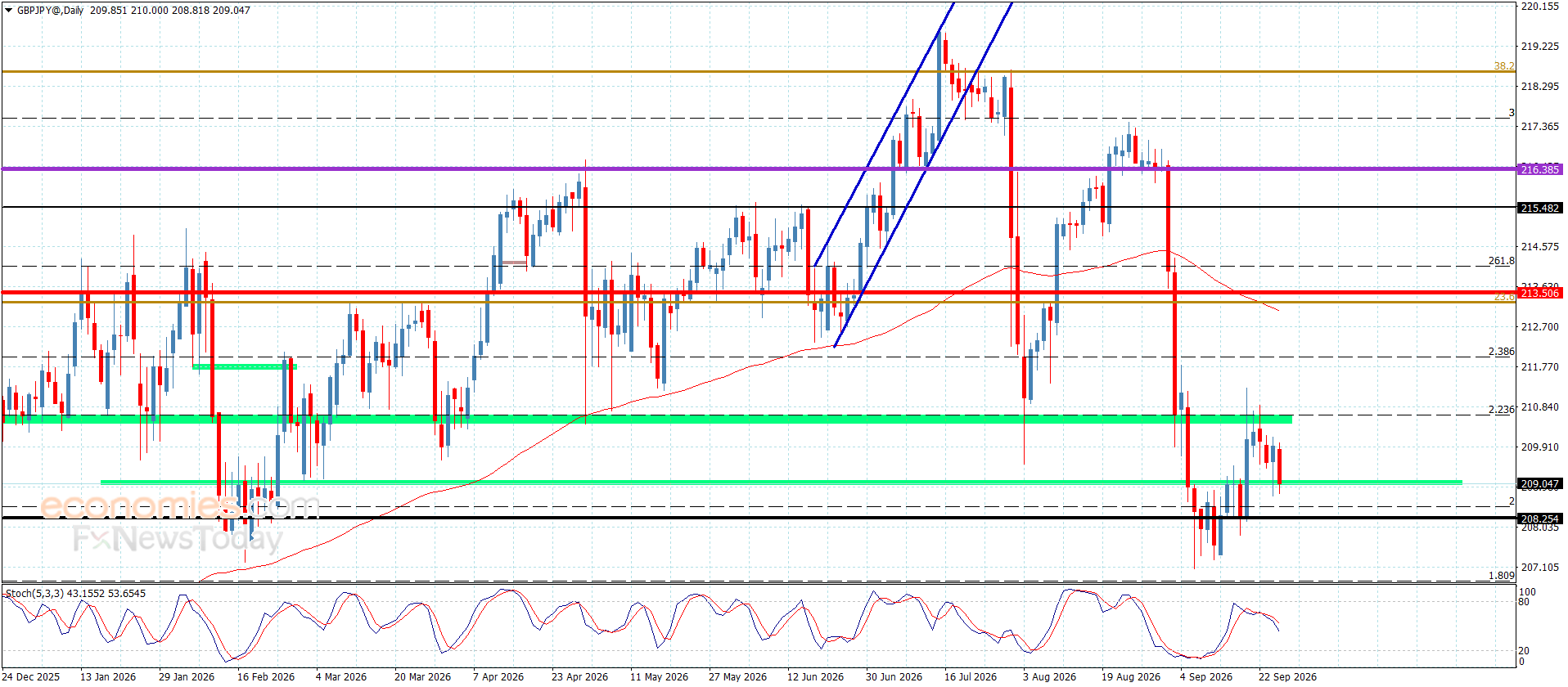
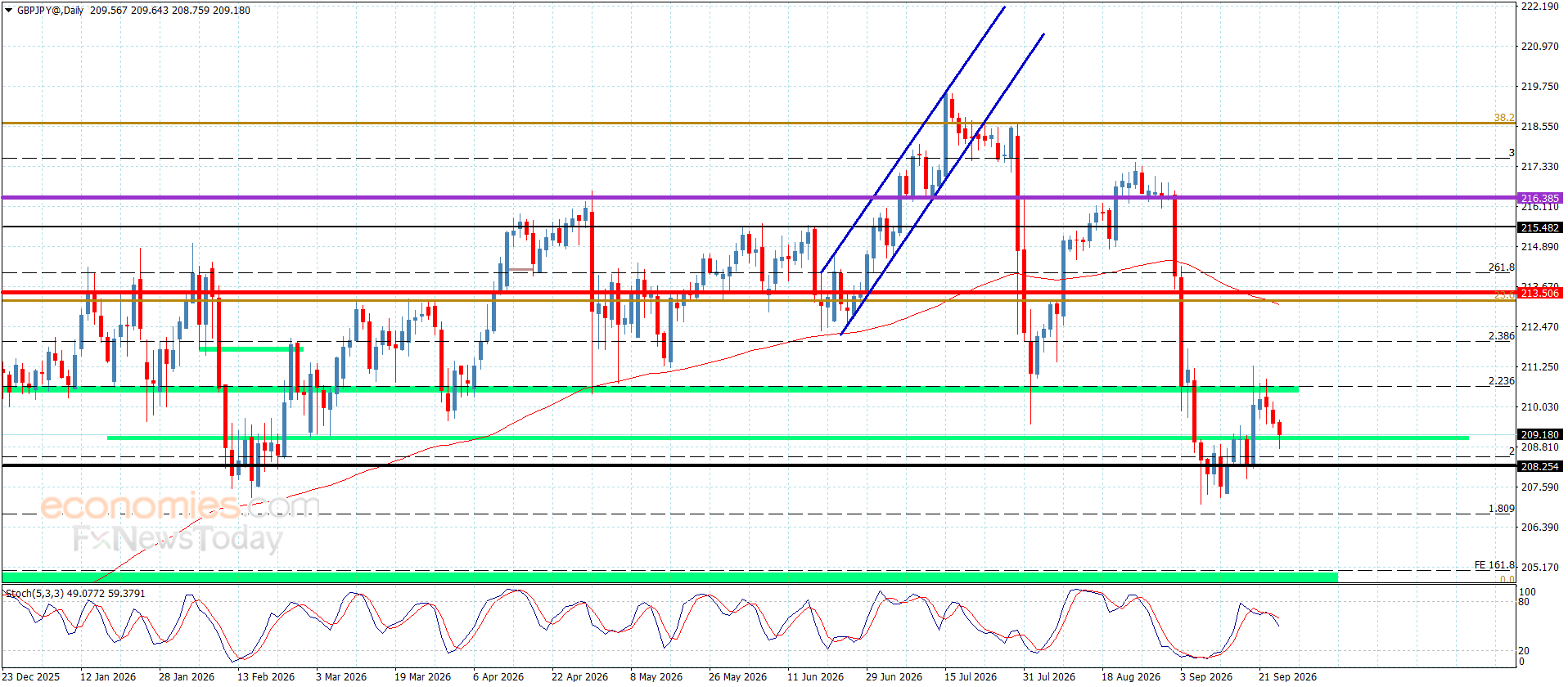
The GBPJPY receives the positive momentum– Forecast today – 23-4-2026

By |2026-04-23T14:28:00+02:00April 23, 2026|Forex News, News|0 Comments

Platinum price continued to provide weak sideways trading by its continued fluctuation near $2040.00 level, affected by the continuation of the main indicators, to obstruct the chances of resuming the previously bullish trend.


Stochastic reach below 50 level might increase the intraday negative pressures on the trading, to expect reaching the moving average level 55 at $1990.00, attempting to test the extra support near $1950.00, while holding above $2110.00 will motivate the bullish trend, to keep waiting for recording the extra target near $2155.00 and $2205.00.


The expected trading range for today is between $1990.00 and $2100.00


Trend forecast: Fluctuating


Source link

23 04, 2026

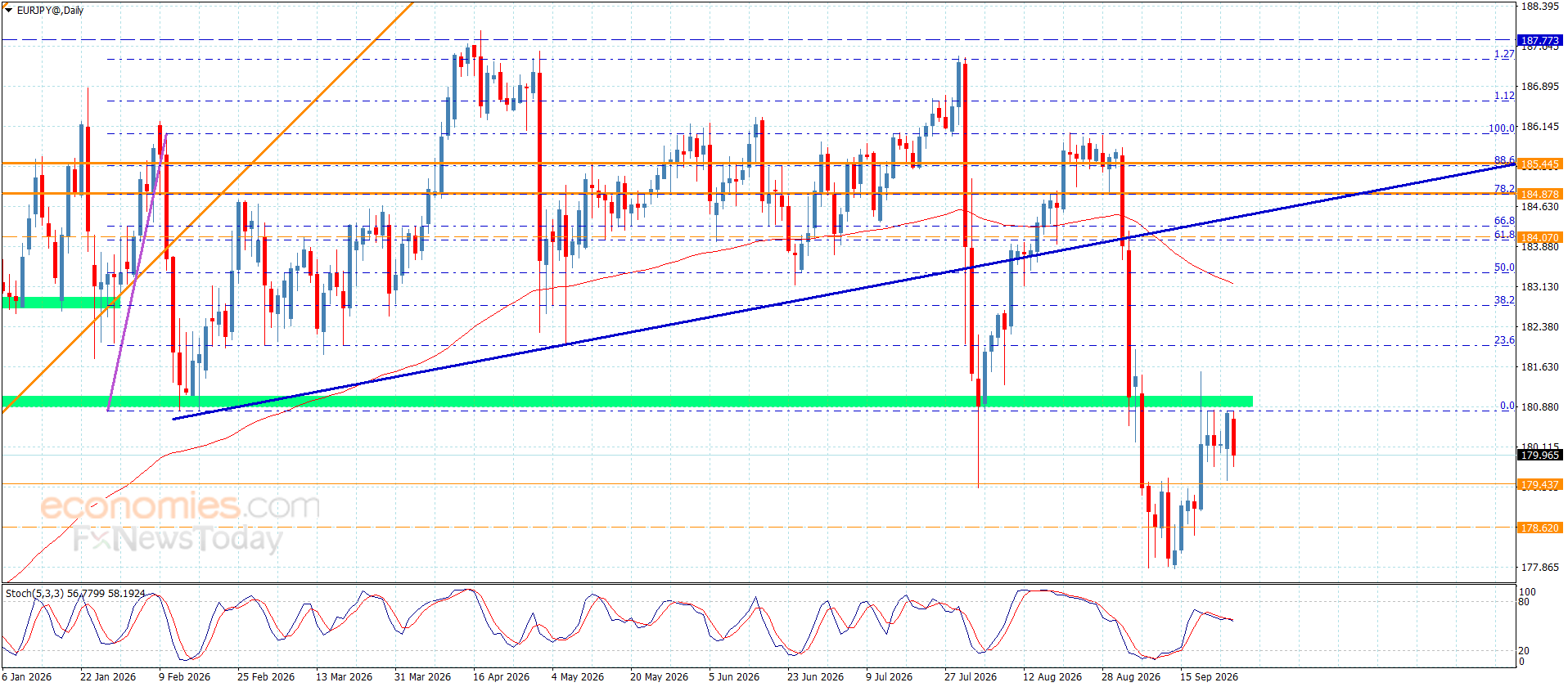
The EURJPY keeps delaying the rise– Forecast today – 23-4-2026

By |2026-04-23T10:27:04+02:00April 23, 2026|Forex News, News|0 Comments

Platinum price continued to provide weak sideways trading by its continued fluctuation near $2040.00 level, affected by the continuation of the main indicators, to obstruct the chances of resuming the previously bullish trend.


Stochastic reach below 50 level might increase the intraday negative pressures on the trading, to expect reaching the moving average level 55 at $1990.00, attempting to test the extra support near $1950.00, while holding above $2110.00 will motivate the bullish trend, to keep waiting for recording the extra target near $2155.00 and $2205.00.


The expected trading range for today is between $1990.00 and $2100.00


Trend forecast: Fluctuating


Source link

23 04, 2026

GBP/USD Forecast: Dollar Softens on Iran Ceasefire Extension News

By |2026-04-23T06:26:01+02:00April 23, 2026|Forex News, News|0 Comments


– Written by

The Pound to US Dollar (GBP/USD) exchange rate moved higher during Wednesday’s trading session, supported by easing geopolitical tensions.

At the time of writing, GBP/USD was trading close to $1.3528, up roughly 0.2% from the start of the day.

The US Dollar (USD) weakened on Wednesday as a slight improvement in market sentiment reduced demand for the safe-haven currency.

This shift followed an announcement from US President Donald Trump confirming an extension to the existing ceasefire with Iran.

Despite this, the downside in the ‘Greenback’ was limited, as uncertainty still lingers. The US continues to enforce restrictions on Iranian shipping, while Tehran has yet to formally agree to the extended truce, leaving investors cautious.

The Pound (GBP) found some support against the US Dollar but remained largely directionless versus other currencies after the release of the UK’s latest inflation figures.

Data from the Office for National Statistics indicated that headline inflation rose from 3% to 3.3% in March, marking its first increase in several months and reflecting higher global energy costs.

Save on Your GBP/USD Transfer

Get better rates and lower fees on your next international money transfer.
Compare TorFX with top UK banks in seconds and see how much you could save.


Compare the Best GBP/USD Rates »

However, core inflation unexpectedly eased from 3.2% to 3.1%, suggesting that underlying price pressures may be softening.

This mixed picture limited Sterling’s upside, as investors judged that the figures are unlikely to prompt an immediate change in policy from the Bank of England (BoE), with policymakers expected to maintain a wait-and-see approach on interest rates.

Short-Term GBP/USD Forecast: PMI Data in Focus

Looking ahead, the next potential driver for the Pound to US Dollar exchange rate will be the UK’s upcoming PMI releases.

Early estimates for April are forecast to show a slowdown in private sector activity, with the impact of geopolitical tensions and higher energy costs weighing on business conditions.

At the same time, the US Dollar is expected to remain sensitive to broader market sentiment.

If confidence continues to improve on the back of Middle East developments, the US Dollar may face further pressure, while any renewed tensions could quickly restore demand for the safe-haven currency.

Like this piece? Please share with your friends and colleagues:


International Money Transfer? Ask our resident FX expert a money transfer question or try John’s new, free, no-obligation personal service! ,where he helps every step of the way,
ensuring you get the best exchange rates on your currency requirements.

TAGS: Pound Dollar Forecasts

Source link

23 04, 2026

Yen Struggles to Recover Amid Higher Energy Prices. Forecast as of 22.04.2026

By |2026-04-23T02:24:59+02:00April 23, 2026|Forex News, News|0 Comments

When GDP stagnates and shows little sign of growth, households tend to increase savings, weighing on investment. Weak investment, in turn, slows economic growth. Sanae Takaichi is seeking to address this issue. Let’s examine the situation and develop a trading plan for the USD/JPY pair.

The article covers the following subjects:

Major Takeaways

  • Tokyo is aiming to keep the USD/JPY at 160.
  • Japan has fallen victim to a self-fulfilling prophecy.
  • The BoJ will not increase interest rates in April.
  • Long positions on the USD/JPY pair can be increased if the price exceeds 159.65.

Weekly Fundamental Forecast for Yen

For weeks now, the USD/JPY rally toward 160 has prompted verbal interventions from the Japanese government. When the pair pulls back, the intensity of these interventions eases. Indeed, the authorities are satisfied with the current US dollar exchange rate, which makes investing in Japan more attractive than in other countries. Coupled with a labor shortage — which leads to competition for talent and rising wages — and the lifting of a long-standing taboo on increasing military spending, these factors form the cornerstone of Sanaenomics.

Sanae Takaichi’s approval ratings remain high despite tensions in the Middle East. An FNN poll shows 70% support, while ANN reports 62%. Surveys by Mainichi, Asahi, and Yomiuri place her approval between 53% and 66%. While investors often label her approach as “Abenomics 2.0,” this is not entirely accurate. The policy focus is more clearly centered on stimulating investment.

Japan has been weighed down by a self-fulfilling cycle. Given expectations of little to no economic growth, the private sector has favored savings over investment. This lack of investment, in turn, has contributed to slower GDP growth. Sanae Takaichi is now seeking to correct these imbalances. If successful in revitalizing the economy, public debt levels could decline while tax revenues increase.

Japan’s Exports

Source: Bloomberg.

The crisis in the Middle East has thrown a wrench in the government’s plans. Japan is heavily dependent on energy imports and has been forced to ramp up purchases. In March, a potential trade deficit helped offset the surge in exports to China. However, the question remains: what happens next?

For Sanae Takaichi, it is important that the Bank of Japan avoids premature tightening. Bloomberg reports that the central bank is likely to hold the overnight rate steady in April, as the full impact of the oil shock has not yet been assessed.

Forecasts for Changes in Bank of Japan’s Overnight Rate

Source: Bloomberg.

About 80% of the 51 experts surveyed by Bloomberg believe that the Governing Council will not make any changes in April. In the March survey, 32% of respondents leaned toward tighter monetary policy. Now, 57% predict that the cycle will resume in June.

If neither the Federal Reserve nor the Bank of Japan takes action before summer, the interest rate differential will continue to favor USD/JPY bulls. The same applies to the Strait of Hormuz factor: while Washington can tolerate higher oil prices, Tokyo is far more sensitive to them. As a result, time is working against the yen, leaving the Japanese authorities with little choice but to rely on verbal intervention. The question is how long they can hold off speculators.

Weekly USDJPY Trading Plan

Since early April, the USD/JPY pair has rebounded three times from 158.5, proving the importance of this support level. Long positions established on rebounds from this level can be increased if the pair breaks through the resistance level of 159.6. At the same time, traders should prepare for potential currency interventions.


This forecast is based on the analysis of fundamental factors, including official statements from financial institutions and regulators, various geopolitical and economic developments, and statistical data. Historical market data are also considered.

Price chart of USDJPY in real time mode

The content of this article reflects the author’s opinion and does not necessarily reflect the official position of LiteFinance broker. The material published on this page is provided for informational purposes only and should not be considered as the provision of investment advice for the purposes of Directive 2014/65/EU.


According to copyright law, this article is considered intellectual property, which includes a prohibition on copying and distributing it without consent.

Rate this article:

{{value}} ( {{count}} {{title}} )


Source link

Go to Top