About Editorial team of BIPNs

Main team of content of bipns.com. Any type of content should be approved by us.
26 12, 2025

India Cracks Down On Misleading Herbal Tea Branding

By |2025-12-26T21:42:35+02:00December 26, 2025|Dietary Supplements News, News|0 Comments


NEW DELHI-India’s food safety regulator has tightened the rules on what can be officially called “tea”, making it clear that only products made from the plant Camellia sinensis can use the word on their labels.

In a directive, the Food Safety and Standards Authority of India (FSSAI) said that many food business operators are wrongly using the term “tea” for herbal infusions and plant-based drinks that are not made from Camellia sinensis. According to the regulator, this practice is misleading consumers and amounts to misbranding.

The FSSAI said it found several products in the market being sold as “Rooibos tea”, “herbal tea” and “flower tea”, even though these beverages are not derived from the tea plant. The authority clarified that such products do not meet the legal definition of tea and therefore cannot be marketed using that name.

As per existing regulations, only infusions made from Camellia sinensis qualify as tea. This includes well-known varieties such as green tea, Kangra tea and instant tea. Any drink made from other plants, herbs or flowers does not fall under this category.

The regulator has warned all food business operators, to stop using the word “tea” directly or indirectly for products that are not derived from Camellia sinensis. Failure to comply, it said, will be treated as a violation of food safety laws. (IANS)


Source link

26 12, 2025

Bitcoin price BTC USD prediction $250000: BTC USD price surge prediction 2026: Why Cardano founder Charles Hoskinson says Bitcoin could reach $250,000

By |2025-12-26T21:38:33+02:00December 26, 2025|Crypto News, News|0 Comments

Bitcoin price BTC USD forecast 2026: Bitcoin could climb as high as $250,000 by 2026, as predicted by Cardano founder Charles Hoskinson, who pointed out that the case for higher BTC USD prices rests on basic economics rather than hype.

Bitcoin price prediction 2026: Will BTC USD reach $250,000

Hoskinson’s argument centers on Bitcoin’s fixed supply colliding with steadily rising demand from large investors, as per a report. With only a limited number of bitcoins available, any increase in demand can have an outsized effect on price. He highlighted that dynamic is becoming more important as institutions continue to enter the market, as per a Coinpedia report.

Bitcoin price outlook 2026: How institutional demand is driving BTC USD higher

Large financial players, including institutions, corporations, and even some governments, are gradually adding Bitcoin to their portfolios. Access for individual investors is also expanding through traditional finance channels.

Also read: Can your dog be a tax dependent? Woman takes IRS to court in legal battle

Morgan Stanley’s Bitcoin USD move and what it means for crypto investors

Morgan Stanley now allows its private wealth advisers to recommend Bitcoin to clients, lowering barriers to entry. Even relatively small allocations from retirement funds and wealth managers can matter because Bitcoin’s supply does not adjust to higher demand, as per the Coinpedia report.

Why institutional investors prefer long-term Bitcoin exposure

Hoskinson said that the same forces that pushed Bitcoin into six-figure territory remain in place. Institutional investors, he notes, tend to buy consistently and hold for the long term, creating steady buying pressure rather than short-term speculation, as per the Coinpedia report. As more financial products tied to Bitcoin become available, demand could continue to broaden.

Also read: Social Security falling short? These 6 income streams can turn retirement into a paycheck

How decentralized finance could unlock new BTC USD demand

Another factor is Bitcoin’s growing role in decentralized finance as new systems are being built that allow Bitcoin holders to earn yield without giving up control of their assets, as per the Coinpedia report. If these tools gain traction, then significant Bitcoin value could gradually move into the wider crypto ecosystem.

Altcoins price prediction 2026: Will Bitcoin gains flow into altcoins next

While Hoskinson expects some capital to rotate from Bitcoin into altcoins, Hoskinson cautions that it may not resemble the strong altcoin rally seen in 2021. He points to a more uncertain global economic environment and ongoing regulatory questions in the United States.

BTC alert: Risks to Bitcoin price USD from tech stocks and market uncertainty

Hoskinson also flagged risks tied to broader markets. He noted that parts of the technology sector, particularly artificial intelligence stocks, appear highly valued. Companies such as Nvidia have reached very large market capitalizations, and he warned that a tech-sector downturn could spill over into crypto markets, which often move in the same direction as tech stocks.

He said, “I also believe there’s going to be some value leakage from Bitcoin into the altcoin space. Whether it will be proportionate like in 2021, when a $68,000 Bitcoin translated into $3 ADA and an all-time high for Ethereum, is hard to say,” as quoted by the Coinpedia report.

FAQs

Who predicted Bitcoin could reach $250,000 by 2026?
The prediction was made by Cardano founder Charles Hoskinson.

Why does Hoskinson believe Bitcoin can rise further?

He says Bitcoin’s fixed supply combined with growing institutional demand supports higher prices.

Source link

26 12, 2025

silver price today: Gold and silver price today, prediction and forecast: Why precious metals rates are rising and should you buy or wait for now? Here’s full analysis

By |2025-12-26T20:26:35+02:00December 26, 2025|Forex News, News|0 Comments


Gold and silver price today, prediction and forecast gained attention after silver crossed the $75 mark for the first time. Gold also reached a new record. Platinum and palladium followed the same trend. Investors reacted to expectations of U.S. interest rate cuts and global uncertainty. These factors increased demand for precious metals across markets.

Gold and silver price today, prediction and forecast driven by rate cut expectations

Gold and silver price today, prediction and forecast remained supported due to expectations of lower U.S. interest rates. Spot gold rose 0.8 percent to $4,516.50 per ounce at 0933 GMT. Gold touched a record of $4,530.60 earlier. U.S. gold futures for February delivery rose 1 percent to $4,547.70.

UBS analyst Giovanni Staunovo said demand for gold and silver remains strong due to expectations of lower U.S. interest rates. He also said low liquidity is increasing volatility in precious metals markets.

Gold market outlook strengthens on policy trends

Gold and silver price today, prediction and forecast also reflects gold’s strongest yearly performance since 1979. Several factors supported this trend. These include Federal Reserve policy easing, central bank purchases, ETF inflows, and reduced reliance on the U.S. dollar.

Markets expect two interest rate cuts next year. These expectations are based on signals of a more flexible Federal Reserve approach. Gold remains supported as it does not offer yield but benefits from lower rates.

Physical demand trends impact gold pricing

Gold and silver price today, prediction and forecast also reflects physical market activity. Gold discounts in India widened to the highest level in more than six months. In China, discounts narrowed compared to last week. Earlier, China discounts had reached a five-year high.

These changes indicate varied demand conditions across major consumer markets. Pricing remains sensitive to local demand and currency movement.

Silver price surge reshapes gold and silver price today, prediction and forecast

Gold and silver price today, prediction and forecast highlights silver’s sharp rise. Spot silver rose 4 percent to $74.82 per ounce. It reached an all-time high of $75.14 earlier in the session. Silver prices have risen 158 percent so far this year.

The rise is linked to supply shortages, its classification as a U.S. critical mineral, and industrial demand. Silver continues to attract attention from investors seeking alternatives to gold.

Platinum and palladium join the rally

Gold and silver price today, prediction and forecast also includes movement in platinum and palladium. Spot platinum rose 7.3 percent to $2,382.35 per ounce. It earlier reached a record high of $2,448.25. Palladium rose 8.3 percent to $1,823.76.

Both metals are used in automotive catalytic converters. Prices increased due to supply constraints, tariff uncertainty, and shifting investment interest. Platinum is up around 170 percent this year. Palladium is up more than 90 percent.

Policy changes influence metal markets

Gold and silver price today, prediction and forecast also reflects policy developments. Staunovo said platinum and palladium markets are smaller than the gold market. Limited investor activity can cause sharp price movement.

He also noted that the European Commission’s plan to ease the 2035 ban on combustion engines has supported prices. This policy change increased expectations for continued demand in automotive use.

Weekly performance signals continued strength

Gold and silver price today, prediction and forecast shows all precious metals heading for weekly gains. Platinum recorded its strongest weekly rise on record. Market participants continue to track interest rate signals and supply conditions.

Precious metals remain sensitive to global economic signals. Investor focus remains on monetary policy, industrial demand, and geopolitical developments.

FAQs

Q1: Why are gold and silver prices rising today?
Gold and silver price today, prediction and forecast shows prices rising due to rate cut expectations, global uncertainty, supply shortages, and increased investment demand across precious metals markets.

Q2: What is the outlook for gold and silver prices?
Gold and silver price today, prediction and forecast suggests prices may remain supported as long as rate cut expectations, central bank buying, and industrial demand continue.


Source link

26 12, 2025

Common supplement shown in lab trials to also boost brain function

By |2025-12-26T19:41:33+02:00December 26, 2025|Dietary Supplements News, News|0 Comments


Many health-conscious people start their day by taking supplements and vitamins as part of their morning routine, right alongside breakfast or a cup of coffee. They do it to boost energy, immunity, bone strength, or overall wellness.

Creatine is one such supplement that has become a common staple in supplement aisles. It has reputation of being something only necessary for people who work out heavily.

Athletes use it to sprint harder, lift heavier, and recover faster, so plenty of people treat it as a “gym thing.” In simple terms, creatine acts like a quick-charge backup system for cells that burn through energy fast.

Creatine and cellular energy

Cells run on energy every second of every day, then they spend it in a form called Adenosine triphosphate (ATP).

ATP works as the main “spendable” energy molecule, but cells burn through it quickly during intense exercise, illness, missed sleep, or other high-demand stress.

Creatine helps by storing energy in phosphocreatine, which can help rebuild ATP when demand spikes. This setup works as a “quick-recharge system.”

One report also links this backup to cell protection during metabolic stress, when tissues need fast energy support to stay stable.

Creatine, energy, and safety

People still ask, “Is creatine safe?” A major safety analysis led by a long-time creatine researcher focuses on results from controlled scientific studies instead of word-of-mouth warnings.

According to Dr. Richard Kreider, a professor and director of the Exercise & Sport Nutrition Lab at Texas A&M University, creatine is crucial for human bodies to function at full capacity.

“When the body is stressed, like in exercise or under metabolic conditions like some diseases, creatine phosphate is needed to maintain energy in the cell, and therefore has a lot of protective and health benefits, in addition to the exercise performance effects that have been seen,” explained Kreider, who has spent more than 30 years studying creatine.

In a comprehensive study, Kreider’s team reviewed hundreds of clinical trials and compared side effects in people who took creatine with people who took a placebo. They did not see meaningful differences in side-effect rates between the groups.

Many of the loudest claims of side effects come as personal stories: “My friend felt bloated,” “Someone online said it hurt kidneys,” “A coach warned me about cramps.”

Kreider’s study refutes those claims, showing that creatine can actually help the body hold onto more fluid, and that may reduce cramping in some situations. People vary, but the strongest evidence does not match the most common fears.

Food vs. supplements

Your body can make creatine from amino acids and move it through the bloodstream to tissues that need quick energy support. Kreider’s study puts that internal production at about one gram each day.

However, the recommended daily amount is to get two to four grams of creatine per day, depending on muscle mass and activity levels. 

“You only get about a gram of creatine per pound of red meat or fish, like salmon, so it’s expensive and takes a lot of calories to get a gram,” Kreider noted.

That is a lot of food if your main goal is simply to raise creatine intake, which helps explain why creatine supplements exist.

Vegetarians and vegans often start with lower creatine stores because they get little creatine through diet, so they may see a more noticeable benefit when they supplement.

Studying creatine and the brain

A separate study from Virginia Tech explains that creatine plays a vital role in the brain’s energy system, but it also points to effects beyond “energy.”

“Creatine is very crucial for energy-consuming cells in skeletal muscle throughout the body, but also in the brain and in the heart,” said Chin-Yi Chen, a research scientist at Virginia Tech’s Fralin Biomedical Research Institute.

Chen is working with a research team that is developing a new way to send creatine directly into the brain using focused ultrasound.

The project takes place in the lab of Cheng-Chia “Fred” Wu, an assistant professor at the Fralin Biomedical Research Institute.

Creatine and brain function

The human brain works nonstop. Neurons fire, support cells keep the chemical environment steady, and energy demand stays high from morning to night.

Creatine can influence neurotransmitter systems, especially pathways involving GABA, a major inhibitory neurotransmitter that helps prevent neurons from becoming overly excitable.

This fact is important because brain function depends on both steady fuel and balanced signaling. When neurons lose either one, circuits can misfire or struggle to adapt.

That helps explain why many studies associate creatine with learning, memory, brain development, and seizure control.

Blood-brain barrier

The brain sits behind the blood-brain barrier, a tight filter built from cells that line brain blood vessels. It blocks many toxins and pathogens from reaching brain tissue, and that protection saves lives. It can also limit access for helpful compounds.

Wu’s study at Virginia Tech describes people with creatine deficiency disorders who can improve muscle mass and body weight with supplements, yet still struggle with neurodevelopmental challenges.

These include difficulties with speech, reading, or writing because the brain does not receive enough creatine through normal routes.

That challenge puts the creatine delivery system at the center of their work. The researchers describe a project that uses therapeutic focused ultrasound to temporarily open access across the blood-brain barrier in a precise, targeted way.

Focused ultrasound uses carefully aimed sound waves to create a short window that can let treatments reach specific brain areas without damaging nearby healthy tissue.

The report notes that the lab has explored focused ultrasound approaches in other contexts, such as pediatric brain cancer, and now sees potential for creatine deficiency conditions as well.

Creatine, energy, and brain function

Despite strong scientific evidence, Kreider says people have misunderstood creatine for years and often spread false claims about it.

He is one of the members of the International Society of Sports Nutrition who recently signed a letter stating that creatine is safe and effective and calling on policymakers not to limit public access to it.

“There’s absolutely no data supporting any negative side effect anecdotally reported about creatine on the internet and in the media,” Kreider enthused. “Creatine is safe, and it’s important for everybody, not just bodybuilders and athletes.”

The work keeps moving from “Does it work?” to “Can we deliver it where it’s needed most?” That question changes the discussion from sports performance to medical delivery, where the details of human biology decide what happens next.

—–

Like what you read? Subscribe to our newsletter for engaging articles, exclusive content, and the latest updates.

Check us out on EarthSnap, a free app brought to you by Eric Ralls and Earth.com.

—–


Source link

26 12, 2025

Will MATIC’s Explosive Growth Reach $1 by 2030?

By |2025-12-26T19:37:16+02:00December 26, 2025|Crypto News, News|0 Comments

BitcoinWorld

Polygon Price Prediction: Will MATIC’s Explosive Growth Reach $1 by 2030?

As the cryptocurrency market continues to evolve, investors are watching Polygon (MATIC) with intense interest. The burning question on everyone’s mind: can MATIC achieve the elusive $1 milestone in the coming years? With its position as a leading Layer 2 scaling solution for Ethereum, Polygon has transformed from a promising project to a fundamental infrastructure component of the blockchain ecosystem. This comprehensive analysis examines MATIC’s potential trajectory through 2026, 2027, and beyond to 2030, providing you with data-driven insights and expert perspectives on whether this ambitious price target is within reach.

Understanding Polygon’s Current Market Position

Polygon has established itself as a critical player in solving Ethereum’s scalability challenges. The network processes transactions faster and at significantly lower costs than the Ethereum mainnet, making it attractive for developers and users alike. As of current market conditions, MATIC faces both opportunities and challenges. The broader crypto market sentiment, regulatory developments, and technological advancements within the Polygon ecosystem will all influence its price trajectory. The network’s active development, including Polygon 2.0 upgrades and zero-knowledge technology integration, positions it for potential growth if adoption continues to accelerate.

Polygon Price Prediction for 2026: The Foundation Year

Looking toward 2026, several factors will shape MATIC’s price movement. Analysts consider multiple scenarios based on market conditions, adoption rates, and technological milestones. A conservative estimate suggests gradual growth if current trends continue, while bullish scenarios depend on widespread institutional adoption and successful implementation of Polygon’s roadmap. Key considerations include:

  • Ethereum ecosystem integration and dependency
  • Competition from other Layer 2 solutions
  • Developer activity and dApp migration to Polygon
  • Overall cryptocurrency market capitalization trends
Scenario 2026 Price Range Key Drivers
Conservative $0.45 – $0.65 Moderate adoption, steady market growth
Moderate $0.65 – $0.85 Strong developer growth, Ethereum scaling needs
Bullish $0.85 – $1.10 Mass adoption, major partnerships, market surge

MATIC Price Analysis for 2027: The Acceleration Phase

By 2027, Polygon’s technological advancements should be more fully realized. The implementation of Polygon 2.0, featuring a unified liquidity layer and enhanced zero-knowledge proofs, could significantly boost network efficiency and appeal. If Ethereum maintains its dominant position and Polygon continues to capture scaling demand, MATIC could experience substantial appreciation. However, investors must remain aware of potential headwinds including regulatory changes, technological disruptions from competitors, and macroeconomic factors affecting all cryptocurrency investments. The MATIC surge potential in 2027 depends heavily on whether the network can maintain its competitive advantages while expanding its use cases beyond simple transaction scaling.

Polygon 2030 Forecast: Long-Term Vision and Potential

The 2030 outlook for Polygon represents the most speculative but potentially rewarding timeframe. By this point, blockchain technology should be more integrated into mainstream applications, and scaling solutions will be essential infrastructure. Polygon’s success in establishing itself as the go-to Layer 2 solution could position MATIC for significant value appreciation. Long-term crypto forecast models suggest that if Polygon captures even a moderate percentage of the projected global blockchain transaction volume, its token economics could support substantially higher valuations. However, this distant horizon requires considering technological obsolescence risks, the evolution of Ethereum itself, and potential paradigm shifts in blockchain architecture.

Will MATIC Surge to $1? Critical Factors to Consider

The $1 price point represents both a psychological milestone and a significant valuation increase from current levels. Achieving this target depends on several converging factors:

  • Network Adoption: Increased daily active users and transaction volume
  • Developer Growth: More applications building on Polygon versus competitors
  • Token Utility: Expanded use cases for MATIC beyond network fees
  • Market Conditions: Overall cryptocurrency bull market support
  • Technological Execution: Successful delivery of Polygon’s development roadmap

Historical patterns suggest that MATIC tends to perform well during periods of Ethereum network congestion, as users seek cheaper alternatives. However, sustained growth requires more than temporary congestion-driven demand.

Risks and Challenges in MATIC’s Price Trajectory

No investment comes without risks, and Polygon faces several significant challenges. The competitive landscape for Layer 2 solutions is intensifying, with projects like Arbitrum, Optimism, and emerging zero-knowledge rollups vying for market share. Regulatory uncertainty surrounding cryptocurrency tokens, particularly those classified as securities, could impact MATIC’s trading and adoption. Additionally, technological risks include potential vulnerabilities in Polygon’s architecture or failure to keep pace with Ethereum’s own scaling improvements through initiatives like Proto-danksharding.

Expert Insights and Market Sentiment

Industry analysts offer varied perspectives on Polygon’s future. Some emphasize its first-mover advantage and established ecosystem, while others caution about increasing competition. Notable figures like Sandeep Nailwal, Polygon’s co-founder, frequently highlight the network’s growing adoption and technological roadmap. Investment firms and crypto research organizations publish regular analyses, with price predictions ranging from cautious to highly optimistic. These forecasts typically consider both fundamental factors (technology, adoption, team) and technical analysis of price charts and market patterns.

Actionable Insights for Investors

For those considering MATIC as part of their portfolio, several strategies merit consideration:

  • Dollar-Cost Averaging: Regular investments over time to mitigate timing risks
  • Portfolio Allocation: Appropriate position sizing relative to overall crypto exposure
  • Monitoring Metrics: Tracking key indicators like daily transactions, developer activity, and treasury health
  • Exit Strategies: Pre-determined profit-taking and loss-limitation points

Remember that cryptocurrency investments carry substantial risk, and only capital that you can afford to lose should be allocated to such volatile assets.

Frequently Asked Questions

What is Polygon and how does it relate to Ethereum?
Polygon is a Layer 2 scaling solution that operates alongside the Ethereum blockchain. It processes transactions off the main Ethereum chain before settling them back, reducing costs and increasing speed while maintaining security through Ethereum’s consensus mechanism.

Who founded Polygon and who are the key people behind it?
Polygon was founded by Jaynti Kanani, Sandeep Nailwal, and Anurag Arjun. The project has attracted developers and advisors from across the blockchain industry and maintains partnerships with numerous companies and projects.

How does MATIC token utility affect its price?
MATIC tokens are used for paying transaction fees, participating in governance, and staking to secure the network. Increased network usage typically increases demand for MATIC, potentially supporting price appreciation if supply dynamics remain favorable.

What are the main competitors to Polygon?
Major competitors include other Layer 2 solutions like Arbitrum by Offchain Labs, Optimism, and zkSync by Matter Labs. Ethereum’s own scaling improvements also represent competitive pressure.

Where can I buy and store MATIC tokens safely?
MATIC is available on most major cryptocurrency exchanges including Coinbase, Binance, and Kraken. For storage, consider hardware wallets like Ledger or Trezor for maximum security.

Conclusion: The Path Forward for MATIC

Polygon’s journey toward the $1 price target represents a compelling narrative in the broader cryptocurrency evolution. While short-term volatility is inevitable, the network’s fundamental value proposition as Ethereum’s scaling layer provides a solid foundation for potential growth. The 2026-2030 period will test Polygon’s ability to execute its technological vision, maintain competitive advantages, and capture increasing market share. Whether MATIC ultimately surges to $1 depends on a complex interplay of technological execution, market conditions, adoption rates, and broader cryptocurrency acceptance. Investors should approach with cautious optimism, thorough research, and appropriate risk management, recognizing both the transformative potential and inherent uncertainties of this dynamic asset class.

To learn more about the latest cryptocurrency market trends, explore our articles on key developments shaping blockchain technology, institutional adoption, and regulatory landscapes that will influence Polygon and the entire digital asset ecosystem in the coming years.

This post Polygon Price Prediction: Will MATIC’s Explosive Growth Reach $1 by 2030? first appeared on BitcoinWorld.


Source link

26 12, 2025

Gold (XAUUSD) Price Forecast: Gold Price Rally Hits New High as Bulls Target Further Breakout

By |2025-12-26T18:25:40+02:00December 26, 2025|Forex News, News|0 Comments


No Overhead Resistance, Only Reversal Risk

With no true resistance, let’s face it, the only fear for the bulls is a sudden reversal to the downside with better-than-average volume. We could still get this today, but if it occurs, it will be driven by low volume, which will set up the next “buy the dip” opportunity.

The New Definition of a Dip in a Vertical Gold Market

As we move higher and more vertical, the definition of dip is going to change. Sticking with a 50% correction of a price swing, our “dip” level at current price levels is $4350.27. That’s nearly $200. Welcome to the “new norm”. During the old regime, we were lucky to see $200 over a few months, maybe a year. However, as we move higher the swings will get bigger, the corrections will be greater and it will become a big boys game and remember that gold isn’t going to “split” like a stock does.

Fundamentals Take a Back Seat but Still Supportive

Back to the fundamentals, the mixed trade in Treasury yields is having little impact on gold prices today. The benchmark U.S. 10-year Treasury yield is trading 4.12%, down 0.014.

We didn’t see much of an impact on yields from this week’s initial claims report, but the Commerce Department’s GDP report showed that the U.S. economy grew by 4.3% in the first quarter, which was the country’s fastest pace of expansion since 2023. This kind of growth is likely to keep inflation boosted, which will be supportive for gold prices.

It seems to me that the economy is getting comfortable with inflation and growth, which will keep gold underpinned and the “buy” the dip strategy intact.

Dollar Breakdown Setup Could Add Fuel to Gold’s Upside

Today’s weaker U.S. Dollar (DXY) is also providing support for gold. The greenback is sitting on support at 97.814. Up above, the 50-day moving average at 98.452 and the 200-day moving average at 100.209 are providing solid resistance and controlling the downtrend. We’re at a critical point for the dollar. Our charts indicate the possibility of a steep decline under 97.814 with 96.218 the first target. Gold could pop even higher on this move.


Source link

26 12, 2025

Camellia Sinensis Beverages as ‘Tea’ Only

By |2025-12-26T17:40:37+02:00December 26, 2025|Dietary Supplements News, News|0 Comments


NEW DELHI: The Food Safety and Standards Authority of India (FSSAI) has written to the Food Commissioners of all States and Union Territories, directing officers to monitor Food Business Operators regarding the use of the term ‘Tea’ on packaging & labelling.

The FSSAI has clarified that only beverages made from Camellia sinensis, such as Kangra tea, green tea, and instant tea, may be labelled ‘tea’. Using the term “herbal” or “plant-based” for infusions is considered misleading and misbranding.

According to the provision, only beverages derived from Camellia sinensis, including Kangra Tea, Green Tea & Instant Tea, may be labelled as Tea. Using the term for other herbal or plant-based infusions is misleading & amounts to misbranding, under the provisions of the Food Safety and Standards Act, 2006.

“Food Business Operators, including E-commerce engaged in manufacturing, packing, marketing, import or sale of such products, are directed to comply with the provisions of the Food Safety and Standards Regulation and refrain from using the term ‘Tea’ for any products not derived from Camellia sinensis,” the letter states.

“It is clarified that, as per standards specified under 2.10.1 of the Food Safety and Standards (Food Product Standards and Food Additives Regulations, 2011, Tea (including Kangra Tea, Green Tea and Instant Tea in solid form) shall be exclusively from the plant of the Camellia sinensis,” it added.

The letter also specified that every package must display the food name on the front, indicating the true nature of the contents.

“Sub-regulation (1) of regulation 5 of Food Safety and Standards (Labelling and Display) Regulations, 2020 specified that every package shall carry the name of the food, which indicates the true nature of the food contained in the package, on the Front of Pack,” it said.

The letter further outlines the repercussions of non-compliance with the provisions of the Food Safety and Standards Act, 2006.

“In case of non-compliance, necessary action shall be initiated as per the provisions of the Food Safety and Standards Act, 2006, and the rules/regulations made thereunder,” thye letter explained.

This move aims to ensure transparency and accuracy in food labelling, protecting consumers from confusion. Manufacturers must comply with these guidelines to avoid penalties. (ANI)

Also Read: HM Amit Shah declares Madhya Pradesh future hub for MSMEs


Source link

26 12, 2025

Why Solana Price Will See a Recovery in 2026

By |2025-12-26T17:35:36+02:00December 26, 2025|Crypto News, News|0 Comments

1: What is the expected SOL price in 2026?
The SOL price in 2026 is expected to range between $130 and $300 in a base-to-bullish scenario, depending on market conditions and adoption growth.

2: Can Solana reach its all-time high again in 2026?
Solana could move toward its previous all-time high near $290 if network upgrades, institutional adoption, and overall crypto market sentiment remain strong.

3: What factors will influence the SOL Price Forecast 2026 the most?
Key factors are expected to include network stability, institutional use cases, regulatory clarity, token burns, and the broader cryptocurrency market trend.

4: Is Solana a good long-term cryptocurrency going into 2026?
Solana is expected to remain a strong long-term project due to its high-speed blockchain design, growing ecosystem, and increasing real-world use cases.

5: What risks could impact Solana’s price in 2026?
Major risks are expected to include regulatory uncertainty, network outages, competition from other blockchains, and global macroeconomic instability.

Source link

26 12, 2025

Futures Rise Into Year-End as LNG Policy, Winter Demand, and Supply Risks Re-Enter the Spotlight

By |2025-12-26T16:24:49+02:00December 26, 2025|Forex News, News|0 Comments


December 26, 2025 — Natural gas is closing out the week with a familiar end-of-year mood: thinner holiday trading, sharper day-to-day swings, and a market still trying to decide whether winter will be a slow burn or a sudden blaze.

In early Friday pricing, NYMEX natural gas futures were trading around $4.345 per MMBtu, up about 2.4% on the session, with an indicated day range roughly $4.224–$4.382. [1]

Across the Atlantic, Europe’s benchmark Dutch TTF contract was holding near €28.095/MWh in the latest available quote shown by Investing.com (displayed as delayed data with a last date stamp of 24/12), underscoring how holiday calendars and liquidity can matter almost as much as weather models this week. [2]

Why natural gas is moving today

Even when price action looks “simple” (up day / down day), natural gas rarely is. Right now, the market is juggling four overlapping storylines:

1) Demand: winter heating loads vs. “milder” signals

One of the cleanest clues about near-term direction is whether heating demand is ramping fast enough to overwhelm supply. The latest American Gas Association (AGA) market indicators showed total U.S. demand (including exports) fell 11.5% week over week, though it remained 1.2% higher than the same week a year earlier—a mixed picture consistent with a winter that has teased cold but hasn’t delivered it everywhere at once. AGA also noted forecasts pointing to milder patterns (including warmer-than-normal conditions in parts of the country). [3]

That matters because winter doesn’t need to be “record cold” to move gas prices—just cold enough, in the right regions, for long enough, to tighten daily balances.

2) Inventories: strong withdrawals still needed to calm price volatility

Storage is the market’s shock absorber. When storage is comfortable, price spikes tend to fade; when storage gets tight, small surprises become big moves.

The last widely cited U.S. government storage snapshot available online this week showed working gas in storage at 3,579 Bcf as of Friday, Dec. 12, 2025, with a 167 Bcf weekly draw. [4]

With the next set of late-December numbers approaching, traders are leaning hard on expectations. Industry reporting has flagged that EIA data for the week ended Dec. 26 is scheduled for release on Wednesday, Dec. 31—a timing quirk that can amplify short-term volatility as the market trades “ahead of the print.” [5]

3) U.S. hub pricing is still whippy—and that matters for LNG economics

Even before today’s move higher, the market has been living through fast rotations. In EIA’s most recent weekly market update (earlier in December), the agency described a sharp drop in the Henry Hub spot price over the prior week and noted that front-month futures also moved down during that span—illustrating how quickly sentiment can change when weather forecasts shift. [6]

Those swings don’t just affect traders. They feed directly into global LNG competitiveness because the U.S. export model is tightly linked to Henry Hub pricing.

4) Geopolitics and infrastructure risk: energy markets hate uncertainty

Early Friday, Reuters reported that a blaze at Russia’s Azov Sea port of Temryuk—sparked by what local officials described as a Ukrainian drone attack—was extinguished, with fuel reservoirs being cooled. Reuters also noted the port handles liquefied petroleum gas (LPG) among other products. [7]

While that incident is not a direct “natural gas supply outage” headline, it reinforces a broader reality for the entire gas-and-LNG complex: infrastructure risk tends to put a floor under risk premiums, especially when markets are already thin.

The biggest natural gas headlines on Dec. 26, 2025

Beyond price screens, today’s natural gas news flow is being shaped by a set of region-specific stories—each different, but all pointing to the same theme: gas markets are becoming more policy-driven and logistics-constrained.

Australia: gas reform and domestic reservation—ambition meets long contracts

In Australia, the conversation is no longer about whether the east coast gas market needs intervention, but how fast reforms can translate into real supply and pricing outcomes.

A prominent analysis published today highlighted hurdles facing Australia’s push to prioritize domestic supply—particularly the reality that large LNG export contracts extend well into the 2030s, which can delay how quickly reforms bite. The same reporting flagged challenges around bringing on new upstream supply (including debates over regions such as the Beetaloo) and the political complexity of streamlining regulations across jurisdictions. [8]

This follows the Australian government’s own Gas Market Review messaging earlier this week, which recommended significant reforms, including a prospective domestic gas reservation policy, improvements to how gas is bought and sold, and streamlined reporting/governance. [9]

For global gas watchers, Australia matters because it’s a heavyweight LNG exporter. Any structural change that meaningfully shifts domestic vs. export allocation can ripple into LNG spot availability—though, as today’s coverage emphasizes, contract reality can slow the transmission mechanism.

Russia-China pipeline gas: a reminder that trade flows keep shifting

Separate Reuters reporting carried into today’s news cycle said Gazprom supplied 38.8 bcm of gas to China via the Power of Siberia pipeline in 2025, exceeding the annual contractual target of 38 bcm. [10]

The strategic significance: incremental pipeline volumes to Asia can offset some pressures elsewhere in Russia’s gas system—while also reinforcing how Europe and Asia are increasingly distinct pricing and flow theaters in a post-2022 world.

Russia LNG: sanctions continue to reshape long-term supply expectations

Another Reuters item widely recirculating today said Russia has delayed its ambition of producing 100 million tons per year of LNG by several years, citing the effects of Western sanctions on projects and equipment. The report also referenced revised strategy forecasts of 90–105 million tons by 2030 and up to 130 million tons by 2036, alongside discussion of delays at major developments. [11]

For today’s spot pricing, that’s not an “immediate outage” story. But for medium-term LNG balance, it’s highly relevant: when expected supply growth shifts rightward on the calendar, future winter risk premia can reappear.

Vietnam: CNG buses and factories watch 2026 supply and pricing risk

In Vietnam, today’s gas story is less about international geopolitics and more about “will the fuel arrive, and at what price?”

Tuoi Tre News reported that PV GAS D said it would continue supplying natural gas to customers, after concerns circulated that supply for CNG production to a trading company could be halted from January 1, 2026—a disruption that businesses warned could impact hundreds of operations and up to 500 CNG buses in Ho Chi Minh City. The report also described industrial customer concerns about potentially having to shift to LNG at higher cost and noted PV GAS D’s comments about declining domestic reserves, priority for power generation when needed, and expanded import/logistics options to stabilize supply. [12]

This kind of local supply anxiety is an underappreciated driver of long-term gas demand: if end users lose confidence in price stability or continuity, they start planning fuel-switching—even when gas is technically available.

India: new LNG station adds to the downstream buildout story

India’s gas market continues to be defined by infrastructure buildout—especially at the distribution and transportation layer.

Indian Infrastructure reported today that THINK Gas commissioned an LNG station in Rapthadu, Andhra Pradesh, and described the company’s footprint across multiple states and districts under the “Think Gas” brand. [13]

In a global context, these smaller commissioning announcements matter because they are the slow, cumulative mechanism by which LNG import volumes translate into actual end-use demand.

What to watch next

As the calendar flips toward year-end, three near-term catalysts stand out:

  • Storage data cadence and expectations: With EIA numbers for the week ended Dec. 26 expected on Dec. 31, the market may remain more reactive to forecast tweaks than usual. [14]
  • Weather model convergence (or chaos): If forecasts snap colder across high-consumption regions, gas can reprice quickly; if “milder” guidance holds, rallies tend to struggle for follow-through. [15]
  • Policy and supply headlines outside the U.S.: Australia’s domestic reservation debate, Russia’s LNG delays, and Asia’s evolving downstream demand all feed into LNG availability—and LNG availability increasingly feeds back into regional gas pricing. [16]

Natural gas is, as always, a market where physics (weather, molecules, pipelines) meets politics (policy, sanctions, domestic priorities). On December 26, that collision is visible everywhere—from Henry Hub screens to Vietnamese bus depots to Australia’s LNG contract math.

References

1. www.investing.com, 2. www.investing.com, 3. www.aga.org, 4. www.eia.gov, 5. www.naturalgasintel.com, 6. www.eia.gov, 7. www.reuters.com, 8. www.theaustralian.com.au, 9. www.dcceew.gov.au, 10. www.reuters.com, 11. www.reuters.com, 12. news.tuoitre.vn, 13. indianinfrastructure.com, 14. www.naturalgasintel.com, 15. www.aga.org, 16. www.dcceew.gov.au



Source link

26 12, 2025

USD/JPY Forecast 26/12: Trading Limits Direction (Chart)

By |2025-12-26T15:49:34+02:00December 26, 2025|Forex News, News|0 Comments

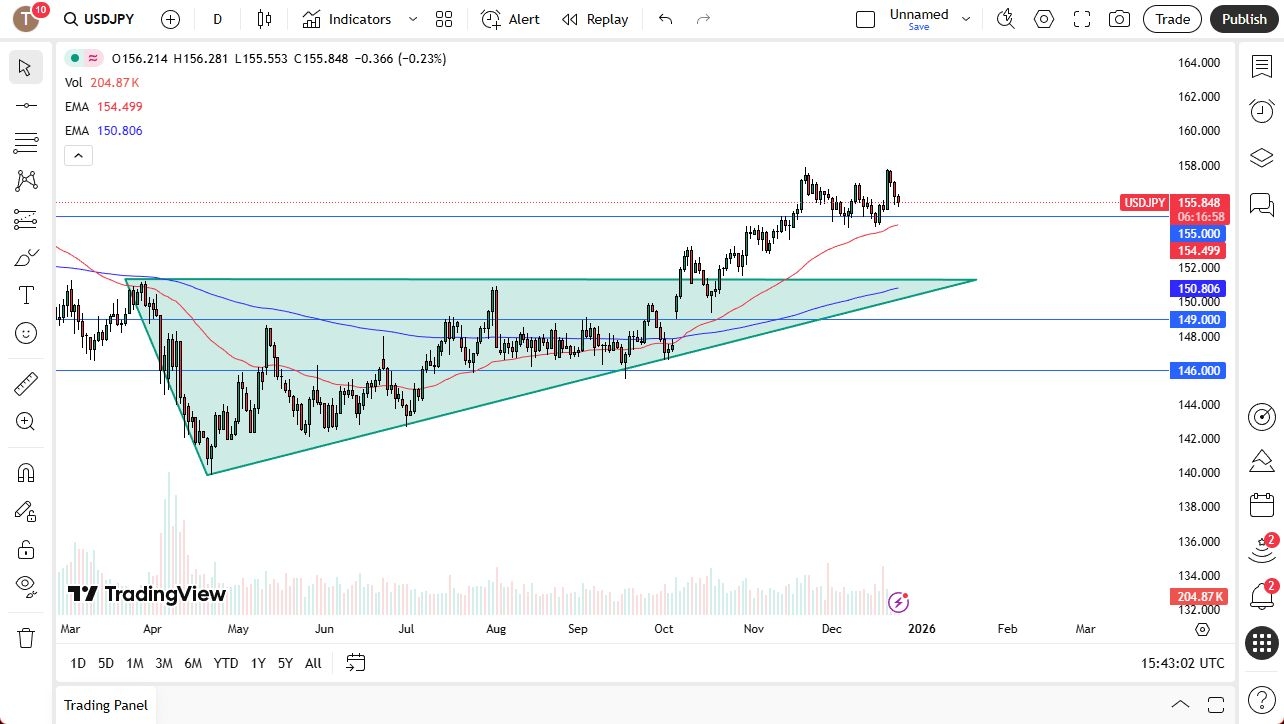
  • I suspect that the most likely outcome, at least over the next couple of weeks, might be sideways action as we carve out a 350-pip range or so.
  • The US dollar has drifted lower against the Japanese yen during early trading on Wednesday, but it is starting to see a little bit of pushback.
  • I believe that the 155-yen level is an area that a lot of people will be watching very closely as it could end up being a bit of a floor, especially with the 50-day EMA sitting just below it.

All things being equal, this is consolidation, but it is also a very high level of pricing that we haven’t seen since the beginning of 2025. So, the question now is, are we bumping into a ceiling? I think it is a little early to suggest that at the moment, but it is a possibility so I will be watching.

Market Volatility and Technical Levels

The 158-yen level is an area that offers significant resistance, but again, the 155-yen region offers significant support. The 50-day EMA, of course, is an indicator that a lot of people watch, and it sits at 154.50 yen, so that all ties together quite nicely.

The Japanese yen had seen a little bit of volatility after the Bank of Japan raised rates last week, but the reality is, I don’t think most of the market likes that, and they may punish Japan for that. I don’t think the market believes that the Japanese can aggressively raise rates anytime soon, while the Federal Reserve at least could make an argument that some of the most recent data have suggested that maybe they have to be very measured in their rate-cutting cycle.

All things being equal, this is a very noisy market, but I believe that it eventually goes looking to the upside. Even if it doesn’t, I would reset somewhere near the 152-yen level and start to look for support there as the 200-day EMA is in that neighborhood.

Want to trade our USD/JPY forex analysis and predictions? Here’s a list of forex brokers in Japan to check out.

Christopher Lewis has been trading Forex and has over 20 years experience in financial markets. Chris has been a regular contributor to Daily Forex since the early days of the site. He writes about Forex for several online publications, including FX Empire, Investing.com, and his own site, aptly named The Trader Guy. Chris favours technical analysis methods to identify his trades and likes to trade equity indices and commodities as well as Forex. He favours a longer-term trading style, and his trades often last for days or weeks.

Source link

Go to Top