About Editorial team of BIPNs

Main team of content of bipns.com. Any type of content should be approved by us.
23 12, 2025

DOGE Pre-Surge Signals Point to $0.20 Breakout

By |2025-12-23T10:55:33+02:00December 23, 2025|Crypto News, News|0 Comments

TLDR

  • Long-term DOGE cycles suggest the current pre-surge phase may be nearing completion
  • Inverse head and shoulders pattern signals short-term trend reversal potential
  • TD Sequential buy setup points to downside exhaustion and rebound risk
  • Break above key resistance could open upside toward $0.15–$0.20

Dogecoin (DOGE) price is drawing renewed attention as multiple technical indicators suggest a potential shift in trend. Long-term cycle analysis, combined with short-term reversal patterns, indicates DOGE may be transitioning from consolidation into an expansion phase. Based on current setups, analysts are watching for upside toward $0.14 in the near term, with higher targets near $0.20 if momentum sustains.

Dogecoin Price Near End of Long-Term Pre-Surge Phase

According to analyst Trader Tardigrade, the two-week Dogecoin chart highlights a repeating multi-cycle structure that has defined DOGE since 2014. Historical price action shows extended downtrends capped by descending trendlines, followed by prolonged consolidation phases. These periods, marked as “pre-surge phases,” have historically preceded strong upside breakouts.

SOURCE: X

More so, the current cycle places Dogecoin price near the $0.09–$0.10 region, close to the descending multi-year resistance. Volume has steadily declined throughout the downtrend, a pattern commonly associated with seller exhaustion. This compression suggests that market participation has thinned, often a prerequisite for trend reversals in meme-driven assets.

Trader Tardigrade noted that a decisive break above the long-term trendline could trigger a fresh expansion phase. Based on previous cycles, initial upside targets are projected in the $0.20–$0.30 range. However, failure to hold above $0.08 could extend consolidation and delay the breakout scenario.

Inverse Pattern Signals Reversal Potential

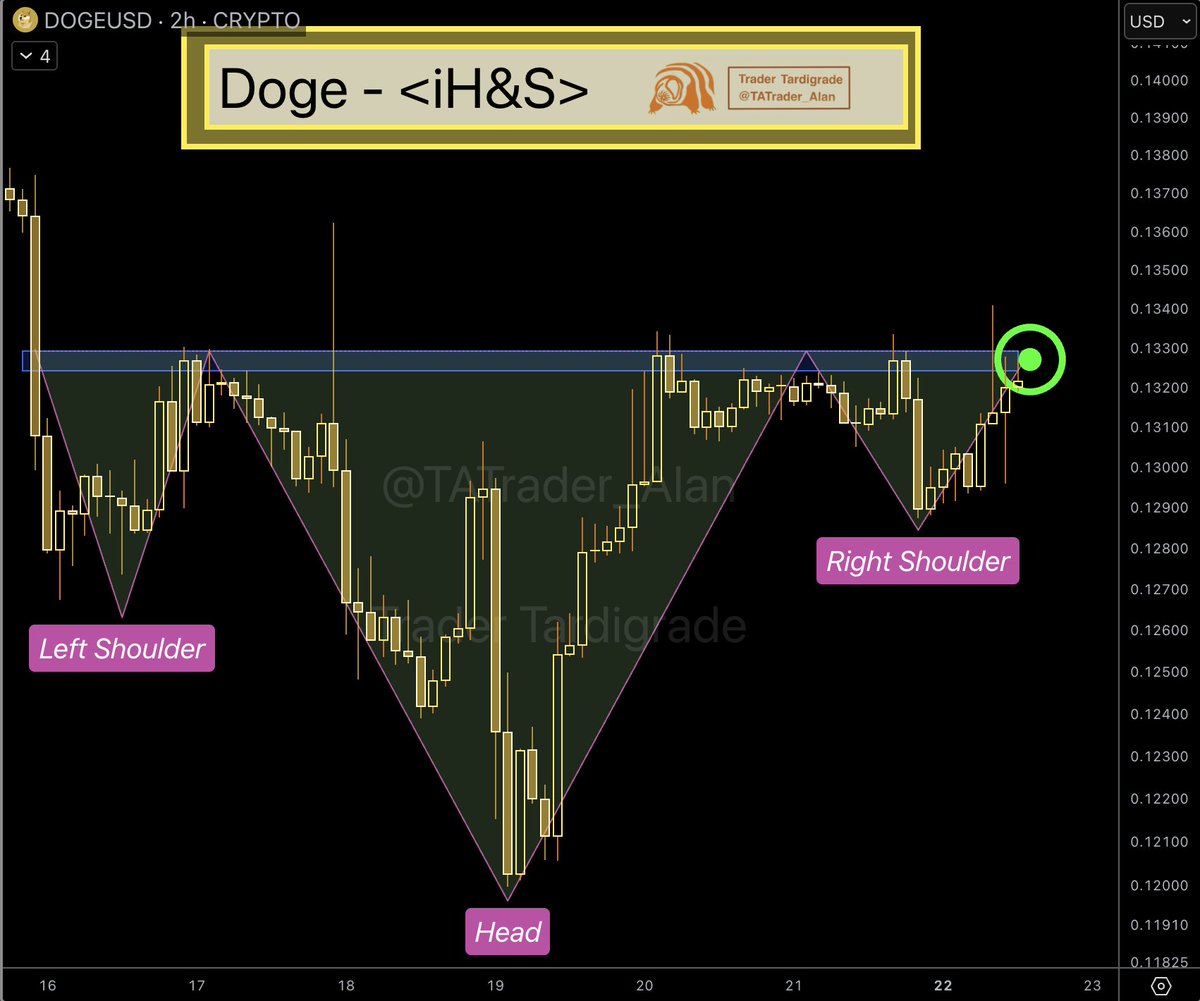
Meanwhile, the two-hour Dogecoin chart presents a clearer short-term bullish structure. Trader Tardigrade identified a completed inverse Head and Shoulders pattern, a classic reversal setup following a decline. The formation shows a left shoulder near $0.1360, a head around $0.1280, and a right shoulder near $0.1320.

ImageSOURCE: X


The neckline, positioned between $0.1330 and $0.1340, has already been breached, signaling a shift in control toward buyers. Volume increased during the right shoulder and breakout phase, reinforcing the pattern’s validity. Such confirmation often strengthens confidence in follow-through moves.

Based on the measured move of the pattern, short-term targets lie between $0.1400 and $0.1450. A sustained move could extend toward $0.1500 if market conditions remain supportive. Pullbacks toward the neckline may act as support, while a breakdown below the right shoulder would invalidate the setup.

TD Sequential Buy Signal Reinforces Upside Bias

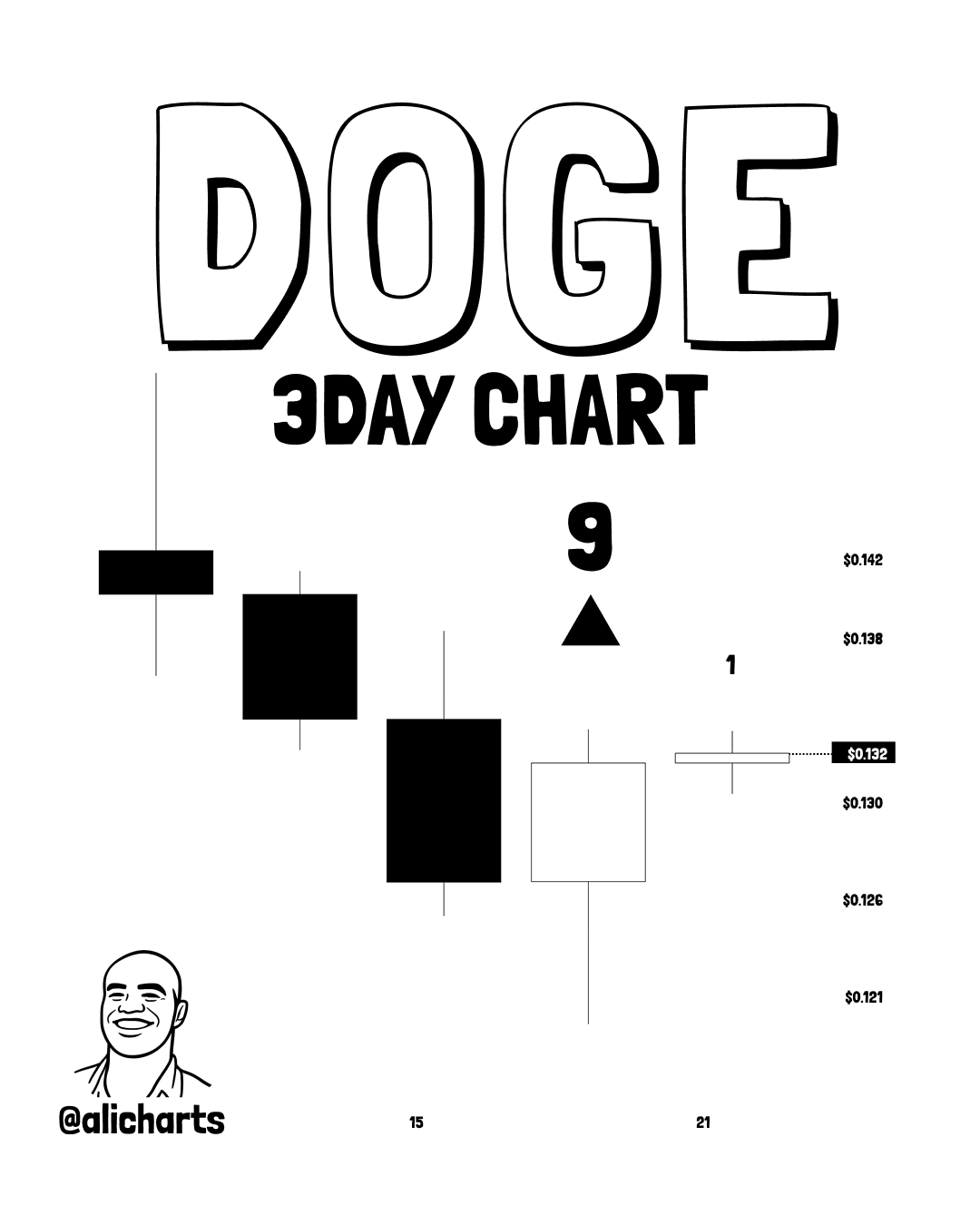
In addition, analyst Ali highlighted a momentum-based signal on the three-day Dogecoin chart using the TD Sequential indicator. The indicator recently printed a “9” sell signal, followed by a “1” buy setup near the $0.132 level. This sequence often marks trend exhaustion and the start of a new directional move.

Image

SOURCE: X

Following the signal, the price retraced toward the $0.121 support zone, aligning with oversold conditions. The indicator’s historical reliability on Dogecoin suggests such setups often precede notable rebounds. The defined range between $0.121 and $0.142 now acts as a critical decision zone.

Ali pointed to an initial reclaim of $0.138–$0.142 as confirmation of bullish continuation. A successful move above this range could open the path toward $0.150, aligning with targets from the inverse pattern. At the time of writing, Dogecoin price trades near $0.13, keeping reversal scenarios firmly in focus.

Source link

23 12, 2025

BOMBIE and CATTEA are officially launched on LINE MINI DAPP today, Tesla and millions of CATI prize pools are waiting for you to win

By |2025-12-23T09:49:10+02:00December 23, 2025|News, NFT News|0 Comments


Today, the world’s first blockchain games launched on the two major social platforms LINE and Telegram, BOMBIE and CATTEA, officially landed on LINE MINI DAPP, bringing a brand new gaming experience to Asian players. These two games have attracted tens of millions of users on Telegram, and with their innovative gameplay and token reward mechanism, they have quickly set off a craze around the world.

BOMBIE is the world’s first fair-launched zombie shooting game. Players will enter the doomsday world, engage in fierce battles with zombies, and earn $BOMBIE tokens; while CATTEA is the world’s first “Drink to Earn” game, combining interesting match-3 gameplay with real-world milk tea shops to create a unique “drink and earn” experience.

As the world’s first blockchain game launched on two major social platforms, BOMBIE and CATTEA have launched a special luxury server lottery event! Players not only have the opportunity to win a Tesla Model Y, 20 iPhone 16 Pro Max, but also share a 1,000,000 CATI prize pool.


Source link

23 12, 2025

XAG/USD trades near fresh high of $70.00 due to safe-haven demand

By |2025-12-23T09:45:48+02:00December 23, 2025|Forex News, News|0 Comments


Silver price (XAG/USD) hit a fresh record high of $70.00 during the Asian hours on Tuesday, trading around $69.70 per troy ounce at the time of writing. Precious metals, including Silver receive support from safe-haven demand amid rising United States (US)–Venezuela tensions.

US President Donald Trump said on Monday that the US would keep and maybe sell the Oil it had seized off the coast of Venezuela in recent weeks. Trump added that the US would also keep the seized ships. Moreover, Ukraine continues strikes on Russian energy infrastructure, with the latest attack damaging two vessels and two piers and igniting a fire in a Black Sea coastal village.

The non-interest-bearing Silver attracts investors amid growing expectations that the Federal Reserve will continue easing policy, reinforced by President Donald Trump’s calls for lower borrowing costs.

Federal Reserve (Fed) Member of the Board of Governors Stephen Miran said in an interview on Bloomberg TV on Monday that the last few months have seen data consistent with his view of the world and that he doesn’t see a recession in the near term. Miran said that failing to ease policy would raise recession risks, adding that the need to dissent for a 50 basis points diminishes over time as rates are reduced.

Traders await the US Gross Domestic Product (GDP) Annualized for the third quarter due on Tuesday. The US economy is estimated to have expanded at an annual rate of 3.2% in Q3. It would be a slowdown from the 3.8% growth in Q2.

Silver FAQs

Silver is a precious metal highly traded among investors. It has been historically used as a store of value and a medium of exchange. Although less popular than Gold, traders may turn to Silver to diversify their investment portfolio, for its intrinsic value or as a potential hedge during high-inflation periods. Investors can buy physical Silver, in coins or in bars, or trade it through vehicles such as Exchange Traded Funds, which track its price on international markets.

Silver prices can move due to a wide range of factors. Geopolitical instability or fears of a deep recession can make Silver price escalate due to its safe-haven status, although to a lesser extent than Gold’s. As a yieldless asset, Silver tends to rise with lower interest rates. Its moves also depend on how the US Dollar (USD) behaves as the asset is priced in dollars (XAG/USD). A strong Dollar tends to keep the price of Silver at bay, whereas a weaker Dollar is likely to propel prices up. Other factors such as investment demand, mining supply – Silver is much more abundant than Gold – and recycling rates can also affect prices.

Silver is widely used in industry, particularly in sectors such as electronics or solar energy, as it has one of the highest electric conductivity of all metals – more than Copper and Gold. A surge in demand can increase prices, while a decline tends to lower them. Dynamics in the US, Chinese and Indian economies can also contribute to price swings: for the US and particularly China, their big industrial sectors use Silver in various processes; in India, consumers’ demand for the precious metal for jewellery also plays a key role in setting prices.

Silver prices tend to follow Gold’s moves. When Gold prices rise, Silver typically follows suit, as their status as safe-haven assets is similar. The Gold/Silver ratio, which shows the number of ounces of Silver needed to equal the value of one ounce of Gold, may help to determine the relative valuation between both metals. Some investors may consider a high ratio as an indicator that Silver is undervalued, or Gold is overvalued. On the contrary, a low ratio might suggest that Gold is undervalued relative to Silver.


Source link

23 12, 2025

Here’s why the Japanese yen is soaring today — TradingView News

By |2025-12-23T09:09:35+02:00December 23, 2025|Forex News, News|0 Comments

The Japanese yen rebounded for the second consecutive day as investors reacted to the ongoing divergence between the Federal Reserve and the Bank of Japan (BoJ). The USDJPY exchange rate retreated to a low of 156.30, down sharply from the year-to-date high of 157.83. It has also formed a risky chart pattern pointing to more downside in the near term.

USDJPY technical analysis points to a retreat 

The daily timeframe chart shows that the USDJPY exchange rate has pulled back in the past two consecutive days. This retreat happened after the pair formed a double-top pattern at 157.83 with a neckline at 154.37.

A double-top pattern is one of the most common bearish reversal chart patterns in technical analysis. 

A closer look shows that the pair has formed a bearish divergence pattern as the MACDA and the Relative Strength Index (RSI) continued to move downwards. A bearish divergence happens when these oscillators drop when a currency pair is in an uptrend.

Therefore, a combination of a double-top pattern and a bearish divergence means that the USDJPY pair will continue falling, with the next key target being at 154.45, the neckline of this pattern. A move below that price will point to more downside, potentially to the psychological level at 150.

BoJ and Fes divergence 

The Japanese yen rose for the second consecutive day after Japan’s Finance Minister, Satsuki Katayama, said that the government was prepared to take bold actions if it moves out of line with its fundamentals.

His statement came a few days after the Bank of Japan (BoJ) delivered its interest rate decision, which was in line with expectations.

The bank hiked interest rates by 0.25% and delivered a muted forward guidance, with analysts expecting the bank to deliver one or two hikes next year. It is doing that since inflation has remained at an elevated level in the past few months. A report released on Friday showed that inflation rose to 3.0%.

The BoJ has taken other hawkish policies that have pushed bond yields to the highest level in years. For example, it is considering selling ETFs worth over $500 billion and had already ended its quantitative tightening policy.

The Federal Reserve has taken the opposite approach as it embraced a dovish tone. It slashed interest rates for the third consecutive meeting this month and some Fed officials are hinting of more cuts in the coming meetings. 

In a statement on Monday, Governor Stephen Miran warned that the Federal Reserve risked a recession without cutting interest rates. He said:

“The unemployment rate has poked up potentially above where people thought it was going to go. And so we’ve had data that should push people into a dovish direction.”

The most recent data showed that the unemployment rate rose to 4.6% in November, reflecting the number of government employees who took Donald Trump’s early retirement offers. Another report showed that US inflation cooled in November.

However, James Williams, the head of the New York Federal Reserve, warned that there was no urgency to cut interest rates again, recommending a continued pause.

Looking ahead, the US will publish some important data later on Tuesday. The key numbers to watch that may move the USDJPY exchange rate will be the upcoming US consumer confidence report, GDP, industrial, and manufacturing numbers.

Source link

23 12, 2025

Beauty Supplements Market Size, Share

By |2025-12-23T09:00:34+02:00December 23, 2025|Dietary Supplements News, News|0 Comments


Report Overview

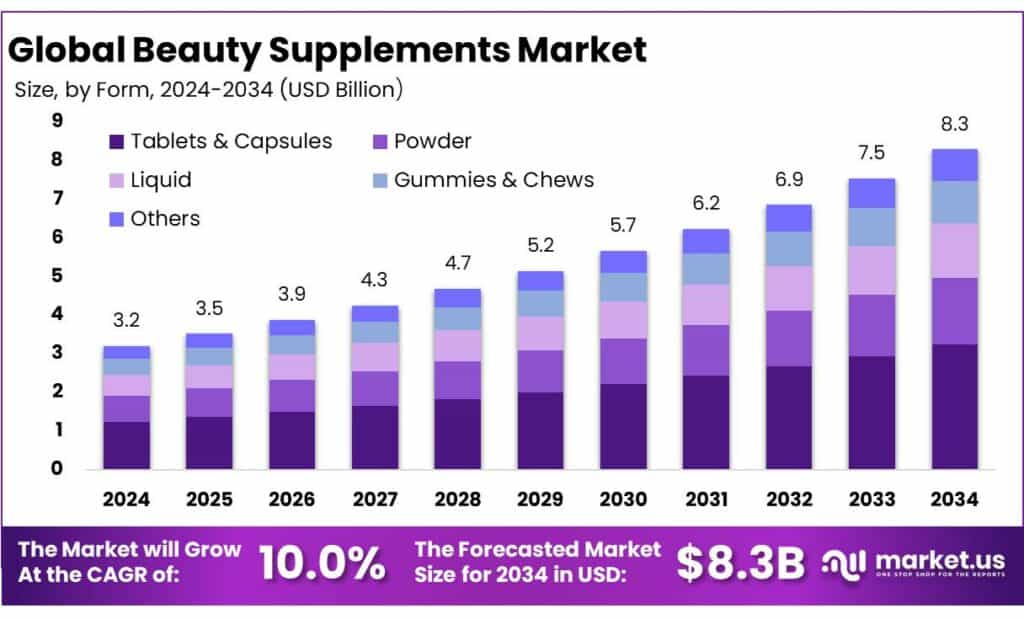
The Global Beauty Supplements Market size is expected to be worth around USD 8.3 Billion by 2034, from USD 3.2 Billion in 2024, growing at a CAGR of 10.0% during the forecast period from 2025 to 2034. In 2024 North America held a dominant market position, capturing more than a 39.4% share, holding USD 1.2 Billion in revenue.

Beauty supplements sit at the intersection of nutrition, functional foods, and personal care—using ingestible formats like capsules, gummies, powders, and ready-to-mix sachets to support visible outcomes such as skin hydration, hair strength, and nail quality. The category’s “industrial story” is less about cosmetics counters and more about food-grade ingredient processing, compliant labeling, and a fast-moving contract manufacturing ecosystem.

  • In the United States alone, FDA notes the dietary supplement market was worth more than $40 billion (2019), and the number of products expanded from about 4,000 (1994) to an estimated 50,000 to more than 80,000 (2019)—supported by a global supply chain that includes more than 10,000 facilities.
Beauty Supplements Market Size, Share

From an industrial scenario perspective, the category benefits from being built on the same manufacturing, ingredient, and regulatory backbone as the broader dietary supplement ecosystem—contract manufacturers, premix blenders, flavor houses, and testing labs—while borrowing branding and claim frameworks from beauty and functional foods. In the U.S., the dietary supplement industry’s overall economic impact in 2023 was $159 billion, supporting more than 615,000 jobs and generating $6.76 billion in state/local taxes and $10.7 billion in federal taxes.

Regulation and safety expectations are also shaping the industry’s direction. Codex has long provided global guidance for vitamin and mineral food supplements (CXG 55-2005), which supports harmonized approaches to quality and labeling. In the EU, nutrition and health claims for foods—including many supplement communications—are governed under Regulation (EC) No 1924/2006, pushing companies toward clearer substantiation and compliant wording. In India, FSSAI’s framework for health supplements and nutraceuticals similarly reinforces category definitions and compliance expectations.

Government and trusted regulatory frameworks are also shaping how the industry scales. In the U.S., companies introducing a new dietary ingredient must submit a premarket safety notification to FDA at least 75 days before marketing, which nudges innovation toward better-documented ingredients and cleaner dossiers.

The EU maintains a harmonized framework for food supplements through Directive 2002/46/EC, influencing permitted vitamin/mineral forms and labelling expectations across member states. In India, FSSAI has issued directives tied to the nutraceutical/health supplement framework (including 2022 directions), pushing clearer category definitions and compliance discipline in a fast-growing market.

Key Takeaways

  • Beauty Supplements Market size is expected to be worth around USD 8.3 Billion by 2034, from USD 3.2 Billion in 2024, growing at a CAGR of 10.0%.
  • Collagen Supplement held a dominant market position, capturing more than a 39.4% share.
  • Tablets & Capsules held a dominant market position, capturing more than a 39.2% share.
  • Skin Care held a dominant market position, capturing more than a 56.8% share.
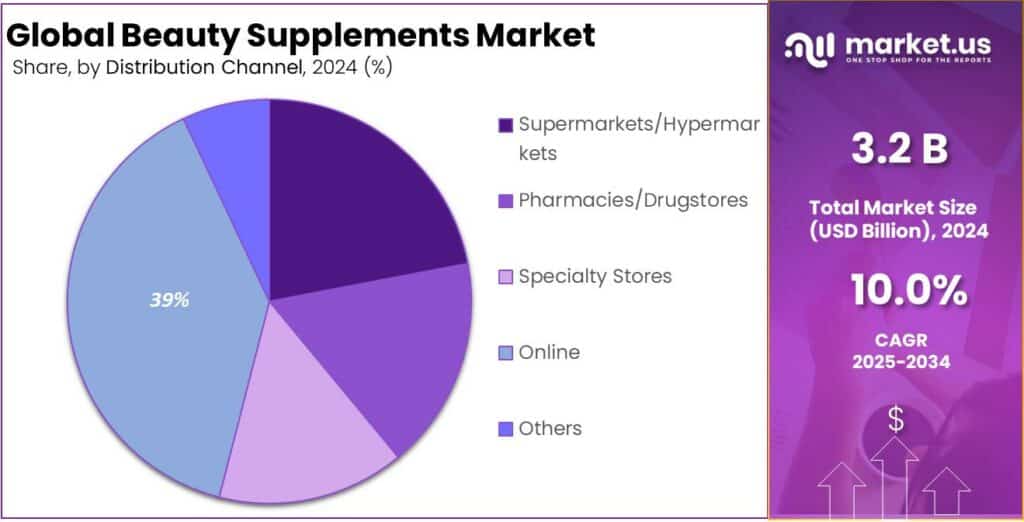
  • Online held a dominant market position, capturing more than a 38.9% share.
  • North America emerged as the dominant region in the beauty supplements market, capturing 39.40% of global share and generating approximately US$1.2 billion.

By Type of Supplement Analysis

Collagen supplements lead with a 39.4% share, driven by strong demand for skin and hair health benefits.

In 2024, Collagen Supplement held a dominant market position, capturing more than a 39.4% share. This leadership was mainly supported by rising consumer focus on skin elasticity, anti-aging benefits, and overall beauty from within. Collagen supplements were widely used for improving skin firmness, reducing fine lines, and supporting hair and nail strength, making them a preferred choice among beauty-focused consumers. The segment also benefited from growing awareness of age-related collagen loss and the easy availability of collagen in powders, capsules, and ready-to-drink formats.

In 2025, demand remained stable as collagen supplements continued to be positioned as a daily wellness product rather than a short-term beauty solution. Strong adoption among working adults and aging populations further supported steady consumption. The segment’s dominance was reinforced by its compatibility with clean-label trends and routine beauty regimes, helping collagen supplements maintain a leading position within the beauty supplements market.

By Form Analysis

Tablets & capsules dominate with a 39.2% share, supported by ease of use and precise dosing.

In 2024, Tablets & Capsules held a dominant market position, capturing more than a 39.2% share. This strong position was mainly driven by consumer preference for convenient, easy-to-consume formats that fit well into daily routines. Tablets and capsules offered accurate dosage, longer shelf life, and better stability compared to liquid or powder forms, making them widely accepted across age groups. These formats were especially popular among working professionals and regular supplement users who value portability and consistency.

In 2025, demand remained steady as tablets and capsules continued to be trusted for delivering beauty nutrients such as collagen, vitamins, and antioxidants in a controlled manner. Their widespread availability through pharmacies and online channels further supported adoption. The segment’s leadership was reinforced by its cost efficiency, standardized formulations, and familiarity, allowing tablets and capsules to remain the preferred form in the beauty supplements market.

By Application Analysis

Skin care leads the market with a 56.8% share, driven by rising beauty awareness and daily wellness habits.

In 2024, Skin Care held a dominant market position, capturing more than a 56.8% share. This leadership was supported by strong consumer focus on maintaining healthy, youthful, and glowing skin through internal nutrition. Beauty supplements for skin care were widely used to support hydration, elasticity, and protection against early aging, making them a regular part of personal care routines. Growing awareness about the link between nutrition and skin health encouraged consistent usage across both younger and aging populations.

In 2025, demand continued as consumers increasingly preferred preventive skin care solutions rather than corrective treatments. Daily intake of skin-focused supplements became common due to changing lifestyles, higher stress levels, and environmental exposure. Easy availability and routine-based consumption further strengthened adoption. As skin appearance remained a key beauty priority, the skin care application continued to dominate the beauty supplements market with sustained consumer trust and usage.

By Distribution Channel Analysis

Online channels lead with a 38.9% share, supported by easy access and growing digital buying habits.

In 2024, Online held a dominant market position, capturing more than a 38.9% share. This dominance was driven by the convenience of home delivery, wider product choice, and easy access to detailed product information. Consumers increasingly preferred online platforms to compare ingredients, read reviews, and choose beauty supplements that match personal needs. Subscription models and regular discounts further supported repeat purchases.

In 2025, online sales continued to grow as digital payment adoption and mobile shopping became more common. Social media promotion and influencer recommendations also played an important role in guiding purchase decisions. As trust in e-commerce platforms improved and delivery networks expanded, online channels remained the preferred distribution route for beauty supplements, supporting steady market growth.
Beauty Supplements Market ShareBeauty Supplements Market Share

Key Market Segments

By Type of Supplement

  • Collagen Supplement
  • Vitamins & Minerals
  • Omega-3 Fatty Acids
  • Antioxidants
  • Probiotics
  • Others

By Form

  • Tablets & Capsules
  • Powder
  • Liquid
  • Gummies & Chews
  • Others

By Application

  • Skin Care
  • Hair Care
  • Nail Care
  • Others

By Distribution Channel

  • Supermarkets/Hypermarkets
  • Pharmacies/Drugstores
  • Specialty Stores
  • Online
  • Others

Emerging Trends

Prebiotics, Adaptogens, and Sleep Support Enter Beauty Supplements

One of the latest trends in beauty supplements is the shift from single “beauty hero” ingredients to whole-body routines built around the gut–skin connection and everyday stress. The idea is practical: if digestion is off, sleep is poor, and stress is high, skin often looks tired and reactive—so brands are blending beauty goals with microbiome support, calming botanicals, and sleep-friendly stacks.

You can see this trend clearly in recent industry tracking from the Council for Responsible Nutrition (CRN). In its 2024 survey update, CRN reported that prebiotic use rose to 7% of supplement users in 2024, up from 5% in 2023. In the same survey release, ashwagandha reached 8% of supplement users in 2024, up from 2% in 2020. Melatonin use also remained elevated at 16% of supplement users.

CRN’s same update also highlights who is pushing this trend: it notes that women—especially younger women—are more likely than men to say they take supplements to enhance skin, hair, and nail health. That matters because younger buyers are also the ones most open to routine-stacking. Even spending is holding steady, which supports repeat buying: the median monthly spend among supplement users was $50 in 2024, while those buying from healthcare professionals reported a median monthly outlay of $100.

Regulatory and government guidance is shaping how this trend is communicated. In the U.S., FDA explains that structure/function claims on supplements are not pre-approved, but manufacturers must have substantiation that claims are truthful and not misleading, must submit a notification to FDA within 30 days after marketing, and must include the required disclaimer that FDA has not evaluated the claim. This pushes brands to be more careful with wording—so you see more “supports skin hydration,” “supports the skin barrier,” or “supports stress response,” instead of bold cure-like promises.

Drivers

Rising Everyday Supplement Use Is Pulling Beauty Supplements Into the Mainstream

One major driving factor for beauty supplements is simple: more people are already taking supplements as part of daily life, so “beauty-from-within” products feel like a natural add-on rather than a new habit. In the U.S., national health data shows that 57.6% of adults aged 20+ used at least one dietary supplement in the past 30 days (2017–2018). Usage is higher among women at 63.8%, compared with 50.8% among men. That matters because women are also the most consistent buyers of skin, hair, and nail solutions—so the base audience is already there, already familiar with capsules, powders, and gummies.

One major driving factor for beauty supplements is simple: more people are already taking supplements as part of daily life, so “beauty-from-within” products feel like a natural add-on rather than a new habit. In the U.S., national health data shows that 57.6% of adults aged 20+ used at least one dietary supplement in the past 30 days (2017–2018). Usage is higher among women at 63.8%, compared with 50.8% among men. That matters because women are also the most consistent buyers of skin, hair, and nail solutions—so the base audience is already there, already familiar with capsules, powders, and gummies.

Regulation and government-led oversight also supports this growth by pushing clearer rules and safer innovation, which builds consumer confidence over time. For example, in the U.S., a company that wants to market a new dietary ingredient generally must submit a premarket safety notification to the FDA at least 75 days before introducing it into interstate commerce. That encourages better documentation and slows down “wild” ingredient launches—important in a category where consumers expect both beauty results and safety.

In Europe, food supplement rules are anchored by Directive 2002/46/EC, which sets a structured framework around vitamins and minerals used in supplements and helps align expectations on labelling and composition. This kind of clarity supports wider retail distribution because retailers and brands can build products with fewer compliance surprises across markets.

Restraints

Safety & Regulation Challenges Restricting Growth of Beauty Supplements

One major restraining factor for beauty supplements is the ongoing concern about safety, effectiveness, and regulation of these products, which makes many consumers hesitant to buy or continue using them. Unlike conventional medicines, dietary supplements—including those positioned for skin, hair, and nail benefits—are not reviewed by regulators for safety or effectiveness before they come to market. In the United States, for example, the U.S. Food and Drug Administration (FDA) does not have the authority to approve dietary supplements for safety or effectiveness before they are sold to the public. That means companies can launch beauty supplement products without proving they actually work or are safe for everyone.

This regulatory gap contributes to a broader lack of consumer confidence. People who are thoughtful about their health often look for evidence-based results, but many beauty supplements lack strong clinical data showing they deliver the promised benefits. Even government-sponsored health resources like the National Institutes of Health Office of Dietary Supplements emphasize that supplements cannot replace a healthy, varied diet and that many products “need more study to determine if they have value.”

Another part of the problem is that regulatory systems do not require detailed ingredient verification or quality checks before products are sold. A U.S. Government Accountability Office review from 2008–2011 found 6,307 reports of health problems tied to dietary supplements, including issues like contamination and mislabeling. Some products had heavy metals or incorrect ingredient amounts listed on their labels—situations that can easily erode trust in the entire category.

At the policy level, this regulatory restraint is rooted in the Dietary Supplement Health and Education Act of 1994 (DSHEA), which allows products to be sold without pre-market safety or efficacy evaluation. Critics of DSHEA point out that this law means regulators can only act after a problem is identified, rather than preventing issues before they arise. While companies appreciate the flexibility it gives them, many healthcare professionals and public health advocates say it leaves consumers to navigate safety and effectiveness questions on their own.

Opportunity

Clinical-Backed, Personalized “Beauty-From-Within” Products Are the Biggest Growth Opportunity

A major growth opportunity for beauty supplements is to move from “pretty promises” to measurable, science-backed results—and then package those results into routines people can actually follow. The customer base is already huge. In the U.S., government health data shows 57.6% of adults (age 20+) used at least one dietary supplement in the past 30 days (2017–2018). Women reported higher use (63.8%) than men (50.8%). That’s a strong signal that the habit is mainstream, especially among the core audience for skin, hair, and nail benefits.

Regulatory structure is another reason this opportunity is real. In the U.S., if a company wants to market a supplement with a new dietary ingredient, it must submit a safety notification to FDA at least 75 days before the ingredient is introduced into interstate commerce. This pushes serious companies toward better safety files and tighter quality systems—exactly the kind of discipline that helps beauty supplements gain long-term trust.

In Europe, food supplements are anchored by Directive 2002/46/EC, which sets a clear framework (especially around vitamins and minerals used in supplements). That kind of rulebook supports cross-border scaling, retailer confidence, and more consistent product standards—helpful when you’re trying to build a repeat-purchase category like collagen, beauty gummies, or “skin barrier support” blends.

Large food and nutrition groups are already putting real weight behind the broader “health science” platform, which can spill over into beauty supplement innovation and distribution. Nestlé’s Health Science business reported CHF 5.0 billion in sales in 2024, showing how scaled the supplement ecosystem has become—and how much room there is for premium, science-led sub-categories like beauty-from-within.

Regional Insights

North America leads with 39.4% share and US$1.2 Bn in 2024, supported by high beauty awareness and strong consumer spending

In 2024, North America emerged as the dominant region in the beauty supplements market, capturing 39.40% of global share and generating approximately US$1.2 billion in revenue. The region’s leadership was underpinned by high consumer awareness of preventive health and internal beauty solutions, supported by widespread acceptance of supplements that target skin, hair, and nail health across diverse age groups. The United States, in particular, continued to be the largest contributor within the region, benefiting from advanced retail infrastructure, strong e-commerce penetration, and a culture that closely links wellness with aesthetic outcomes, especially through high-profile marketing and influencer engagement. ‘

North American consumers also show strong preference for science-backed, premium formulations with transparent ingredient sourcing, which has boosted demand for products such as collagen peptides and antioxidant blends. Retail availability through pharmacies, health stores, and online platforms made these products highly accessible, increasing repeat purchase frequency throughout 2024. Meanwhile, Canada reported steady growth as consumers embraced beauty supplements alongside broader preventive health trends.

Beauty Supplements Market Regional AnalysisBeauty Supplements Market Regional Analysis

Key Regions and Countries Insights

  • North America
  • Europe
    • Germany
    • France
    • The UK
    • Spain
    • Italy
    • Rest of Europe
  • Asia Pacific
    • China
    • Japan
    • South Korea
    • India
    • Australia
    • Rest of APAC
  • Latin America
    • Brazil
    • Mexico
    • Rest of Latin America
  • Middle East & Africa
    • GCC
    • South Africa
    • Rest of MEA

Key Players Analysis

In 2024, Pfizer Inc. supported beauty and skin health segments through targeted nutraceutical products within its Consumer Healthcare business before divestitures. The company reported total revenue of USD 51.6 billion, with consumer health and nutrition-related sales estimated at ~USD 3.5 billion. Pfizer’s scientific research lent credibility to functional supplement claims.

In 2024, Meiji Holdings Co. expanded its beauty supplement portfolio in Japan and Asia with collagen and nutrient blends. The company recorded consolidated revenue of ¥1,273 billion (JPY), with its Nutrition & Health business contributing around ¥180 billion. Meiji’s strong domestic brand recognition supported product uptake across multiple age groups.

In 2024, Everest NeoCell LLC led in collagen and beauty-oriented supplement formulations, promoting peptides for skin, hair, and nail health. The company reported estimated revenue of USD 95 million, with collagen products constituting ~80% of sales. NeoCell’s focus on science-backed ingredient quality supported retailer placement and brand trust.

Top Key Players Outlook

  • Amway
  • Asahi Group Holdings
  • HUM Nutrition Inc
  • Pfizer Inc
  • Meiji Holdings Co
  • Everest NeoCell LLC
  • Nestlé
  • Nu Skin
  • Meiji Holdings Co., Ltd.
  • Herbalife International of America, Inc.

Recent Industry Developments

In 2024, Asahi Group Holdings, Ltd. engaged indirectly in the beauty supplements and wellness space through its broader food and functional nutrition activities, even though the company’s core business remains beverages and consumer foods. The group reported annual revenue of JPY 2.94 trillion in fiscal 2024, marking growth supported by strategic pricing and premium product focus across regions.

In 2024, Amway continued to shape the beauty supplements segment through its widely recognised Nutrilite brand, which remains central to the company’s nutrition and wellness strategy and influences its beauty-oriented offerings. Amway reported global sales of approximately USD 7.4 billion for the year ending December 31, 2024, with the nutrition category—dominated by vitamins, dietary supplements, and wellness solutions—accounting for 64 % of total sales, signalling strong consumer demand for health-linked and beauty-enhancing products.

Report Scope


Source link

23 12, 2025

Bullish Signs Emerge as ETFs Hits Milestone

By |2025-12-23T08:54:43+02:00December 23, 2025|Crypto News, News|0 Comments

XRP price remains in a technical bear market after losing almost half of its value since its July peak. Ripple token was trading at $1.9010, down sharply from the all-time high of $3.6655. Its market capitalization has dropped from the all-time high of nearly $200 billion to $115 billion despite the soaring ETF inflows.

XRP Price Dumps Despite ETF Inflows Milestone 

The XRP token has dropped sharply in the past few months, even as demand from American investors has jumped.

SoSoValue data shows that spot XRP ETFs brought in over $82 million in inflows last week, bringing that cumulative total to $1.07 billion. This growth brought the total net assets to $1.2 billion.

In contrast, spot Bitcoin ETFs shed over $497 million in assets, bringing their cumulative total to $57 billion. The outflows erased the $286 million inflows recorded in the previous week.

Meanwhile, Ethereum ETFs saw outflows over the last 7 days, bringing their cumulative net inflows to $12.4 billion. They shed over $643 million in assets last week after adding $208 million in the previous week.

XRP is also beating Solana, whose ETFs have had cumulative inflows of over $742 million and have $946 million in net assets. Other ETFs, such as Dogecoin, Chainlink, and HBAR, have seen muted investor demand.

READ MORE: Here’s Why the Crypto Market is Going Up Today: Is This a Santa Claus Rally?

Ripple price has underperformed the market despite ongoing demand from South Korean investors, who are showing substantial interest in the token. 

CoinMarketCap data shows that most XRP trading occurs on Upbit, the country’s largest crypto exchange. Upbit’s volume jumped to $100 million in the last 24 hours, higher than other popular crypto exchanges like Binance and Coinbase.

XRP Price Technical Analysis 

Bullish Signs Emerge as ETFs Hits Milestone
XRP price chart | Source: TradingView

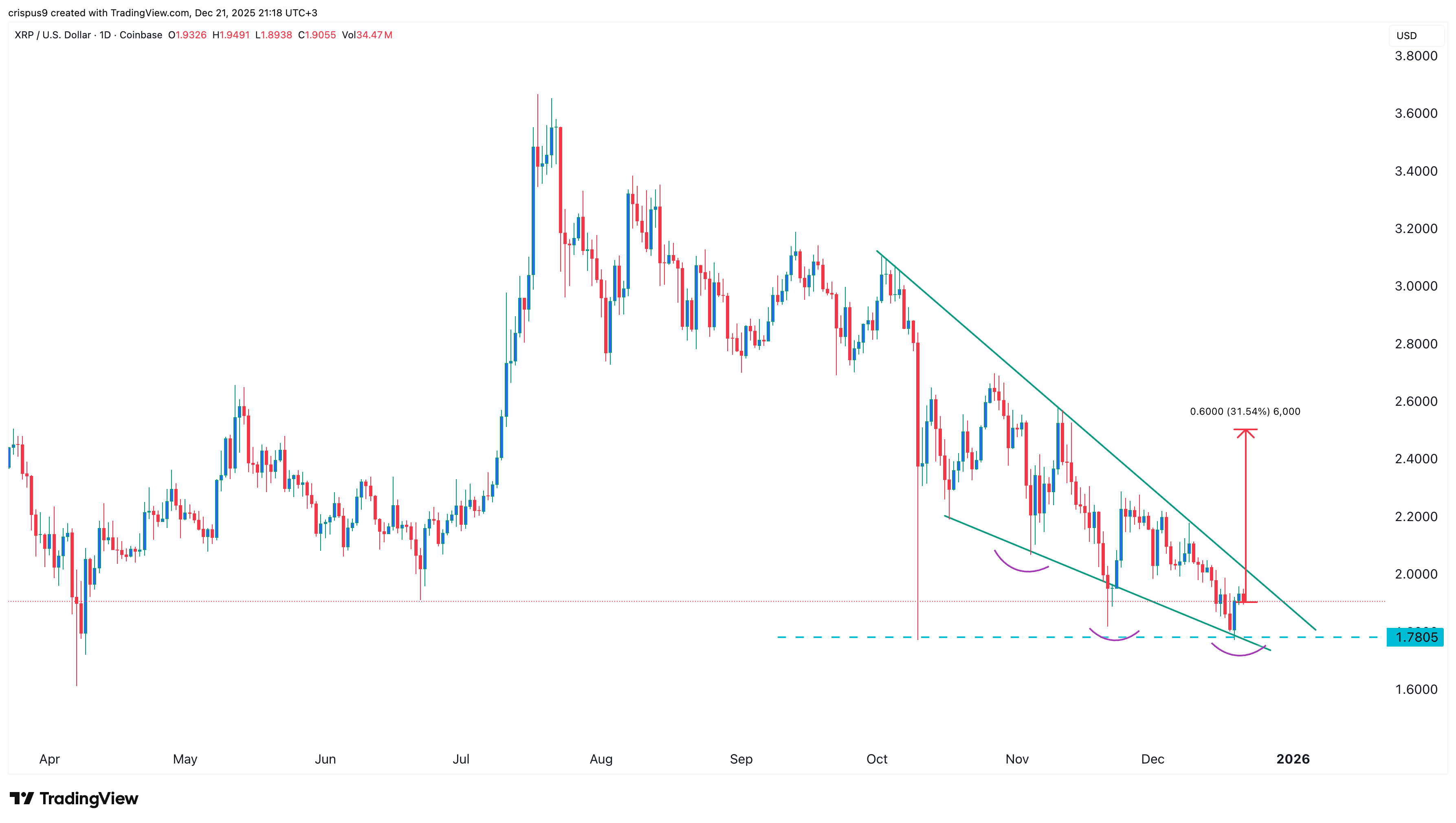
The daily timeframe chart shows the XRP price is bottoming after falling by ~40% from its highest level this year.

It has found necessary support at $1.7805, its lowest level in October, November, and December. That is a sign that it has formed a triple-bottom pattern, a common bullish reversal sign.

The token has also formed an inverse head-and-shoulders pattern and a falling wedge, two popular bullish reversal patterns. 

Therefore, the most likely scenario is where it rebounds in the coming days, supported by its strong fundamentals, including the soaring ETF inflows. A rebound may push it to the critical resistance level at $2.50, which is 31% above the current level.

On the other hand, a drop below the triple-bottom point at $1.7805 will invalidate the bullish XRP price forecast and point to more downside, potentially to the key support at $1.500.

READ MORE: Silver Price Surged and Beat Gold, Crypto in 2025: Is a Crash Coming?

Source link

23 12, 2025

BLIFE Protocol and Portal Merge to Enhance Web3 Gaming Ecosystem

By |2025-12-23T07:47:49+02:00December 23, 2025|News, NFT News|0 Comments


Rongchai Wang
Dec 22, 2025 11:59

BLIFE Protocol merges with Portal to operate as a unified entity, backed by Animoca Brands and G-20, enhancing cross-chain gaming and Web3 adoption.


BLIFE Protocol, a decentralized protocol on the Bitcoin blockchain, announced its merger with Portal, a platform focused on interoperability and liquidity for Web3 gaming, according to Animoca Brands. The newly combined entity will operate under the Portal brand, with the support of Animoca Brands and G-20.

Strategic Merger and Leadership

The merger aims to integrate BLIFE’s Bitcoin-based projects with Portal’s cross-chain gaming solutions. Benjamin Charbit, a former Ubisoft game director known for his work on Assassin’s Creed IV: Black Flag, will lead the combined entity as CEO.

Support from Key Industry Players

Animoca Brands, a leader in digital assets and Web3, will bolster Portal’s relaunch with capital and strategic connections. G-20 will also contribute as an ecosystem and strategic partner, enhancing Portal’s capabilities and reach.

Expanding Web3 on Bitcoin

BLIFE has been instrumental in developing Web3-native experiences for the Bitcoin ecosystem, including the creation of BLIFE.ID, a Bitcoin identity passport, and Odin.fun, a memecoin trading platform. These initiatives have significantly contributed to expanding Bitcoin’s role in the Web3 landscape.

Enhancing Cross-Chain Connectivity

In mid-2025, BLIFE acquired Beyond, a Bitcoin L1 bridge, which will now become part of Portal’s interoperability stack. This addition will enhance Portal’s ability to connect Bitcoin users with Web3 gaming, utilizing a proprietary cross-chain bridge to facilitate seamless transactions across different blockchain networks.

Portal’s Vision for Unified Gaming

Portal aims to unify fragmented blockchain gaming ecosystems into a cohesive platform, allowing for deep liquidity and seamless gaming experiences across various chains. The integration of BLIFE’s network and the upcoming Beyond bridge will help Portal achieve its mission of reducing fragmentation in Web3 gaming and enhancing connectivity for developers and players.

For more detailed information, visit the official announcement on Animoca Brands.

Image source: Shutterstock


Source link

23 12, 2025

XAU/USD eyes $4,500 as buying remains unabated

By |2025-12-23T07:44:41+02:00December 23, 2025|Forex News, News|0 Comments


Gold (XAU/USD) is seen building on the previous day’s strong rally of over 2% and continues scaling new all-time highs for the second consecutive day on Tuesday. The commodity climbs closer to the $4,500 psychological mark during the Asian session and remains well supported by a combination of factors. Comments from US Treasury Secretary Scott Bessent add to the uncertainty around the Federal Reserve’s (Fed) long-term policy credibility. This, along with dovish Fed expectations, exerts some follow-through pressure on the US Dollar (USD) and underpins the bullion. Adding to this, persistent geopolitical uncertainties benefit the precious metal’s safe-haven status and contribute to the strong move up.

Speaking on a podcast, Bessent opened the door to a rethink of the Fed’s inflation framework and said that he favours the idea of an inflation range rather than a fixed-point target. Bessent further suggested the new Fed chair could consider scrapping the dot plot — a move that would mark a significant shift in how the central bank communicates its policy outlook. This comes on top of expectations that the new Fed chair will slash interest rates regardless of the economic fundamentals. In fact, traders are still pricing in a greater chance of two more rate cuts by the US central bank, which drags the USD lower for the second straight day and further drives flows towards the non-yielding yellow metal.

US President Donald Trump had ordered a blockade of sanctioned oil tankers entering or leaving Venezuela to tighten the economic screws on President Nicolás Maduro. The US seized a large tanker on December 10 and intercepted a second vessel over the weekend, and was also pursuing a third tanker. This raises the risk of a further escalation of tensions in the region. Apart from this, US Vice President JD Vance said that he doesn’t have confidence that there will be a peaceful solution to a nearly four-year-old Russia-Ukraine war. Moreover, the possibility of another Israeli strike against Iran keeps geopolitical risks in play and turns out to be another factor that contributes to the XAU/USD pair’s strong positive momentum.

Meanwhile, the aforementioned supportive fundamental backdrop, to a larger extent, offsets a generally positive tone around the equity markets, suggesting that the path of least resistance for Gold remains to the upside. Traders now look to the US economic docket – featuring the delayed release of the Q3 GDP report and Durable Goods Orders later during the North American session. Apart from this, comments from influential FOMC members could drive the USD demand and produce short-term trading opportunities around the XAU/USD pair amid the year-end thin liquidity. However, extremely overbought conditions on short-term charts warrant caution for bulls before positioning for further appreciation.

Gold daily chart

Technical outlook

The overnight breakout through the $4,375-4,380 hurdle (the previous all-time peak) and a subsequent move beyond the $4,400 mark was seen as a fresh trigger for the XAU/USD bulls. The 50-day Simple Moving Average (SMA) climbs steadily, further underscoring a firm uptrend. Price holds above the SMA, currently pegged around the $4,160 area, which should act as dynamic support. The Moving Average Convergence Divergence (MACD) line extends above the Signal line and sits in positive territory, suggesting strengthening bullish momentum. However, the Relative Strength Index (RSI) stands at 81 (overbought), which could cap gains and prompt a near-term pause.

Momentum remains strong as the uptrend is supported by the rising SMA, while the positive MACD tone reinforces buyers’ control. With the RSI stretched, a consolidation or shallow pullback could unfold, and a slide toward the rising average would not disrupt the broader bullish bias. A sustained close above support would keep the upside path intact, while any cooling of momentum would likely translate into range trading rather than a trend reversal.

(The technical analysis of this story was written with the help of an AI tool)


Source link

23 12, 2025

The Realistic Path to $1 Revealed

By |2025-12-23T06:54:01+02:00December 23, 2025|Crypto News, News|0 Comments

BitcoinWorld

Dogecoin Price Prediction 2026-2030: The Realistic Path to $1 Revealed

Will Dogecoin, the cryptocurrency that started as a joke, finally reach the elusive $1 mark? As we look toward 2026, 2027, and beyond, millions of investors are asking this crucial question. Our comprehensive Dogecoin price prediction analyzes market trends, adoption drivers, and technical factors to reveal whether DOGE can realistically achieve this milestone.

Understanding Dogecoin’s Current Market Position

Dogecoin occupies a unique space in the cryptocurrency ecosystem. Originally created in 2013 by Billy Markus and Jackson Palmer as a lighthearted alternative to Bitcoin, DOGE has evolved into a serious digital asset with a massive community. The coin’s inflationary supply model, with 5 billion new coins minted annually, creates different economic dynamics than deflationary cryptocurrencies.

Dogecoin Price Prediction 2026: The First Major Test

By 2026, several factors will influence Dogecoin’s price trajectory. Our analysis considers three potential scenarios:

Scenario Price Range Key Drivers
Bullish $0.45 – $0.75 Major exchange adoption, Elon Musk integration
Moderate $0.25 – $0.40 Steady growth, retail adoption
Bearish $0.10 – $0.20 Market downturn, regulatory pressure

The most likely outcome for our Dogecoin price prediction 2026 falls in the moderate range, assuming continued development and gradual adoption. The DOGE price forecast depends heavily on broader cryptocurrency market conditions and specific Dogecoin developments.

DOGE Price Forecast 2027: Building Momentum

Looking further ahead to 2027, several developments could significantly impact Dogecoin’s value:

  • Payment Integration: More merchants accepting DOGE as payment
  • Technical Upgrades: Potential improvements to transaction speed and fees
  • Community Growth: Continued expansion of the Dogecoin ecosystem
  • Institutional Interest: Possible investment from traditional financial institutions

Our DOGE price forecast for 2027 suggests a range of $0.35 to $0.65 under favorable conditions. The Dogecoin 2026 foundation will be crucial for this growth phase.

Dogecoin 2030: The Ultimate Price Target

The question on every investor’s mind: Can Dogecoin reach $1 by 2030? Let’s examine the mathematics and market dynamics required:

For Dogecoin to reach $1, its market capitalization would need to approach approximately $140 billion at current circulating supply levels. This represents significant growth but remains within the realm of possibility given cryptocurrency market expansion. Key requirements include:

  1. Mass adoption as a payment method
  2. Strong community support maintained for another decade
  3. Favorable regulatory environment worldwide
  4. Continued development and innovation

Our Dogecoin 2030 analysis suggests that while challenging, the $1 target is achievable under optimal conditions. The DOGE $1 target represents more than just a price milestone—it symbolizes mainstream cryptocurrency acceptance.

Will DOGE Reach $1? The Critical Factors

The path to $1 depends on several interconnected factors. First, broader cryptocurrency adoption must continue accelerating. Second, Dogecoin needs to maintain its cultural relevance and community strength. Third, practical utility must increase through merchant adoption and technological improvements.

Historical patterns show that Dogecoin often follows Bitcoin’s market movements while amplifying them. This correlation means that a strong Bitcoin bull market could propel DOGE toward its $1 target faster than expected. However, the inflationary supply presents a constant selling pressure that must be overcome by demand.

Challenges to the DOGE $1 Target

While optimistic about Dogecoin’s potential, we must acknowledge significant challenges:

  • Inflationary Supply: Constant new coin creation requires sustained demand
  • Competition: Thousands of alternative cryptocurrencies vying for attention
  • Regulation: Uncertain regulatory landscape for meme coins
  • Technological Limitations: Need for ongoing development to remain competitive

These factors create headwinds that could delay or prevent Dogecoin from reaching $1. Investors should consider these risks alongside the potential rewards.

Actionable Insights for Dogecoin Investors

Based on our Dogecoin price prediction analysis, here are practical steps for interested investors:

  1. Dollar-Cost Average: Consider regular investments rather than timing the market
  2. Monitor Developments: Watch for major announcements from key figures like Elon Musk
  3. Diversify: Include Dogecoin as part of a balanced cryptocurrency portfolio
  4. Stay Informed: Follow reliable sources for Dogecoin news and analysis

Remember that all cryptocurrency investments carry risk, and you should never invest more than you can afford to lose.

Frequently Asked Questions

What is the most realistic Dogecoin price prediction for 2026?
Our analysis suggests a moderate range of $0.25 to $0.40 for Dogecoin in 2026, assuming steady growth and continued development.

Can Dogecoin realistically reach $1 by 2030?
Yes, but it requires optimal conditions including mass adoption, favorable regulations, and sustained community support. The DOGE $1 target is challenging but achievable.

Who are the key figures influencing Dogecoin’s price?
Elon Musk, CEO of Tesla and SpaceX, has significantly impacted Dogecoin through his public statements. The original creators, Billy Markus and Jackson Palmer, also remain influential figures in the community.

How does Dogecoin’s inflation affect its price potential?
The 5 billion new DOGE created annually creates constant selling pressure that must be overcome by increasing demand. This makes sustained adoption crucial for price appreciation.

What companies accept Dogecoin as payment?
Several companies have accepted Dogecoin, including Tesla for merchandise at various times, AMC Theatres, and various online retailers through payment processors.

Conclusion: The Realistic Outlook for Dogecoin

Our comprehensive analysis reveals that Dogecoin’s journey to $1 is paved with both opportunity and challenge. The Dogecoin price prediction for 2026-2030 shows gradual appreciation potential, with the $1 target representing an ambitious but possible milestone by 2030. Success depends on continued community support, technological development, and broader cryptocurrency adoption.

Dogecoin has repeatedly defied expectations since its creation. While our DOGE price forecast provides data-driven projections, the cryptocurrency market remains unpredictable. The most important factor may be Dogecoin’s unique ability to capture public imagination—a quality that could propel it to heights that pure technical analysis cannot predict.

To learn more about the latest cryptocurrency market trends, explore our article on key developments shaping Bitcoin, Ethereum, and other major digital assets and their potential impact on meme coins like Dogecoin.

This post Dogecoin Price Prediction 2026-2030: The Realistic Path to $1 Revealed first appeared on BitcoinWorld.


Source link

23 12, 2025

Pi Network SDK Updates Simplify DApp Integration and Drive Expansion of Picoin Payment Ecosystem

By |2025-12-23T05:46:39+02:00December 23, 2025|News, NFT News|0 Comments


Pi Network is steadily advancing its blockchain ecosystem with updates to its Software Development Kit (SDK), making it easier than ever for developers to integrate decentralized applications. This milestone reflects the network’s broader goal of fostering a functional, user-friendly ecosystem where Picoin can be utilized across a range of services and applications. With these updates, Pi Network is positioning itself to accelerate the adoption of DApps, payment apps, and other Web3 solutions.

Streamlined DApp Integration for Developers

The updated Pi SDK significantly reduces the technical barriers for developers seeking to build decentralized applications on the Pi Network blockchain. Previously, integrating DApps required intricate coding, resource-intensive testing, and complex blockchain interactions. Now, developers can leverage simplified tools and documentation, speeding up development cycles and reducing implementation errors.

This improvement aligns with Pi Network’s strategy to attract developers and expand the network’s ecosystem. By making DApp creation more accessible, Pi Network encourages innovative solutions that leverage Picoin as both a medium of exchange and a functional asset within various applications.

Impact on the Pi Ecosystem

The implications of this SDK update extend beyond development convenience. By facilitating DApp integration, Pi Network creates a more dynamic and functional ecosystem for Picoin. Increased DApp activity not only provides utility for the coin but also incentivizes user engagement, transaction volume, and community participation.

With more applications connected to the Pi blockchain, users gain additional reasons to hold and use Picoin. Payment apps, decentralized marketplaces, and other Web3 services can seamlessly integrate Picoin, enhancing its real-world usability and creating a feedback loop where adoption drives further development.

Accelerating the Adoption of Pi Payment Apps

One of the most immediate benefits of the SDK updates is the acceleration of Pi payment apps. These applications allow users to pay for goods and services using Picoin, increasing its practicality beyond digital wallets or speculative holding. By simplifying the process for developers, Pi Network ensures that payment apps can be deployed quickly, providing tangible use cases that reinforce the coin’s value proposition.

In addition to facilitating transactions, payment apps expand the visibility of Picoin, attracting new users and merchants to the ecosystem. As adoption grows, network activity increases, supporting liquidity and fostering a more robust economic environment for all participants.

Encouraging Innovation and Developer Engagement

Beyond payment apps, the SDK updates encourage broader innovation across the Pi ecosystem. Developers can experiment with decentralized finance applications, gaming platforms, NFT marketplaces, and social applications that integrate Picoin.

By lowering the technical threshold, Pi Network empowers developers to focus on creative problem-solving rather than navigating complex blockchain infrastructure. This shift is critical for attracting diverse projects and ensuring that the ecosystem evolves in alignment with both user needs and market trends.

Picoin Utility and Network Growth

Picoin’s utility is central to Pi Network’s long-term vision. Each new DApp or payment solution integrated through the updated SDK expands the coin’s real-world functionality. This utility not only strengthens network adoption but also increases the frequency and diversity of transactions within the ecosystem.

A vibrant ecosystem of DApps and payment apps enhances the coin’s appeal to both existing Pioneers and new users, creating a sustainable cycle of growth. Increased transaction volume improves network security, liquidity, and value perception, positioning Picoin as a practical tool in the broader Web3 economy.

Strengthening Pi Network’s Web3 Position

The SDK updates are a strategic step toward establishing Pi Network as a credible player in the Web3 landscape. Web3 emphasizes decentralization, user empowerment, and interoperability across blockchain-based services. By making DApp integration easier, Pi Network aligns itself with these principles and enables developers to build applications that adhere to modern Web3 standards.

As the network becomes more developer-friendly, it is likely to attract innovative projects that showcase Picoin’s capabilities. Each successful DApp contributes to Pi Network’s reputation, reinforcing its credibility and potential as a sustainable, long-term platform within the global crypto ecosystem.

Community Engagement and Participation

Pi Network has always emphasized community-driven growth, and SDK updates further empower Pioneers and developers to contribute actively. Developers can experiment with applications, share feedback, and iterate on new solutions, while users can interact with an increasingly diverse array of Picoin-enabled services.

This collaborative environment fosters engagement, strengthens community loyalty, and encourages broader adoption of both Picoin and the network’s DApps. Active participation also supports network resilience, ensuring that growth is organic and aligned with user demand.

Strategic Implications for the Crypto Market

The Pi SDK updates have broader implications for the crypto market. By enabling faster DApp integration, Pi Network positions itself to compete with other emerging blockchain platforms that prioritize developer accessibility. A growing portfolio of functional applications and payment solutions increases the network’s relevance, attracts investor interest, and demonstrates practical use cases beyond speculative trading.

Moreover, enhanced developer tools and accessible integration help Pi Network stay ahead in the rapidly evolving Web3 ecosystem, where innovation cycles are short and community-driven adoption is critical for long-term success.

Challenges and Considerations

While the SDK updates represent a significant milestone, challenges remain. Developers must still ensure security, scalability, and user experience when deploying applications. As DApps proliferate, maintaining consistent quality and performance across the network will be crucial.

Additionally, Pi Network must manage expectations within its community. Rapid expansion is beneficial, but sustainability and reliability should remain priorities to avoid potential pitfalls associated with overextension or poorly optimized applications.

Future Outlook and Opportunities

Looking forward, Pi Network’s SDK updates open the door to a rapidly expanding ecosystem of Picoin-enabled applications. Developers are now better equipped to create innovative DApps, and the growing number of payment apps ensures that Picoin continues to gain real-world utility.

As the ecosystem matures, additional integrations with DeFi, smart contracts, and other Web3 services are likely. Each successful deployment reinforces the network’s credibility, attracts new users, and strengthens Picoin’s value proposition.

In the long term, the Pi SDK updates are a foundation for sustainable growth, ecosystem diversity, and meaningful adoption of Picoin across the global Web3 landscape.

Conclusion

Pi Network’s recent SDK updates mark a pivotal moment in the project’s evolution. By simplifying DApp integration, the network empowers developers, accelerates the deployment of payment apps, and expands Picoin’s real-world utility.

These updates enhance the overall ecosystem, attract community engagement, and strengthen Pi Network’s position within the broader Web3 economy. As developers continue to build, deploy, and innovate, the Pi blockchain is poised to evolve from an early-stage network into a thriving, functional ecosystem where Picoin serves as a versatile digital asset for transactions, applications, and decentralized services.

hokanews.com – Not Just Crypto News. It’s Crypto Culture.

Writer 

@Erlin
Erlin is an experienced crypto writer who loves to explore the intersection of blockchain technology and financial markets. She regularly provides insights into the latest trends and innovations in the digital currency space.


 Check out other news and articles on Google News

Disclaimer:


The articles published on hokanews are intended to provide up-to-date information on various topics, including cryptocurrency and technology news. The content on our site is not intended as an invitation to buy, sell, or invest in any assets. We encourage readers to conduct their own research and evaluation before making any investment or financial decisions.
hokanews is not responsible for any losses or damages that may arise from the use of information provided on this site. Investment decisions should be based on thorough research and advice from qualified financial advisors. Information on HokaNews may change without notice, and we do not guarantee the accuracy or completeness of the content published.


Source link

Go to Top