A strategic partnership with NEOSTELLAGAMES, a mobile game studio with strong global live-service capabilities
Co-developing a casual roguelike RPG for the global Web3 market with an H5 title
Enhancing BORA token utility through payment, rewards, and onboarding collaboration
SEOUL, South Korea, Nov. 20, 2025 /PRNewswire/ — METABORA GAMES (CEO Choi Se-hoon), a leading blockchain game developer, announced today that it has signed a partnership with NEOSTELLAGAMES (CEO Kim Tae-Kyun) to co-develop and globally launch a Web3 game built on HTML5 (H5).
METABORA GAMES Forms Strategic Partnership with NEOSTELLAGAMES To Co-Develop and Launch Web3 Games
NEOSTELLAGAMES is a mobile game studio founded by developers who have led a wide range of projects at major global companies including Line Play, Disney Interactive, and NCSOFT. The studio has extensive experience in commercial game development and global live service operations, and has built strong expertise in the casual and idle RPG genres. With additional experience in Web3 game development, the company has also secured capabilities for next generation hybrid game production.
Through this partnership, the two companies will collaborate on the launch of a next generation Web3 title that combines H5 accessibility with a Web3-driven, targeting for the global H5 game market. NEOSTELLAGAMES will lead development and live service operations for a casual roguelike RPG Web3 game, while METABORA GAMES will support tokenomics design optimized for synergy with the BORA ecosystem, along with global Web3 marketing and user engagement systems.
The new title jointly developed by the two companies will support in-app payments that allow players to purchase in game items using the BORA token. The game is also planned to introduce a gas abstraction feature, enabling players to pay gas fees with BORA even without holding KAIA tokens.
METABORA GAMES has been actively pursuing external collaborations to secure H5 based Web3 game titles. Through this onboarding partnership with NEOSTELLAGAMES, the company plans to expand its global lineup of H5 based Web3 games, strengthen the utility of the BORA token, and accelerate the growth of its ecosystem.
A representative from METABORA stated that the company will continue to expand its portfolio of H5 based titles across various genres, increase real use cases for the BORA token, and further enhance user engagement.
About METABORA
METABORA is a casual game developer and the service operator of the blockchain platform BORA.
The BORA ecosystem brings together partners across various industries—ranging from tokenomics and content to blockchain technology—driving innovation and collaboration across games, sports, and entertainment.
BORA is a national game/entertainment token with a high liquidity in the market and reinforcing the accessibility of users and services abroad by increasing the listing on global cryptocurrency exchanges and expanding partnership.
While each product featured is independently selected by our editors, we may include paid promotion. If you buy something through our links, we may earn commission. Read more about our Product Review Guidelines here.
I’ve been living in the States for 10 years now. I first came here for college, then moved to New York, so at this point I’m basically a New Yorker. And I’m sure you’ve heard that we New Yorkers love an early-morning, late-night routine . . . which conveniently allows us to drink more than a couple cups of coffee a day.
I might be a New Yorker now, but I’m also Turkish. Growing up in Turkey, tea was non-negotiable — it was just part of life. But after adapting to the American lifestyle, I’m ashamed to say I went from drinking several cups of tea a day to having it once in a blue moon. And honestly, the tea here just doesn’t compare to the tea back home (and I’m not even talking about the ritual, everyone drinking tea together like it’s water, which adds so much to the experience). So I slowly just let it go.
That’s why when Rishi Tea reached out with their tea offerings, I was genuinely excited to hopefully get my groove back and try a new tea company. I immediately checked their website, which has a ton of options from Japanese matcha (another favorite of mine, as long as it’s high quality and not chalky) to blends with turmeric and ginger, cinnamon plum, Earl Grey lavender, and even vanilla mint chai, which I haven’t seen much before. I wanted to try everything. The website is visually pleasing, and seeing the loose tea leaves honestly just made me want to start brewing right away.
Once I got the package that’s filled to the brim with Turmeric Ginger ($36), it took me maybe 3 to 5 minutes to make my first cup, I was that excited. And let me tell you, it did not disappoint. They come individually packaged, which I love because it helps preserve the aroma and prevents the tea from going stale. Plus, it just feels more hygienic.
The awesome, centering energy of golden turmeric root is enhanced by strengthening licorice root and zesty ginger in this Ayurveda-inspired blend.
The tea is uncaffeinated and super easy to prepare. The instructions are printed on each sachet, but if you get the loose-leaf version, you basically use 1.5 tablespoons in 12 oz of hot water (around 200°F) and steep for 5 minutes. If you want an extra soothing cup, you can steep it stronger and longer, up to 10 minutes. They also offer a Simple Brew Loose Leaf Teapot ($29) and Loose Leaf Tea Filters ($9) to make things easier. Or you can just do what I do and stick with the pre-packaged sachets. The good thing is Rishi offers everything — sachets, loose leaf, iced teas, concentrates, powders, you name it.
What I Like About Rishi’s Turmeric Ginger Tea
The moment I took a sip, I knew I was going to be hooked. I personally love ginger – I use it in meals, soups, green juices, anything. I think it’s one of the best ingredients for supporting your health, and when you pair it with turmeric, there’s no going back.
One thing I loved about this tea is that you can actually taste both ginger and turmeric strongly. The flavor is sharp and warming, and it feels like you’re fighting a cold even before you have one. The tea is slightly spicy thanks to the golden turmeric and the citrusy, spicy ginger, truly a perfect match. Fragrant lemongrass and citrus peels add a lemon-drop sweetness that balances out the turmeric’s pungency. You can taste the tradition behind the Ayurvedic blend.
As someone with a hectic schedule, who can’t afford to get sick, is obsessed with natural herbal benefits, and constantly tries to keep her digestion calm (my stomach hurts all the time), this tea feels like it’s about to become my best friend.
What’s Worth Noting Before You Try It
I’m not ashamed to say I had two cups back-to-back while working, and I could feel my digestion waking up (if you know what I mean).
The only downside is that the tea is a bit more expensive than supermarket tea options. But honestly, the flavor strength, ingredient quality, and sourcing transparency make the price understandable if you’re looking for something that feels like a treat and not just a random tea bag.
It’s also caffeine-free, which might be a downside for some, but I actually love that I can drink it during the day or night without worrying about sleep.
Who Is Rishi’s Turmeric Ginger Tea Best For?
Anyone who loves bold, spicy, herbal teas
People who enjoy ginger and turmeric specifically
Those who want a soothing, digestion-supporting drink
Anyone who prefers caffeine-free options
People who value high-quality, ethically sourced ingredients
Anyone exploring Ayurvedic or natural remedies
Additional Details:
Key ingredient origins: Turmeric and ginger originate from Southeast Asia; licorice root comes from the Mediterranean and Asia (including Turkey, which made me feel closer to home); lemongrass is native to Southeast Asia, India, and Africa.
Preparation: 1.5 tbsp loose leaf in 12 oz hot water at ~200°F for 5 minutes, or up to 10 minutes for a stronger cup.
Packaging: Available in individually packaged sachets, loose leaf tins, powders, concentrates, and more.
Where Can You Buy This Tea?
You can purchase it directly from Rishi Tea’s website or on Amazon which has their full selection — from sachets and loose leaf to matcha, concentrated teas, and unique blends.
Rating:
★★★★
Balim Tezel (she/her) is a shopping updates editor at PS and the founder of Maison des Nus, a New York-based affordable luxury brand. She graduated from Northwestern University’s Medill School of Journalism.
Crypto markets are on edge after Mt. Gox suddenly moved 10,608 BTC worth $953M, its first major transfer in eight months. Fears are renewing about another possible liquidity shock.
Bitcoin is already under correction pressure, and institutional inflows are slowing. XRP price prediction models are now rapidly readjusting.
DeepSnitch AI continues to move higher despite the uncertainty unfolding in the crypto sector. Its presale is up 58% so far and has raised more than $555K. Traders are now relying on DeepSnitch AI for monitoring whale wallets like Mt. Gox, so they can make decisions before the masses.
The defunct Japanese exchange transferred 10,608 BTC to a new wallet, which is its first major move since March. Large Mt. Gox movements have led to BTC sell-offs in the past.
Mt. Gox still holds 34,689 BTC, which is more than enough to shake market liquidity if even a fraction hits exchanges.
Mt. Gox has yet again pushed back the timeline for giving creditors their Bitcoin back. The deadline is now October 31, 2026, so the BTC supply won’t hit the open market any time soon.
The sudden whale-sized movement raises concerns that Mt. Gox might be getting ready to liquidate some of the remaining stash that would add pressure to markets that are already fragile.
DeepSnitch AI hasn’t flinched. Its presale momentum is climbing despite the chaos. Its trajectory is steadily going upwards. Early-stage coins look safer than big caps during panic dips. There’s also the powerful suite of trading tools that are vital for presale investors looking to navigate an uncertain market.
DeepSnitch AI: The panic-proof play of 2025
DeepSnitch AI isn’t impacted by market swings, so its presale is steadily ticking upwards with more than $555K raised to date. Presales feed on momentum rather than react to whale moves.
Traders are relying on the five autonomous AI agents that scan whale wallets, sentiment, and liquidity changes 24/7. These tools eliminate the information gap. What used to be institutional-only intelligence is now available to everyday traders.
Many people are now seeing early-stage projects with high upside. The problem with this approach is knowing which projects are trustworthy and which to avoid.
DeepSnitch AI’s AuditSnitch is the perfect tool for these individuals. It allows you to analyze token data to check to see if it’s sketchy or legit. This means you can avoid scams and focus on projects that can deliver real value.
DeepSnitch AI is one of the few early-stage plays that traders genuinely believe could deliver 100x upside. It’s still at an early stage, which is why many people are fleeing from high-cap coins and into the DeepSnitch AI presale before it’s too late to get the big upside.
2. XRP price prediction: $3 target returns as liquidity rotates
The recent crypto market volatility has led to a big uptick in demand for XRP price prediction models. XRP often catches the flight from Bitcoin to mid-cap coins when there are major BTC whale events like the Mt. Gox news.
Long-term catalysts remain intact for Ripple despite the short-term noise. Traders see the volatility as a chance to revisit aggressive XRP price prediction targets.
There is still a good level of XRP institutional adoption, so the XRP long-term outlook remains strong even during market turbulence. XRP price prediction models point towards a run back towards $3 from the current $2.15 levels in the short term. Its aggressive expansion and gradual global regulatory clarity mean that the XRP future value outlook is bright.
3. Bitcoin: Wobbles as Mt. Gox moves $953M in BTC
Some analysts immediately warned that Mt. Gox was preparing to sell. So far, there has been no moving of funds from the wallet to exchanges. BTC is still holding the $90K to $92K range also.
The continuing market uncertainty means that more BTC volatility is likely ahead. Another unexpected macro shock or unexpected Mt. Gox sales could lead to a BTC correction zone of $72K to $82K. The bull case is a possible rally in the medium term past the $150K mark if there’s whale accumulation and Fed rate cuts.
Final verdict: Mt. Gox shakes BTC, but DeepSnitch AI stays strong
The Mt. Gox wallet activity created a new level of uncertainty across the crypto market. BTC wobbled, and every major XRP price prediction had to readjust.
DeepSnitch AI kept climbing while everything else wobbled, and that’s exactly why investors are paying attention. It’s up 58% so far and has plenty of runway left. Traders see this as an asymmetric play that has the potential to skyrocket 100x.
Why is DeepSnitch AI getting so much attention right now?
Presales aren’t correlated to BTC fear or XRP institutional adoption, so DeepSnitch AI is gaining in utility and hype.
What is DeepSnitch AI’s upside?
Unlike the moderate XRP price prediction, it offers early-stage gains that established coins can’t match, which is why analysts see it as having 100x potential.
Why are investors moving toward presales over established coins?
Investors are looking for price stability, rising demand, and early-stage exponential upside.
Hyperliquid, a prominent decentralized exchange operating on-chain, has introduced HIP-3 Growth Mode, a new feature
intended to reduce trading fees by more than 90%
for markets that have just launched. This enhancement
is designed to make it easier for both market makers and traders to participate
, boosting liquidity for specialized and up-and-coming assets while competing with centralized platforms. With this update, taker fees—which are usually 0.045%—can fall to just 0.00144% for top traders, and
additional fee reductions are available for those who use compatible collateral or meet certain staking levels
. According to experts in the field, this marks
one of the most competitive fee models in DeFi
.
Growth Mode operates in a
permissionless manner, so deployers can enable it without needing approval from a central authority
. To be eligible,
new markets must not duplicate existing validator-run perpetuals
and must observe a 30-day fee lock to maintain stability. This mechanism
helps stop “parasitic” trading activity
and supports experimentation in less-served asset types, such as equity-linked derivatives and real-world assets.
For instance, Felix Protocol has recently introduced
a Tesla perpetual contract using HIP-3, demonstrating the platform’s adaptability.
This move by Hyperliquid comes as competition heats up in the decentralized perpetuals space.
Other protocols, including Aster and Lighter, have been competing for trading activity
, but Hyperliquid’s technological strengths—like its HyperBFT consensus and HyperEVM blockchain—give it an edge for long-term leadership.
The exchange
handles more than $10 billion in trades every day
, with some days seeing volumes above $30 billion. By making trading cheaper, Hyperliquid
hopes to draw both liquidity providers and individual traders
to new markets during their formative periods.
The launch has sparked considerable excitement on crypto social platforms, with many users
calling the update an “incredibly bullish” catalyst
for new developments.
Analysts suggest that these extremely low fees could lead to a surge
in innovative markets, such as tokenized government bonds and unconventional commodities, which traditional validators might avoid. Still,
the exchange has encountered obstacles
, including a $4.9 million bad debt event in November 2025. In reaction, Hyperliquid
implemented tighter market controls
and introduced 30-day fee locks to address risks from high leverage.
Even with ongoing volatility in the broader crypto market, Hyperliquid’s native token, HYPE, remains central to its economic model.
The exchange dedicates 97% of its trading income
to buying back HYPE through its Assistance Fund, supporting demand even during price drops. Although HYPE is currently trading below $40—a 6% decrease since the news—the platform’s $10 billion market capitalization highlights its leading position in DeFi.
Industry experts point out that Hyperliquid’s approach fits with the sector’s move toward open infrastructure and user rewards. By merging speed, decentralization, and lower fees, the platform is transforming how on-chain liquidity is provided. However,
whether Growth Mode succeeds
will depend on whether deployers can build up liquidity and attract traders to fresh markets.
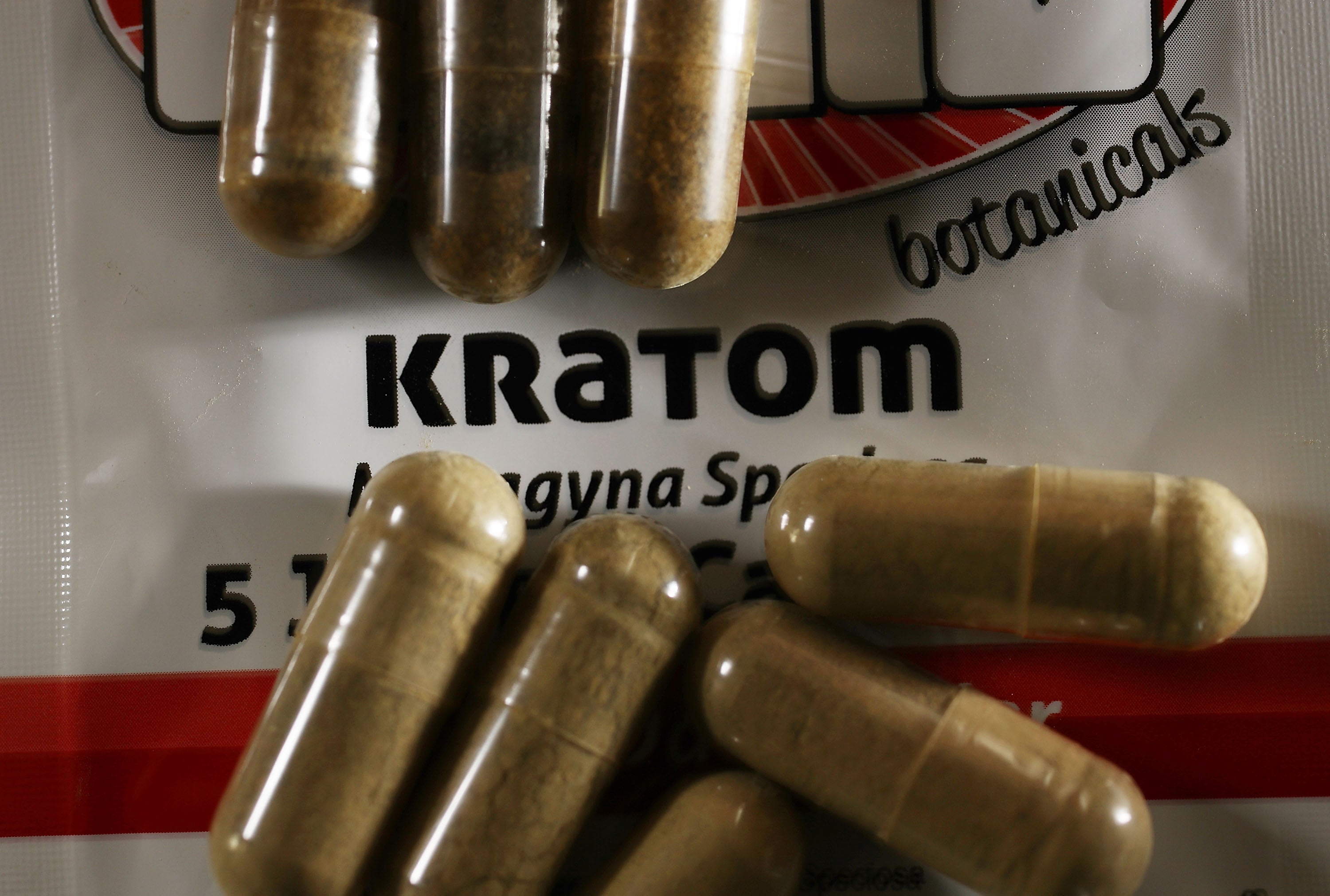
California officials have banned the sales of kratom, a popular supplement often used to treat pain and anxiety, after finding it was linked to six deaths in Los Angeles County, but what role the supplement played remains a mystery.
Kratom is a tropical tree native to Southeast Asia; 7-OH is a natural psychoactive component found in kratom leaves in trace amounts. But there’s a growing popularity of concentrated versions — offered as tablets, gummies, and liquid extracts — which are synthetic, according to the FDA.
Neither kratom nor 7-OH are regulated or approved for use in the U.S. as a drug product, a dietary supplement, or a food additive, according to the FDA. In July, the agency issued warning letters to companies that were “illegally marketing products” containing 7-OH.
Since the spring, six people between the ages of 18 and 40 have died after ingesting products containing 7-OH, Los Angeles County Department of Public Health said. The department this month advised retailers to stop selling products that contain kratom and the synthetic kratom compound 7-OH from their shelves.
These products are often marketed as dietary supplements, used to alleviate pain, anxiety and mood disorders, opioid withdrawal, LA County health officials said.
Los Angeles County health officials urged retailers to immediately remove kratom and 7-OH products from their shelves after six deaths in the county were linked to the synthetic supplement (Getty Images)
“At lower doses, 7-OH acts like a stimulant and at higher doses, it acts like an opioid. Mixing or using it with alcohol, prescription drugs, or illicit substances can significantly slow breathing and lead to death,” Dr. Muntu Davis, Los Angeles County Health Officer, said in a statement. “The safest choice is to avoid all 7-OH products.”
The county isn’t alone. Some local governments have adopted bans on kratom products and at least six states — Alabama, Arkansas, Indiana, Rhode Island, Vermont and Wisconsin — have banned 7-OH, according to a 2023 report by the Congressional Research Service.
The FDA warned consumers to avoid using kratom “because of the risk of serious adverse events,” such as seizures, noting it has been linked to deaths “in rare cases.” But, the agency noted that in these cases, “kratom was usually used in combination with other drugs, and the contribution of kratom in the deaths is unclear.”
That was true in the deaths reported in LA County this year tied to kratom use. Health officials noted that alcohol, medications or illicit substances were also found alongside 7-OH. Medical examiners’ reports, obtained by the Los Angeles Times, showed the cause of five of the deaths was listed as a consequence of “mixed drug effects.” The sixth death was caused by a cocaine overdose.
Toxicologists told the LA Times that there was insufficient research to show what concentrations of kratom can be toxic when not mixed with another substance.
“I don’t claim to have investigated all the reports about kratom deaths, but I haven’t seen too many reports of single-drug ingestions of kratom causing death,” Craig Smollin, medical director of the San Francisco division of the California Poison Control System, told the paper.
On top of lack of research, the testing methods may not be effective, experts say. There is a test to show how much kratom is in the body, but no such test exists for 7-OH. The existing test merely shows whether 7-OH was present or not, according to the LATimes.
Perhaps further complicating measures, when the body metabolizes kratom, part of the breakdown includes 7-OH, making the compound likely to appear in medical tests alongside kratom, Donna Papsun, a forensic toxicologist at NMS Labs in Pennsylvania, told the outlet.
Testing results may also be complicated because 7-OH is also “incredibly unstable,” Papsun said, noting that while it may be detected at the time of death, in the time that passes until samples are collected, it may have already broken down.
Consumers and retailers argue that instead of a ban, kratom products should be regulated (Getty Images)
The deaths are “not an easy picture” to unpack, Robert Powers, a forensic toxicologist at the University of New Haven, told the paper, saying he understands why health officials have taken steps to restrict kratom and 7-OH.
“I think it’s reasonable to recognize that in these cases, kratom could have indeed played a contributory role. And I understand the interest in trying to limit the potential effects of this drug in those mixed cases, so I understand why people would be interested in controlling this drug,” Powers said.
But not everyone is supportive of the ban. Consumers and sellers argue kratom products should be regulated.
Dee Macaluso, a 74-year-old who has trouble breathing and suffers from fatigue due to chronic lung illnesses, sought out specialists to try to help her get back to her once-active lifestyle, but nothing they suggested improved her health, the LA Times reported. So she turned to kratom after watching a documentary.
“I didn’t use it very often, but when I did I found that it helped so many of my issues,” Macaluso told the outlet, saying it gave her a boost of energy. Now she relies on it daily.
After the county announced it was going to pull kratom products from the shelves, she recalled: “I told my husband, I don’t know what I’m going to do if I don’t have it and then I won’t be able to get out of bed, or paint or do the little bit that I can do.”
Macaluso educated herself on how to use the products, experimenting with different dosages, and said she thinks the government should allow the public to continue to do so, regulating them, not banning them altogether. “There’s always going to be people that misuse it but I don’t think that those of us who are using it responsibly and getting benefit from it should be penalized,” she said.
Abdullah Mamun, who started the business Authentic Kratom in 2013, told the LA Times that while he understands that 7-OH poses a danger, he says a ban on all kratom products is a mistake.
His customers say his products have helped them manage pain. Mamun supported regulating kratom products: “We want them to be properly labeled for customers because people should know what they’re putting in their body.”
Solana price is showing renewed strength across multiple timeframes, reclaiming key levels and attracting fresh attention as participants watch for confirmation of a sustained recovery.
The crypto market may still be mixed, but Solana price has quietly stepped into the spotlight with a sharp recovery that’s building momentum across several charts. From 4H trend reclaims to fresh double-bottom signals, SOL is starting to show the kind of structure traders look for at the start of a turnaround.
Solana current price is $137.46, down 2.48% in the last 24 hours. Source: Brave New Coin
Solana Price Leads the Market With Strong 4H Recovery
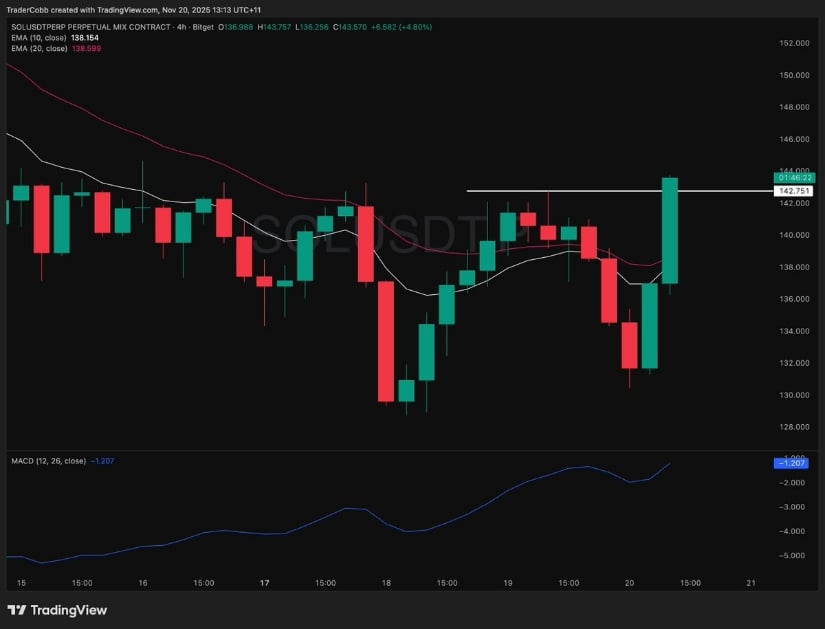
Solana Price continues to outperform the broader market, reclaiming the 4H trend level ahead of every other major asset. The chart shared by Trader Cobb shows SOL breaking above short-term resistance near $143–$145, with price now trading firmly above the EMA cluster, signalling momentum rotation back to the upside. The candle expansion is clean, the wicks are tight, and buyers are clearly stepping in with conviction.
Solana reclaims its 4H trend ahead of the entire market, signaling renewed strength as buyers step back in with conviction. Source: Trader Cobb via X
One key detail is that SOL didn’t just bounce, it reclaimed a level, which is far more meaningful. Historically, when SOL Solana price takes back the 4H structure before its peers, it tends to lead the next rotation leg. This early reclaim strengthens the case that buyers may be regaining control after weeks of heavy distribution.
Double-Bottom Structure Eyes a Push Towards $160
Momentum extends further on the intraday chart shared by GTradeCrypto, where Solana price has now broken the descending channel while simultaneously forming a textbook double bottom around $131 to $133. Both lows are clean, reactive, and supported by oversold readings on RSI. This combination often forms the foundation for strong continuation moves.
Solana breaks its descending channel and forms a clean double bottom, setting sights on the $160 measured-move target. Source: GTradeCrypto via X
The measured move target from the double-bottom pattern points directly towards $160, which aligns with the upper channel boundary and the next high-volume node. With SOL now trading around $140, the short-term resistance to clear sits around $146–$148. If bulls hold these reclaimed levels, the path towards $160 becomes far more attainable.
Strong Bullish Triggers Continue to Support Sentiment
Away from charts, the broader fundamentals shared by Solana Sensei highlight a string of bullish catalysts that continue to accumulate. Solana remains #1 in app revenue, #1 in DEX volume, and has now achieved over 650 days of uptime, proving its stability. Even more importantly, multiple major institutions, including Fidelity, VanEck, Canary, and 21Shares, now have SOL ETFs live or approved.
This steady stream of ecosystem growth is likely to have an important impact on SOL’s price as well. Moreover, these structural positives help strengthen the medium-term outlook for SOL as well.
On-Chain Volume Supporting Bullish Bias
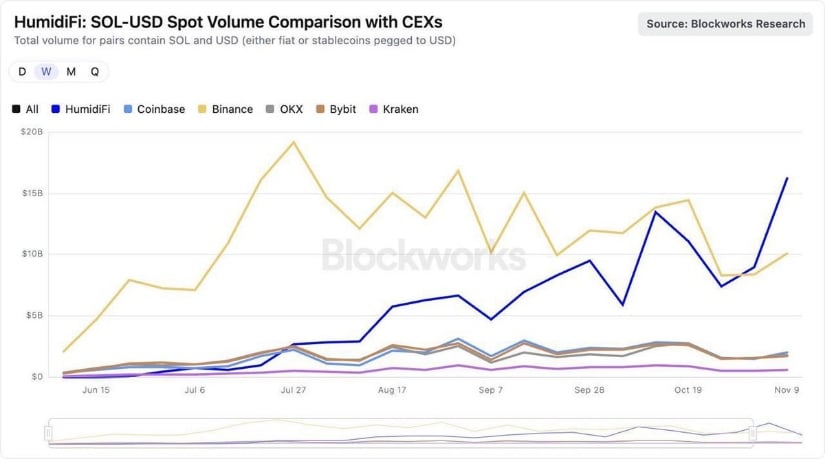
Vibhu’s data highlights one of Solana’s most impressive developments: SOL/USDC on-chain volume outpaced all centralized exchanges combined. This is a significant milestone, and it speaks to behavioral change across participants who increasingly prefer Solana’s low-fee, high-speed environment over CEX trading.
Solana’s on-chain SOL/USDC volume surpasses all major CEXs for the first time. Source: Vibhu via X
The shift has been building for months, but last week’s spike marks the first time on-chain liquidity surpassed aggregated CEX liquidity. This type of inflection is often a precursor to long-term market share dominance. It also highlights that even during drawdowns, Solana’s real activity continues to expand.
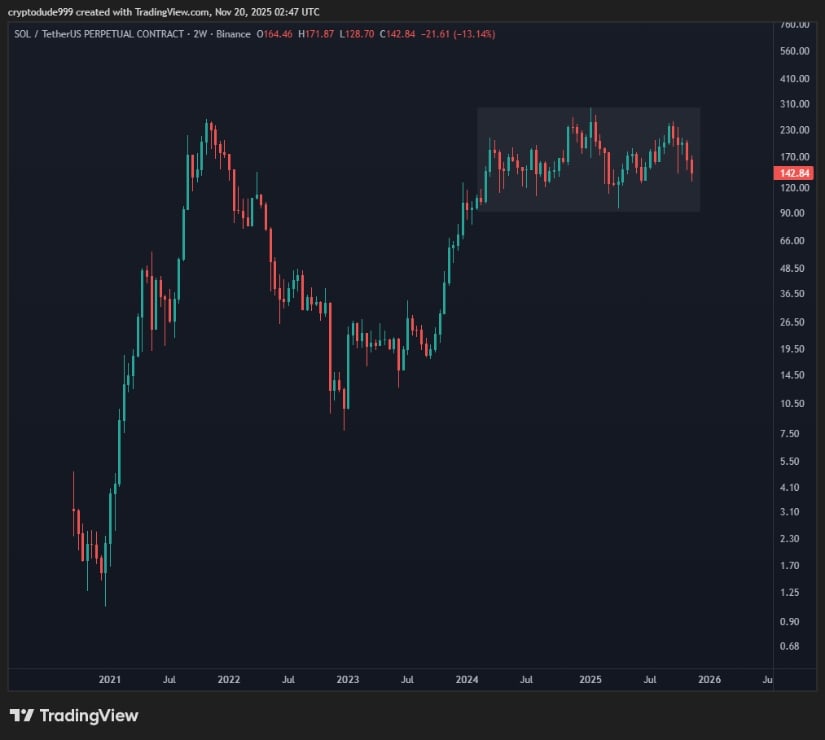
While some market participants point to a potential head-and-shoulders formation, the chart shared by the dude suggests another interpretation: a developing cup-and-handle structure. The weekly range between $128–$180 remains intact, and despite volatility, Solana price has not broken below the key macro support band.
Solana continues to defend its weekly range as a potential cup-and-handle pattern forms, keeping the broader bullish structure intact. Source: dude via X
The bearish scenario requires a return to double-digit, a view that historically would imply a market cap below $50B, which remains a stretch given the strength of Solana’s fundamentals. From a technical standpoint, as long as the base of the range stays protected, the structure remains constructive and still leans towards the handle-completion breakout later in the cycle.
Final Thoughts: Can Solana Recovery Sustain?
Solana is once again positioning itself as one of the strongest large-cap performers. From early trend reclaims on the 4H to intraday double-bottom formations, the technical picture is improving across multiple timeframes. ETF inflows, growing user activity, and surging on-chain volume reinforce Solana’s position at the center of the market’s shift toward high-performance blockchains.
While short-term volatility remains part of the landscape, the deeper fundamentals and technical setups suggest SOL is preparing for a broader recovery phase. If buyers continue defending support zones and momentum sustains, the next leg towards $160–$180 becomes increasingly viable.
BoJ and Prime Minister Takaichi’s Policies Add to Yen Weakness
Softer Japanese data and a weaker yen have intensified focus on Prime Minister Sanae Takaichi’s ultra-loose monetary policy stance and BoJ Governor Kazuo Ueda’s forward policy guidance.
October’s data came after the first meeting between Japanese Prime Minister Sanae Takaichi and BoJ Governor Kazuo Ueda on Tuesday, November 18. BoJ Governor Ueda kept a potential rate hike on the table, stating that monetary policy decisions will hinge on incoming data.
Wage growth trends will likely be crucial for the BoJ, given the weaker yen-import price dynamic. Updates from Japanese labor unions pushing for wage hikes ahead of the 2026 spring negotiations could support a more hawkish BoJ rate path.
Later in the morning session, Japan’s S&P Global Services PMI also requires consideration. Economists expect the Services PMI to drop from 53.1 in October to 52.8 in November. Slowing services activity would support a less hawkish BoJ rate path, given that the sector contributes around 70% to Japan’s GDP.
US Services PMI and Fed Speakers in Focus
While Japanese trade data faced market scrutiny, US services sector data will influence bets on a December Fed rate cut.
Economists expect the S&P Global Services PMI to fall from 54.8 in October to 54.6 in November. A modest drop in the headline PMI would signal economic resilience, given that the services sector accounts for around 80% of US GDP.
However, traders should consider service sector price trends, given the Fed’s increased concerns about inflation. As a key contributor to inflation, price trends will likely be the key driver for the US dollar. Elevated prices would support a more hawkish Fed policy stance, sending USD/JPY toward 160.
Beyond the data, FOMC members’ speeches may also move the dial. Growing support to delay further monetary policy easing to tame inflation would send USD/JPY higher. FOMC members John Williams, Michael Barr, Philip Jefferson, and Lorie Logan are on the calendar to speak. Views on inflation, the labor market, and the timeline for rate cuts will be crucial for the USD/JPY pair.
USD/JPY Scenarios: Diverging Monetary Policies
Bearish USD/JPY Scenario: Hawkish BoJ rhetoric, intervention warnings, softer US Services PMI, and dovish Fed chatter could drag USD/JPY toward 155.
Bullish USD/JPY Scenario: Dovish BoJ signals, stronger US PMI data, and hawkish Fed rhetoric could send USD/JPY toward 160.
ActionHub and its parent company were paid a fee to publish this article unedited. The views or opinions expressed here are those of the author and may not reflect those of ActionHub or any of its affiliates.
If you’ve been searching for a Melt PM review that gives real insight from an actual user, you’re in the right place. Heidi B., a woman in her 40s, shares how Vitauthority’s women’s sleep support supplement transformed her nights and mornings. Going through menopause can be a tough stage for many women, filled with restless nights, mood swings, and stubborn fat that refuses to go away. But for Heidi, Vitauthority supplement, Melt PM, has been nothing short of a life-changing solution.
A Struggle Many Women Know Too Well
Before trying Melt PM, Heidi described her nights as long and exhausting. Like many women entering menopause, she struggled to fall asleep and often woke up multiple times a night. Her metabolism slowed down, her energy dipped, and losing fat became harder than ever.
She mentioned,
“I used to wake up tired, with cravings that made me reach for unhealthy snacks. I just couldn’t find balance.” That’s when she discovered Vitauthority Melt PM, a menopause nighttime aid designed to help women sleep better, recover overnight, and support fat-burning while they rest.
Melt PM by Vitauthority
Melt PM is a fat-burning sleep supplement that works while you rest. It’s formulated to help your body relax, support healthy metabolism, and improve sleep quality, especially for women dealing with hormonal changes during menopause.
The key idea behind Melt PM is simple yet powerful:
By promoting deep, uninterrupted sleep, this supplement helps your body manage stress hormones and burn fat naturally overnight. Many women, like Heidi, report waking up feeling lighter, refreshed, and more in control of their hunger and energy levels.
Image courtesy of Melt PM
Heidi’s Honest Customer Testimonial
Heidi’s customer testimonial perfectly captures what many women experience after using Melt PM:
“Melt PM has been a life changing supplement for me! Being a woman in my 40s and going through the phase of not so fun menopause, this product has helped me sleep through the night, keep stubborn fat OFF, and wake up feeling rested and ready to start the day without feeling hungry or having any crazy cravings. Thank you Vitauthority for this AMAZING little capsule!”
Her story is a real user experience that shows how a targeted nighttime formula can make a big difference. She didn’t just lose unwanted fat, she regained her energy, improved her sleep, and felt like herself again.
Melt PM Works So Well
Vitauthority designed Melt PM specifically for women who face hormonal and metabolic challenges during midlife.
Here’s why it stands out:
Supports Deep Sleep: Ingredients help calm the mind and promote restful sleep, essential for hormone balance.
Encourages Fat Burning: It works overnight to boost metabolic activity, helping reduce stubborn belly fat.
Curbs Cravings: By improving sleep quality, Melt PM naturally helps reduce late-night snacking and sugar cravings.
Boosts Morning Energy: Women wake up refreshed and motivated instead of groggy and sluggish.
For those struggling with sleepless nights and menopause symptoms, Melt PM acts as both a women’s sleep support supplement and a menopause nighttime aid, delivering results from the first few weeks.
Image courtesy of Melt PM
The Real Science Behind Melt PM
During menopause, hormonal imbalances, especially a drop in estrogen, can disrupt sleep and slow metabolism. Lack of rest can also increase cortisol, a stress hormone that promotes fat storage. Melt PM helps reverse these effects by:
Supporting natural melatonin production.
Encouraging relaxation through herbal and amino acid blends.
Regulating nighttime metabolism for better fat utilization.
This combination helps the body recover, repair, and maintain a healthy balance, exactly what women in their 40s and 50s need.
Real User Experience
Heidi’s results go beyond physical changes. She describes feeling mentally stronger, emotionally calmer, and overall more confident. “I can finally get through my day without feeling drained or stressed,” she says.
Her real user experience reminds other women that health during menopause isn’t just about losing weight, it’s about restoring balance and peace of mind.
Is Melt PM Worth Trying?
If you’ve tried countless sleep or weight loss products with no success, Heidi’s experience may inspire you. Melt PM isn’t a quick fix, it’s a gentle, effective way to support your body’s natural rhythms.
For women struggling with fatigue, sleepless nights, or stubborn fat during menopause, this fat-burning sleep supplement could be the missing piece. Thousands of women have shared similar customer testimonials, praising Melt PM for its life-changing impact. The consistent theme? Better sleep, improved mood, and a stronger, healthier body.
To complement Melt PM’s benefits, following practices like 7 Proven Tips to Improve Sleep Naturally can enhance results even more, helping women create the ideal environment for deeper, restorative rest.
Conclusion
Melt PM review from Heidi B. offers an authentic look at how Vitauthority supplements can make a real difference during menopause. From improving sleep to reducing fat and increasing energy, Melt PM delivers on its promises.
Heidi’s real user experience is proof that the right menopause nighttime aid can help women regain control of their health, happiness, and confidence. If you’re ready to experience deeper sleep and better mornings, Vitauthority’s Melt PM might be your next step toward balance and vitality.
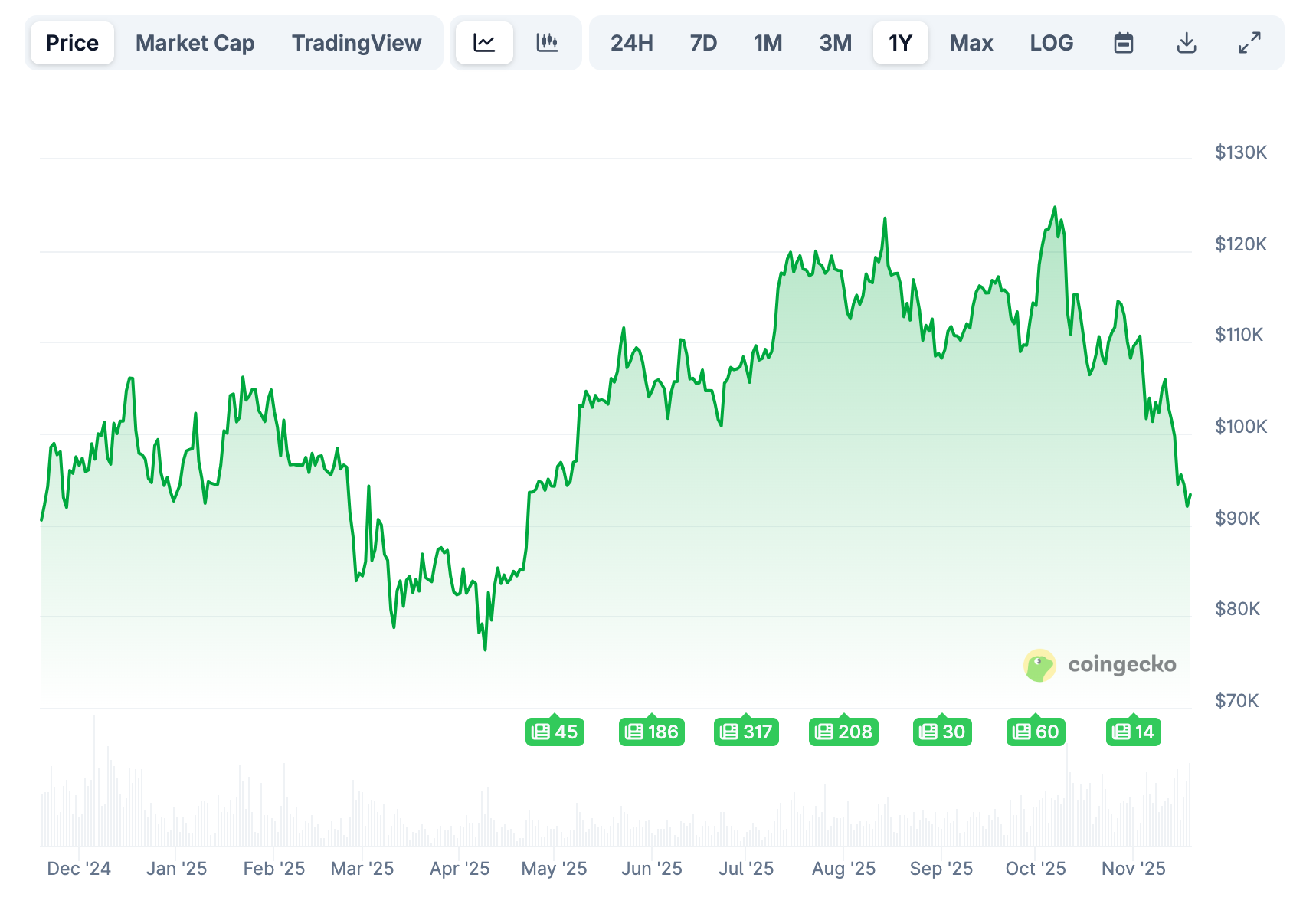
The Bitcoin trading volume has surged, drawing notable attention from investors and analysts in Singapore. As of today, BTCUSD is priced at $86,979.99, marking a slight decline from previous highs. The increase in trading activity suggests a possible shift in investor sentiment towards Bitcoin, which has experienced an 18.43% increase over the past year. This uptick in volume may indicate bullish tendencies as traders capitalize on price fluctuations in the cryptocurrency market.
Bitcoin Trading Volume Surge
Over recent days, Bitcoin trading volume has hit 1,599,846,314, surpassing its average of 1,017,515,369. This significant uptick highlights increased participation among traders. The renewed interest in Bitcoin is reflected in social media discussions and trading platforms, pointing to potential bullish behavior among investors. Bitcoin‘s current status in the market shows diverse opinions, but the rising volume signifies a potentially positive outlook.
Impact on Bitcoin Price
Despite the recent slide in Bitcoin’s price to $86,979.99, the trading volume indicates strong underlying interest. Historically, a surge in volume often precedes significant price movements. The slight uptick observed earlier in the week suggests that investors might be positioning for future gains. The year’s high of $126,296 shows potential for growth. However, the current technical indicators, such as the RSI at 28.01, suggest the asset is oversold, potentially positioning it for a rebound.
Cryptocurrency Market Trends
In the broader cryptocurrency market, trends indicate a growing acceptance and adaptation among investors. This aligns with global financial movements towards digital assets. Bitcoin’s role as a market leader makes its volume spikes significant for the overall sector. Recent forecasts put Bitcoin’s monthly target at $100,096.72, pointing to continued optimism. Although short-term volatility remains, the greater trajectory suggests positive longer-term trends.
BTC Price Prediction and Investor Sentiment
Market predictions for Bitcoin remain cautiously optimistic. Current forecasts suggest a potential climb to $138,747.08 in the coming quarter. Sentiment among traders might be mixed due to short-term hurdles, but long-term investors often see these downturns as buying opportunities. An investor on X commented, noting Bitcoin’s resilience and potential for gain beyond current levels. The market’s pulse suggests that investors are closely watching these developments as they plan their strategies.
Final Thoughts
For investors in Singapore, the recent surge in Bitcoin trading volume is a crucial indicator of market dynamics. Despite a short-term pullback in price, the increased volume reflects potential bullish trends and a confidence among traders betting on a future rally. This renewed interest might drive Bitcoin closer to its forecasted price targets, offering chances for strategic investments. Always stay informed about fluctuations and market sentiments. Platforms like Meyka provide timely financial insights to help navigate these changes effectively.
FAQs
What does a surge in Bitcoin trading volume mean?
A surge in trading volume generally means increased interest and activity in the market. This could indicate potential price movements as traders engage more actively.
How does Bitcoin’s oversold status affect its price?
An oversold status often suggests that Bitcoin is undervalued, which might lead to a price rebound as traders take advantage of lower prices to buy in.
What are the price predictions for Bitcoin?
Current forecasts suggest Bitcoin could reach $100,096.72 monthly and $138,747.08 quarterly, indicating positive investor sentiment despite short-term volatility.
Disclaimer:
The content shared by Meyka AI PTY LTD is solely for research and informational purposes.
Meyka is not a financial advisory service, and the information provided should not be considered investment or trading advice.
From protein powders to toddler snacks — these are the pantry items to keep stocked this season.Photo by Getty Images
Article content
Reviews and recommendations are unbiased and products are independently selected. Postmedia may earn an affiliate commission from purchases made through links on this page.
Advertisement 2
This advertisement has not loaded yet, but your article continues below.
Article content
As a shopping editor, I test a lot of consumables — from protein powdersto pantry staples to toddler snacks. Only a few earn a permanent spot in my kitchen, or have my toddler asking for more. These are the standouts I genuinely loved, used up, and reordered. Many are Canadian, all are editor-approved.
Why I love it: This all-in-one supplement from David Beckham’s wellness brand replaced a shelf of capsules with one scoop. With 92 ingredients — including adaptogens, prebiotics and greens — it’s a powerhouse for energy and recovery. It blends nicely into smoothies and doesn’t have that grassy aftertaste that many greens powders do. For less than $5 per serving, the focus and energy boost I feel makes it worth the investment. Price: $131/month Where to buy:IM8 Health
Advertisement 3
This advertisement has not loaded yet, but your article continues below.
Create Creatine Monohydrate Gummies.Photo by Create Creatine
Why I love it: A clean creatine that supports strength and recovery without fillers. I noticed better performance in my workouts and zero bloating, plus it comes in a bunch of fun (and tasty) flavours like sour peach, blue raspberry and watermelon. I find it much easier to pop three gummies than remember to mix powder into a smoothie, and you can take these on the go.
Why I love it: Made in Canada from wild-caught fish, this collagen powder is clean, neutral-tasting, and blends beautifully into coffee. I noticed smoother skin and stronger nails after a few weeks of daily use, and now I’m hooked. Price: $56 Where to buy:COLE Skin
Plain Nutrition Protein Coffee.Photo by Plain Nutrition
Shopping Essentials
Product reviews, deals, roundups and interviews to help you make better buying decisions.
By signing up you consent to receive the above newsletter from Postmedia Network Inc.
We encountered an issue signing you up. Please try again
Article content
Advertisement 4
This advertisement has not loaded yet, but your article continues below.
Article content
Why I love it: Clean, Canadian-made protein with no gums, sweeteners or fillers. The Plain Whey (Unflavoured) is an all-arounder – smooth and creamy and truly tasteless. The Protein Coffee packs a huge kick and is made from Colombian beans, meaning I can combine my two morning drinks into one effortlessly. Both come in vegan options, and all are packaged using biodegradable materials. Price: From $45+ Where to buy:Plain Nutrition
Organic Traditions Superfoods blends.Photo by Organic Traditions Superfoods
Why I love it: This Canadian brand makes pantry staples like cacao powder, matcha powder, ashwagandha and acai berry powder that are organic and potent. I’m currently drinking the Pumpkin Spice Latte mix, because we can all shamelessly love a PSL in the fall. I love the added probiotics and the clear explanation on the packaging on how each product supports my health and wellbeing. Price: From $14+ Where to buy:Organic Traditions |Amazon | Well
Advertisement 5
This advertisement has not loaded yet, but your article continues below.
Why I love it: This electrolyte-packed powder comes in single-serve portions, ideal for travel days, workouts and anytime I feel dehydrated. It mixes easily into water, tastes good (I’m partial to the Lemon Lime), and actually makes me feel energized without the sugar crash. That said, they are quite sweet – I find half of a package mixed with 8 oz of water is more than enough. Price: $35+ Where to buy:Liquid IV | Amazon
Why I love it: This Calgary-based, woman-led brand makes raw, unfiltered honey that tastes delicious and comes in a variety of flavours. I’m partial to the White Raw Honey for its subtle clover notes, but the Turmeric Gold and Cinnamon Spice blends are up there, too. Bonus: it’s bee-friendly and supports Canadian beekeepers. Price: From $15+ Where to buy:Drizzle Honey |Amazon
Advertisement 6
This advertisement has not loaded yet, but your article continues below.
Rawcology Blueberry and Acai Granola.Photo by Rawcology Granola
Why I love it: This Toronto-based brand makes grain-free, allergen-friendly granola that’s crunchy, satisfying and not overly sweet. The Blueberry Acai is my go-to for topping yogurt or eating straight from the bag, and my partner loves the Chocolate with Raw Cacao – each has three or four grams of protein, is low in sugars and packed with superfoods like coconut and pumpkin seeds. Price: From $12+ Where to buy:Rawcology |Amazon
Why I love it: This Calgary bakery makes exceptional cupcakes — moist, flavourful and beautifully frosted – but the best part is it’s “bake at home selection” so Canadians can enjoy all across the country. I paired the red velvet cake mix with the vanilla buttercream and at least 12 toddlers can attest to how delicious they are. Gluten-free and vegan options are available and just as tasty. Price: From $8+ Where to buy:Crave Cupcakes |Amazon
Advertisement 7
This advertisement has not loaded yet, but your article continues below.
Why I love it: Wild-caught, flash-frozen Canadian seafood delivered to your door? Yes, please. The halibut and scallops are restaurant-quality, and I love that they support small coastal fisheries across Canada. Price: $9+ Where to buy:Larry’s Catch
Why I love it: As a busy parent, HelloFresh takes the guesswork out of dinner. There is nothing worse than questioning what to make, whether I have the ingredients or whether I have the time to prepare after a long day at work. The recipes are straightforward, the ingredients are fresh and the portions are generous enough for me to buy for two people but have enough for our family of three. I love having the option of the Family Friendly and Quick & Easy plans. Price: $89+ Where to buy: HelloFresh
Advertisement 8
This advertisement has not loaded yet, but your article continues below.
Organic Apricot Fruity Bars.Photo by Little Bellies
Why I love it: These toddler snacks are a lifesaver for post-daycare pick-ups or long road trips. They’re organic, low in sugar and come in fun shapes and textures that help with self-feeding. My kiddo’s favourites? The Organic Sweet and Salty Popcorn (I find myself stealing handfuls often) andOrganic Apricot Fruity Bars. Price: $4+ Where to buy:Little Bellies |Amazon| Well
Dreamcrust High Protein Pizza Mix.Photo by Dreamcrust
Why I love it: Imagine pizza night without the carb crash. Dreamcrust’s high-protein, high-fibre pizza mix is keto-friendly and actually tastes like real pizza. Just add water and olive oil and voila – 11 grams of protein, 22 grams of fibre and only 2 grams of net carbs in 20 minutes.
Price: From $38/pack of three Where to buy:Dreamcrust
Shopping Essentials, a category written by research-obsessed shopping fanatics, is now on Canoe. Explore in-depth product reviews, expert recommendations and exciting collaborations — plus get behind-the-scenes info on your favourite brands and trending products — learn more here or sign up for our newsletter.


:quality(70):extract_cover():upscale():fill(ffffff)/2025/11/20/990/n/44344577/shopZCAxIM.jpg "I Tried Rishi Turmeric Ginger Tea, Here’s My Honest Review")
:extract_cover():upscale():fill(ffffff)/2025/11/20/990/n/44344577/shopZCAxIM.jpg)
:extract_cover():upscale():fill(ffffff)/2025/11/20/994/n/44344577/shopQWp7CQ.jpg)
:extract_cover():upscale():fill(ffffff)/2025/11/20/994/n/44344577/shopekmInS.jpg)