About Editorial team of BIPNs

Main team of content of bipns.com. Any type of content should be approved by us.
3 09, 2025

Leveraging Aave to Build a $53M AAVE Empire

By |2025-09-03T15:53:46+03:00September 3, 2025|News, NFT News|0 Comments


A major whale has accumulated over 167,000 AAVE tokens over the past week, currently valued at approximately $53.65 million, according to recent on-chain activity tracked by multiple blockchain analytics platforms. This significant accumulation highlights the whale’s strategic use of decentralized finance (DeFi) tools to build a substantial position in the Aave protocol’s native token. The transaction history reveals a continuous and deliberate buying pattern, suggesting a long-term bullish outlook on Aave’s utility and value proposition within the DeFi ecosystem.

The whale’s strategy appears to involve a combination of direct token purchases and leverage-based asset deployment. On-chain data indicates that the address associated with these transactions has been actively acquiring AAVE tokens at an average price of around $321.50, while also utilizing Aave’s lending and borrowing functionalities to amplify its position. The wallet has been engaging with Aave V3, depositing a mix of ETH and WBTC to secure stablecoin liquidity, which has been used to further fund AAVE token acquisitions. This approach reflects a high-degree of sophistication in managing exposure and capital efficiency, typical of large institutional or whale participants in the crypto market.

The accumulation of AAVE tokens has not gone unnoticed by the broader DeFi community. Analysts have pointed out that such whale activity can serve as an indicator of future market sentiment and price movements. Given the whale’s large stake, any further strategic moves—such as staking, governance participation, or liquidation—could influence the broader market. The average entry price for the AAVE tokens acquired over the past week also serves as a key reference point for traders and analysts, potentially acting as a psychological barrier or target for future price action.

Market observers are closely monitoring the whale’s behavior, especially in light of recent fluctuations in the Aave token’s price. While AAVE has been trading in a relatively tight range around $313–$320 in recent weeks, the whale’s accumulation suggests a belief that the token is either undervalued or poised for a breakout. Analysts from various platforms have offered differing short-term price predictions, with some projecting a potential move toward $370 if the token breaks above key resistance levels. Others maintain a more conservative view, suggesting that Aave may consolidate before seeing meaningful upside movement.

The broader implications of this whale activity extend beyond the Aave protocol. It reflects the growing trend of institutional-grade trading strategies being adopted by large crypto holders, leveraging DeFi protocols to optimize capital deployment. This mirrors similar behaviors seen in traditional finance, where hedge funds and institutional investors use leverage and asset recycling to maximize returns. The whale’s use of Aave to secure liquidity while building a long-term position in AAVE underscores the evolving sophistication of crypto market participants and the increasing role of DeFi in facilitating such strategies.

As the crypto market continues to mature, the actions of large players like this whale will likely play a more prominent role in shaping market dynamics. The whale’s recent accumulation of AAVE tokens, combined with its use of Aave’s lending and borrowing features, illustrates the growing integration of DeFi tools into advanced trading and investment strategies. For now, the focus remains on whether AAVE can sustain its upward trajectory or whether it will face short-term volatility. Traders and analysts are watching closely to see how the whale’s position evolves and what impact it may have on the broader Aave ecosystem and the DeFi market at large.

Source: [1] Whale Accumulates $230M in WBTC and ETH via Aave Recursive Borrowing in 3 Weeks (https://blockchain.news/flashnews/whale-accumulates-230m-in-wbtc-and-eth-via-aave-recursive-borrowing-in-3-weeks) [2] Crypto Whale Buys $81.5M In ETH, $160M In WBTC (https://blockchainreporter.net/crypto-whale-buys-81-5m-in-eth-160m-in-wbtc-borrows-usdt-from-aave/) [3] AAVE’s $370 Target and LINK’s $50 Dream Take Backseat (https://crypto-economy.com/aaves-370-target-and-links-50-dream-take-backseat-as-whales-line-up-for-usdt-rewards-on-blockchainfx/)




Source link

3 09, 2025

Rises above 173.00 due to prevailing bullish bias

By |2025-09-03T15:44:32+03:00September 3, 2025|Forex News, News|0 Comments

  • EUR/JPY may find its primary barrier at 173.90, the highest since July 2024.
  • Bullish bias strengthens as the 14-day Relative Strength Index remains above the 50 mark.
  • The initial support lies at nine-day EMA of 172.31.

EUR/JPY continues its winning streak for the fifth successive session, trading around 173.20 during the European hours on Wednesday. The technical analysis of the daily chart suggests the prevailing bullish market bias as the currency cross is remaining within the ascending channel pattern.

The 14-day Relative Strength Index (RSI) is positioned above the 50 mark, strengthening the bullish bias. Additionally, the short-term price momentum is stronger as the EUR/JPY cross remains above the nine-day Exponential Moving Average (EMA).

On the upside, the EUR/JPY cross may approach the 173.90, the highest since July 2024, recorded on July 28, 2025, aligned with the upper boundary of the ascending channel around the psychological level of 174.00.

The EUR/JPY cross may find its primary support at the nine-day EMA of 172.31. A break below this level could weaken the short-term price momentum and prompt the currency cross to test the ascending channel’s lower boundary around 171.40, followed by the 50-day EMA of 170.93.

Further declines below the confluence support zone would weaken the medium-term price momentum and put downward pressure on the EUR/JPY cross to navigate the region around the nine-week low at 169.72, which was recorded on July 31.

EUR/JPY: Daily Chart

Euro Price Today

The table below shows the percentage change of Euro (EUR) against listed major currencies today. Euro was the strongest against the Japanese Yen.

USD EUR GBP JPY CAD AUD NZD CHF
USD -0.08% 0.06% 0.24% 0.12% -0.06% 0.06% 0.00%
EUR 0.08% 0.13% 0.31% 0.21% -0.11% 0.12% 0.07%
GBP -0.06% -0.13% 0.16% 0.06% -0.24% 0.00% -0.06%
JPY -0.24% -0.31% -0.16% -0.14% -0.39% -0.28% -0.23%
CAD -0.12% -0.21% -0.06% 0.14% -0.26% -0.06% -0.12%
AUD 0.06% 0.11% 0.24% 0.39% 0.26% 0.07% 0.18%
NZD -0.06% -0.12% -0.00% 0.28% 0.06% -0.07% -0.06%
CHF -0.00% -0.07% 0.06% 0.23% 0.12% -0.18% 0.06%

The heat map shows percentage changes of major currencies against each other. The base currency is picked from the left column, while the quote currency is picked from the top row. For example, if you pick the Euro from the left column and move along the horizontal line to the US Dollar, the percentage change displayed in the box will represent EUR (base)/USD (quote).

Source link

3 09, 2025

Green gruel? Pea soup? What Westerners thought of matcha when they tried it for the first time

By |2025-09-03T15:44:32+03:00September 3, 2025|Dietary Supplements News, News|0 Comments


Matcha mania” shows no signs of slowing, with global demand pushing “supply chains to the brink,” as Australia’s ABC News reported in July 2025.

The powdered drink retains a massive following in Tokyo, where long lines of customers snake out of The Matcha Tokyo on any given Saturday. At the trendy, minimalist cafe, the staff uses a cast-iron kettle and a bamboo ladle. Both are a nod to the traditional Japanese way of preparing matcha, called “chanoyu,” which literally means “hot water for tea” but in English has been translated as “tea ceremony.”

Beyond Tokyo, matcha cafes and bars have also become a familiar sight in Western cities, from Stockholm to Melbourne to Los Angeles. Matcha has been a permanent fixture on the menu at Starbucks since 2019 and at Dunkin’ since 2020.

It’s been quite the rise for a drink long met with skepticism in the West.

World’s fairs serve as a stage

I spent part of 2024 as a Japan Foundation Fellow at Waseda University, where I researched how Westerners experienced matcha and chanoyu during the Meiji period, an era of rapid modernization and Westernization that lasted from 1868 to 1912.

Matcha is a form of green tea in which young tea leaves have been ground to a powder using a stone mill. Unlike other teas, which involve steeping leaves and removing them before drinking, matcha powder is then whisked into hot water.

Matcha is made using tea leaves ground into a powder.
Sina Schuldt/Picture Alliance via Getty Images

Matcha actually originated in China. It was introduced to Japan around 1250 C.E., where it assumed a key role in chanoyu from the 1500s on. Portuguese Jesuit missionaries in Japan in the 1500s wrote about both matcha and chanoyu. But only in the 19th century did interest in matcha really take off outside Japan.

Beginning in the late 19th century, world’s fairs and expositions started being held in European and American cities. These events allowed countries from around the world to showcase their art, inventions and culture before huge audiences.

For emerging Japan, world’s fairs and expositions presented a tremendous opportunity. In its exhibits, Japanese representatives often gave chanoyu demonstrations, while both the Japanese government and tea industry heavily marketed all varieties of Japanese green tea, including matcha.

Initial skepticism

Though steeped Japanese green tea became popular in 19th-century America, where it was usually sipped with milk and sugar, matcha didn’t initially jibe with Western palates.

Eliza Ruhamah Scidmore, an American journalist and travel writer who spent decades living in Japan, described matcha as “a bowl of green gruel more bitter than quinine” in her 1891 book “Jinrikisha Days in Japan.” Wealthy Canadian tourist Katharine Schuyler Baxter detailed her experience at a matcha tea gathering in her 1895 book “In Beautiful Japan: A Story of Bamboo Lands.”

“The beverage is made of powdered leaves, is greenish in color, thick like pea-soup, fragrant, and not very palatable,” she wrote. In my research, I encountered “pea soup” being the most common descriptor of matcha at this time.

Descriptions of matcha and chanoyu also abound in newspaper articles from the era.

Canadian journalist Helen E. Gregory-Flesher described the Japanese tea ceremony for readers in San Francisco.

“Very few Europeans can drink it without feeling very unhappy,” she wrote of a thick preparation of matcha called “koicha.” “For in the first place the taste is not agreeable, and then it is so intensely strong that it is sure to disagree with them if they do manage to swallow it.”

For the St. Louis Globe Democrat, the Countess Anna de Montaigu reported on a tea gathering she attended at the St. Louis World’s Fair in 1904. She described matcha’s flavor as “exquisite,” but left her American readers with a warning: “Drunk without sugar or cream, this expensive tea … is not pleasant to the palate of the uninitiated.”

Embracing the ceremony

There are also records of a few Westerners studying chanoyu while living in Japan. While those records don’t include their thoughts on matcha, I have to assume they enjoyed drinking it – at least enough to continue their practice, since in all cases they studied chanoyu for several years.

Chanoyu isn’t a simple serving ceremony. It’s a practice that involves learning the range of ways to serve and receive matcha, as well as food, and it’s taught by various “lineages,” or schools.

Lessons involve students learning how to be a host and a guest through observation and practice. All of this learning is put into practice by hosting or being a guest at a formal tea gathering, called a “chaji.” This can last three to four hours and include a multicourse meal – the “kaiseki” – several rounds of sake, and the laying and replenishing of charcoal.

There are two servings of matcha; one is prepared as thick tea – koicha – the other as thinner tea known as “usucha.” Each is accompanied by sweets.

A Swedish woman named Ida Trotzig lived in Japan from 1888 to 1921, during which she took lessons in chanoyu. Upon returning to Sweden she published a book about chanoyu in 1911, “Cha-no-yu Japanernas teceremoni.” American Mary Averil also studied both chanoyu and ikebana, the art of Japanese flower arrangement.

Green gruel? Pea soup? What Westerners thought of matcha when they tried it for the first time

Mary Averil performs chanoyu in a 1911 issue of The San Francisco Call.
Library of Congress

In 1905, the Urasenke School of Tea in Kyoto welcomed three American sisters, Helen, Grace and Florence Scottfield, as students. There, they studied under the head of the school, and a photograph of all three girls wearing kimonos with their hair styled in a Japanese manner appeared in an issue of the school’s monthly magazine in 1908.

Matcha minus chanoyu

Scholars haven’t pinpointed the reasons for the recent global matcha boom. But I think it’s worth considering a few factors.

First, it’s clear that social media, particularly Instagram and TikTok, have played a big role. The bright green beverage is aesthetically pleasing. Its many purported health benefits have also allowed it to join the ranks of other viral superfoods, such as acai berries and kombucha.

Then there’s the way Westerners often mythologize Japan as a source of “ancient wisdom.” Accompanying that is a particular infatuation with traditional Japanese practices, lifestyles and foods – matcha included.

Finally, people seem drawn to the minimalist aesthetics associated with chanoyu, which have echoes in other Japanese practices such as dry rock gardening and calligraphy.

Green, frothy drink in a craft ceramic cup, next to a dish of green powder, a ceramic teapot and a bamboo whisk.
Many cafes use tools involved in chanoyu such as bamboo scoops and whisks.
Natasha Breen/REDA/Universal Images Group via Getty Images

Interestingly, the vast majority of matcha drinkers today don’t experience chanoyu, even as matcha purveyors borrow from the practice’s aesthetics. In the late 19th century, you couldn’t drink matcha without first experiencing chanoyu. And the drink was always served “straight” – no milks, flavorings or sweeteners.

Sometimes I wonder what the Countess de Montaigu would order if she visited Pipers Tea and Coffee, which is rated the best matcha in St. Louis on Yelp. Would she prefer it straight? Or would she be won over by its In Bloom Latte – a vanilla matcha latte topped with cherry blossom-sakura cold foam?


Source link

3 09, 2025

How High Can WLFI Go?

By |2025-09-03T15:40:47+03:00September 3, 2025|Crypto News, News|0 Comments

The post World Liberty Financial (WLFI) Price Prediction 2025, 2026–2030: How High Can WLFI Go? appeared first on Coinpedia Fintech News

Story Highlights

  • WLFI price today is at $  $ 0.22920737
  • WLFI price could reach a maximum of $0.515 in 2025.
  • The token could touch $3.897 by 2030 if adoption accelerates.

World Liberty Financial (WLFI) is a hybrid finance protocol bringing together traditional banking with DeFi. Backed by Donald J. Trump and institutional investors, it is powered by its governance token $WLFI and a USD-pegged stablecoin, USD1. This is in order to drive financial inclusion and strengthen the U.S. dollar dominance through a compliant, audit-backed framework.

WLFI is built on Ethereum with cross-chain support through Chainlink’s CCIP and planned expansion to Solana and BNB Chain. A mobile app is in development to onboard Web2 users for staking, lending, and governance. With a fixed 100 billion token supply, future unlocks require community votes. The Trump family holds 15.75 billion WLFI, raising governance neutrality questions, while staking utilities are set to launch soon.

World Liberty Financial Price Today

Cryptocurrency World Liberty Financial
Token WLFI
Price $0.2292

down -5.08%
Market Cap $ 5,654,332,813.49
24h Volume $ 1,524,801,747.8922
Circulating Supply 24,669,070,265.00
Total Supply 100,000,000,000.00
All-Time High $ 0.4600 on 01 September 2025
All-Time Low $ 0.2096 on 01 September 2025

World Liberty Financial Price Prediction 2025

If WLFI’s adoption accelerates, driven by its USD1 stablecoin being used in high-value institutional settlements, further exchange listings, and staking rollout, the upper target of $0.515 is achievable. On the flip side, regulatory headwinds or delays in app development could test the low of $0.172.

Year Potential Low Potential Average Potential High
2025 $0.172 $0.344 $0.515

Also read: Trump Coin Price Prediction 2025, 2026-2030

WLFI Price Prediction 2026 – 2030

Year Potential Low ($) Potential Average ($) Potential High ($)
2026 0.258 0.516 0.773
2027 0.387 0.774 1.160
2028 0.581 1.161 1.741
2029 0.872 1.742 2.612
2030 1.308 2.613 3.897

WLFI Cryptocurrency Forecast 2026

In 2026, WLFI could trade between $0.258 and $0.773, with an average near $0.516. As more users are onboarded through its upcoming mobile app and cross-chain features mature, liquidity may deepen, supporting steady price growth.

WLFI Coin Price Prediction 2027

For 2027, WLFI’s price could reach a maximum of $1.160, while its potential low sits at $0.387. Assuming staking is fully integrated and institutional use of USD1 expands, the average price could stabilize around $0.774.

WLFI Token Price Projection 2028

By the end of 2028, WLFI could see further traction among compliant DeFi protocols, helping the price hit $1.741 at its peak. A more conservative outlook suggests a low of $0.581, with a median value near $1.161.

WLFI Price Analysis 2029

If WLFI’s governance model remains strong and avoids centralization risks despite Trump family holdings, the token may range between $0.872 and $2.612, with an average projection of $1.742 in 2029. Global DeFi adoption and regulatory clarity would be key catalysts.

WLFI Crypto Price Forecast 2030

Looking ahead to 2030, WLFI’s long-term outlook depends heavily on USD1 adoption as a compliant settlement stablecoin and its ability to bridge traditional banking with DeFi. In a bullish scenario, WLFI may climb to $3.897, while a bearish climate could limit it to $1.308. The average price is expected to hover around $2.613.

Market Analysis

Firm Name 2025 2026 2030
CoinEdition 0.33 0.42 0.75
MEXC 0.05 0.0525 0.0638
CoinCodex 0.165 0.3333 0.5033

*The aforementioned targets are the average targets set by the respective firms.

CoinPedia’s WLFI Price Projection

Expecting a bullish outlook, WLFI price could claim a high of $0.515 in 2025. Conversely, a bearish climate may push it toward $0.172. Over the longer term, WLFI could scale up to $3.897 by 2030, provided the protocol sustains real-world use cases and keeps regulatory compliance at its core.

Year Potential Low Potential Average Potential High
2025 $0.172 $0.344 $0.515

Also check out: Ethereum Price Prediction 2025, 2026-2030.

FAQs

What is World Liberty Financial (WLFI)?

WLFI is a hybrid finance protocol that combines traditional banking with DeFi using its governance token WLFI and USD1 stablecoin.

What is the total supply of WLFI tokens?

WLFI has a fixed supply of 100 billion tokens, with community-controlled unlocks.

Is WLFI a good investment?

Yes, if we consider compliant DeFi adoption and USD-pegged stablecoin growth. WLFI’s strong institutional backing and governance model give it long-term potential.

Source link

3 09, 2025

Solana’s Breakthrough Upgrade Sparks Race for Web3 Supremacy

By |2025-09-03T13:53:04+03:00September 3, 2025|News, NFT News|0 Comments


Solana, one of the most prominent blockchain platforms, is currently experiencing significant market attention amid ongoing technical upgrades and shifting investor sentiment. Recent developments suggest the network is preparing for a major transformation, as the Solana community overwhelmingly approved the Alpenglow upgrade with 98.27% of stakers voting in favor. This update, which replaces core components of the network—Proof-of-History and TowerBFT—introduces Votor and Rotor, two new systems designed to enhance transaction finality and reduce data transfer overhead [1]. According to the upgrade’s timeline, Votor is expected to cut finality times from over 12 seconds to approximately 150 milliseconds, while Rotor will focus on improving scalability for high-demand applications such as decentralized finance (DeFi) and Web3 gaming [1]. This technical evolution is seen as a critical step in positioning Solana for broader adoption and increased transaction throughput, reinforcing its position as a top-tier blockchain for developers and users alike.

The market has responded to these developments with renewed interest in Solana’s price trajectory. As of late August 2025, Solana (SOL) traded above $200, marking a significant recovery from earlier price dips in the year. Analysts suggest that the token is on a strong trajectory, with a peak price of $224 expected by November 2025, driven by growing on-chain activity and institutional interest [2]. The Solana blockchain continues to attract real-world asset (RWA) projects, decentralized finance protocols, and high-performance dApps, all of which contribute to increased network utilization and, potentially, long-term value capture for SOL holders. Furthermore, the approval of a spot Solana ETF by the U.S. Securities and Exchange Commission (SEC) in October 2025 is anticipated to serve as a major catalyst for price appreciation, as it could unlock a new wave of institutional demand [2].

Despite this optimism, Solana faces immediate downside risks. Market watchers caution that SOL could struggle to maintain its position above $180 in the near term, with fading momentum and weak support levels contributing to bearish sentiment [4]. If the token breaks below $174, analysts warn that a more pronounced selloff could follow, particularly if broader market conditions remain volatile. However, many remain bullish in the medium to long term, citing Solana’s ongoing innovation and expanding ecosystem as key differentiators. The network’s recent performance, including a 14% week-on-week gain, reinforces this view, with the bulls targeting a potential $300 level based on technical indicators such as the RSI and volume patterns [6].

At the same time, attention is increasingly shifting to emerging projects like DeSoc, a SocialFi initiative that has raised over $10 million in its presale phase. DeSoc’s $SOCS token is gaining traction for its unique approach to decentralized social infrastructure, allowing users to monetize content and maintain cross-platform identity without relying on centralized intermediaries [3]. Unlike Solana, which focuses on infrastructure and transaction efficiency, DeSoc is addressing a growing need in Web3: decentralized identity and content monetization. Analysts highlight this as a compelling value proposition, particularly in an era where social media platforms are under scrutiny for data privacy and creator compensation [5]. With over 50,000 wallets participating in its presale and a structured roadmap emphasizing scalability and adoption, DeSoc is positioned as a potential 2,000% gain for early investors [4].

While Solana and DeSoc operate in different niches of the blockchain space, both projects are vying for the attention of crypto investors seeking high-growth opportunities. Solana’s strength lies in its established ecosystem and technical capabilities, whereas DeSoc’s appeal stems from its novel approach to social media and content creation in a decentralized context. As the market continues to evolve, the interplay between these projects could shape the next phase of Web3 adoption, with institutional and retail investors alike weighing their respective risks and rewards.

Source:

[1] title1 (https://www.coindesk.com/tech/2025/09/02/solana-set-for-major-overhaul-after-98-votes-to-approve-historic-alpenglow-upgrade)

[2] title2 (https://icobench.com/cryptocurrency/solana-price-prediction/)

[3] title3 (https://www.thecoinrepublic.com/2025/08/29/desoc-raises-over-10-million-cardano-and-dogecoin-investors-bet-big-socs/)

[4] title4 (https://coindoo.com/solana-price-prediction-sol-price-eyes-220-whilst-desoc-set-for-2000-gains/)

[5] title5 (https://coindoo.com/is-this-the-best-crypto-investment-of-2025-as-desoc-could-recreate-shiba-inu-and-pepe-coin-gains/)

[6] title6 (https://cryptodnes.bg/en/solana-rebounds-to-200-as-new-solana-bot-presale-nears-3-5m/)


Source link

3 09, 2025

Pound Sterling recovery seems brittle as gilt yields edge higher

By |2025-09-03T13:43:39+03:00September 3, 2025|Forex News, News|0 Comments

  • GBP/USD recovers above 1.3400 after dropping to its weakest level in nearly a month.
  • Long-dated UK gilt yields remain near multi-decade highs.
  • Key resistance area for GBP/USD aligns at 1.3440-1.3460.

After falling more than 1% and registering its biggest one-day loss since April on Tuesday, GBP/USD touched its lowest level since early August at 1.3333 in the Asian session on Wednesday. Although the pair recovered above 1.3400 in the European trading hours, investors could refrain from betting on an extended rebound.

Pound Sterling Price This week

The table below shows the percentage change of British Pound (GBP) against listed major currencies this week. British Pound was the weakest against the US Dollar.

USD EUR GBP JPY CAD AUD NZD CHF
USD 0.35% 0.68% 1.02% 0.45% 0.21% 0.44% 0.51%
EUR -0.35% 0.32% 0.61% 0.10% -0.14% 0.09% 0.15%
GBP -0.68% -0.32% 0.18% -0.22% -0.45% -0.23% -0.12%
JPY -1.02% -0.61% -0.18% -0.50% -0.80% -0.55% -0.49%
CAD -0.45% -0.10% 0.22% 0.50% -0.23% -0.01% 0.10%
AUD -0.21% 0.14% 0.45% 0.80% 0.23% 0.23% 0.35%
NZD -0.44% -0.09% 0.23% 0.55% 0.00% -0.23% 0.11%
CHF -0.51% -0.15% 0.12% 0.49% -0.10% -0.35% -0.11%

The heat map shows percentage changes of major currencies against each other. The base currency is picked from the left column, while the quote currency is picked from the top row. For example, if you pick the British Pound from the left column and move along the horizontal line to the US Dollar, the percentage change displayed in the box will represent GBP (base)/USD (quote).

Growing concerns over the global fiscal health lifted borrowing costs of long-dated government bonds of major economies on Tuesday, opening the door for a flight to safety. Following Tuesday’s sharp increase, the yield on the 30-year UK gilt touched its highest level since 1998 at 5.75% early Wednesday before retreating. In turn, Pound Sterling found support and managed to erase its daily losses.

Reporting on the matter, “in Britain, Prime Minister Keir Starmer’s reshuffle of his top team of advisers on Monday renewed focus on fiscal challenges given the UK’s high levels of borrowing and slow growth,” Reuters reported. “A budget is due later in the year, prompting weeks of speculation about tax rises that could dampen the economy.”

In the second half of the day, the US Bureau of Labor Statistics will release the JOLTS Job Openings data for July. Markets expect the number of job openings to decline slightly to 7.4 million. A noticeable increase, with a print above 7.7 million, could boost the USD and weigh on GBP/USD. On the flip side, a disappointing reading close to 7 million is likely to have the opposite impact on the pair’s action. Nevertheless, investors could remain reluctant to bet on a steady recovery in Pound Sterling unless there is a sharp downward correction in long-dated gilt yields.

GBP/USD Technical Analysis

The Relative Strength Index (RSI) indicator on the 4-hour chart stays near 40 and GBP/USD continues to trade well below the 200-period Simple Moving Average (SMA), suggesting that the bearish bias remains intact despite the latest recovery attempt.

On the upside, GBP/USD faces a critical resistance area at 1.3440-1.3460, where the 200-period SMA, Fibonacci 50% retracement of the latest downtrend and the 100-day SMA are located. While this resistance area stays intact, buyers are likely to remain on the sidelines. On the downside, 1.3330 (static level) could be seen as the next support level before 1.3300 (Fibonacci 23.6% retracement).

If GBP/USD manages to clear 1.3440-1.3460, next resistance levels could be spotted at 1.3490-1.3500 (round level, 100-period SMA) and 1.3535 (Fibonacci 61.8% retracement).

UK gilt yields FAQs

UK Gilt Yields measure the annual return an investor can expect from holding UK government bonds, or Gilts. Like other bonds, Gilts pay interest to holders at regular intervals, the ‘coupon’, followed by the full value of the bond at maturity. The coupon is fixed but the Yield varies as it takes into account changes in the bond’s price. For example, a Gilt worth 100 Pounds Sterling might have a coupon of 5.0%. If the Gilt’s price were to fall to 98 Pounds, the coupon would still be 5.0%, but the Gilt Yield would rise to 5.102% to reflect the decline in price.

Many factors influence Gilt yields, but the main ones are interest rates, the strength of the British economy, the liquidity of the bond market and the value of the Pound Sterling. Rising inflation will generally weaken Gilt prices and lead to higher Gilt yields because Gilts are long-term investments susceptible to inflation, which erodes their value. Higher interest rates impact existing Gilt yields because newly-issued Gilts will carry a higher, more attractive coupon. Liquidity can be a risk when there is a lack of buyers or sellers due to panic or preference for riskier assets.

Probably the most important factor influencing the level of Gilt yields is interest rates. These are set by the Bank of England (BoE) to ensure price stability. Higher interest rates will raise yields and lower the price of Gilts because new Gilts issued will bear a higher, more attractive coupon, reducing demand for older Gilts, which will see a corresponding decline in price.

Inflation is a key factor affecting Gilt yields as it impacts the value of the principal received by the holder at the end of the term, as well as the relative value of the repayments. Higher inflation deteriorates the value of Gilts over time, reflected in a higher yield (lower price). The opposite is true of lower inflation. In rare cases of deflation, a Gilt may rise in price – represented by a negative yield.

Foreign holders of Gilts are exposed to exchange-rate risk since Gilts are denominated in Pound Sterling. If the currency strengthens investors will realize a higher return and vice versa if it weakens. In addition, Gilt yields are highly correlated to the Pound Sterling. This is because yields are a reflection of interest rates and interest rate expectations, a key driver of Pound Sterling. Higher interest rates, raise the coupon on newly-issued Gilts, attracting more global investors. Since they are priced in Pounds, this increases demand for Pound Sterling.

Source link

3 09, 2025

Suntory announces resignation of CEO amid illegal supplement investigation

By |2025-09-03T13:42:40+03:00September 3, 2025|Dietary Supplements News, News|0 Comments


Japanese beverage giant Suntory has announced that Takeshi Niinami, the company’s CEO, has resigned from his position amid a police investigation regarding his purchase of suspected illegal supplements.

Niinami – who served as Suntory’s chairman, chief executive officer and representative director – stepped down effective from 1 September 2025 following the matter, which Suntory called a ‘grave governance concern’.

In a statement published yesterday (2 September), Suntory said it had received a report from Niinami on 22 August confirming that an investigation was being conducted by the police regarding supplements allegedly purchased by him under the understanding that they were legal.

Suntory, which offers a range of supplements under its Health & Wellness business, emphasised that the supplements purchased were not Suntory products.

According to Tokyo news outlet Shimbun, the investigation surrounds supplements sent to Niinami’s home suspected to contain cannabis components. Shimbun reported that Niinami confirmed he had purchased CBD supplements from the US upon an acquaintance’s recommendation, after suffering from jet lag due to overseas business trips.

CBD (cannabidiol) is an active ingredient found in cannabis, and is legal in Japan as well as many other regions including the EU and UK. It is commonly used in dietary supplements and functional food and beverage products, believed to offer potential benefits such as relaxation, mood support and pain relief. The psychoactive component of cannabis, THC, is illegal in Japan – though it is legal in some US states.

At a press conference in Tokyo as representative director of the Japan Association of Corporate Executives, Niinami reportedly stated his innocence, commenting: “I neither possessed nor used the supplements, nor did I order their import into Japan. I believe I am innocent and have not broken any laws.”

In its statement, Suntory said that the determination of the supplements’ legality should be deferred to authorities – however, it stressed that ‘strict compliance with laws and regulations is fundamental,’ and that ‘exercising appropriate caution in purchasing supplements is an indispensable quality’.

Due to this, the company decided Niinami’s actions demonstrated a ‘lack of awareness’ regarding the supplements industry, rendering him unable to continue in his position.

Niinami told press at the briefing: “Although I am not aware of any violation of the law, I have decided to resign in accordance with the company’s judgment and to avoid causing trouble to employees and customers”.

Suntory has not appointed a replacement for the CEO role, with president and representative director Nobuhiro Torii continuing to lead the global business.


Source link

3 09, 2025

MATIC Price Prediction: Recovery to $0.45-$0.50 Expected Within 30 Days Despite Current Weakness

By |2025-09-03T13:40:11+03:00September 3, 2025|Crypto News, News|0 Comments


Felix Pinkston
Sep 03, 2025 05:41

MATIC price prediction targets $0.45-$0.50 recovery over next month as oversold conditions and key support at $0.35 create potential buying opportunity despite bearish momentum.


Polygon’s MATIC token is currently navigating through challenging technical territory at $0.38, presenting both risks and opportunities for traders. Our comprehensive MATIC price prediction analysis suggests a potential recovery phase could emerge over the coming weeks, despite current bearish momentum indicators.

MATIC Price Prediction Summary

MATIC short-term target (1 week): $0.42 (+10.5%) – targeting SMA 20 resistance • Polygon medium-term forecast (1 month): $0.45-$0.50 range – recovery to SMA 50 levels • Key level to break for bullish continuation: $0.43 (SMA 20 breakthrough needed) • Critical support if bearish: $0.35 (immediate support breakdown triggers deeper decline)

Recent Polygon Price Predictions from Analysts

The cryptocurrency prediction landscape for MATIC has been notably quiet over the past three days, with no significant analyst forecasts emerging. This silence often occurs during consolidation phases where the market awaits clear directional signals. The absence of fresh predictions creates an opportunity for technical analysis to guide our Polygon forecast, as fundamental sentiment appears neutral in the near term.

The lack of analyst coverage suggests that MATIC is currently in a “wait-and-see” mode among institutional observers, making technical indicators particularly crucial for our prediction framework.

MATIC Technical Analysis: Setting Up for Potential Reversal

Our Polygon technical analysis reveals a complex picture that supports a cautious bullish outlook over the medium term. The current RSI reading of 38.00 places MATIC in neutral territory but approaching oversold conditions, historically a precursor to bounce opportunities.

The MACD histogram at -0.0045 confirms bearish momentum remains intact, but the magnitude suggests weakening selling pressure rather than accelerating decline. This divergence between RSI positioning and MACD momentum often creates conditions for trend reversals.

MATIC’s position within the Bollinger Bands at 0.29 indicates the token is trading in the lower portion of its recent range, with the lower band at $0.31 providing crucial technical support. The 24-hour trading volume of $1,074,371 on Binance suggests moderate interest, sufficient to support a recovery move if buying emerges.

The moving average structure presents a clear roadmap for recovery, with the 7-day SMA at $0.37 already below current price, suggesting short-term momentum may be shifting. The next key MATIC price target sits at the 20-day SMA of $0.43, representing a 13% upside from current levels.

Polygon Price Targets: Bull and Bear Scenarios

Bullish Case for MATIC

Our optimistic MATIC price prediction centers on a recovery to the $0.45-$0.50 range within 30 days, representing a 18-32% upside potential. This scenario requires MATIC to first reclaim the $0.43 SMA 20 level, which would signal the beginning of a technical recovery.

The pathway to $0.50 involves breaking through the SMA 50 at $0.45, a level that has historically acted as significant resistance. Success at this level could trigger momentum-driven buying, potentially pushing MATIC toward the Bollinger Band upper boundary at $0.56.

Volume confirmation above 1.5 million daily on Binance would support this bullish Polygon forecast, indicating genuine buying interest rather than short-covering rallies.

Bearish Risk for Polygon

The downside scenario becomes active if MATIC breaks below the immediate support at $0.35, which would trigger our bearish MATIC price prediction toward the strong support zone at $0.33. This represents a 13% decline from current levels and would likely coincide with RSI dropping into oversold territory below 30.

A break of $0.33 support would expose MATIC to a test of yearly lows near $0.31, aligning with the Bollinger Band lower boundary. This scenario carries a 18% downside risk and would require significant market stress or MATIC-specific negative developments to materialize.

Should You Buy MATIC Now? Entry Strategy

Based on our Polygon technical analysis, the current risk-reward profile suggests a cautious accumulation strategy rather than aggressive buying. The optimal entry strategy involves scaling into positions between $0.35-$0.38, with the strongest conviction purchases occurring near the $0.35 support level.

Risk management becomes crucial in this environment. Conservative traders should implement stop-losses below $0.33, limiting downside exposure to approximately 13% from current levels. More aggressive traders might consider wider stops below $0.31, accepting higher risk for potentially greater rewards.

Position sizing should reflect the medium confidence level of this prediction, suggesting allocation of no more than 2-3% of portfolio value to MATIC positions until clearer technical confirmation emerges.

The buy or sell MATIC decision ultimately depends on individual risk tolerance, but current technical conditions favor patient accumulation over immediate selling, particularly for investors with 30-60 day time horizons.

MATIC Price Prediction Conclusion

Our comprehensive analysis supports a medium-confidence MATIC price prediction targeting $0.45-$0.50 over the next 30 days, representing 18-32% upside potential from current levels. This Polygon forecast relies on MATIC maintaining support above $0.35 and subsequently breaking through SMA 20 resistance at $0.43.

Key technical indicators to monitor include RSI movement toward oversold levels below 30 (bullish divergence signal) and MACD histogram progression toward positive territory. Volume expansion above 1.5 million daily would provide crucial confirmation of our bullish thesis.

The prediction timeline spans 2-4 weeks for initial targets around $0.43-$0.45, with extension to $0.50 possible if momentum sustains through month-end. Failure to hold $0.35 support would invalidate this forecast and trigger reassessment toward lower targets near $0.31-$0.33.

Image source: Shutterstock


Source link

3 09, 2025

Why investors are betting big on DeFi’s next breakout

By |2025-09-03T11:51:39+03:00September 3, 2025|News, NFT News|0 Comments


Mutuum Finance (MUTM) has surged 300% from its initial presale price of $0.01 to $0.035 in Phase 6, attracting more than $15.2 million in capital and securing 15,880+ holders [1]. This rapid growth is driving investor interest as the token prepares for a price increase to $0.04 in the next phase and a projected launch price of $0.06, offering potential gains of up to 500% for early buyers [2]. The project’s presale momentum is fueled by a capped token supply and the introduction of a two-way lending model, which combines peer-to-peer and peer-to-contract mechanisms to enhance capital efficiency and user accessibility [3].

The lending innovation in Mutuum Finance is further supported by its integration of a Layer 2 solution, which reduces transaction costs and increases speed, making the platform more scalable and user-friendly [1]. Additionally, the project has launched an overcollateralized stablecoin system, designed to maintain price stability by operating on a mint-and-burn framework [2]. These features position MUTM as a competitive player in the decentralized finance (DeFi) sector, where utility-driven models are becoming increasingly attractive to investors.

Security remains a key focus for Mutuum Finance. The project recently completed a CertiK audit with a 95.00 score and no reported vulnerabilities, ensuring a robust foundation for its platform [1]. To further strengthen its security posture, the team has also launched a $50,000 Bug Bounty Program, incentivizing the community to identify and report potential weaknesses [3]. These efforts have contributed to the trust and confidence seen in the growing number of holders and presale participants.

Community growth has also been a significant driver of MUTM’s momentum. The project has introduced a $100,000 giveaway, distributing $10,000 worth of MUTM to 10 winners, which has further amplified enthusiasm around the token [2]. Additionally, the launch of a leaderboard featuring the top 50 token holders encourages long-term commitment by offering bonus token rewards [1]. These initiatives, combined with the project’s strong presale performance, underscore MUTM’s potential to generate substantial returns for early investors.

Price predictions for MUTM suggest the token could surpass $0.50 by 2025, a target supported by historical parallels with Dogecoin and Ripple (XRP). For instance, Dogecoin rose from $0.0025 in 2020 to $0.74 in May 2021 within 18 months, while XRP saw an over 60,000% return from $0.006 in 2017 to $3.84 by 2017’s end [2]. These examples illustrate how strong community growth and utility-driven models can lead to explosive returns in the crypto market.

Comparisons between MUTM and Ethereum (ETH) highlight the different investment profiles of these assets. While Ethereum remains a foundational asset with a current price above $4,300, its growth potential is constrained by its large market capitalization and limited upside for exponential returns [3]. In contrast, Mutuum Finance’s low entry price and dual-lending infrastructure make it a compelling option for investors seeking higher ROI. At launch, MUTM is projected to deliver a 750% return from its presale price, with longer-term predictions suggesting the token could reach $1 by 2026 [3]. This potential growth aligns with MUTM’s structured DeFi use cases, including mtToken staking and the development of a USD-pegged stablecoin [1].

As the DeFi market continues to evolve, projects like Mutuum Finance are gaining attention for their innovative approaches to lending, borrowing, and stablecoin issuance [4]. The combination of security, scalability, and community-driven initiatives positions MUTM as a strong contender for long-term value creation, particularly in comparison to higher-priced tokens where growth is more constrained. With its presale currently in Phase 6, the opportunity to secure MUTM at its current price is rapidly closing, making it one of the top cryptos to watch in 2025.

Source:

[1] Price Prediction If Mutuum Finance Breaks $0.50 In 2025 (https://www.mitrade.com/insights/news/live-news/article-3-1086200-20250902)

[2] Mutuum Finance (MUTM): The New Crypto Below $0.05 … (https://www.mitrade.com/insights/news/live-news/article-3-1084643-20250901)

[3] MUTM vs. ETH: Which crypto to buy today for long-term ROI? (https://invezz.com/news/2025/09/01/mutm-vs-eth-which-crypto-to-buy-today-for-long-term-roi/)

[4] Ethereum (ETH) Price Set to Touch $8500 in 2025, But … (https://www.mitrade.com/insights/news/live-news/article-3-1083225-20250901)


Source link

3 09, 2025

The CADCHF keeps the positive attempts– Forecast today – 3-9-2025

By |2025-09-03T11:43:53+03:00September 3, 2025|Forex News, News|0 Comments


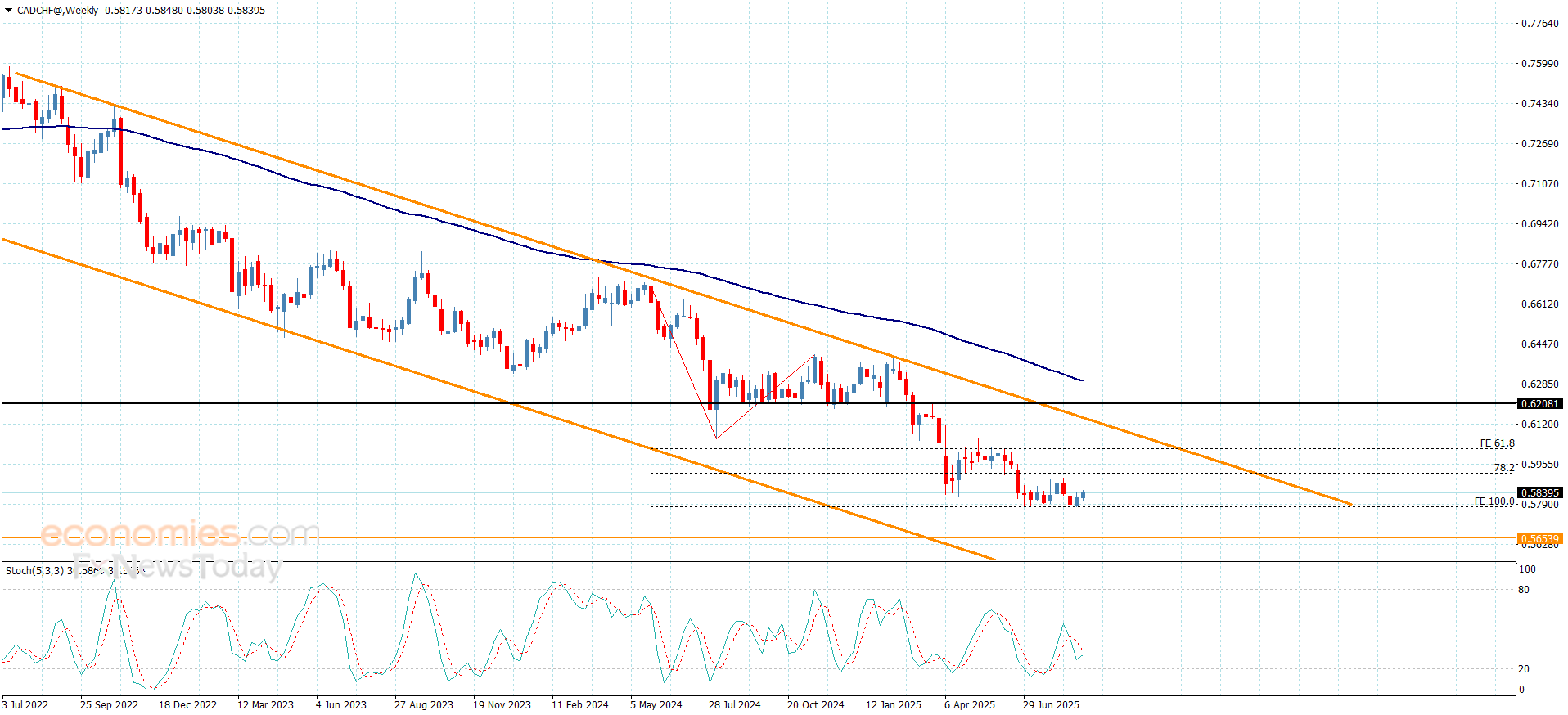
Despite the neediness of the CADCHF to the positive momentum in the last period, but it its positive stability above the support at 0.5780 supports the chances of activating the suggested bullish correctional attempts, to fluctuate near 0.5830.


By the above image, we notice stochastic attempt to provide positive momentum by its stability above 20 level, to increase the chances for targeting the positive stations by its rally towards 0.5910, surpassing it might succeed in renewing the pressure on the barrier at 0.6020 level.


The expected trading range for today is between 0.5800 and 0.5910


Trend forecast: Bullish


Source link

Go to Top