The main category of All News Articles.
You can use the search box below to find what you need.
[wd_asp id=1]
The main category of All News Articles.
You can use the search box below to find what you need.
[wd_asp id=1]
Join me for my weekly trading plan with this week’s forex analysis covering:
DXY, EUR/USD, GBP/USD, USD/JPY, USD/CAD, USD/CHF, AUD/USD, NZD/USD.
AUD/JPY, EUR/JPY, GBP/JPY, AUD/CAD, EUR/CAD, GBP/CAD.
Bitcoin analysis – BTC/USD.
Ethereum analysis – ETH/USD.
Gold analysis – XAU/USD.
Silver analysis – XAG/USD.
Crude Oil analysis – WTI.
Domestic coffee prices
The domestic coffee market on April 15 continued to increase, shortening the gap with the peak set on March 24 by about 6,500 VND/kg.
According to surveys in key growing areas of the Central Highlands, coffee prices simultaneously increased by 600 VND/kg, bringing the average price level of the whole region to the threshold of 87.100 VND/kg.
In Dak Nong province (old), the recorded purchasing price was the highest in the region at 87.2 million VND/kg.
Dak Lak and Gia Lai localities ranked 2nd in the region with a price threshold of 87.1 million VND/kg.
With the same increase of 600 VND, Lam Dong province listed it at 86,600 VND/kg.
World coffee prices
On the international market, futures exchanges increased sharply. Closing the trading session, the price of online Robusta coffee contracts for May 2026 delivery on the London exchange increased sharply by 3.19% (about 107 USD/ton), to 3,458 USD/ton.
July 2026 futures contract increased by 2.98% (equivalent to 97 USD/ton), reaching 3,351 USD/ton.
Similarly, on the New York Stock Exchange, Arabica coffee for May 2026 delivery increased slightly by 0.6% (1.8 US cents/lb), reaching 302.65 US cents/lb. July 2026 delivery contract increased by 0.46% (1.35 US cents/lb), reaching 297.6 US cents/lb.
Robusta coffee prices soared to a one-week high, while Arabica coffee prices slightly recovered from a one-month low last week.
Market outlook
Declining supply from Brazil is supporting prices after the country’s March green coffee exports fell 10% over the same period, to 2.65 million bags. Previously, the Brazilian Ministry of Commerce also reported that March exports fell 31%, to 151,000 tons.
Lower-than-average rainfall in Brazil is also a factor supporting prices. Minas Gerais region – the largest Arabica growing area, only received 4.2 mm of rain last week, equivalent to 20% of the historical average.
The increase in Arabica prices is somewhat slower due to forecasts of strong production growth in Brazil in the next crop year. According to Reuters, agricultural consulting firm Safras & Mercado said that Brazil’s coffee production in the 2026-2027 crop year is forecast to reach 75.65 million bags (60 kg type), an increase of 17% compared to the previous crop year.
Most of this increase came from Arabica coffee, with an estimated output of 49.95 million bags, up 29% compared to the previous crop year.
At the same time, the sales activities of the new crop are still slow, when farmers have only sold 14% of the expected output for the 2026-2027 crop year, lower than the 5-year average of 23%.
Dry weather combined with exchange rate fluctuations and global supply and demand momentum are maintaining a high level of market volatility in the first days of the week. Although Robusta prices have increased, the trading pace is not even between coffee varieties, which also depends a lot on domestic conditions as well as exchange rate diễn biến.
– Written by
Tim Boyer
STORY LINK Pound to Dollar Forecast: 6-Week GBP/USD Best Above 1.35
The Pound to Dollar exchange rate (GBP/USD) held firm above 1.3400 despite a dip to 1.3380, as renewed Iran tensions and a surge in oil prices tested market confidence.
With geopolitical risks intensifying and volatility rising, Sterling remains range-bound, with traders watching whether GBP/USD can hold support or push back towards the 1.3460 resistance zone.
The Pound to Dollar (GBP/USD) exchange rate dipped to 1.3380 in Asian trading on Monday before a recovery to 1.3425 with market resilience again a key issue.
The dollar gained a lift from renewed fears surrounding the Iran situation. The weekend talks between US and Iranian officials failed to make a breakthrough, increasing concerns that the ceasefire would not hold.
According to UoB; “the price action suggests that GBP has likely entered a rangetrading phase. For the time being, we expect GBP to trade between 1.3270 and 1.3460.”
UBS still expects the dollar will slide later in the year with an end-2026 GBP/USD forecast of 1.40.
Get better rates and lower fees on your next international money transfer.
Compare TorFX with top UK banks in seconds and see how much you could save.
After the talks failed to make a breakthrough, President Trump announced that the US would instigate a blockade to stop Iranian ships passing through the Strait of Hormuz.
There was a fresh jump in oil prices on supply fears with Brent jumping close to 8% and just below $100 p/b.
Danske Bank commented on Brent; “It traded above USD110/bbl before the ceasefire announcement last week and there is a clear possibility it will rise back to this level if the sides do not restart talks in the coming days.”
Overall risk appetite was less confident with weaker equities, although the overall impact was limited.
ING commented; “The focus now shifts to whether the naval blockade encourages another round of negotiations, whether the Iranian-backed Houthis in Yemen try to block the southern end of the Red Sea and what the likes of China make of interference in their oil imports.”
BNP Paribas noted that risks have increased; “We did expect negotiations to be difficult and lengthy but assumed that this weekend’s talks would be the beginning of a process which would, at least, result in a degree of situational stabilisation. This view was clearly misplaced.”
According to Rabobank; “On one hand, US escalation might work. Yet unless Iran were to crumble quickly, the prospect is of an even deeper global energy crisis ahead first.”
BNP did note the political pressure; “we would not be surprised if the negotiations are restarted relatively quickly given the current ceasefire timeline.”
The reaction of central banks will also be an important underlying element for markets, especially with upward pressure on headline inflation.

ING commented; “Away from the geopolitical headlines which will bounce the dollar around this week, the market focus will likely be on central bank reaction functions.”
The UK inflation data for March will not be released until next week, but Bank of England comments will be watched closely.
International Money Transfer? Ask our resident FX expert a money transfer question or try John’s new, free, no-obligation personal service! ,where he helps every step of the way,
ensuring you get the best exchange rates on your currency requirements.
TAGS: Pound Dollar Forecasts
Natural gas price continued providing strong bearish pressures on the support level at $2.620, due to the negative momentum by the main indicators, which makes us wait for breaking the required breakout, to begin targeting extra negative stations by reaching $2.390 and $2.250 initially.
The stability of the moving average 55 above the initial resistance towards $3.170 confirms the trading confinement within the negative track, to keep waiting for achieving the negative targets, waiting for the next close to detect the suggested targets in the upcoming trading.
The expected trading range for today is between $2.390 and $2.820
Trend forecast: Bearish
Japan had no need to intervene in currency markets to force USD/JPY bulls to retreat. Verbal interventions were enough. The government bought itself some time and is now reaping the benefits of the US dollar’s weakness. Let’s discuss this topic and make a trading plan.
The article covers the following subjects:
Investors are increasingly driven by sentiment, reacting to reports of a potential new round of US–Iran negotiations. As a result, the greenback is facing some pressure as a safe-haven asset. On the other hand, oil prices remain high, which is hampering USD/JPY bears. Japan is heavily dependent on energy exports, and its economy will suffer more from geopolitical tensions than the US economy.
The bullish oil market has prompted Japanese analysts to lower earnings forecasts for 113 TOPIX-listed companies. The outlook for US companies looks much better, and capital flows from Asia to the US could become a key driver of the USDJPY rally.
Source: Bloomberg.
Meanwhile, the yen is no longer being used as a funding currency in carry trades. Japanese bond yields are at high levels amid expectations of tighter monetary policy. However, carry trades require low volatility to generate profits properly. Volatility, on the other hand, remains high due to geopolitical tensions.
At the same time, Kazuo Ueda’s dovish rhetoric has disappointed USD/JPY bears. The Bank of Japan governor stated that the regulator would closely monitor developments in the Middle East. However, he did not signal an overnight rate hike at the upcoming BoJ meeting, despite having previously hinted at a tightening of monetary policy. Markets interpreted this as a setback to tightening expectations, with the perceived probability of an April rate hike falling from 55% to 32%.
Source: Bloomberg.
Kazuo Ueda has chosen the right moment for his remarks. The US dollar is weakening amid hopes for a resumption of talks between Washington and Tehran. With this in mind, bears could be deprived of an important advantage, and USD/JPY quotes will continue to fall.
The Bank of Japan’s reluctance to continue its cycle of monetary tightening is good news for the Japanese government. Prime Minister Sanae Takaichi criticized her staff for saying that lower import prices could be achieved by tightening monetary policy.
The authorities got what they wanted. Through verbal interventions, they tempered USD/JPY bulls without spending a single penny. The government bought time and is now reaping the benefits of the US dollar’s weakness amid the de-escalation of the conflict in the Middle East and the resulting decline in demand for the greenback as a safe-haven asset. Another issue is that oil prices remain elevated, which will slow down the Japanese economy.
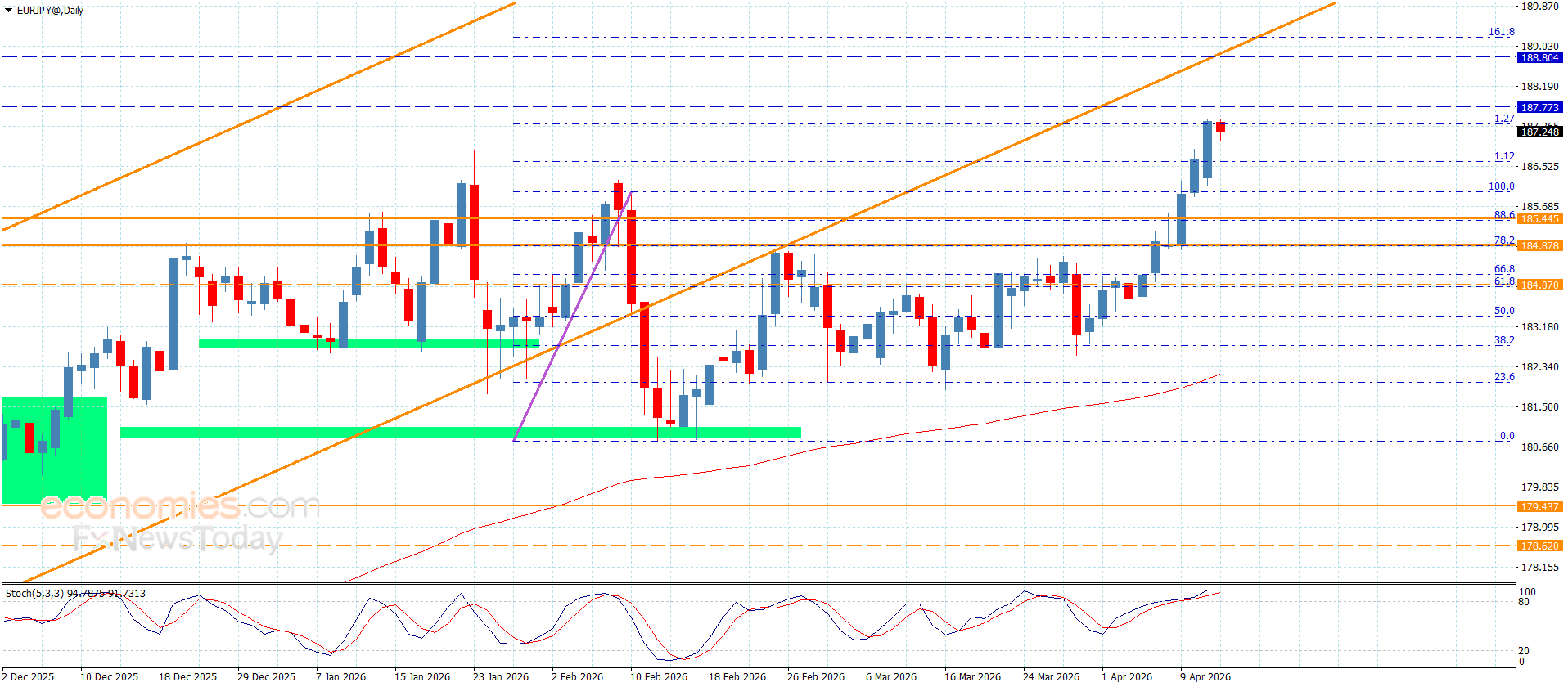
The USD/JPY pair is likely to consolidate within the 158.5–160 range. Only a breakout above or below this range will allow the pair to define its further direction. As long as quotes remain below 159.5, short trades can be opened.
This forecast is based on the analysis of fundamental factors, including official statements from financial institutions and regulators, various geopolitical and economic developments, and statistical data. Historical market data are also considered.
The content of this article reflects the author’s opinion and does not necessarily reflect the official position of LiteFinance broker. The material published on this page is provided for informational purposes only and should not be considered as the provision of investment advice for the purposes of Directive 2014/65/EU.
According to copyright law, this article is considered intellectual property, which includes a prohibition on copying and distributing it without consent.
Copper price resumed the bullish trend, taking advantage of the continuation of providing positive momentum by the main indicators, to reach $5.9700 barrier, followed by recording the suggested target in the previous report.
The price attempt to support this barrier supports the chances of targeting new positive stations confirms the importance of waiting for confirming the breach, to avoid any unexpected corrective rebound, while the extra positive stations that are located at $6.0850 reaching $6.2300 level.
The expected trading range for today is between $5.8800 and $6.0850
Trend forecast: Bullish
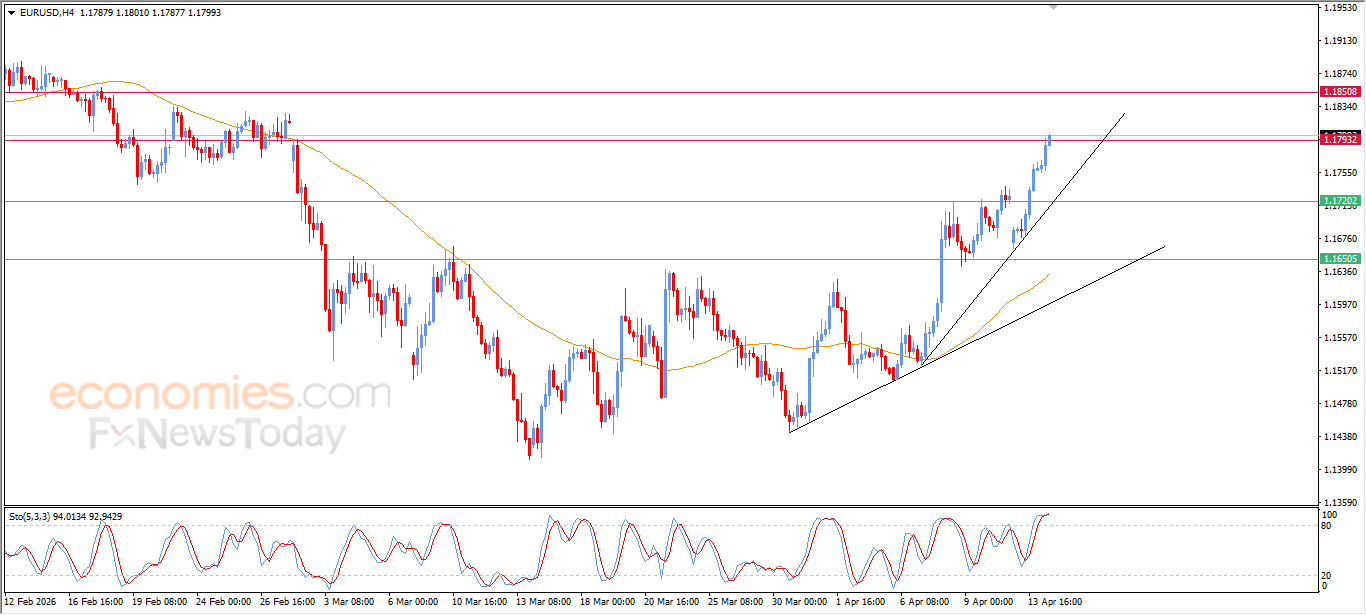
The Euro to Dollar (EUR/USD) exchange rate strengthened to 5-week highs at 1.1740 last week before dipping back below the 1.17 level as Middle East developments dominated.
Brent crude dipped sharply after the US and Iran announced a cease-fire, but there was renewed upward pressure on prices on Monday as peace talks failed to secure a breakthrough.
Credit Agricole still sees downward risks for the Euro due to energy stresses and has an end-2026 EUR/USD forecast of 1.13.
Events surrounding the Iran conflict will remain a key short-term market influence. The bank still considers that the Euro will remain vulnerable in the short term amid risks of fresh escalation surrounding the Iran conflict. Crucially, the bank notes that the Euro-Zone economy remains vulnerable from an energy shock, especially if prices increase further.
From a longer-term perspective, Credit Agricole calculates that fair value for EUR/USD based on underlying fundamentals is currently around 1.11 which will tend to act as a barrier to Euro gains.
Even with an element of unease surrounding investor appetite for US assets, Credit Agricole still expects that the dollar will remain the dominant reserve currency.

Silver (XAG/USD) surges on Tuesday, trading around $78.80 at the time of writing, up 4.16% on the day as strong buying interest pushed Silver to a daily high of $79.32. The white metal rebounds sharply after touching lows near $72.60 on Monday, benefiting from a broad weakening of the US Dollar (USD) and improving market sentiment.
Precious metals are gaining ground as investors also react to softer-than-expected inflation data in the United States (US). The Producer Price Index (PPI) published by the US Bureau of Labor Statistics earlier in the day, shows that annual producer inflation rose by 4% in March, below market expectations of 4.6%, while the monthly reading increased by 0.5%, also missing forecasts. The weaker figures are helping to dampen hawkish speculations about the future Federal Reserve (Fed) monetary policy, which is providing support for non-interest-bearing assets such as Silver.
At the same time, the US Dollar remains under pressure across currency markets. The US Dollar Index (DXY), which tracks the performance of the Greenback against a basket of major currencies, declines toward six-week lows as traders adjust their expectations for US interest rates following the softer inflation figures.
Geopolitical developments are also shaping market sentiment. Reports suggesting the possibility of renewed negotiations between the US and Iran are boosting risk appetite after tensions escalated earlier in the week. According to Reuters, diplomatic efforts could lead to a new round of talks in Islamabad in the coming days, raising hopes of a potential de-escalation following the breakdown of previous discussions.
These developments come after US President Donald Trump indicated that Iranian officials had reached out to seek a possible agreement, suggesting that diplomatic channels remain open despite ongoing disagreements over Iran’s nuclear program.
In this context, the combination of a weaker US Dollar, softer inflation signals and easing geopolitical tensions is reinforcing demand for precious metals, allowing Silver to extend its recovery.
Silver is a precious metal highly traded among investors. It has been historically used as a store of value and a medium of exchange. Although less popular than Gold, traders may turn to Silver to diversify their investment portfolio, for its intrinsic value or as a potential hedge during high-inflation periods. Investors can buy physical Silver, in coins or in bars, or trade it through vehicles such as Exchange Traded Funds, which track its price on international markets.
Silver prices can move due to a wide range of factors. Geopolitical instability or fears of a deep recession can make Silver price escalate due to its safe-haven status, although to a lesser extent than Gold’s. As a yieldless asset, Silver tends to rise with lower interest rates. Its moves also depend on how the US Dollar (USD) behaves as the asset is priced in dollars (XAG/USD). A strong Dollar tends to keep the price of Silver at bay, whereas a weaker Dollar is likely to propel prices up. Other factors such as investment demand, mining supply – Silver is much more abundant than Gold – and recycling rates can also affect prices.
Silver is widely used in industry, particularly in sectors such as electronics or solar energy, as it has one of the highest electric conductivity of all metals – more than Copper and Gold. A surge in demand can increase prices, while a decline tends to lower them. Dynamics in the US, Chinese and Indian economies can also contribute to price swings: for the US and particularly China, their big industrial sectors use Silver in various processes; in India, consumers’ demand for the precious metal for jewellery also plays a key role in setting prices.
Silver prices tend to follow Gold’s moves. When Gold prices rise, Silver typically follows suit, as their status as safe-haven assets is similar. The Gold/Silver ratio, which shows the number of ounces of Silver needed to equal the value of one ounce of Gold, may help to determine the relative valuation between both metals. Some investors may consider a high ratio as an indicator that Silver is undervalued, or Gold is overvalued. On the contrary, a low ratio might suggest that Gold is undervalued relative to Silver.
Copper price resumed the bullish trend, taking advantage of the continuation of providing positive momentum by the main indicators, to reach $5.9700 barrier, followed by recording the suggested target in the previous report.
The price attempt to support this barrier supports the chances of targeting new positive stations confirms the importance of waiting for confirming the breach, to avoid any unexpected corrective rebound, while the extra positive stations that are located at $6.0850 reaching $6.2300 level.
The expected trading range for today is between $5.8800 and $6.0850
Trend forecast: Bullish
Domestic coffee prices
The domestic coffee market on April 14 continued to increase, extending the recovery period.
According to surveys in key growing areas of the Central Highlands, coffee prices simultaneously increased by 500 – 600 VND/kg, bringing the average price level of the whole region to the threshold of 86,500 VND/kg.
In Dak Nong province (old), the purchase price recorded the highest increase of 600 VND/kg, pushing the price to the highest in the region at 86,600 VND/kg.
Dak Lak and Gia Lai two localities increased by another 500 VND/kg, bringing the price to the highest level of 86,550 VND/kg.
With the same increase of 500 VND, Lam Dong province listed it at 86,500 VND/kg.
World coffee prices
On the international market, futures exchanges rebounded after the weekend session remained unchanged. On the New York exchange, Arabica futures for May 2026 opened at 300.85 cents/lb. Further forwards offered prices at the threshold of 268.4 cents/lb – 296.25 cents/lb.
In the same period, the London exchange also witnessed the Robusta line increasing in price, standing at 3,351 USD/ton. Further terms fluctuated around 3,106 USD/ton – 3,254 USD/ton.
Coffee prices are trending upwards, with Arabica coffee reaching its highest level in 2 weeks. The reason is that rainfall in Brazil is lower than average, which could reduce yields and push prices up. Tight Robusta supply also supports prices.
Market outlook
The closure of the Strait of Hormuz disrupted global transportation and tightened coffee supply. This increased transportation, insurance and fuel costs, thereby increasing costs for coffee importers and roasters.
Last week, Arabica prices fell to a 4-week low due to expectations for a record crop in Brazil. Coffee exports increased sharply from Vietnam – the world’s largest robusta producer, putting pressure on robusta prices.
According to data from the General Statistics Office, Vietnam’s coffee exports in the first quarter of 2026 increased by 14% compared to the same period, reaching 585,000 tons. In 2025, exports increased by 17.5%, reaching 1.58 million tons. The output of the 2025/26 crop is expected to increase by 6%, to 1.76 million tons (294 million bags), the highest level in 4 years.
Coffee prices were also supported by information that Brazil’s green coffee exports in February decreased by 27% year-on-year, to 2.3 million bags. The Brazilian Ministry of Commerce also said that exports in March decreased by 31%, to 151,000 tons.
The US Department of Agriculture (USDA – FAS) forecasts that Brazil’s output will decrease by 3.1% to 63 million sacks, while Vietnam will increase by 6.2% to 30.8 million sacks (the highest in 4 years). Inventory at the end of the 2025-2026 crop year is expected to decrease by 5.4%, to 20.148 million sacks.
![Weekly forex forecast: EUR/USD, XAU/USD, GBP/USD, Oil and more [Video]](https://editorial.fxsstatic.com/images/i/Oil2-18326_Medium.png "Weekly forex forecast: EUR/USD, XAU/USD, GBP/USD, Oil and more [Video]")