The main tag of Forex News Today Articles.
You can use the search box below to find what you need.
[wd_asp id=1]

11 02, 2026

ING Warning On Overshoot at 1.25

By |2026-02-11T09:04:09+02:00February 11, 2026|Forex News, News|0 Comments

Image © European Union, 2025. Photographer: Xavier Lejeune.


ECB would cut rates in the event of a significant rise in the euro says European bank.

ING backs ongoing gains by the dollar, but warns the European Central Bank (ECB) will have a pain threshold.

In a new research note, ING says “appetite for the dollar is waning.”

At the same time, “the strong demand for pro-cyclical currencies, including the euro, is one factor drawing money away from the US.”

Uncertainties about U.S. policy into the U.S. midterm elections in November, which the Republicans are expected to find difficult, are anticipated to be another USD headwind.

“That is certainly the message from the options market, where dollar puts are in demand,” says ING.

Compare EUR to USD Exchange Rates

Find out how much you could save on your euro to US dollar transfer

Potential saving vs high street banks:

$2,750.00

Compare EUR/USD Rates from Leading Providers →

Free • No obligation • Takes 2 minutes

But because U.S. growth remains reasonably strong, we’re facing “a dollar dip, not a collapse.”

“Unless the outlook for US bond and equity market returns deteriorates substantially (not our base case), we continue to favour EUR/USD edging up to 1.22 area in an orderly manner,” forecasts ING.

However, there could be a line in the sand that policy makers won’t want crossed. “Any overshoot to 1.25 could well prompt a European Central Bank rate cut,” says ING.

The ECB tends to not comment on the euro’s value, judging that silence is in itself a compelling policy tool.

However, it does plug into inflation forecasts, and a materially stronger euro implies materially lower import costs, which would weigh on inflation and invite speculation of a cut.


🎯 EUR/USD year-ahead forecast: Consensus targets from our survey of over 30 investment bank projections. Request your copy.


Source link

11 02, 2026

The EURJPY loses its bullish momentum– Forecast today – 10-2-2026

By |2026-02-11T05:02:36+02:00February 11, 2026|Forex News, News|0 Comments

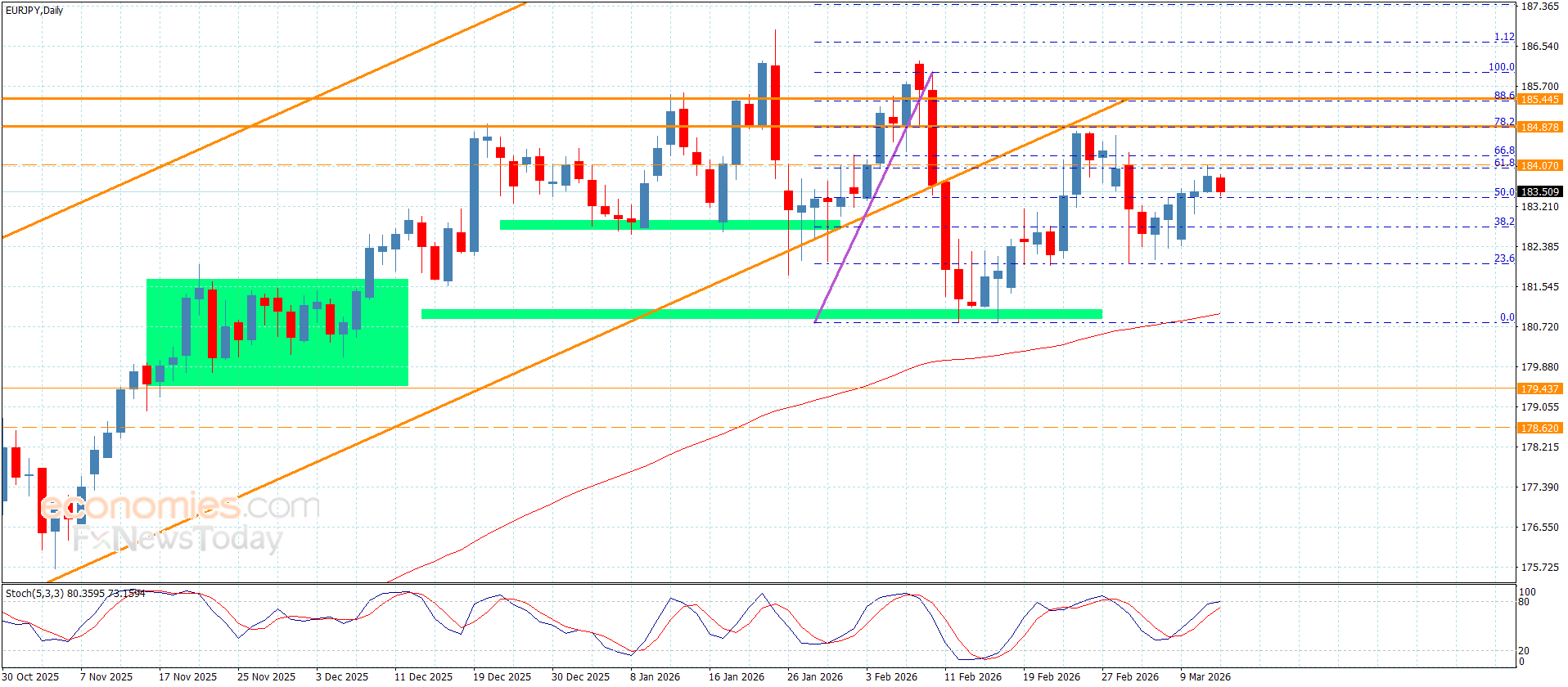
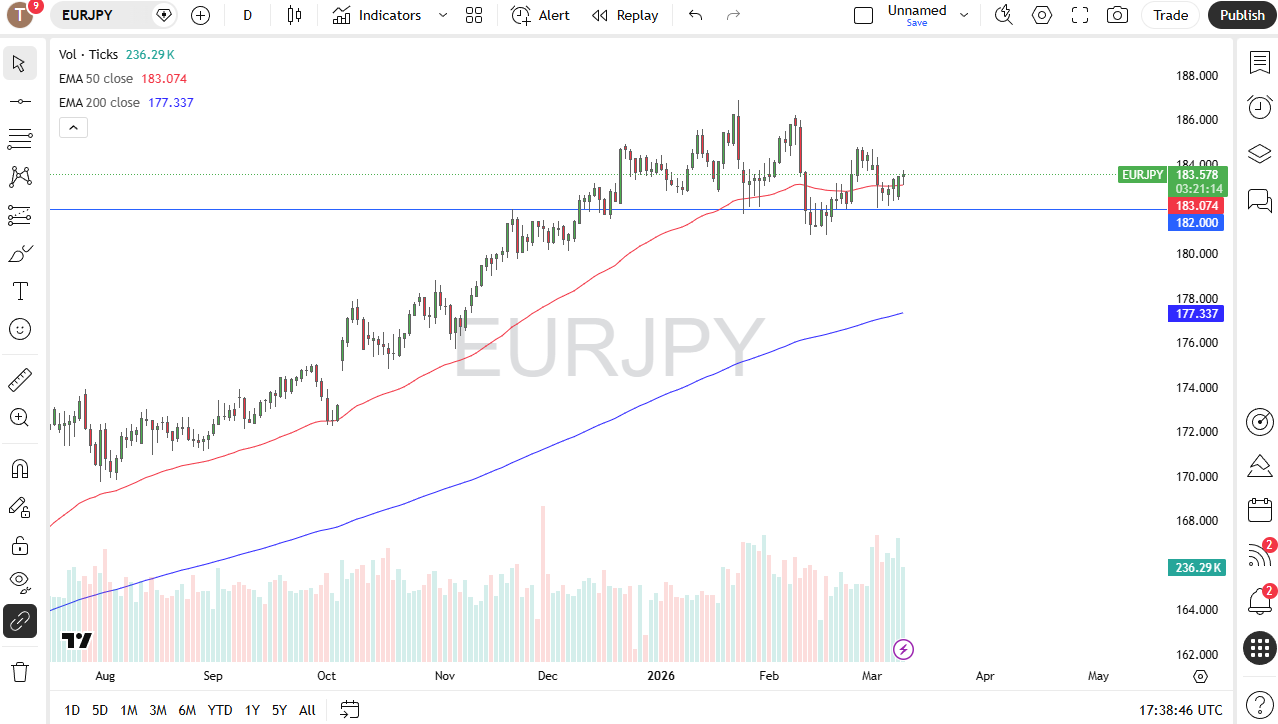
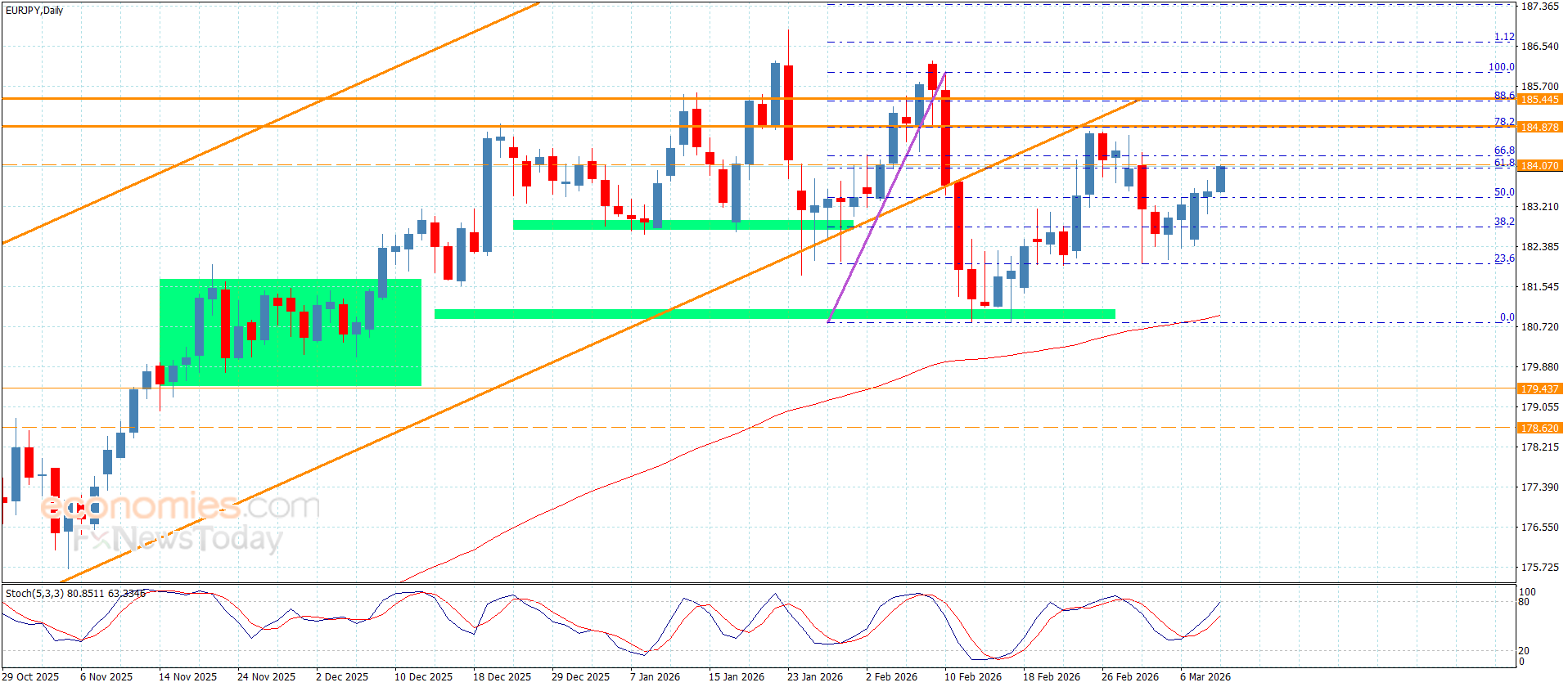
The EURJPY pair lost its bullish momentum due to stochastic exit from the overbought level, which forces it to delay the previously suggested bullish rally, reaching 184.85 level to find an exit to motivate the dominance of the bearish corrective trend in the current period.


Our bullish scenario depends on forming main barrier at 186.20 level, note that the continuation of the negative pressures might force the price to suffer some losses by reaching 184.10, then attempts to press on the bullish channel’s support at 183.55, which represents a confirmation key for the next trend in the upcoming trading.


The expected trading range for today is between 184.20 and 186.00


Trend forecast: Bearish


Source link

11 02, 2026

ECB’s Cautious Stance on Strong Euro Reveals Critical Policy Dilemma

By |2026-02-11T01:01:58+02:00February 11, 2026|Forex News, News|0 Comments

BitcoinWorld

EUR/USD Analysis: ECB’s Cautious Stance on Strong Euro Reveals Critical Policy Dilemma

FRANKFURT, Germany – January 15, 2025: The European Central Bank maintains heightened vigilance regarding the euro’s persistent strength against the U.S. dollar, according to recent analysis from Commerzbank. This EUR/USD dynamic presents significant challenges for European monetary policymakers as they navigate complex economic crosscurrents in early 2025. Market participants closely monitor these developments, particularly as currency valuations influence inflation trajectories and export competitiveness across the Eurozone.

ECB’s Monetary Policy Framework and Currency Considerations

The European Central Bank operates within a dual mandate framework focusing on price stability and supporting economic growth. Currency valuation directly impacts both objectives through multiple transmission channels. A stronger euro typically exerts downward pressure on import prices, potentially helping to contain inflationary pressures. Conversely, currency appreciation can reduce export competitiveness, potentially dampening economic activity in export-dependent Eurozone economies.

Commerzbank’s foreign exchange strategists highlight the ECB’s delicate balancing act. They note that while the central bank doesn’t target specific exchange rate levels, policymakers carefully monitor EUR/USD movements for their macroeconomic implications. Historical data reveals that significant euro appreciation episodes have preceded periods of monetary policy adjustment, particularly when currency movements threatened to undermine the ECB’s inflation mandate.

Historical Context of ECB Currency Interventions

The European Central Bank has demonstrated varying approaches to currency strength throughout its history. During the euro’s initial decade, policymakers frequently expressed concerns about excessive appreciation. More recently, the institution has adopted a more nuanced communication strategy. Verbal interventions have replaced direct market operations as the primary tool for influencing currency perceptions.

Commerzbank’s analysis references several key historical episodes:

  • 2017-2018 Appreciation Cycle: The euro strengthened approximately 15% against the dollar, prompting ECB concerns about inflation undershooting
  • 2020 Pandemic Response: Currency considerations influenced the scale and composition of emergency asset purchase programs
  • 2022-2023 Inflation Battle: Euro weakness contributed to imported inflation, accelerating monetary tightening

Current Economic Indicators and Policy Implications

Recent Eurozone economic data reveals several conflicting signals for policymakers. Manufacturing PMI readings remain below expansion thresholds in several member states, suggesting vulnerability to currency strength. Meanwhile, services sector activity demonstrates greater resilience. Inflation metrics show gradual moderation, though core measures remain above target levels.

Commerzbank economists emphasize that the ECB’s reaction function depends on multiple factors:

Factor Current Status Policy Implication
Core Inflation 2.8% (December 2024) Supports cautious policy stance
Economic Growth 0.3% QoQ (Q4 2024) Limits tightening appetite
EUR/USD Level 1.12-1.15 range Moderate appreciation concern
Energy Prices Stable to declining Reduces imported inflation risk

Transmission Mechanisms and Economic Impact

Currency movements affect the Eurozone economy through several well-documented channels. The trade channel represents the most direct impact, as exchange rates influence the price competitiveness of European exports in global markets. Additionally, the financial channel operates through cross-border investment flows and balance sheet effects. The confidence channel affects business and consumer sentiment, potentially influencing spending and investment decisions.

Commerzbank’s research indicates that the current EUR/USD level presents manageable challenges for most Eurozone economies. However, significant further appreciation could trigger more explicit policy responses. The analysis suggests that the 1.18-1.20 range represents a potential threshold where currency considerations might more directly influence monetary policy decisions.

Comparative Central Bank Perspectives

The ECB’s approach to currency considerations differs notably from other major central banks. The Federal Reserve typically maintains a stronger dollar policy focus, while the Bank of Japan has historically demonstrated greater willingness to intervene directly in currency markets. The Swiss National Bank represents perhaps the most active major central bank regarding currency management, regularly citing franc strength as a policy concern.

This comparative context helps explain why the ECB maintains its cautious but non-interventionist stance. Institutional mandates, economic structures, and historical experiences shape each central bank’s currency policy framework. The Eurozone’s unique multi-country composition further complicates currency policy decisions, as exchange rate effects vary significantly across member economies.

Market Implications and Trading Considerations

Foreign exchange markets exhibit heightened sensitivity to central bank communications regarding currency levels. Commerzbank’s analysis suggests that EUR/USD volatility may increase around key ECB communications, particularly press conferences following monetary policy meetings. Options market pricing indicates growing investor attention to tail risks associated with potential policy shifts.

Several factors could amplify currency market reactions in coming months:

  • Diverging Monetary Policies: Differing ECB and Fed policy trajectories
  • Geopolitical Developments: Trade policy shifts and international tensions
  • Economic Data Surprises: Unexpected inflation or growth figures
  • Technical Factors: Key support and resistance levels in EUR/USD

Conclusion

The European Central Bank maintains appropriate vigilance regarding EUR/USD strength, balancing multiple policy objectives in a complex economic environment. Commerzbank’s analysis highlights the nuanced relationship between currency valuations and monetary policy decisions. While direct intervention remains unlikely under current conditions, verbal guidance and policy adjustments may respond to significant exchange rate movements. Market participants should monitor ECB communications closely for evolving perspectives on currency considerations, particularly as economic conditions continue to evolve throughout 2025.

FAQs

Q1: Why does the ECB care about the euro’s strength?
The European Central Bank monitors currency strength because it affects inflation through import prices and economic growth through export competitiveness. While not targeting specific levels, significant movements can influence monetary policy decisions.

Q2: What exchange rate level might trigger ECB action?
Commerzbank analysis suggests the 1.18-1.20 EUR/USD range represents a potential threshold where currency considerations might more directly influence policy, though specific triggers depend on accompanying economic conditions.

Q3: How does euro strength affect different Eurozone countries?
Effects vary significantly across member states. Export-dependent economies like Germany face greater challenges from currency appreciation, while countries with higher import dependence may benefit from reduced inflationary pressures.

Q4: What tools does the ECB have to influence the euro’s value?
The primary tools are verbal interventions through official communications. The ECB can also adjust monetary policy parameters, though these decisions consider multiple factors beyond currency valuations.

Q5: How does the ECB’s approach compare to other central banks?
The ECB maintains a more restrained approach than the Swiss National Bank but shows greater currency sensitivity than the Federal Reserve. This reflects the Eurozone’s unique economic structure and policy constraints.

This post EUR/USD Analysis: ECB’s Cautious Stance on Strong Euro Reveals Critical Policy Dilemma first appeared on BitcoinWorld.

Source link

10 02, 2026

Critical Resistance Battle Looms As Pair Hovers Below 0.8720 And 0.8745 Levels

By |2026-02-10T21:00:34+02:00February 10, 2026|Forex News, News|0 Comments


EUR/GBP Forecast: Critical Resistance Battle Looms As Pair Hovers Below 0.8720 And 0.8745 Levels


Source link

10 02, 2026

Pound to Dollar Rate Forecast: GBP Pressured by UK Bond Rout, US Jobs Data

By |2026-02-10T17:00:01+02:00February 10, 2026|Forex News, News|0 Comments


– Written by

The Pound to Dollar exchange rate (GBP/USD) is navigating a fragile balance as rising UK bond yields, mounting political pressure on Prime Minister Starmer and crucial US labour market data converge to drive near-term direction.

With gilt yields hitting fresh 2026 highs and investors bracing for delayed US jobs figures, Sterling is holding above 1.35 but remains vulnerable to sharp volatility on both sides of the Atlantic.

If you’re planning a Dollar-Pound transfer or want to protect against renewed GBP swings, compare specialist money transfer providers now to secure competitive exchange rates before key data hits.

GBP/USD Forecasts: Hold Above 1.35

The Pound to Dollar (GBP/USD) exchange rate dipped below 1.3600 in early Europe on Monday before trading just above this level as a weaker dollar helped spare the Pound from further punishment with a rebound to around 1.3650. Crucial support is in the 1.3500 area.

According to Scotiabank; “the GBP looks to have found nearterm support around 1.35, at levels roughly corresponding to the prior local high from early January. The RSI is neutral, and additional support is expected around the 50 day MA at 1.3477 as well as the 200 day MA at 1.3430. We look to a near-term range bound between 1.3550 and 1.3650.”

CIBC has a year-end GBP/USD forecast of 1.39.

Save on Your GBP/USD Transfer

Get better rates and lower fees on your next international money transfer.
Compare TorFX with top UK banks in seconds and see how much you could save.


Compare the Best GBP/USD Rates »

UK and US developments are both likely to have an important impact during the week with a focus on UK politics and US jobs data.

Political tensions have continued to rock the Pound with Prime Minister Starmer remaining under severe pressure over the Mandelson scandal.

Over the weekend, his chief of staff McSweeney resigned in an attempt to deflect pressure on Starmer, but his position remains perilous.

Markets remain concerned that if Starmer is forced to resign, Chancellor Reeves would also be likely to lose her job with markets fretting over the outlook for fiscal policy.

UK bonds lost ground on Monday with the 10-year yield increasing to a 2026 high of 4.58%. There will be further concerns over debt interest payments with the risk that bonds and the Pound will slide in tandem.

ING expects dollar vulnerability; “Barring a significant turn for the worse in risk appetite, it looks like we could see a down week for the dollar.”

It considers that solid risk appetite was curbing dollar demand.

The bank added; “US labour market data surprised on the downside last week, and markets are now bracing for the Federal Reserve to potentially re-apprise its view of the jobs market.”

The delayed US employment report is now due on Wednesday. Consensus forecasts are for an increase in non-farm payrolls of around 70,000 from 50,000 last month with the unemployment rate holding at 4.4%.

The latest retail sales data is due on Tuesday with the latest consumer prices data on Friday.

CNBC does see scope for a near-term dollar recovery; “For now, we are cognizant of near-term USD upside driven by very tactical catalysts. For one, the reshuffling of speculative positions in gold, silver, and bitcoin could still need more time to stabilize.”

The bank also sees the risk of a dip in risk appetite which would potentially support the US currency.

As far as UK data is concerned, the latest GDP data is due onThursday with consensus forecasts for a 0.1% increase for December from 0.3% previously.

Markets are also expecting GDP growth of 0.2% for the fourth quarter from 0.1% previously.

Like this piece? Please share with your friends and colleagues:


International Money Transfer? Ask our resident FX expert a money transfer question or try John’s new, free, no-obligation personal service! ,where he helps every step of the way,
ensuring you get the best exchange rates on your currency requirements.

TAGS: Pound Dollar Forecasts

Source link

10 02, 2026

USD/JPY Forecast Today 10/02: US Dollar Drops

By |2026-02-10T12:58:38+02:00February 10, 2026|Forex News, News|0 Comments

The US dollar plunged against the Japanese yen during the trading session on Monday, and it looks like we will be trying to find value on a dip yet again.

USD/JPY

The US dollar plunged against the Japanese yen during the trading session on Monday as the 158 yen level continues to be a bit of a barrier. If we can break above the 158 yen level, then it is possible that the market could continue much higher. But I think ultimately at this point in time, we have a lot of questions asked about whether or not the Japanese yen can continue to sell off.

Quite frankly, with the election results over the weekend, I suspect that we will remain in a dovish type of situation when it comes to the Japanese yen. This pullback is probably simple profit taking and perhaps a little bit of a response to US dollar weakness on the whole. We are hanging around the 50-day EMA, which of course is a significant technical indicator that a lot of people will watch.

Support and Resistance Levels

Even if we do break down below here, it is likely that the market could go looking to the 154 yen level, maybe even the 200-day EMA. All things being equal, this is a situation where the 152 yen level is your absolute floor.

If we turn around and go to the upside, we could break above the 158 yen level, maybe go looking to the 160 yen level. I do believe that the carry trade will continue to be a major player in the forex world. While the US dollar should eventually bounce here and offer a buying opportunity, I think you also have to look at other Japanese yen denominated currency pairs such as the British pound against the Japanese yen and the Aussie dollar against the Japanese yen. I am still very bearish on the yen.

Christopher Lewis has been trading Forex and has over 20 years experience in financial markets. Chris has been a regular contributor to Daily Forex since the early days of the site. He writes about Forex for several online publications, including FX Empire, Investing.com, and his own site, aptly named The Trader Guy. Chris favours technical analysis methods to identify his trades and likes to trade equity indices and commodities as well as Forex. He favours a longer-term trading style, and his trades often last for days or weeks.

Source link

10 02, 2026

Euro to Dollar Forecast: EUR/USD Swings as Markets Reprice the Fed

By |2026-02-10T08:57:39+02:00February 10, 2026|Forex News, News|0 Comments


– Written by

The Euro to Dollar exchange rate (EUR/USD) is being driven almost entirely by Federal Reserve expectations, with investors reassessing the outlook for US rate cuts amid mixed labour-market signals, political uncertainty and growing scrutiny of the Fed’s next leadership.

After a sharp pullback from recent highs, EUR/USD has stabilised below 1.18 as markets weigh weakening US jobs data against the risk of a dollar rebound, leaving the pair highly sensitive to incoming payrolls and Fed rhetoric.

EUR/USD Forecasts: All about the Fed

MUFG forecasts that the Euro to Dollar (EUR/USD) exchange rate will strengthen to 1.25 at the end of 2026 as the dollar is subjected to further pressure.

SocGen, however, expects that any near-term gains will fade with a retreat to 1.14 by the end of this year as the dollar recovers and the Euro fades.

EUR/USD posted sharp losses to below 1.18 amid a wider dollar rebound and unwinding of long Euro positions, but stabilised later in the week.

SocGen commented on potential selling above 1.20; “Client conviction still low over a sustained move above 1.20.”

Save on Your EUR/USD Transfer

Get better rates and lower fees on your next international money transfer.
Compare TorFX with top UK banks in seconds and see how much you could save.


Compare the Best EUR/USD Rates »

A partial US shutdown delayed the latest US employment report. There was, however, an increase in jobless claims for the latest week and the JOLTS data also recorded a sharp decline in job openings to the lowest level since August 2020.

ING commented; “The Fed is becoming more relaxed about the US jobs market. Yet data this week makes that look complacent. And payroll numbers next week will be key.”

It added; “Major downward revisions to payrolls next week would add to the pressure to eventually resume rate cuts.”

Markets now see close to a 20% chance of a rate cut in March and close to a 75% chance of a move by June. Wider issues surrounding Fed policy remain crucial elements for the markets.

According to MUFG; “Further rates cuts and the predictable uncertainties associated with the Trump presidency points to further dollar depreciation this year. Trump described the dollar’s

performance as “great” in January and the Fed checking rates in USD/JPY will ensure investors continue to suspect the Trump administration wants a weaker Dollar.”

Any rhetoric from Fed Chair nominee Warsh will be watched closely.

Lloyds commented on the outlook; “How Warsh intends to reshape the Fed ought to become clearer during the Congressional confirmation hearings . The focus will be on how he could deliver rate cuts — which he must surely have promised to get the job.”

It added; “Whether Powell feels he needs to stay on as Governor, to help protect Fed independence, will be important too . It’ll become clear fairly soon whether the three rate cuts delivered at the end of last year have stabilised the labour market.”

The ECB held the deposit rate at 2.00%, in line with strong expectations. There was no formal guidance and President Lagarde played down the potential risks from a stronger Euro.

Rabobank commented; “We continue to see policy on hold through 2026.”

SocGen, however, sees scope for a looser ECB monetary policy; “We expect disinflation to dominate 2026, driven by moderating wage growth and supportive commodity dynamics, particularly in Brent and agricultural prices.”

Like this piece? Please share with your friends and colleagues:


International Money Transfer? Ask our resident FX expert a money transfer question or try John’s new, free, no-obligation personal service! ,where he helps every step of the way,
ensuring you get the best exchange rates on your currency requirements.

TAGS: Euro Dollar Forecasts

Source link

10 02, 2026

The GBPJPY tests the broken support– Forecast today – 9-2-2026

By |2026-02-10T04:57:11+02:00February 10, 2026|Forex News, News|0 Comments

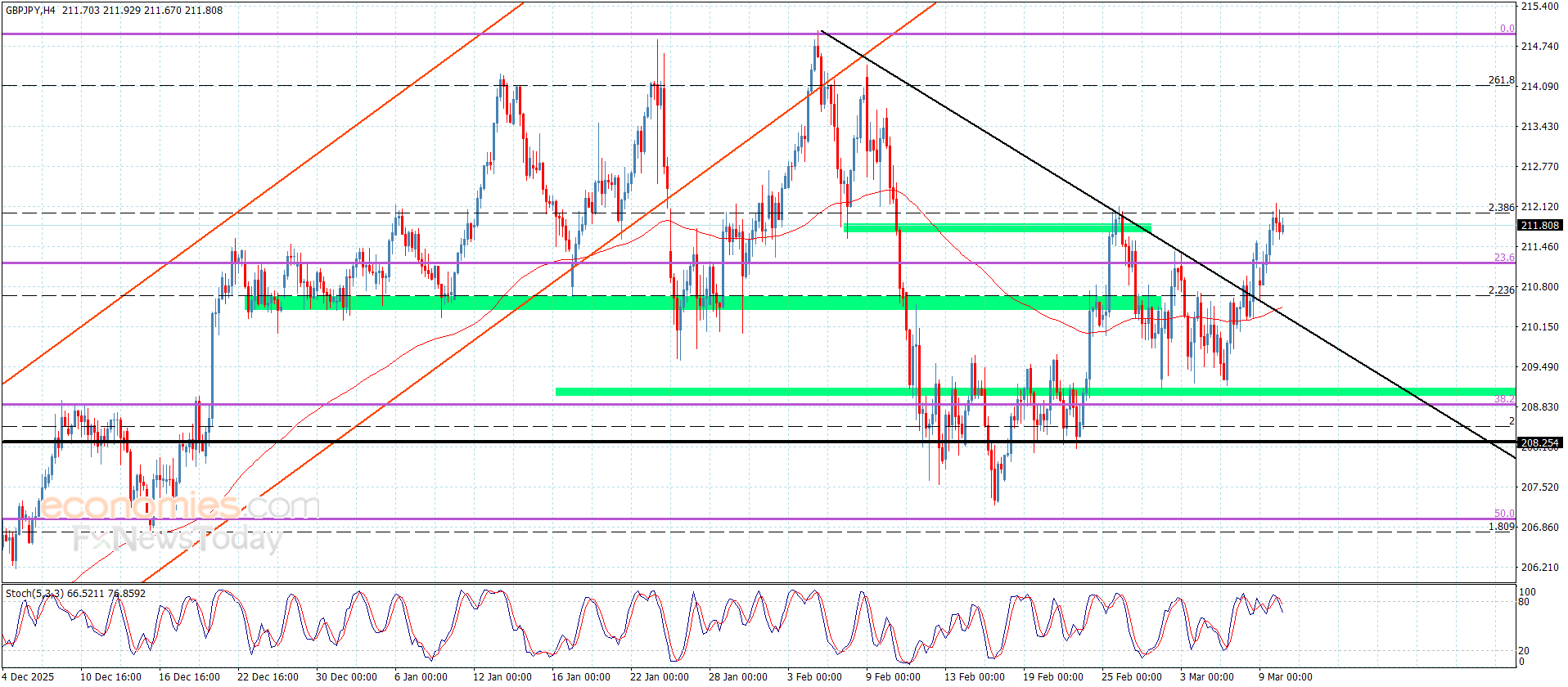
The GBPJPY pair failed to confirm breaking 212.85 level, which forces it to delay the previously suggested negative scenario, forming bullish waves to test the broken bullish channel’s support at 214.40 in this morning’s trading, forming a new bearish decline to settle near 213.40.


The contradiction between the main indicators might push the price to provide temporary trading, to keep waiting to confirm the negative scenario by reaching below 212.85, opening the way for targeting negative stations at 212.00 and 211.25, while breaching 214.40 and holding above it will confirm regaining the bullish track, providing strong chances to record new gains by its rally towards 215.50.


The expected trading range for today is between 211.25 and 213.85


Trend forecast: Sideways


Source link

10 02, 2026

GBP/USD Forecast: Pound Sterling Supported Amid Yen Strength, Jobs Doubts

By |2026-02-10T00:55:09+02:00February 10, 2026|Forex News, News|0 Comments


– Written by

The Pound to US Dollar exchange rate (GBP/USD) found modest support at the start of the week, with the pair steadying as doubts over the outlook for US employment weighed on the Dollar.

At the time of writing, GBP/USD was trading close to $1.3652, up around 0.3% from Monday’s opening levels as investors grew increasingly cautious ahead of key US labour market data.

The US Dollar struggled to find momentum as confidence in the resilience of the American jobs market continued to ebb.

A run of softer-than-expected employment indicators released last week has left markets wary ahead of January’s delayed non-farm payrolls report. Any disappointment could weigh heavily on the Greenback and further complicate expectations for Federal Reserve policy in the months ahead.

Adding to the Dollar’s woes was renewed strength in the Japanese Yen.

The Yen rallied after Japan’s ruling Liberal Democratic Party secured a decisive election victory, fuelling expectations of fresh fiscal stimulus and pushing Japanese government bond yields higher. The move encouraged capital flows away from the US Dollar, further pressuring USD exchange rates.

Sterling, meanwhile, struggled to build on its early gains as political uncertainty in the UK resurfaced.

Save on Your GBP/USD Transfer

Get better rates and lower fees on your next international money transfer.
Compare TorFX with top UK banks in seconds and see how much you could save.


Compare the Best GBP/USD Rates »

Confidence in the Pound took a knock following the resignation of Prime Minister Keir Starmer’s chief of staff, Morgan McSweeney, over the weekend. The departure has intensified scrutiny of Starmer’s leadership and unsettled investors.

The episode has also revived attention on Starmer’s decision to appoint Peter Mandelson as the UK’s ambassador to Washington, with renewed focus on Mandelson’s past links to Jeffrey Epstein adding to the unease.

For GBP investors, McSweeney’s exit has heightened concerns over instability within the government, particularly at a time when divisions inside the Labour Party appear to be becoming more visible.

GBP/USD Forecast: US Jobs Data to Drive Near-Term Direction

Looking ahead, the next major test for the Pound to US Dollar exchange rate will be Wednesday’s release of the US non-farm payrolls report.

Markets are forecasting job creation of around 70,000 in January, an improvement on December’s 50,000 gain. A result in line with expectations could offer the US Dollar some support.

However, another downside surprise would likely trigger renewed USD selling, especially given the recent run of underwhelming labour data.

With no significant UK economic releases scheduled, Sterling is likely to remain sensitive to domestic political developments. Any further pressure on Prime Minister Starmer’s leadership could leave the Pound vulnerable through the remainder of the week.

Like this piece? Please share with your friends and colleagues:


International Money Transfer? Ask our resident FX expert a money transfer question or try John’s new, free, no-obligation personal service! ,where he helps every step of the way,
ensuring you get the best exchange rates on your currency requirements.

TAGS: Pound Dollar Forecasts

Source link

9 02, 2026

US Dollar Continues to Levitat

By |2026-02-09T20:53:10+02:00February 9, 2026|Forex News, News|0 Comments

The interest rate differential continues to be a mainstay of this pair, as we are levitating into the weekend, looking bullish overall.

USD/JPY

The US dollar has been noisy against the Japanese yen during the trading session here on Friday as we are simply hanging around the 156-yen level. I think at this point in time we are probably due for a little bit of a pullback, but I do not want to buy the yen. What I want to do is buy cheaper US dollars.

The interest rate differential continues to favor the United States and that will play a major part in where we go next. Ultimately, I think this is a scenario that remains a buy-on-the-dip for some time, and I just don’t have any interest whatsoever in trying to fight the interest rate differential.

The Long-Term Problem for Japan

The 158-yen level followed by the 159-yen level, both I think are resistance and I think it’s going to be difficult to get above there. But if we can break above the dollar-yen reading of about 162, that’s the highest level since something like 1990.

So, we are on the precipice of something big. We could be talking about 100 yen before it’s all said and done. That doesn’t mean that you put all of your money in aiming for 250 yen, but I think you have to understand that this is a long-term problem for Japan, and I think it continues to be so.

Shorting the yen against a multitude of currencies might be the trade for the next several years, and this is the first place you do it, but there are other places: the Australian dollar, the New Zealand dollar, British pound, etc. I have no interest in shorting this pair. It would have to break down below the 150-yen level for me to rethink things. That doesn’t mean I chase it up here though, and that’s the point of the analysis.

Christopher Lewis has been trading Forex and has over 20 years experience in financial markets. Chris has been a regular contributor to Daily Forex since the early days of the site. He writes about Forex for several online publications, including FX Empire, Investing.com, and his own site, aptly named The Trader Guy. Chris favours technical analysis methods to identify his trades and likes to trade equity indices and commodities as well as Forex. He favours a longer-term trading style, and his trades often last for days or weeks.

Source link

Go to Top