About Editorial team of BIPNs

Main team of content of bipns.com. Any type of content should be approved by us.
25 12, 2025

FSSAI says herbal or plant-based infusions cannot be labeled as “Tea”

By |2025-12-25T11:26:32+02:00December 25, 2025|Dietary Supplements News, News|0 Comments


The Food Safety and Standards Authority of India (FSSAI) on Thursday said that the term “tea” cannot be used on labels of herbal or plant-based infusions as it will amount to misbranding. It pointed out that only beverages derived from Camellia sinensis including Kangra Tea, Green Tea and Instant Tea can be labelled as Tea. It has directed food companies including e-commerce platforms to comply with the requisite standards and refrain from misbranding tea products. It has also asked states and UTs to ensure adherence to standards in this regard and take action.

“It has come to the notice of FSSAI that some Food Business Operators (FBOs) are marketing products that are not obtained from the plant Camellia sinensis under the name ‘Tea’, such as ‘Rooibos Tea’, ‘Herbal Tea’, ‘Flower Tea’, among others,” the Authority stated in an advisory.

It is clarified that, as per standards specified in the Food Safety and Standards (Food Product Standards and Food Additives) Regulations, 2011, the term “Tea”, including Kangra Tea, Green Tea and Instant Tea in solid form, can be exclusively from the plant Camellia sinensis.

Stating that every food package must carry the “true nature” of the food contained in the package on the front of pack, it added the use of the word “Tea” directly or indirectly for any other plant-based or herbal infusions or blends not derived from Camellia sinensis is misleading and amounts to misbranding.

“As per the aforementioned regulation, such plant-based or herbal infusions or blends, which are not derived from Camellia sinensis, do not qualify to be named as Tea,” it added.

All Food Business Operators including e-commerce engaged in manufacturing, packing, marketing, import or sale of such products are directed to comply with the provisions of the Food Safety and Standards Regulation and refrain from using the term “Tea” for any products not derived from Camellia sinensis, it added. 

The Authority directed Food Safety Commissioners of all states and UTs and Regional Directors to direct the Designated Officers and Food Safety Officers under their jurisdiction to monitor and ensure strict adherence to these provisions by the Food Business Operators including e-commerce.

“In case of non-compliance, necessary action shall be initiated as per the provisions of the Food Safety and Standards Act, 2006,” it added.

Published on December 25, 2025


Source link

25 12, 2025

Coca-Cola price shows mixed signals – Forecast today

By |2025-12-25T10:09:32+02:00December 25, 2025|Forex News, News|0 Comments


Coca-Cola Company (KO) declined in its latest intraday trading, breaking below its 50-day SMA, which has increased near-term negative pressure on the stock. This move comes alongside the emergence of a negative crossover on the RSI, reinforcing short-term weakness. However, the main bullish trend still dominates the medium term, with price action continuing to move alongside a supportive upward trendline, which limits the downside risk for now.


Therefore we expect the stock price to move higher in the upcoming trading, as long as it remains stable above the support level at $68.80, to target the resistance level at $71.30.


Today’s price forecast: Neutral


Source link

25 12, 2025

Copper’s Record Run, China Iron Ore Tensions, and What Analysts Forecast for 2026

By |2025-12-25T08:08:25+02:00December 25, 2025|Forex News, News|0 Comments


BHP Group Ltd (ASX: BHP; NYSE: BHP) is heading into the year-end holiday stretch with a familiar “big miner” cocktail: copper is surging to historic highs, iron ore remains the profit engine but is tangled in tough China-facing commercial politics, and investors are still weighing whether BHP’s next leg of growth comes from disciplined project delivery—or the temptation of headline-grabbing M&A.

With markets thinned by Christmas-week trading, the most actionable inputs for BHP stock right now are not dramatic one-day price moves, but the underlying drivers that will shape cash flow and dividends across 2026: copper pricing and supply tightness, iron ore volumes and realized pricing, and BHP’s ability to execute major growth projects (and fund them smartly).

Where BHP stock stands heading into Christmas week

In U.S. trading, BHP’s NYSE-listed ADR closed around $60.87 in the latest session available (Dec. 24, 2025) and implies a market capitalization near $155 billion. [1]

In Australia, BHP has been back on investor radar after a late-2025 rebound, with one widely followed valuation note pointing to roughly a 12% one-month lift and a share price around A$45 (Dec. 23). [2]

That bounce matters because BHP is often traded as a “macro + dividends + China” proxy. When metals prices rip higher, BHP tends to benefit—but the market also tends to ask, immediately and relentlessly: Will the company actually convert this cycle into sustainable free cash flow and shareholder returns?

The biggest tailwind right now: copper—and the AI/grid demand story

The most obvious, loudest tailwind into Dec. 25 is copper.

Copper prices pushed into record territory this week, breaking above $12,000 per tonne amid a mix of supply disruptions, tariff fears, and tightening availability outside the U.S. [3] The broader market narrative is that copper is being pulled in two directions at once:

  • structurally rising long-term demand (electrification, grid upgrades, EVs, data centers), and
  • short-term trade dislocation (tariff uncertainty shifting physical flows and inventories)

Reuters’ metals coverage has repeatedly highlighted the “dislocation” angle—where the threat of tariffs can be as market-moving as tariffs themselves, reshaping where copper sits and who feels “short” of metal. [4]

The other piece: analysts have been modeling persistent deficits. A Reuters roundup of copper market dynamics cited expectations for a 124,000-tonne deficit in 2025 and 150,000 tonnes in 2026, alongside a demand story increasingly tied to power infrastructure and AI-era electricity buildouts. [5]

Why this matters specifically for BHP shares

BHP is not “a copper pure play,” but copper is one of the company’s most important levers for growth and narrative momentum—and BHP’s own operational readouts have leaned into that.

In its operational review for the quarter ended Sept. 30, 2025 (reported in October), BHP said group copper production rose 4% and highlighted record concentrator throughput at Escondida. The company also reiterated FY2026 copper production guidance of 1,800–2,000 kt, with Escondida guidance 1,150–1,250 kt. [6]

When copper is printing all-time highs, markets usually do two things at once:

  1. reward near-term earnings torque, and
  2. re-rate long-dated copper optionality (projects, expansions, districts)

BHP is trying to be in both camps.

Iron ore is still BHP’s cash-flow core—now with China-facing friction

Even with copper stealing the spotlight, iron ore remains the heavy gravitational mass in BHP’s earnings universe. And right now, the iron ore story has two layers:

Layer 1: Operations look solid

BHP reported quarterly iron ore production of 64.1 Mt, with FY2026 guidance unchanged at 258–269 Mt (equity basis). WAIO (Western Australia Iron Ore) shipments and supply-chain execution were positioned as standouts, including the completion of the Car Dumper 3 rebuild at Port Hedland ahead of schedule. [7]

BHP also disclosed an average realized iron ore price around US$84.04/wmt for that quarter (Sept. 2025 quarter), up year-on-year in the same disclosure. [8]

Layer 2: China commercial politics are messy—and potentially market-moving

The more delicate layer is the ongoing negotiation tension between major miners and China’s centralised iron ore buying apparatus.

Reuters reported that a stand-off between China Mineral Resources Group (CMRG) and BHP tightened iron ore supplies, with market participants pointing to disrupted flows tied to contract negotiations. [9]

In a related Reuters report, several BHP cargoes were reportedly offered for sale in China amid “ban fear” headlines, with sources indicating at least one cargo traded—suggesting a complicated reality: pressure points exist, but trade in other grades can continue even while specific products are frozen. [10]

For BHP stock, this matters because iron ore isn’t just a commodity exposure—it’s also a relationship exposure. If negotiations snarl into prolonged disruptions (even if partial), the market will price in risk around volumes, realized pricing, and China channel access.

Project execution and asset quality: Samarco, grades, and “better iron ore”

One underappreciated theme for miners in 2026 is not just volume, but quality—especially as steelmakers and regulators push on emissions and efficiency.

An Argus analysis published Dec. 23, 2025 argued that new supply developments could lift average grades for major producers, specifically pointing to the ramp-up of BHP’s Samarco operations in Brazil as a potential support for BHP’s overall product quality. Argus noted BHP’s aim to produce 7–7.5 million tonnes of ~67% Fe pellets at Samarco in FY2025–26 and referenced longer-term ramp potential toward higher capacity by 2028. [11]

This dovetails with BHP’s own FY2026 Samarco guidance of 7–7.5 Mt (equity basis). [12]

If iron ore markets become more quality-sensitive over time, “better tons” can matter disproportionately—especially in tight markets where buyers pay up for consistency and performance.

Capital strategy in focus: the $2 billion infrastructure funding deal

BHP also gave markets a clear signal in December: it wants to fund growth while keeping balance sheet flexibility, and it’s willing to “recycle capital” from infrastructure-like assets to do it.

Reuters reported that BHP struck a $2 billion deal with Global Infrastructure Partners (GIP)—owned by BlackRock—linked to BHP’s WAIO inland power network. The structure involved a new entity with BHP holding 51% and GIP 49%, with BHP retaining operational control and paying a tariff over 25 years tied to usage. [13]

This kind of transaction tends to be read as:

  • a pragmatic funding move (freeing capital without giving up operating control), and
  • a quiet admission that the capex pipeline is large enough to justify creative financing

For BHP stock, it’s also a signal that management is actively trying to avoid a “dividends vs growth” zero-sum fight.

Dividends, profits, and the shareholder bargain

BHP investors—especially in Australia—treat the stock like a hybrid: part commodity exposure, part income vehicle.

On that front, Reuters’ coverage of BHP’s FY2025 results (year ended June 30, 2025) reported:

  • underlying profit of $10.16 billion (a five-year low in that metric, per the report),
  • a total FY dividend of $1.10 per share, with a final dividend of $0.60, and
  • a raised net debt target range of $10–$20 billion. [14]

This is the core bargain BHP stock keeps making with the market: You accept cyclicality, and in return you get scale, resilience, and a meaningful slice of cash when the cycle cooperates.

Copper strength helps that bargain. Iron ore stability protects it. Cost blowouts and project delays threaten it.

BHP stock forecast: what analysts are saying heading into 2026

Analyst forecasts are not prophecy; they’re structured guesses with assumptions wearing a suit and pretending they don’t sweat. Still, they matter because they influence institutional positioning.

One widely referenced compilation (MarketBeat) put BHP at a “Hold” consensus rating based on 10 analyst ratings, with an average 12‑month price target of $48.50 (range $44–$53), versus the then-current ADR price around $60.87. [15]

In Australia, a valuation-focused note (Simply Wall St) suggested BHP was trading very close to a “fair value” estimate around A$44.94 versus a recent price around A$45.07, framing the stock as near fully priced after the recent rebound. [16]

How to interpret these forecasts without losing your mind

If you’re trying to reconcile “copper at record highs” with “Hold ratings,” the missing link is usually one (or more) of these assumptions:

  • iron ore mean reversion (analysts often model conservative long-run iron ore pricing)
  • capex intensity (potash, copper expansions, decarbonisation)
  • China demand uncertainty (property, steel output, policy swings)
  • FX and rates (USD strength can hit commodity pricing and AUD revenue translation)

In other words: analysts can like the assets and still hesitate on timing, because miners are where macro confidence goes to be tested.

Technical sentiment check: momentum improved, but not a clean setup

For traders who follow technical indicators (and yes, even fundamental investors secretly peek), Investor’s Business Daily noted BHP’s ADR Relative Strength (RS) Rating rising to 81 from 78 in mid-December, a momentum signal often interpreted as bullish—while also cautioning the stock had moved beyond an “ideal” buy range after a breakout pattern. [17]

That’s basically the technical version of: “Nice move—now don’t chase it.”

What investors should watch next for BHP shares

Here are the highest-signal catalysts and risks as of Dec. 25, 2025—ranked by how directly they can hit BHP’s cash flow narrative:

Copper price structure (not just the headline):
Watch whether copper stays elevated because of real deficits and constrained mine supply, or whether trade-driven inventory relocation unwinds. Reuters’ reporting has emphasized how tariff uncertainty can distort prices and stock locations. [18]

China iron ore negotiations:
Pay attention to whether the CMRG-related stand-offs remain isolated to specific products or broaden into wider commercial disruption. [19]

FY2026 delivery vs guidance:
BHP’s FY2026 guidance ranges—especially copper (1.8–2.0 Mt) and iron ore (258–269 Mt)—set the bar. Markets usually punish misses more than they reward small beats, because miners are supposed to be boring in the execution layer. [20]

Jansen potash and capex discipline:
BHP continues to position Jansen as a major long-term growth pillar, with Stage 1 tracking toward production in 2027 in its operational commentary. [21] Any renewed cost pressure will matter for valuation.

Capital allocation moves like the GIP deal:
More “capital recycling” transactions could be read positively—unless investors start to suspect BHP is selling the family silver to fund overruns. [22]

Bottom line for BHP Group Ltd stock on Dec. 25, 2025

BHP stock is ending 2025 with momentum coming from two directions at once: a copper market that is screaming “scarcity” and “electrification,” and an iron ore business that is still operationally strong but increasingly entangled in China’s evolving approach to commodity purchasing power.

If copper stays structurally tight into 2026—and BHP executes on volume guidance and project milestones—the stock has a credible fundamental case as a diversified, cash-generative miner. If copper’s surge proves more trade-dislocation than durable deficit, or if iron ore negotiations create recurring disruptions, the market will likely revert to treating BHP as what it has always been at heart: a world-class portfolio living inside a cyclical pricing machine.

References

1. stockanalysis.com, 2. simplywall.st, 3. www.ft.com, 4. www.reuters.com, 5. www.reuters.com, 6. www.bhp.com, 7. www.bhp.com, 8. www.bhp.com, 9. www.reuters.com, 10. www.reuters.com, 11. www.argusmedia.com, 12. www.bhp.com, 13. www.reuters.com, 14. www.reuters.com, 15. www.marketbeat.com, 16. simplywall.st, 17. www.investors.com, 18. www.reuters.com, 19. www.reuters.com, 20. www.bhp.com, 21. www.bhp.com, 22. www.reuters.com



Source link

25 12, 2025

Natural GLP-1 Supplements Are On The Rise, According To Experts

By |2025-12-25T07:24:10+02:00December 25, 2025|Dietary Supplements News, News|0 Comments


At this point it’s no secret that GLP-1s can be an effective strategy for losing weight. The problem? They’re not always that easy to get your hands on—and if they are, they might not come with the most pleasant side effects. (In fact, between 50 and 75 percent of people stop taking them within a year, per a 2024 study in JAMA Network Open.) Enter: “natural GLP-1 supplements.” Yup, supplements that promise to give similar results to those mighty weight loss meds without the same hassle.

Between berberine and psyllium husk duking it out for the title of “nature’s Ozempic” and all the new concoctions being developed by brands, there’s no shortage of options on the market. Kourtney Kardashian’s Lemme brand has Lemme GLP-1 Daily, touted on Instagram as “a breakthrough innovation in metabolic health, formulated to naturally boost your body’s GLP-1 production, reduce appetite, and promote healthy weight loss.” Supergut sells a GLP-1 Daily Support, while Pendulum offers a GLP-1 Probiotic. “This multi-strain probiotic is formulated with beneficial bacteria that naturally increase GLP-1, the ‘un-hunger’ hormone that helps curb cravings and appetite,” according to the Pendulum website. Many of these supplements are specifically marketed to women, playing on the idea that out-of-whack hormones might be contributing to weight gain.

Obviously, there’s one critical question: do these supplements actually work? We tapped obesity medicine physicians for their answer.

Meet the experts: Kunal Shah, MD, is an assistant professor in the division of endocrinology at the Rutgers Robert Wood Johnson Medical Center. Mir Ali, MD, is a bariatric surgeon and medical director of MemorialCare Surgical Weight Loss Center at Orange Coast Medical Center.

What is a natural GLP-1 supplement?

First, a quick refresher on what a GLP-1 receptor agonist is: one of the most popular GLP-1 receptor agonists is Ozempic, a semaglutide medication that’s technically designed to help control blood sugar in people with type 2 diabetes. (The drug is approved by the Food and Drug Administration for weight loss under the name Wegovy.) After research demonstrated that people could lose up to 11 percent of their body weight from Ozempic, it skyrocketed in popularity as an off-label medication for weight loss.

Semaglutide works by mimicking a protein in your body called glucagon-like peptide 1, a.k.a. GLP-1, says Kunal Shah, MD, an assistant professor in the division of endocrinology at the Rutgers Robert Wood Johnson Medical Center. There are also a similar class of drugs, called tirzepatide, and those include meds Mounjaro (for type 2 diabetes) and Zepbound (for weight loss).

This activates GLP-1 receptors in your body, leading to an increase in the production of insulin, which helps move glucose into your cells, where it’s used for energy, Dr. Shah says. But GLP-1 receptor agonists do more than just help shuttle glucose around your body. “These medications slow down the transit of food from the stomach to the gut, making you feel full,” Dr. Shah says. You also have receptors in your brain that modulate your hunger and metabolism. Ozempic and other GLP-1s signal to those receptors, making you feel less hungry, he says.

Still following? Your body produces GLP-1 naturally after you eat, but Ozempic and other similar medications are more reliable forms of the same hormone your body makes, Dr. Shah says.

Here’s where “natural” GLP-1 supplements come in. These products contain a range of ingredients that companies claim will help stimulate GLP-1 production in your body. Each supplement is slightly different, but these are a few ingredients that have come up:

  • L-taurine (an amino acid)
  • Prebiotics (fiber that feed good bacteria in your gut)
  • Boron (a trace element)
  • Berberine (a plant-based substance)
  • Eriomin (lemon extract)
  • Supresa (saffron extract)
  • Morosil (blood orange extract)
  • Green tea leaf extract (concentrated green tea)

These can all impact the body, yes, but it’s a stretch to suggest that these would have the same effect as GLP-1 receptor agonist medications, says Mir Ali, MD, a bariatric surgeon and medical director of MemorialCare Surgical Weight Loss Center at Orange Coast Medical Center.

Can natural GLP-1s help with weight loss for women?

That’s the million-dollar question. Currently, some in the medical community don’t buy the idea that a supplement can give you similar results as GLP-1 receptor agonists.

“I haven’t seen convincing evidence that any of these will make a significant impact on weight loss,” Dr. Ali says. “They are not nearly on par with [weight loss] medications.”

Natural supplements have “very mild effects” on weight loss based on what Dr. Ali has seen. There is some data to suggest that saffron, green tea, or turmeric can have a slight impact on GLP-1 production, he says, but again, it’s not a ton.

It’s a stretch to suggest that these would have the same effect as GLP-1 receptor agonist medication.

One way to stimulate similar effects is by focusing on protein, Dr. Ali says. “Eating more protein increases natural GLP-1 production.” That’s true whether you’re going through menopause or have an underlying health condition that makes you prone to weight gain, but protein can really stimulate similar effects for anyone, he says. He recommends 1.2 to 1.5 grams of protein per kilogram of body weight per day, or about 30 to 35 grams of protein per meal.

So, while you may be interested in taking a so-called natural GLP-1 supplement, you’re unlikely to see a major impact on your weight—at least, not nearly at the level that you’d see if you took a GLP-1 receptor agonist medication. While GLP-1 receptor agonists are not cheap, some companies are looking at ways to make them more affordable. Eli Lilly, for example, recently announced that they would be selling vials of Zepbound and Mounjaro directly to consumers, which will half the cost of the medications. Other companies are expected to follow.

Are natural GLP-1s safe?

If you’re a healthy person with no underlying health conditions, you’re probably OK to take a GLP-1 supplement. “It certainly doesn’t seem to be harmful for most people to take these,” Dr. Ali says.

Keep in mind that some of these contain caffeine or other stimulants, so you’ll want to make sure that you don’t overdo it on top of the caffeine you may already be having in your day. And if you’re taking any medications, there’s always a risk that any supplement could interact with it. That’s why you should always consult with your doctor before hopping on a GLP-1 supplement, Dr. Ali says.

It’s also worth considering that the supplement industry is largely unregulated, making it difficult to know if what a company claims is in the bottle is actually accurate. In fact, several popular herbal supplements have been linked to liver damage and other health issues. So, to be safe, whenever you’re buying a supplement, try to opt for products that are doctor-recommended and third-party tested.

At the end of the day, if you’re trying to lose weight, consult a doctor before trying a new strategy or supplement—no matter how promising it appears. “If you want to lose weight, start by speaking to a primary care physician,” Dr. Ali says. “If you qualify for the actual medications, that would be the best route.”

Korin Miller is a freelance writer specializing in general wellness, sexual health and relationships, and lifestyle trends, with work appearing in Men’s Health, Women’s Health, Self, Glamour, and more. She has a master’s degree from American University, lives by the beach, and hopes to own a teacup pig and taco truck one day.


Source link

25 12, 2025

U.S. Futures Slide Toward $4.25 as Weather Models Ease Heating Demand; Europe’s TTF Ticks Higher

By |2025-12-25T06:06:40+02:00December 25, 2025|Forex News, News|0 Comments


Natural gas markets are ending Christmas Eve with a familiar mix of volatility and contradiction: U.S. Henry Hub-linked futures are retreating after a sharp rally, while Europe’s benchmark prices are firming modestly—all as traders juggle shifting temperature models, LNG headlines, and a holiday-altered flow of “must-watch” data releases.

As of today’s session on Wednesday, December 24, 2025, Natural Gas futures were around $4.249 per MMBtu, down about 3.6% on the day, after opening near $4.421 and trading in a $4.183–$4.589 range. [1]

In Europe, the TTF benchmark rose to roughly €28.09/MWh on Dec. 24, up about 1.37%. [2]

The big picture: markets are still pricing a winter that can change quickly, but the short-term narrative into the holiday weekend is being shaped by near-term warmth in parts of the U.S., regional cold risks, and the ever-present global LNG linkage that increasingly ties U.S. pricing to events well beyond North America.


Natural gas price action today: a pullback after a major pop

The most important context for today’s decline is what happened just before it.

On Tuesday, U.S. natural gas futures surged, and today’s selloff looks like a classic “giveback” in thin holiday liquidity, as traders reassessed the balance between near-term warmth and later-winter cold risk. One market commentary described the move as a drop that partly reversed Tuesday’s sharp rally, citing weather shifts that turned somewhat warmer for the U.S. East Coast in early January, even as colder risks persisted elsewhere. [3]

The day’s tape aligns with the broader pricing data: Dec. 24 shows a sharp down day after a strong up day, reinforcing that weather-driven re-pricing—rather than a single supply shock—is still the primary driver heading into year-end. [4]


Europe and the UK: firmer benchmarks even as global LNG stays competitive

While U.S. futures weakened today, European benchmarks moved the other way—at least modestly.

  • Dutch TTF: around €28.09/MWh, up ~1.37% on Dec. 24. [5]
  • Another price series shows TTF at ~€28.095 on Dec. 24, reinforcing the “slightly higher” tone. [6]
  • UK NBP (quarterly benchmark series) also strengthened on Dec. 24, printing around 71.84 and up roughly 1.33% in that series. [7]

This Europe-firmer/U.S.-softer split is one reason global gas watchers keep emphasizing spreads: when Europe’s benchmark holds up while Henry Hub swings around, LNG economics and destination competition can change quickly.


The weather factor: why forecasts still dominate every natural gas headline

If there’s a single “boss level” for natural gas traders, it’s weather—and that remains true on Dec. 24.

Near-term U.S. demand: warmth reduces immediate heating burn, but cold risks remain regional

A widely followed weather-oriented outlook indicated that warmer-than-normal temperatures were expected to dominate much of the U.S. over the next 7 days, with overall light demand (and only limited colder exceptions). [8]

At the same time, regional cold risks are clearly on the map:

  • In the U.S. Northeast, officials in Connecticut activated a severe cold weather protocol tied to an incoming arctic system, with forecasts including mid-teen temperatures and low wind chills. [9]
  • In Texas, meteorologists flagged a major cooldown early next week, with freeze potential in parts of the state—an important watch item because Texas is central to both U.S. production and LNG export feedgas flows. [10]

Put simply: national demand can look “light” while critical regions turn sharply colder, and that’s enough to keep volatility alive—especially when the market is already perched above $4 and reacting to every model update.

EIA’s winter framing: colder December assumptions and storage implications

The U.S. Energy Information Administration’s latest Short-Term Energy Outlook (released Dec. 9) underscored how strongly early December cold can re-shape expectations:

  • EIA forecast Henry Hub spot prices averaging around $4.30/MMBtu over the winter heating season (Nov–Mar), about 22% higher than last winter. [11]
  • Using NOAA data, EIA assumed December heating degree days (HDDs) about 8% above the 10‑year average, and said it lifted its estimate of gas used for space heating—raising December residential/commercial consumption expectations versus the prior month’s outlook. [12]
  • EIA also projected December inventory withdrawals of ~580 Bcf, materially above the typical five-year average for the month, and forecast end-of-winter stocks around 2,000 Bcf. [13]

Even if the next 7 days skew warmer for much of the country, these longer heating-season assumptions help explain why prices can stay elevated—and why rallies can return fast if colder risks reassert themselves in January and February.


Storage: the latest EIA report and why the next one matters even more

Because natural gas is seasonal and storage-dependent, the weekly storage report remains a central “gravity point” for pricing—even when holiday schedules disrupt the normal rhythm.

The latest EIA Weekly Natural Gas Storage Report available today shows:

  • Working gas in storage: 3,579 Bcf (Lower 48) as of Friday, Dec. 12, 2025
  • Weekly change: -167 Bcf
  • Stocks were 61 Bcf below the year-ago level and 32 Bcf above the five-year average (3,547 Bcf)
  • EIA noted inventories were within the five-year historical range [14]

Holiday schedule: next release date shifts the calendar

EIA’s storage page lists the next release as December 29, 2025, rather than the typical Thursday cadence. [15]
A market note also flagged that the storage report timing was rescheduled because of the Christmas holiday. [16]

For traders, that matters because weather volatility doesn’t pause for holidays—but some of the most market-moving confirmation data does. That mismatch can magnify price swings.


LNG and global headlines: Petronas–CNOOC deal highlights long-term demand signals

Beyond daily price moves, one of today’s most important structural developments is in LNG contracting.

On Dec. 24, Malaysia’s state energy firm Petronas announced it will supply 1 million metric tons per annum of LNG to CNOOC Gas and Power Singapore Trading & Marketing, deepening an existing relationship between the companies. [17]

Why this matters for “natural gas today,” not just LNG watchers:

  1. Long-term LNG contracting reduces spot-market exposure, but it also reinforces that Asian buyers are still willing to lock in supply.
  2. When long-term volumes are spoken for, the remaining “flex” supply can tighten quickly during cold snaps or outages—raising sensitivity for both Europe and the U.S.
  3. LNG deals are a reminder that U.S. Henry Hub is no longer merely a domestic story; it’s part of a connected global gas system.

Texas reliability focus: inspections and in-state storage levels in the spotlight

Another Dec. 24 development hits the reliability question directly.

Texas regulators said they are stepping up winter gas inspections, continuing post-Uri weatherization oversight into the 2025–26 cold season. The same update noted Texas working gas in storage reached 524.9 Bcf as of Nov. 30, 2025, described as the highest recorded in more than 25 years. [18]

For price-sensitive readers, the key point is not simply “more inspections,” but what it implies:

  • Texas remains a critical node for production, intrastate pipelines, power burn, and LNG feedgas.
  • Reliability measures and local storage buffers can reduce the odds of extreme dislocations during cold spells—though they do not eliminate them.

Forecasts into 2026: higher prices, higher exports, and production growth expectations

Forecasts published or reiterated today point to a market still wrestling with competing forces:

EIA: production growth moderates prices, but the baseline stays elevated

In its December STEO natural gas section, EIA said rising production is expected to moderate prices next year, while still forecasting:

  • U.S. dry gas production averaging ~109 Bcf/d in 2026 (about 1% higher than 2025 in that forecast) [19]
  • Henry Hub spot prices averaging almost $4.50/MMBtu in 4Q26 (notably described as down 5% from the prior month’s forecast) [20]

Consumer-facing outlook: natural gas prices expected higher in 2026

An energy-cost outlook published today pointed to natural gas prices rising in 2026, citing a combination of stagnant domestic production and increasing U.S. exports, with an estimate of about a 16% rise in 2026. [21]

The most practical takeaway: even if daily futures swing on short-term weather, the forward-looking consensus still assumes a structurally tighter market than the ultra-cheap gas era, largely because exports (especially LNG) keep expanding the demand base tied—directly or indirectly—to Henry Hub.


What to watch next: the short list that could move prices fast

Heading out of Christmas Eve, these are the biggest catalysts traders and consumers will track:

  1. Weather model shifts after the holiday
    National demand can look soft while regional cold spikes—especially in the Northeast, Midcontinent, and Texas—re-price the curve quickly. [22]
  2. EIA storage report timing and the next print
    With the next EIA storage release moved to Dec. 29, the next data point may carry extra weight if weather volatility persists. [23]
  3. LNG contracting and export economics
    New long-term supply agreements—like the Petronas–CNOOC deal—highlight demand durability and reinforce the globalization of gas pricing dynamics. [24]
  4. Reliability and infrastructure readiness
    Texas’ inspection push and storage levels signal preparation, but cold-weather performance remains a real-time test each winter. [25]

Bottom line for Dec. 24, 2025

Natural gas is closing Christmas Eve with U.S. prices easing to about $4.25/MMBtu, while European benchmarks are slightly higher, and the market narrative remains weather-first, data-scheduled-second, LNG-always. [26]

If you want, I can also tailor this article for a specific geography and audience (U.S. retail consumers vs. European industrial buyers vs. traders) while keeping it Google News/Discover-ready—without changing any of the core facts above.

References

1. www.investing.com, 2. tradingeconomics.com, 3. www.barchart.com, 4. www.investing.com, 5. tradingeconomics.com, 6. www.investing.com, 7. www.investing.com, 8. natgasweather.com, 9. www.ctinsider.com, 10. www.chron.com, 11. www.eia.gov, 12. www.eia.gov, 13. www.eia.gov, 14. ir.eia.gov, 15. ir.eia.gov, 16. www.barchart.com, 17. www.reuters.com, 18. www.mrt.com, 19. www.eia.gov, 20. www.eia.gov, 21. www.investopedia.com, 22. www.ctinsider.com, 23. ir.eia.gov, 24. www.reuters.com, 25. www.mrt.com, 26. www.investing.com


Source link

25 12, 2025

Will XRP outperform Bitcoin (BTC USD) 2026: XRP price prediction 2026: Will XRP crush Bitcoin (BTC USD)? Here’s why analysts expect altcoins to lead next year

By |2025-12-25T05:17:35+02:00December 25, 2025|Crypto News, News|0 Comments

XRP vs Bitcoin (BTC USD) 2026 prediction: XRP is showing signs of strength and could outperform Bitcoin in 2026, as liquidity gradually returns to the crypto market and regulatory clarity in the United States provides a boost for investors. Analysts suggest that the blue-chip altcoin may lead other major cryptocurrencies next year, as per a report.

XRP Price Poised to Outperform Bitcoin (BTC USD) in 2026: XRP Crucial Support Zone Between $1.82 and $1.98 Holds Strong

Crypto analyst DEFI PENIEL highlighted that XRP has held steady above a crucial demand zone between $1.82 and $1.98, as per a Coin Edition report. This same range, which served as a major sell zone during the 2021 crypto bull market, has now strengthened as a support area in 2025.

XRP Investment Products See Positive Cash Inflows Amid Volatility

XRP-linked investment products have continued to see positive cash inflows in recent weeks despite market volatility. DEFI PENIEL noted that, “You don’t need bullish tweets here. You need support to hold while fear does the work. That’s how accumulation actually looks,” as quoted by Coin Edition.

Also read: Bitcoin price fell $40,000 from all-time high: Why new whale panic is behind the 32% crypto crash and what’s BTC USD year-end target

Bullish Breakout Signals Growth for XRP/BTC Pair: Elliott Wave Theory Suggests XRP Is Preparing for Next Bull Phase

Analyst CrediBULL Crypto expects XRP to outperform Bitcoin in the upcoming 2026 bull market. The XRP/BTC pair has confirmed a bullish breakout, setting the stage for a fresh rally. According to Elliott Wave theory, the pair is completing its second wave, preparing for a third wave.

Crypto Market Prediction: What Will Boost XRP in 2026 Over Bitcoin

Experts have been encouraging XRP accumulation as capital is expected to rotate into altcoins next year. The altcoin market underperformed Bitcoin in 2025 due to Bitcoin’s global stability, but the landscape could change following the signing of the Clarity Act by US president Donald Trump, possibly before the end of the first quarter of 2026, as per the Coin Edition report.

Also read: Trump’s $2,000 tariff dividend warning: Why experts predict grocery bills could rise in USOngoing global money printing has also weakened fiat currencies, increasing demand for alternative assets, including cryptocurrencies and precious metals, from institutions, retailers, and central banks.

With the XRP ecosystem growing rapidly in 2025 and benefiting from US regulatory clarity, analysts suggest that investors may want to consider taking a more aggressive position in the coming weeks. XRP’s US spot ETFs have also outperformed other altcoins, further supporting its bullish outlook for 2026, as per the Coin Edition report.

FAQs

What price zone is XRP holding above right now?
XRP is holding strong between $1.82 and $1.98, which has become a key support area.

Why are analysts optimistic about XRP in 2026?

Regulatory clarity in the US and a potential altcoin market rally are boosting confidence.

Source link

25 12, 2025

GameFi News: More Crypto Market Pain, Beware of Web3 Gaming Malware

By |2025-12-25T04:11:34+02:00December 25, 2025|News, NFT News|0 Comments


Bears have a firm grip on the leading GameFi tokens, with the majority of them in the red.

  • Anome Protocol and SentismAI partner.
  • Ronin network activity slumps as its top game’s popularity declines.
  • MetaArena outperforms its peers with a 25% weekly pump.
The market is a bit more buoyant as the U.S. Senate confirmed Trump’s nominee Michael Selig to lead the CFTC and potentially bring regulatory clarity to the crypto industry.
Bitcoin reclaimed $88.2K after having slid to $85K earlier, but still finished the week 4% down. Tread carefully, though, as Fidelity warns that BTC could drop to $65,000.
Bears have a firm grip on the leading GameFi tokens, with the majority of them in the red. Victoria (VR) stood its ground with a 16% weekly gain, as capital rotated to the altcoin.

It was another meh week for the gaming industry as it caught stray bullets from scammers.

  • SentismAI has partnered with Anome Protocol to plug AI into on-chain card gaming across Base and BNB Chain. The partnership blends GameFi, NFTFi, and DeFi into a shared asset economy built for players and builders.

Source: SentismAI

  • A fake Telegram game drained a Singapore entrepreneur’s entire crypto portfolio. Malware exploited wallet access and a Chrome bug to steal over $14,000 despite antivirus protection. The lesson for GameFi users is clear: browser wallets and exposed seed phrases remain prime targets, and it’s important to follow Web3 security best practice.

Source: Mothership

GameFi Sector Review

The Web3 gaming sector’s market cap slipped 15% to $7.7 billion. But trading volume was on fire, exploding 116% to $2.8 billion. Are GameFi degens accumulating or folding to sell pressure?

Source: CoinMarketCap

Morale is low, and the signs are there. The Fear and Greed Index dropped from 29 to 21, placing it firmly in Fear territory. Are we back in goblintown?

Source: CoinMarketCap

Top Gainers

A handful of GameFi tokens pulled ahead this week. Each posted small gains in a market trending lower.

Top Decliners

You could have blindly shorted the leading Web3 gaming coins and still made a killing, as the majority are bleeding double-digit losses.

Source: CoinMarketCap

It was another blow to the Web3 gaming sector as it slumped from second to 12th place on DeFiLlama’s narrative tracker. Liquidity is thin, and prediction markets are the talk of the town.

Source: DeFiLlama

Web3 Gaming News This Week

Ronin’s GameFi Fade

Ronin’s on-chain activity crashed 70% in 2025 as Pixels’ boom fizzled out, revealing its total dependence on Web3 hit games for crypto momentum.

What You Can Do Now

  • Track on-chain activity to identify the next breakout Web3 game or blockchain.
  • Lock in profits early to reduce downside risk as prices trend lower.
  • Leverage tools like CMC AI to access real-time market signals.

This article contains links to third-party websites or other content for information purposes only (“Third-Party Sites”). The Third-Party Sites are not under the control of CoinMarketCap, and CoinMarketCap is not responsible for the content of any Third-Party Site, including without limitation any link contained in a Third-Party Site, or any changes or updates to a Third-Party Site. CoinMarketCap is providing these links to you only as a convenience, and the inclusion of any link does not imply endorsement, approval or recommendation by CoinMarketCap of the site or any association with its operators. This article is intended to be used and must be used for informational purposes only. It is important to do your own research and analysis before making any material decisions related to any of the products or services described. This article is not intended as, and shall not be construed as, financial advice. The views and opinions expressed in this article are the author’s [company’s] own and do not necessarily reflect those of CoinMarketCap.


Source link

25 12, 2025

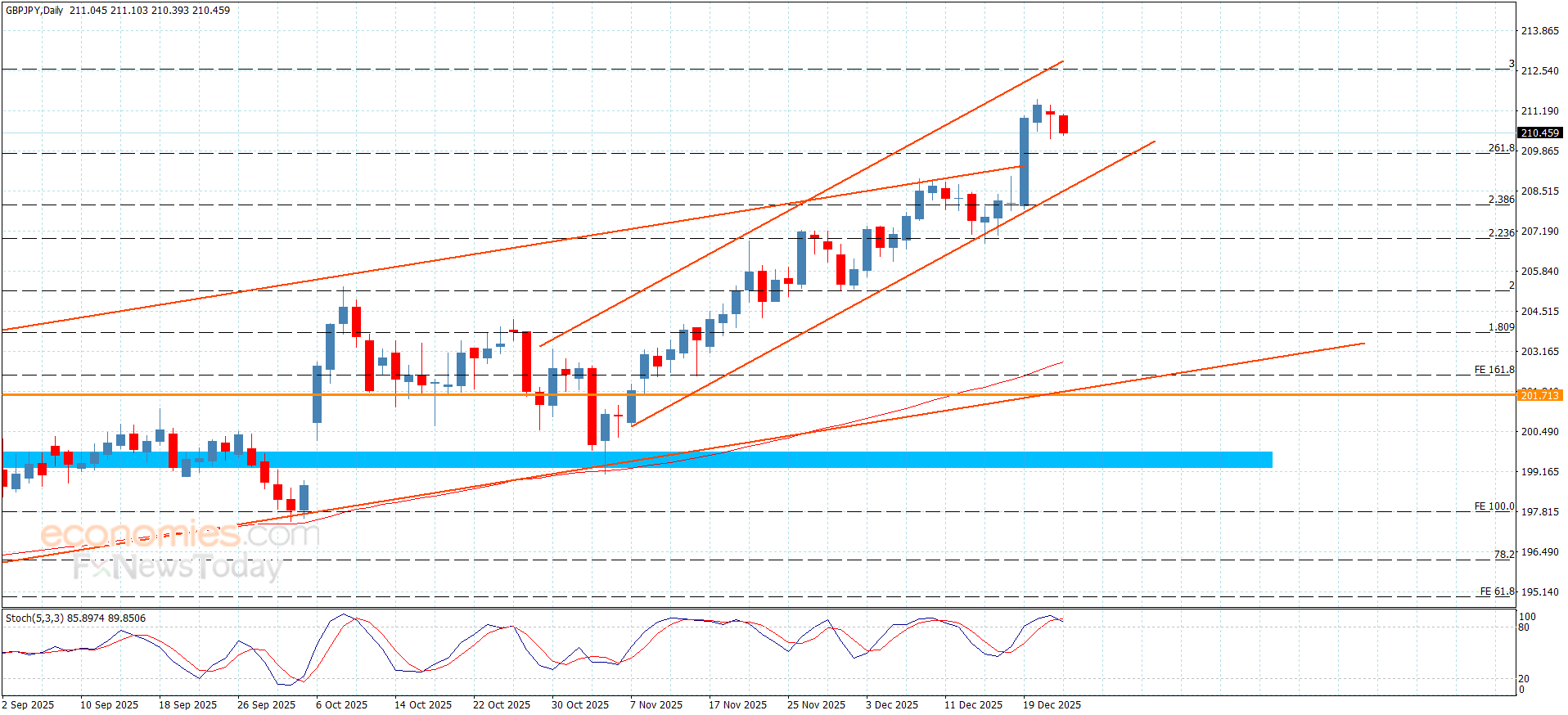
The GBPJPY repeats the corrective attempts– Forecast today – 24-12-2025

By |2025-12-25T04:05:30+02:00December 25, 2025|Forex News, News|0 Comments


Copper price activated with the main indicators again, surpassing the barrier at $5.5000, announcing its readiness to achieve extra gains on a near-term basis, therefore, we will keep our bullish expectations, reminding you that the extra target near $5.6300 and $5.7400 level.


Note that the price stability below the current barrier might force it to form mixed trading, and there is a chance of testing the support at $5.1500.


The expected trading range for today is between $5.3900 and $5.6300


Trend forecast: Bullish


Source link

25 12, 2025

XRP Price Prediction: XRP Loses $1.95 Weekly Support as Downside Risk Builds Toward $1.60

By |2025-12-25T03:15:32+02:00December 25, 2025|Crypto News, News|0 Comments

XRP is facing renewed downside pressure after slipping below a long-defended weekly support level, signaling a potential shift in market structure as traders reassess short-term price risk following a prolonged consolidation phase.

The breakdown below the $1.95 zone, an area reinforced by Fibonacci retracement levels and long-term moving averages, has placed XRP at a technical crossroads. This level mattered not only technically but also behaviorally, as it had consistently attracted dip-buying throughout 2025. With that support now compromised, market participants are closely watching whether buyers can stabilize price action or if downside momentum accelerates toward lower support zones.

XRP Price Today

At the time of writing, XRP is trading near $1.86, reflecting a 1.25% decline during the latest 24-hour session, according to Brave New Coin data. Trading volume over the same period stands at approximately $2.08 billion, suggesting sustained liquidity even as price weakens. The move places XRP below a level that had repeatedly acted as a price floor earlier this year, raising questions about near-term stability.

XRP was trading at around 1.85, down 1.25% in the last 24 hours at press time. Source: XRP price via Brave New Coin

From a broader market perspective, the XRP market cap has softened alongside price, while volatility has begun to expand. Historically, similar weekly breakdowns in XRP have led to heightened intraday swings as leveraged positions adjust, rather than immediate directional follow-through.

Technical Structure Shows Breakdown Risk

On the weekly chart, XRP has slipped below the $1.95 support zone, which aligns with the 0.5 Fibonacci retracement and the 89-week exponential moving average (EMA). These levels are widely monitored because they often mark equilibrium points during corrective phases within broader market cycles. A loss of such confluence tends to weaken bullish conviction.

XRP Price Prediction: XRP Loses .95 Weekly Support as Downside Risk Builds Toward .60

XRP tests $1.95 support, with a weekly close below risking $1.60 and a close above potentially sparking a bounce toward $2.30. Source: @CryptoXLARG via X

Technical analyst CryptoXLARG, who focuses on higher-timeframe crypto market structure on X, highlighted the significance of the move. The analyst noted that XRP remains capped below the descending trendline and the 8–21 EMA band, a zone commonly used to gauge short- to medium-term trend strength.

“$1.95 has been a structural support all year,” the analyst explained. “Losing it on a weekly basis shifts the technical bias lower.”

A confirmed weekly close below this level increases the probability of a move toward the 0.618 Fibonacci retracement near $1.60, a level that often acts as a deeper corrective target rather than a trend reversal point.

Lower Timeframe Pressure Persists

Shorter timeframes continue to reflect underlying weakness. On the 4-hour chart, XRP remains confined within a descending channel, with multiple failed attempts to reclaim the $2.00–$2.05 resistance zone. This area has consistently attracted selling interest during recent rebounds.

Lower Timeframe Pressure Persists

XRP remains in a downtrend, repeatedly rejected at $2.00–$2.05 resistance, with potential downside toward $1.55–$1.50 unless it closes above $2.05. Source: @suryapro via X

Crypto market analyst Surya, who frequently publishes short-term technical breakdowns on X, noted that XRP “still hasn’t escaped the downtrend.” According to the analyst, as long as the $2.00–$2.05 range caps upside, downside scenarios toward $1.55–$1.50 remain technically valid.

These repeated rejections suggest that bullish momentum has yet to establish acceptance above resistance, limiting the durability of relief rallies.

Key Support Levels Under Watch

Attention has now shifted to the $1.86–$1.87 region, which coincides with short-term historical support. Data from CoinDesk shows XRP recently closed near $1.87, placing this zone under immediate pressure as sellers retain control.

Key Support Levels Under Watch

XRP faces strong selling pressure at the descending trendline, with price needing to hold key 4H support and break above resistance to unlock upside momentum. Source: Leo524 on TradingView

TradingView technical analyst Leo524, known for monitoring trendline interactions and intraday support zones, emphasized the importance of this area. The analyst observed that XRP has been rejected twice from the descending trendline and is now reliant on a critical 4-hour support band below current prices.

“Price must hold this support to avoid further downside,” the analyst wrote, adding that upside continuation would require a clean breakout above the trendline, rather than brief intraday spikes.

Final Thoughts

XRP’s move below the $1.95 weekly support has shifted market focus toward risk management rather than upside expansion. With price hovering near $1.86, the immediate question is whether this short-term support can stabilize price and slow downside momentum. A sustained hold above this zone would suggest consolidation rather than continuation.

Conversely, a decisive weekly close below current levels would strengthen the case for a deeper retracement toward the $1.60 Fibonacci level, where buyers may reassess risk exposure. Until XRP reclaims former support and breaks above the descending trendline, price action is likely to remain cautious, with traders awaiting clearer confirmation from higher-timeframe closes and broader market conditions.

Source link

25 12, 2025

XAG/USD Holds Near $72 After Record High as Forecasts Eye $75—and Beyond

By |2025-12-25T02:04:35+02:00December 25, 2025|Forex News, News|0 Comments


December 24, 2025 (Updated 5:01) — Silver prices are in sharp focus today after a historic run pushed the metal into fresh record territory. In global markets, spot silver hit an all-time high of $72.70 per ounce before easing slightly as traders locked in profits during holiday-thinned trade. Reuters last cited silver around $71.94/oz, still up about 0.7% on the day. [1]

That pullback doesn’t change the bigger picture: silver’s 2025 rally has been extraordinary. Reuters pegged silver’s year-to-date gain around 149%, highlighting how the “white metal” has outpaced gold’s rise this year. [2]

Below is what’s driving silver today (24.12.2025), what analysts and market watchers are saying, and the key levels traders are watching next.


Silver price today: where XAG/USD stands on December 24, 2025

Silver’s breakout has become the defining precious-metals story into year-end:

  • Record high: $72.70/oz (spot) [3]
  • Latest widely reported spot level: about $71.94/oz (Reuters) [4]
  • Intraday guide (spot chart feed): around $71.88, with a day range roughly $70.20–$72.71 (XAG/USD streaming feed). [5]

The message is clear: after a nearly vertical climb, silver is trying to consolidate, not collapse—yet the swings are getting bigger, and that cuts both ways for anyone trading it short-term.


Why silver is moving: the 4 biggest drivers behind today’s price action

1) Rate-cut expectations are doing the heavy lifting

Precious metals tend to benefit when markets expect lower interest rates—because lower yields reduce the opportunity cost of holding non-yielding assets like gold and silver.

Reuters pointed to a market backdrop where:

  • The U.S. central bank cut rates three times in 2025, and
  • Traders were pricing in two more cuts next year. [6]

That rate outlook has been reinforced by macro signals and investor positioning into year-end.

2) The U.S. dollar and yields are key “silent” catalysts

On a day when U.S. yields eased and the dollar’s tone remained an important macro input, precious metals stayed supported even as they cooled off from highs. Reuters described Treasury yields easing and noted that gold and silver “edged back from record levels.” [7]

In plain terms: silver didn’t need new buyers to keep levitating—it just needed the macro headwinds (yields/dollar) to stay contained.

3) Geopolitical headlines still matter

Safe-haven demand rarely has a single trigger, but it often builds when investors sense rising geopolitical risk. Reuters highlighted a geopolitical strand in today’s broader market narrative, including attention on a Venezuela-linked oil tanker situation involving the U.S. Coast Guard. [8]

Even when headlines don’t directly involve metals, they can keep risk premiums alive—especially late in the year.

4) Holiday liquidity is amplifying every move

One underappreciated force today: thin year-end volume. Investing.com’s analysis explicitly warned that holiday conditions can exaggerate volatility, pushing prices to extremes more easily than during normal liquidity. [9]

That helps explain why silver can spike to a new record and then fade—without a major change in fundamentals.


India check: domestic silver hits fresh records, too

Silver’s surge isn’t just a dollar story.

In India, The Times of India reported silver prices jumping to a fresh record in the national capital, with silver hitting ₹2,27,000 per kilogram in Delhi, citing the All India Sarafa Association. [10]

Meanwhile, The Economic Times tied the global move directly to Indian market action:

  • It noted silver moving above $72/oz,
  • Said MCX silver touched a new all-time high near ₹2,20,490/kg, and
  • Highlighted industrial demand themes (including solar/EVs/electronics), supply constraints, and expectations of looser U.S. policy as drivers. [11]

The rally even spilled into equities: The Economic Times reported Hindustan Zinc shares rising after silver crossed $72/oz, pointing to the company’s leverage to silver prices. [12]


Technical outlook: “price discovery” meets overbought warnings

Silver’s chart is flashing two truths at once:

  1. The trend is powerful, and
  2. The move is stretched enough to punish late entries.

FXEmpire: record high, but fatigue risk is rising

FXEmpire’s December 24 analysis captured the mood: silver set a fresh record at $72.70 but struggled to hold the top as traders paused into the holiday break. [13]

Crucially, FXEmpire warned the rally looked stretched: silver was cited as about $17.81 above its 50‑day moving average, raising the odds of a near-term pullback even if the bigger trend remains bullish. [14]

Investing.com: profit-taking risk and an intraday “sell zone”

Investing.com’s analysis went further, describing the environment as highly volatile and emphasizing intraday discipline. It flagged the $72.70–$72.80 area as an “intraday sell zone” with a stop above $73.50, while pointing to downside targets around $71.30, $71.00, and $70.00 if profit booking accelerates. [15]

Whether you agree with that trade setup or not, it underlines a widely shared view: the market is increasingly sensitive to profit-taking at record highs.

Barchart: strong buy trend—but RSI overbought, watch key levels

Barchart’s technical snapshot shows how “hot” this move has become:

  • Technical opinion: Strong buy, with long-term indicators supporting the trend
  • Relative Strength above 80, explicitly warning the market is in “extreme overbought territory” and to beware reversal risk [16]

Barchart also mapped clear reference levels traders may use as pivots:

  • Resistance: ~72.41, 73.34, 75.11
  • Support: ~69.71, 67.95, 67.02
  • Last price reference: ~71.91 [17]

These aren’t predictions—they’re decision points. In a market this fast, those levels can shape where stops cluster and where liquidity shows up.


Forecasts and targets: where analysts see silver heading next

Silver’s surge has kicked forecasting into a higher gear, especially because the market is now operating in “price discovery” mode.

Near-term target: $75 by year-end (Kitco via Reuters)

In Reuters’ reporting, Kitco Metals senior analyst Jim Wyckoff said the next upside target for silver is $75/oz by the end of the year, adding that the technicals remain bullish. [18]

That’s an ambitious target—but it’s also close enough that traders will treat it as a magnet level if momentum returns.

2026 outlook: banks at $56–$65, but technical models stretch higher

For the bigger horizon, IG’s commodities outlook (published Dec. 23 and circulating into today’s Dec. 24 conversation) summarized the next year’s debate:

  • It said the average of major banks places silver in the $56–$65 range for 2026 (a “conservative view”).
  • It also noted technical models that stretch toward $72 and $88, especially if the gold/silver ratio compresses further. [19]

IG also emphasized the structural backdrop supporting silver—tightening supply, rising industrial demand, and a breakout setup—and argued silver is still “cheap relative to gold” when viewed through the gold/silver ratio lens. [20]

One important nuance: these aren’t unanimous views. The same volatility that powered the upside can create sharp drawdowns—particularly if rate expectations shift or if positioning becomes crowded.


What to watch next: the catalysts that can move silver fast

With silver at record levels, it may not take much to trigger the next big leg—or the next sharp shakeout. Key items to watch:

  1. U.S. rates narrative: any change in how markets price 2026 rate cuts can quickly lift or cap precious metals. [21]
  2. Dollar and yields: a renewed dollar rally or a spike in real yields can pressure silver even if industrial fundamentals remain strong. [22]
  3. Holiday liquidity conditions: thin volumes can exaggerate both breakouts and pullbacks. [23]
  4. Profit-taking behavior: multiple analysts explicitly warn that extended rallies at “lifetime highs” often invite heavy profit booking. [24]
  5. Industrial-demand headlines: solar and electrification themes are increasingly part of the silver narrative, especially in coverage linking silver’s move to producer equities and MCX pricing. [25]

Bottom line at 5:01: silver’s trend is bullish, but the market is “stretched”

Silver’s price action on December 24, 2025 is the classic late-stage momentum setup: still trending higher, still supported by rates and risk narratives, but stretched enough to snap back hard.

  • The record high ($72.70/oz) is now the headline reference point. [26]
  • Analysts are openly discussing $75/oz as a near-term target, while longer-range outlooks debate whether 2026 is a consolidation year—or another breakout year. [27]
  • Overbought signals and profit-taking risk are rising, especially in thin liquidity. [28]

Market note: Prices can change quickly, especially around holidays. The levels above reflect figures and commentary reported on 24.12.2025 by the cited sources, not a fixed quote.

References

1. www.reuters.com, 2. www.reuters.com, 3. www.reuters.com, 4. www.reuters.com, 5. www.investing.com, 6. www.reuters.com, 7. www.reuters.com, 8. www.reuters.com, 9. www.investing.com, 10. timesofindia.indiatimes.com, 11. m.economictimes.com, 12. m.economictimes.com, 13. www.fxempire.com, 14. www.fxempire.com, 15. www.investing.com, 16. www.barchart.com, 17. www.barchart.com, 18. www.reuters.com, 19. www.ig.com, 20. www.ig.com, 21. www.reuters.com, 22. www.reuters.com, 23. www.investing.com, 24. www.fxempire.com, 25. m.economictimes.com, 26. www.reuters.com, 27. www.reuters.com, 28. www.barchart.com


Source link

Go to Top